Advertising disclosure: This page includes affiliate links that may earn us a commission at no additional cost to you.
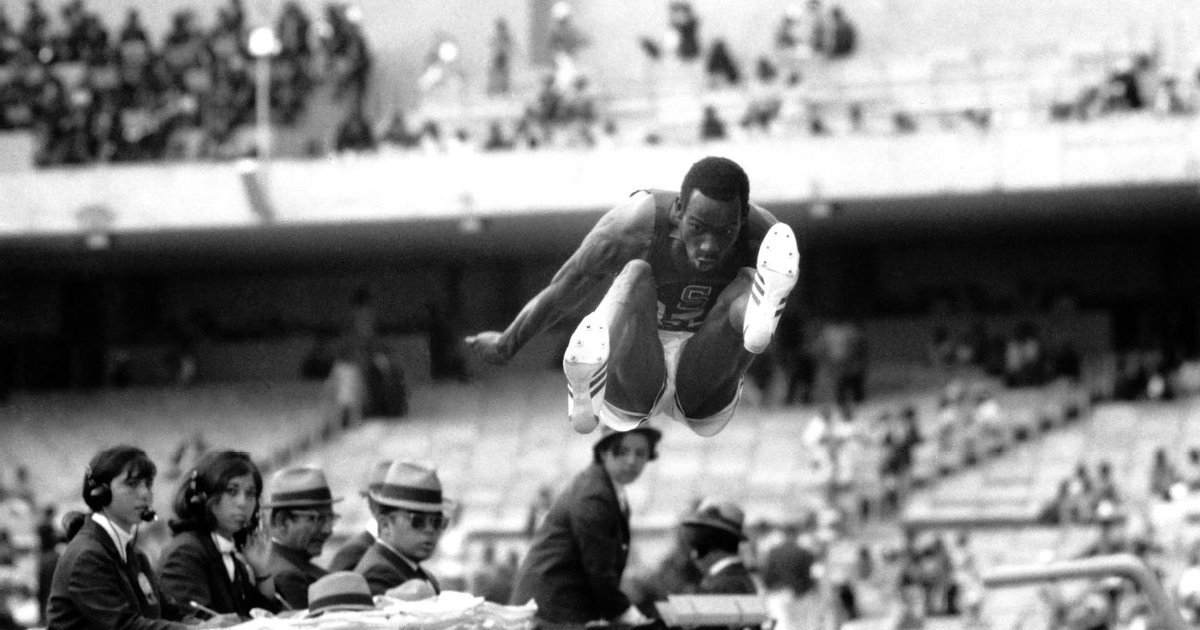
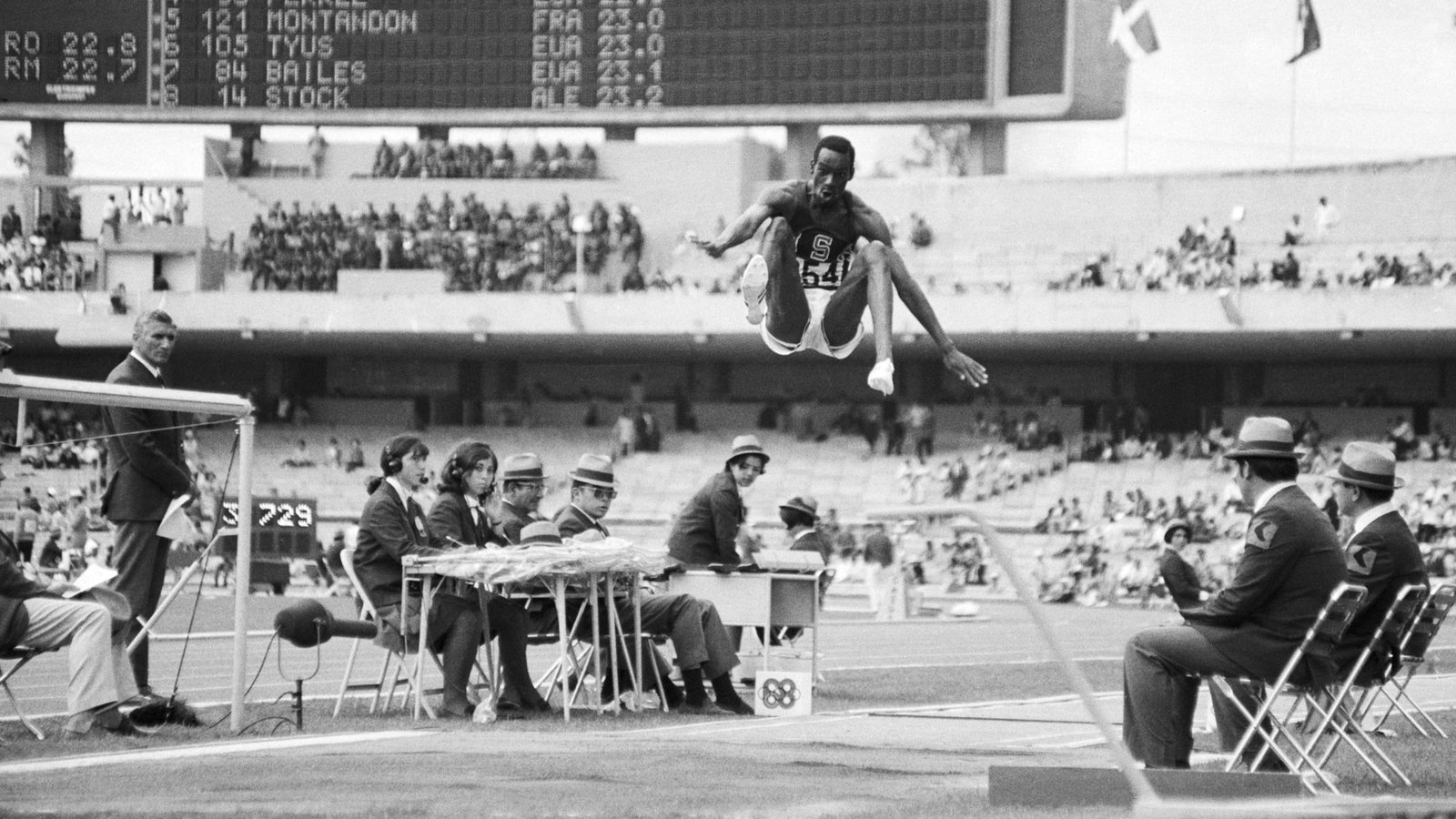
Some personal bests improve a familiar number. Bob Beamon’s long jump in Mexico City changed the scale of the conversation. On 18 October 1968, he jumped 8.90 m and won Olympic gold. The previous world record was 8.35 m: a difference of 55 centimetres in an event where a single centimetre can separate performances.
The interesting fitness question is not how to copy one extraordinary jump. It is how to understand a result that sits so far beyond the comparison point. Beamon’s performance rewards a closer look at measurement, competition and the difference between a peak and a repeatable baseline.
Put the 55-centimetre improvement in perspective
Subtract 8.35 from 8.90 and the improvement is 0.55 m. Divide that improvement by 8.35 and it is approximately 6.6% of the previous record distance. That percentage describes the relationship between two marks. It does not mean Beamon became 6.6% stronger, ran 6.6% faster or improved his training by a measurable 6.6% that afternoon.
That distinction matters whenever a sporting result becomes a headline about physical ability. A long-jump distance is an outcome. It is not a direct readout of one isolated quality. The arithmetic gives the achievement scale without pretending to explain every factor that produced it.
It also helps to state the comparison explicitly. This was an improvement on the existing world record, not a 55-centimetre advantage over the silver medallist. Those are separate gaps with separate denominators. Mixing them makes an already remarkable performance less clear rather than more impressive.
The same discipline helps with everyday training numbers. If your best set changes, decide whether you are comparing load, repetitions, range of motion or the whole task. A percentage can be useful once the quantity is defined. Before that, it can give a precise-looking answer to an unclear question.
The rest of the final still tells a story
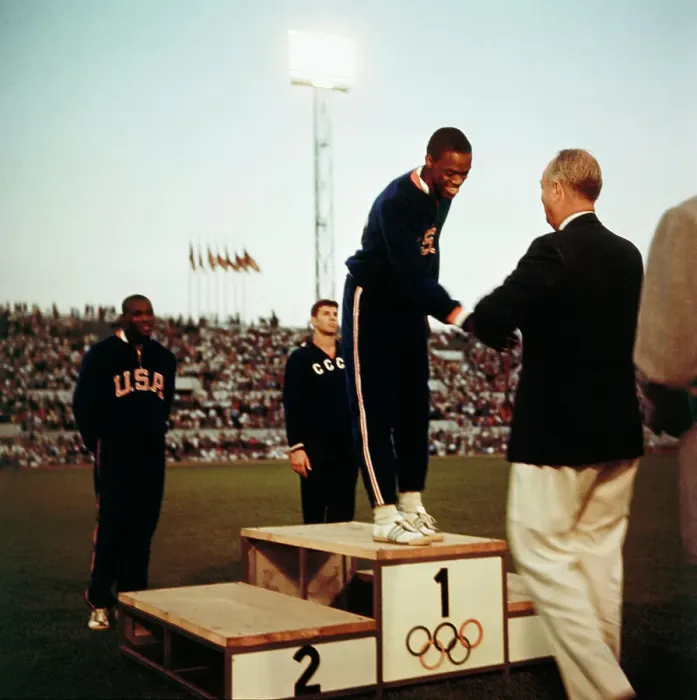
Klaus Beer took silver with 8.19 m, and Ralph Boston won bronze with 8.16 m. Beamon’s winning margin over silver was therefore 71 centimetres. His record improvement and his winning margin were both large, but they describe different features of the competition.
The final-round series adds another useful detail. Beamon opened with 8.90 m, followed it with 8.04 m, and passed his remaining four attempts. That second mark does not undo the first. It shows why the winning mark and the sequence of attempts should remain separate pieces of information.
A competition that rewards the best valid performance does not ask every attempt to match it. Reading the result as though it were an average would change the question after the event. Equally, taking the best attempt as a guarantee of what the athlete could reproduce on demand would add a claim the result itself does not establish.
For a lifter, that is a useful distinction between celebrating a personal best and choosing a sensible reference for later sessions. You can keep the best result in your record while also recording what happened around it. One number preserves the milestone; the surrounding attempts preserve the context. Neither needs to replace the other.
Keep the measurement separate from the mythology
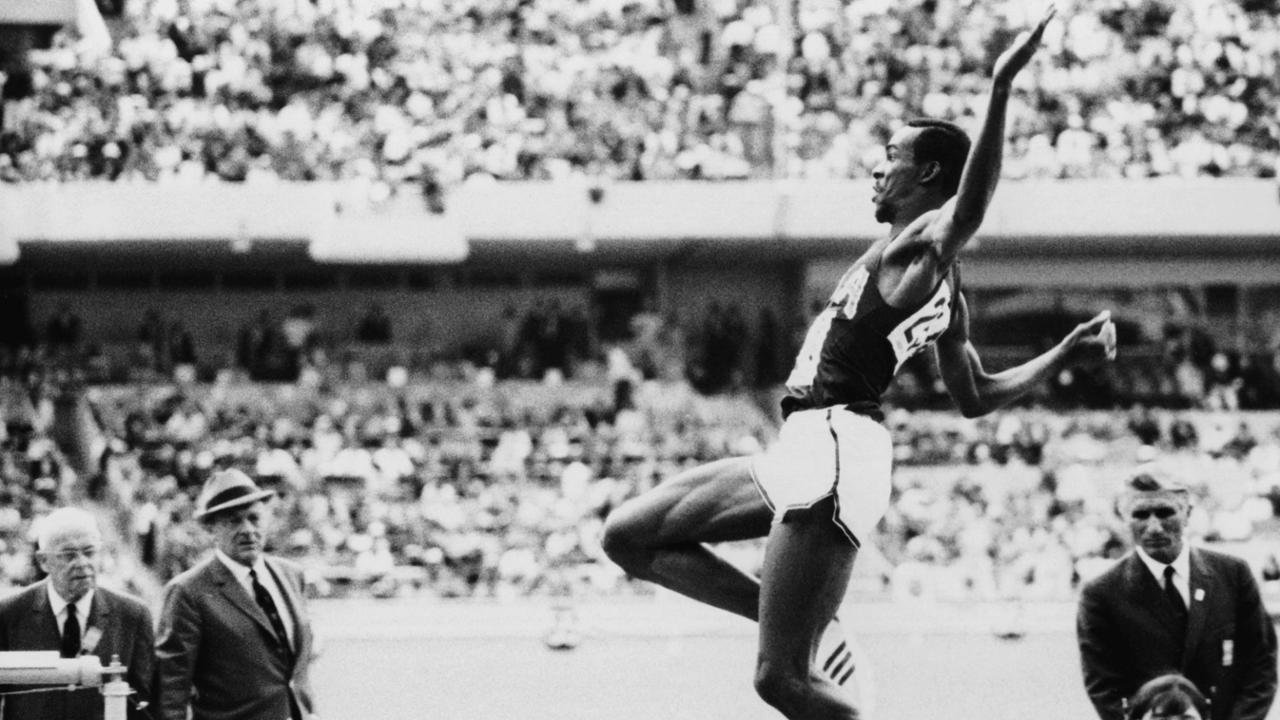
Beamon’s jump extended beyond the installed optical measuring system’s range, so officials used a tape to establish the distance. That practical detail is part of the story’s appeal: the performance exceeded what the equipment had been set up to measure in that way. It does not mean the distance was a visual estimate.
The result table also records a +2.0 m/s wind reading for the 8.90 m attempt. Keep that condition attached to the result. It is more informative than describing the jump as though it happened in an unspecified environment, and it does not justify inventing an exact distance that Beamon would have jumped under different conditions.
There is an important difference between acknowledging context and calculating an adjustment. A claim about a hypothetical alternative needs a defensible method and the right inputs. Simply knowing that conditions mattered does not tell you how much to subtract. This article does not assign a no-wind or sea-level equivalent to the jump.
Another Mexico City story, Dick Fosbury’s change to high-jump technique, raises a related question about how an outcome is achieved. But the two jumping events are different tasks. A dramatic photograph can start a good discussion; it cannot supply every missing measurement or make one event’s explanation transferable to another.
An exceptional performance is not a complete training plan
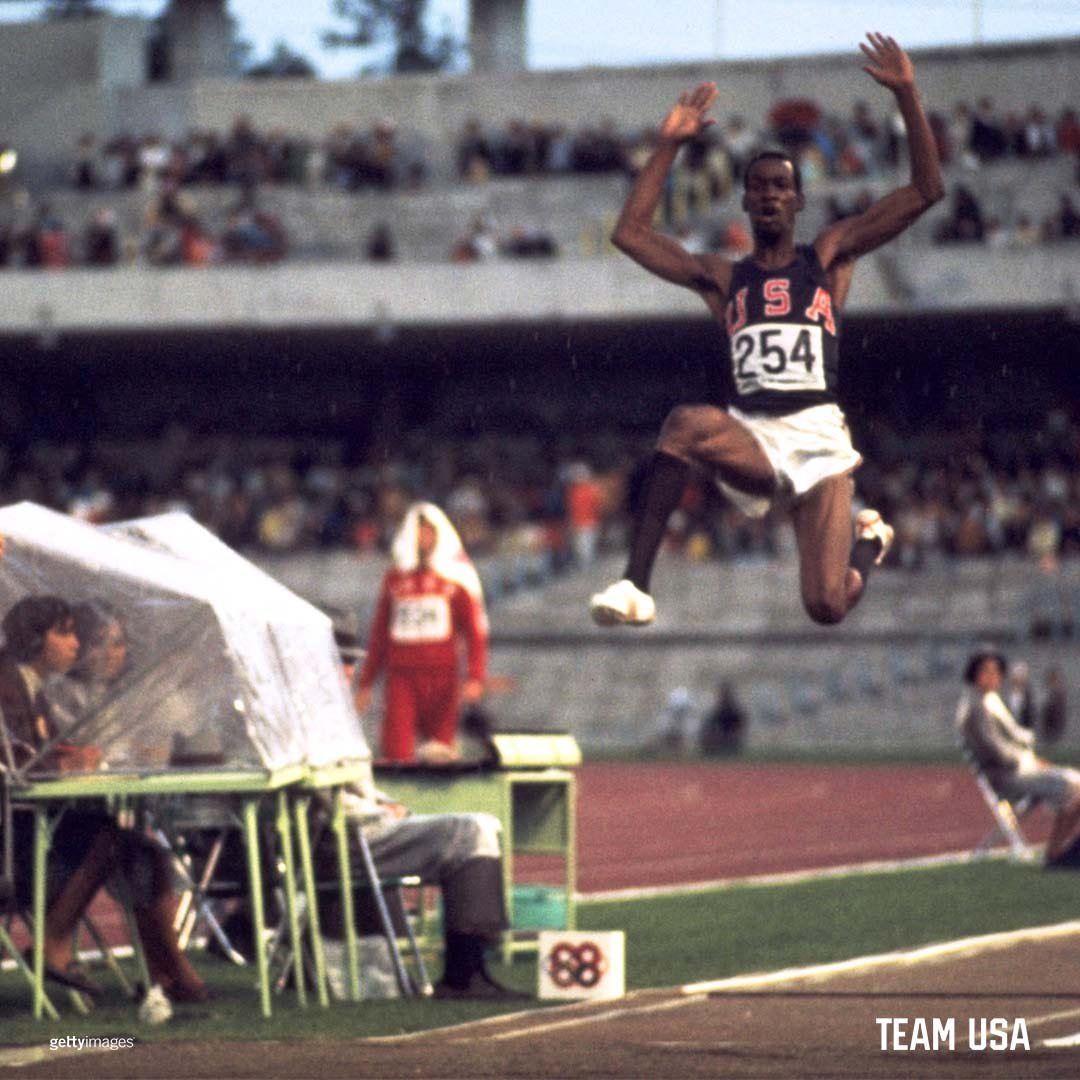
It is tempting to work backwards from a spectacular result and search for one decisive workout. That would require evidence about the actual preparation, not just evidence that the result occurred. The 8.90 m mark does not tell us Beamon’s full training schedule, his exercise selection or a formula that another athlete could follow for the same outcome.
This is where a historical performance feature should resist becoming a fabricated routine. A competition record can establish what was achieved on the day. A training account can describe what someone reports doing beforehand. Those are useful forms of evidence, but they answer different questions and do not automatically prove a cause-and-effect relationship.
A modern reader can still take something practical from the story. Start by naming the skill or quality you want to improve. Decide what observation would help you judge it. Then choose a way of recording progress that leaves room for unusually good or bad days. That is an editorial application of the measurement problem, not Beamon’s personal programme.
Run-up speed, take-off execution and landing are subjects for actual event-specific coaching. A general gym session should not be presented as a substitute for learning a technical sport. Admiring a champion is easy; describing what you personally need to practise requires a more specific question.

Cardio Shirts & Workout Gear
Cardio and conditioning gym gear for runners, endurance athletes and anyone who earns the sweat.

Don't Quit Do It – Motivational Workout Vest Muscle Shi Tank Top
Bring “Don't Quit Do It” humor to your next lifting session.

Cardio Is Calling Decline Bros Meme Hooded Hoodie
Make your off-duty look more fun with “Cardio Is Calling”.

Cardio Is Hardio – Workout Meme Pullover Jumper T-Shirt
For laid-back days and cardio humor: “Cardio Is Hardio”.

Anti Running Club Tee
Heavy lifts, good laughs, and a little “Anti Running Running Club” energy.

Negative Cardio Review 1 Star Sweater Cardio Sucks T-Shirt
Show some gym-day personality with “Negative Cardio Review”.

Cardio Sucks Shirt Meme & Gymbros Top T-Shirt
Make gym days more fun with “Cardio Sucks” style.

Death By Cardio Shirt Meme & Top T-Shirt
Bring “Death By Cardio” humor to your next gym day.

Cardio Heartbeat for Runners, Cyclists and Endurance Fa Tank Top
Bring “Cardio Heartbeat” humor to your next lifting session.

Skip Cardio Exit Cardio Meme Decal Water Bottles & Sticker
Put “Skip Cardio” gym humor on your laptop, bottle, or gym gear.

Straight Outta Shape Hoodie
Stay casual and show some cardio attitude with “Straight Outta Shape”.
Celebrate the peak and keep a useful baseline

Beamon’s world record lasted until Mike Powell jumped 8.95 m in 1991. That later mark was five centimetres farther. The two comparisons are worth keeping distinct: Beamon added 55 centimetres to the earlier world record, while Powell later added five centimetres to Beamon’s mark. Neither gap, by itself, explains the athletes’ preparation.
For your own training, a simple record can hold both an achievement and a basis for future decisions. Write down the task, the result and the conditions you can actually observe. If you record several attempts, keep them rather than saving only the best. You can then choose whether your next question concerns your ceiling, your consistency or your ability to repeat a task.
For example, a hypothetical athlete might log a best attempt alongside the other valid attempts from the same session. The best answers “What did I achieve today?” The series helps answer “What happened across the session?” Neither answer should be inflated into a prediction about the next competition. A short note about a changed setup can also prevent a misleading comparison later.
The distinction is equally useful when looking at what Bolt’s Berlin race times actually measure. A recorded result can support some calculations while leaving other questions unanswered. Knowing that boundary makes the number more useful, not less exciting.
Beamon’s achievement deserves its place as an extraordinary sporting moment. It also offers a grounded habit for anyone who trains: celebrate the peak, preserve its context, and avoid turning one exceptional result into a promise that every attempt must fulfil.