Advertising disclosure: This page includes affiliate product links that may earn us a commission, as well as products from our own store.
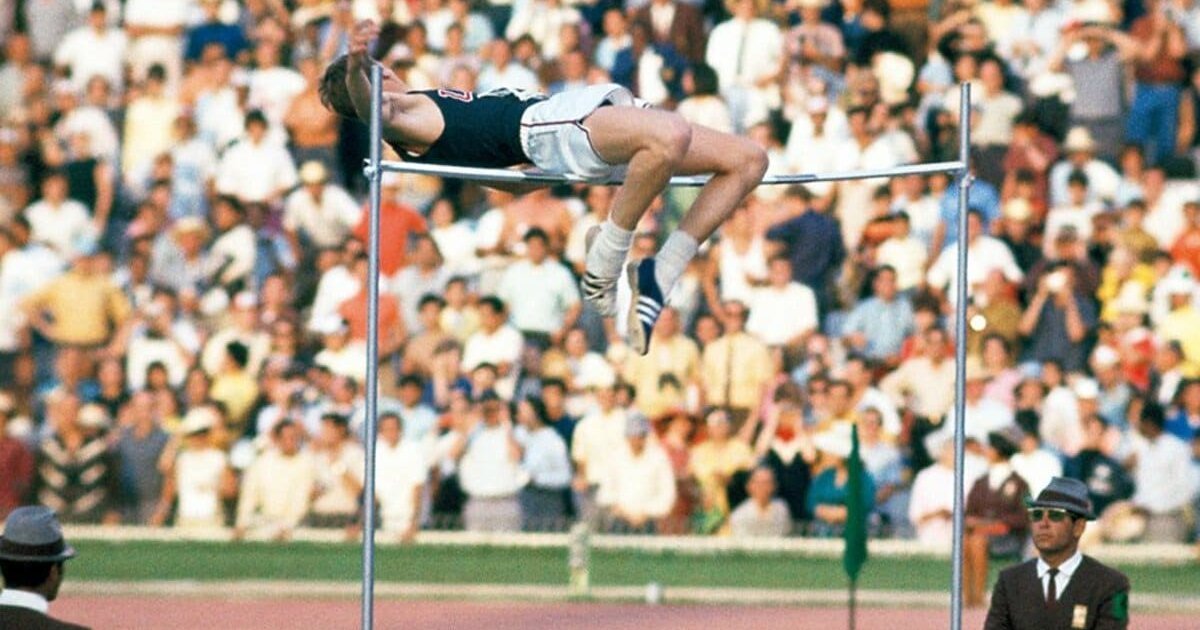
Dick Fosbury did not win Olympic gold by finding a heavier weight to lift. He changed how he crossed the bar. At Mexico City in 1968, his back-first high jump made a familiar event look unfamiliar, and the result gave an unconventional technique an audience that years of experimentation had not reached.
For anyone who trains, that is a more interesting story than the usual instruction to work harder. Strength matters, but a movement problem may also have a technical solution. Fosbury’s career offers a way to think about testing changes, choosing equipment and judging progress without treating every strange-looking exercise as the next revolution.
The breakthrough started before the Olympic spotlight
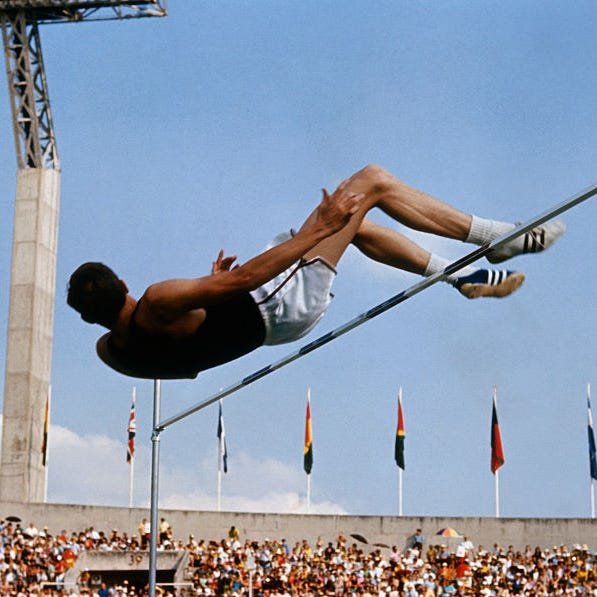
Fosbury had been experimenting with his back-first approach since 1963, while still in high school. The Olympic final five years later was its defining showcase, not its first trial. Other jumpers were exploring similar ideas too, notably Canada’s Debbie Brill. The history is richer than a lone genius spontaneously deciding to jump backwards on the biggest stage.
His early development began against a familiar problem: the conventional options were not producing the progress he wanted. He had learned the scissors style and was encouraged to use the straddle. In the technique that became associated with him, the head and shoulders passed the bar before the rest of the body, with the jumper landing on the back.
The distinction between experimenting and improvising matters. A promising movement change has to survive practice, changing conditions and repeated attempts. A successful photograph captures one instant; it does not reveal the less successful trials that made that instant possible. In Fosbury’s case, years separate the early experiments from the result most people remember.
That timeline challenges a common gym habit: trying a new stance or cue once, then deciding it is either useless or miraculous. A fair trial needs a clear question. Does the change improve control? Does it produce the intended movement more consistently? Can you repeat it without introducing a different problem? Those questions are more useful than whether it looks impressive on its first outing.
The landing area helped make a new technique practical
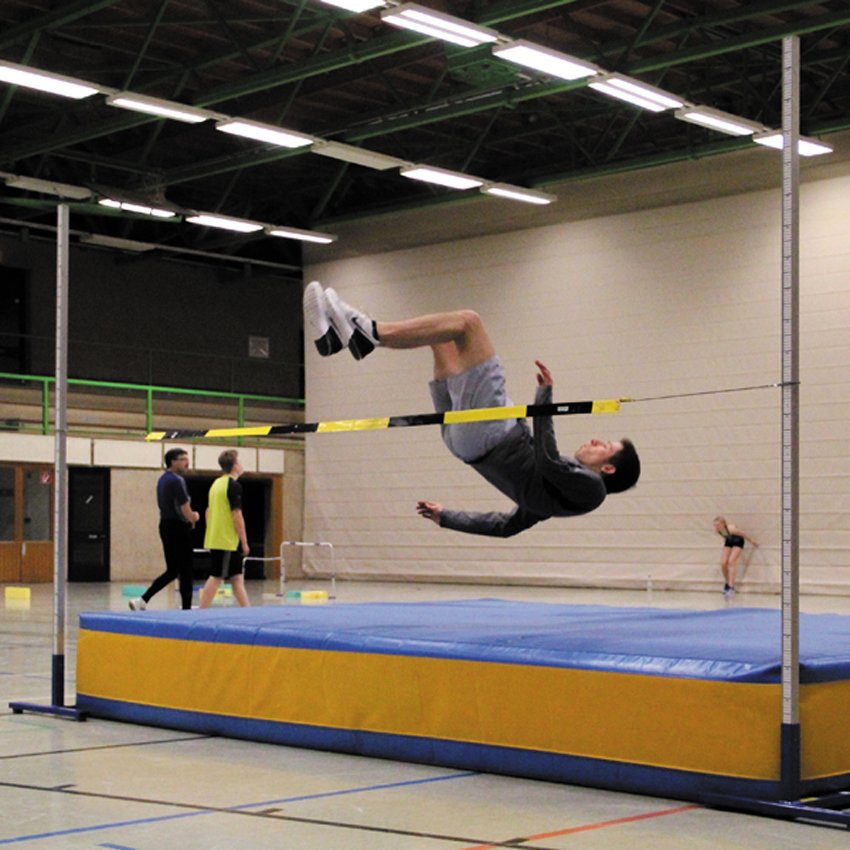
Soft landing equipment was an important part of the change. Deep foam matting offered a different landing environment from the sand used earlier in the event’s history. Clearing a bar back first and landing face up became more practical when the landing area could accommodate it. The technique and its environment developed together.
That does not mean a soft surface removes risk. The modern training photograph here illustrates a dedicated high-jump landing setup; it is not Fosbury, an instruction sequence or evidence that any mattress will do. Learning high jump calls for suitable facilities and qualified coaching. A gym bench, crash cushion or improvised garden obstacle is not an equivalent training environment.
The broader lesson applies whenever equipment changes what a movement allows. In a gym, the same exercise name can conceal different setups: handle position, support, floor space and available resistance all matter. Before copying a movement, identify the conditions that make it workable. Changing one detail may require changing the whole setup rather than simply copying the athlete’s visible body position.
Think of equipment as part of a decision, not a promise of a result. A tool may make a task easier to practise or measure, but owning it does not supply the skill. Fosbury’s story is particularly valuable because the landing-area detail prevents a simplistic reading in which confidence alone explains the breakthrough. Practical constraints deserve as much attention as motivation.
What the 2.24-metre gold medal actually established

On 20 October 1968, Fosbury won the men’s Olympic high jump with 2.24 metres, an Olympic and United States record. He cleared that height on his third attempt. Ed Caruthers took silver and Valentin Gavrilov bronze. The result established that the technique could succeed under championship conditions against the best competitors of the day.
It was not a world record. Fosbury subsequently attempted 2.29 metres and did not clear it. Keeping those two facts separate gives the performance its proper scale: an Olympic title and record were extraordinary achievements without adding a world record that he did not set. The famous image needs no inflated caption.
Results are especially useful when the task has an unambiguous outcome. In high jump, the question is whether the athlete clears the bar within the competition rules. In the gym, the outcome is often less obvious. More weight on the bar can coexist with a shorter range of motion, a changed setup or assistance that was absent last week.
Choose the standard before judging the attempt. If your aim is a stronger squat through a defined range, keep that range consistent. If your aim is to practise a new movement, record the learning work separately from a personal best. You can recognize a genuine improvement without making every session compete for the most dramatic number.
A technique can change a sport without rewriting every record
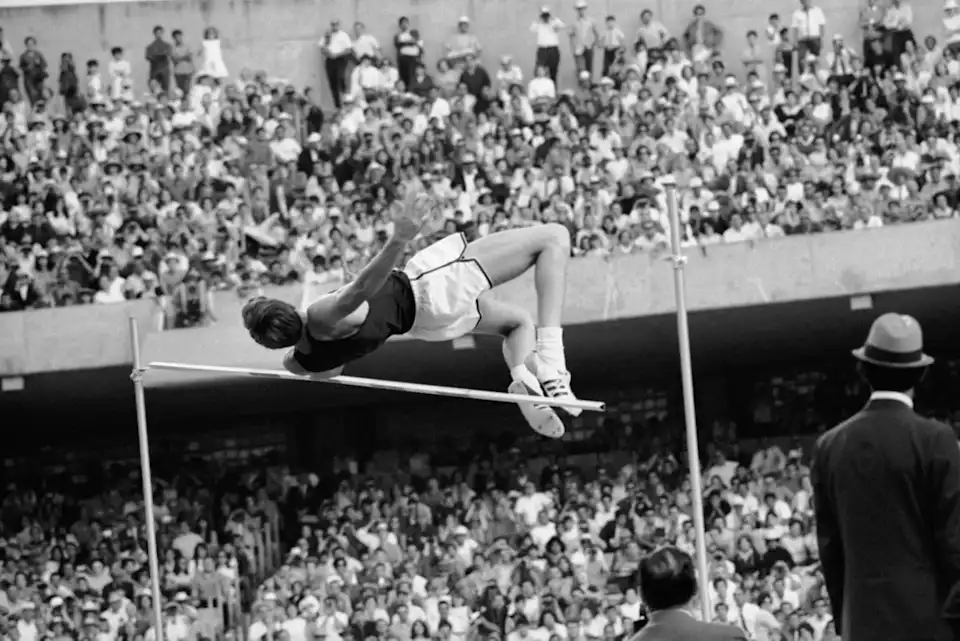
By the 1972 Olympics, 28 of the 40 high-jump competitors were using Fosbury’s style. That is 70 percent of the field, not 28 finalists. The distinction matters when describing how quickly the approach spread. Four years after his gold medal, adoption was already substantial, although the transition was not instantaneous.
Fosbury never jumped higher than his winning Mexico City height. He also won NCAA titles in 1968 and 1969, and later completed an engineering degree. His influence cannot be reduced to a graph of ever-increasing personal bests. A career can change what other athletes consider possible even when its defining competitive mark remains unchanged.
For recreational training, that is a useful way to separate several meanings of progress. A technically cleaner repetition, a better-tolerated exercise choice and a heavier lift are different achievements. You may value all three, but they need different evidence. A new movement does not become superior merely because other people adopt it, and an established method does not become obsolete because an alternative works.
Be specific about the comparison. Better for which person, under which rules, with which objective? A powerlifter, a high jumper and someone seeking bigger quads may make different choices while all training intelligently. Fosbury’s success supports taking technique seriously. It does not support the idea that conventional coaching should always be ignored or that unusual-looking movements deserve automatic trust.
What lifters can borrow: a fair test, not a copied routine
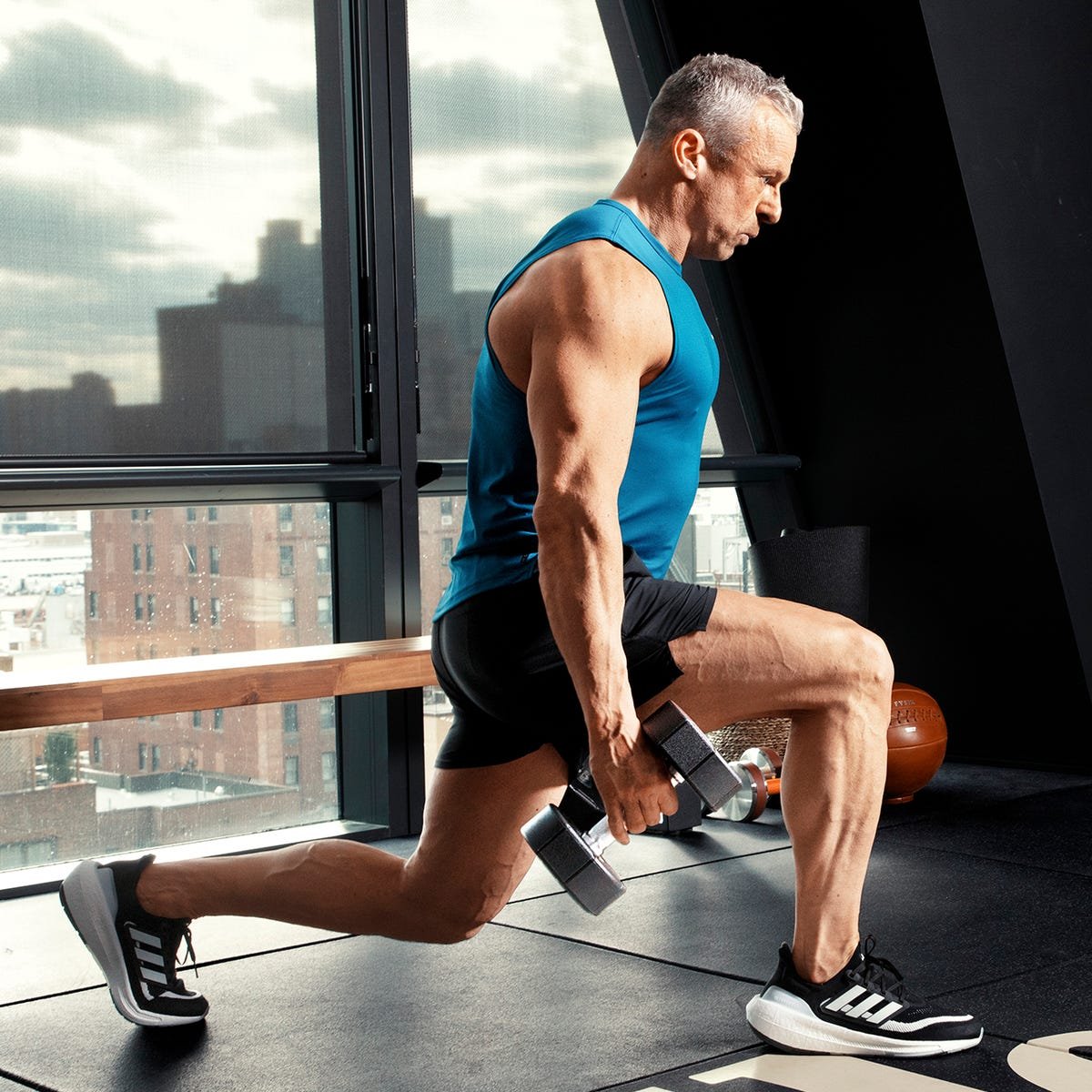
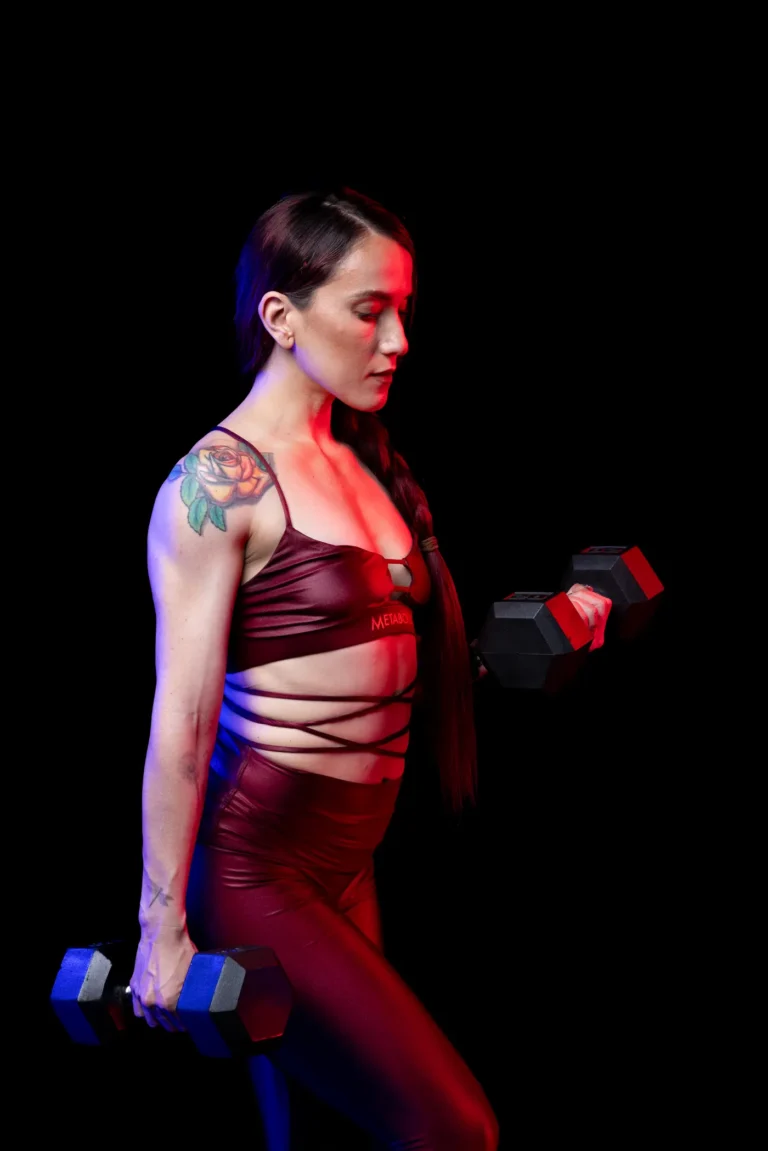
The strength-training photograph in this section is a modern illustration of a dumbbell split squat. It is not Fosbury and does not document his preparation. No exact Fosbury gym split, loading prescription or jump-training programme is being claimed here. The useful adaptation is a method for testing a change in your own training.
Start with a movement you already understand. A lifter might compare two comfortable split-squat setups using light dumbbells, or examine a small stance adjustment in an ordinary squat. Define the question in advance: perhaps which setup allows the intended depth with more consistent balance. That is narrower and more assessable than asking which version is universally best.
Keep the load conservative while learning. Record the stance, repetitions and range used, and change one feature at a time. If the movement becomes painful or difficult to control, stop and reassess rather than forcing enough repetitions to validate the experiment. Coaching can help distinguish a useful adjustment from a compensation you cannot see yourself.
Dumbbells, kettlebells or a familiar barbell setup can provide resistance for ordinary lower-body training. A rack and appropriate safety supports matter for barbell work; a squat wedge changes the setup and should be treated as a deliberate variation. None of these products reproduces a high-jump approach or turns gym strength directly into a specific clearance height. Choose equipment for the exercise you intend to perform.

Equipment Worth Exploring
Explore equipment, accessories and gear from our carefully selected range.


Rubber Hex Dumbbells
Rubber-coated hex dumbbell pairs with a stable shape for home and commercial strength training.


Cast Iron Kettlebells
Textured cast-iron kettlebells for swings, squats, carries, and full-body training.

GymPin Squat Wedges
Non-slip 15-degree squat wedges help elevate the heels for deeper quad-focused squats.


Give a technically sound change several comparable sessions before drawing a conclusion, provided it remains comfortable and appropriate. Write down both the result and the conditions. A useful log might say that balance improved at the same load and depth; it need not pretend that a small practice improvement proves a long-term muscle-building advantage.
Fosbury’s lasting lesson is to combine curiosity with a standard of evidence. Know the task, understand the environment and distinguish practice from performance. For lifters, better technique testing can begin with a modest adjustment and an honest training log. It does not require a spectacular stunt, a reinvented exercise or an invented story about how an Olympic champion trained.

Leg Day Shirts & Workout Gear
Leg-day gym shirts and workout gear for lifters who never skip squats, lunges and lower-body punishment.

1 Plate Squat Club Meme – Motivational Top T-Shirt
Bring “1 Plate Squat Club” humor to your next gym day.

I Love Squats Valentine'S Day Shirt – & T-Shirt
Heavy lifts, good laughs, and a little “I Love Squats Valentine's Day” energy.

Negative Leg Day Review Not Recommended 1 Star T-Shirt
Keep things casual with a little “Negative Leg Day Review” attitude.

Leg Day Is Calling You Squats & Deadlifts Meme Hoodie
Stay casual and show some leg-day attitude with “Leg Day Is Calling You”.

Leg Day Squats Deadlifts Vest Meme Tank Top
Bring “Leg Day” humor to your next lifting session.

Anti Leg Day Leg Day Club Decal Water Bottles & Sticker
Give your everyday gear a playful “Anti Leg Day Leg Day Club” twist.

Everyday Is Leg Day Octopus Meme & Top T-Shirt
Show some leg-day attitude with a playful “Everyday Is Leg Day Funny Octopus” tee.


Heavy Metal Leg Day – Shirt Squats & Gains – & T-Shirt
Show some metalhead attitude with a playful “Heavy Metal Leg Day” tee.

Funny Squat Inspector Gym | Edgy Leg Day Meme Muscle Sh Tank Top
Show some personality between sets with “Squat Inspector”.