Advertising disclosure: This page includes affiliate product links that may earn us a commission, as well as products from our own store.
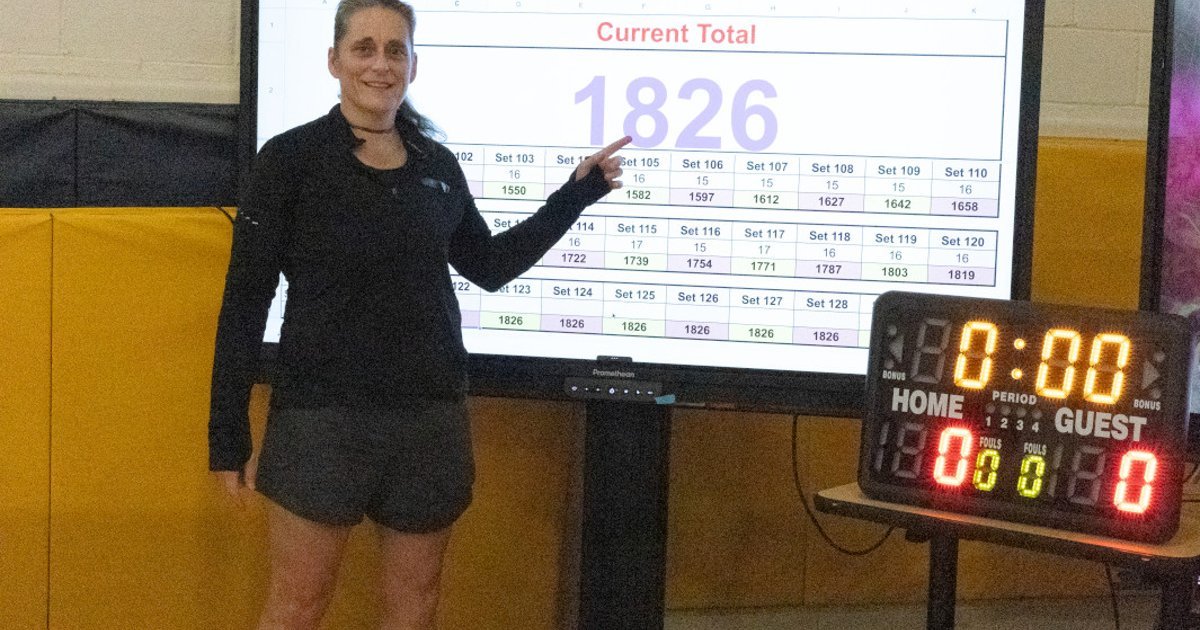
Completing 1,826 push-ups in 60 minutes is a different challenge from performing a heavy bench press or winning a one-minute repetition sprint. Laura Hunt, a physical education teacher in Pittsburgh, achieved that total on November 8, 2025. Her record was certified in 2026 and remains listed in the official women’s one-hour category as of November 23, 2026. The headline number is striking, but the interesting training questions concern pacing, repeatable technique and the cost of sustaining that much pressing volume.
This is not a workout prescription. It is an analysis of an exceptionally trained athlete’s attempt, with a much more conservative route for lifters who want better push-up endurance without trying to copy her workload.
The record was a year-long project, not a surprise fitness test
Hunt’s final count surpassed the former women’s one-hour benchmark of 1,575 by 251 repetitions. Divide 1,826 by 60 and you get roughly 30.4 accepted repetitions per minute across the entire hour. That average includes breaks, changes in tempo and the repeated effort of getting back into position. A short burst of 30 push-ups is therefore not remotely equivalent to holding that mean for an hour.
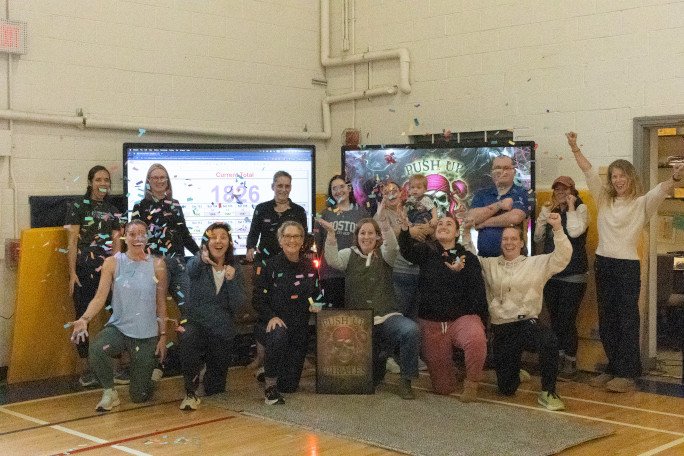
The athlete was not starting from zero. Hunt had worked in physical education for more than 25 years and was training regularly before she formally pursued the title. She first passed the old mark during a private attempt at home, then pursued the evidence and supervision required for recognition. The official performance took place at Falk Laboratory School with timekeepers, independent witnesses and fitness professionals involved. Formal verification, rather than a gym’s casual counting standard, is the crucial distinction.
The timeline also matters. She performed the record on November 8, 2025; she submitted evidence in January 2026; certification arrived later that year. Accounts published in August and October 2026 describe the achievement retrospectively, not as a November 2026 attempt. Correct dates make the scale of the preparation easier to understand: she had years of training behind her and months devoted to getting a legitimate result.
Small sets and the clock explain more than a heroic first minute
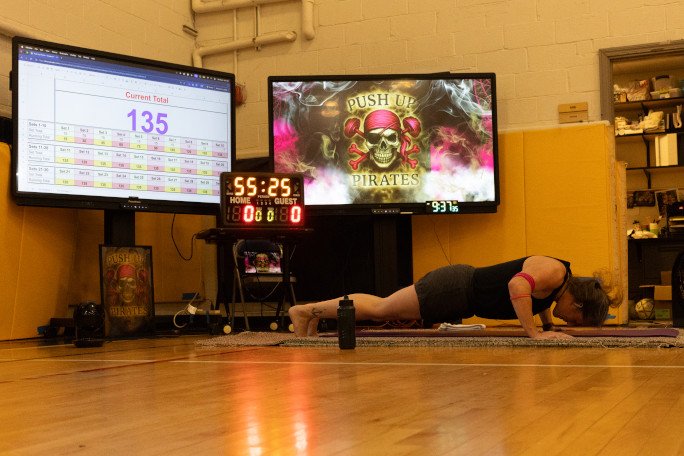
Hunt began with sets of 15. At that size, 100 sets would deliver 1,500 repetitions; reaching 1,826 requires 121 full sets of 15 plus 11 more reps, assuming the same set size throughout. Her actual sequence was not that tidy: reports describe her changing set sizes, briefly resting and passing the previous mark during set 105. The useful insight is that the total came from repeated manageable bouts, not one uninterrupted push-up set.
At an even rate, 1,826 repetitions would require about one repetition every 1.97 seconds, including every pause. Real attempts cannot follow that perfectly. Some early sets have a little spare time and later sets become more expensive because the chest, triceps, shoulders and trunk grow fatigued. A small pacing mistake near the beginning can make the final fifteen minutes feel disproportionately costly.
For ordinary training, use a simple density target instead of chasing a record. For example, a lifter with a clean maximum of 25 push-ups might try six sets of eight over twelve minutes, taking controlled rest. Record the number of clean reps, perceived effort and any form changes. Once the session feels repeatable, add a single rep to a few sets or shorten rests slightly, but not both in the same week. A clock is useful when it protects consistent pacing rather than pressuring you to grind.

Equipment Worth Exploring
Explore equipment, accessories and gear from our carefully selected range.


Power Tower
Freestanding pull-up and dip station with adjustable handles for bodyweight training.




Rubber Hex Dumbbells
Rubber-coated hex dumbbell pairs with a stable shape for home and commercial strength training.


Her 5,500-rep training weeks are context, not an instruction
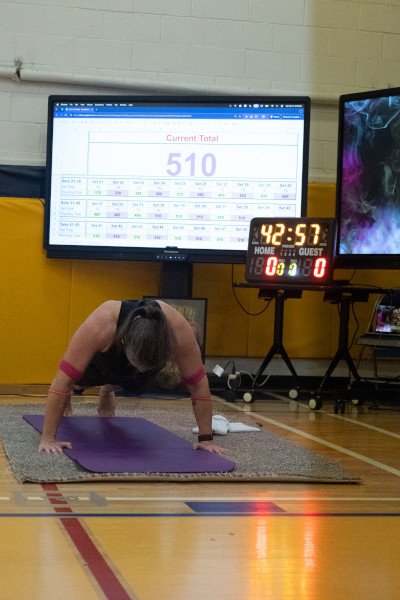
During the build-up, Hunt reported averaging roughly 5,500 push-ups per week. That is about 786 per calendar day if spread evenly, though it does not mean she actually performed the same number each day. Her university described a more modest home gym containing dumbbells, a stationary bike, resistance bands and a mat. She used push-ups alongside her normal workouts and developed progressive volume over time; she did not buy a specialized machine to make the achievement possible.
The gap between an advanced specialist and a recreational lifter is enormous. High repetition tolerance develops from an athlete’s history, total workload, technique, sleep and ability to recover. Jumping from 60 weekly push-ups to several hundred merely because a record holder does thousands is an avoidable way to aggravate wrists, elbows or shoulders. The right volume is the highest amount you can recover from consistently, not the largest number you can type into a training log.
Push-up endurance also does not replace all strength training. A balanced plan includes pulling movements, lower-body work, progressive resistance and aerobic activity. The standard public-health baseline for adults is at least 150 minutes of moderate aerobic activity each week, or 75 minutes vigorous activity, alongside two muscle-strengthening days. Those targets are not designed for records, and they provide a more sensible starting point for most people.
Strict repetitions become the limiting factor under fatigue
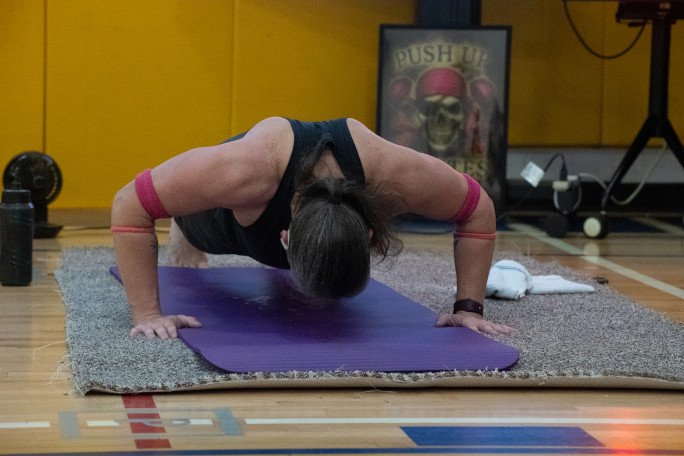
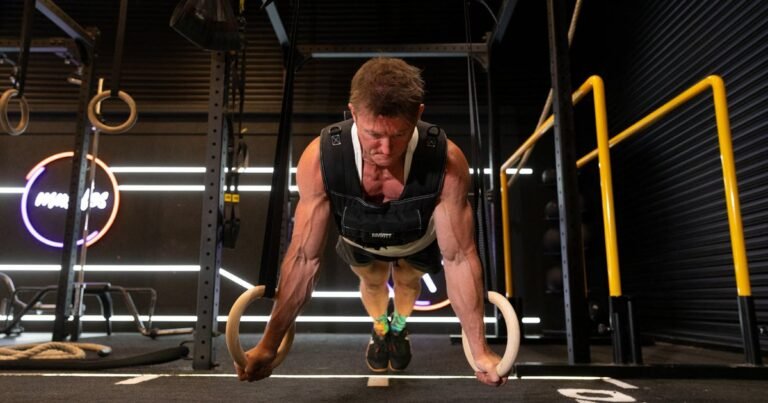
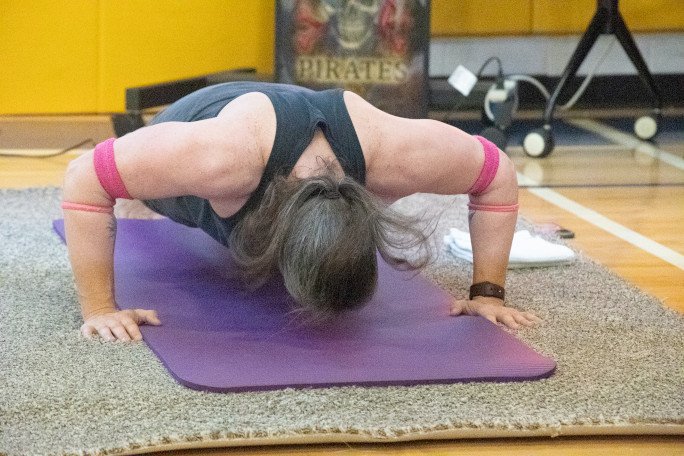
The familiar plank shape is deceptively demanding at high volume. Hands need a stable position, shoulders must tolerate repeated loading, and the trunk must resist sagging through hundreds of cycles. Early sets can look clean while late sets become shorter, faster and less controlled. That is why a witnessed record is different from a social-media clip with an unverified counter. The exact record rulebook, not somebody’s preferred gym standard, determines which repetitions qualify.
For your own workouts, create a repeatable standard before adding speed. Lower until you reach the same depth each time, maintain a firm trunk and return to a consistent top position. Video from the side can expose changing range of motion. If a rep becomes visibly shorter or your hips start leading the press, stop the set even if your timer says you could fit in more. Count what you are willing to count again next month.
An hour-long challenge also requires an intelligent relationship with discomfort. Muscle burn and elevated breathing are expected; sharp joint pain, numbness or steadily worsening technique are not cues to push harder. Use a stable nonslip surface and allow hands to find a pain-free position. People with existing wrist or shoulder symptoms should modify their setup or seek qualified assessment rather than repeatedly forcing painful positions. What makes an impressive record possible is not a general argument that extreme volumes are safe for everyone.

Calisthenics Shirts & Street Workout Gear
Calisthenics and bodyweight-training gear for pull-ups, dips, handstands and street-workout athletes.

T-Rex Hates Push Ups Crewneck Pullover Sweater for Cali T-Shirt
For laid-back days and bodybuilding humor: “T-Rex Hates Push Ups”.

Calisthenics Evolution Muscle Shirt Athletic Vest for B Tank Top
Add some lifting attitude to training with “Calisthenics Evolution”.

Big Dip Energy Hooded Pullover for Calisthenics Dips Fa Hoodie
Show off your lifting humor in a laid-back “Big Dip Energy” hoodie.

Stronger Than Excuses Tank
Show some personality between sets with “Be Stronger Than Your Excuses”.

Calisthenics Heartbeat Decal for Water Bottles Laptops Sticker
Put “Calisthenics Heartbeat” gym humor on your laptop, bottle, or gym gear.


Turn Off Gravity Funny Calisthenics Gym Crewneck Pullov T-Shirt
Show some gym-day personality with “Turn Off Gravity Funny Calisthenics”.

Always Pull Yourself Up Tank
Show some personality between sets with “Always Pull Yourself Up”.

Calisthenics – Meme & Lovers – Top & Gains T-Shirt
Heavy lifts, good laughs, and a little “Calisthenics” energy.

A four-week push-up plan worth borrowing from the method
Start by establishing a genuinely strict maximum on a fresh day, then work well below that ceiling. On Monday, perform four sets at roughly 40 percent of your maximum with two minutes of rest, followed by rows or band pulls. On Wednesday, perform a ten-minute density block of small sets, resting enough to maintain identical repetitions. On Friday, perform three slightly harder push-up sets with full recovery, then train legs and core. Leave at least one easier day between demanding pressing sessions.
During week one, learn the standards and record the baseline. In week two, add one clean repetition to selected Monday sets only if recovery is normal. In week three, hold Monday volume steady and increase Wednesday’s total by roughly ten percent if every previous repetition was controlled. In week four, reduce overall training stress before testing a new quality-first maximum. These are example progressions, not Hunt’s published personal program and not a guarantee of adaptation.
Suppose your initial maximum is 20 strict repetitions. Four sets of eight on Monday, ten small sets of four on Wednesday and three sets of ten on Friday would add up to 102 push-ups, plus your other strength training. That is a meaningful but manageable week for someone already used to similar volumes; an absolute beginner should start much lower with incline variations. Log shoulder comfort, energy and form, not just totals. If you improve from 20 excellent reps to 26 excellent reps, the result is useful even though it is nowhere close to 1,826.
The deepest lesson of Hunt’s effort is the unglamorous one: she built capacity gradually, tracked progress and set a specific test that could be independently checked. Take the consistency, not the record-sized workload. A practical training system should leave you stronger next month, not merely exhausted after one memorable Saturday.
Keep a second metric beside repetition totals: the number of quality sets you could repeat after normal recovery. It is possible to win a single-day volume contest yet lose productive training time to soreness or joint irritation. Use a schedule that leaves room for your other goals. Hunt was already an experienced physical educator with a long practice history, while your own plan has to match your starting point. Performance records are compelling demonstrations of human capacity, but personal progress is still made one recoverable session at a time.
Equipment Worth Exploring
Explore equipment, accessories and gear from our carefully selected range.
VOLTRA
Compact digital cable trainer with smooth, adjustable resistance.

Go-Tone Pro
Portable digital cable trainer with up to 66 lb (30 kg) of adjustable resistance.


Foldable Wall Rack
Wall-mounted folding squat rack designed to save floor space between workouts.

FID Bench MAX
Adjustable bench offering flat, incline, and decline positions + adjustable headrest.


Angles 90 Grips
Flexible grip attachments that allow natural wrist movement during pulling exercises.


Slam Ball
Low-bounce weighted slam ball for explosive throws and high-intensity conditioning.