Advertising disclosure: This page includes affiliate product links that may earn us a commission, as well as products from our own store.
Triceps Pushdowns: Rope vs Straight Bar, Elbow Setup and a Six-Week Plan
Cable pushdowns are a staple for arm training, yet the usual rope-versus-straight-bar debate often misses the bigger variables. A stable elbow position, a comfortable wrist, a reliable range of motion and a progression you can repeat matter more than declaring one attachment the winner.
This guide explains how each handle changes the feel of the lift, how to avoid turning pushdowns into a bodyweight-assisted dip, when overhead extensions add something different, and exactly how to progress over six weeks.
1. What pushdowns train and why the setup matters
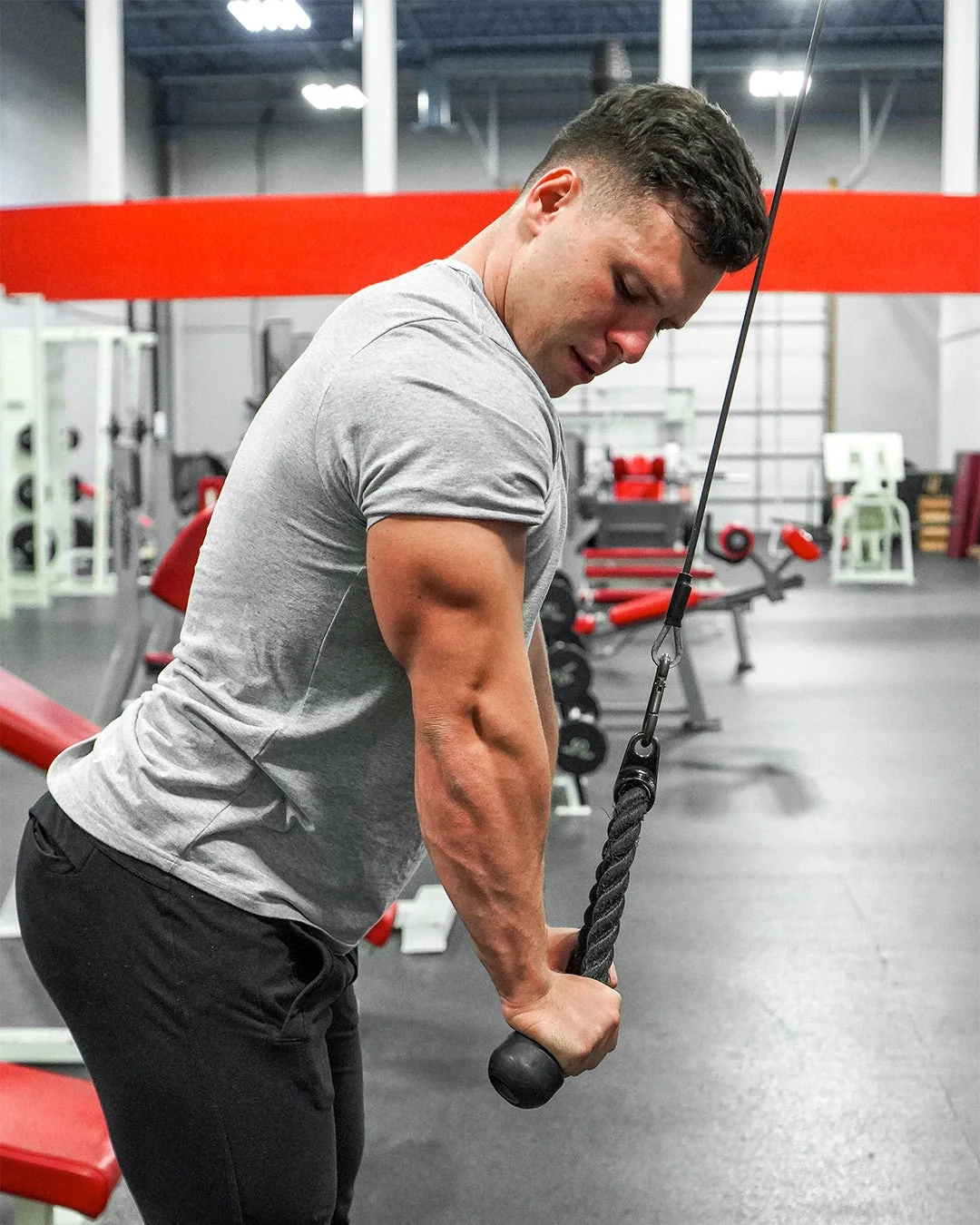
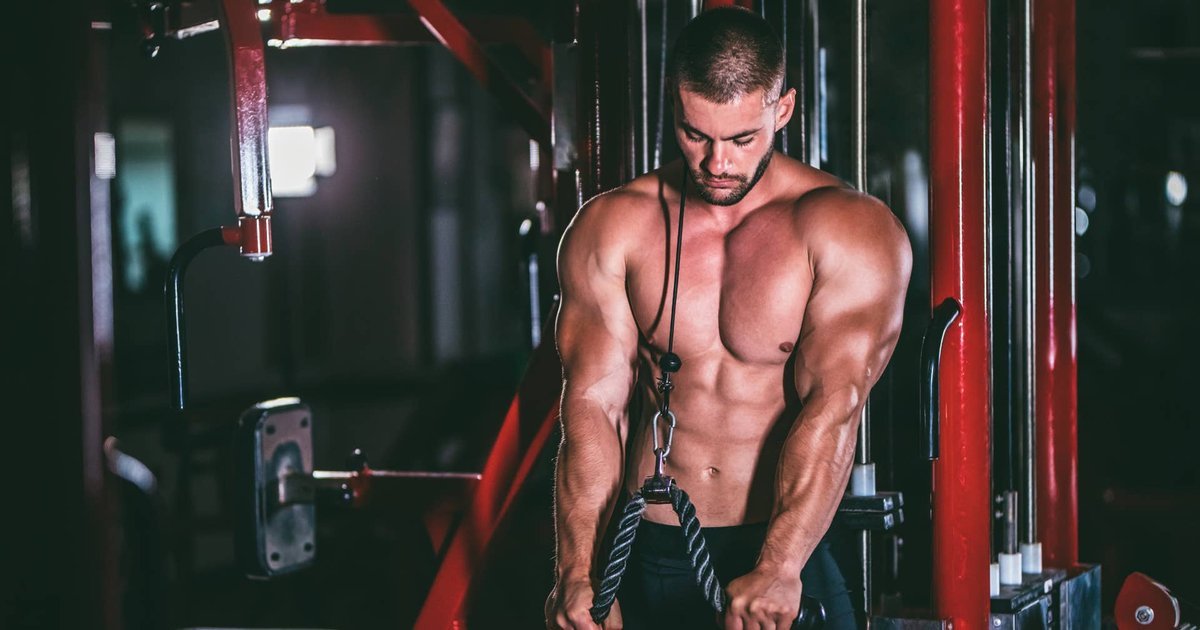
A triceps pushdown is an elbow-extension exercise. You keep the upper arms relatively near your torso while the forearms move from a bent to a straighter position against the pull of a high cable. The triceps’ three heads contribute to extending the elbow, but the long head also crosses the shoulder.
Pushdowns are valuable because a cable gives you a predictable loading path and lets you make small weight changes. The movement is straightforward to learn, does not demand heavy spinal loading and fits after bench presses, dips or shoulder presses. It is not a magic isolation tool: how much tension the target muscles experience still depends on range, execution, shoulder position and sensible load selection.
Begin with the pulley high, the cable hanging cleanly, and an attachment you can grip without bending your wrists uncomfortably. Stand with feet approximately hip-width apart, knees soft and chest stacked over your pelvis. Take a small step back if necessary to clear the cable path. Set the elbows at your sides or slightly ahead of the body, rather than pointing far behind you. Check that each handle can travel down without striking your legs.
For the first warm-up set, use a load that makes 12 controlled repetitions feel easy. Watch where the shoulders move: if your chest collapses, shoulders swing or the whole torso drops to move the stack, the load is no longer measuring the action you intend to train.

Equipment Worth Exploring
Explore equipment, accessories and gear from our carefully selected range.

Long Tricep ERGO Ropes
Extended triceps ropes with ergonomic grips for cable pressdowns and overhead extensions.
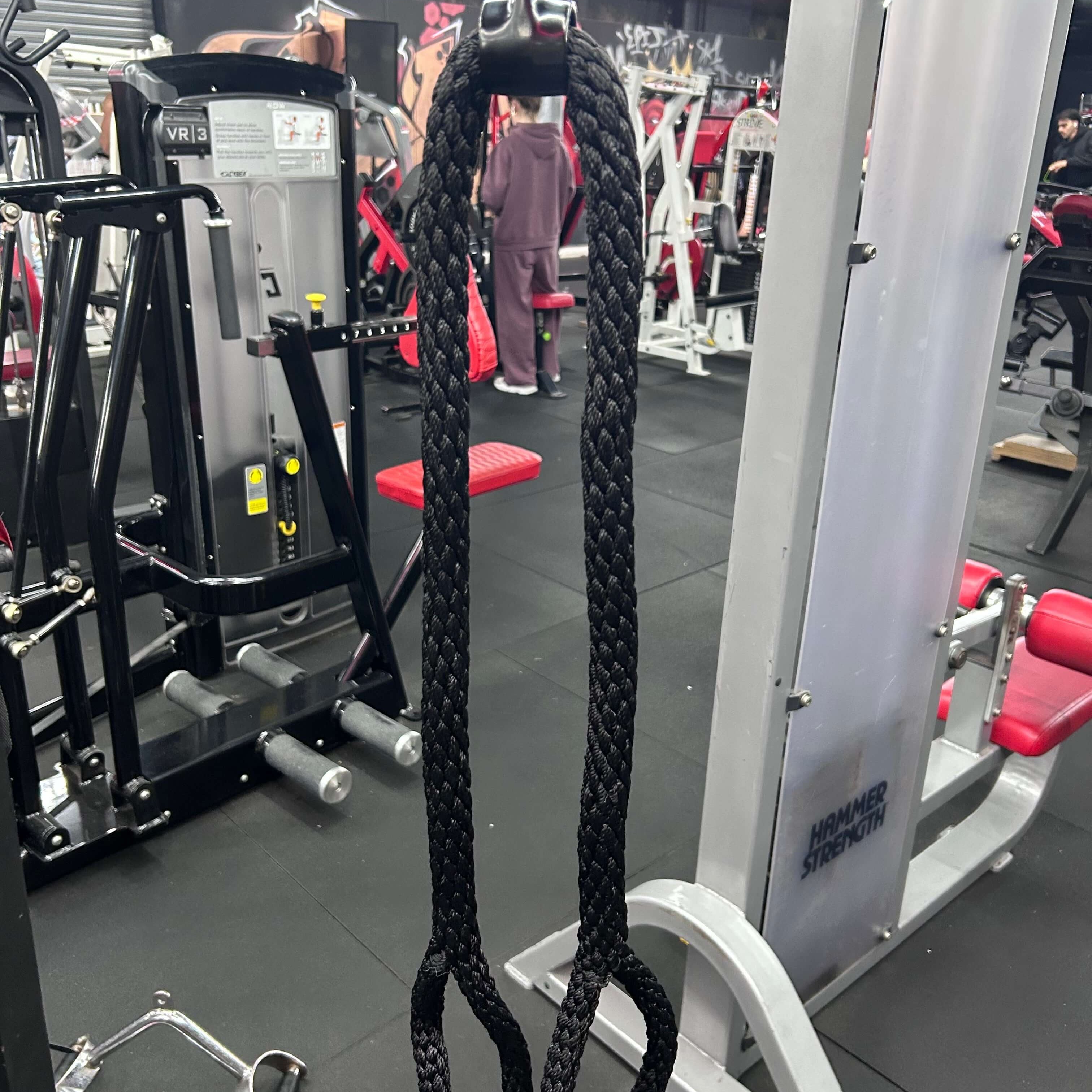
Super Long Tricep Rope
Extra-long looped cable rope for triceps pressdowns and overhead extensions.
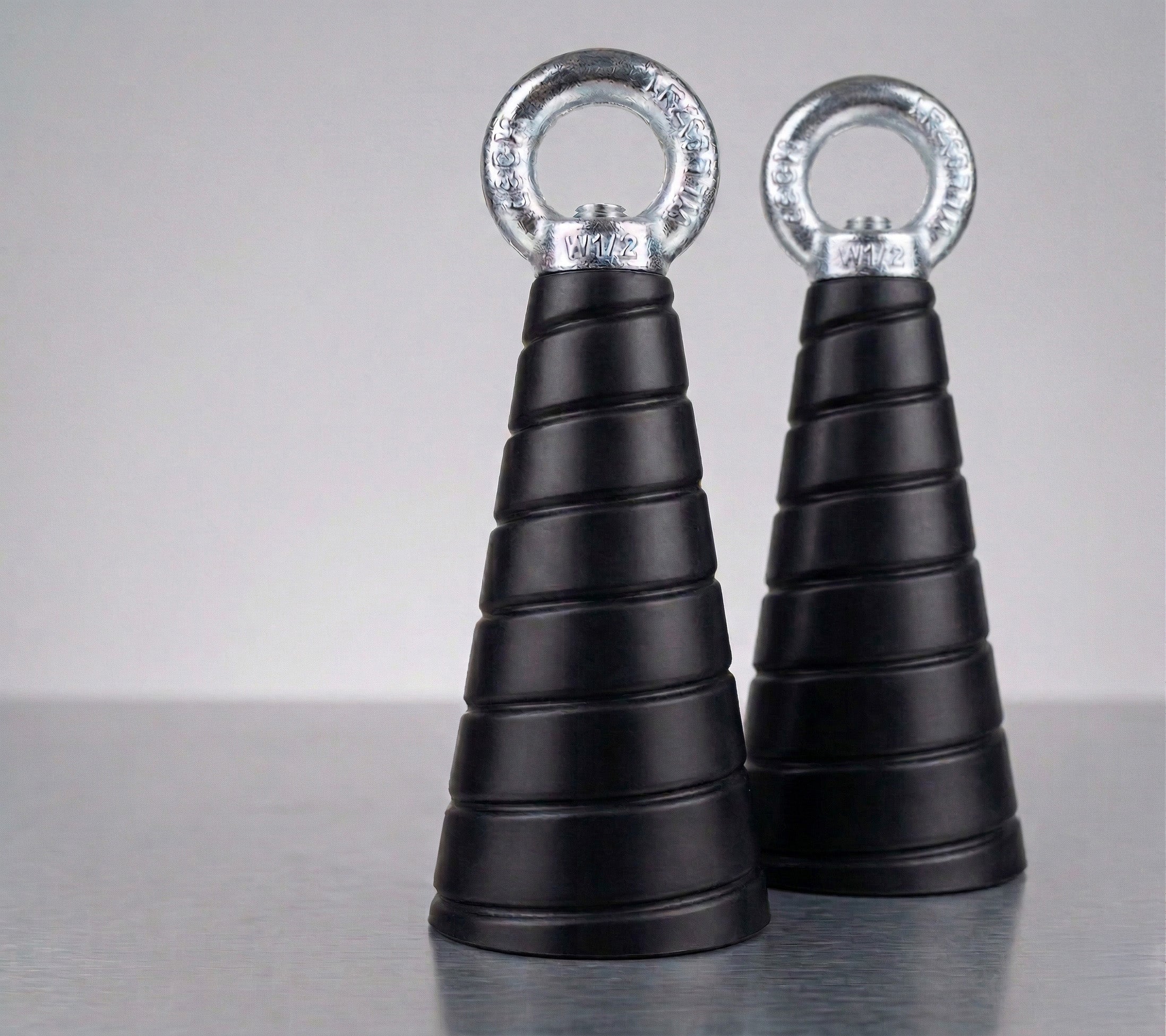
Tapered Tricep Cone
Tapered rubber cable grip for triceps extensions, face pulls and hammer curls.
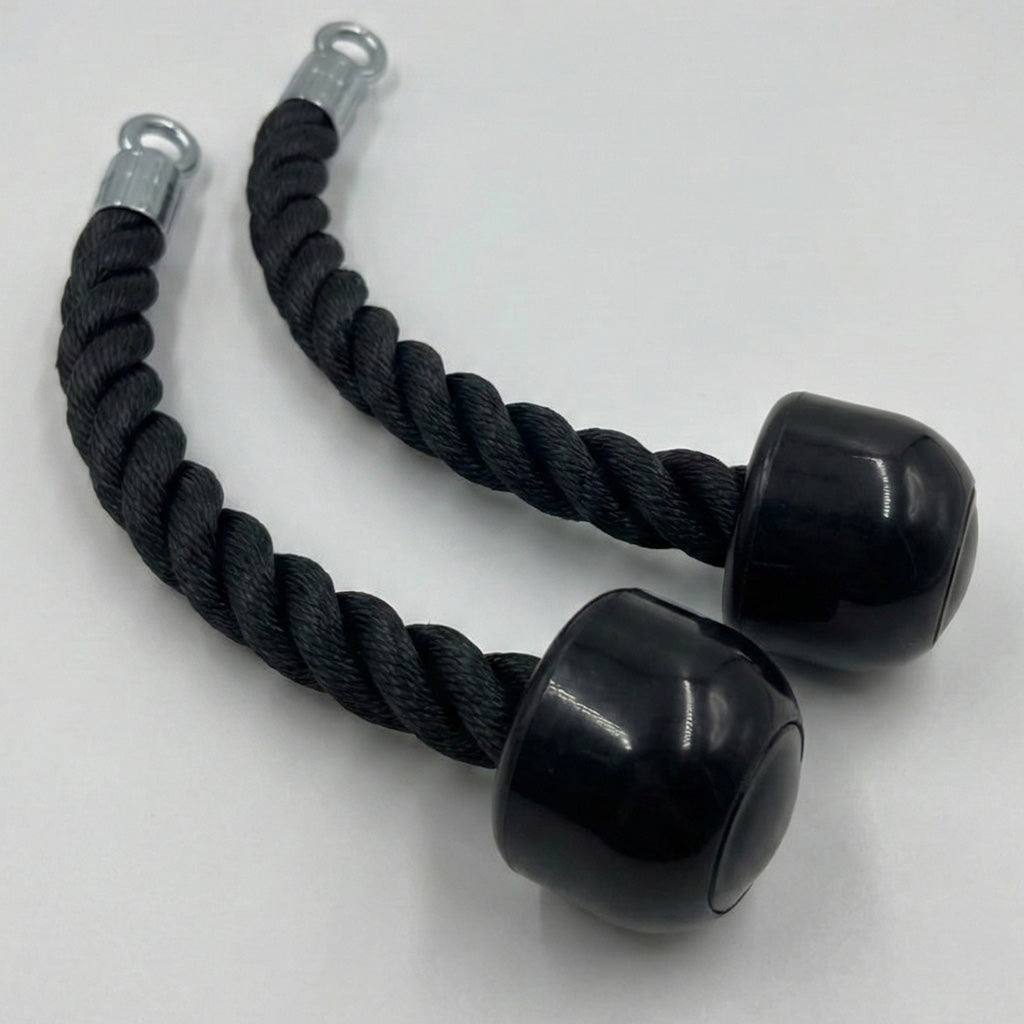
Individual Tricep Ropes
Pair of individual cable ropes for triceps pressdowns and cable hammer curls.

Multi-Length Tricep Strap
Adjustable-length cable strap for triceps, biceps and upper-body cable exercises.

GymPin Ergo Handles
Pair of ergonomic cable handles shaped for comfortable triceps and pulling exercises.

44in Dual Hook Bar
44-inch aluminum dual-hook straight bar for cable rows, pulldowns, and curls.
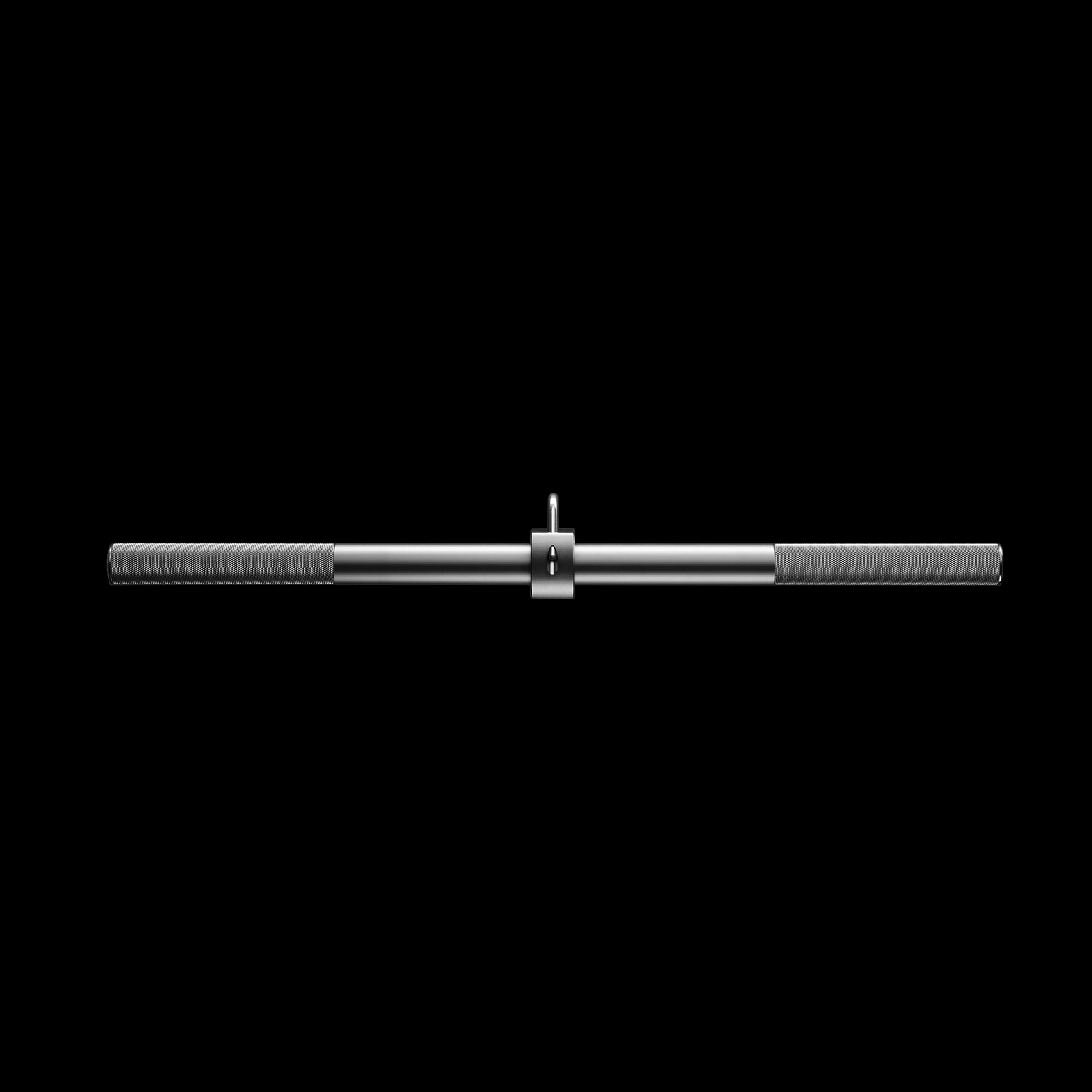
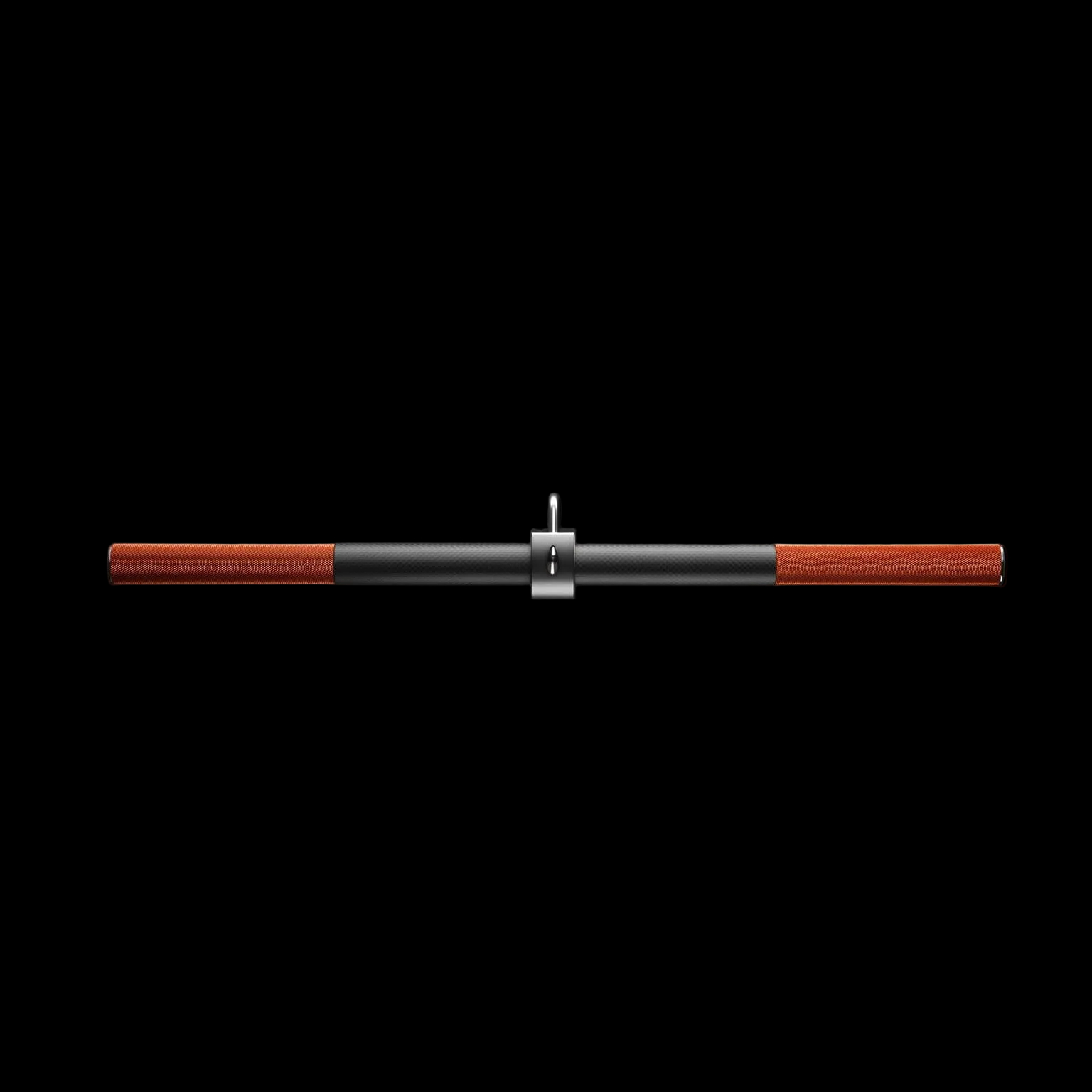

GymPin D Handle Bar
Multi-use steel D-handle bar for cable rows, pulldowns and other cable exercises.
2. Rope vs straight bar: different grips, same elbow-extension job
The rope is a flexible attachment. At the top, your hands can sit close together in a neutral grip; near the bottom, you may allow the rope ends to move slightly apart if that keeps the forearms comfortable. The point is elbow extension, not theatrically pulling the rope apart. Flare the hands only as far as you can maintain a stable upper arm and a smooth wrist position.
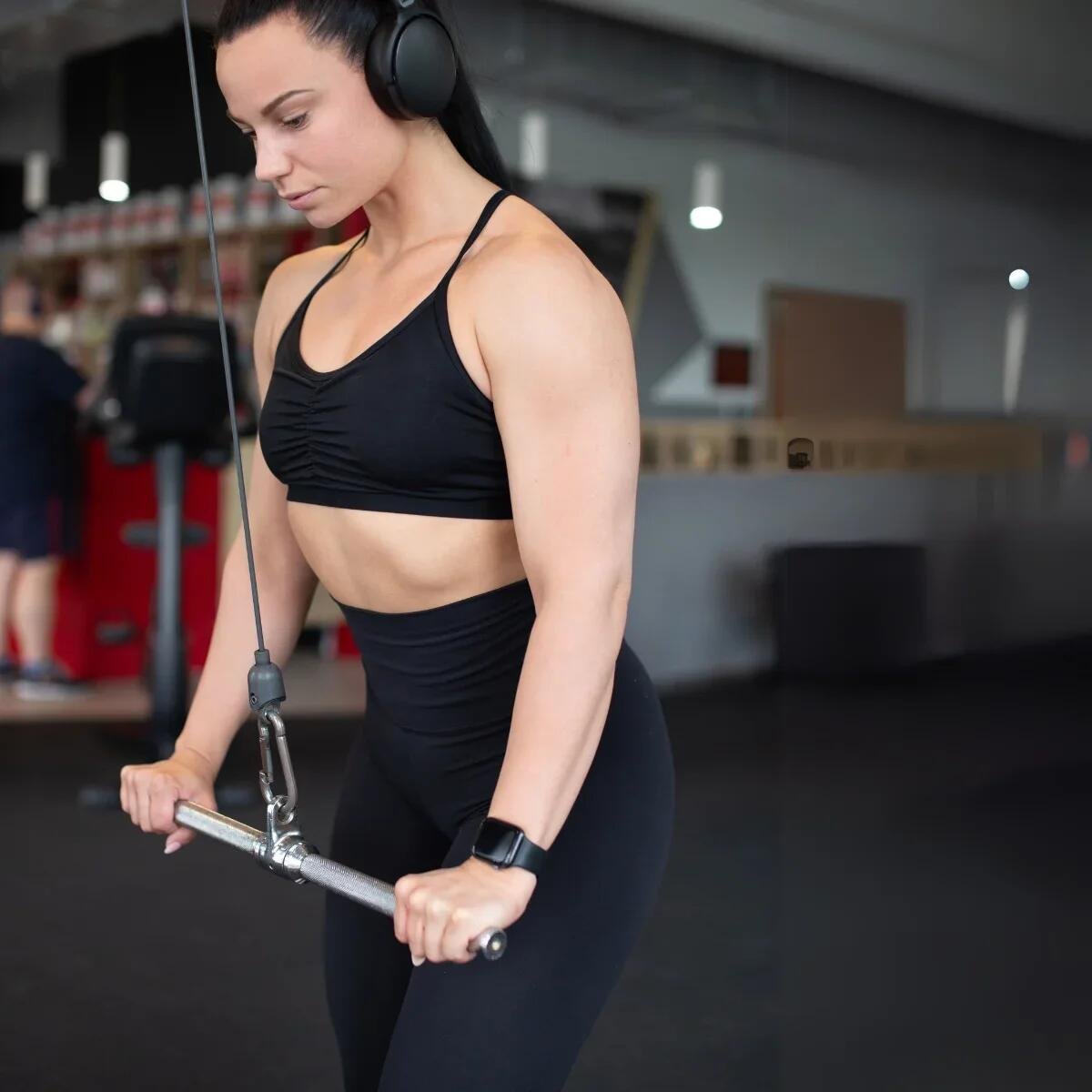
A straight bar fixes hand spacing and usually places the forearms in a pronated grip, with palms toward the floor. This may feel solid at heavier loads and can be easier to standardize between sessions. A fixed bar can also irritate some wrists or limit how naturally the hands rotate. Neither attachment automatically turns the exercise into a unique triceps-head movement; individual anatomy, comfort and controlled range matter more than a universal ranking.
Compare attachments by performing two warm-up sets at matching effort, not necessarily the same number on the weight stack. Use the rope for 10-15 deliberate repetitions, rest, then use the bar for the same target. Ask three questions: Can I extend fully without wrist discomfort? Can I keep my upper arms steady? Can I repeat the path without swinging? An EZ-style bar, independent handles or a single-arm cable grip can solve problems that neither standard option solves.
Do not assume that a higher stack setting on one attachment proves it builds more muscle. Handle length, grip leverage, friction and cable angle can change the felt resistance. If both feel good, alternate them by training block, or keep one as the main progression exercise and the other as a lighter accessory.

Bodybuilding Shirts & Workout Gear
Bodybuilding shirts, tanks and gym gear for lifters chasing muscle, size, symmetry and the pump.

Lucky Arms St. Patrick'S Day Irish Beer & Meme T-Shirt
Heavy lifts, good laughs, and a little “Lucky Arms” energy.


Duty Gains Stoic Muscle : Meme Shirt & Greek God T-Shirt
Heavy lifts, good laughs, and a little “Duty Gains Stoic” energy.


Netflex Pump Chill Meme Decal Motivation Waterproof Sticker
Stick a little “Netflex Pump Chill” humor on your favorite gear.

Meme Installing Muscles & Lifting Shirt Bros & T-Shirt
Bring “Installing Muscles” humor to your next gym day.

Hustle for That Muscle Greek God Tee
Show some lifting attitude with a playful “Hustle For That” tee.


Every Day Is Arm Day
Make gym days more fun with “Every Day is Arm Day Octopus Gym Meme” style.

Ask What Your Muscles Can Do Tee
Heavy lifts, good laughs, and a little “Ask Not What Your Muscles Can Do For You” energy.
3. Elbow path, wrist position and the mistakes that hide weak reps
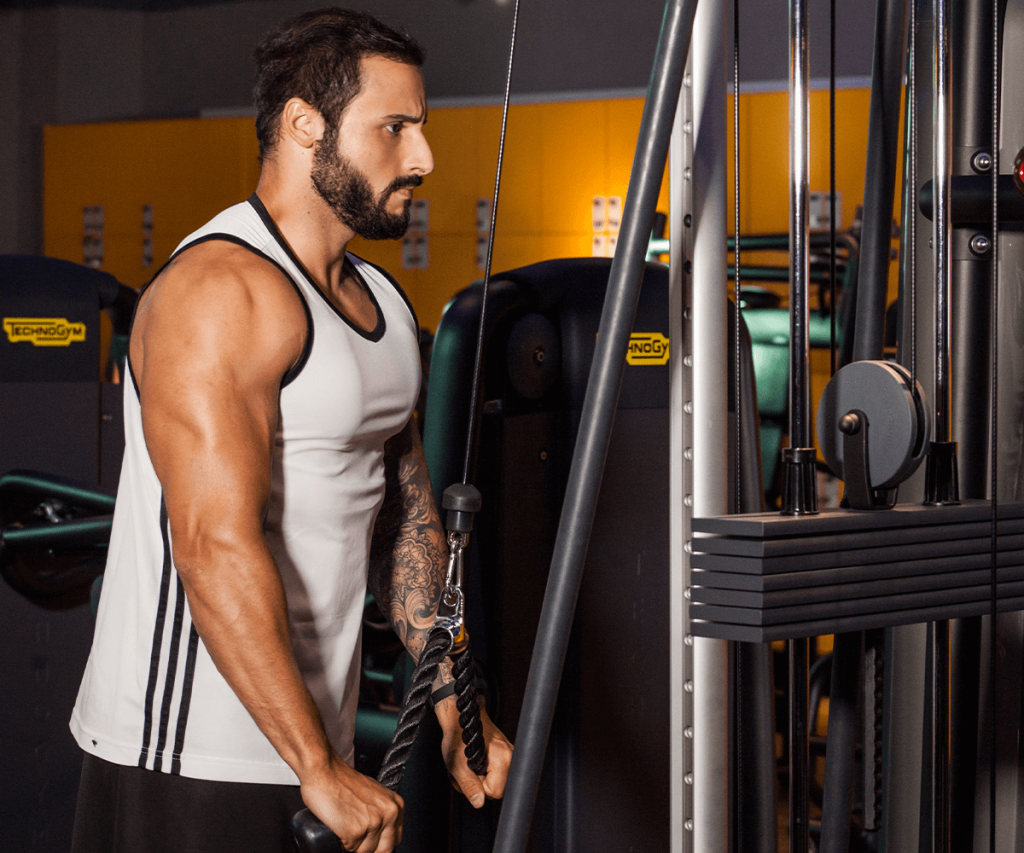
Start each repetition with the elbows comfortably bent and the shoulders quiet. Press the forearms down until the arms are straight without forcing the elbow joint past its normal end range. Pause briefly, then return slowly enough that you can stop the handles at the same top position each time. A useful tempo is roughly one to two seconds down and two seconds up; strict timing is less important than retaining control.
One frequent mistake is turning a pushdown into a standing dip. Lifters load the machine heavily, drop their shoulders and drive their bodyweight into the handle. They may move more plates while the elbow travels through less motion. Another is letting the elbows drift forward and back on every repetition.
Wrist discomfort deserves a setup change rather than a grit-your-teeth response. Keep the wrist approximately in line with the forearm, avoid curling it excessively under the bar, and test the rope, angled attachment or a one-handed handle. If the rope’s end stops pinch the palms, try a longer rope or different grip spacing. If the elbows ache, reduce load, shorten a painful extreme of range temporarily and see whether a different cable angle feels better. Persistent joint pain warrants qualified assessment.
Film a side view occasionally: the movement should look like a controlled forearm hinge, with the torso stable and the handle approaching roughly thigh level. A comfortable near-full range done repeatedly is more informative than the exact load on someone else’s cable stack.
4. What overhead extensions add that pushdowns cannot fully copy
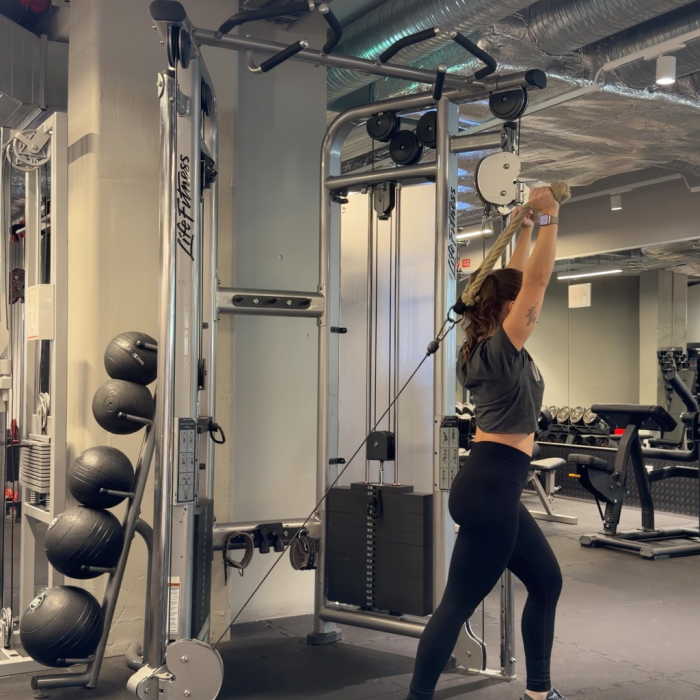
Pushdowns usually position the upper arms close to the sides, while overhead cable extensions place the shoulders in greater flexion. This distinction lengthens the triceps long head because it crosses the shoulder as well as the elbow. It is a strong reason to consider both movements within a complete arm-training plan, rather than debating rope versus straight bar as if those grips were the only meaningful variable.
In a 12-week within-person trial involving 21 adults, one arm trained cable elbow extensions overhead and the other trained with the arm in a neutral position. Both grew, but the overhead condition showed larger average triceps muscle-volume gains, including the long head. The study directly compared arm position, not rope against bar, and used a particular training protocol. It does not establish that pushdowns are useless or that everyone will show the same difference.
A practical pairing is two or three challenging sets of pushdowns after pressing and two or three sets of an overhead cable extension on a separate day. Use a load that permits the elbows to move comfortably; overhead work can require much less absolute weight. Give the elbows a chance to adapt and keep the upper arms stable enough that the triceps, not swinging shoulders or rib flare, do the majority of the work.
If you already press frequently, total elbow-extension work adds up. Count hard close-grip presses, dips and other triceps accessories when deciding how much isolation volume to add.
Equipment Worth Exploring
Explore equipment, accessories and gear from our carefully selected range.
VOLTRA
Compact digital cable trainer with smooth, adjustable resistance.

Go-Tone Pro
Portable digital cable trainer with up to 66 lb (30 kg) of adjustable resistance.

VForce Wall Trainer
Space-saving wall-mounted functional trainer with pivoting cable arms and variable resistance ratios.

VForce Lat Tower
Wall-mounted cable tower with pivot arms and adjustable 1:1 or 2:1 pulley ratios.

VForce 2IN1
Half rack and pivot-arm functional trainer with switchable 1:1 and 2:1 pulley ratios.
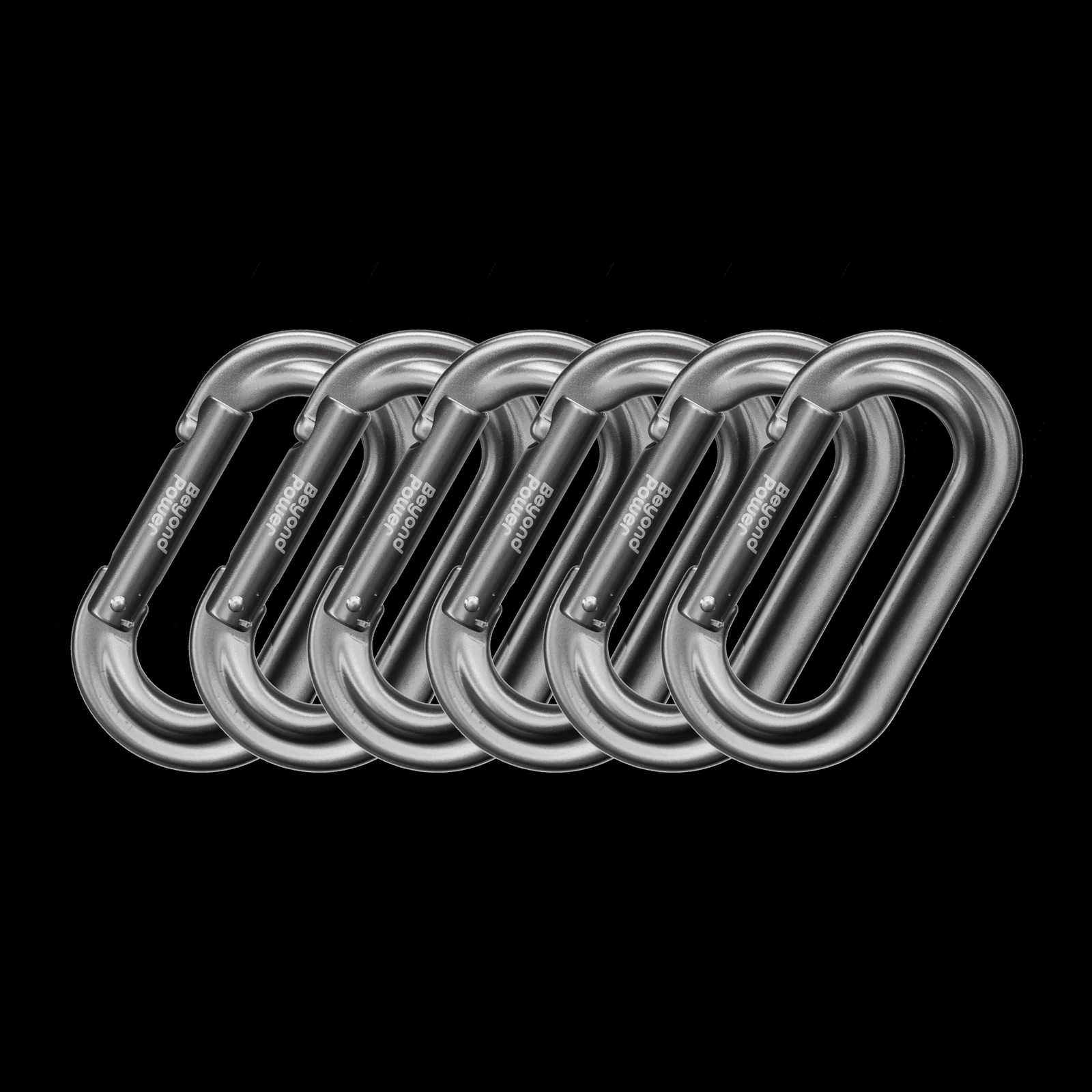
Premium Carabiner
Durable carabiner for connecting cable attachments and training accessories.
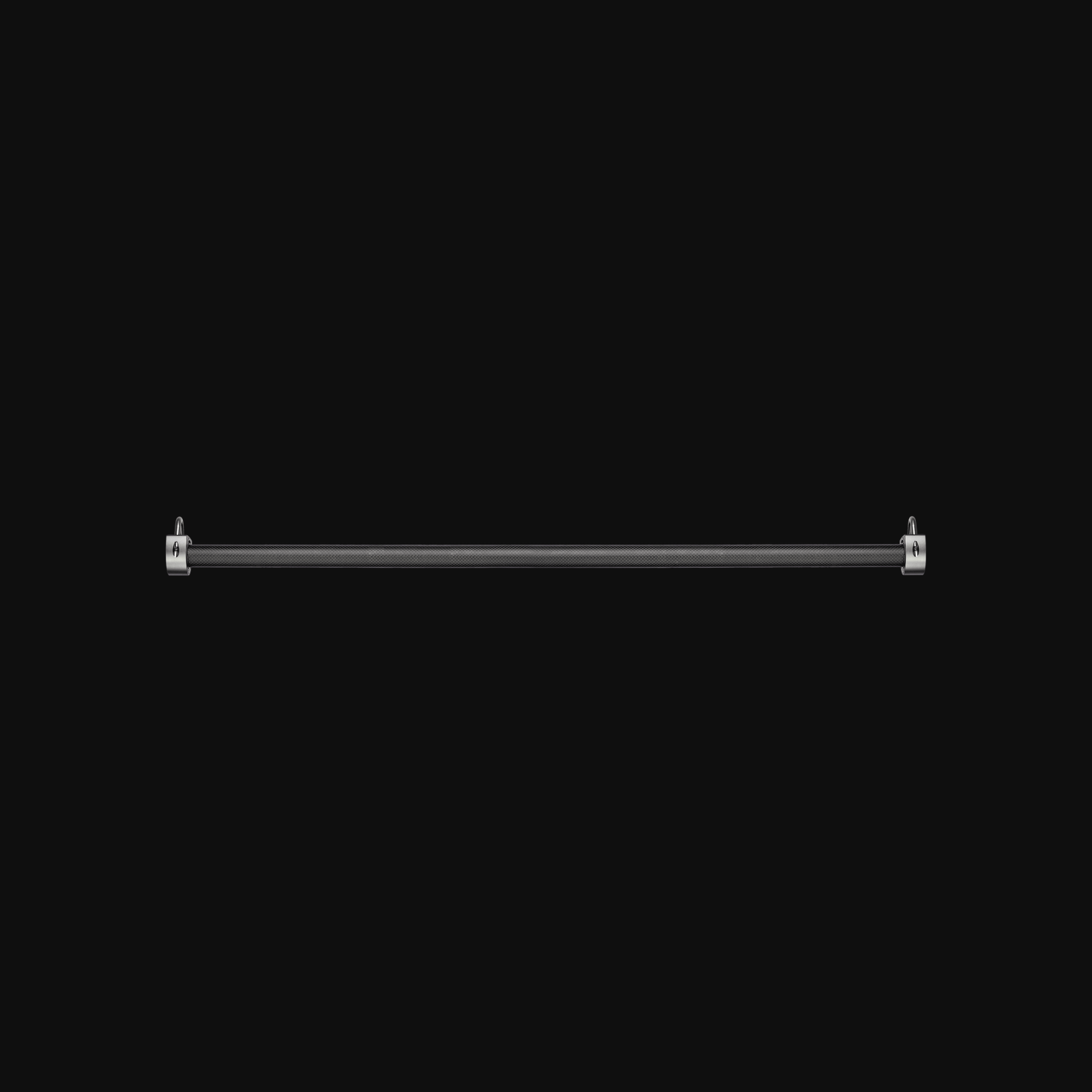
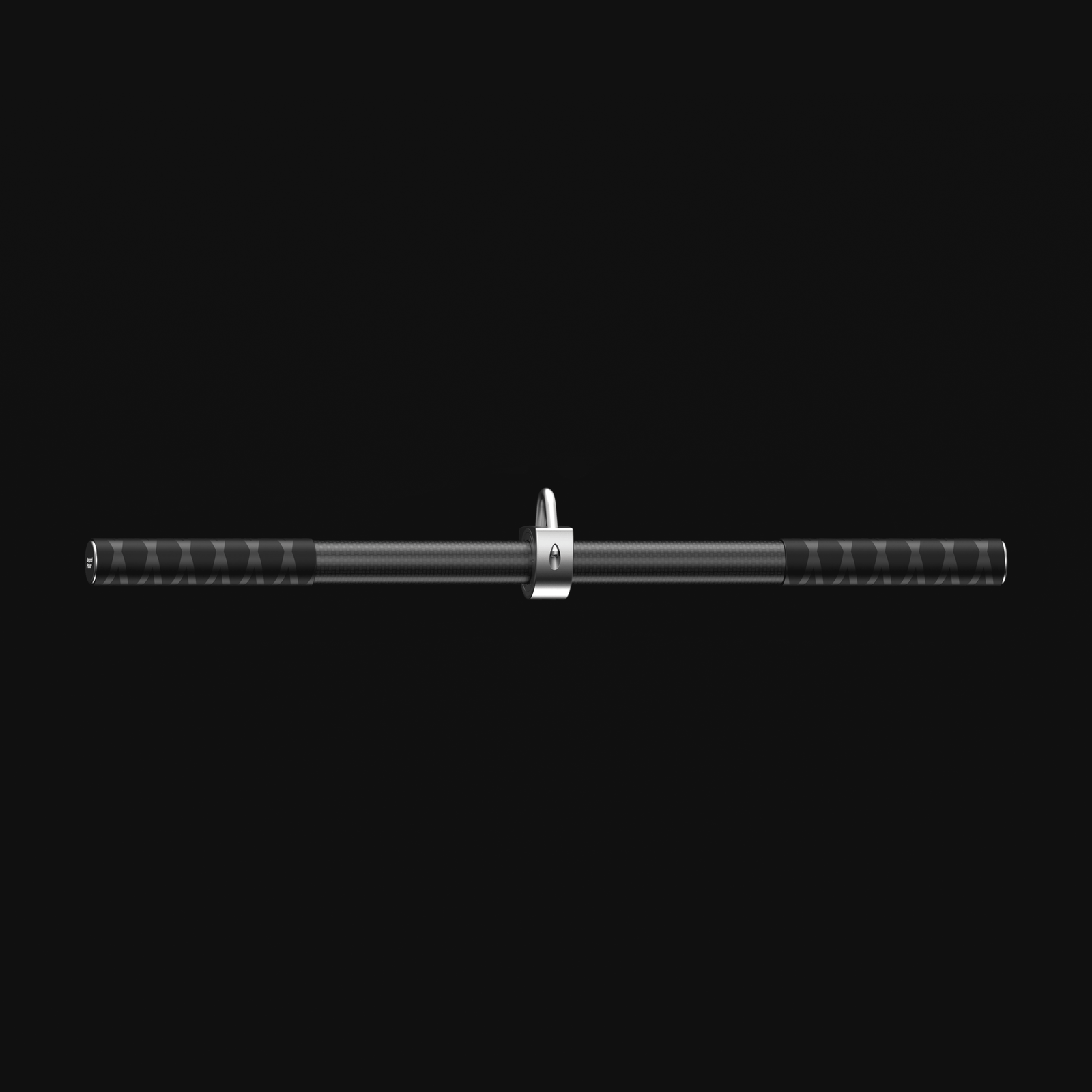

Dual Hook EZ Curl Bar
Angled aluminum dual-hook cable bar for biceps curls and pulldown variations.

GymPin D Cuffs
Adjustable wrist cuffs with textured grips for supported cable-machine exercises.
5. A six-week triceps plan with practical progression rules
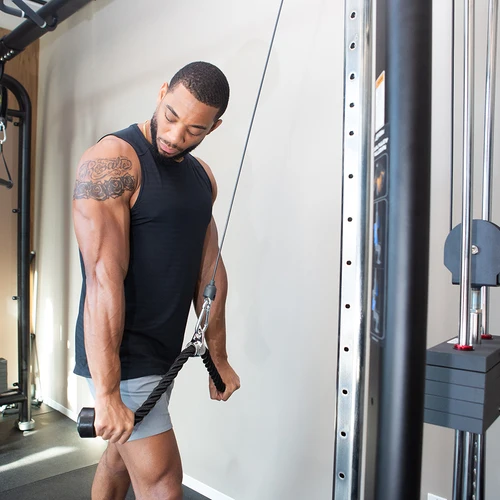
Train pushdowns twice weekly with at least a day between hard triceps sessions. Put the exercise after your major presses, unless arm growth is the clear priority and you deliberately choose to train it first. Use a load that leaves about two or three clean repetitions in reserve on the opening week. If you cannot maintain your elbow position for eight reps, lower the weight.
Weeks 1-2: On Day A, do three sets of 10-15 rope pushdowns with approximately 90 seconds of rest; on Day B, perform two sets of 12-15 straight-bar or angled-bar pushdowns. Keep the movement steady and log the chosen attachment and stack setting. Add one or two sets of overhead extensions on Day B if the elbows feel good and overall pressing volume is reasonable.
Weeks 3-4: Keep the same variations. Add repetitions before load. For example, a 12, 11, 10 performance at a given weight becomes 13, 12, 11 before chasing heavier plates. Once all three Day A sets reach 15 controlled repetitions, increase the stack by the smallest sensible increment, then rebuild from around 10-12. Day B should remain a little lighter, with full range and no momentum. If your cable machine has unusually large increments, use a slower controlled return or an extra repetition rather than a forced jump.
Weeks 5-6: Keep Day A at three hard sets, now leaving roughly one or two repetitions in reserve on the final set, and keep Day B at two or three easier technique-focused sets. Review soreness, elbow comfort and pressing performance each week. If recovery worsens, keep the load steady and trim a set rather than pushing harder. If recovery is easy and performance rises, add a set to the lower-volume day, not to every exercise simultaneously.
Use a simple scorecard: attachment, load, repetitions, rest and whether each set met your form standard. If the same stack produces more clean reps over several weeks, you have made measurable progress. The rope and bar are both tools; neither replaces enough effort, sufficient recovery and a plan you can actually repeat.