Advertising disclosure: This page includes affiliate product links that may earn us a commission, as well as products from our own store.
Squat Warm-Ups: What an Eight-Man Pilot Can and Cannot Tell You
Rehearsing the squat before a heavy set makes practical sense. Proving that one warm-up produces better performance than another is a separate question. An eight-man pilot examining squat-specific preparation offers a useful example of why those two ideas should not be collapsed into a confident headline.
The results point toward a question worth studying, rather than a universal warm-up prescription. The comparison involved a brief, stationary force test, not a training block or a full squat session. Here is what the experiment measured, why its statistical detail matters and how to use the broader idea of specific preparation without turning a small finding into an equipment purchase or a new rule.
1. Understand the task before borrowing the result
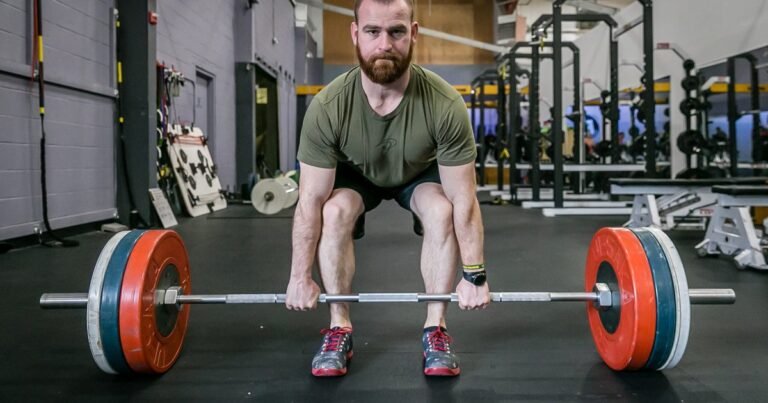
Eight resistance-trained men completed both warm-up conditions in randomized, counterbalanced sessions. After preliminary preparation and a baseline test, they performed either a general mobility-based routine or low-intensity bodyweight movements resembling the squat. The routines lasted roughly six to seven minutes. A second test followed two minutes of rest.
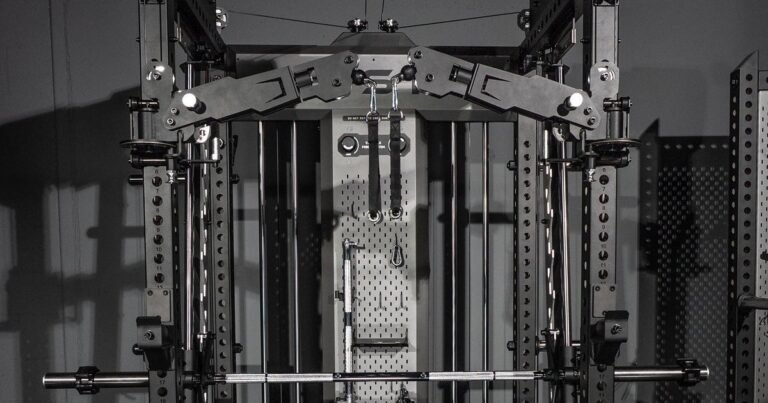
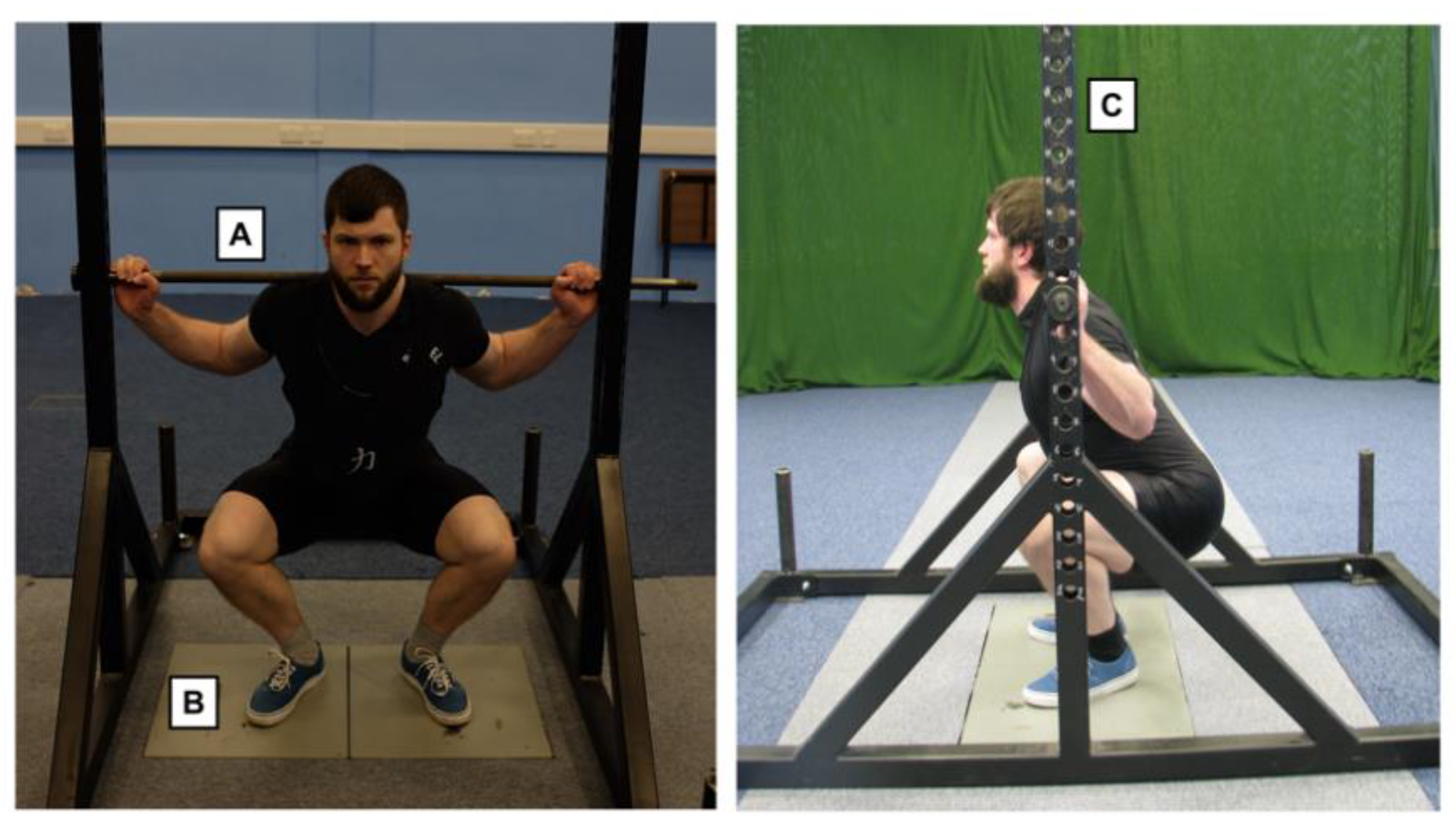
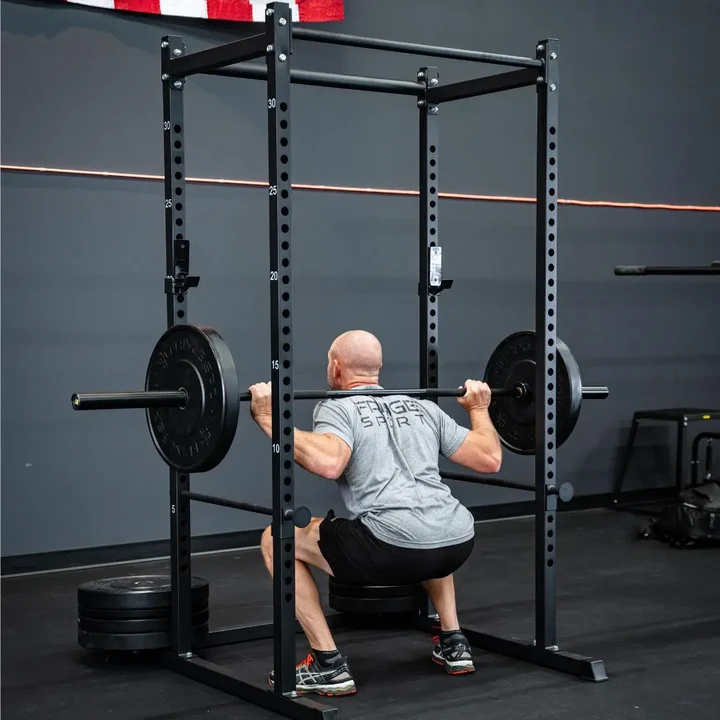
The test was a maximal isometric high-bar squat at 90 degrees of knee flexion: the lifter produced force against a stationary bar. The apparatus photograph illustrates isometric testing, but does not show this pilot’s participants. A moving back squat has a descent, reversal and ascent that this stationary measurement does not reproduce.
That distinction sets the boundary for interpretation. A result measured in a fixed position cannot simply be converted into extra repetitions, a heavier one-repetition maximum or a prediction of muscle growth. Those outcomes need their own measurements. The experiment is relevant to preparation, but it does not answer every question you might have about an entire leg session.
A fixed test angle also makes the outcome position-specific. Producing force there is not the same as controlling every position of a loaded squat. Even if a warm-up helps one test position, that would still leave open questions about the rest of the movement and how well the result transfers to ordinary training.
Having the same men complete both conditions is useful because the comparison is less dependent on differences between separate groups of lifters. It still does not make eight observations a large evidence base. Day-to-day performance variation, the precision of measurement and the specific test remain important when deciding how much confidence to place in the result.
2. Read the direct comparison, not just two p-values
Peak force fell by 3.8% after the general routine and by 1.9% after the movement-specific routine. The first change was statistically significant; the second was not. Crucially, the direct difference between the protocols was not statistically significant either, with p = 0.186.
It is tempting to translate that pattern into “one worked and the other failed.” That is stronger than the comparison supports. A significant change within one condition and a non-significant change within another do not, by themselves, establish a significant difference between the conditions. The direct test addresses that latter question.
Notice the direction of the estimates as well. Neither condition produced a reported mean increase in peak force. Describing the smaller decline as a strength boost would reverse what was actually measured. Preserving performance relative to a baseline, showing less decline and demonstrating an increase are three different claims.
Nor does the non-significant comparison prove that the two approaches are identical. A small experiment can leave considerable uncertainty about the size and consistency of an effect. The sensible reading allows both points at once: the numerical pattern may be interesting, and the evidence does not establish a reliable advantage for one protocol.
Subtracting the two percentage changes gives a 1.9-percentage-point gap in the reported estimates. It does not demonstrate an extra 1.9% on your squat. The numbers describe changes in the measured force test under the experimental conditions. They should not be used as a loading recommendation or a promise about what will happen in your next workout.
When judging another training headline, ask the same question: was the claimed difference tested directly, or inferred because only one result crossed a threshold? That habit helps distinguish an exploratory finding from a strong practical recommendation without requiring you to dismiss every small study.
3. Keep electrical activity separate from training outcomes
The experiment also recorded surface muscle activity. Normalized gluteal activity and the combined integrated signal did not show significant changes. That does not supply evidence that one warm-up created a superior muscle-building stimulus, and the force result should not be rewritten as a muscle-activation breakthrough.
An electrical recording, a force measurement and long-term adaptation are different outcomes. Each can help answer a different question. A single session cannot establish the results of weeks of training merely because its equipment produces detailed-looking numbers. The appearance of precision does not remove the need to match the measurement with the claim.
For your own sessions, keep observations similarly specific. “My first set felt smoother” is a useful experience to record. “This warm-up increased my muscle growth” is a much larger conclusion that the experience cannot establish. You can act on a repeatable practical preference without presenting it as a proven physiological explanation.
Also avoid replacing the study’s general routine with an imagined version that you dislike. General preparation, mobility work, prolonged static stretching and a tiring circuit are not interchangeable descriptions. Unless the actual protocol matches the routine you are discussing, a blanket verdict about all stretching or all mobility goes beyond the evidence.

Bodybuilding Shirts & Workout Gear
Bodybuilding shirts, tanks and gym gear for lifters chasing muscle, size, symmetry and the pump.

I Love Squats | Valentine's Day Leg Day Hooded Pullover Hoodie
Keep it laid-back with a little “I Love Squats” attitude.

Don'T Fart Squats Sweater & Leg Day Meme T-Shirt
Show some gym-day personality with “Don't Fart Squats”.

Leg Day Squats Deadlifts Vest Meme Tank Top
Bring “Leg Day” humor to your next lifting session.


Squats R Us Shirt – Leg Day Gains & T-Shirt
Heavy lifts, good laughs, and a little “Squats R Us” energy.

Shirt – Squat Inspector Leg Day & Booty Gains – Meme T-Shirt
Make gym days more fun with “Squat Inspector” style.

Leg Day Is Calling You Decal Water Bottles & Sticker
Bring “Leg Day Is Calling You” attitude to your water bottle or laptop.


Never Skip Leg Day Squats & Deadlifts Meme , Top T-Shirt
Show some leg-day attitude with a playful “Never Skip Leg Day” tee.
4. Rehearse the lift while managing preparation fatigue
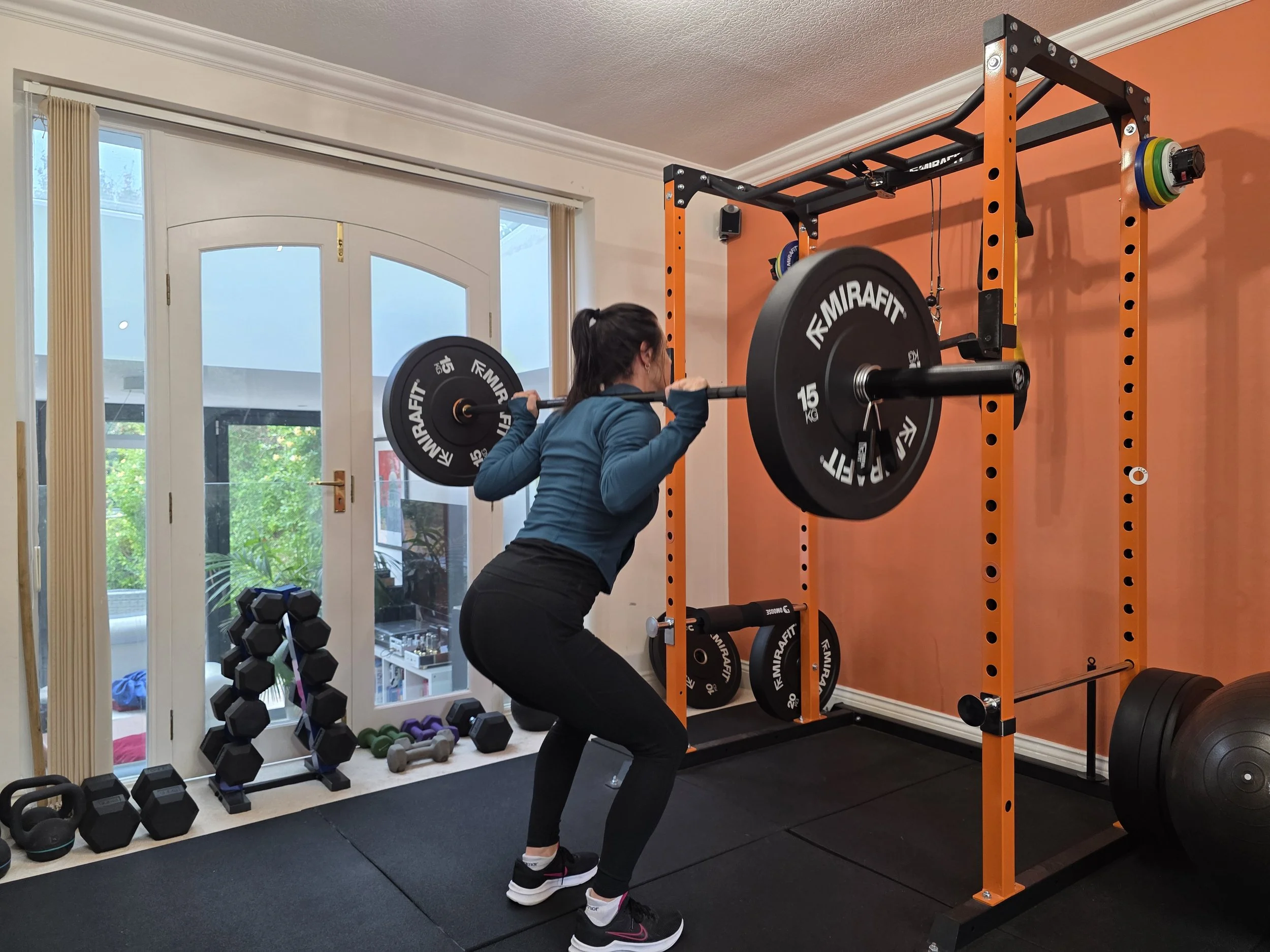
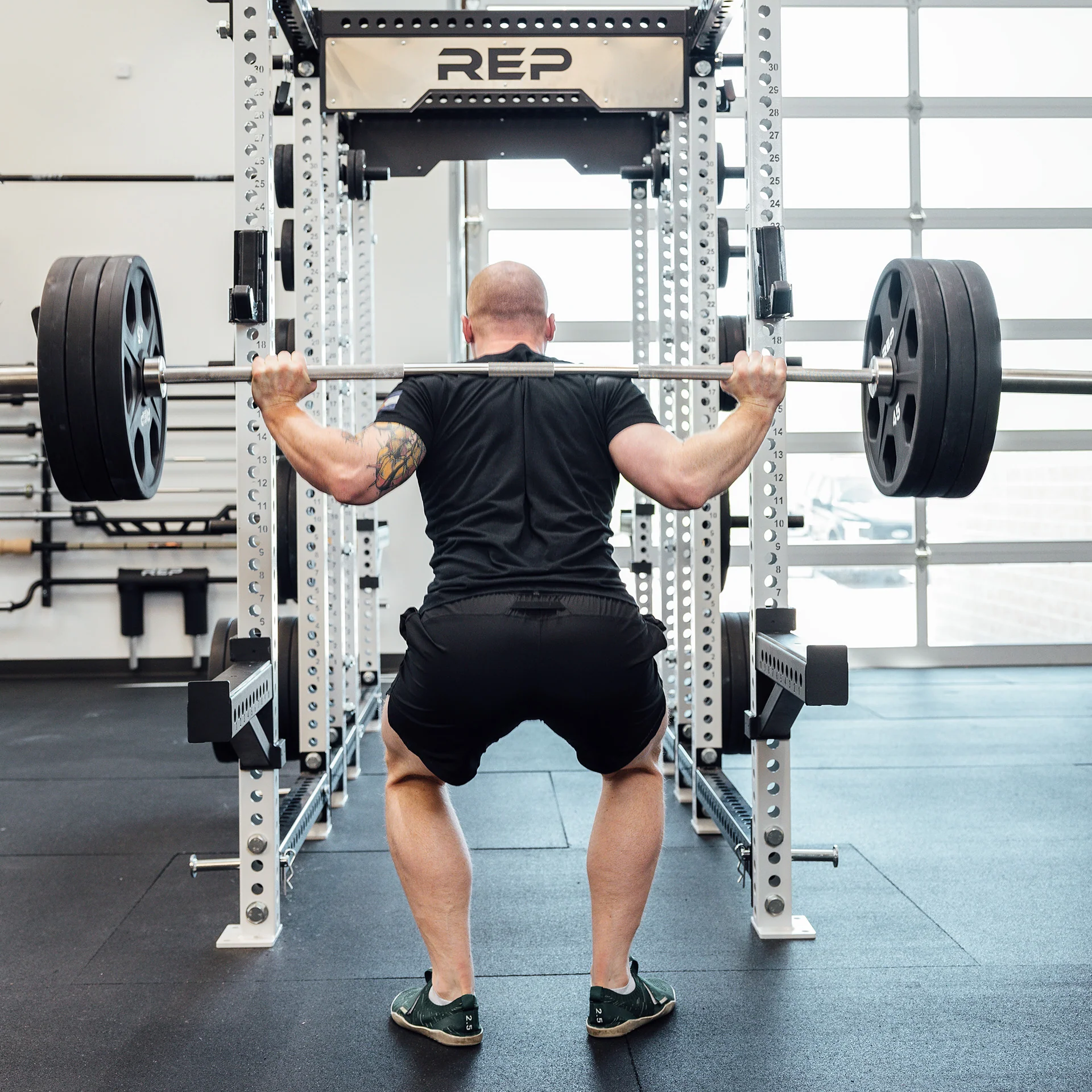
A useful practical principle is to prepare for the movement you are about to perform while keeping the effort manageable. That can include general activity followed by squat-pattern rehearsal and progressively heavier preparation sets. It does not require treating general and specific preparation as mutually exclusive choices.
Begin with a version you can control. Bodyweight repetitions or a manageable empty bar can help you check stance, depth and balance before working loads. The exact progression depends on your planned exercise, experience and starting condition. A sequence that is appropriate before moderate training need not be identical to preparation for a maximal attempt.
Keep the equipment familiar while assessing the warm-up. Record bar type, rack settings and the planned working load. Check J-hook height, safety placement, secure plates and suitable collars. Changing to a differently shaped bar or a new squat variation at the same time makes it harder to identify whether preparation actually changed performance.
You do not need to purchase a special rack, bar or attachment to apply the idea of rehearsal. Use equipment appropriate to the exercise and its loading. A different bar or machine may be useful for another training purpose, but it does not reproduce this experiment merely because the movement is called a squat.
More preparation is not automatically better preparation. If the warm-up becomes a demanding workout, fatigue may compete with readiness. Conversely, rushing through an arbitrary minimum can leave you poorly prepared. Adjust the dose to the task instead of treating the clock or the number of drills as the main measure of success.

Equipment Worth Exploring
Explore equipment, accessories and gear from our carefully selected range.


Foldable Wall Rack
Wall-mounted folding squat rack designed to save floor space between workouts.

Multi Pull Smith Rack MPHR-780
All-in-one rack with a Smith machine, functional trainer, lat pulldown and low row.

Competition Plates
Competition-style bumper plates for Olympic lifts and loaded strength training.

Grip Plates
Rubber-coated weight plates with handholds for loading barbells and machines.


Speed Collar
Quick-release collars designed to secure weight plates on standard two-inch Olympic bars.
5. Test a practical change without chasing a guaranteed boost
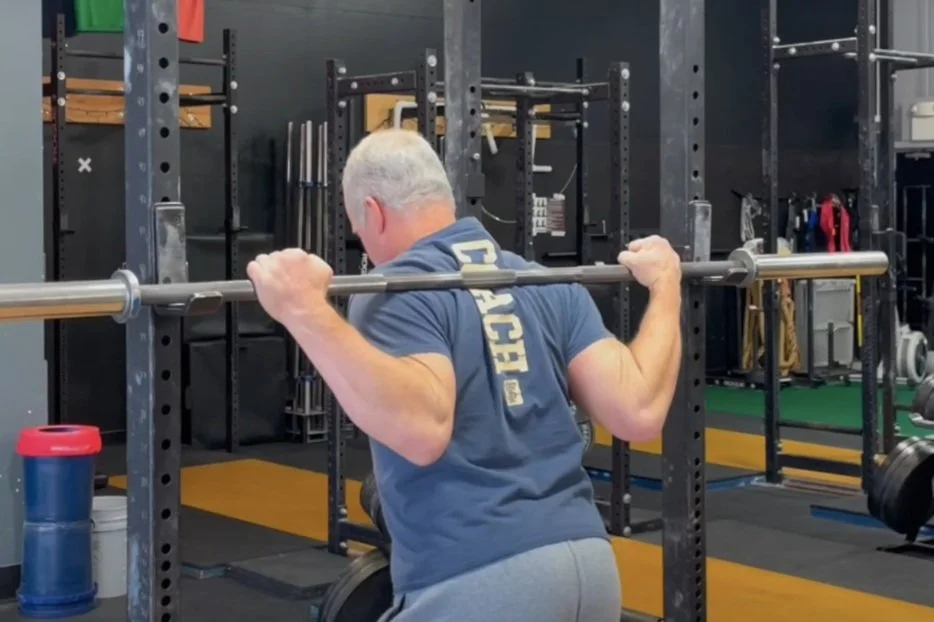
If you want to refine your squat warm-up, choose a modest change and track familiar sessions. For example, keep the main exercise, working-set plan and preparation loads stable while making the squat rehearsal more deliberate. This is an individual comparison method, not a replication of the pilot or a validated new program.
Record preparation sets, approximate duration, rest before the first working set and how that set performed. Note sleep, recent leg training and unusual interruptions too. If the first set is slower or harder after a poor night’s sleep, the warm-up may not be the only relevant explanation.
Keep changes reversible and specific. If you add several drills, change footwear and move to a different training time together, a better first set will not tell you which change mattered. Prefer one clear adjustment you can repeat and describe. That makes a training note more informative, even though it remains an informal observation rather than a controlled experiment.
Review several comparable sessions before declaring a winner. A single good day can reflect ordinary variation or a better starting condition. Likewise, a routine that feels different need not be better. Look for a useful pattern in movement quality, manageable effort and completion of the work you actually planned.
The pilot appeared online in December 2025 and in a March 2026 collection; it is not evidence of a newly discovered universal method. Its practical value is the question it sharpens: does your preparation fit the task without adding unnecessary fatigue? Keep that question, preserve the uncertainty and judge changes against your actual training rather than an expected percentage gain.