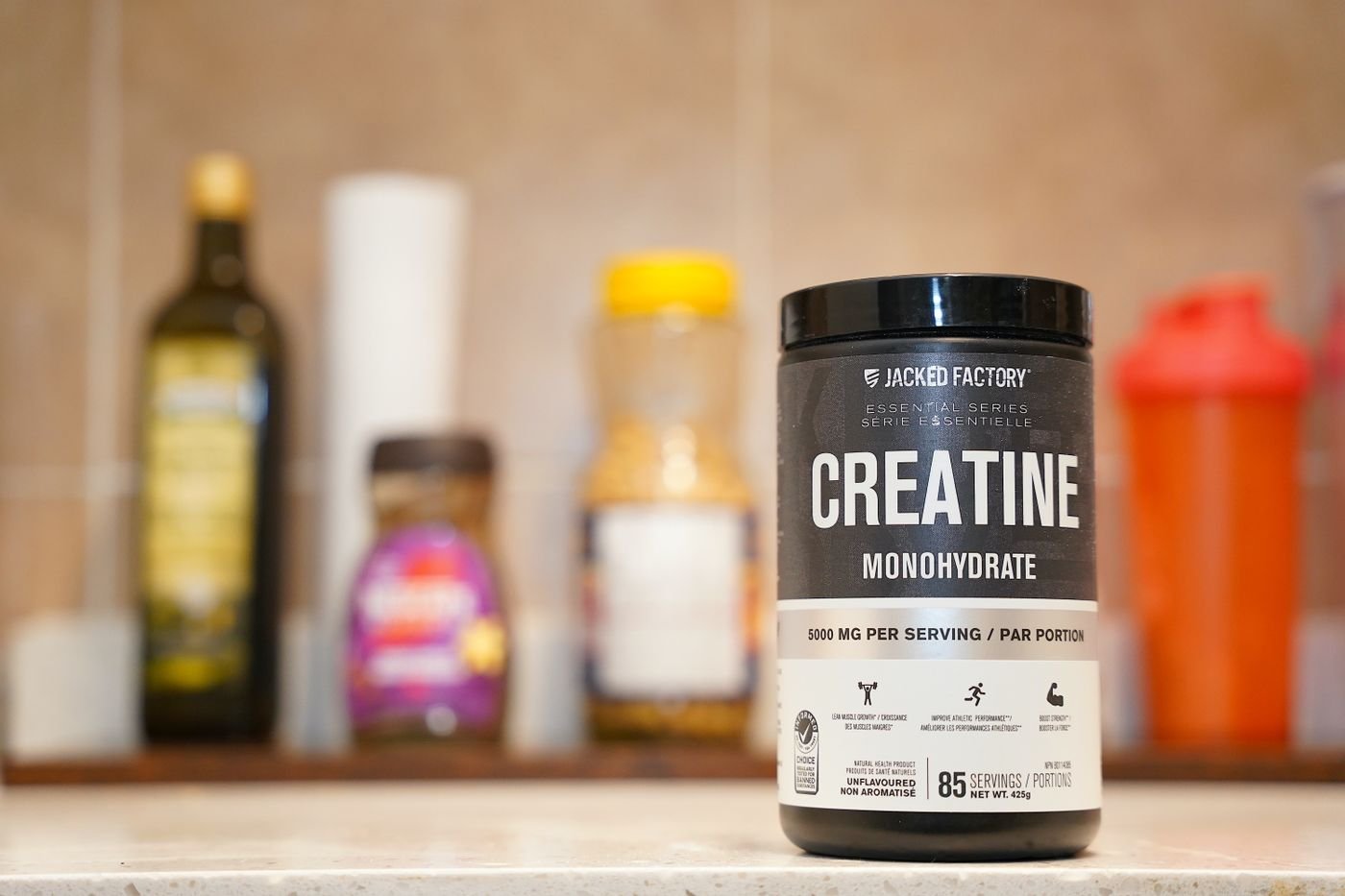
Taking creatine every day is simple until someone suggests that you should cycle off it. The proposed reasons vary: reset your response, protect your kidneys, lose water weight, or check whether the supplement still does anything. A fresh discussion of creatine washouts has revived a useful question, but the answer is not a fixed four-week-on, four-week-off calendar.
Creatine works mainly by increasing the pool of creatine and phosphocreatine available inside muscle. Those stores change over weeks, not instantly when you miss a scoop. Research supports creatine monohydrate for certain repeated high-intensity efforts and strength-training adaptations; it does not establish that routine breaks improve those outcomes. Here is what actually happens when supplementation stops, where the evidence is limited, and how to make a sensible decision without turning a supplement into a second training program.
What a creatine washout really means

A washout is a period without a supplement, usually included in research so that one intervention is less likely to carry over into the next. That scientific purpose is different from a fitness claim that muscles need to be periodically cleansed or receptors reset. Creatine is not a stimulant whose immediate alertness effect fades in hours. It is a compound your body produces and also obtains from foods such as meat and fish, with a substantial portion stored in skeletal muscle.
During short, demanding efforts, the phosphocreatine system helps regenerate ATP, the energy currency used by contracting muscle. Supplementation can increase the available pool, especially when starting stores are lower. It is most relevant to repeated hard sets, short sprints and similar work; it does not replace sufficient calories, protein, sleep or progressive training. Individual responses vary because starting stores, diet, muscle mass and training demands differ.
Three terms often get mixed up. Loading uses larger divided doses for several days to raise muscle stores faster. Maintenance uses a smaller daily amount to sustain elevated stores. Washout means stopping intake and allowing stores to decline. None of those terms implies that cycling is required for safety or that taking a break automatically makes the next loading phase more effective.
A practical baseline for many healthy adults is 3–5 grams of creatine monohydrate daily, without a mandatory loading phase. Loading may reach saturation faster, but the slower approach can eventually achieve a similar destination. Consistency matters more than timing a scoop to a particular minute of the workout.
What happens to muscle creatine after you stop
The first distinction is between creatine circulating in blood and creatine stored inside muscle. Blood concentrations respond quickly to a dose and fall relatively quickly afterward. Muscle stores are a different reservoir. When daily supplementation stops, those elevated stores tend to decline gradually as creatine is converted and lost, while normal dietary intake and internal production continue.
In one classic experiment involving 31 men, a high-dose loading protocol raised total muscle creatine by about 20% within six days. A smaller daily maintenance dose preserved the increase for another month. Without maintenance supplementation, the elevated total muscle creatine declined over roughly 30 days to a level not statistically different from the starting value in that study. A separate three-gram daily approach produced a similar increase more gradually, over approximately four weeks.
That does not mean every person reaches an identical baseline on day 30. Muscle measurements vary, diets differ, and studies use different protocols. Think in terms of several weeks rather than a countdown clock. Missing one dose or taking a weekend away does not empty your muscles, and stopping does not create a sudden physiological crash.
It also helps to separate a measured change in muscle creatine from a measurable change in the gym. If your bench press falls during a week of poor sleep, that is not evidence that creatine stores vanished. To evaluate performance, compare repeated sessions under reasonably similar training, recovery and nutrition conditions, not one unusually good or bad workout.

Equipment Worth Exploring
Explore equipment, accessories and gear from our carefully selected range.


FID Bench MAX
Adjustable bench offering flat, incline, and decline positions + adjustable headrest.

VOLTRA
Compact digital cable trainer with smooth, adjustable resistance.

Why older washout experiments can appear to disagree
A smaller 2004 experiment is often repeated as proof that creatine stays elevated for longer than a month. In that case study, a single trained man completed two five-day loading periods separated by a 30-day break. His muscle phosphocreatine rose substantially after the first period and was still above the original baseline after the break. Blood and urine measurements, however, had returned to their earlier patterns.
The result is interesting, but one participant is not a universal washout timetable. The earlier experiment examined 31 men and reported group-level total muscle creatine. The later case report emphasized phosphocreatine in one person. Different participants, measurements, baseline stores and dietary habits can produce different results without either finding being fraudulent or useless.
There is another important limitation: a change in stored phosphocreatine does not directly tell us how much strength, muscle growth or endurance a particular lifter gained or lost. Neither experiment tested whether scheduled creatine breaks produce more hypertrophy than continuous maintenance over many months. They mainly tell us how supplementation and cessation influence muscle chemistry under their respective conditions.
The fair synthesis is that washout is gradual and variable. Thirty days may be enough for some measures or people, and insufficient for others. Claims that everyone must take exactly 30 days off, or that the body needs a mandatory reset after eight or twelve weeks, reach far beyond what these experiments can establish.

Funny Gym Shirts & Workout Gear
Funny gym shirts, tanks, hoodies and workout gear for lifters who like training hard.

Creatine Gym Cosmic Graphic , Crazy Workout Pullover Hoodie
Show off your bodybuilding humor in a laid-back “Creatine” hoodie.

Sniffing Creatine Gym | Hilarious Hooded | Gym Meme Jum Hoodie
Make your off-duty look more fun with “Sniffing Creatine”.

Creatine Monster Cookie Monster Meme & Gains T-Shirt
For laid-back days and lifting humor: “Creatine Monster”.

Powered By Creatine Breaking Bad Meme Sweater & Bros T-Shirt
For laid-back days and bodybuilding humor: “Powered By Creatine”.

Uncle Sam Eat Your Protein – Patriotic 4th July Muscle Tank Top
Show some personality between sets with “Uncle Sam Eat Your Protein”.

with Protein Shaker Print | Bodybuilding Muscle Shirt Tank Top
Train hard, laugh a little, and rep “with Protein Shaker Print”.

Bulking Bad Decal Water Bottles & Supplements Sticker
A fun “Bulking Bad” touch for bottles, laptops, and lockers.

– I'M Just Here Because I Like To Eat & Foodies Tank Top
Bring “I'm Just Here Because I Like To Eat” humor to your next lifting session.

Powered By Creatine – Creatine Lovers, & Gymbros – T-Shirt
Heavy lifts, good laughs, and a little “Powered by Creatine” energy.

Funny Viking Gym – Blood Sweat Protein Shakes Workout D Sticker
Give your everyday gear a playful “Viking” twist.
Does cycling improve muscle gains, responsiveness or safety?

For an otherwise healthy adult using a conventional maintenance dose, there is no persuasive evidence that cycling on and off creatine produces superior muscle growth or strength compared with taking it consistently. The basic mechanism offers no obvious reason to expect a special rebound: once stores are elevated, maintaining them keeps that energy buffer available during training. Stopping lets the buffer diminish, then restarting gradually raises it again.
Creatine monohydrate has been studied much more extensively than many other sports supplements. The broader evidence supports modest benefits for repeated high-intensity performance and, when paired with appropriate resistance training, some strength and lean-mass outcomes. Those benefits are averages, not promises that every individual will notice a dramatic difference. A plateau in your lifts is more likely to require a look at training volume, progression, recovery and nutrition than a supplement reset.
Safety needs equal precision. A 2026 synthesis of 26 studies involving 1,036 participants found that creatine could raise blood creatinine and lower estimated kidney filtration when calculations relied on creatinine. Measures using a different filtration method did not show a statistically significant difference. That pattern can reflect altered creatinine metabolism rather than kidney injury, but it does not mean every individual or medical condition has been studied equally well.
People with kidney disease, unexplained abnormal blood tests, pregnancy, or medication-related kidney concerns should discuss supplementation with a qualified clinician. Tell the clinician if you use creatine before interpreting a creatinine-based result. Cycling is not a substitute for medical assessment, and taking very high doses indefinitely is not justified by the simple desire to gain an extra repetition.
What you may notice during a break

Some lifters notice a modest decline in scale weight after stopping creatine. Part of the initial weight increase from supplementation can come from additional water held within muscle, so the reverse can occur as stores return toward baseline. That is not the same thing as suddenly losing contractile muscle tissue. Day-to-day bodyweight also responds to carbohydrate intake, sodium, digestion and hydration, so avoid assigning every change to one supplement.
Performance changes are harder to isolate. A person who does repeated hard sets or sprint intervals might eventually notice slightly less capacity as muscle stores decline. Another person may notice little or nothing, especially if training is inconsistent or the effect was small to begin with. Neither experience proves that creatine was ineffective for everyone. It is also possible to keep getting stronger during a break because progressive training continues.
A break can have a behavioral purpose. If tracking every supplement, meal and workout has become mentally exhausting, removing one daily task may be useful. That is a legitimate personal choice, not a demonstrated biological requirement. Likewise, someone preparing for a weight-class event may care about small scale-weight fluctuations, but the timing and size of any change are individual and should not be treated as a reliable rapid weight-cutting method.
Consider what you are trying to learn. If the goal is to test whether creatine noticeably affects your workouts, a brief stop of only a few days is unlikely to reveal much because muscle stores decline slowly. If the goal is simply to reduce routine complexity, you do not need to pretend the break has a special muscle-building mechanism.
Equipment Worth Exploring
Explore equipment, accessories and gear from our carefully selected range.


Leather Lifting Straps
Padded leather straps support grip during heavy rows, deadlifts and pulling exercises.


A four-week decision framework for lifters
Start by choosing one question: do you want to maintain a supplement routine, take a personal break, or compare training performance with and without it? Do not change your entire program at the same time. Keep your main exercises, weekly hard sets, rest periods and training days reasonably stable so that your log is useful. If you are testing a break, understand that four weeks may still be too short for some individuals to return fully to baseline stores.
- Week 1: Record your current routine, dose, morning bodyweight trend, sleep and two or three repeatable performance markers such as a fixed-load set of squats, rows or presses. Avoid testing a maximal single just to create a dramatic baseline.
- Week 2: Continue training with the same basic exercise order and effort targets. If you have chosen a break, do not compensate by adding extra stimulants or cutting calories. If you continue creatine, use your normal maintenance amount rather than an unnecessary high-dose cycle.
- Week 3: Review several sessions, not one peak. Note reps achieved at comparable loads and effort, total hard sets, fatigue and whether sleep or diet changed. Compare a rolling bodyweight average rather than individual weigh-ins.
- Week 4: Decide whether the routine is helping your goals. A perceived difference can inform your preferences, but a personal experiment without blinding or direct muscle measurements cannot establish cause and effect.
For most healthy lifters who find creatine convenient and tolerate it well, a steady 3–5 gram daily maintenance approach is simpler than repeated loading and stopping. If you prefer not to supplement, training can still work extremely well. The supplement is a small supporting tool, not the organizing principle of a strength program.
Bodybuilding Shirts & Workout Gear
Bodybuilding shirts, tanks and gym gear for lifters chasing muscle, size, symmetry and the pump.

Gymhead Mind Muscle Connection Bodybuilders & Bros Tank Top
Show some personality between sets with “Gymhead”.

Knight Of The Iron Weights Medieval Tank Top
Bring “Knight of the Iron Weights” humor to your next lifting session.

Gym Makes Me Happy Crewneck Pullover Sweater Top Who Lo T-Shirt
Bring “Gym Makes Me Happy” humor to your everyday gym style.

Happy Weights Gym Tee
Make gym days more fun with “Happy Weights Emoji Weight Plate” style.

No Days Off for Fitness Motivation and Lifting Culture Sticker
Put “No Days Off” gym humor on your laptop, bottle, or gym gear.

My Therapist Says Lift More – Gym Therapy Meme Hooded P Hoodie
Show off your powerlifting humor in a laid-back “My Therapist Says Lift More” hoodie.

I Want You To Lift Weights Uncle Sam – Patriotic 4th of T-Shirt
Show some gym-day personality with “I Want You To Lift Weights Uncle Sam”.

Muscle Mommy Pink Gym Girl Decal for Women, Lifters, Wo Sticker
Put “Muscle Mommy” gym humor on your laptop, bottle, or gym gear.

Lightning Skull Muscle Shirt Gym Training Gift Uplift I Tank Top
Train hard, laugh a little, and rep “Tank Top Lightning Skull Muscle”.

Shirt Rats – & Bros – Meme Gains & T-Shirt
Bring “for Gym Rats” humor to your next gym day.
Who should reconsider the routine, and the bottom line

It is reasonable to reconsider any supplement if it causes persistent gastrointestinal discomfort, adds unwanted cost, conflicts with a medical plan, or becomes a source of stress. Some people tolerate a smaller dose with a meal better than large single servings. A consistent, quality-controlled creatine monohydrate product is usually a more evidence-based choice than expensive blends promising instant saturation or a mandatory detox phase.
Special circumstances deserve more than generic internet dosing advice. People managing kidney conditions or relevant medications should ask their healthcare team about the supplement and about how laboratory values are interpreted. Competitive athletes should also check the rules and quality assurance of everything they consume, because product contamination is a separate concern from the creatine molecule itself.
There are two conclusions worth keeping separate. First, creatine stores do not disappear the moment supplementation stops; their decline unfolds over weeks and varies across people. Second, no good evidence shows that routine cycling improves muscle gains or creates a safer response in healthy adults compared with sensible continuous use. The fact that a break is not required does not mean a break is forbidden.
If daily creatine fits your training, budget and health context, consistency is a practical default. If you want time off, take it for a clear personal reason rather than a mythical reset. Keep lifting, recover well, and judge progress from months of useful training data—not from the calendar date on a supplement tub.