One marathon can shape an entire season. Entering another while the first is still fresh can be exciting, but it also changes the training and recovery decisions you make for months. The right number of marathons per year is not a universal number. It depends on whether you want to race fast, finish comfortably, travel with friends or simply keep collecting finish lines. A sensible calendar accounts for the stress of 42.195 kilometres, the time needed to rebuild fitness and the rest of your life.
Some product links may be affiliate links, which can support Mind Muscle Perfection at no additional cost to you.
1. Decide what each marathon is supposed to achieve

Two runners can cover the same course and finish with very different recovery costs. One might race close to their limit, fuel aggressively and spend the final ten kilometres fighting to maintain pace. Another might use a controlled conversational effort, stop for photographs and finish feeling relatively comfortable. Both complete a marathon, but the first requires more deliberate recovery and a longer rebuilding period before another peak effort.
Start by labelling races by their purpose. An A race is the event you train to perform your best in, with a full build, taper and recovery block. A B race is important but not necessarily a personal-record attempt; you may race it with some restraint. A C event is a social, scenic or training-oriented run that you deliberately keep easier. These labels are planning tools, not guarantees that an easy marathon is harmless.
The distinction matters because every marathon occupies more calendar space than race day. A fast goal requires weeks of progressive mileage, long runs, event-specific workouts and reduced training before the start. Then comes the period when you are restoring normal running and strength capacity. Put two maximal marathons too close together and you may sacrifice both the training block and the freshness needed to perform well in the second.
For a newer runner, one carefully prepared marathon may be an ambitious enough annual goal. An experienced runner with years of consistent volume may tolerate more. Neither should copy a high-volume marathon streak from social media without considering pace, training history, injuries and recovery.
2. Why your legs can feel fine before recovery is complete

Marathon fatigue has several layers. Repeated impact and eccentric braking can leave the quadriceps and calves sore; long-duration effort also draws on fuel stores, disrupts ordinary sleep for some runners and creates temporary changes in perceived effort. The absence of soreness does not prove that the tissues, neuromuscular system and motivation are ready for another maximal race.
In a controlled study of 64 marathon finishers, researchers compared moderate running, elliptical exercise and rest during the following week. The different approaches did not produce clear differences in the measured blood markers of muscle damage. Some neuromuscular measures recovered faster in the group that resumed controlled running, but that result is not a license to race again immediately. Moderate movement after a marathon and another 42.2-kilometre competition are completely different stresses.
A separate small study of 11 recreational runners found that several treadmill performance measures had largely returned toward baseline one week after a marathon. Its size and selected participants limit what it can tell an individual runner. Restoring one laboratory measure does not automatically mean the next high-mileage training cycle should begin at full intensity.
Use several signals together: ordinary walking and stairs feel comfortable, easy pace no longer demands unusual effort, sleep and appetite are normal, and there is no worsening localized pain. Persistent swelling, sharp pain, chest symptoms, unusual breathlessness or illness deserve medical attention rather than an improvised training test.
Recovery is a process, not a countdown timer. Fitness can remain high while tissue tolerance and willingness to train lag behind. The safest calendar leaves room for both.

Equipment Worth Exploring
Explore equipment, accessories and gear from our carefully selected range.

Apple Watch Ultra 3
Rugged 49 mm smartwatch with cellular connectivity, GPS and fitness tracking.

Powerbeats Fit
Secure-fit wireless workout earbuds with active noise cancellation and a charging case.


3. One, two, three or more marathons: a useful decision framework

For many recreational runners who want to race well, one or two primary marathons a year is a practical starting point. That is not a scientifically established maximum. It simply leaves enough room for a meaningful training build, an honest recovery period and other fitness goals. Three may work for a durable, experienced runner who accepts that not every event can be an all-out peak. Four or more becomes increasingly dependent on running history, controlled intensity and how well the rest of life supports recovery.
Imagine two calendars. Runner A wants a personal best in spring and another in autumn. They can build for the first, take a lower-stress period, develop strength and aerobic capacity, then prepare specifically for the second. Runner B enters a marathon every six weeks. Unless many of those efforts are deliberately easy, their calendar may become a repeating sequence of tapering, racing and recovering with little uninterrupted development.
Higher frequency can still be a valid personal choice. Some runners value travel, charity participation and community more than finishing time. For them, maintaining an easy pace and being willing to skip an event are central skills. The race number itself tells us less than how hard each event was run and what training happened between starts.
Ask whether the next marathon adds something meaningful. Is it a new performance target, a favourite course, a social experience or simply a reaction to seeing other people register? A thoughtful answer helps distinguish an exciting opportunity from an unnecessary interruption to training.
If you are returning from injury, increasing weekly mileage for the first time or balancing a demanding work season, choose the lower-frequency option. A year with fewer healthy, enjoyable races often beats a year filled with compromised starts.

Cardio Shirts & Workout Gear
Cardio and conditioning gym gear for runners, endurance athletes and anyone who earns the sweat.

Anti Running Club Tee
Heavy lifts, good laughs, and a little “Anti Running Running Club” energy.

Cardio Heartbeat for Runners, Cyclists and Endurance Fa Tank Top
Bring “Cardio Heartbeat” humor to your next lifting session.

Running Dost Thou Even Trot Medieval Treadmill Pullover Hoodie
Show off your medieval humor in a laid-back “Running” hoodie.

Anti Jogging Jogging Club Shirt – & Meme Top T-Shirt
Bring “Anti Jogging Jogging Club” humor to your next gym day.

Don't Quit Do It – Motivational Workout Hooded Pullover Hoodie
Show off your cardio humor in a laid-back “Don't Quit Do It” hoodie.

Cardio Is Hardio – Workout Meme Pullover Jumper T-Shirt
For laid-back days and cardio humor: “Cardio Is Hardio”.

Everything Hurts And I'M Tired Motivation Jumper T-Shirt
Add a playful “Everything Hurts And I'm Tired” touch to your casual rotation.

Straight Outta Shape – Out Of Shape Meme Vest Tank Top
Your gym-day look, with a playful “Straight Outta Shape” twist.

Cardio Is Calling Decline Sweater Meme T-Shirt
Bring “Cardio Is Calling” humor to your everyday gym style.

Triathlon – Iron Man Medieval Knight Swim Bike Run Pull Hoodie
Show off your medieval humor in a laid-back “Triathlon” hoodie.
4. The mental cost of always chasing the next finish line

Marathons provide structure, identity and community. A training plan turns distant goals into weekly tasks, and a finish line offers an unusually clear sense of achievement. Those are genuine benefits. But an athlete can also become so attached to the next race that missed sessions feel like personal failure or rest days provoke anxiety.
A 2025 cross-sectional survey of 576 highly experienced multi-marathon runners found considerable variation in depression and anxiety scores. Many participants reported relatively low symptoms, while a smaller subgroup had substantially elevated scores. Because the survey was observational and compared a selected population with reference data, it cannot establish that running more marathons causes poor mental health. It does show why race frequency should not be used as a simple proxy for wellbeing.
Pay attention to the tradeoffs outside training. Do you still have energy for relationships, sleep and ordinary interests? Can you enjoy an easy run without tracking a performance metric? Would you feel comfortable withdrawing from an event when your body needs more time? The answers matter as much as weekly kilometres.
A useful practice is to leave a few weeks each year without an imminent race. Run because you want to, try another sport, lift weights or take relaxed walks. That space can restore enthusiasm and reveal whether your next goal is genuinely motivating. It also helps prevent every session from becoming a rehearsal for competition.
Frequent racing is not inherently unhealthy, and an occasional emotional dip after a major goal is not automatically a disorder. Persistent low mood, compulsive exercise or distress that affects daily life deserves support from a qualified professional.
5. Build a race calendar around recovery and training blocks

Start with the events that matter most and work backwards. For a major marathon, reserve a substantial training block with progressive long runs, manageable weekly mileage and a taper. After the finish, leave a lower-stress period before resuming hard workouts. The exact timing varies with race effort, experience and symptoms, so treat any example as a flexible template rather than a universal prescription.
For two performance-focused marathons, a spring-and-autumn structure often works because the events are separated by several months. Between them, rebuild gradually, strengthen weak links and develop aerobic fitness without living in perpetual peak-race mode. If you prefer three races, decide in advance which one is the main performance target and which can be run more conservatively.
For runners considering another marathon only eight to twelve weeks later, the calendar gets tighter. The first weeks may be devoted to recovery; the remaining weeks must fit a modest rebuild, a few quality long runs and another taper. That can be feasible for some experienced athletes, but it offers little margin for illness, missed sessions or a difficult first race. Sixteen weeks or more provides more breathing room for two serious attempts.
Make the training calendar honest by including travel days, family commitments, strength sessions and potential work stress. A race plan that looks perfect on paper but requires constantly borrowing from sleep is not robust. You can also use shorter races as milestones without treating every start as a personal-record mission.
One simple test: after placing all races on the calendar, can you identify at least one uninterrupted block for building fitness rather than tapering or recovering? If not, consider removing an event or changing its intensity goal.
Equipment Worth Exploring
Explore equipment, accessories and gear from our carefully selected range.

FID Bench MAX
Adjustable bench offering flat, incline, and decline positions + adjustable headrest.


Power Tower
Freestanding pull-up and dip station with adjustable handles for bodyweight training.
VOLTRA
Compact digital cable trainer with smooth, adjustable resistance.
6. What to do during the first two weeks after a marathon
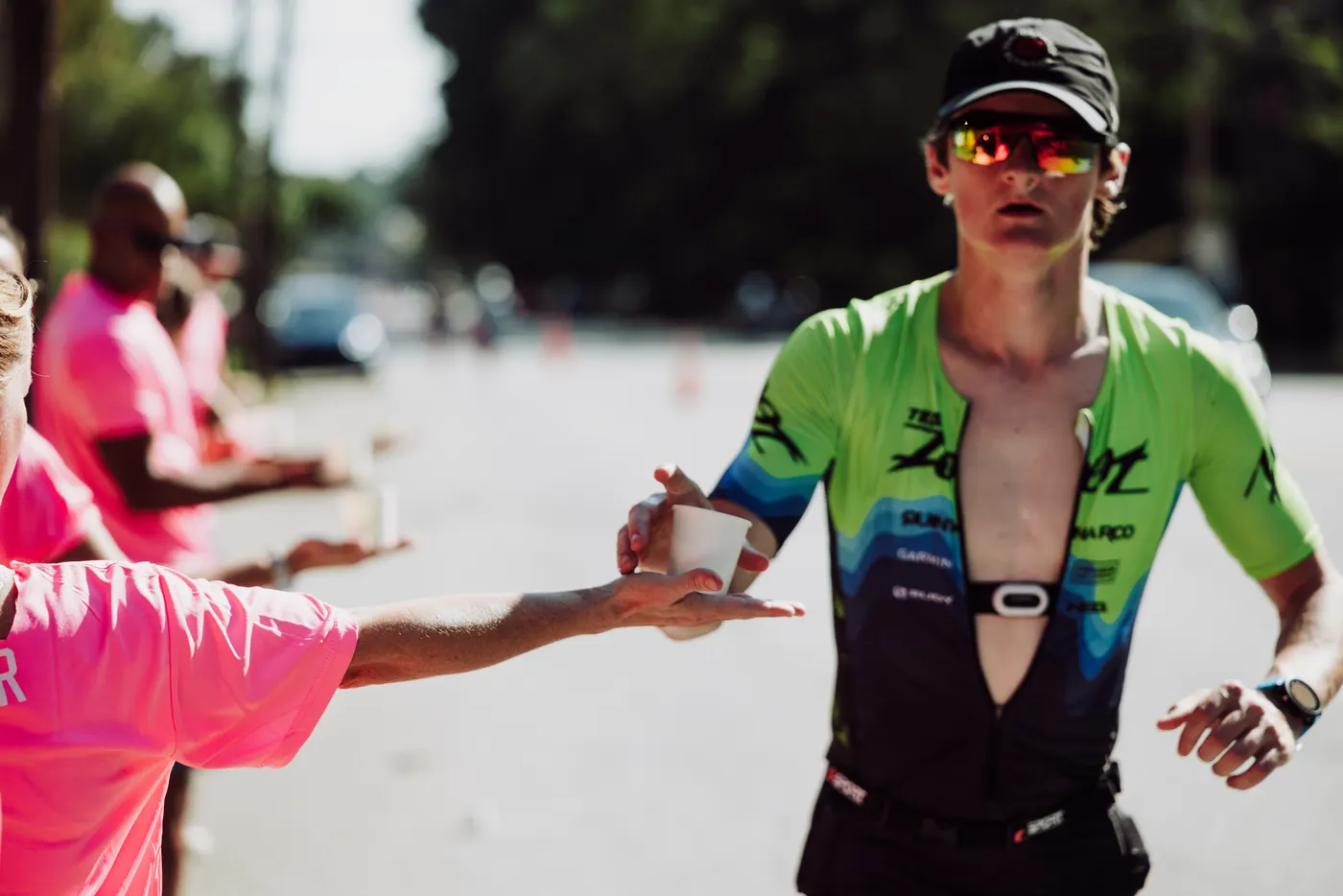
The first day is about basic care: drink to thirst, eat enough carbohydrate and protein, change out of wet clothing, and give yourself a chance to sleep. Gentle walking is usually enough movement. There is no need to chase a dramatic recovery intervention or attempt a hard workout to prove your fitness survived the race.
Over the next several days, easy movement can help you feel less stiff. Walking, relaxed cycling or swimming may be comfortable, provided symptoms are improving. A study comparing moderate activity and rest after a marathon suggests that carefully controlled movement need not worsen the measured recovery markers, but it does not imply that every runner should resume running at forty-eight hours. Choose the least stressful option that feels good for your individual recovery.
When ordinary daily movement feels normal, test a short, conversational run on flat ground. Keep it brief and stop if your gait changes or pain increases. A runner who finished at maximum effort, struggled with heat or developed an injury may need more time. Do not use a rigid mileage percentage to override obvious warning signs.
In the second week, build easy volume gradually before adding fast intervals, heavy downhill running or demanding long runs. Light strength work can return when movement is comfortable, but the first sessions should be far from maximal. Calf raises, step-ups, split squats and controlled hip work are useful only if they do not aggravate postrace symptoms.
Fuel adequately throughout recovery. Undereating while trying to return immediately to high mileage makes the transition harder. If symptoms worsen rather than improve, take additional rest and seek professional evaluation when appropriate.
Cardio Shirts & Workout Gear
Cardio and conditioning gym gear for runners, endurance athletes and anyone who earns the sweat.

Negative Cardio Review Cardio Sucks 1 Star Vest Tank Top
Bring “Negative Cardio Review” humor to your next lifting session.

Skip Cardio Exit Cardio Meme Hooded Hoodie
Keep it laid-back with a little “Skip Cardio” attitude.

Cardio Sucks Shirt Meme & Gymbros Top T-Shirt
Make gym days more fun with “Cardio Sucks” style.

Anti Cardio Cardio Club Shirt Meme & Top T-Shirt
Bring “Anti Cardio Cardio Club” humor to your next gym day.

Death By Cardio Shirt Meme & Top T-Shirt
Bring “Death By Cardio” humor to your next gym day.

Exercise Your Demons | Cardio Workout From Hell Muscle Tank Top
Add some cardio attitude to training with “Exercise Your Demons”.

Anti Walking Walking Club Shirt Gymbro Meme Lifting T-Shirt
Bring “Anti Walking Walking Club” humor to your next gym day.

Cardio Kills Gains Shirt 'S Meme & Top T-Shirt
Rep “Cardio Kills Gains” humor in and out of the gym.

Meme Shirt – Two Things I Like Lifting Weights Not T-Shirt
Make gym days more fun with “Two Things I Like Lifting Weights Not” style.

Shirt – I Want You To Do Cardio Uncle Sam Patriotic T-Shirt
Heavy lifts, good laughs, and a little “I Want You To Do Cardio Uncle Sam Patriotic” energy.
7. Signs the next marathon is worth entering—and reasons to wait

Before registering, review the last race without romanticizing it. Did you finish healthy? How long did easy running feel unusually difficult? Did you miss work or sleep because of lingering fatigue? Were you able to return to normal strength and mobility? These observations give you more useful information than the number of medals already on the wall.
Next, look at the training required for the new goal. If you want to run faster, you need room for consistent aerobic work and specific long runs. If you want a relaxed destination marathon, you still need enough preparation to cover the distance comfortably. An experienced runner’s easy marathon can be a very hard event for someone with a smaller mileage base.
Consider postponing when you have unresolved tendon or bone pain, recurrent illness, worsening sleep, unusually high perceived effort at familiar paces or a pattern of repeatedly skipping recovery. In particular, pain that becomes sharper with impact or changes your stride should not be negotiated away by enthusiasm. Seek clinical guidance for persistent or concerning symptoms.
Finally, ask a question that has nothing to do with pace: will this race make the next few months better? The answer might be yes because you love the course, your friends are running or you have a meaningful goal. It might be no because you are already stretched thin. Either answer can be a sign of good judgment.
Bottom line: one or two carefully prepared marathons is a sensible default for many runners chasing strong performances, but there is no fixed biological annual limit. The best frequency leaves enough time to recover, train productively and still enjoy running between finish lines.