Advertising disclosure: This page includes affiliate product links that may earn us a commission, as well as products from our own store.
The Vesta Fitness VForce 3IN1 puts a Smith machine, half rack and pivoting dual-stack cable trainer in one station. Its most interesting feature is not the machine count: it is the option to switch between 1:1 and 2:1 cable resistance and move the Smith bar from a straight to an angled track. Here is what those changes actually mean, where the setup can disappoint, and how a sensible week of training would use its different stations.
What the VForce 3IN1 actually combines
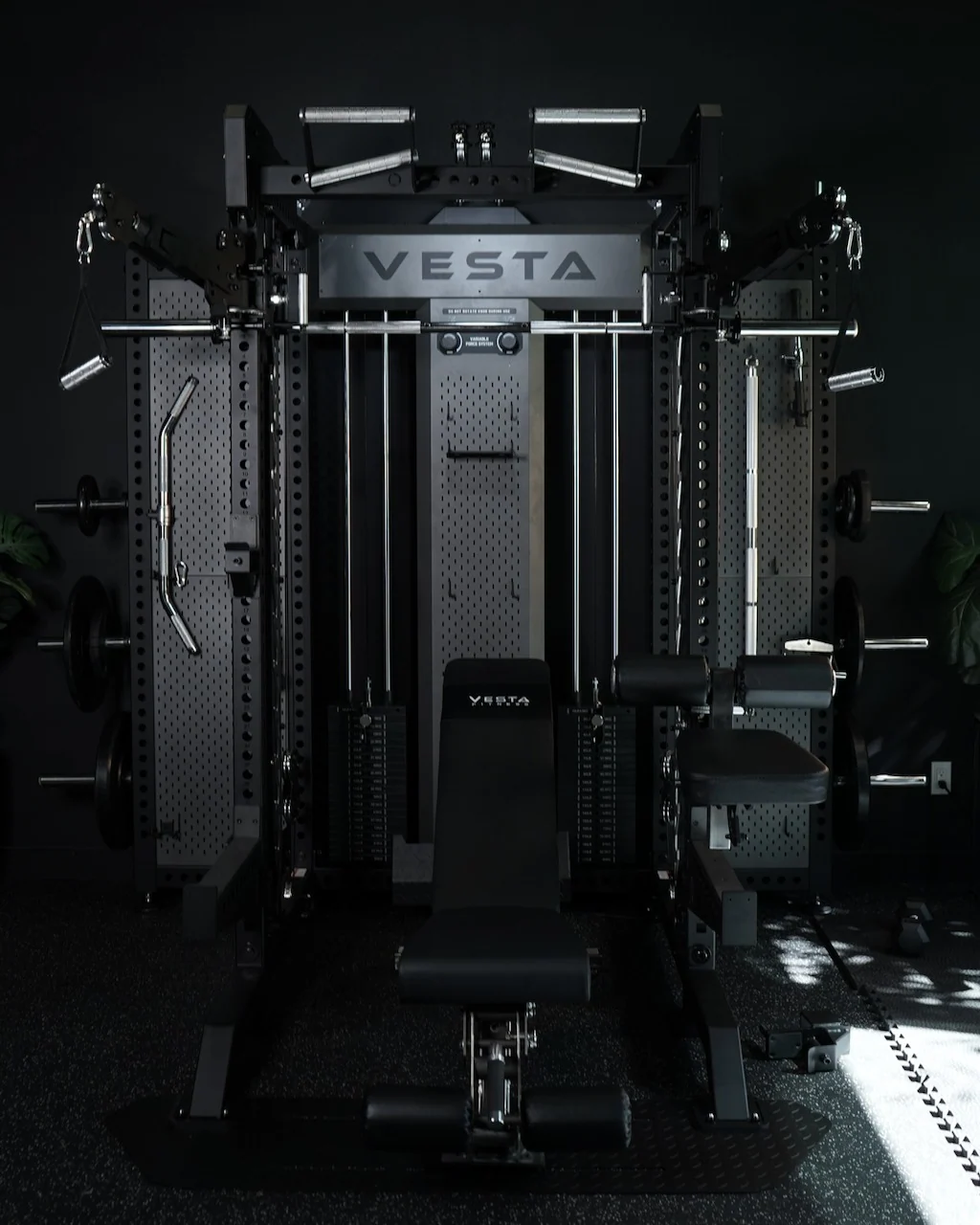
The most interesting detail about the Vesta Fitness VForce 3IN1 is not simply that it combines three pieces of equipment. Conventional all-in-ones already put a rack, a Smith bar and a functional trainer into one footprint. This model adds two less common choices: the cable ratio can change without rebuilding the cable routing, and the Smith guide path can move between vertical and angled positions. Those two adjustments change how the same station feels from one exercise to the next.
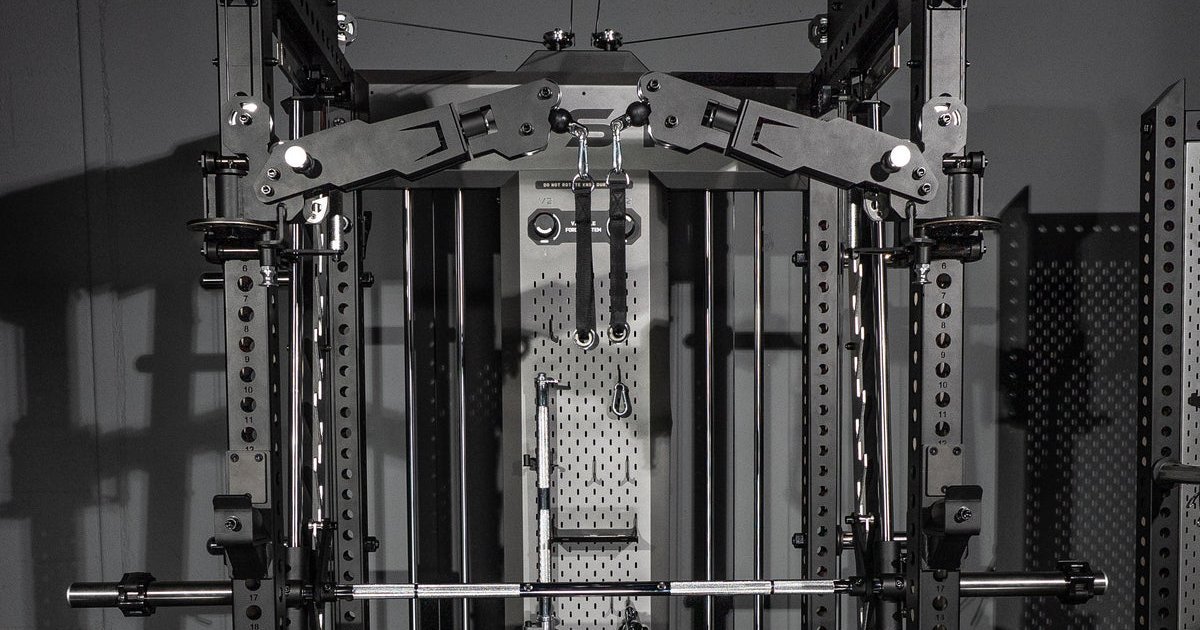
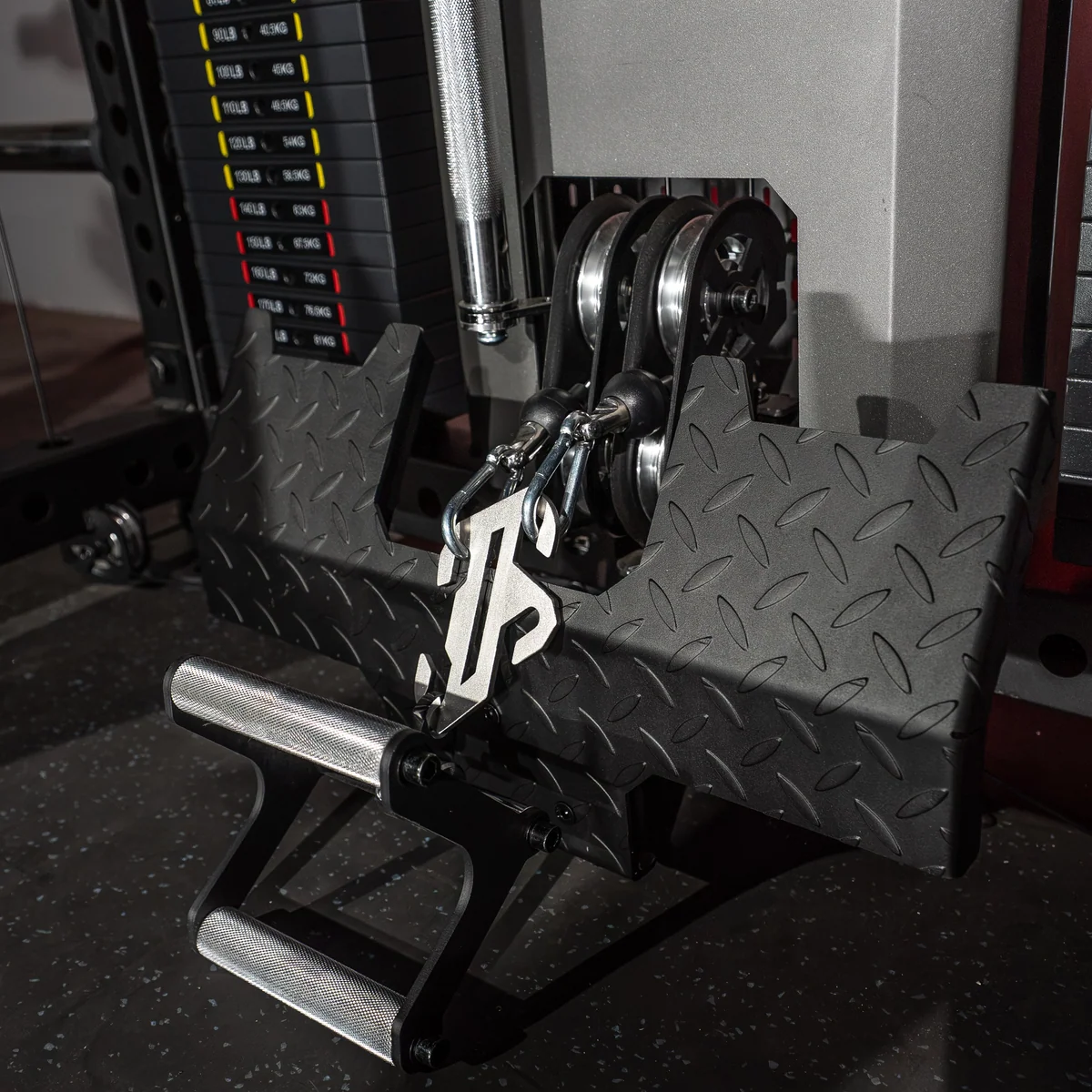
The four-post configuration is designed around a half-rack training area, an integrated Smith machine and a dual-stack cable trainer. Roller-style J-cups and spotting arms support conventional barbell work, while the guided Smith movement handles repetitions where a fixed path is desirable. The cable arms offer movements that would otherwise require several pulley heights or a separate crossover. None of this eliminates the need for proper setup, adequate clearance or an appropriately rated floor.
For a lifter shopping for one central training station, the useful question is not how many exercise names appear in an advertisement. It is whether you can actually set up the movements in your week without constantly removing a bench, crossing cables, moving plates or working around a bar. A good multi-station rack saves real transitions; a crowded one simply hides its compromises behind extra hardware.
The manufacturer describes a 93-inch-tall unit with three-by-three-inch uprights and one-inch holes. There are significant reach and space requirements beyond the upright footprint, particularly once the pivot arms are opened. Treat the measurements in the installation section below as your first buying filter, not an afterthought.
The 1:1 versus 2:1 cable switch is a practical training tool
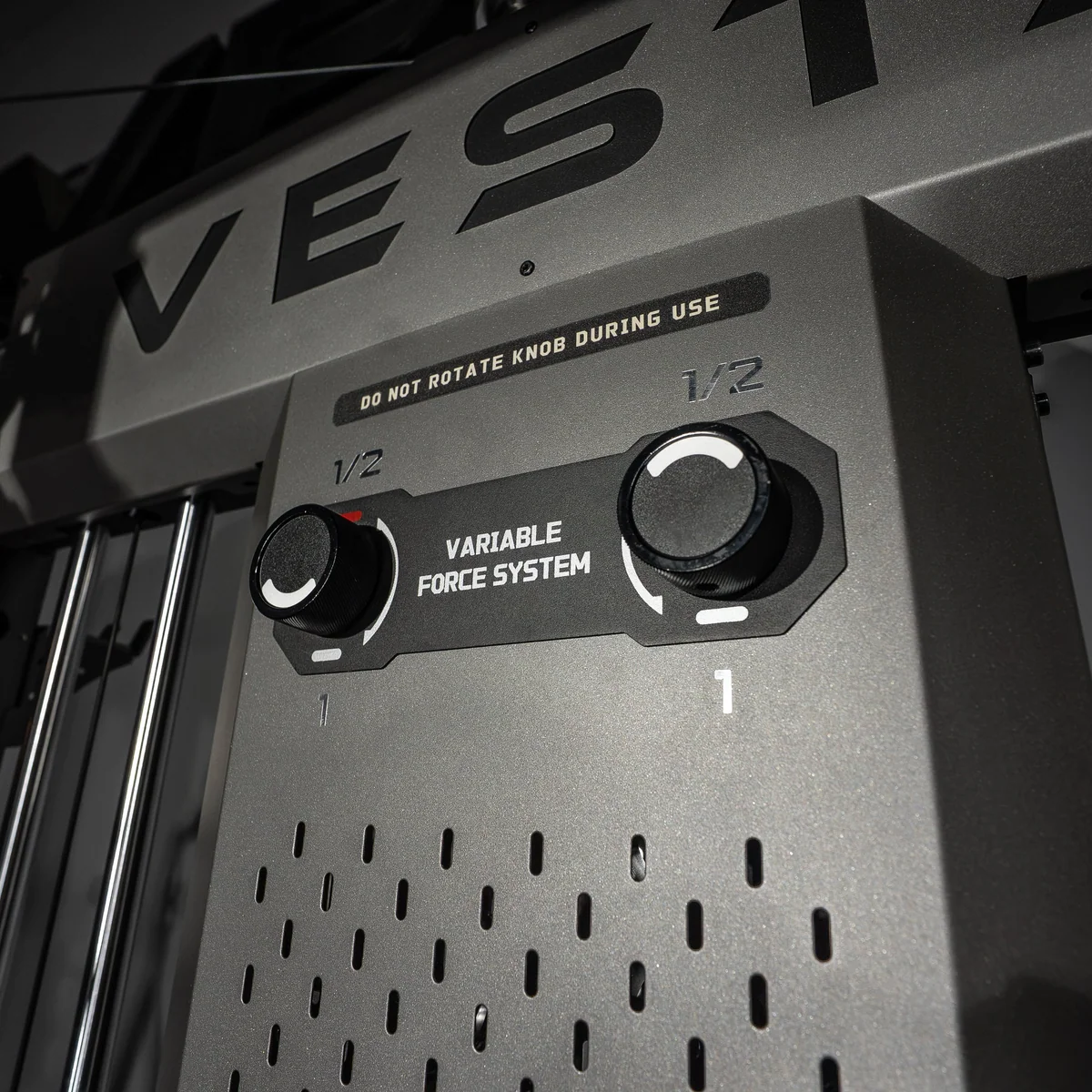
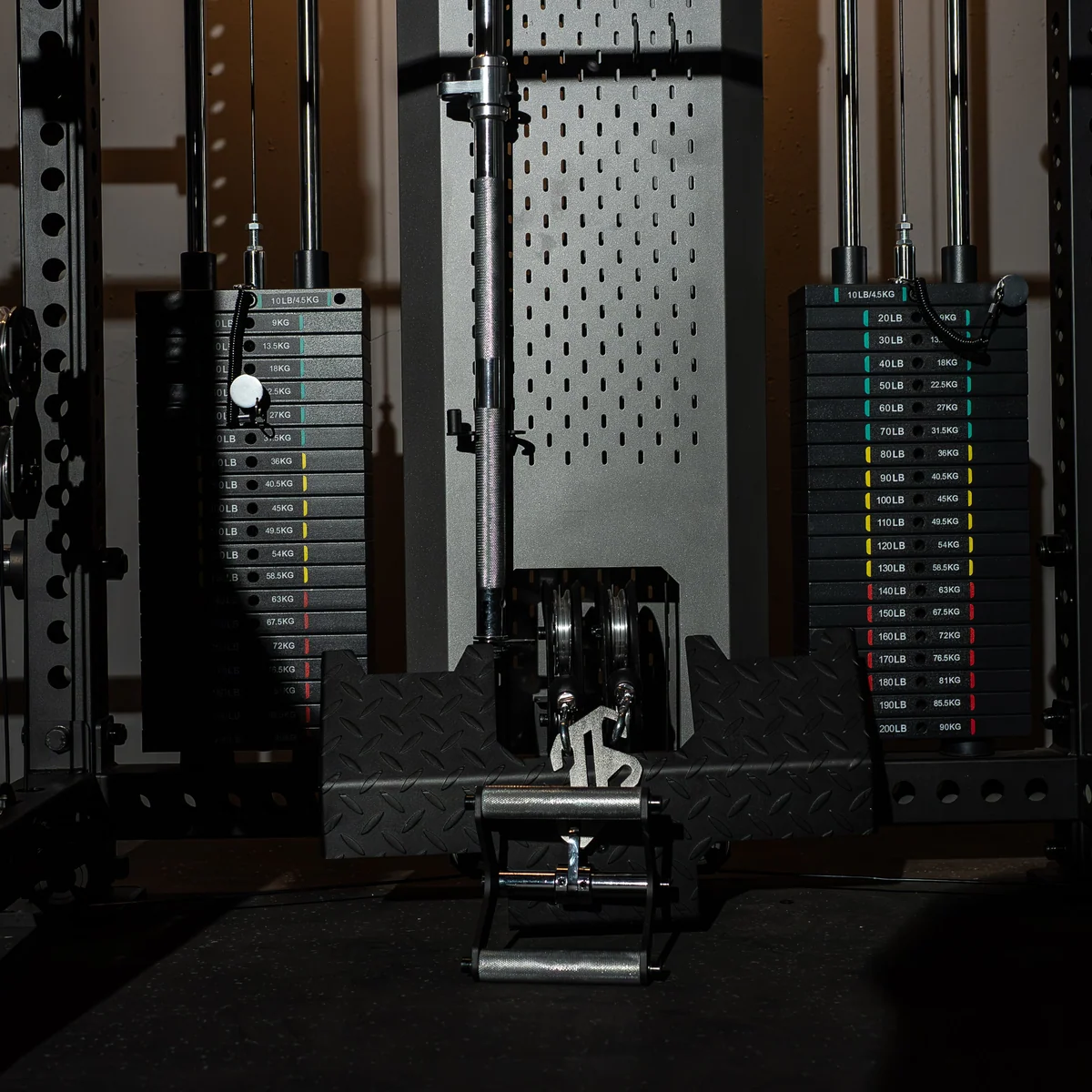
Vesta lists a 200-pound stack on each side and a selector that changes the pulley mechanical advantage. In 1:1 mode the nominal handle load tracks the selected stack weight more directly: selecting 100 pounds means roughly 100 pounds of nominal cable resistance. In 2:1 mode, the same stack selection produces roughly half that handle force while allowing more handle travel for a given stack movement. Cable friction, attachments and actual measured forces can vary, so these are useful nominal figures rather than a promise about every inch of a repetition.
Think of the 1:1 setting as a better starting point for heavy lat pulldowns, cable rows or movements that benefit from substantial handle resistance without stacking on many attachments. Think of 2:1 as a versatile choice for cable flyes, lateral raises, long-range curls, rear-delt work and controlled rotational patterns. When changing ratios, the correct pin setting can change dramatically. Do not carry the same number into your logbook and assume the stimulus has remained identical.
The distinction matters especially when you use both sides together. The product describes combining the cables for selected bilateral pulls and presses, with up to 400 pounds of nominal combined load in the appropriate 1:1 configuration. That is not a universal promise for every exercise: cable line of pull, connection geometry, attachment rating, handle position and stable stance all matter. A two-cable adapter is useful, but never assume that every attachment is comfortable or rated for the maximum stated combination.
A simple tracking method is to write an entry such as ‘cable row, 1:1, 110 lb, 3 × 10’ rather than simply ‘row 110’. For unilateral arm work, record which pulley, which ratio, and whether the movement was performed standing, seated or supported. Those three details make a strength increase interpretable weeks later instead of confusing increased leverage with actual progress.
Pivoting arms open useful lines of pull—and introduce setup decisions
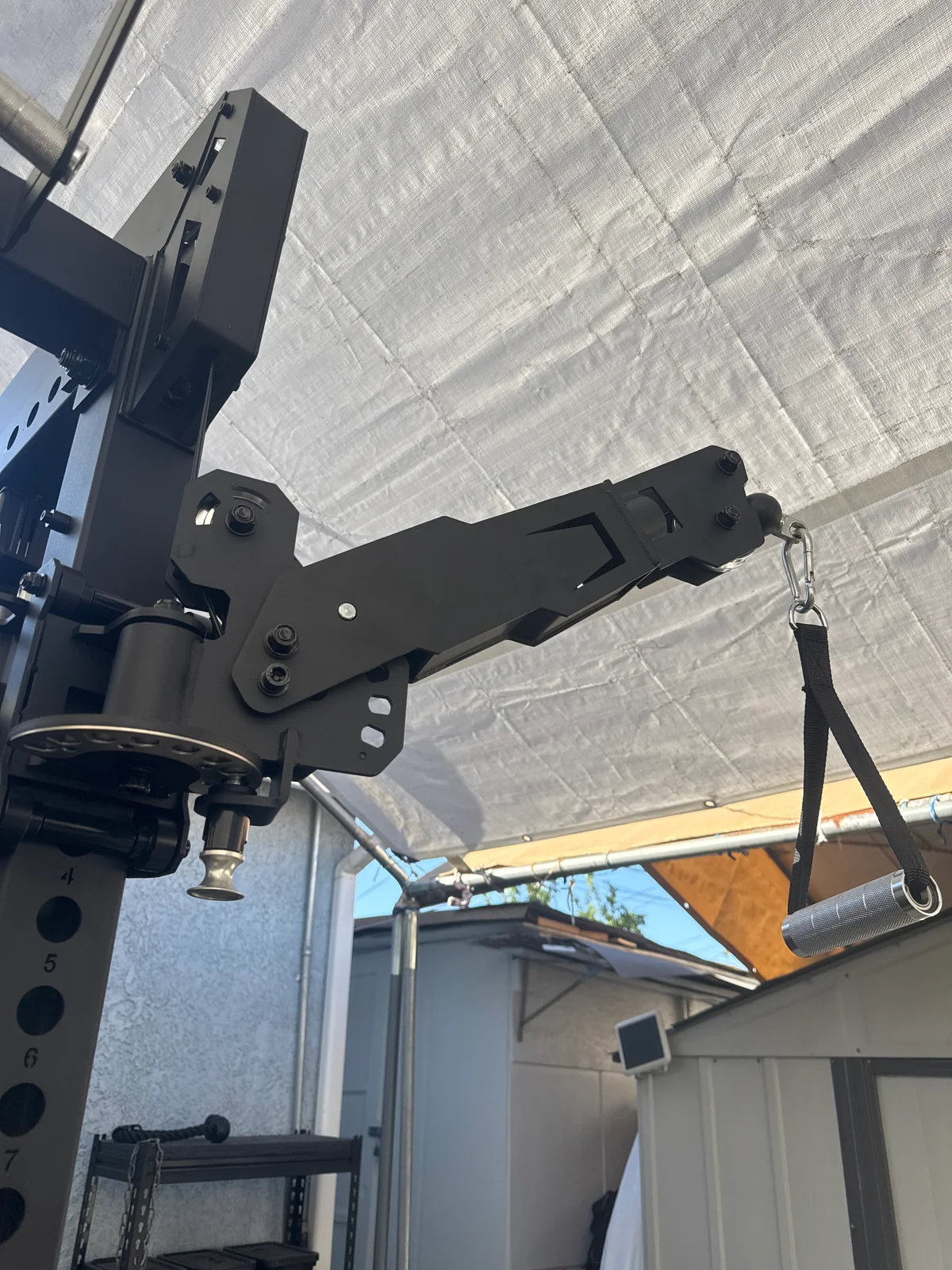
The VForce pivot-arm assembly is rated for six vertical positions between approximately minus 36 and plus 54 degrees, alongside nine horizontal settings between minus 90 and plus 90 degrees. In practical terms, a handle can approach you from the side or at an upward or downward angle rather than always pulling along one fixed line from a vertical column. That can make it easier to place the resistance where the exercise demands it.
For chest flyes, place the pivots far enough apart to give a comfortable opening arc without pulling your shoulders into an exaggerated stretch. For a supported row, align the arms with the direction your elbows should travel and move the bench or seat until the cable remains clear throughout the repetition. For lateral raises, begin with light resistance and a line that keeps the cable away from your torso instead of blindly maximizing the angle range.
Independent left and right positioning also lets you build asymmetrical stations: one pulley can be set high for a downward triceps extension while the other is lower for a curl or rotational drill. That does not mean both sides should always be used simultaneously. Crossing cables, walking behind a loaded arm or passing between the bar and a moving pulley increases the number of things that can go wrong.
Test every new setup with the minimum sensible load and a full rehearsal of the exercise’s path. Check handle reach at both ends of the motion, confirm both arm locks are fully engaged, keep elbows and fingers clear of adjustment hardware and verify that nearby walls, mirrors or furniture will not be struck. The ability to articulate a pulley is valuable only when it is fast, repeatable and safe.

Equipment Worth Exploring
Explore equipment, accessories and gear from our carefully selected range.

VForce 3IN1
All-in-one rack combining an adjustable Smith machine, functional trainer, and free-weight station.

VForce 3IN1 Max
Six-post all-in-one rack with Smith machine, functional trainer, and variable-force cables.

VForce 2IN1
Half rack and pivot-arm functional trainer with switchable 1:1 and 2:1 pulley ratios.

VForce Wall Trainer
Space-saving wall-mounted functional trainer with pivoting cable arms and variable resistance ratios.

VForce Lat Tower
Wall-mounted cable tower with pivot arms and adjustable 1:1 or 2:1 pulley ratios.

Foldable Wall Rack
Wall-mounted folding squat rack designed to save floor space between workouts.

VForce Lat Seat
Rack-mounted seat attachment for supported lat pulldowns and seated cable exercises.

Ultimate Power Seat
Rack-mounted power seat for lat pulldowns, leg extensions, and leg curls.

48in Aluminum Lat Bar
48-inch aluminum lat pulldown bar with knurled grip and rotating center swivel.

44in Dual Hook Bar
44-inch aluminum dual-hook straight bar for cable rows, pulldowns, and curls.
A straight or angled Smith path cannot replace good lifting mechanics
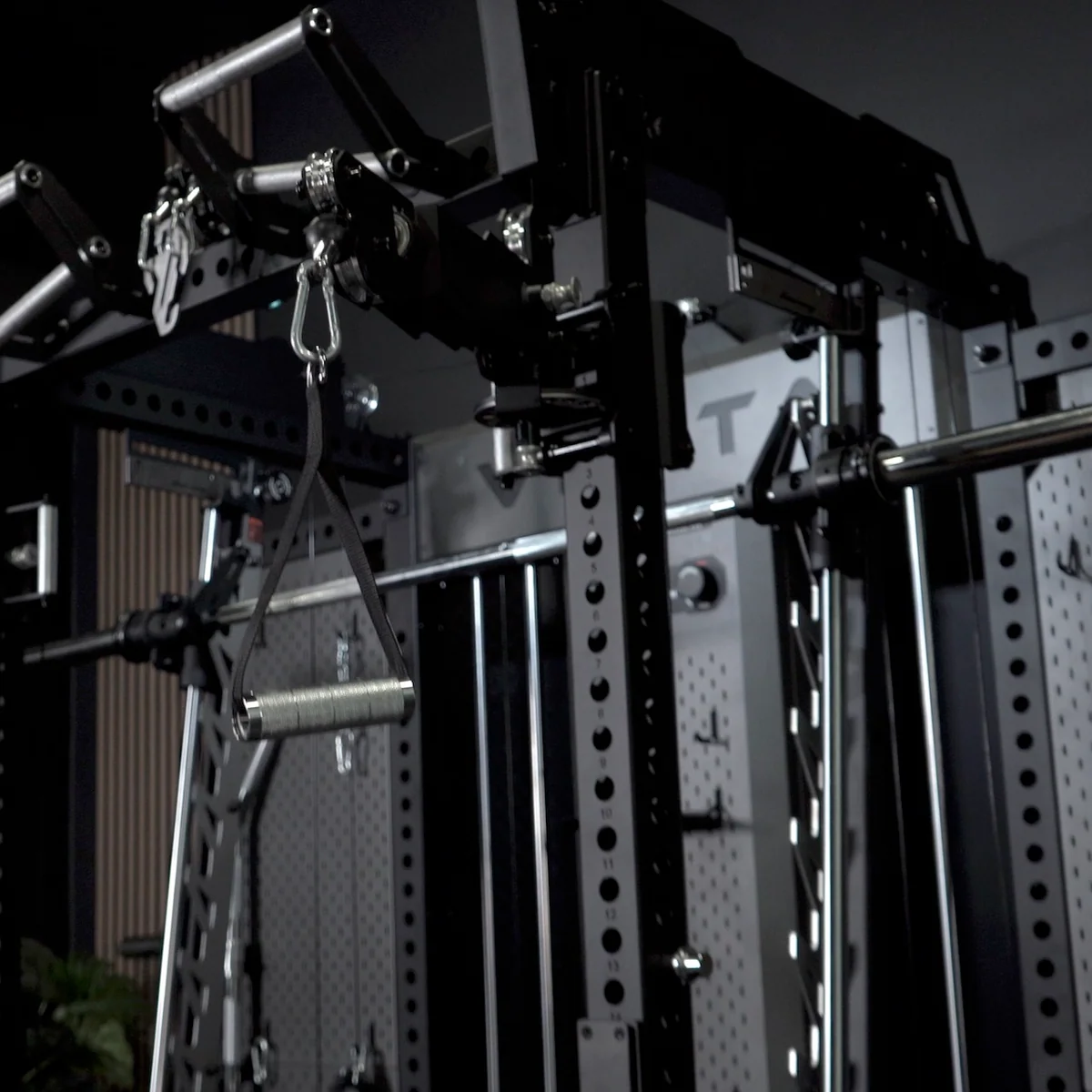
The adjustable Smith system has a vertical zero-degree setting and a seven-degree forward-angled option. Those are not interchangeable with a free-moving barbell. A Smith guide rail constrains bar movement to a preset path, which can make loading, balance and setup feel different. A fixed line is convenient for certain squats, split squats, presses and calf raises, but it should follow the lifter’s workable joint path rather than forcing the body into an uncomfortable position.
The manufacturer specifically instructs users to lower the Smith bar fully before switching its path. Make that a hard habit: unload and secure the setup as the manual requires, lower the bar, change the adjustment, confirm the lock and only then begin the next exercise. A selector that changes the mechanics of a loaded bar is not something to manipulate casually in the middle of a workout.
If a guided squat feels better with an angled track, verify which direction you face and where your feet are in relation to the path. The angle alone does not automatically make squats deeper or safer for everyone. Keep pressure distributed across the foot, use a depth you can control, and stop if the path shifts stress uncomfortably into the knees, hips or back. Start lighter than your free-barbell working weight until the setup is familiar.
The half-rack side remains important for conventional barbell training. Roller-style J-cups help with positioning, and spotter arms add a safety layer when adjusted correctly. They are not an excuse to bench or squat under a bar without knowing the rack’s limits, lock positions and safe escape route. A cable machine, Smith machine and barbell rack are three different tools; use each for the movement it does best.

Home Gym Shirts & Garage Gym Gear
Home, garage and basement gym shirts and workout gear for lifters who built their own place to train.

Shirt – Home Is Where Your Is Hilarious Homegym, T-Shirt
Bring “Home Is Where Your Gym Is Hilarious” humor to your next gym day.

Anti Basement Club , Gymbros & Basement Dwellers T-Shirt
Heavy lifts, good laughs, and a little “Anti Gym Basement Gym Club” energy.

Funny Home Gym | Home Is Where Your Gym Is Muscle Shirt Tank Top
Bring “Funny Home Gym Tank” humor to your next lifting session.

Funny Garage Gym Crewneck Pullover Sweater Garage Gym W T-Shirt
Keep things casual with a little “Garage” attitude.

Basement Gym Hooded Pullover for Home Gym Lifters Gymbr Hoodie
Make your off-duty look more fun with “Basement”.

Anti Gym Home Gym Club Muscle Shirt Athletic Vest for H Tank Top
Your gym-day look, with a playful “Anti Gym Home Gym Club” twist.

Anti Gym Garage Gym Club Decal for Garage Gym Equipment Sticker
Give your everyday gear a playful “Anti Gym Garage Gym Club” twist.

Anti Social Home Gym Club Crewneck Pullover Sweater for T-Shirt
Keep things casual with a little “Anti Social Home Gym Club” attitude.

Home Gym Nerd Decal for Water Bottles Laptops Garage Gy Sticker
A fun “Home Gym Nerd” touch for bottles, laptops, and lockers.

Funny Home Gym Hooded Pullover for Garage Gym Basement Hoodie
Keep it laid-back with a little “Funny Home Gym Hoodie Pump Cover Hooded” attitude.
Measure the true operating footprint before buying
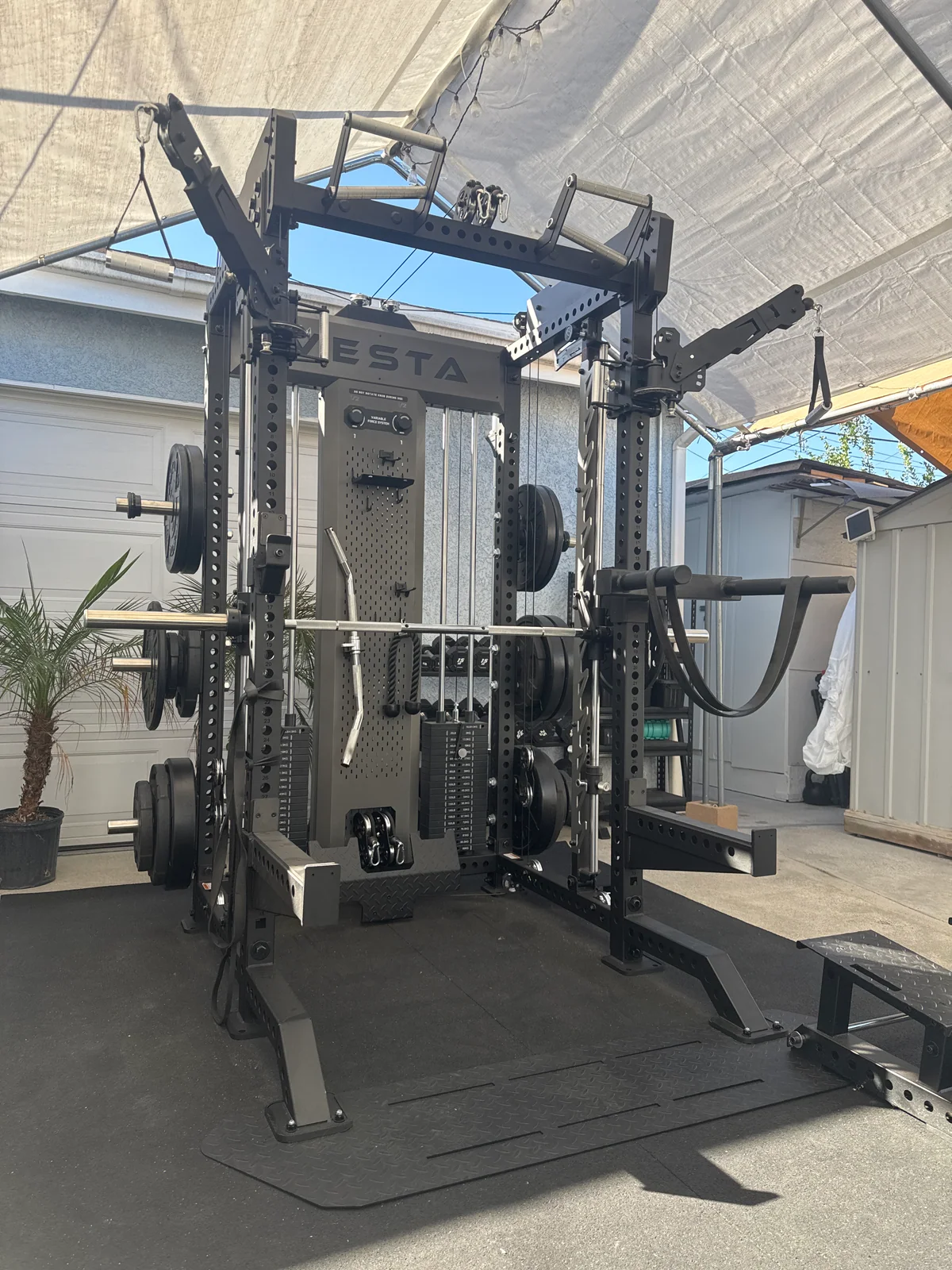
The VForce 3IN1 product listing gives a 93-inch overall height, a 72.1-inch depth and a floor footprint described as 63.6 inches wide. The Smith bar itself is listed at approximately 80.1 inches long, while the width with pivot arms extended reaches approximately 89.6 inches. Those figures describe different aspects of the machine. For a real room plan, the extended-arm width and the clearance needed by the moving bar and user may matter more than the bare post-to-post footprint.
Use painter’s tape on the floor to outline the measured rack footprint, then add a separate zone for cable swing and lateral foot movement. Rehearse the largest positions: a wide cable fly; a Smith squat with room behind the bar; a loaded bench with someone walking around; and a pull-up where your head does not hit the ceiling. A room can technically contain a machine while still making several of its headline features inconvenient or unusable.
Ceiling clearance deserves more than checking that 93 inches is lower than the room height. Pull-ups require space for the head and hands; installation tools require overhead access; and some lifters will need room for overhead press variations. Likewise, a swinging arm needs open width at the point where you actually grip the handle, not just where the hardware sits when folded back.
Vesta’s listing states that concrete anchors are included for floor installation. Before delivery, confirm the structural requirements for your specific floor, the permitted anchoring method, and whether a professional installer is needed. An apartment floor, floating platform, raised timber surface and concrete slab are not automatically equivalent. This machine also arrives by freight; curbside delivery means you must plan how the components reach the training room.
Finally, budget for the real surroundings: a bench, independent Olympic bar, sufficient plate storage, floor protection, cable attachments and installation time. A four-post machine can replace several separate stations, but it does not make the room or every supporting accessory disappear.
VForce 3IN1 versus 2IN1 and 3IN1 Max: choose by the movements
Within the same VForce family, the 2IN1 combines a rack and cable trainer without the adjustable Smith system. That makes it the more direct choice if all your heavy squat, press and hinge work already happens with a free bar and you mainly want cable flexibility. The 3IN1 adds a second bar path and more possible lower-body and pressing variations, but also more moving parts and decisions at each station.
The 3IN1 Max adds two posts and a larger frame configuration. It is not automatically the better purchase for every lifter simply because its name says Max. Measure the room and write down your real exercises first. If you routinely need a larger working enclosure, extra storage opportunities or a longer rack setup, that might justify the additional hardware. If your main constraint is narrow floor space and short session transitions, the four-post model may be more rational.
The purchasing decision also includes maintenance and local support. Cable ends, pulleys, selector mechanisms, locks and a Smith carriage are wear points that should be checked on an ongoing basis. Read the exact warranty for the purchased model and region rather than assuming every component receives the frame’s coverage term. The current manufacturer listing distinguishes structural frame coverage from finite periods for moving parts and cables.
There is a useful middle ground: buy a conventional rack and train most barbell movements there, then add a separate cable trainer when space allows. That option gives flexibility and easier component replacement, but often increases the occupied floor area. The right comparison is total installed cost, room use, dependable exercise setup and how much equipment would be duplicated—not merely the base sticker price.
Equipment Worth Exploring
Explore equipment, accessories and gear from our carefully selected range.
VOLTRA
Compact digital cable trainer with smooth, adjustable resistance.

Go-Tone Pro
Portable digital cable trainer with up to 66 lb (30 kg) of adjustable resistance.



FID Bench MAX
Adjustable bench offering flat, incline, and decline positions + adjustable headrest.


Competition Plates
Competition-style bumper plates for Olympic lifts and loaded strength training.

Grip Plates
Rubber-coated weight plates with handholds for loading barbells and machines.

GymPin Ergo Handles
Pair of ergonomic cable handles shaped for comfortable triceps and pulling exercises.

Lat Pulldown Set
Multi-grip cable attachment set for pulldowns, rows, and varied upper-body training.
A realistic four-day training week using all three stations
A big feature list matters only if it makes training better. A practical starting point is an upper/lower split repeated twice each week, with enough time between hard sessions to recover. The example below assumes the lifter is healthy, familiar with the movements and can adjust exercise selection to fit experience and joint tolerance. It is an illustration of equipment usage, not a clinical prescription or a claim that the VForce produces better muscle growth.
Monday—upper-body strength: barbell or Smith press 3 sets of 5–8; 1:1 cable row 3 sets of 6–10; a pulldown 3 sets of 8–12; a 2:1 cable lateral raise 2 sets of 12–18; a cable triceps extension 2 sets of 10–15. Rest long enough on compound lifts to keep technique and repetitions stable.
Tuesday—lower-body strength: free-barbell or Smith squat 3 sets of 5–8; Romanian deadlift with a free bar 3 sets of 6–10; supported single-leg cable exercise 2 sets per leg of 10–15; Smith calf raises 3 sets of 10–15. For Smith squats, set the guide path before starting and use safety stops with suitable clearance.
Thursday—upper-body volume: incline press 3 sets of 8–12; independently positioned cable flyes 2 sets of 10–15; one-arm row 3 sets per side of 8–12; rear-delt cable work 2 sets of 12–20; alternating curls 2 sets of 10–15. Here the 2:1 ratio makes fine resistance adjustments and longer cable travel useful.
Friday—lower-body volume: split squats 3 sets per side of 8–12; cable pull-through or another hinge 3 sets of 10–15; Smith squat or another quad-dominant pattern 2 sets of 10–15; calf raises 3 sets; optional light trunk work 2–3 sets. Avoid assuming the strongest nominal setting is appropriate for isolation work simply because the machine can provide it.
Progress one variable at a time. If all working sets reach the upper end of their rep range with consistent form and a little reserve, increase the appropriate stack or bar load next session. Keep separate logbook entries for Smith straight versus angled, and for 1:1 versus 2:1 cables. Over the first month, test whether the quick switches genuinely save your time or whether your routine would work equally well on a simpler rack. That answer is more useful than a feature count.
At a published starting price of roughly $6,499 before optional extras and temporary discounts, the VForce 3IN1 belongs in the category of significant long-term equipment purchases. Compare confirmed delivered pricing, the manufacturer’s actual warranty terms, room fit and your priorities before treating it as an upgrade. A versatile machine is worth owning when you use its versatility consistently—not simply when it offers the longest list of settings.
Powerlifting Shirts & Lifting Gear
Powerlifting shirts and gym gear for squat, bench and deadlift lifters who live for heavy numbers.

Icy 45LB Weight Plate Frozen Barbell Lifting Workout Co Hoodie
Keep it laid-back with a little “Icy 45LB Weight Plate” attitude.

Flaming 45LB Weight Plate Fire Barbell Lifting Workout T-Shirt
Show some powerlifting attitude with a playful “Flaming 45LB Weight Plate” tee.

Heavy Squatter Harry Potter Squat Meme Sweater Leg T-Shirt
Show some gym-day personality with “Heavy Squatter”.

4 Plates Deadlift Club – Motivational & Deadlifts Top T-Shirt
Show some deadlift attitude with a playful “4 Plates Deadlift Club” tee.

5 Plates Squat Club Meme – Top T-Shirt
Bring “5 Plates Squat Club” humor to your next gym day.

Zombie Deadlift Deadlift Lovers & Leg Day Meme Tank Top
Show some personality between sets with “Zombie Deadlift”.

Meme : Squat Rack Top Home T-Shirt
Make gym days more fun with “Powerlifting Gym Meme” style.

Ultimate : Meme Squat Rack Gains & Humor T-Shirt
Rep “Ultimate Powerlifting” humor in and out of the gym.

Deadlift Addict & Barbell Cigarettes Can'T Quit T-Shirt
Show some deadlift attitude with a playful “Deadlift Addict & Barbell Cigarettes” tee.

Squat Here | Edgy Workout | Gym Meme Hooded Jumper Hoodie
Make your off-duty look more fun with “Squat Here”.