Advertising disclosure: This page includes affiliate product links that may earn us a commission, as well as products from our own store.
Squat wedges promise deeper reps, a more upright torso and extra quad stimulus. Some of that has a biomechanical basis; some claims outrun the evidence. A 2026 synthesis of squat experiments and separate new balance testing reveal a useful distinction: changing your heel height changes the rep, but it does not automatically make that rep better. Here is what actually changed in the measurements, what remains unknown and how to test the setup under your own barbell.
The 2026 numbers: more knee and ankle motion, not magic
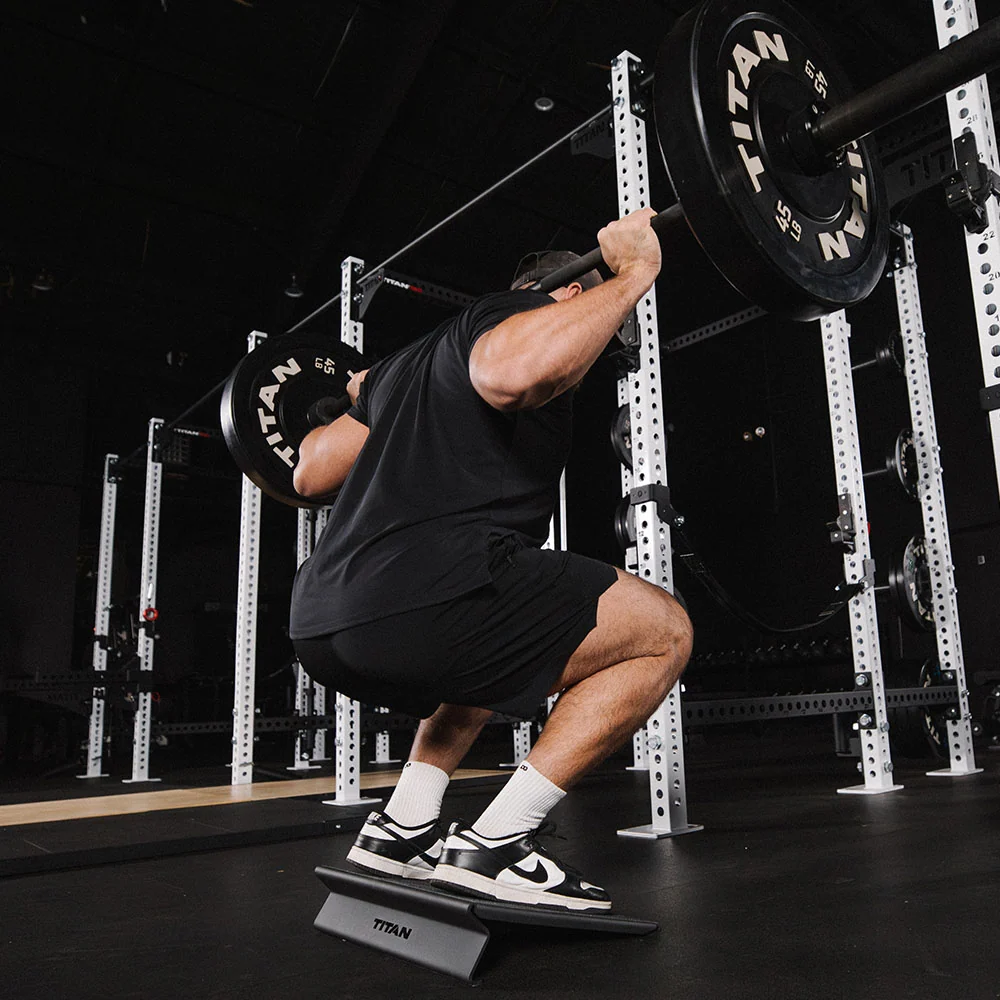
A 2026 synthesis assembled 14 experiments involving 177 adults. Across those studies, squatting with an elevated heel was associated with about 4.33 degrees more ankle range of motion and 4.94 degrees more knee range of motion on average than the comparison setups. The pooled hip and trunk range-of-motion differences were not statistically significant. Those are joint-angle findings, not evidence that a wedge adds kilograms to a one-rep max.
The ankle result depended in part on the amount of elevation. In the review’s subgroup analysis, increases in ankle range were clear with higher elevations, described as more than 2.5 centimetres or more than five degrees; knee range changed across both lower and higher elevation groups. These thresholds characterize the reviewed experiments. They are not a universal instruction to buy the tallest wedge in the shop.
Consider what range of motion actually means here. A knee that bends further during a heel-raised squat can allow the hips to descend with a different torso position, yet the depth a lifter reaches also depends on stance, technique, load and body proportions. Moving through a few additional degrees may be useful if a specific joint currently limits a comfortable squat. It cannot tell you whether your next set will feel stable or whether your quads will eventually grow faster.
Why a small heel lift changes a full-body squat
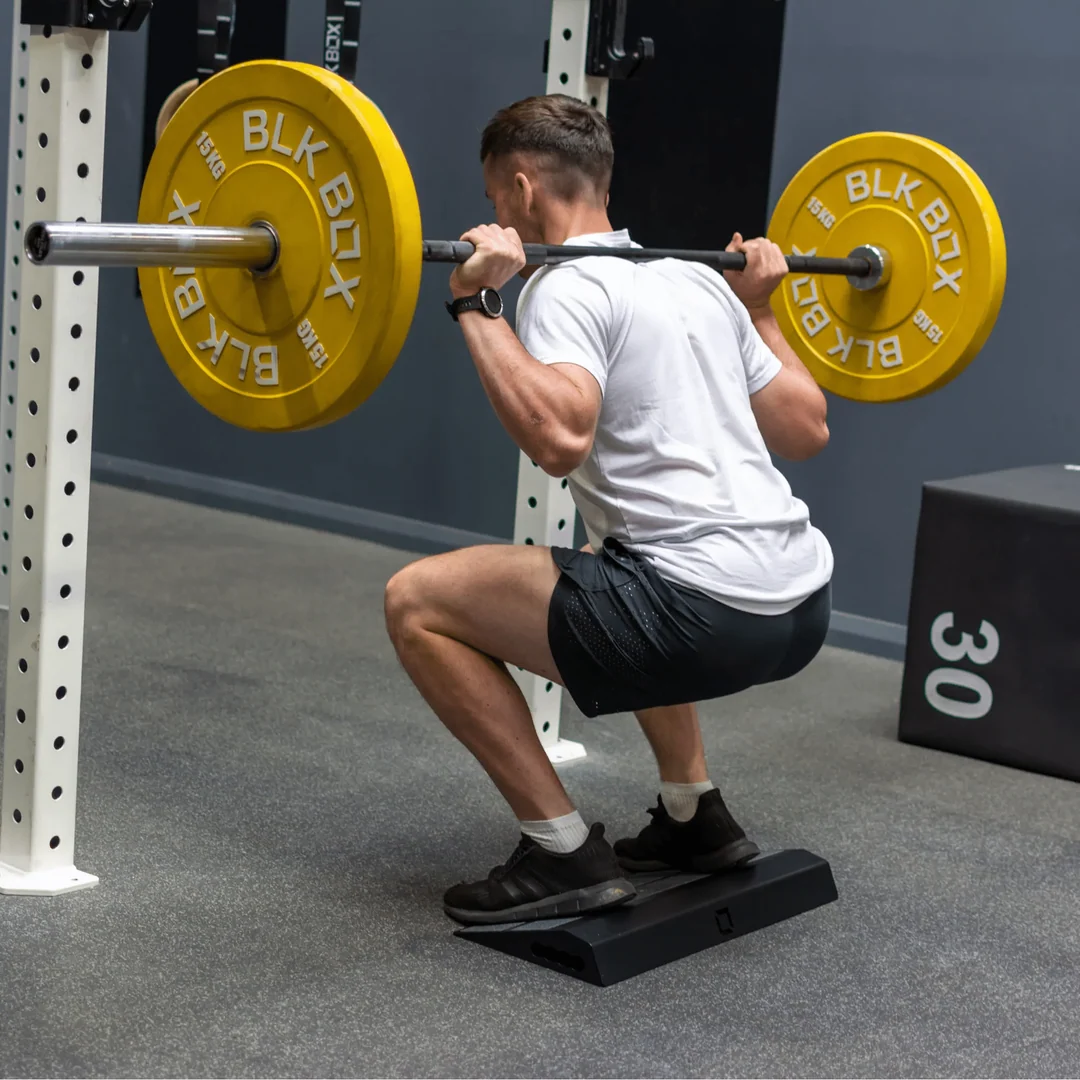
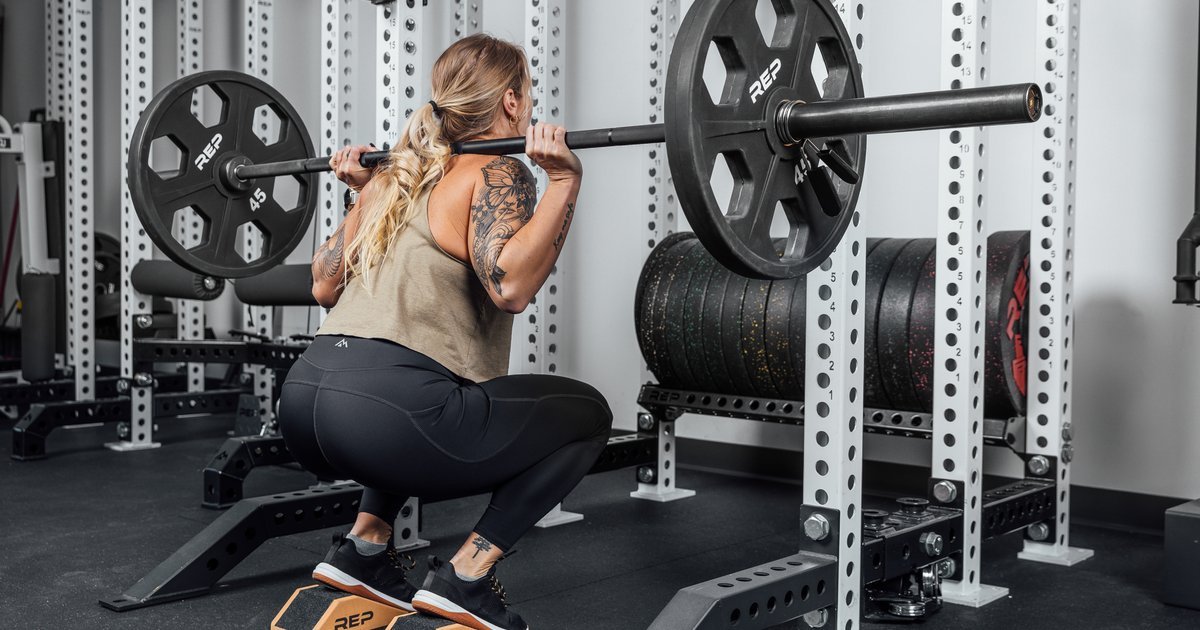
In a flat-foot squat, the shin must angle forward as the knees bend. Some lifters reach a point where their heels want to rise before the depth they intend. A firm heel wedge starts the ankle in a more plantar-flexed position and lets the body express forward knee travel with a different ankle demand. That is why the wedge can make a deep squat feel more accessible even though it does not permanently lengthen a tight calf.
A separate 2026 experiment tested 30 healthy men whose ankle dorsiflexion was restricted. They performed loaded squats with heels raised by zero, one, two, three, four and five centimetres. As elevation increased, researchers observed less peak ankle dorsiflexion and less forward trunk inclination, but more peak knee and hip flexion and greater knee extensor demand. This is an important counterweight to the simplistic claim that raising the heels makes a squat easier everywhere.
The geometry also depends on where the wedge supports the foot. A broad platform under the whole shoe and two little heel blocks create different contact points. Changing a shoe’s heel-to-toe drop is not identical to standing on a tall platform. Keep stance width, toe angle and bar placement consistent when comparing setups, or you will not know which adjustment made the difference.
For a long-femured lifter, a wedge may offer a more upright-looking squat at a chosen depth. But long femurs are not an injury diagnosis, and an upright back is not a competition requirement for every squat style. The correct setup is the one that permits a controlled rep for your purpose.

Equipment Worth Exploring
Explore equipment, accessories and gear from our carefully selected range.

GymPin Squat Wedges
Non-slip 15-degree squat wedges help elevate the heels for deeper quad-focused squats.


Safety Squat Handles
Barbell squat handles that reduce shoulder positioning demands during high-bar squats.


Multi Pull Smith Rack MPHR-780
All-in-one rack with a Smith machine, functional trainer, lat pulldown and low row.

Competition Plates
Competition-style bumper plates for Olympic lifts and loaded strength training.

Studio V-Squat
Plate-loaded V-squat machine for supported lower-body strength training.
Quad loading, back angle and the limits of the evidence
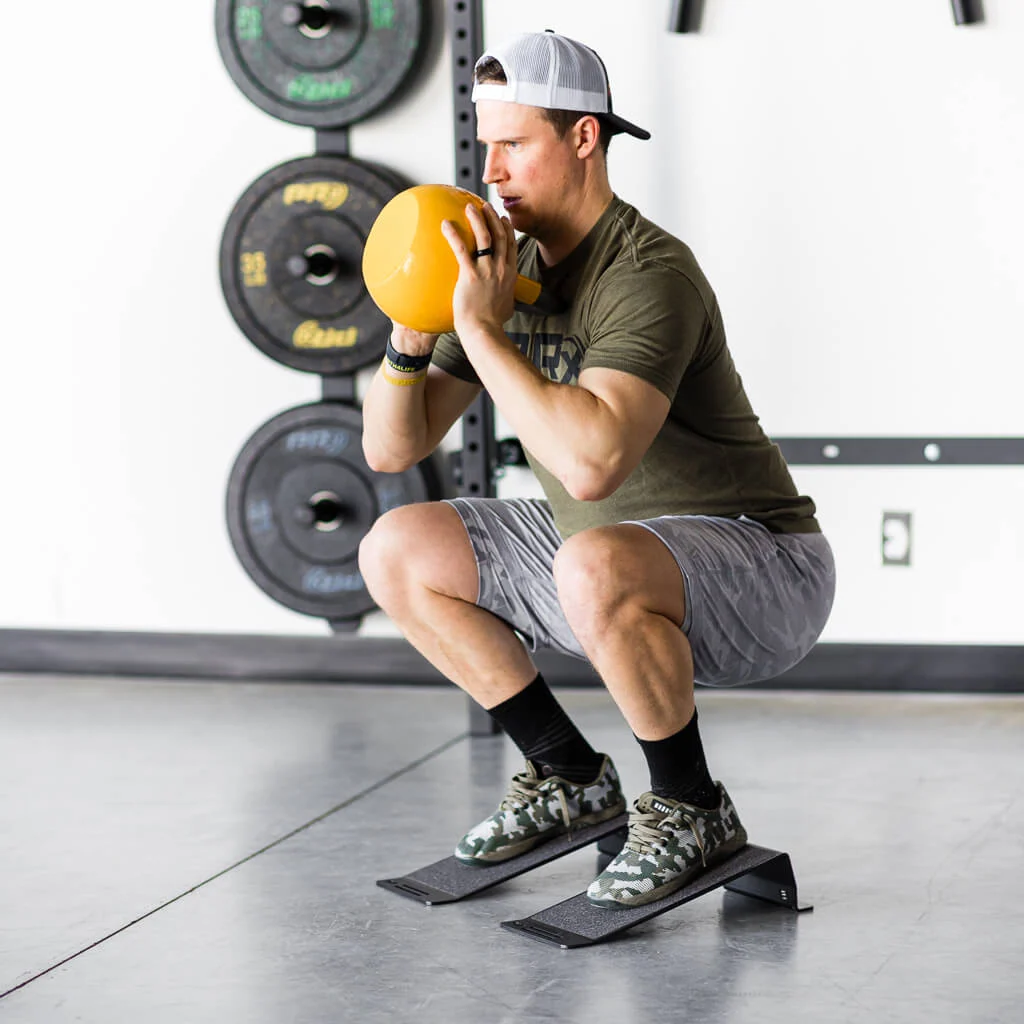
Many gym conversations jump from more knee travel to the conclusion that elevated heels automatically produce more quadriceps growth. The evidence is not that direct. Joint position and knee extensor moment indicate changed mechanical demands during the movement, but neither proves a superior long-term hypertrophy response. Muscle activation snapshots and force-plate readings are not a substitute for months of controlled training comparisons.
In an earlier experiment, 14 recreational weightlifters performed relatively heavy back squats under flat, heel-raised platform and weightlifting-shoe conditions. Investigators did not find significant differences in the measured knee-extensor or spinal-muscle activation, nor in the reported trunk-angle comparisons. That small experiment cannot settle every training situation, but it illustrates why a single posture cue should not be marketed as a universal muscle-building mechanism.
The newer 30-person loaded-squat experiment adds another complication: taller heel lifts increased knee extensor moments while some modeled lower lumbar stress outcomes decreased. Modeling is not the same as watching fewer back injuries occur, and greater knee demand is not automatically good or bad. Pain, recent injury and your tolerance for loading still matter more than a promised ‘safe angle.’
If your aim is leg development, judge the wedge against alternatives you can load progressively: front squats, high-bar squats, hack squats, split squats or a leg press. A useful exercise lets you control depth, repeat the path, get close enough to a challenging effort and recover before the next session. A heel wedge is one way to alter that exercise—not the defining ingredient of results.
Stability is a separate question from depth
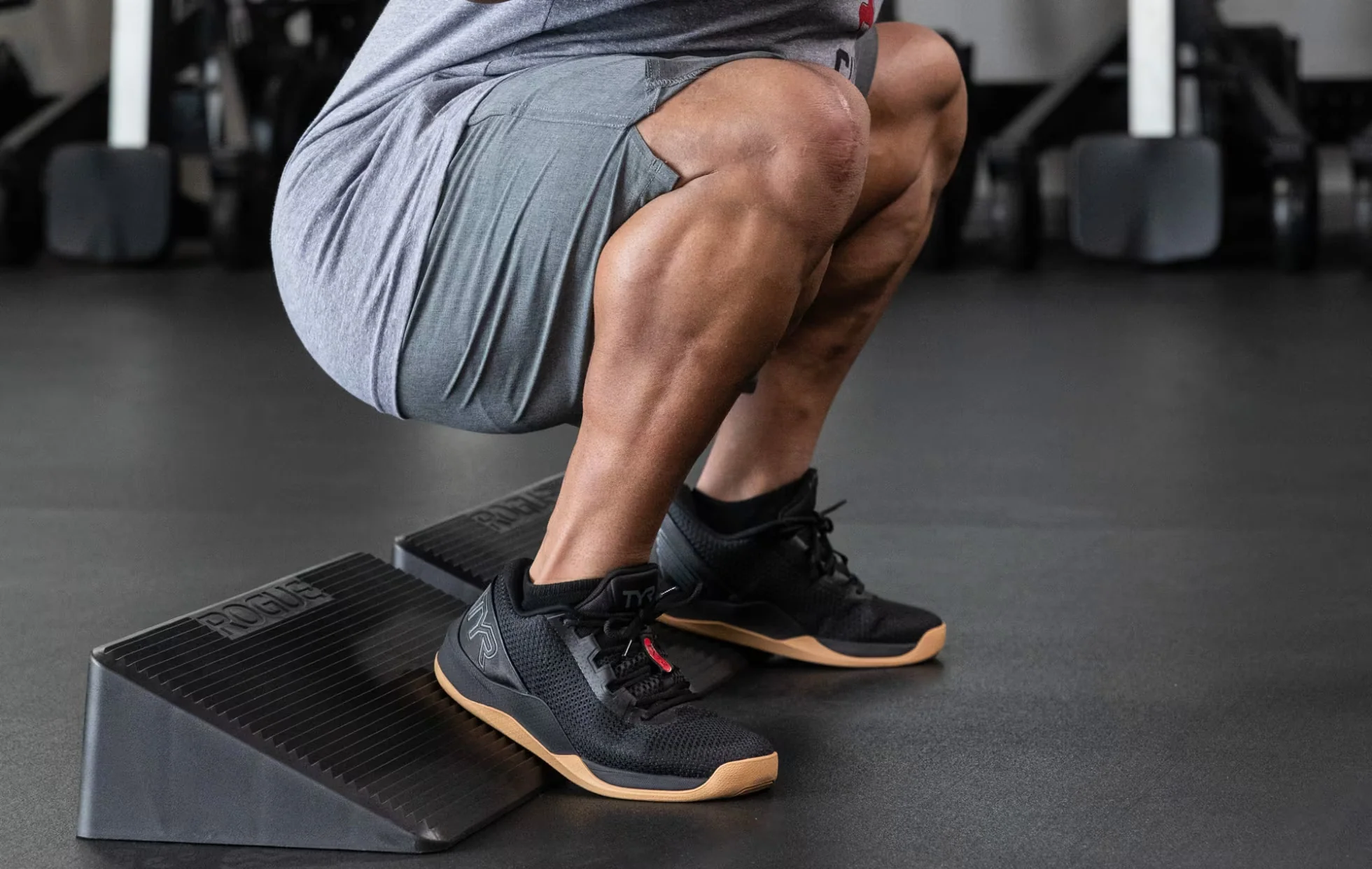
A deeper squat is not necessarily a more stable squat. A small exploratory trial published in June 2026 examined eight trained young men doing barbell back squats at a load around 70% of their estimated one-rep max. Participants completed the comparison with and without three-centimetre wooden heel wedges, keeping target depth and stance standardized.
Mean and peak ground reaction forces did not differ significantly between conditions. The wedge condition showed somewhat more side-to-side movement of the centre of pressure, with unadjusted differences appearing in some balance measures. Small sample size and multiple comparisons mean those signals should be treated as tentative; they do not prove that wedges make all lifters unstable.
Nevertheless, the study points to an important coaching check. If a wedge makes you roll to the outer edge of the foot, wobble between rep halves or struggle to maintain pressure through your shoe, the extra depth may not be worth it at that load. You can test the same squat at a lighter weight first. A stable platform, appropriate footwear, secured rack and safeties are essentials, not optional accessories.
Who should experiment with heel elevation?
The best candidate is a lifter who can keep a braced trunk and controlled foot pressure but consistently runs into a heel-rise or position limit near the bottom of a flat squat. A modest heel raise may let that person practise an intended depth and keep the bar travelling over the midfoot. Someone already squatting comfortably, stably and to the depth required for their sport may gain little by changing footwear.
If the problem is unfamiliarity with squats, balance or loading, start with simpler changes: lighten the weight, practise a comfortable goblet squat, alter stance slightly, control the descent and use a rack where appropriate. Do not use heel height to disguise painful movement. If a knee or ankle is painful or recovering from injury, individualized professional guidance is more useful than selecting an angle from a social-media demonstration.
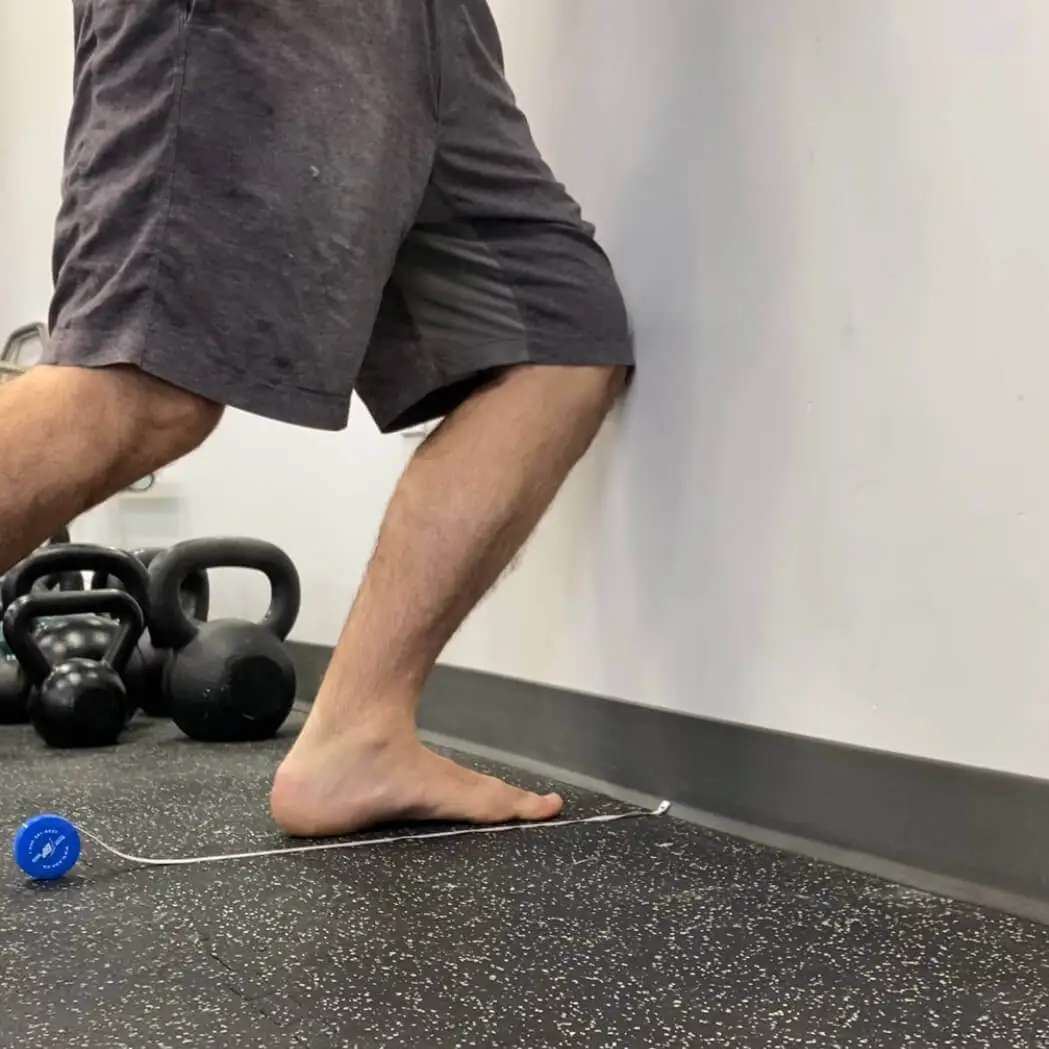
A basic knee-to-wall check can help identify a meaningful left-right difference in ankle motion. Face a wall with one foot planted flat, drive that knee forward toward the wall without letting the heel peel up, and find the farthest comfortable toe distance at which the knee reaches it. Measure both sides with the same technique. This is a self-comparison tool, not a diagnosis or proof your squat requires a wedge.
Equipment Worth Exploring
Explore equipment, accessories and gear from our carefully selected range.

Leg Press/Hack Squat BPR-790
Convertible 45-degree leg press and hack squat machine with a broad footplate and band pegs.

Compact Leg Press CLP-700
Compact reverse-style leg press with a moving seat carriage and an adjustable footplate.

Leg Extension/Curl BCO-780
Leg extension and lying leg curl combo with plate loading, band pegs and a cable-loading option.

Seated Leg Combo BCO-680
Adjustable seated leg extension and leg curl machine with band pegs for added resistance.

Belt Squat Collar
Heavy-duty collar adapter for compatible belt-squat and landmine bar setups.

VForce 3IN1 Max
Six-post all-in-one rack with Smith machine, functional trainer, and variable-force cables.


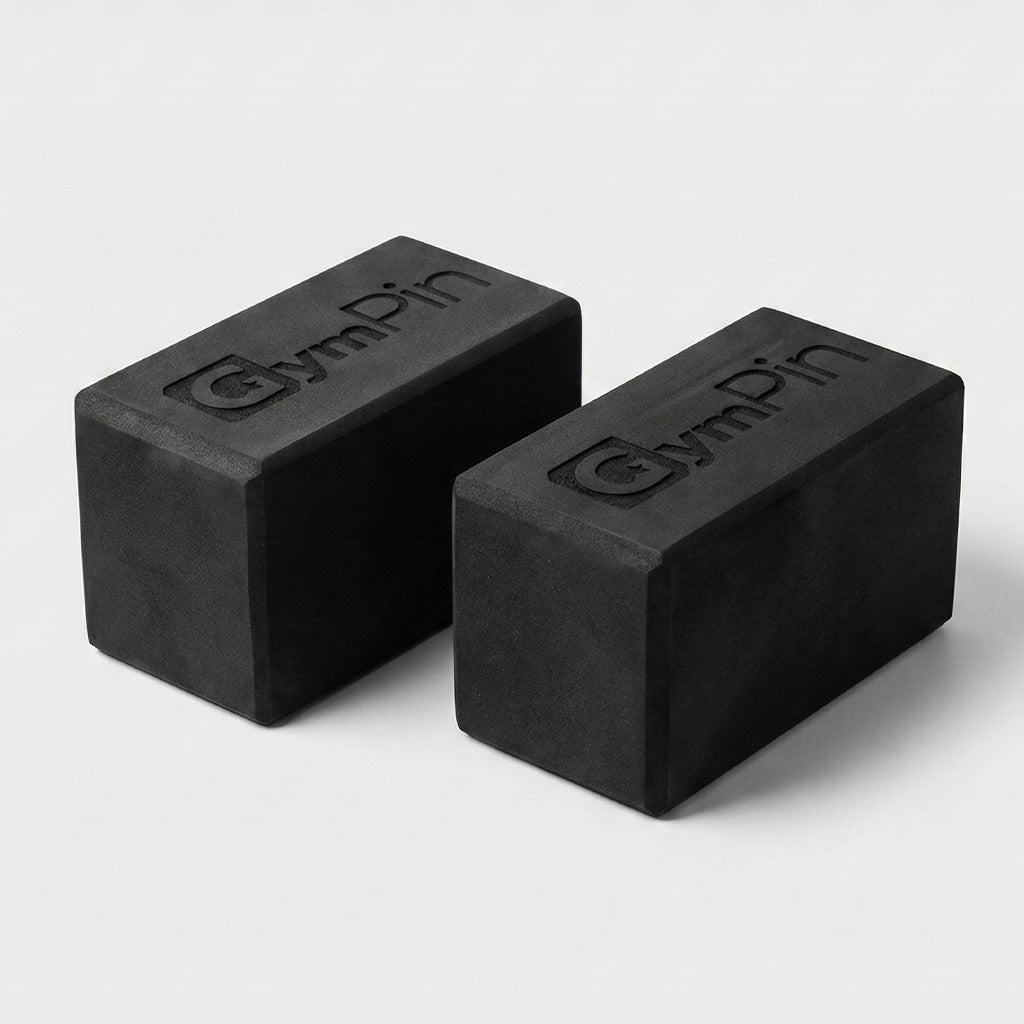
GymPin Starting Blocks
Portable high-density foam blocks for adjusting machine starting positions and range of motion.

Rubber Hex Dumbbells
Rubber-coated hex dumbbell pairs with a stable shape for home and commercial strength training.
A two-session wedge test worth repeating
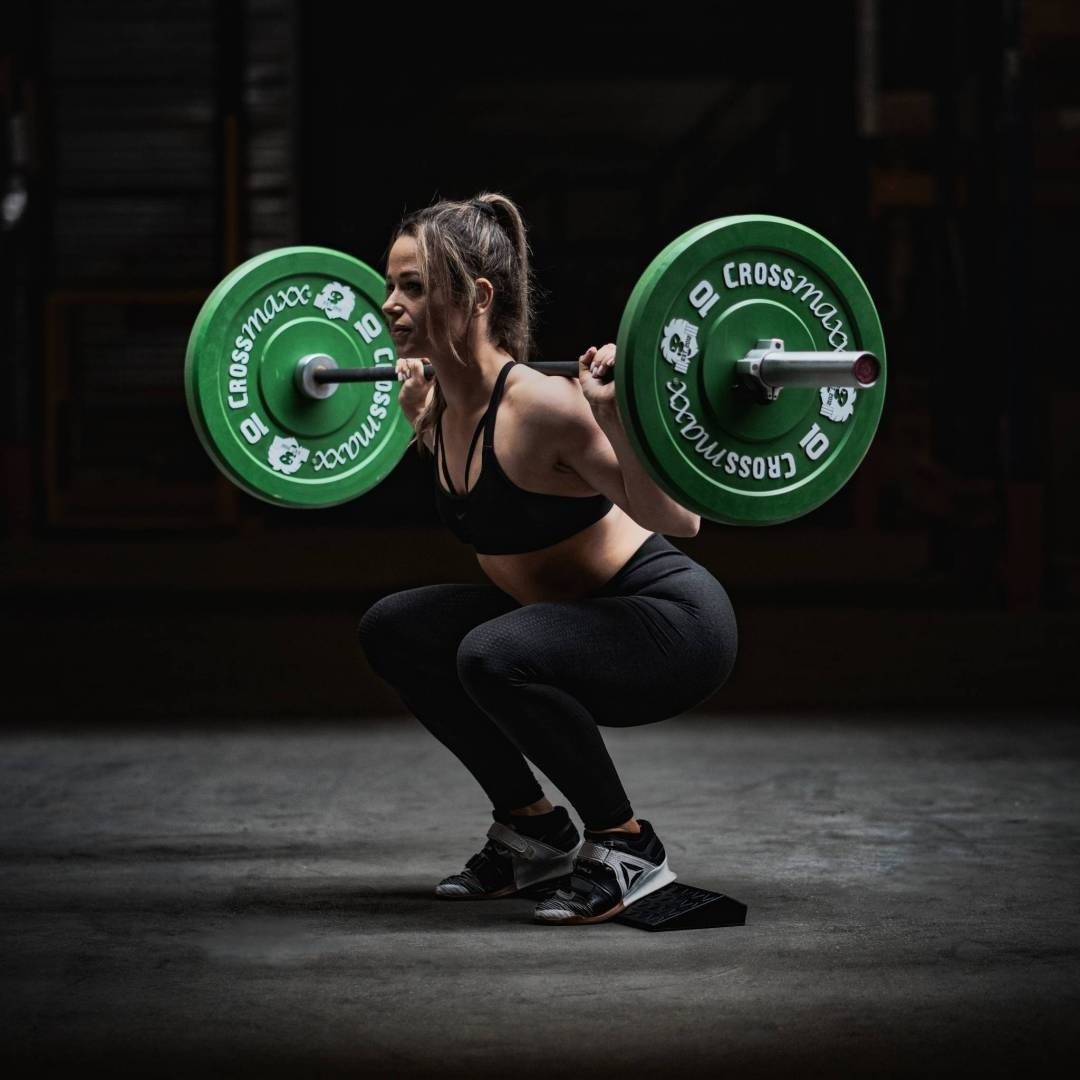
On the first training day, warm up as usual and choose a manageable squat load that allows five repeatable, technically clean repetitions. Perform a flat-foot set and record the side-view depth, bar path, foot pressure and whether your heels lift. Rest adequately, then repeat with a low, stable heel elevation and otherwise the same stance, shoes, tempo and bar position. Do not chase more depth if you lose control.
After another rest, decide which setup you can reproduce without wobbling or shifting your hips. Rate the movement’s perceived effort and note where it feels demanding. These are personal observations, not measurements of quadriceps hypertrophy or lumbar forces. If the wedge changes depth, record roughly how much instead of writing that it ‘activates 30% more quads.’
On a second session later in the week, repeat the comparison at a similar intensity. A single good rep on a wedge might reflect novelty, fatigue, a different warm-up or a deeper comfort level that day. Agreement across two sessions is a more sensible reason to keep experimenting. If neither setup clearly wins, you do not need to buy another attachment.
Bottom line: heel wedges can change the ankle and knee angles in a squat. They do not automatically improve balance, power, growth or injury risk. Choose the position that delivers clean, repeatable work and judge it by the outcome you can actually track.

Leg Day Shirts & Workout Gear
Leg-day gym shirts and workout gear for lifters who never skip squats, lunges and lower-body punishment.


Heavy Squatter Meme Squats & Gains Leg Day Wizard Top T-Shirt
Heavy lifts, good laughs, and a little “Heavy Squatter” energy.

2 Plates Squat Club Meme Shirt – Motivational Leg T-Shirt
Heavy lifts, good laughs, and a little “2 Plates Squat Club” energy.

Coffee Shots & Heavy Squats for Leg Day, Lifting and Fi Tank Top
Add some leg-day attitude to training with “Coffee Shots & Heavy Squats”.

Squatbucks Gym | Funny Starbucks Parody Workout Decal | Sticker
Stick a little “Squatbucks” humor on your favorite gear.


Never Skip Leg Day Squats & Deadlifts Meme , Top T-Shirt
Show some leg-day attitude with a playful “Never Skip Leg Day” tee.


Leg Day Gains | LEGO Muscle Shirt For Squats & Deadlift Tank Top
Add some leg-day attitude to training with “Leg Day Gains”.

Heavy Metal Skeleton Squat for Powerlifting, Bodybuildi Tank Top
Bring “Heavy Metal Skeleton Squat” humor to your next lifting session.