Advertising disclosure: This page includes affiliate product links that may earn us a commission, as well as products from our own store.
A farmer’s walk looks almost too simple to require its own equipment: pick up heavy objects and carry them. Yet the handles determine how much room you need, how the load moves, how hard it is to start, and whether the setup suits a beginner or a competition specialist. The $319 Sorinex Farmer’s Walk Handles are a useful reference point because their published dimensions are unusually clear.
This is a specifications-led buying and training guide, not a hands-on test of equipment we own. We will contrast a 27-pound-per-hand long steel handle with compact alternatives and competition-style timber, then build a practical carry session around what a home gym actually has available.
The $319 long-handle setup: what you are buying
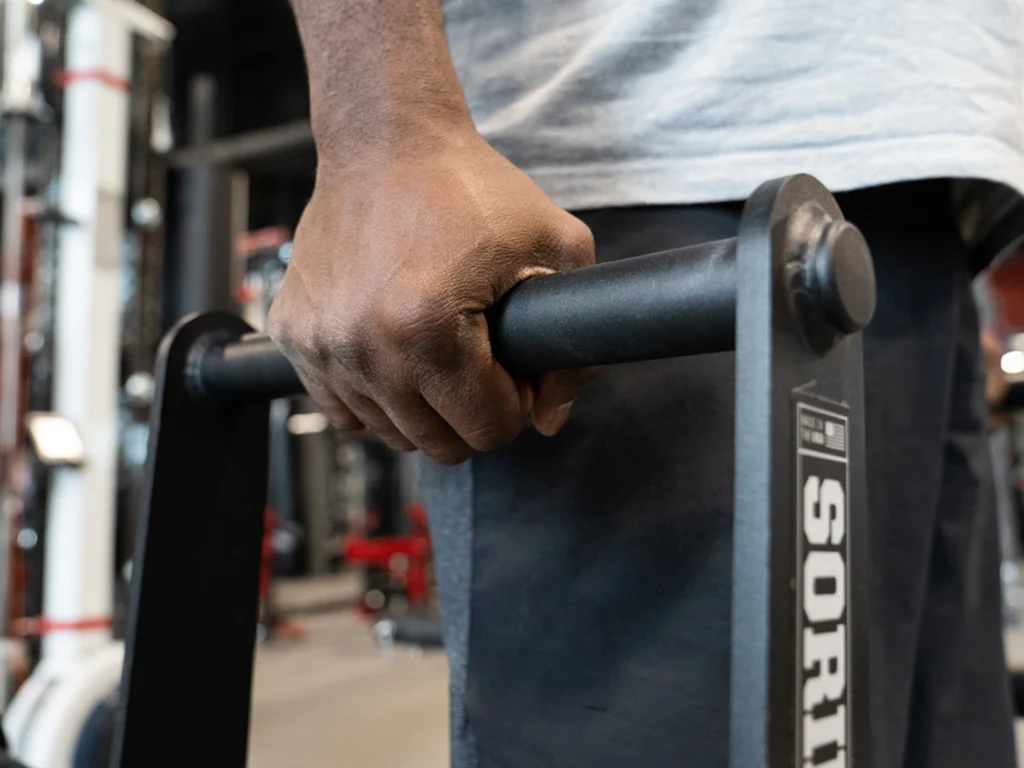
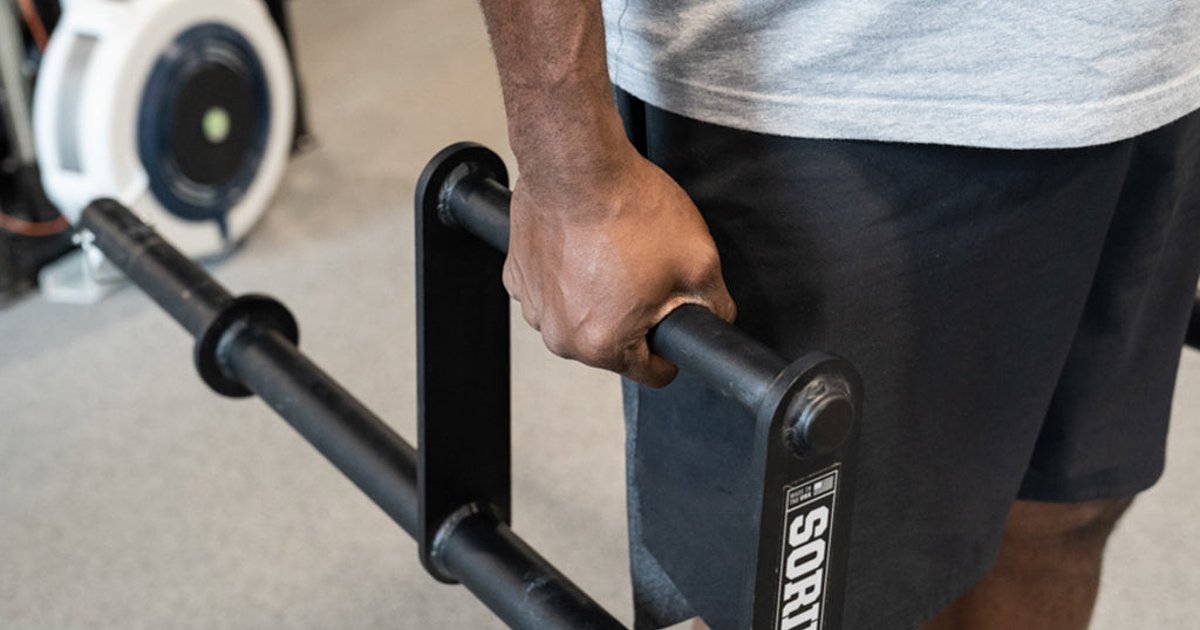
The listed pair of Sorinex Farmer’s Walk Handles costs $319 before any applicable shipping or taxes. Each steel handle is 60 inches long, weighs 27 pounds unloaded and has a 1.25-inch-diameter grip. That is a relatively accessible starting weight for a dedicated strongman implement: the empty pair weighs 54 pounds in total, spread between two hands. The painted black textured finish is meant to offer a secure gripping surface, not to turn grip strength into an automatic advantage.
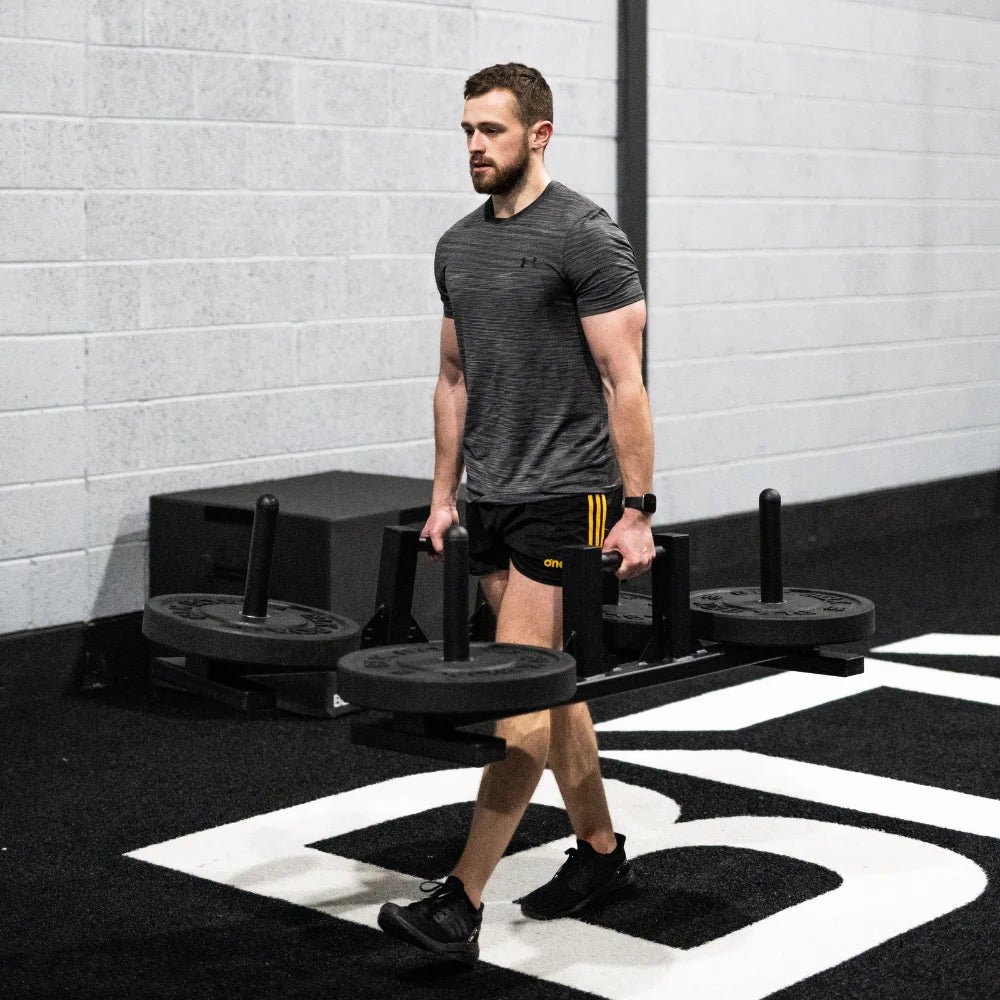
The long format matters more than the logo. Plates sit away from your legs, giving a different balance and clearance challenge from walking with dumbbells or kettlebells. You have to manage how both loaded bars sway through your first steps and around a turnaround. This style can approximate a familiar competition carry without demanding a giant timber frame.
On the other hand, five feet of steel per hand needs a real walking lane. In a compact garage, you can have enough room to deadlift the handles but not enough clear runway to benefit from them. Measure the actual route, including turning room, door swings and obstacles, before deciding that an attractive specification sheet equals a sensible purchase.
Plates, collars and clearance are the hidden costs
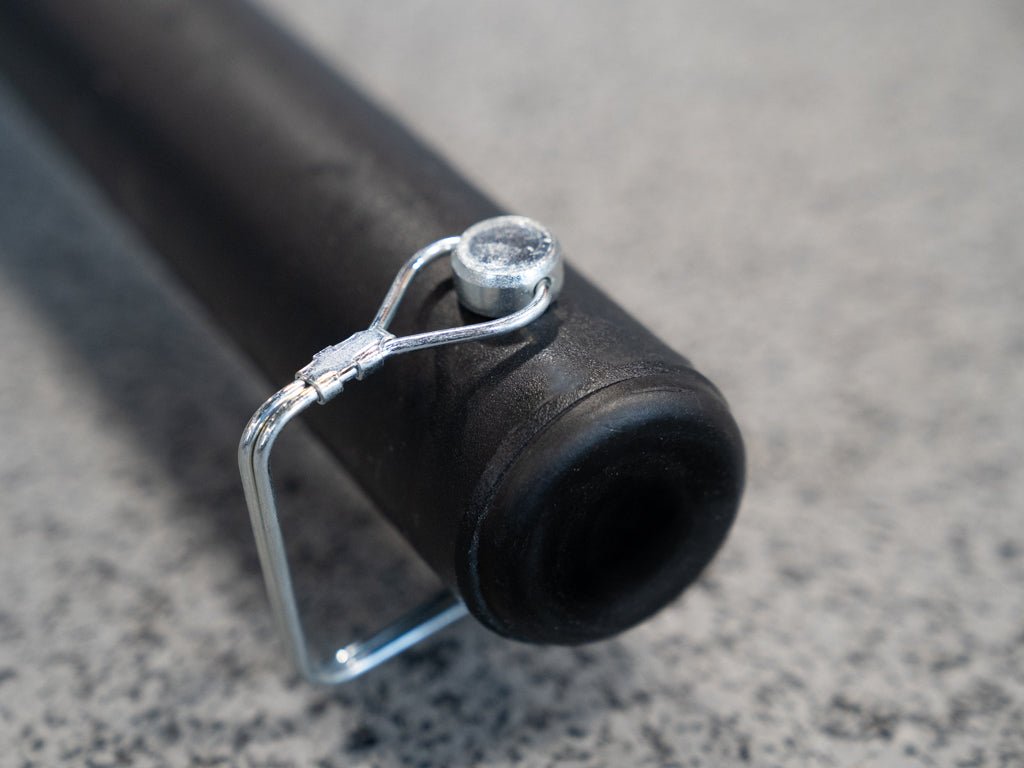
A pair of unloaded carry handles is only the beginning of the expense. A lifter planning 100 pounds in each hand, for example, would need to add roughly 73 pounds per handle to these 27-pound implements. That calls for a substantial amount of compatible plating, plus safe loading and a floor capable of surviving occasional controlled set-downs. The 100-pound example is simple arithmetic, not an advertised load capacity.
Check plate fit before ordering. Sorinex specifically says these handles work with bumper and iron plates but that ordinary spring collars will not work on their sleeves. Do not interpret that as permission to walk with unsecured plates. Ask the manufacturer which retainers suit the particular sleeve and your plate combination. The cost of compatible hardware belongs in the purchase calculation.
Also think about the pickup. A handle that starts with its grip above the floor can feel very different from pulling a loaded trap bar. The balance changes when you accelerate, when your gait shortens under fatigue, and when you put the implements down. Protect the flooring with appropriate training surfaces, use a straight unoccupied route, and stop the set before repeated sideways swings make a controlled landing unlikely.

Equipment Worth Exploring
Explore equipment, accessories and gear from our carefully selected range.


Pro Sled System
Heavy-duty push-pull training sled for loaded conditioning, speed, and strength work.

Open Hex Bar
Open-frame trap bar with multiple handles for deadlifts, carries, and lower-body training.


Cast Iron Kettlebells
Textured cast-iron kettlebells for swings, squats, carries, and full-body training.


Leather Lifting Straps
Padded leather straps support grip during heavy rows, deadlifts and pulling exercises.

Leather Wrist Grips
Padded leather lifting grips help support the hands and wrists on heavy pulling exercises.
Compact Ranch Hands: a different tool, not a cheaper twin
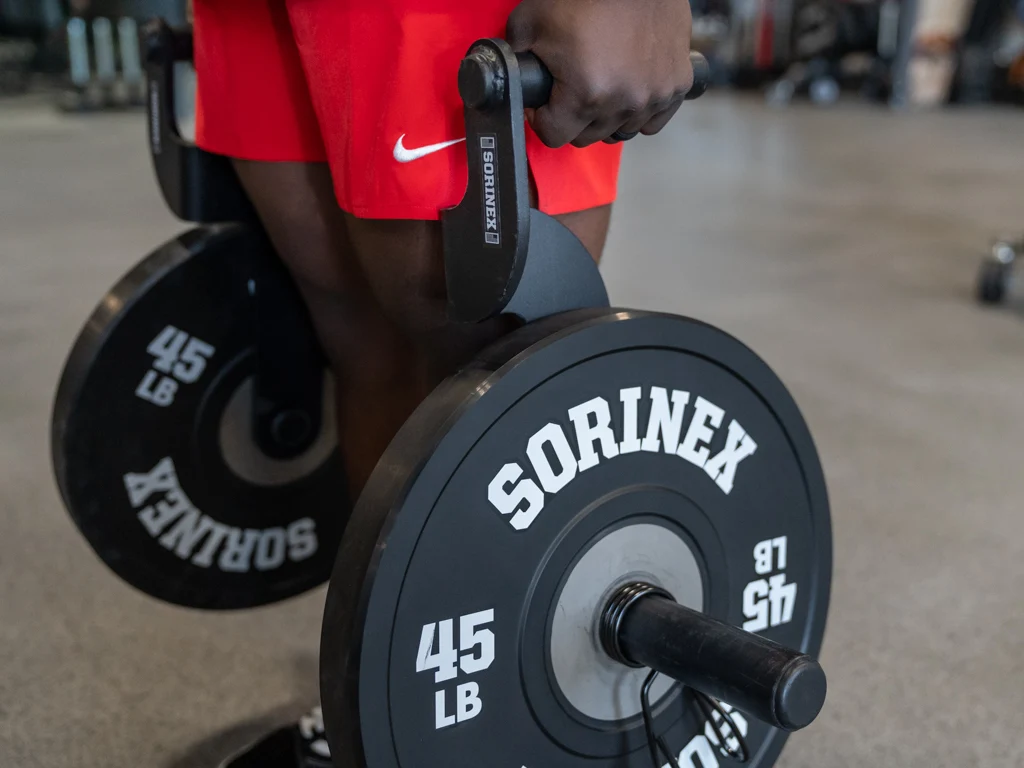
Sorinex also lists the Ranch Hands at $249 per pair, so it is tempting to rank them by price alone. That misses the geometry. The compact design has a published 17-inch height, 7.5-inch width and 9-inch depth, with a 6.25-inch handle and a 1.25-inch grip diameter. Its sleeve is 8 inches long. In contrast, the long Farmer’s Walk Handles distribute weight along an extended 60-inch frame.
The Ranch Hands are marketed as space-saving tools that can be set down and rolled into position. They include their own specialty collars, another meaningful difference when the conventional handles require you to resolve collar compatibility separately. Compact handles may be convenient for carries, static holds and shrugs in a modest training area. They do not necessarily replicate the way a long frame swings, clears the legs or turns.
For a home gym with limited aisle length, that is a fair trade. For a lifter specifically preparing to race with long farmer’s handles at a strongman event, the difference is a reason to practise with the competition format when available. Compare the exercise you intend to perform, not just the maximum load you imagine carrying someday.
Why a $1,125 timber set is a separate category
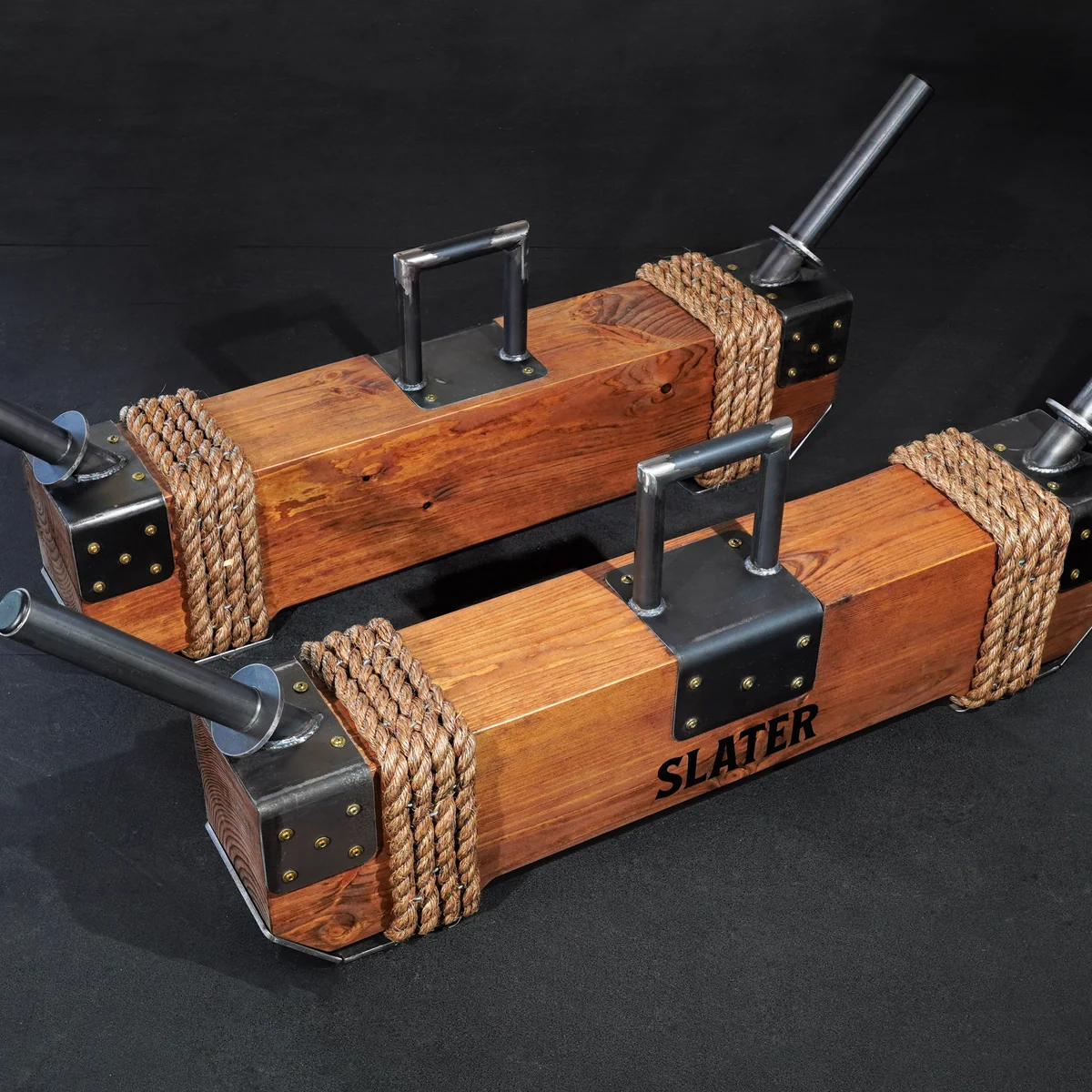
At the heavy end of the comparison, Slater’s Timber Farmer’s Walk Handles are a very different proposition. Their product listing describes two handmade wooden beams, each approximately 125 pounds empty, around 48 inches long and made from kiln-dried eastern white pine. Published loading guidance exceeds 400 pounds, with the maker suggesting additional metal skis for concrete or asphalt and rope for turf or grass. The listed $1,125 sale price was accompanied by sold-out availability when checked, so it should not be presented as an immediately purchasable bargain.
An empty 125-pound timber per hand is not a normal beginner’s progression from a pair of light dumbbells. It is a specialist implement whose bulk, pickup height and ground-contact behaviour shape the task. Heavy timber can teach bracing and deliberate footwork, but it is not inherently superior to steel handles for building general grip endurance. The training goal determines whether that very specific challenge is useful.
Storage is an equal part of the decision. Two bulky wooden frames are expensive in floor space even before the weight plates, loading equipment and lifting lane. If your home gym does not host strongman practice, conventional adjustable dumbbells, a trap bar or a compact farmer’s set can deliver a more flexible strength return for the space occupied.

Strongman Shirts & Strength Gear
Strongman gym shirts and strength gear for lifters who train stones, carries, presses and brutally heavy objects.

The Original Atlas Stone Shirt – Greek Mythology T-Shirt
Heavy lifts, good laughs, and a little “The Original Atlas Stone” energy.


Mount Liftmore Strongman Brian Shaw & Eddie Hall T-Shirt
Rep “Mount Liftmore Strongman” humor in and out of the gym.

Atlas Gains Meme – Marble Sculpture T-Shirt
Make gym days more fun with “Atlas Gym Gains Funny Meme Graphic” style.

Atlas Lifting The Earth Meme – Greek God Bodybuilder T-Shirt
Heavy lifts, good laughs, and a little “Atlas Lifting The Earth” energy.

Enter Strongman Enter Sandman Parody Strongman Atlas St Hoodie
Stay casual and show some metalhead attitude with “Enter Strongman”.


Strongman Superman Crewneck Pullover Sweater Gymbros Co T-Shirt
Keep things casual with a little “Strongman Superman” attitude.

Big Man Batman Gym Hero Decal Workout Comic Style Gym Sticker
Stick a little “Big Man Batman Gym Hero” humor on your favorite gear.

Carry technique: the first step makes or breaks the set
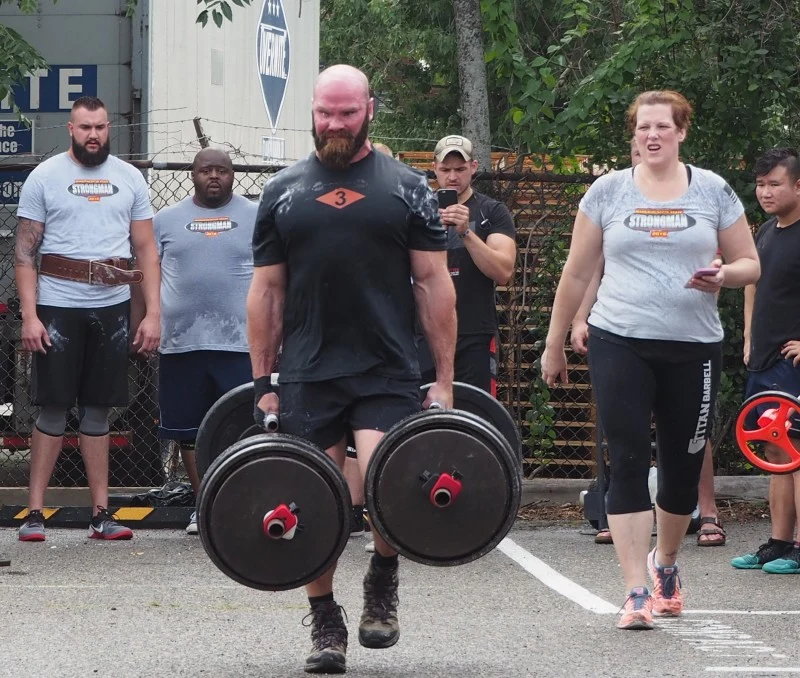
Start with matched loads in both hands and enough free runway to avoid a rushed turn. Stand between the implements, set your feet evenly, hinge down to the handles and brace as though preparing for a controlled deadlift. Get fully upright before trying to accelerate. The object is to keep the weight close to your sides without letting your shoulders collapse or your lower back extend excessively.
Begin with short, deliberate strides. A fast first step with a swinging bar can pull you off line, while overstriding makes it harder to control every landing. Once you can walk smoothly at an easy load, add modest weight or distance, but not both simultaneously every session. Keep the same distance when comparing progress; otherwise, a heavier carry completed over half the route creates an inflated sense of improvement.
Grip is only one failure point. Breathing, trunk stiffness, uneven pavement and speed of movement all matter. Use shoes that feel stable and non-slippery, avoid collars or plates rattling loose, and keep spectators and other gym users out of the lane. If you cannot put the implements down under control, you were probably working too near your limit for that environment.
A practical three-part carry workout for ordinary lifters
Use a simple progression once or twice a week, separated from your heaviest pulling session if your hands and back need the recovery. First, warm up with easy carries: three 15- to 20-metre trips at a weight you could confidently double in distance. Think of these as rehearsal for balance, bracing and clean turnarounds rather than something that should leave you exhausted.
Next, perform four working carries of 15 to 25 metres, allowing roughly two minutes between efforts. Choose a load at which the last few steps require concentration but the handles stay stable. Add a small amount of weight only after all four efforts remain equally tidy. To finish, do two controlled farmer’s holds of 20 to 30 seconds using a lighter load. Static holds train support grip without forcing you to rush across the floor when fatigue is high.
If you have only kettlebells or dumbbells, use the same distance and timing. The load path will differ, but the training intent survives. A trap bar is another practical option if you have enough space, although its single frame changes how your hands move independently. This is one way to train carries, not a promise of a certain competition result or an excuse to ignore elbow, wrist or back discomfort.
For buyers, the conclusion is straightforward: Sorinex’s $319 long handles make sense for lifters who can dedicate room to true two-implement carries; the $249 compact pair prioritizes convenience; expensive wooden frames are specialist tools. The best choice is whichever one you can load securely, walk with safely and use consistently.
Equipment Worth Exploring
Explore equipment, accessories and gear from our carefully selected range.


Competition Plates
Competition-style bumper plates for Olympic lifts and loaded strength training.


Grip Plates
Rubber-coated weight plates with handholds for loading barbells and machines.


Slam Ball
Low-bounce weighted slam ball for explosive throws and high-intensity conditioning.


Some product links may be affiliate links, which can support Mind Muscle Perfection at no additional cost to you.