Advertising disclosure: This page includes affiliate product links that may earn us a commission, as well as products from our own store.
A short strength workout needs a clear priority, a practical exercise order and enough recovery to keep the work useful. Alternating exercises can help, but only when the setup and effort remain manageable. Build the session around the work you want to preserve, then save time through preparation, sensible pairings and a fallback for occupied equipment.
Choose the lift that earns first place
Start by deciding what the session must accomplish. A short visit can preserve a useful training habit, provide demanding work for a particular muscle group, or advance a priority lift. Those are different jobs. Trying to squeeze every exercise from a longer session into the same small window makes the plan harder to execute and harder to judge afterward.
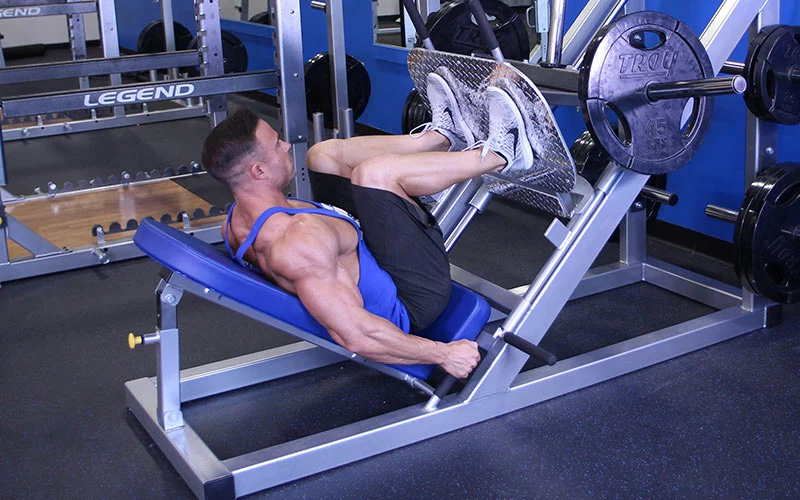
For a lower-body priority, a familiar leg press might deserve the first work sets. For another lifter, that place belongs to a squat or a press. Pick an exercise you can set up confidently and perform with repeatable technique. The photograph illustrates a leg press option; it is not a prescription to copy the machine position or load shown. Fit the equipment to your body before adding effort.
Write a short order of importance before entering the gym: first priority, complementary movement, optional accessory. If the clock runs down, remove the optional work first. That preserves the purpose of the session and avoids the temptation to hurry the most demanding exercise. A fixed stopping time becomes a planning constraint instead of a surprise during the final set.
An academic time-efficiency guide highlights exercise selection, preparation and paired training as ways to organize limited gym time. Treat those ideas as choices to test. They do not establish that every lifter should use the same short routine, nor that all rest is wasted time. Your recent training, available equipment and ability to recover still shape the session.
Include preparation in the time budget. Leave room to warm up and practise the main movement with easier efforts before the working sets. Choosing a familiar exercise saves decision time without requiring you to skip that preparation. A realistic plan begins when you reach the equipment, not when you finally start the first hard repetition.
Pair exercises that share a workable setup
Pairing exercises means alternating between two movements rather than finishing every set of one before starting the other. A press and a row are a familiar example. In a busy gym, however, a theoretically efficient pairing can become a long walk between occupied stations. The equipment arrangement matters as much as the names in your training app.
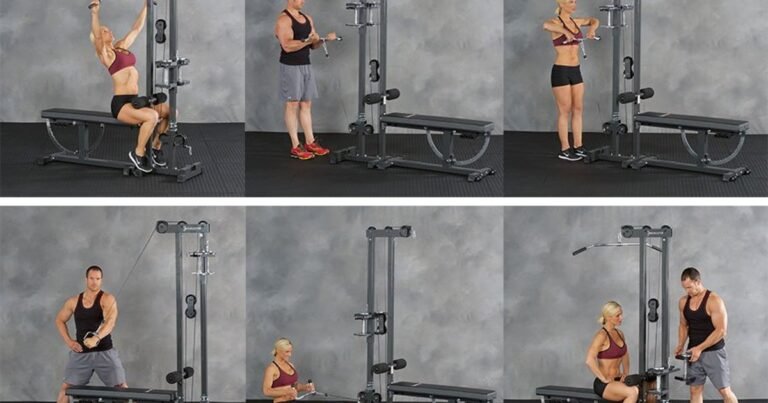
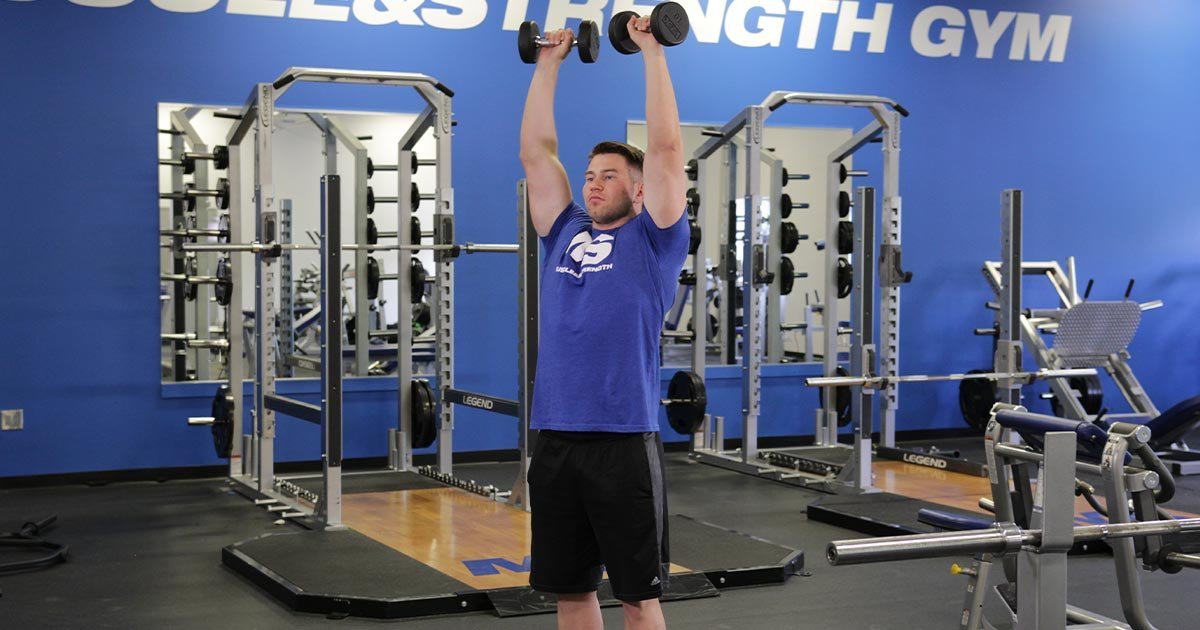
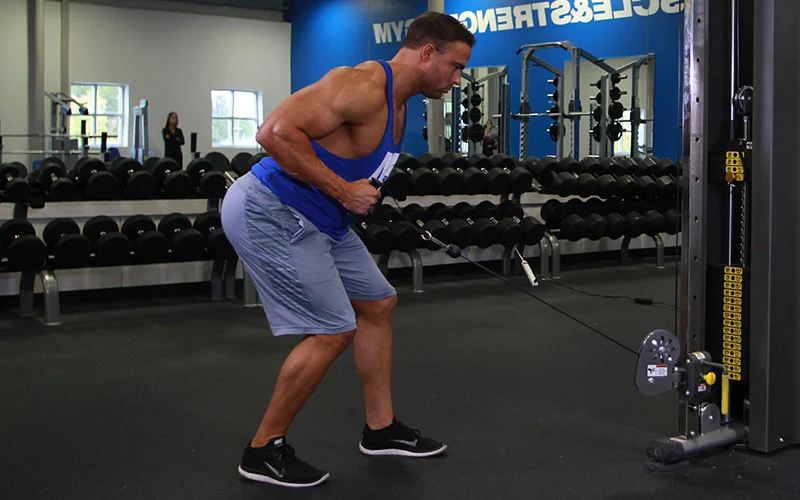
Consider a standing dumbbell press and a cable row only when you can use the nearby space without obstructing anyone or reserving several stations. The single-arm cable row shown here also requires work on both sides. Count that honestly when estimating the time. Changing hands, adjusting the cable and moving a bench are part of the session even though they are absent from the repetition total.
Pairing does not mean the second exercise erases fatigue from the first. In one small acute trial, trained men alternated bench presses with seated rows. The paired format took less time and allowed more total lifting work than the comparison format, while producing greater measured neuromuscular fatigue. That finding describes one session and specific exercises, not guaranteed long-term muscle growth.
Use the first few sessions to check whether both movements remain controlled. If your pressing turns into excessive leaning after the row, change the pairing, reduce its demands or use separate sets. The aim is a repeatable schedule for useful training, not a rule that every movement must be attached to another one.
Keep the pairing easy to remember: one set of the first movement, the planned transition, one set of the second movement, then the recovery you need before repeating. Decide in advance whether warming up the second movement needs its own preparation. A clear sequence prevents improvisation from consuming the time you hoped to save.
Keep enough recovery to make the next set useful
A stopwatch can show that the session is moving quickly while hiding that the work is deteriorating. Watch the exercise itself. Are you shortening the movement, losing the intended position or making a much lighter load necessary just to continue? Those changes deserve attention before you celebrate a better finishing time.
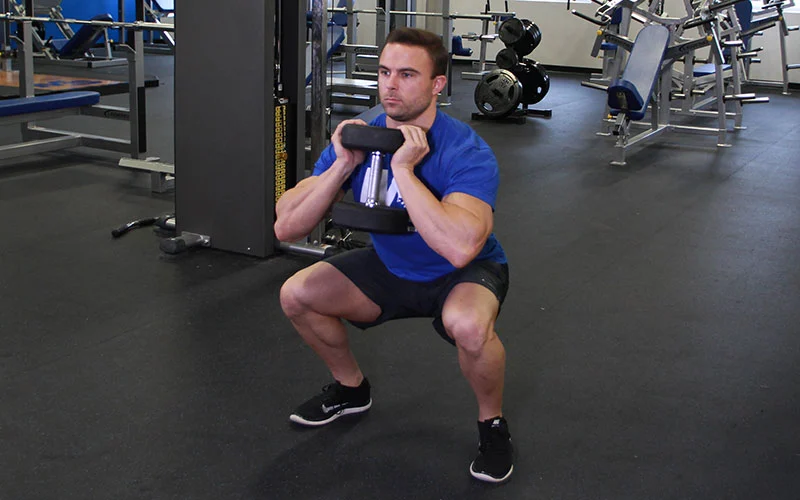
For a goblet squat, for example, the relevant standard is a controlled version suited to your mobility and strength. The photograph shows the dumbbell held at the chest in a squat. It does not mean that matching the pictured depth is compulsory. If you cannot maintain your chosen position because you are still recovering from the previous exercise, allow more time or separate the movements.
Distinguish local muscular effort from simply being out of breath. Both may occur during a hard session, but they do not provide the same information about whether the intended muscles received useful work. A pairing that turns every set into a struggle to regain your breathing may have drifted away from the strength task you selected at the start.
Rest needs can differ between exercises and between sets. Keep a planned recovery period, then adjust when performance shows that the plan is inadequate. Do not turn a short workout into a test of ignoring pain or forcing repetitions through an unstable position. Stop an exercise that causes pain and seek appropriate guidance when the problem persists.
Protect the highest-priority work when making changes. You might keep its normal recovery and save time by dropping one accessory, choosing a simpler second movement or reducing equipment changes. That is still a time-efficient session. Finishing fewer planned exercises well can be more useful than completing a longer checklist with steadily declining control.
Prepare a fallback before the equipment is occupied
A fallback plan answers a practical question: what will you do if the chosen station is unavailable? Decide while you are calm, rather than after spending several minutes waiting beside it. Choose an alternative you already know and can perform with the equipment that is actually free. A rushed session is a poor occasion to teach yourself an unfamiliar variation.
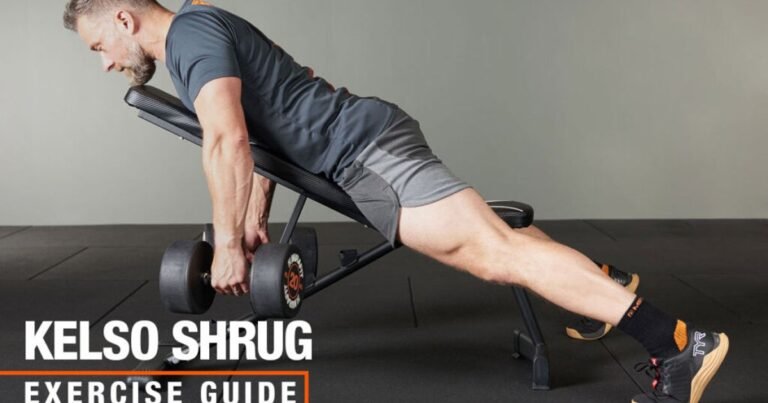
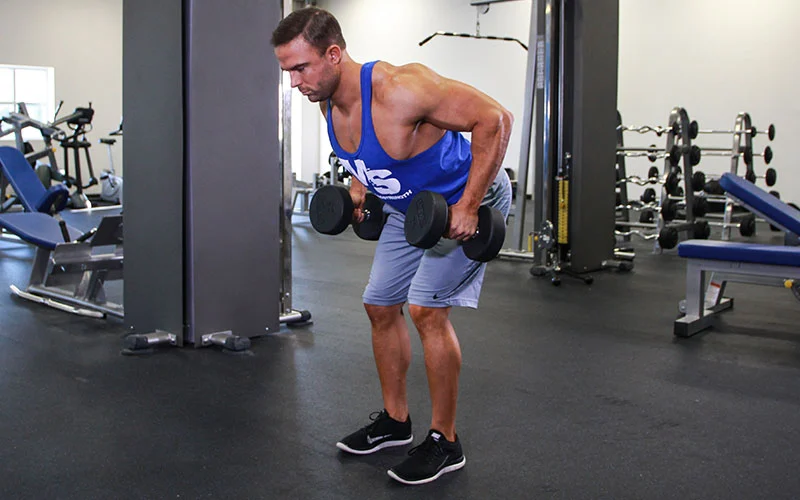
A bent-over dumbbell row can be one option when a cable station is busy, provided you can maintain its unsupported position comfortably. The photograph shows that specific bilateral variation. It is not mechanically identical to every cable or chest-supported row. If holding the position becomes the limiting factor, use a familiar supported alternative or change the session instead of pretending the exercises are interchangeable.
Keep replacement records separate. A set performed on a cable stack and a set with dumbbells cannot be compared by their displayed numbers alone. Different equipment, support and movement paths change the task. Log the actual variation so a later session does not look like unexplained progress or regression when the setup simply changed.
The same principle applies at home. Put the dumbbells you expect to use within a clear working area, prepare a stable bench when needed and leave enough space for the movements. Equipment that changes quickly can help, but buying another accessory will not resolve an overcomplicated exercise order. First remove unnecessary moves between stations and repeated adjustments. For barbell work, plan the bar, plates, collars and rack together; repeated loading changes also use time.
Have one fallback, not an endless menu. A concise plan might specify the intended row and one familiar alternative, with an optional accessory removed if time is tight. That gives you a usable response to a busy gym while preserving enough consistency to learn whether the routine works for you across several visits.

Equipment Worth Exploring
Explore equipment, accessories and gear from our carefully selected range.


Rubber Hex Dumbbells
Rubber-coated hex dumbbell pairs with a stable shape for home and commercial strength training.

FID Bench MAX
Adjustable bench offering flat, incline, and decline positions + adjustable headrest.


Multi Bench MBX-650 2.0
Adjustable multi-bench with roller adjustment, 15 backrest positions and accessory mounts.


Log the work and the time so the next session improves
Record more than the finishing time. Note the exercises, loads, repetitions, completed work sets and any meaningful changes in recovery or setup. A training log gives the shorter session a history. Without those details, a fast visit with lighter, less controlled work can look like an improvement simply because it ended sooner.
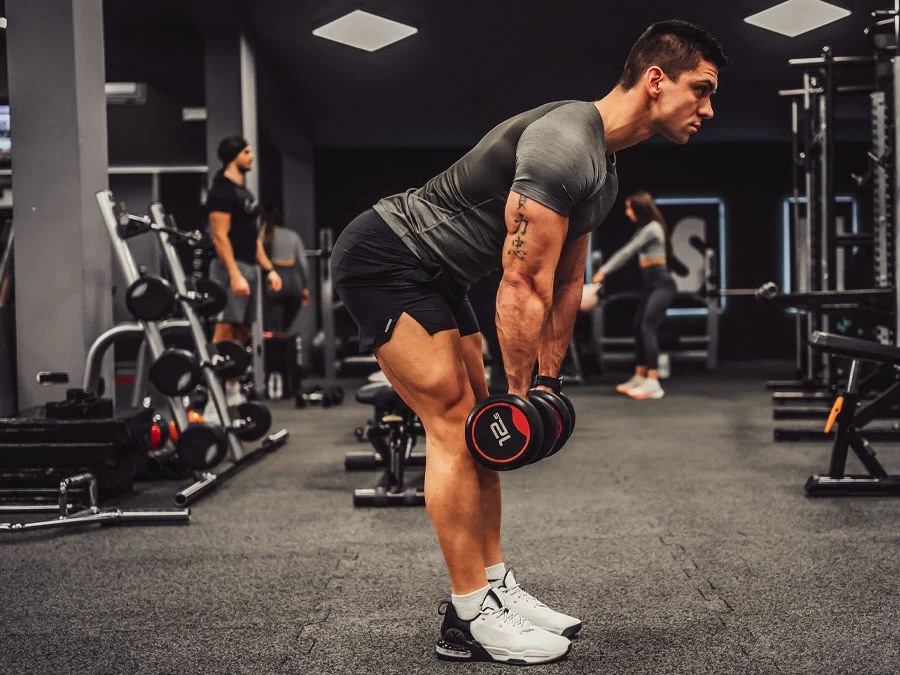
For a familiar dumbbell deadlift, for example, record the actual variation and the weight of each dumbbell. The photograph illustrates one dumbbell lifting option, not a reason to add a new hinge movement to every brief workout. Compare later sessions using the same setup wherever possible. If you change the exercise or available range, write that down before interpreting the numbers.
Add one practical note: the row station was occupied, changing dumbbells took longer than expected, or the second pairing needed more recovery. These observations explain where time went. They also identify the next useful adjustment, which might be moving an exercise earlier or choosing a simpler alternative rather than attempting to perform every set faster.
Judge the plan over repeated sessions. Can you arrive, prepare, complete the priority work and leave when needed? Are the exercises still progressing appropriately, and does the routine fit the rest of your training week? A schedule that you can repeat before work, at lunch or in the evening has value even when the individual sessions are not identical.
Change one part at a time so the result remains interpretable. Keep the first priority, test a simpler pairing and review the log before adding more exercises. The goal is a shorter session with a clear purpose and a useful next step. Time saved through preparation and sensible choices is easier to sustain than time saved by repeatedly rushing recovery.

Bodybuilding Shirts & Workout Gear
Bodybuilding shirts, tanks and gym gear for lifters chasing muscle, size, symmetry and the pump.

Rest Day Sloth – Essential T-Shirt
Show some bodybuilding attitude with a playful “Rest Day Sloth” tee.

Consistency Is Key Stoic Greek God Marble Sculpture T-Shirt
Make gym days more fun with “Consistency is Key Stoic Greek God Marble” style.

Flexonomics Tee
Show some lifting attitude with a playful “: Flexonomics Muscle Graph” tee.

Meme – Shhh I'm Doing Math Plate Math Weightlifting T-Shirt
Heavy lifts, good laughs, and a little “Shhh I'm Doing Math Plate Math” energy.

Be Stronger Than Your Excuses – Motivational T-Shirt
Rep “Be Stronger Than Your Excuses” humor in and out of the gym.

Muscle Mountain – Gymbro , & Gains Meme Top T-Shirt
Rep “Muscle Mountain” humor in and out of the gym.


– Installing Muscles Downloading Gains Meme Tank Top
Your gym-day look, with a playful “Installing Muscles Downloading Gains Meme” twist.

Lift Eat Sleep Repeat Meme Sweater & T-Shirt
Bring “Lift Eat Sleep Repeat” humor to your everyday gym style.

Safety Practice Safe Sets Sweater Jumper T-Shirt
Show some gym-day personality with “Gym Safety”.