Advertising disclosure: This page includes affiliate product links that may earn us a commission, as well as products from our own store.
Kelso Shrugs: Train Shoulder-Blade Movement Without Turning It Into a Row
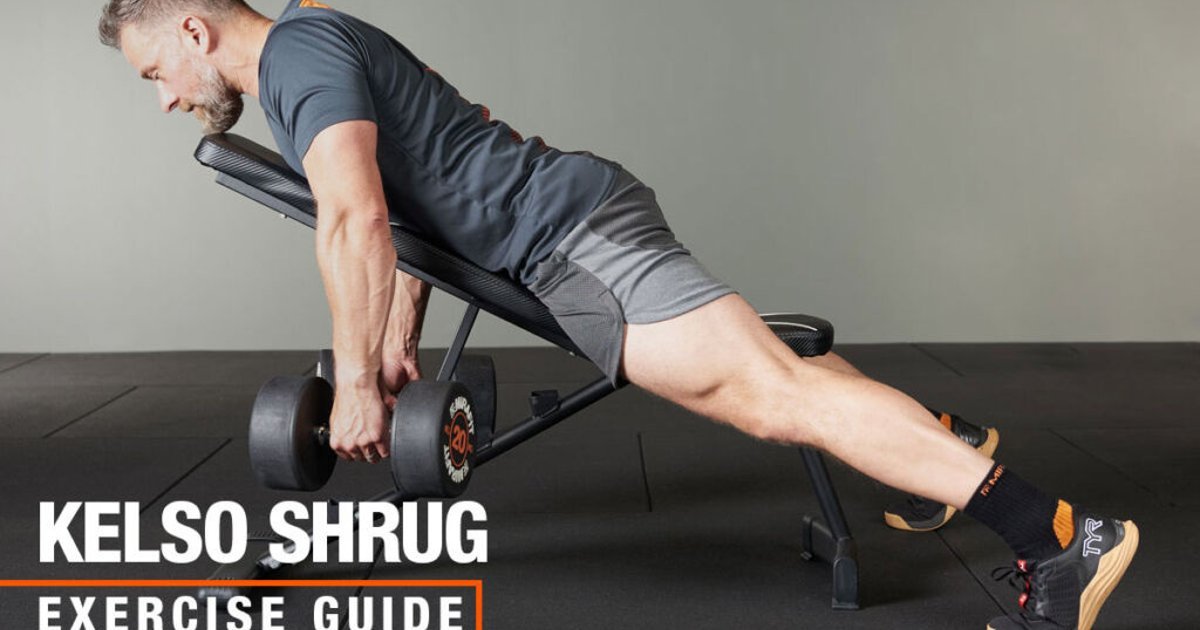
The Kelso shrug is a useful reminder that a small movement can be a deliberate exercise rather than an unfinished repetition. With your chest supported and your arms hanging, the aim is to move the shoulder blades against resistance while keeping elbow bending to a minimum. The weights travel only a short distance.
That makes the exercise different from both a chest-supported row and a standing shrug. It can be an optional addition to upper-back training, but it does not replace every pulling movement or guarantee a posture correction. Learn the distinction first, choose a manageable load and judge progress against repetitions you can actually repeat.
1. Understand what is supposed to move
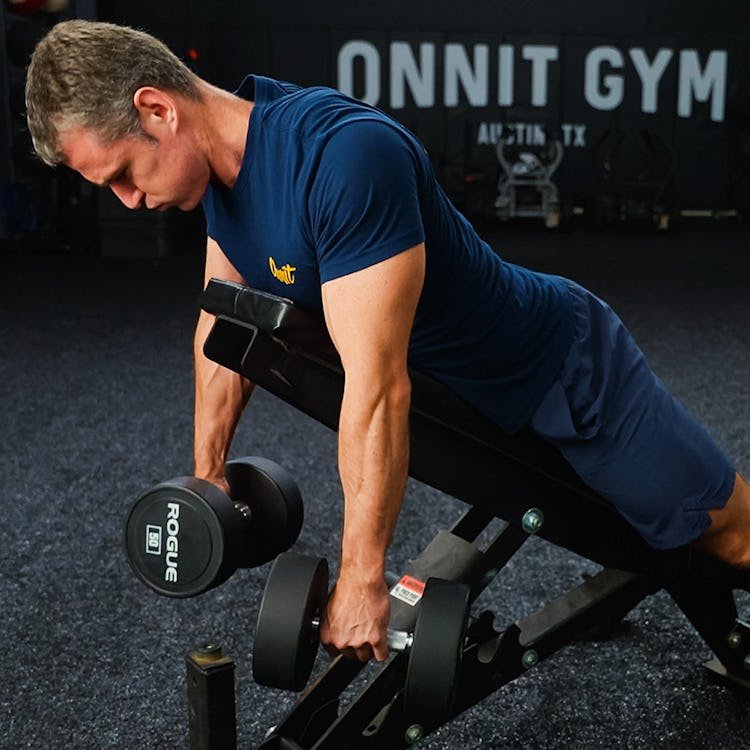
In a chest-supported Kelso shrug, the shoulder blades move from a more spread position towards each other. This backward movement is called retraction. The trapezius and rhomboids contribute to controlling the shoulder blades, while your hands and arms transmit the resistance. The exercise is not complete isolation of one small part of the back.
Keep your elbows mostly straight and allow the movement to come from the shoulders rather than pulling the dumbbells towards your ribs. A slight natural elbow bend is different from actively curling the weights through the repetition. If your elbows travel well behind you, you have started doing a row instead.
A standing shrug primarily raises the shoulders towards the ears. The chest-supported position changes how you can move against the resistance, so copying that same upward shrug while lying on the bench misses the intended distinction. Think about a controlled backward squeeze rather than trying to hide your neck between your shoulders.
The short travel can feel underwhelming at first. Resist the temptation to invent extra range by lifting your chest, bending the elbows or jerking your head upwards. A modest, repeatable shoulder-blade movement is more useful for this task than making the weights cover the same distance as a full row.
2. Build a support position you can keep
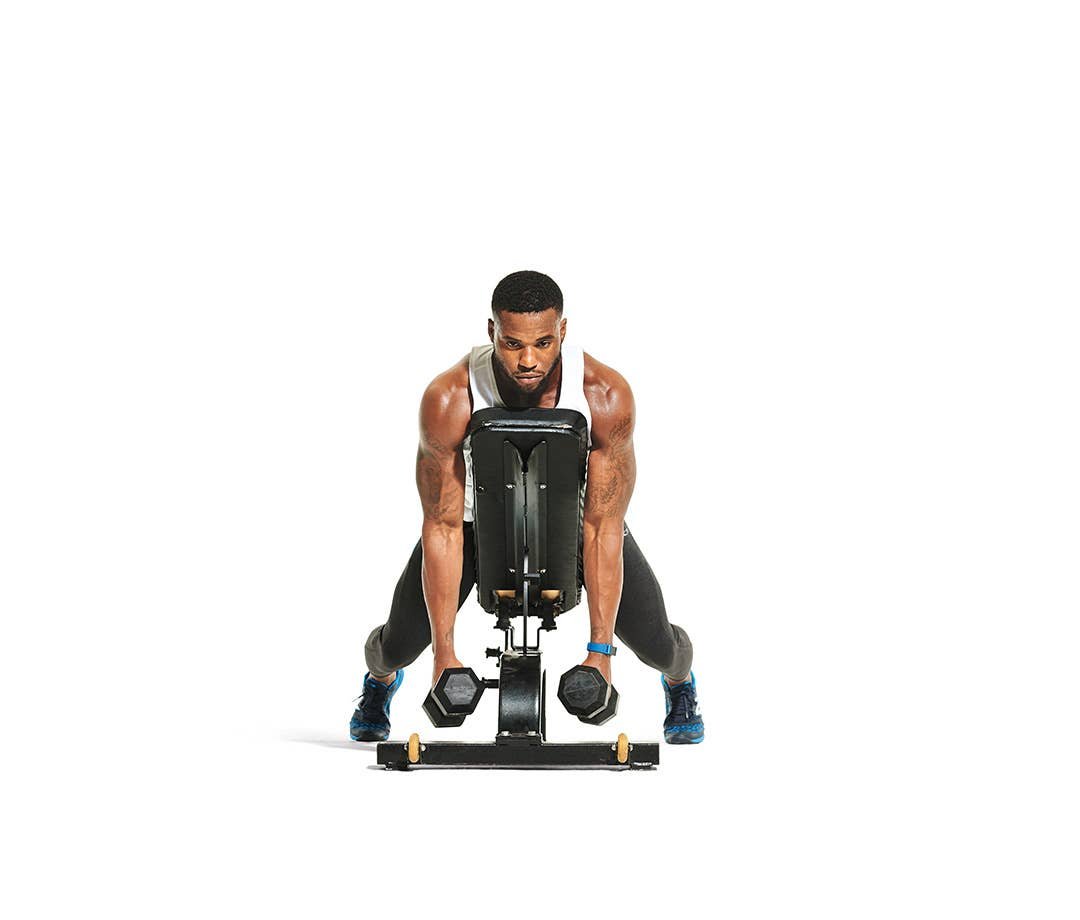
Set an adjustable bench to a moderate incline, commonly around 30 to 45 degrees as a starting point. Check that the adjustment is locked and the bench cannot slide. Lie chest-down with your feet placed securely, leaving enough clearance for the weights and your hands to hang without hitting the floor or bench frame.
Adjust your body position so that the upper edge of the pad does not press into your throat. Keep your head broadly aligned with your upper back rather than craning your neck to watch a mirror. The purpose of the support is to give you a stable base, not to force an uncomfortable position you must endure for the set.
Choose dumbbells you can pick up, hold and put down under control. Do not start with the weight you normally row. The exercises use different movement strategies, and a large number is not useful if it makes the shoulders immovable or forces you to bend your arms to finish.
Bench shape and hand clearance matter more than a particular brand. A long straight bar is another option, but it must clear the bench and your body throughout the small movement. Dumbbells allow the hands to find independent positions. A chest-supported row machine may offer a related option where its design permits comfortable shoulder-blade movement, but each machine needs its own setup check.
Record the bench setting and grip as well as the load. Changing from dumbbells to a barbell or machine changes the task, so keep separate records rather than treating the weight labels as interchangeable.
Check your exit before the first set: you should be able to lower the weights and stand up without twisting around the bench or stepping over loose equipment. If the dumbbells are difficult to reach from the supported position, ask for appropriate assistance or choose a lighter, easier setup. Getting into position should not be the hardest repetition of the exercise.

Equipment Worth Exploring
Explore equipment, accessories and gear from our carefully selected range.


FID Bench MAX
Adjustable bench offering flat, incline, and decline positions + adjustable headrest.


Multi Bench MBX-650 2.0
Adjustable multi-bench with roller adjustment, 15 backrest positions and accessory mounts.


Rubber Hex Dumbbells
Rubber-coated hex dumbbell pairs with a stable shape for home and commercial strength training.


Leather Lifting Straps
Padded leather straps support grip during heavy rows, deadlifts and pulling exercises.
3. Practise the short pull and controlled release
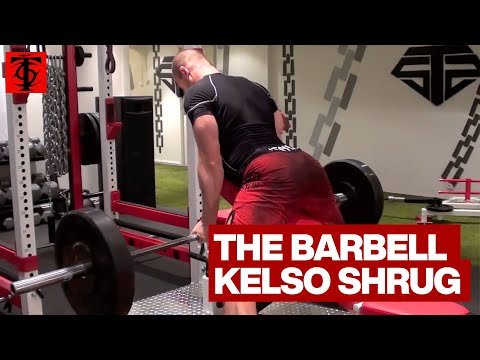
Begin with the weights hanging beneath your shoulders and a secure grip. Let the shoulder blades move forwards comfortably without rounding your entire torso over the pad. From there, draw them backwards, allowing the weights to rise slightly. Keep the chest supported and the arms long as you make that small movement.
A barbell version may use an underhand grip, provided the wrists tolerate it and the bar clears the support. Do not force wrist rotation to imitate a demonstration. For the dumbbell version, a neutral grip is a practical starting point. In either case, the goal remains shoulder-blade movement rather than a powerful elbow pull.
Pause briefly where you can maintain the contraction, then allow the shoulders to move forwards again under control. The release completes the repetition; holding the shoulder blades squeezed together throughout the whole set removes much of the movement you meant to practise. Avoid dropping the weights into the bottom position.
Use a few easy repetitions to check whether you can feel and repeat the distinction. Feeling the upper back work can be helpful feedback, but a burning sensation does not prove that you have isolated a specific muscle or selected an ideal training dose. Look at the movement as well as the sensation.
If the grip becomes the limiting factor, reduce the load while learning. Lifting straps are an optional tool for holding resistance, not a fix for an unstable bench or a weight you cannot control. Learn how to use them separately rather than adding an unfamiliar accessory and a new exercise at the same time.
4. Compare the shrug with a full chest-supported row
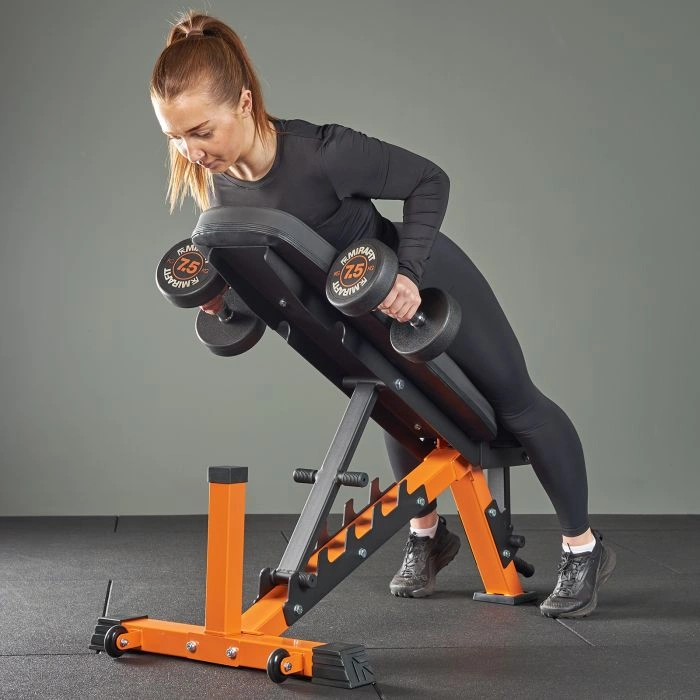
In a chest-supported row, the elbows bend and move backwards as the weights approach the torso. The shoulder blades still move, but the exercise includes a larger contribution from the arms and upper-arm movement. That is useful when rowing is the intended task; it is simply different from a straight-arm Kelso shrug.
This distinction gives you a straightforward quality check. If the first repetitions are short shoulder-blade movements but the final repetitions become full rows, you changed the exercise as fatigue increased. End the set when the intended movement stops being repeatable instead of counting every possible way of lifting the weights as the same repetition.
A side-view recording can help you see your elbows bending or your chest lifting away from the pad. Place the camera clear of other people and walkways. Use the recording to compare visible technique, not to diagnose a shoulder condition or decide that one side of your back is medically abnormal.
Rows can remain a main pulling exercise, with Kelso shrugs used as a smaller accessory if they suit your goals. There is no need to replace a productive rowing movement because a shorter exercise looks more specialised. Equally, performing rows already does not mean every lifter needs additional shrugging volume.
If a repetition causes pain, stop the set. Recurring shoulder or neck symptoms deserve individual assessment rather than a promise that this movement will correct them. Choose training you can perform comfortably while the cause of persistent symptoms is addressed.
5. Keep standing shrugs and progression in their own roles
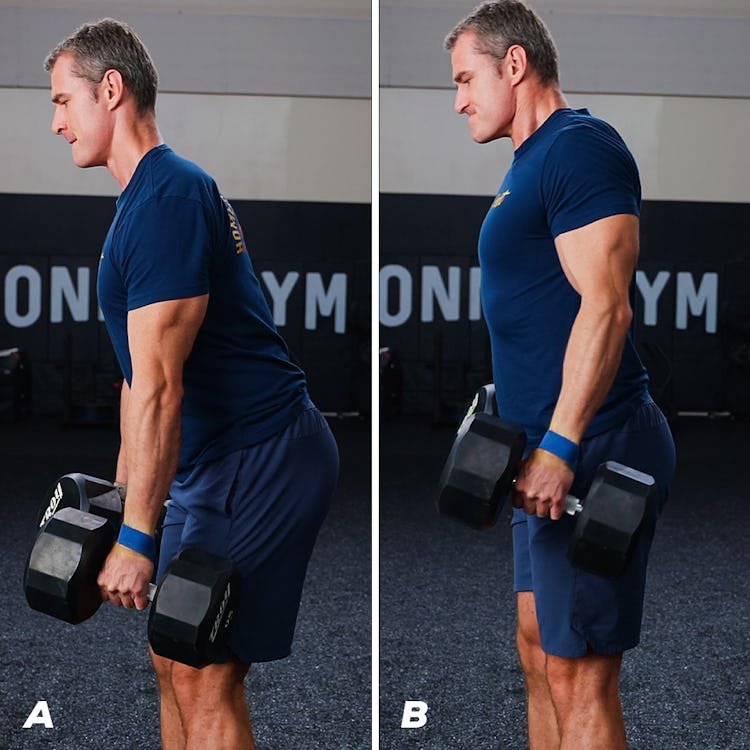
A standing dumbbell shrug is a separate option that emphasises lifting the shoulders. Keep it distinct in your log rather than using the same exercise name for both positions. A slight forward lean in some shrug variations adds another setup detail; it does not make every standing shrug identical to a chest-supported Kelso shrug.
For a healthy lifter exploring the movement, an illustrative starting dose is two easy sets of eight controlled repetitions after the main pulling work. Leave a generous margin before technique breaks down. This is a modest practice example, not a research-established optimal prescription or a requirement to train the exercise twice every week.
Repeat the same support angle, grip and load for the next few exposures. Record whether the final repetition still had long arms and a controlled release. Once that is consistent, add a repetition or a small load increase, keeping the other details unchanged so that you can judge the result.
If increasing the weight turns the exercise into a row, return to the previous load. The useful progression is more controlled work in the movement you selected, not simply a heavier dumbbell hanging below the bench. Keep the exercise only if it contributes something worthwhile to your wider back-training programme.

Bodybuilding Shirts & Workout Gear
Bodybuilding shirts, tanks and gym gear for lifters chasing muscle, size, symmetry and the pump.

Gym Dost Thou Even Pull Medieval Knight Back Day Crewne T-Shirt
Show some gym-day personality with “Dost Thou Even Pull Medieval Knight Back”.


Wide Privilege – Wide Back Meme Hooded Pullover Hoodie
Make your off-duty look more fun with “Wide Privilege”.

Progress Stoic Bodybuilder Greek God Marble Sculpture T-Shirt
Heavy lifts, good laughs, and a little “Progress Stoic Bodybuilder Greek God Marble” energy.


Meme Installing Muscles & Lifting Shirt Bros & T-Shirt
Bring “Installing Muscles” humor to your next gym day.

Shirt – Lift O'Clock Bros – Meme & Gains T-Shirt
Rep “Lift O'clock” humor in and out of the gym.

Lift Together Grow Stronger Buddies Friendship Workout T-Shirt
Make gym days more fun with “Lift Together Grow Stronger” style.

Lift Eat Repeat – Weightlifting & – Meme Bros & T-Shirt
Make gym days more fun with “Lift Eat Repeat” style.

Anti Social Gymbro Club – , Meme Shirt, T-Shirt
Bring “Anti Social Gymbro Club” humor to your next gym day.