Advertising disclosure: This page includes affiliate links that may earn us a commission at no additional cost to you.
Jack LaLanne helped make exercise something people could do in front of the television, in the room they already had. Long before an online instructor could stream into your phone, his show brought an energetic coach, simple movements and an invitation to join in into American homes.
His career also included gyms, equipment, books and extraordinary swimming feats. Yet the most useful part of his legacy for a busy lifter may be less spectacular: make training familiar enough to begin, then give it a regular place in your life. You can appreciate that idea without copying his personal schedule or treating every old fitness slogan as settled science.
1. He brought the instructor into the living room
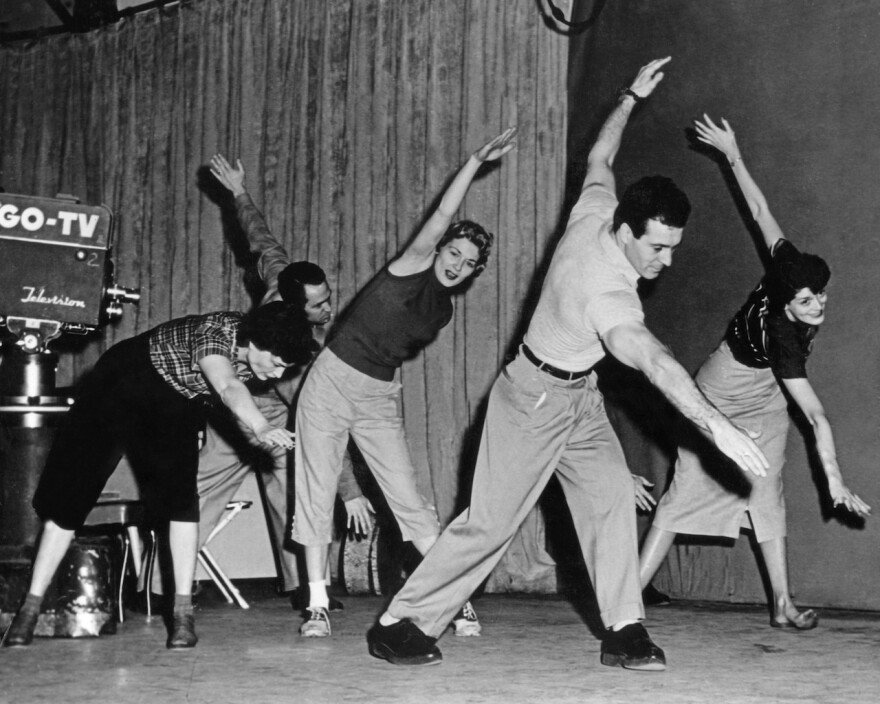
The Jack LaLanne Show began on local San Francisco television in 1951 and reached a national audience in 1959. Its run lasted until 1985. Those dates put the achievement in perspective: this was an exercise program built for broadcast television, decades before the on-demand workout library became ordinary.
The format made participation easy to understand. LaLanne spoke to the viewer and demonstrated movements using familiar props, including a chair, a towel or a rubber cord. A person watching at home could see the task immediately. The invitation was to move along with him, rather than spend the entire program admiring what someone else could do.
That distinction remains useful when choosing fitness content today. A video can be entertaining without helping you decide what to do in your next session. Good instruction makes the movement, starting position and suitable level of difficulty clear. It gives the viewer something usable beyond the host’s personality.
LaLanne’s upbeat delivery mattered, too. An instructor becomes familiar when people encounter the same voice repeatedly. That familiarity can make exercise feel like an ordinary appointment rather than a special project that requires a new identity. The technology has changed; the appeal of a recognizable person encouraging you to participate has endured.
2. Simple props were an entry point, not a limit on strength
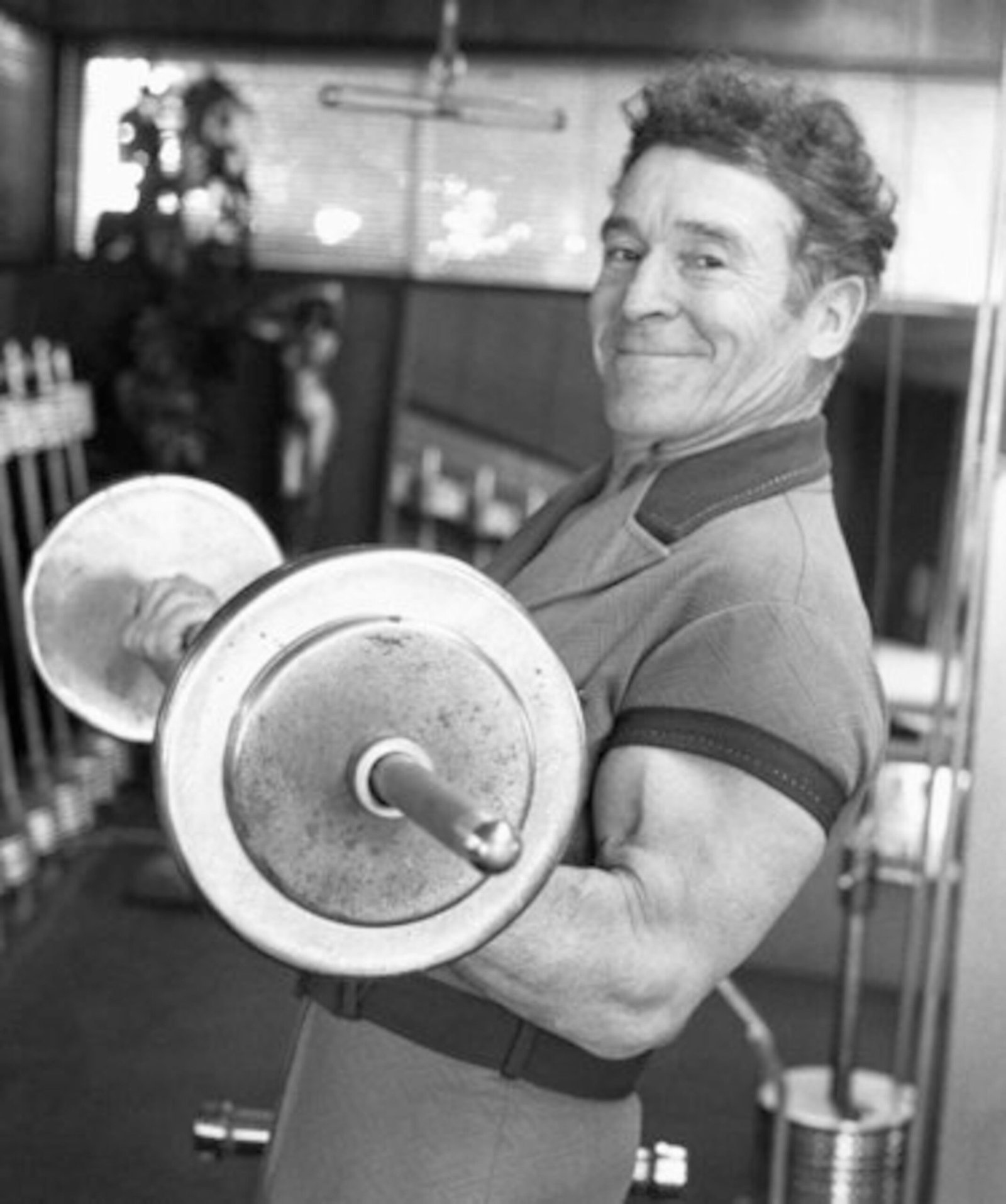
LaLanne opened his Oakland health studio in 1936. His work included weight training for women and athletes when resistance exercise was surrounded by misconceptions about who should use it. He also developed exercise equipment. The television personality associated with simple household props had a substantial connection to gyms and loaded training.
That combination is more interesting than a contest between equipment and bodyweight exercise. A simple movement can help someone begin. External resistance can make a later progression more convenient. Neither requires pretending that every exercise delivers the same result, or that owning more equipment automatically produces a better routine.
Consider a push-up. Raising the hands onto a secure, stable surface changes the challenge; gradually lowering that surface changes it again. Eventually, another variation or a loaded press might fit the person’s goal better. The useful question is whether the exercise can be performed consistently and progressed sensibly, rather than whether it looks impressively minimal.
Our guide to progressing bodyweight strength exercises explores those choices in more detail. That is a modern training discussion, separate from any claim about LaLanne’s own program. An archival chair demonstration illustrates his presentation style; it does not establish that the same chair exercise suits every reader or that household furniture is safe for every load.
3. His personal discipline was bigger than the viewer’s first step
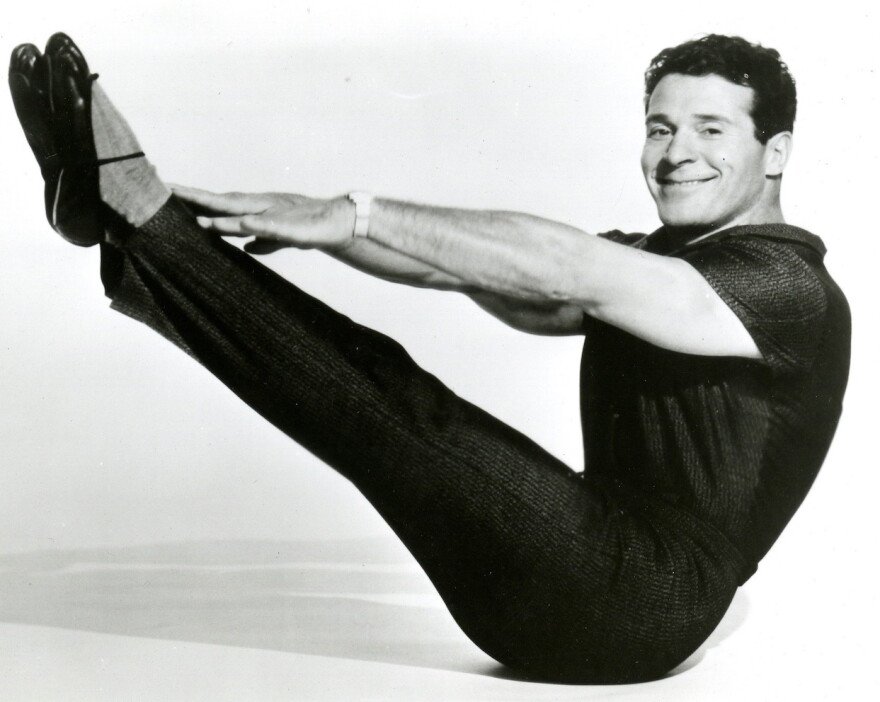
In a 2007 interview, LaLanne described exercising for two hours every day. He also made a revealing distinction between enjoying the work and valuing what it produced. His public enthusiasm did not mean that every training session felt effortless or that he needed to feel excited before beginning.
It is tempting to turn that personal account into a minimum requirement: if a fitness icon trained for two hours, perhaps a shorter session does not count. But the interview describes what LaLanne said he did. It does not establish a universal prescription, explain every detail of his training load or show that the same schedule is appropriate for someone else.
A more practical interpretation is to decide which part of your week you can protect. That might be a modest session before work or a pair of planned visits when family commitments allow. Write down the exercises and available time before the week becomes crowded. A clear appointment gives you a decision you can act on.
For parents facing unpredictable days, our two compact strength workouts for busy parents offer one way to organize that constraint. They are not LaLanne’s routine. The connection is the effort to make participation possible, without requiring a recreational trainee to imitate the daily timetable of a professional fitness personality.
Keep ambition and practicality in the same plan. A manageable starting commitment can coexist with a larger goal. If a session is repeatedly missed, inspect the timing, preparation and workload before deciding that the only answer is a more forceful motivational speech.
4. The boat-towing feats were a different part of the show
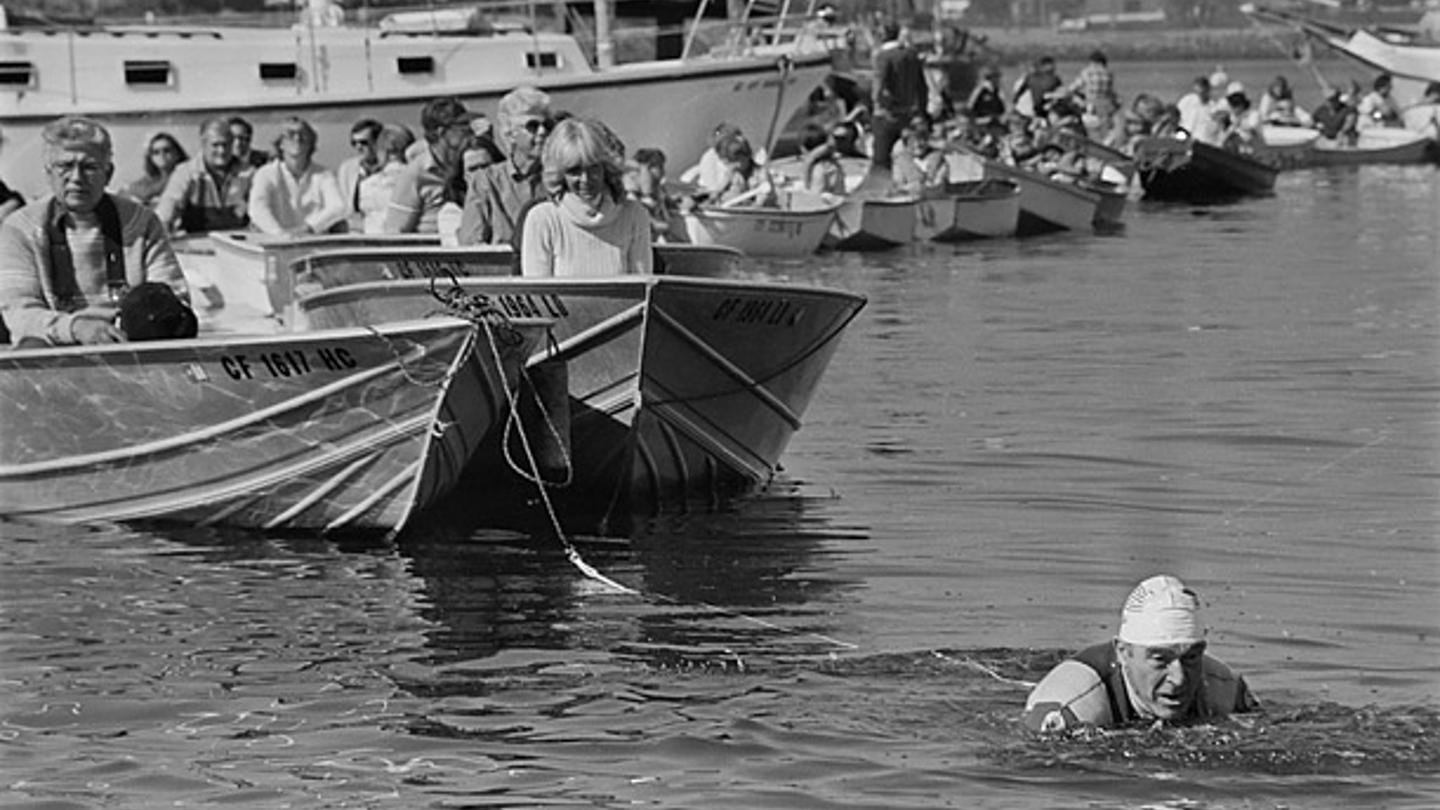
LaLanne also used remarkable swimming displays to attract attention to fitness. In 1984, at age 70, he towed a flotilla of 70 boats through Long Beach Harbor while shackled. It is an arresting image precisely because it is so far removed from an ordinary workout.
The feat belongs in his story as a demonstration and a public spectacle. It should not be confused with the accessible invitation that made his television work useful. Watching an exceptional performance and choosing your next appropriate exercise are different activities. One can inspire curiosity without becoming a task to reproduce.
Historical accounts do not agree on every detail of the swim, including the distance. There is no need to supply a falsely precise number to make the central event impressive. The recognizable combination of age, boats and an unusual challenge already explains why the scene became memorable.
Nor can a photograph tell you the preparation, assistance, conditions or contingency arrangements behind a stunt. Bound swimming and boat towing introduce hazards that a routine fitness session does not need. Treat the image as fitness history, not a challenge for a holiday, a social-media post or a test of whether your training has worked.
That distinction is useful well beyond LaLanne. A creator’s most dramatic clip is often the least representative sample of their ordinary preparation. Enjoy the performance, then return to training decisions that match your experience, environment and actual goal.
5. Make a home session easy to begin and worth repeating
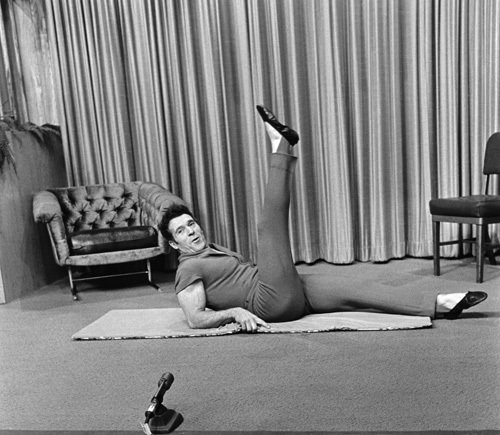
The enduring home-exercise idea is practical: reduce the number of decisions between intending to train and starting. Choose the session in advance, clear enough space for the movements and keep the equipment you need accessible. A spare room, garage or small training corner becomes useful through what you do there.
Give the session a purpose. Strength practice, a conditioning workout and an easy movement break need not look identical. If you are following an instructor, check whether the level suits you and whether the routine explains how to adjust it. A demanding-looking exercise is not automatically the best next step.
Keep a brief record, too. The exercise variation, resistance and completed repetitions can make the next session easier to plan. Recording what you actually did is more informative than saving another ideal routine that never reaches the calendar. Review the pattern over time and change one practical obstacle when it keeps recurring.

Home Gym Shirts & Garage Gym Gear
Home, garage and basement gym shirts and workout gear for lifters who built their own place to train.

Home Gym & Garage Gym Tee
Heavy lifts, good laughs, and a little “Home Gym & Garage” energy.

Home Gym Nerd Garage Gym Basement Gym Meme Workout Musc Tank Top
Your gym-day look, with a playful “Home Gym Nerd” twist.

Home Is Where Your Gym Is | Funny Garage Gym Meme Worko Hoodie
Show off your lifting humor in a laid-back “Home Is Where Your Gym Is” hoodie.

Funny Home Gym Crewneck Pullover Sweater for Garage Gym T-Shirt
For laid-back days and lifting humor: “Funny Home Gym Sweatshirt Pump Cover”.

Home Gym Built Not Bought Decal for Garage Gym Equipmen Sticker
A fun “Home Gym Built Not Bought” touch for bottles, laptops, and lockers.

Anti Gym Home Gym Club Crewneck Pullover Sweater for Ho T-Shirt
Add a playful “Anti Gym Home Gym Club” touch to your casual rotation.

Garage Shirt – Garage Meme Top Home Gains & Gymbros T-Shirt
Bring “Garage” humor to your next gym day.

Basement Gym Club Muscle Shirt Athletic Vest for Baseme Tank Top
Add some lifting attitude to training with “Basement Gym Club”.

Garage Gym Hero Hooded Pullover for Home Gym Lifters Wo Hoodie
Keep it laid-back with a little “Garage Gym Hero” attitude.

Funny Home Gym Owner Gym Decal for Garage Gym Basement Sticker
Give your everyday gear a playful “Home Gym Owner” twist.
There is also room to enjoy the setting. A home gym can reflect its owner’s personality without becoming a prerequisite for exercise. Comfortable training clothes and a space you like are welcome additions; completing the planned work is what gives that space its purpose.
LaLanne’s career paired an unusually visible personality with an invitation ordinary people could understand. The costumes, broadcast style and publicity stunts belong to their era. The useful question survives: when the next session arrives, do you know what you are going to do, and have you made it straightforward enough to begin?