Advertising disclosure: This page includes affiliate product links that may earn us a commission, as well as products from our own store.
Rolling dumbbell triceps extensions add a deliberate shoulder movement to a lying elbow extension. That extra motion is the point of the exercise, but it also makes the repetition easy to change as fatigue builds. A heavier set can quietly become a short dumbbell press, while an ambitious stretch can pull you out of a stable bench position. Learn the sequence with manageable weights, define a repeatable range and treat the movement as accessory work rather than a test of how much weight you can get overhead.
Build a stable bench position before adding the roll
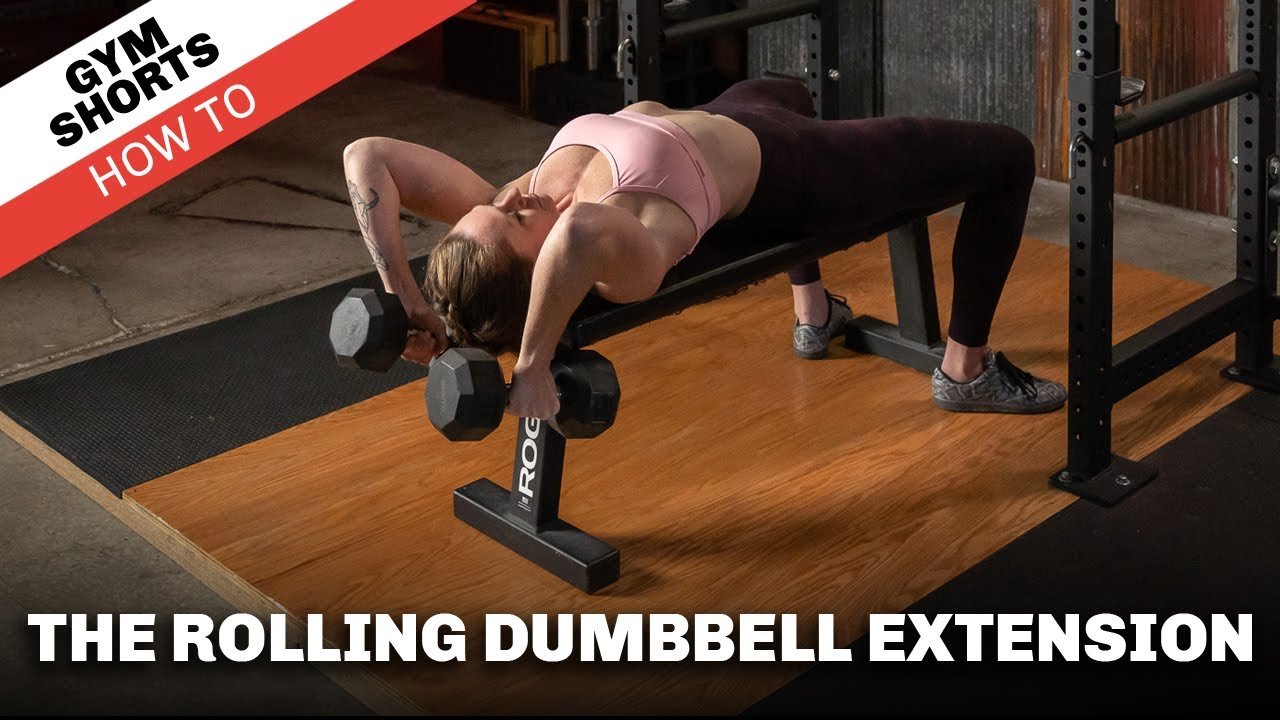
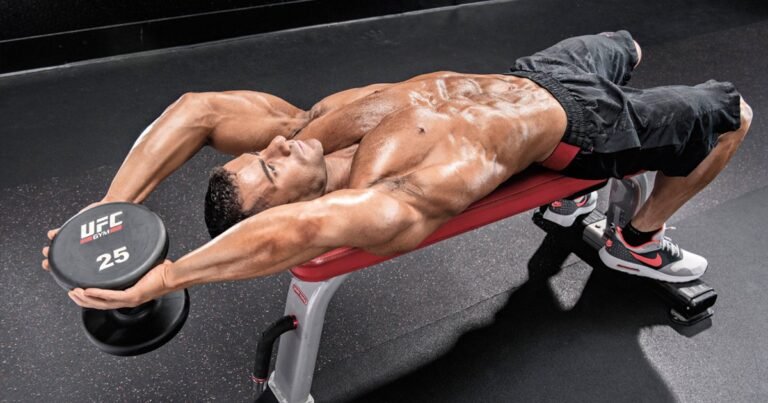
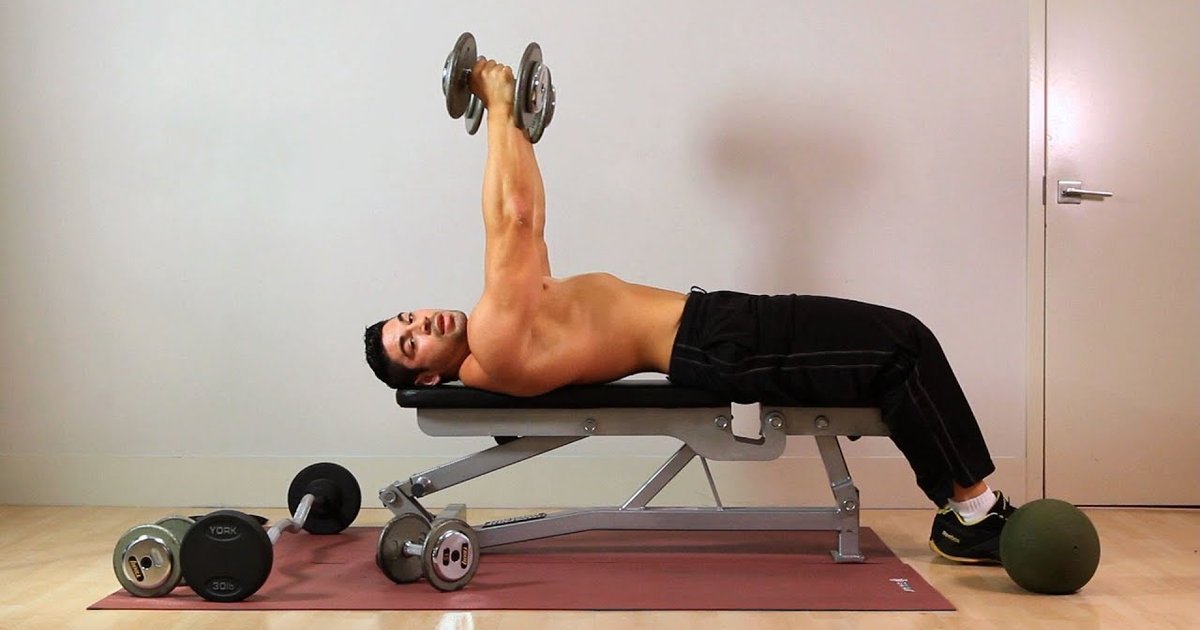
Use a stable flat bench and a pair of dumbbells you can bring into position deliberately. Sit with the weights close to your body, lie back under control and establish support for your torso and head. Plant your feet where they help you remain steady. Do not copy a head-hanging demonstration if it makes your neck uncomfortable or the setup difficult to control.
Start with the dumbbells above your shoulders and your palms facing each other. Keep the implements parallel enough that each hand has a clear path beside your head and shoulders. Bulky adjustable dumbbells may occupy more space than a smaller fixed pair. Check that clearance with light weights before selecting the load you would normally use for another triceps exercise.
The bench should let you move your upper arms without making you slide along the pad. If its frame, pad position or nearby rack interferes with the movement, solve the setup first. An awkward starting position does not become a better one when the dumbbells are heavier. Keep a clear space for finishing the set and putting the weights down.
Begin with a few deliberately easy repetitions to establish the path. A useful warm-up shows whether you can lower both weights consistently, keep your feet planted and return to the same top position. It is not a competition to achieve the deepest possible stretch. Use a range you can control without changing the position of your whole torso.
Separate elbow bending from the shoulder movement
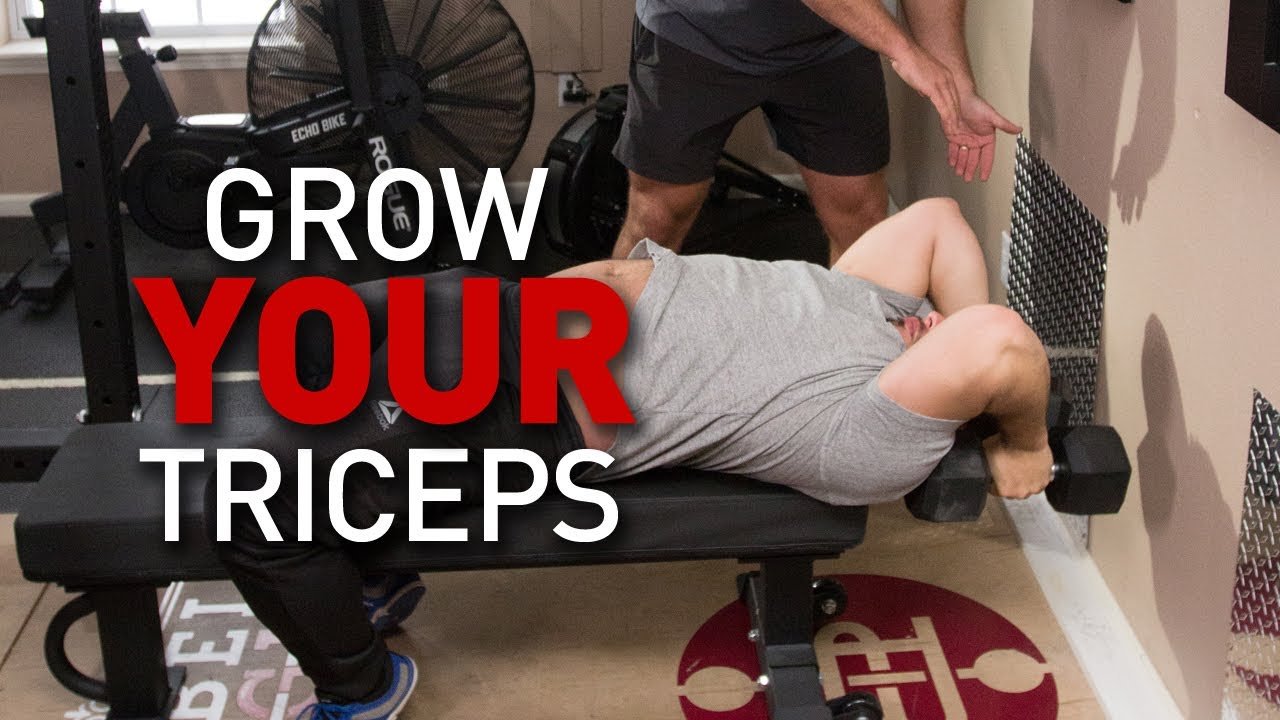
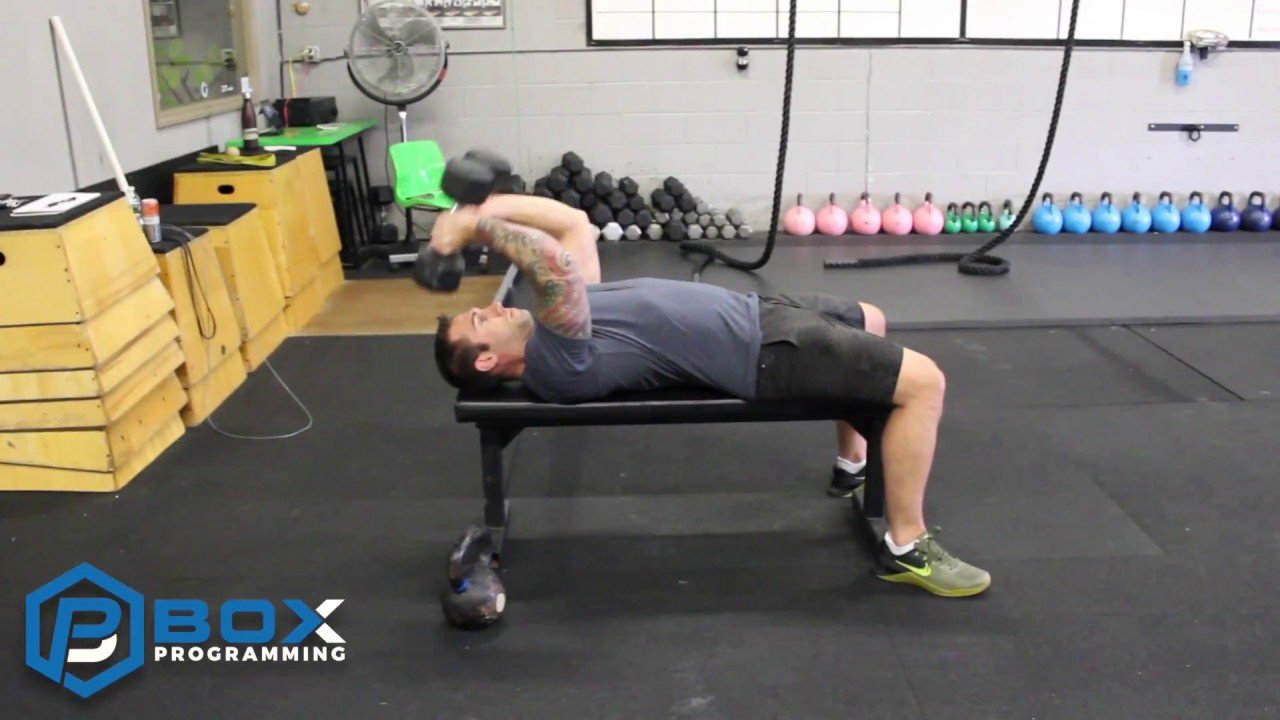
From the starting position, bend your elbows to lower the dumbbells toward your shoulders. Then allow the upper arms to move back toward your head, creating the rolling portion of the repetition. Think of this as a sequence you can recognize, rather than letting every joint move at once. The weights should travel beside you instead of colliding with your face.
Reverse the sequence by bringing the upper arms back toward their starting position, then straightening the elbows to finish. The transition should remain controlled. A coaching cue about driving the weights upward does not require throwing them, jerking at the bottom or snapping into an aggressive lockout. Keep enough control that you could describe where the repetition changes direction.
This distinguishes the exercise from a stricter lying triceps extension, where the upper arm stays relatively still. It also distinguishes it from simply pressing the dumbbells up from the chest. You are choosing a coordinated rolling extension, not an exercise that must look identical to a skull crusher at every point. Keep the intended sequence consistent within the set.
If the movement is difficult to learn, slow down and use lighter weights. Practise recognizing the elbow bend and the upper-arm movement separately before trying to make them flow together. A short side-view recording can help you see whether the upper arms return to the same position or gradually drift into a different exercise. Change the load before sacrificing that repeatability.
Choose range and load without forcing a stretch
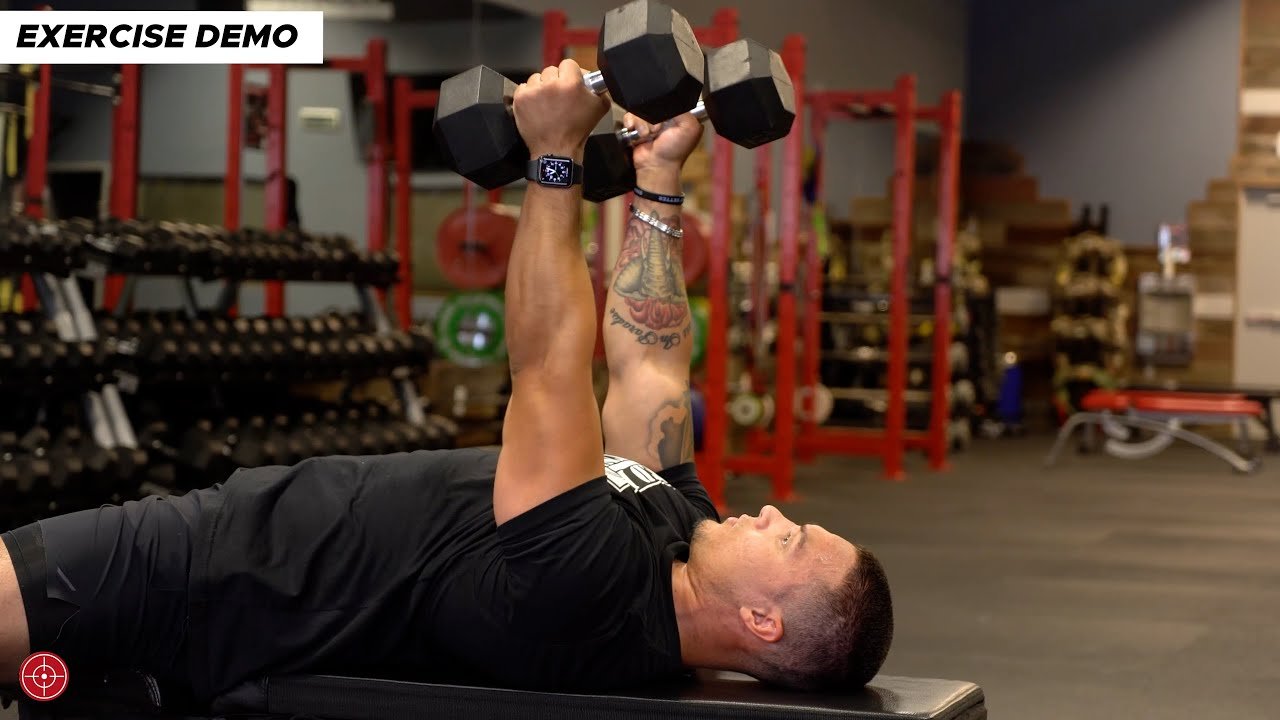
The additional shoulder motion changes the range and feel of the movement. That does not establish a universal depth that every lifter should reach. Your endpoint should be a position you can reverse smoothly while maintaining your bench support. Do not chase contact between the dumbbell and shoulder if the implement's shape makes that contact awkward.
Keep your trunk organized as the arms move. If reaching farther requires a growing lower-back arch, flared ribs or your body sliding along the pad, shorten the range and reassess the weight. More travel is useful only when it belongs to the movement you are trying to train. Turning the bottom into a full-body reach makes successive repetitions harder to compare.
Use a load that lets you control the lowering phase and keep both sides reasonably coordinated. Your bench-press weight is not a starting prescription for this exercise. Nor should a dumbbell pair used for a stricter extension automatically become the correct load for the rolling variation. Treat the new movement as its own task and build a baseline.
Stop a set when the path changes substantially or you cannot handle the weights deliberately. Pain is a reason to stop and reassess, not evidence that a triceps stretch is working especially well. Claims that a particular variation is easier on everyone's elbows are too broad. A different exercise or qualified assessment may be appropriate when symptoms persist.
Progress with the same repetition each session
An adjustable example is two working sets of eight to twelve controlled repetitions after suitable warm-up work. Choose a load that leaves you able to complete more clean repetitions if needed. This is a practical starting framework, not a tested prescription guaranteeing a specific amount of arm growth. Adjust it to your training experience, existing pressing work and recovery.
Keep the bench position, range and sequence consistent while adding repetitions within your chosen range. Once both sets reach the upper end with the same movement quality, consider the next manageable load increase. If that jump is too large, keep practising at the current weight. Shortening the roll or turning the final repetitions into presses does not make the progression equivalent.
Record the load per dumbbell, repetitions, sets and a brief note about the movement. A note such as 'last two repetitions needed a shorter roll' explains more than a total-repetition score alone. Hold the other variables steady when judging whether a heavier pair is a useful next step. Avoid changing the load, bench angle and range together.
For equipment choices, prioritize a suitable bench and dumbbells with enough clearance. Fixed and adjustable pairs offer different loading increments and dimensions. Plates, add-on weights and collars require explicit compatibility with the handle being used; never balance an improvised load above your head. A larger collection of equipment does not replace a secure setup. Return the weights to their proper storage after the set.

Equipment Worth Exploring
Explore equipment, accessories and gear from our carefully selected range.


Rubber Hex Dumbbells
Rubber-coated hex dumbbell pairs with a stable shape for home and commercial strength training.


FID Bench MAX
Adjustable bench offering flat, incline, and decline positions + adjustable headrest.


Multi Bench MBX-650 2.0
Adjustable multi-bench with roller adjustment, 15 backrest positions and accessory mounts.


Fit the exercise into arm day or push day
Place rolling extensions where their fatigue fits your priorities. If bench press or overhead press performance matters most in the session, complete that work before exhausting your triceps with accessories. Start with a modest amount rather than adding a large arm-day block on top of all your existing presses, dips and pushdowns. Count the work you already do.
The exercise can be one triceps option on a push day or a focused arm day, but it does not need to appear in every workout. Compare how your elbows, shoulders and pressing sessions respond to the total training load. When adding it, keeping the rest of the program familiar makes the effect easier to judge than simultaneously replacing every accessory exercise.
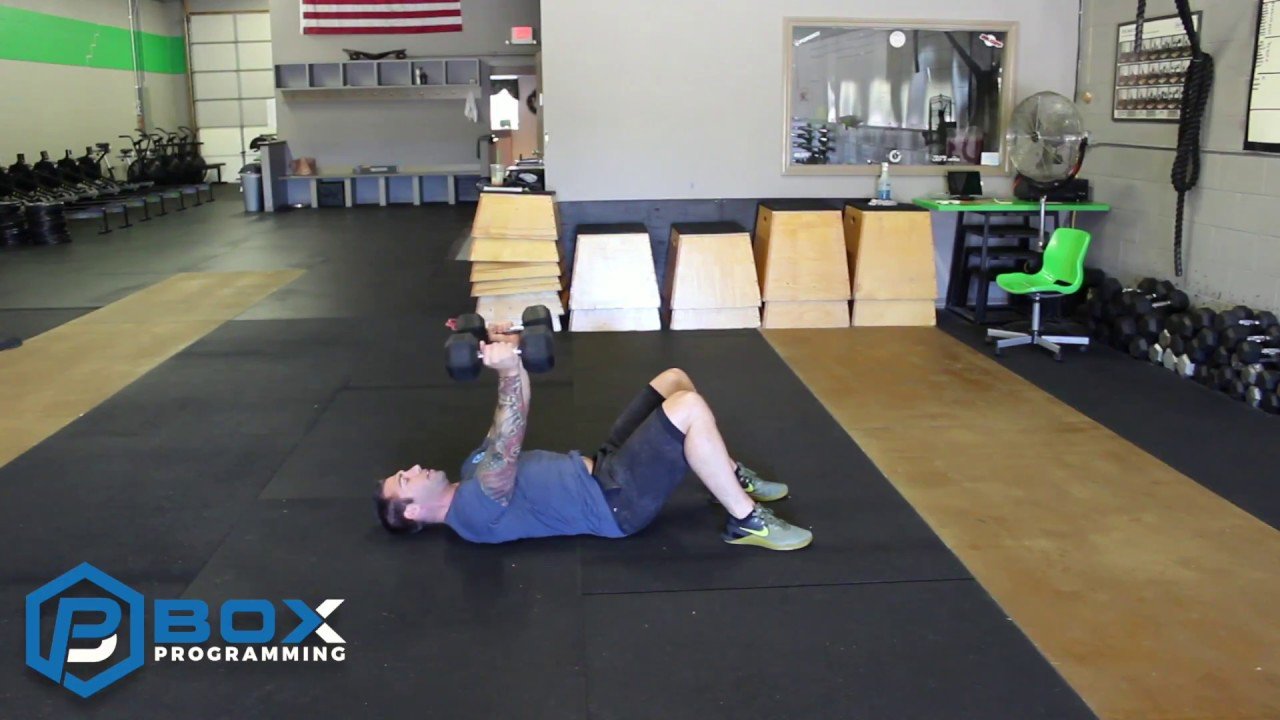
A floor rollback is a separate variation with different support and available travel. Do not assume that a floor demonstration prescribes the same range as a bench version. A stricter lying extension is another alternative when you want less upper-arm movement. Label the variation in your log instead of combining their numbers into a single rolling-extension record.
Judge the exercise by repeatable work and how it fits the rest of your lifting. Can you keep the intended path as repetitions accumulate? Is the next weight increment manageable? Are your main pressing sessions still recovering well? Keep the version that answers those questions usefully. The goal is productive triceps work you can progress, rather than the most dramatic stretch or the heaviest improvised press.

Funny Gym Shirts & Workout Gear
Funny gym shirts, tanks, hoodies and workout gear for lifters who like training hard.

Every Day Is Arm Day
Make gym days more fun with “Every Day is Arm Day Octopus Gym Meme” style.


Bench Press and Chill Funny Gym T
Make gym days more fun with “Bench Press and Chill” style.

I Love Bench Press Valentine'S Day Meme – Chest Day T-Shirt
Rep “I Love Bench Press Funny Valentine's Day” humor in and out of the gym.

Dumbbell Heartbeat Hooded Pullover Fitness Fans Hoodie
Stay casual and show some bodybuilding attitude with “Dumbbell Heartbeat”.

Dumbbell Meme Shirt – Essential & Gymbros Seeking T-Shirt
Make gym days more fun with “Dumbbell Gym Meme” style.

Heart And Brains Dumbbell Meme : The Ultimate T-Shirt
Make gym days more fun with “Heart and Brains Dumbbell Gym Meme” style.