Advertising disclosure: This page includes affiliate product links that may earn us a commission, as well as products from our own store.
Most lifters know what to do when a squat feels too easy: add weight or another repetition. Dumbbell lateral lunges are less straightforward. A longer side step, a deeper hip shift, and a heavier pair of dumbbells all increase difficulty, but not in the same way. If the moving knee caves in or the heel lifts, loading the movement harder usually makes the mistake louder.
The exercise is a practical way to add deliberate side-to-side work to a lower-body program. Here is how to set the stance, move the dumbbells, control the hips and choose a progression that does not confuse range of motion with progress.
Why the sideways lunge deserves its own place
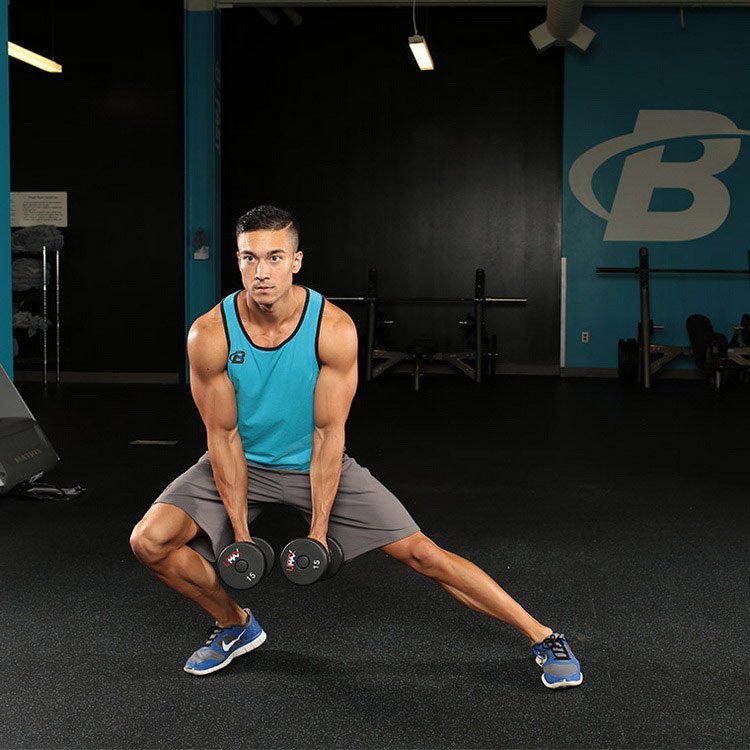
Most leg routines move forward and back: squats lower you vertically, split squats keep one foot in front, and walking lunges cover ground in a different direction. A lateral lunge adds deliberate side-to-side travel. The stepping leg bends at the hip and knee while the other leg extends; instead of forcing both legs through the same pattern, you shift your mass over one foot, control the deceleration, and drive yourself back to the middle. A pair of dumbbells increases the demand without changing the basic movement.
The working-side quadriceps helps extend the knee while the glutes contribute at the hip. The adductors and surrounding hip muscles help manage the sideways position and movement out of it. You can often feel the inner thigh of the straighter leg lengthening, but the exercise is not simply a passive groin stretch. It is loaded, coordinated lower-body work. A deeper position is only useful when you can reach and leave it without shifting uncontrolled weight into the knee or ankle.
Think of the standing return as a complete repetition rather than a bounce out of the bottom. Your torso angle will vary with your hip proportions and mobility. There is no prize for remaining perfectly upright if it makes the heel peel away or forces the knee into an uncomfortable angle. The useful goal is a stable foot, a purposeful hip hinge, and repeatable balance from one side to the other.
Choose your step width and the working foot
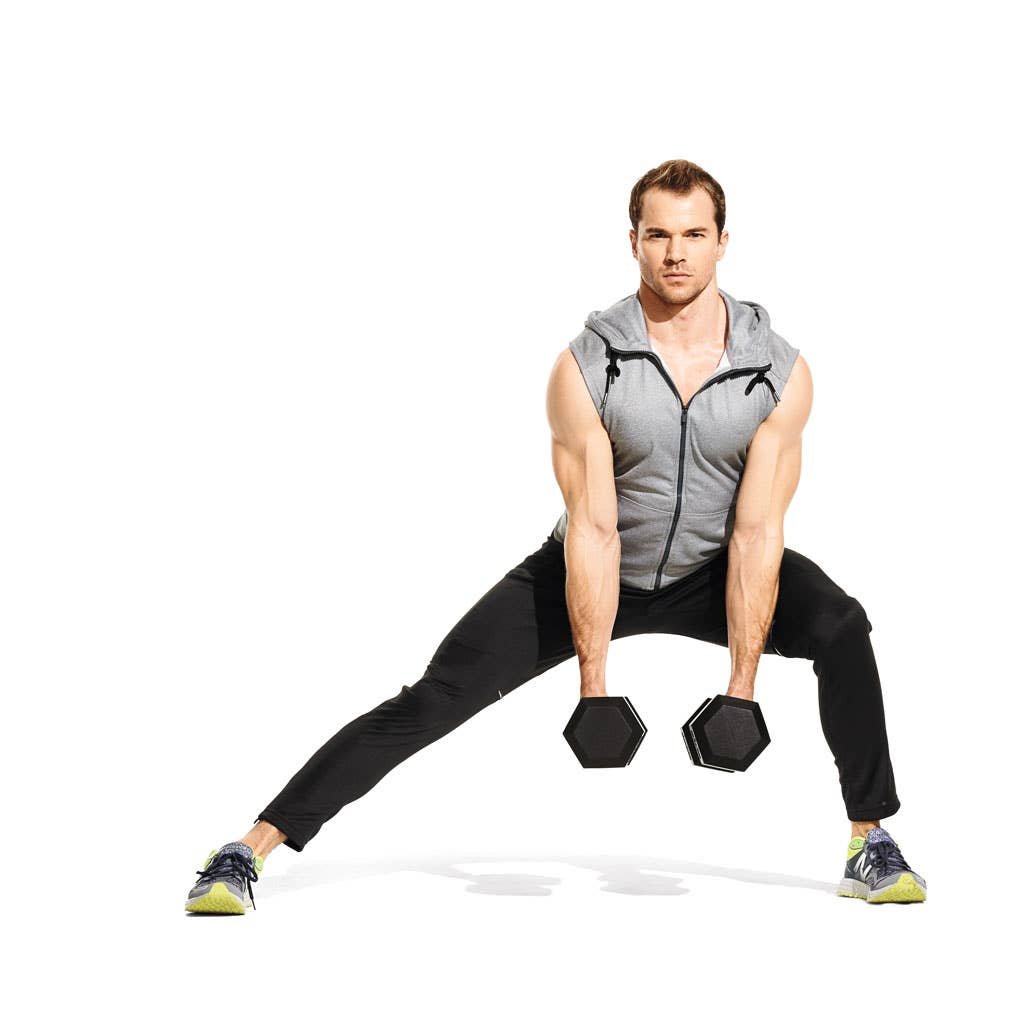
Begin unloaded with feet approximately hip width apart. Step one foot outward and plant the whole sole. A useful first test is a step wide enough for the opposite leg to lengthen as the stepping knee bends, but not so far that you have to drag yourself back with a strained groin or twist the planted heel. Body size changes the practical distance: two lifters can follow the same instructions and end up with very different step widths.
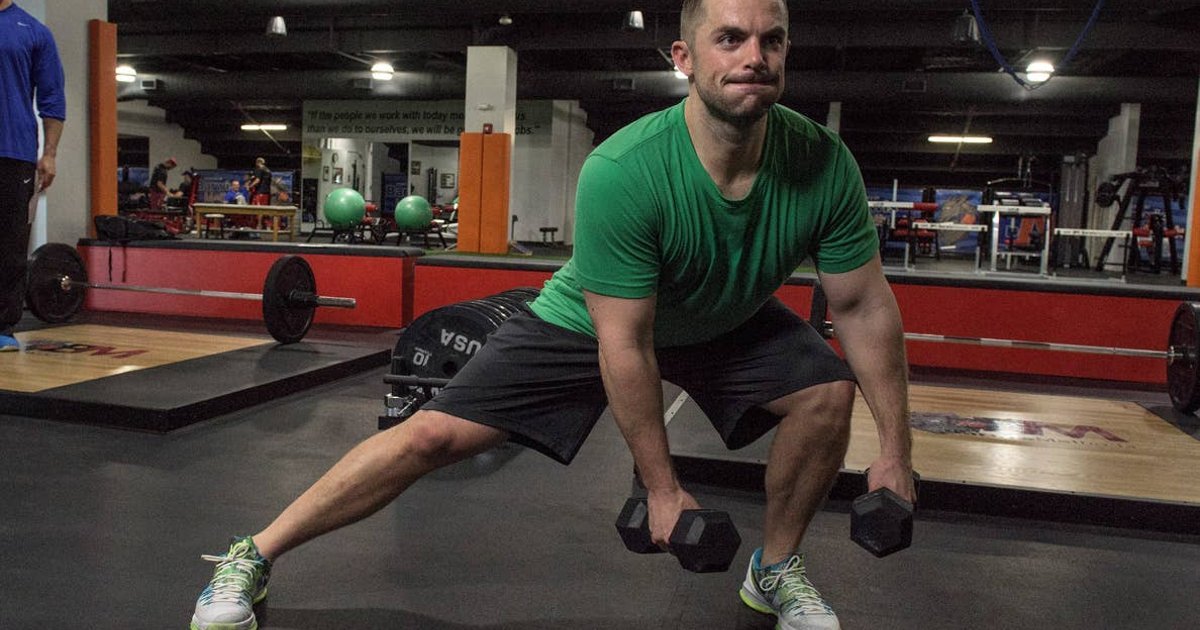
As you lower, send the working-side hip back and slightly down. Keep the moving knee following the direction of that foot, generally somewhere over the midfoot rather than collapsing inward. Leave the other leg long but do not force it into a painful locked position. Both feet should remain grounded for a conventional dumbbell lateral lunge. Some athletes naturally allow a little toe turnout; what matters is that the knee, ankle, and foot cooperate instead of fighting one another.
Test three bodyweight repetitions each side and observe the same four landmarks: whether the outer foot lands firmly, whether the heel stays planted, whether the pelvis moves over the stepping foot, and whether you return without hopping. If you cannot repeat those landmarks, shorten the step before you add load. Make the floor less slippery, clear nearby equipment, and use a controlled stepping tempo. You should be able to stop at the bottom deliberately rather than falling into it.
Start with the less-coordinated side when alternating legs. A small difference in comfortable depth is not an invitation to force symmetry immediately. Record the stance distance or use a floor tile seam as a reference; consistency lets the next workout tell you whether you improved.
Hold the dumbbells and complete one clean rep
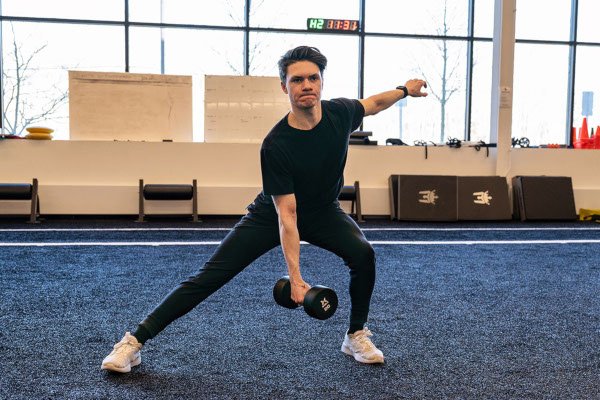
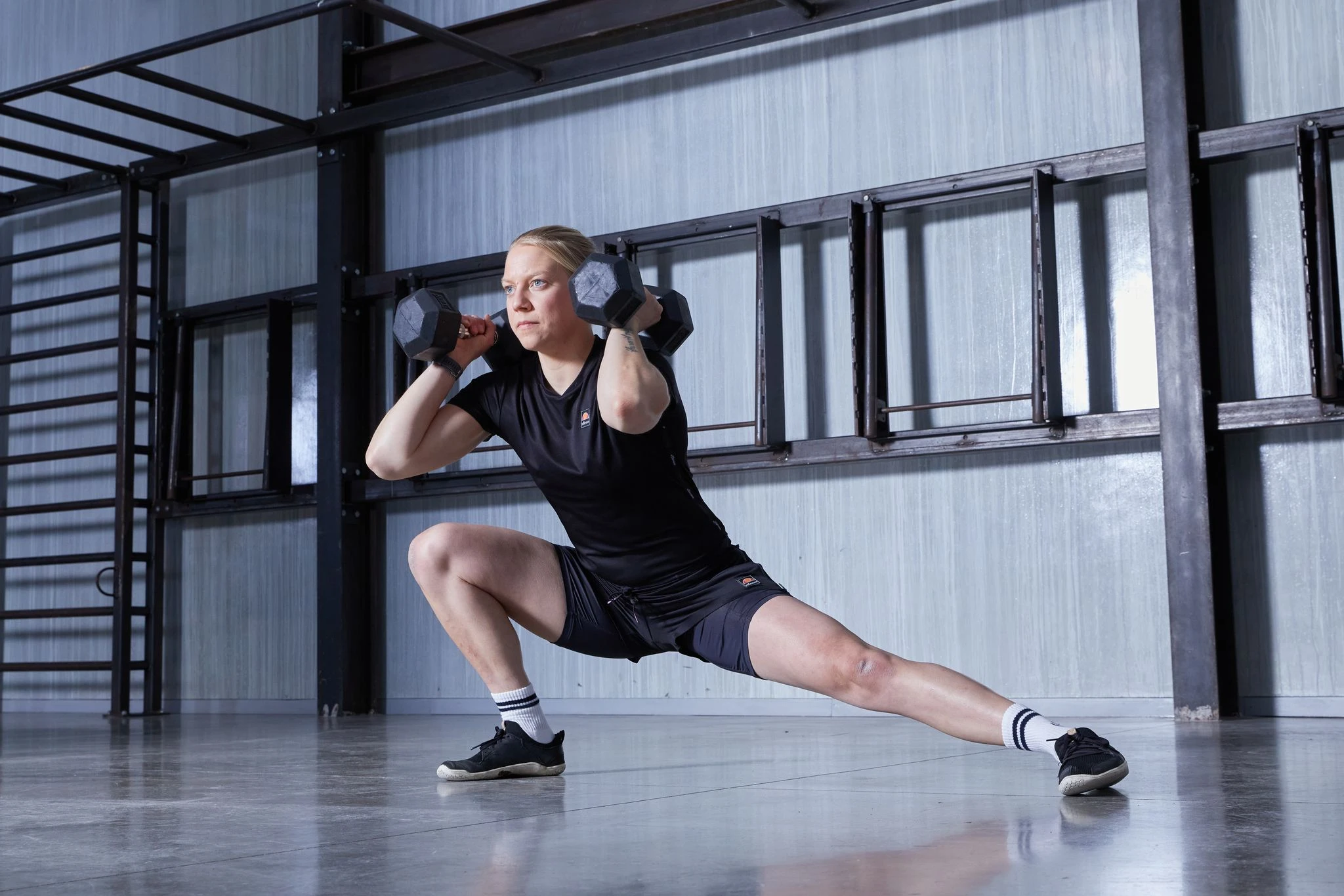
With a dumbbell in each hand, stand tall and let the arms hang near the thighs. Choose weights that do not pull your shoulders forward when you reach the bottom. Maintain a secure neutral grip, relaxed shoulders, and enough clearance that the bells do not bang against the bent knee. In most cases the weights will follow a roughly vertical path as you shift sideways. Do not deliberately swing them toward the working foot to create momentum.
Brace as though you were preparing for a firm cough, then step out under control. As the foot lands, bend the working knee and sit the hip back. The torso can tip forward a little from the hip, but avoid rounding the back just to bring the dumbbells closer to the floor. Let the nonworking leg lengthen while its foot stays flat. Stop when the stepping hip has traveled as far as you can control. A parallel-thigh target is optional, not the definition of a successful repetition.
From the low position, push the floor away with the stepping foot. Extend its knee and hip together and bring yourself back to the original stance. Finish balanced rather than throwing the torso upward and pulling the foot across the floor. If you alternate sides, reset completely before stepping the other way. If you work one side for a full set, keep the same landmarks on every rep and perform the same number on the second side.
An uncomplicated tempo is two seconds down, a brief controlled pause, and a smooth drive to standing. The pause removes the temptation to rebound and helps reveal foot instability. If the final three repetitions look noticeably different from the first three, reduce the load or finish the set instead of calling every wobble extra intensity.

Equipment Worth Exploring
Explore equipment, accessories and gear from our carefully selected range.


Rubber Hex Dumbbells
Rubber-coated hex dumbbell pairs with a stable shape for home and commercial strength training.


Cast Iron Kettlebells
Textured cast-iron kettlebells for swings, squats, carries, and full-body training.

GymPin Squat Wedges
Non-slip 15-degree squat wedges help elevate the heels for deeper quad-focused squats.

Leg Press/Hack Squat BPR-790
Convertible 45-degree leg press and hack squat machine with a broad footplate and band pegs.

Compact Leg Press CLP-700
Compact reverse-style leg press with a moving seat carriage and an adjustable footplate.
Work around depth, mobility, and knee comfort
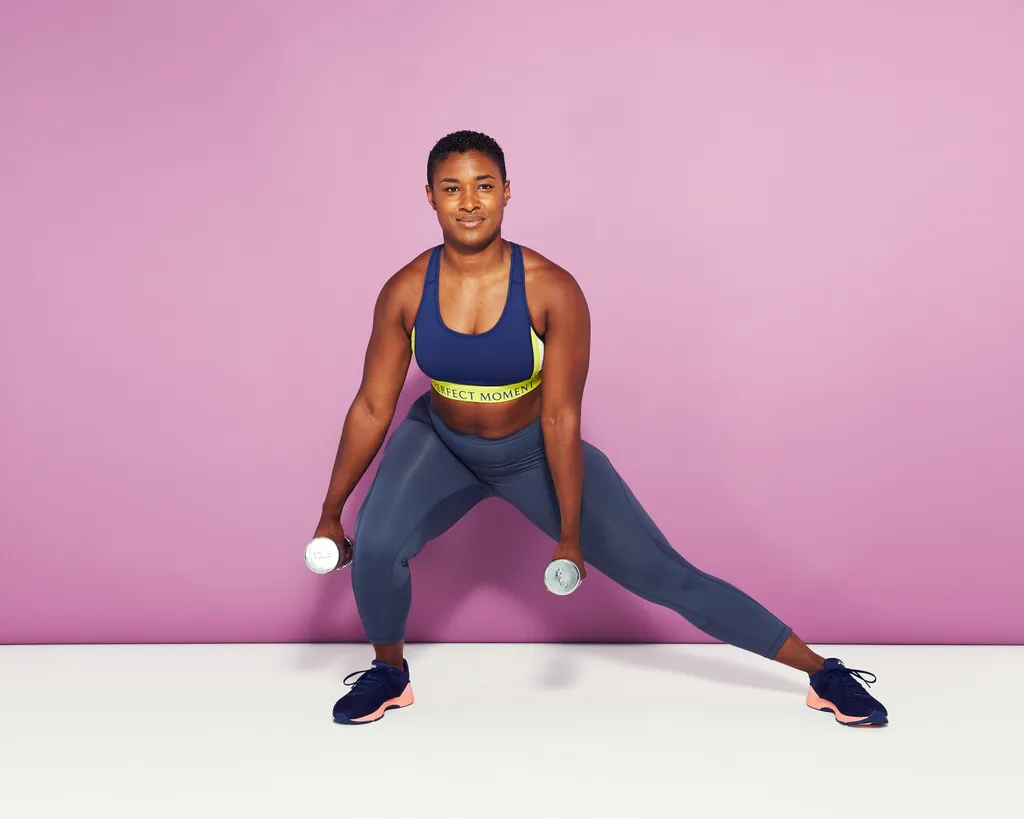
Depth is a tool, not an independent goal. If the stepping heel lifts, the pelvis turns away, or the torso collapses dramatically, the current range may be more than you can actively control. Shorten the step slightly, shift the hip back sooner, or decrease the load. Film a couple of reps from the front: the knee should generally follow the foot rather than dive inward while your pelvis travels across.
The inner thigh on the extended side may feel tension. That sensation is different from sharp pain, pinching, or a sudden pulling feeling, which are reasons to stop that attempt. People with existing knee, hip, or groin problems may need an individualized range or another exercise. There is no medical advantage to forcing a lateral lunge through pain. A shorter controlled repetition is more useful than a heroic deep repetition that cannot be repeated.
One common mistake is planting the stepping foot so far away that the return becomes a sideways jump. Another is turning the movement into a narrow squat in which both knees bend equally and the hip never travels toward one side. Both variations change the emphasis. Correct by stepping a manageable distance, keeping the nonworking leg relatively extended, and pushing decisively from the bent-leg foot as you return. Barely moving sideways misses the purpose; traveling too far sacrifices control.
If balance is the limiting factor, begin with hands free of weights and hold a rack upright lightly for support. That is a regression, not cheating. Build an honest range with smooth transitions, then return to a light dumbbell in each hand. You can keep a slight bend in the straight leg rather than trying to lock the joint forcibly.
Useful variations and the mistakes they expose
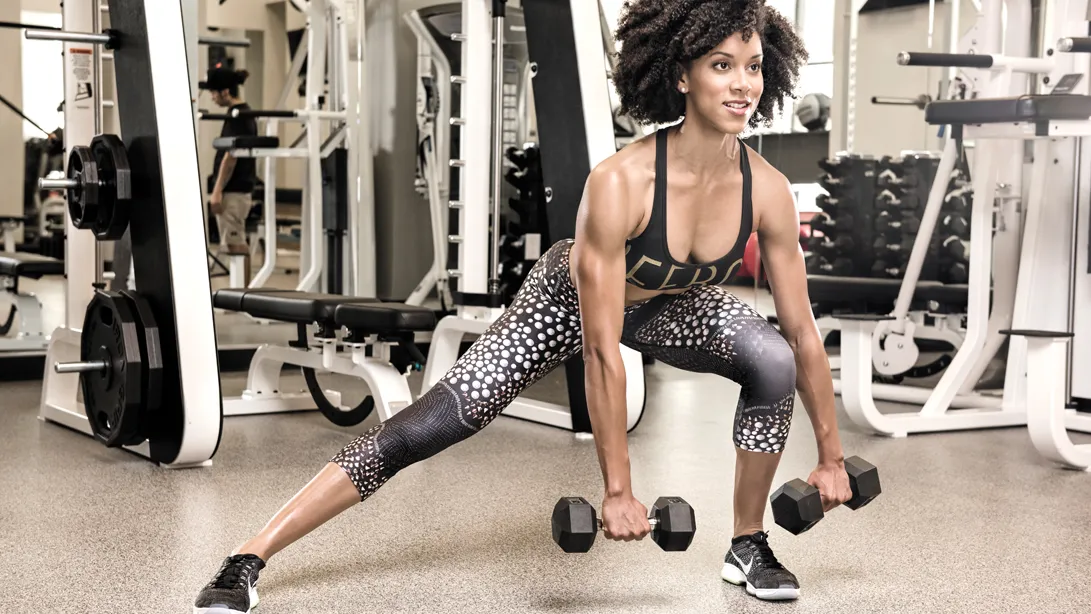
A stationary side-to-side squat starts from a wide stance and shifts the pelvis toward one leg while both feet remain planted. It is a convenient way to rehearse the low position without coordinating the step or return. The stepping lateral lunge adds a deceleration and re-centering challenge. Neither is automatically superior for leg growth; select the version that lets you train the intended muscles with good movement quality.
Holding one dumbbell close to the chest in a goblet position can simplify load management when two bells drag the shoulders or bump the knees. Holding a weight on just one side creates an additional anti-tilt challenge, but that should come after the unloaded pattern is dependable. A kettlebell goblet hold is another viable option. For a more demanding variation, add a deliberate three-second descent or increase load modestly, not both on the same day.
A lateral lunge is not the same as a curtsy lunge. The curtsy steps diagonally behind the supporting leg, while this movement travels directly outward. It is also different from a Cossack squat, usually performed in a wider and sometimes deeper stance with different foot positions. Do not swap the names on a workout sheet and assume identical joint angles or progression.
Use a quick technique checklist during every set: both feet controlled, stepping knee follows its toes, hip moves sideways and backward, torso folds from the hip rather than crumpling, and the return finishes in balance. Unequal depth, bouncing at the bottom, dropping the bells toward the floor, and rushing the return are reasons to adjust the next repetition, not to grind harder.
A six-week progression you can actually measure
Place lateral lunges after your main heavy squat or hinge when they are an accessory, or earlier if side-to-side movement quality is the session priority. Start with a few minutes of walking or cycling and several unloaded hip hinges, bodyweight squats, and lateral shifts. Then perform two easy practice lunges to each side. This warm-up is about familiarizing the joints and movement pattern, not exhausting the adductors before work starts.
Weeks one and two: perform two sets of six to eight controlled repetitions per leg once or twice per week. Use bodyweight or very light dumbbells. Rest roughly sixty to ninety seconds between sets. Leave at least two or three clean repetitions in reserve and make the stance width, floor contact, and descent speed repeatable. The main metric is quality, not how far you can lunge.
Weeks three and four: if both sides have clean, repeatable reps, perform three sets of eight per side. Add a small amount of weight to both dumbbells only when the last rep still looks like the first. Keep the nonworking leg long, but accept a slight natural knee bend. If one side cannot reach the same range, use a comfortable shared range and practice that position instead of forcing the weaker side deeper.
Weeks five and six: progress to three sets of eight to ten reps per side, or keep the same reps while raising the total dumbbell load slightly. Choose one variable at a time. You can add a one-second pause near the bottom instead of weight if the movement still feels unstable. Record your pair of dumbbells, step width, reps per side, pause, and whether either heel lifted. These notes are more meaningful than a vague report of getting a bigger stretch.
Pair the exercise with other lower-body patterns rather than trying to make it do everything. A hip hinge covers a different function, a conventional squat supports bilateral leg loading, and calf work can be added separately. You do not need to chase failure on every lateral lunge. The best result after six weeks is a deeper or heavier repetition that retains the same balanced foot position and controlled return.

Leg Day Shirts & Workout Gear
Leg-day gym shirts and workout gear for lifters who never skip squats, lunges and lower-body punishment.


My Leg Hurts Leg Day Squat Lovers & Meme Fans Hoodie
Bring “My Leg Hurts” gym humor to lazy days and post-workout plans.


Leg Press Dost Thou Even Press Medieval Knight Gym Deca Sticker
Give your everyday gear a playful “Leg Press” twist.

Never Skip Legday – Chicken Legs Meme , , & Leg Day T-Shirt
Heavy lifts, good laughs, and a little “Never Skip Legday” energy.


Barbie & Barbells Strong Leg Day Athletic Shirt Tank Top
Train hard, laugh a little, and rep “Barbie & Barbells”.

Leg Day Decal Water Bottles & Equipment Meme Sticker
A fun “Leg Day” touch for bottles, laptops, and lockers.

Booty Building Mode Gym Girl Tee
Make gym days more fun with “Booty Building Mode Gym Girl” style.