Advertising disclosure: This page includes affiliate product links that may earn us a commission, as well as products from our own store.
Dumbbell Pullovers: Secure Support, Consistent Grip and Controlled Range
A dumbbell pullover is an arc, not a contest to reach the floor behind your head. You begin with the weight above the chest, move the arms overhead and return along the same path. The useful challenge is controlling that movement without quietly changing your elbow bend, lifting the ribs or losing a dependable grip.
Before adding weight, settle three questions: what supports your body, how you will hold the dumbbell, and where your controlled range ends. This guide uses those choices to build a repeatable accessory exercise. It does not promise a larger ribcage, a guaranteed chest-versus-back isolation trick or a reason to force uncomfortable shoulder positions.
1. Build a stable bench position before lifting
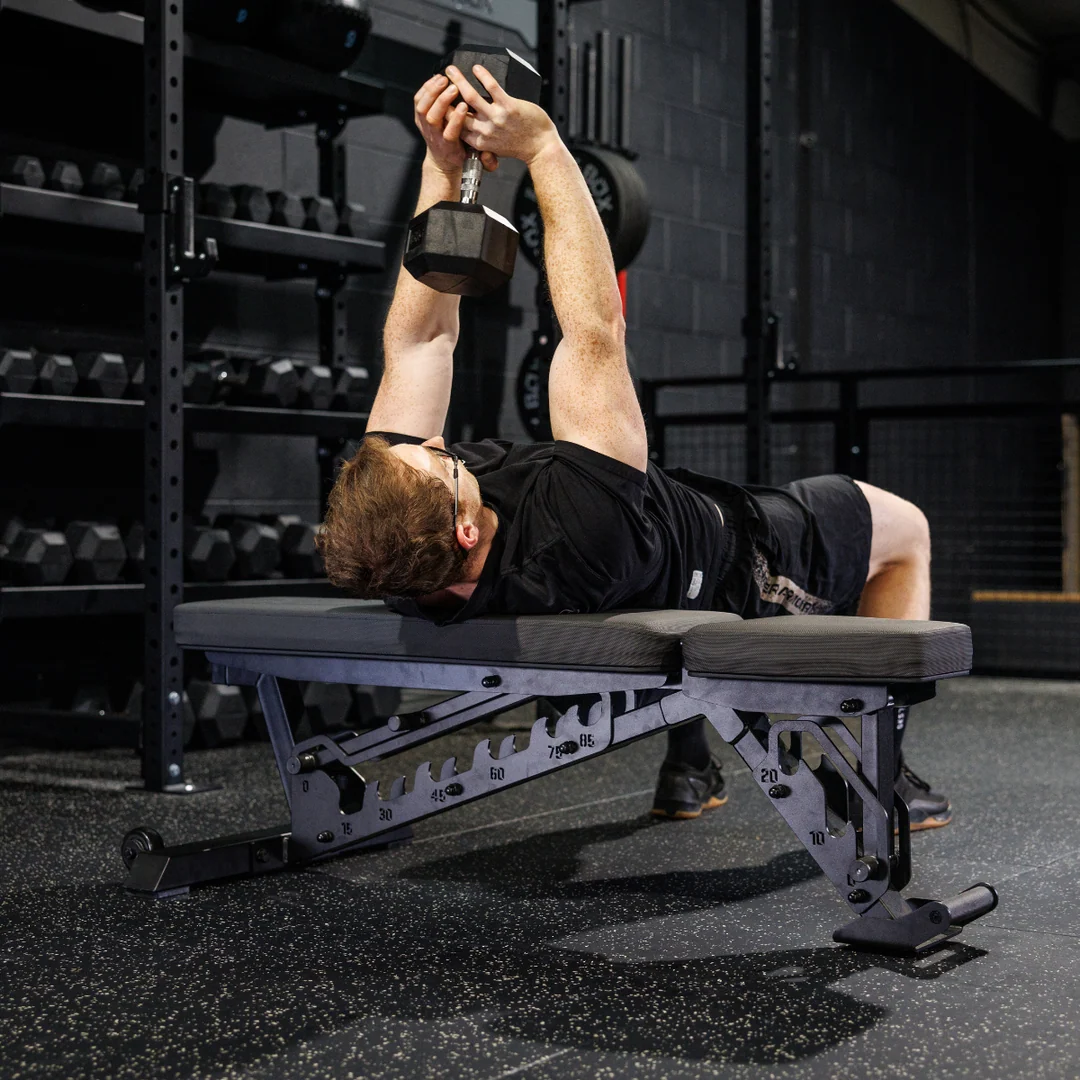
For a straightforward starting setup, lie along a flat bench with the head and upper back supported, feet planted securely and enough space behind the bench for the weight’s path. Check that the bench cannot rock or slide. On an adjustable model, secure the back pad in its intended flat position before bringing the dumbbell into place. A loose adjustment is not something to discover midway through the set.
Set your feet where they help you maintain the same body position throughout the movement. Avoid reaching so far for the floor that you slide toward the end of the pad. Tall lifters may need to pay particular attention to pad length and foot contact. The setup should support the movement you intend, not require a balancing act simply to keep your head off the edge.
Keep the area around your shoulders and behind your head clear of other equipment. Plan both the entry and the finish with a very light weight first. Bring the dumbbell into a secure position before extending it above the chest. After the final repetition, return it toward the chest under control and put it down without twisting from an awkward overhead position. Do not begin with a weight you cannot position and remove dependably.
Write down the bench position you use. “Flat bench, lying lengthways, feet on floor” is a useful baseline. If next week’s set is performed across the bench with unsupported hips, the support demands have changed. That may be a deliberate variation, but it should not be hidden inside a comparison of dumbbell numbers.
2. Choose a secure grip and keep the elbow angle steady
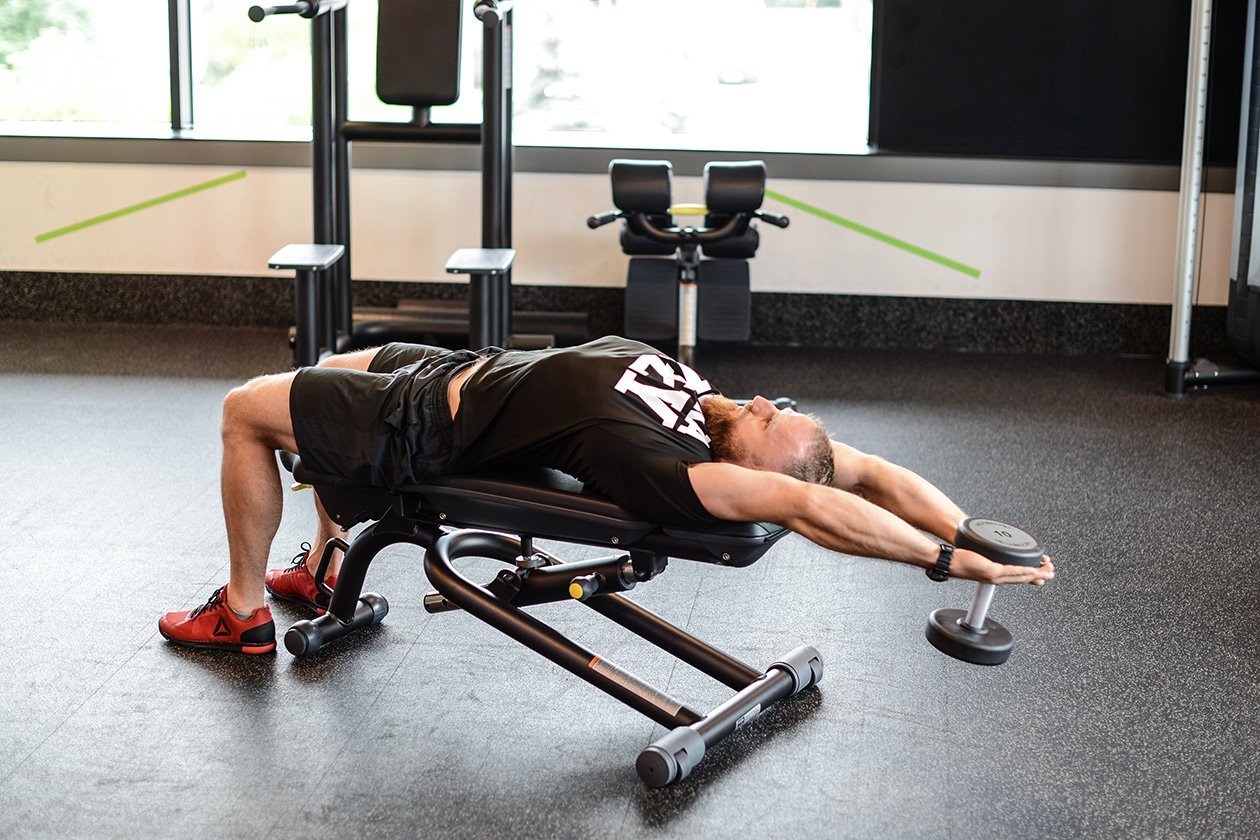
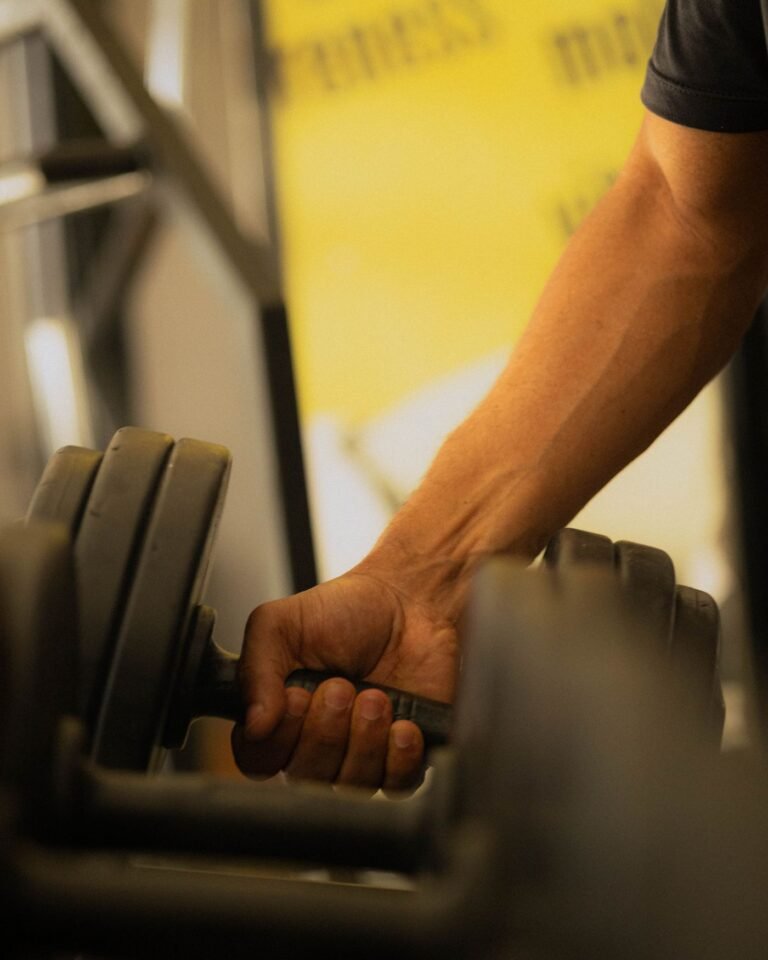
Many single-dumbbell demonstrations use both hands beneath one end of the weight. That requires a shape and construction that actually permit a secure hold. Do not assume that every adjustable dumbbell, removable plate or selector mechanism is suitable for being supported that way. Check the manufacturer’s intended use and locking instructions. If your hands cannot form a dependable hold, choose different equipment rather than squeezing an unsuitable head harder.
Start with the dumbbell above the chest and the arms nearly straight, keeping a modest, comfortable bend at the elbows. “Straight-arm” does not require aggressively locking the joint. The important comparison is whether that elbow angle remains broadly consistent as the arms move. Your shoulders move through the arc; the repetition should not gradually become an overhead elbow extension.
More bend shortens the distance between the shoulder and the weight. If you bend farther as the set becomes difficult, the same dumbbell can become easier to move while the exercise changes. This is one reason a heavier pullover is not automatically a stronger performance. Record the arm position you can maintain rather than chasing a number that depends on a different lever.
Use the first light set to check the grip through the entire path. Notice any shifting, pinching or need to readjust the hands. Pause the exercise and reset if necessary; do not turn a slipping grip into another repetition. The catalogue below compares dumbbell, bench and loading options, but a listing alone does not establish that its head or locking system is approved for this particular overhead hold.

Equipment Worth Exploring
Explore equipment, accessories and gear from our carefully selected range.


Rubber Hex Dumbbells
Rubber-coated hex dumbbell pairs with a stable shape for home and commercial strength training.




Multi Bench MBX-650 2.0
Adjustable multi-bench with roller adjustment, 15 backrest positions and accessory mounts.


Grip Plates
Rubber-coated weight plates with handholds for loading barbells and machines.
3. Let controlled shoulder movement set the lower limit
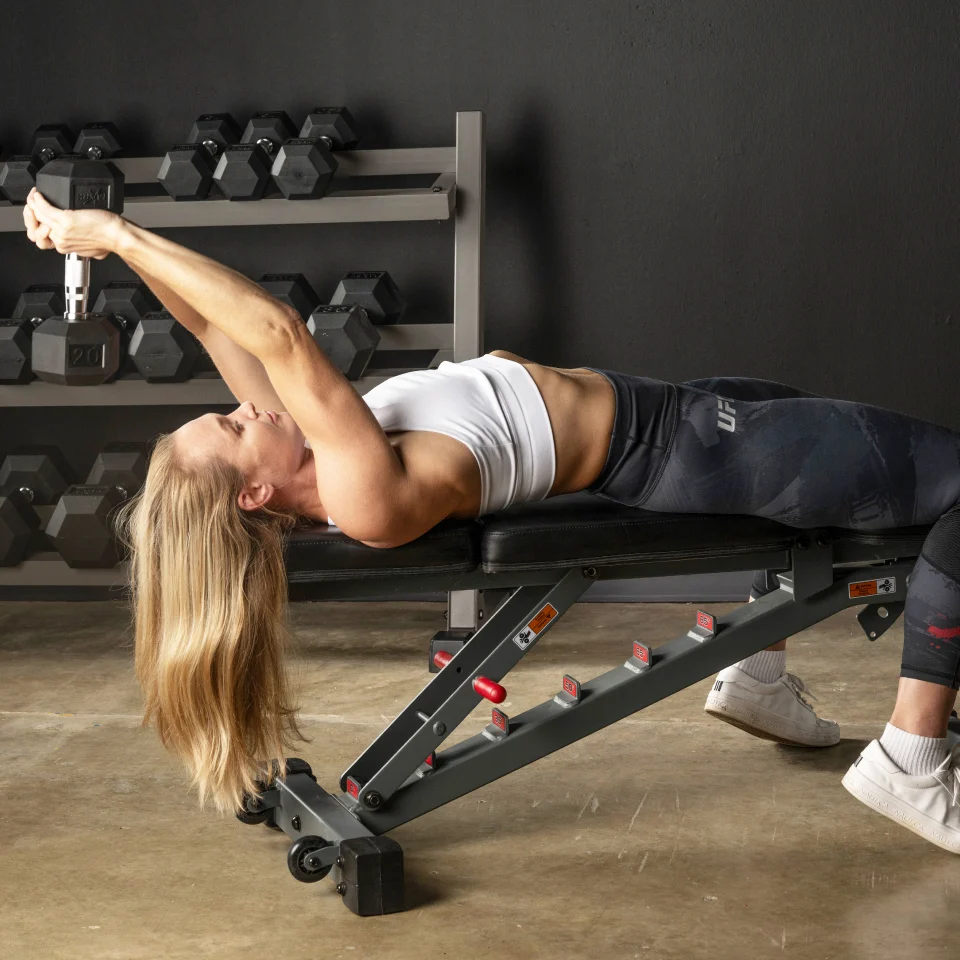
Lower the weight behind the head in a smooth arc while preserving your chosen elbow angle and trunk position. Stop at the range you can control, then return toward the starting position. Having the upper arms approach the ears is a useful description of the movement, not a requirement to force every shoulder to the same endpoint. The floor is not a target.
Watch for extra movement that makes the dumbbell appear to travel farther. A progressively larger back arch or rib lift can add distance without representing more controlled motion at the shoulder. The aim is not to press the lower back flat by force; it is to avoid changing the torso position simply to reach farther. Use a smaller arc or lighter weight when the movement no longer resembles your intended repetition.
Control the turn at the bottom instead of dropping into a stretch and bouncing out. On the return, guide the weight back above the chest rather than pulling it toward the waist to make the finish look larger. Breathe throughout the set. A slower practice pace can make it easier to notice changes, but there is no special second count that turns poor positioning into productive work.
A side-view recording is useful for comparison. Check the top position, elbow bend, lowest controlled point and whether the torso changes noticeably near the bottom. If the first and final repetitions use different movement patterns, shorten the set or adjust the load. An uncomfortable shoulder sensation is a reason to stop and reassess, not evidence that you have finally found a better stretch.
4. Treat lengthways and cross-bench versions as different setups
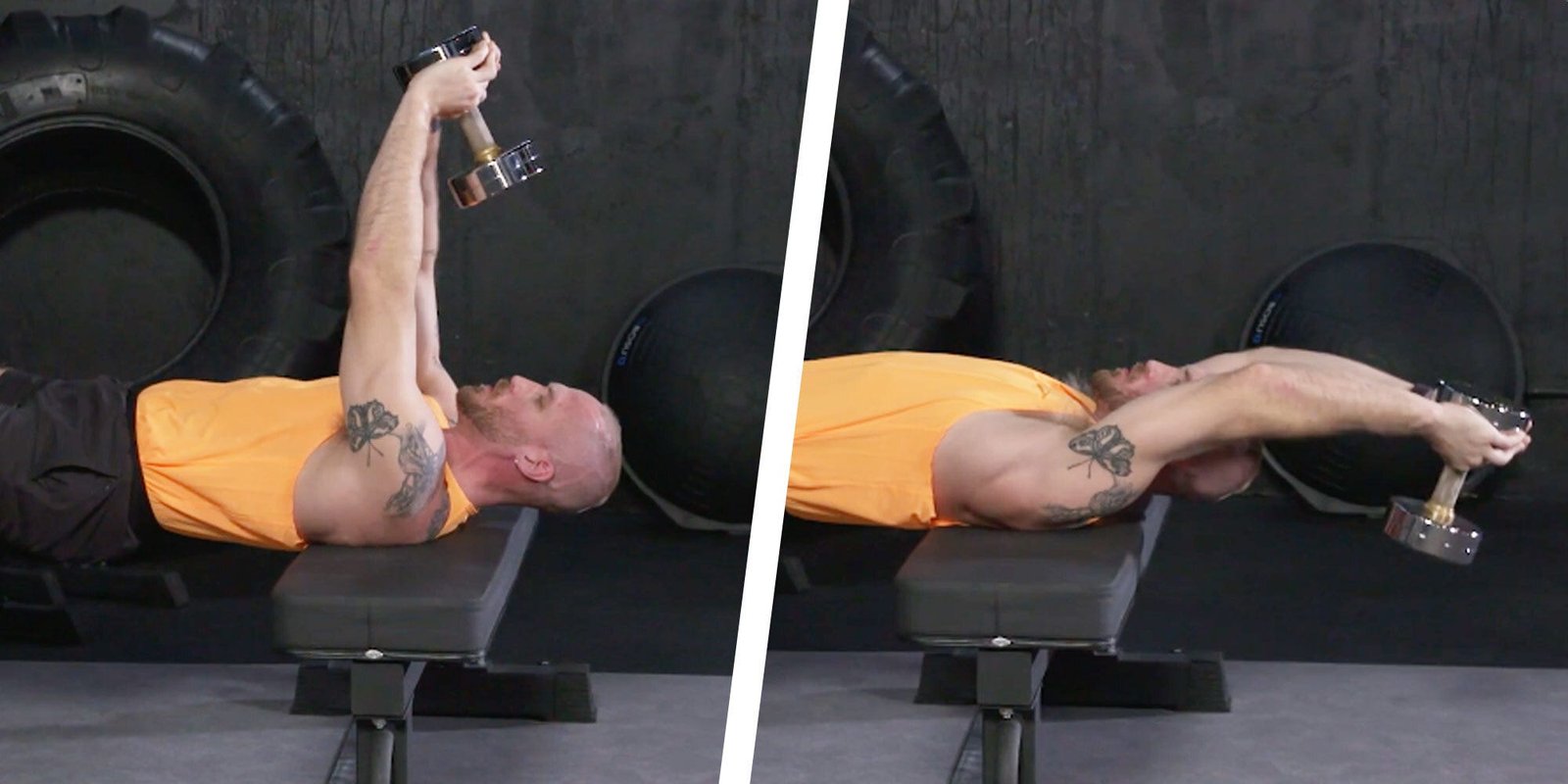
Cross-bench pullovers support the upper back across the pad while the feet and lower body maintain the rest of the position. They are a familiar variation, but they add a different support task from lying along the bench. Keeping the hips and torso consistent becomes part of the exercise. Do not assume that less support automatically creates better chest or back training.
If you use the cross-bench version, practise its body position before adding meaningful resistance. Keep your stance dependable and avoid allowing the hips to rise or fall dramatically as the dumbbell moves. If maintaining the bridge becomes the reason you stop, note that limitation. It is different from reaching the end of your capacity to control the arm movement.
The pullover belongs to an upper-body routine, but it does not have to settle an argument about whether it is exclusively a chest exercise or exclusively a back exercise. Both the chest and latissimus dorsi can contribute to the movement. A strong sensation in one area does not establish that every other muscle is inactive, and a particular grip cue does not guarantee a precise division of long-term growth.
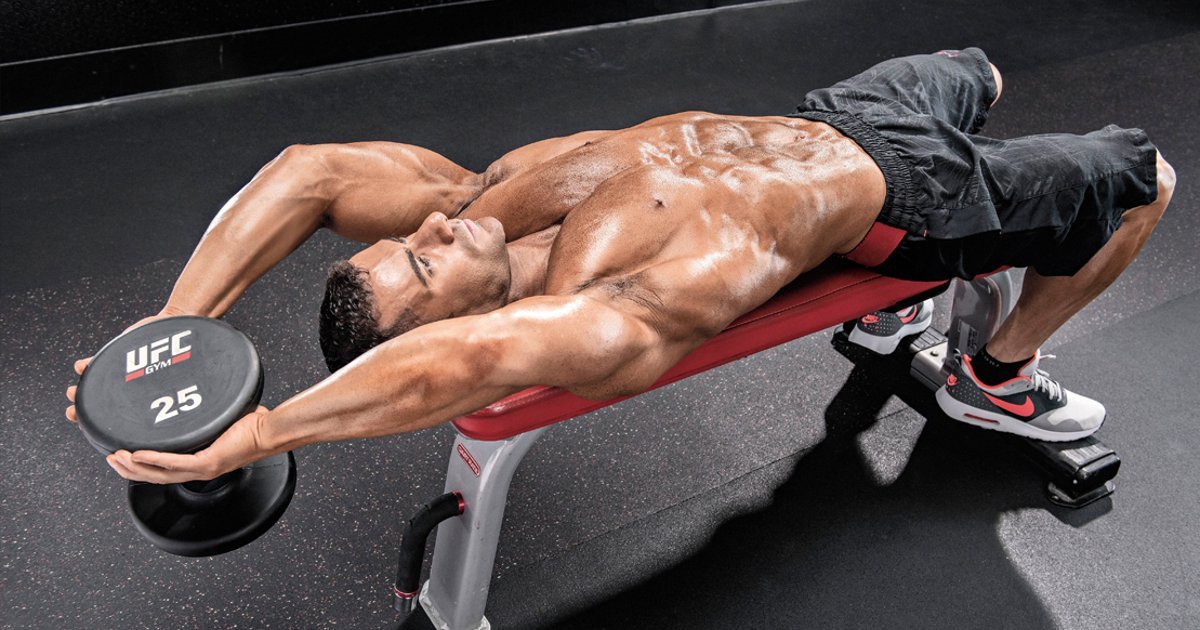
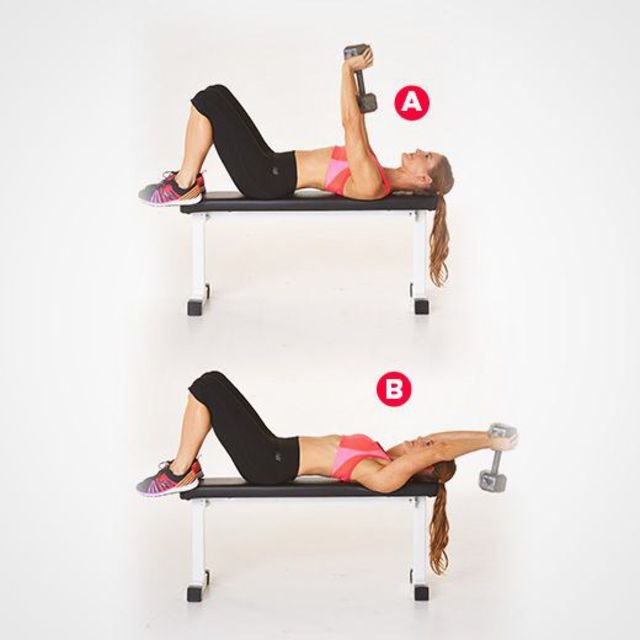
Choose the version you can perform comfortably and compare consistently. Neither a bench variation nor a deeper-looking photo proves that you should copy that exact range. The images show different bodies and support arrangements; use them to understand the task, then establish your own repeatable position. Keep changes deliberate so your training log describes the exercise you actually performed.
5. Progress the accessory without sacrificing the next session
Place pullovers where they fit the priorities of your upper-body workout. If pressing or rowing performance matters most that day, complete those lifts before demanding pullover work. If learning the pullover is the priority, a light practice set earlier can make sense. Avoid assuming that every accessory needs to reach exhaustion to deserve its place.
As a modest trial, use two sets of eight to twelve controlled repetitions with a weight that leaves several clean repetitions available. Rest until you can repeat the same support, grip and range. This is an adjustable example, not a proven optimal dose. Your other chest, back, shoulder and arm work affects the amount of extra training you can recover from.
Keep the load unchanged while the repetitions become more consistent. When both sets reach the upper end of your range without extra elbow bend or torso movement, consider the smallest practical increase. Expect fewer repetitions at the new weight. If the increase makes the grip uncertain or shortens the arc substantially, return to the previous load rather than redefining the movement to keep the heavier number.
Log the dumbbell, support arrangement, elbow position, comfortable lower limit, repetitions and how the next upper-body session feels. Distinguish adding clean repetitions from adding depth or changing the support. For the wider bodybuilding routine, a dumbbell design or chest-day slogan can be part of the gym ritual; the useful habit is still measurable execution. Keep the pullover when it offers controlled, recoverable work, and change it when its practical demands no longer suit your training.

Bodybuilding Shirts & Workout Gear
Bodybuilding shirts, tanks and gym gear for lifters chasing muscle, size, symmetry and the pump.

Dumbbell Heartbeat Hooded Pullover Fitness Fans Hoodie
Stay casual and show some bodybuilding attitude with “Dumbbell Heartbeat”.

Live Love Lift Crewneck Pullover Sweater Workout Gymbro T-Shirt
For laid-back days and gym-girl humor: “Live Love Lift”.

Shirt – Liftionaire Golden Dumbbell Gymbros & Gains T-Shirt
Make gym days more fun with “Liftionaire Golden Dumbbell” style.

Hell'S Dumbbells Shirt AC/DC Rock Music & Gymbros T-Shirt
Make gym days more fun with “Hell's Dumbbells” style.

Vitruvian Man With Dumbbells Shirt: Leonardo Da T-Shirt
Bring “Vitruvian Man With Dumbbells” humor to your next gym day.

Dumbbell Meme Shirt – Essential & Gymbros Seeking T-Shirt
Make gym days more fun with “Dumbbell Gym Meme” style.

Heart And Brains Dumbbell Meme : The Ultimate T-Shirt
Make gym days more fun with “Heart and Brains Dumbbell Gym Meme” style.

Chest Day Decal Water Bottles & Equipment Meme Sticker
Bring “Chest Day” attitude to your water bottle or laptop.

If You're Reading This Its Chest Day Gym | Drake Meme W Tank Top
Train hard, laugh a little, and rep “If You're Reading This Its Chest Day”.

One More Rep Shirt: Motivational & T-Shirt
Make gym days more fun with “One More Rep” style.