Advertising disclosure: This page includes affiliate product links that may earn us a commission, as well as products from our own store.
The Rogue Echo GHD is appealing because it breaks a large training station into smaller pieces. That also changes the buying decision. You are choosing a setup built around a pad, a box and a mounting point, so the important question is whether those pieces work together in your actual gym. A small pad footprint does not describe the room needed to mount it, get into position or train without moving surrounding equipment. Check the complete arrangement before comparing it with a freestanding machine.
Start with the complete station, not the pad footprint
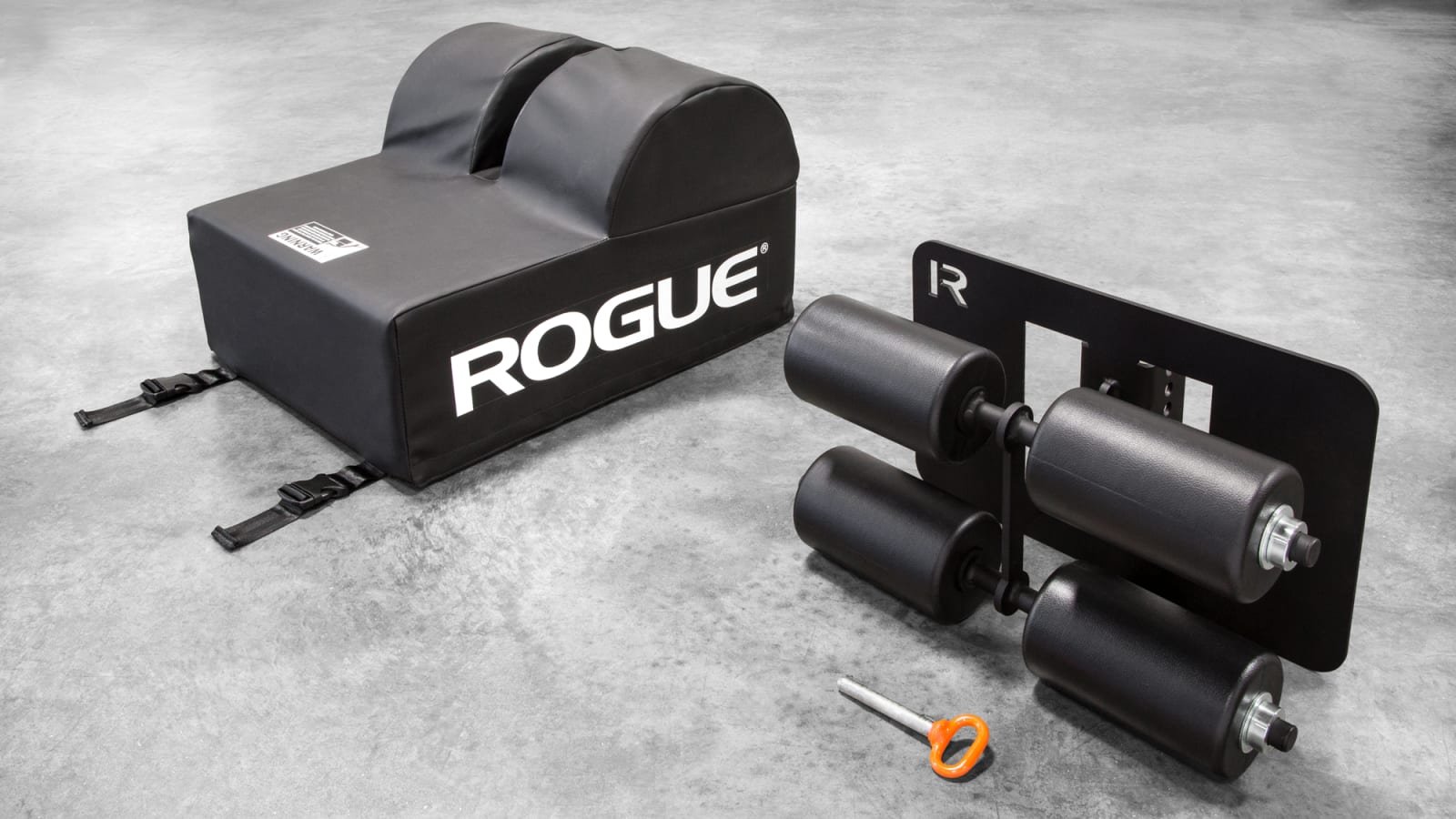
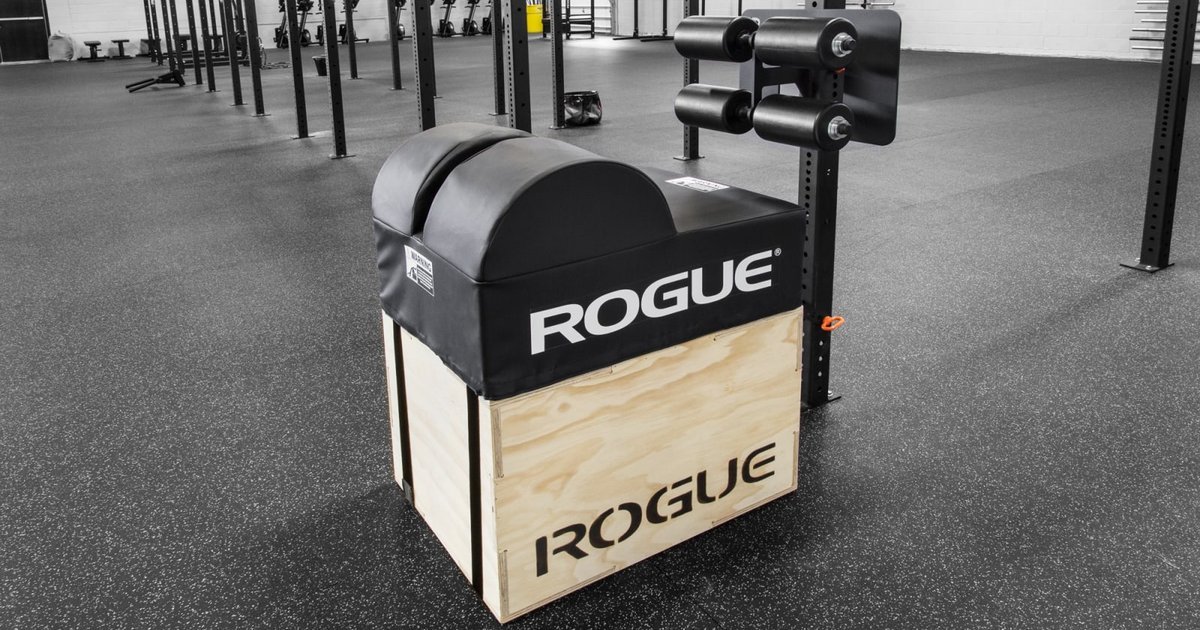
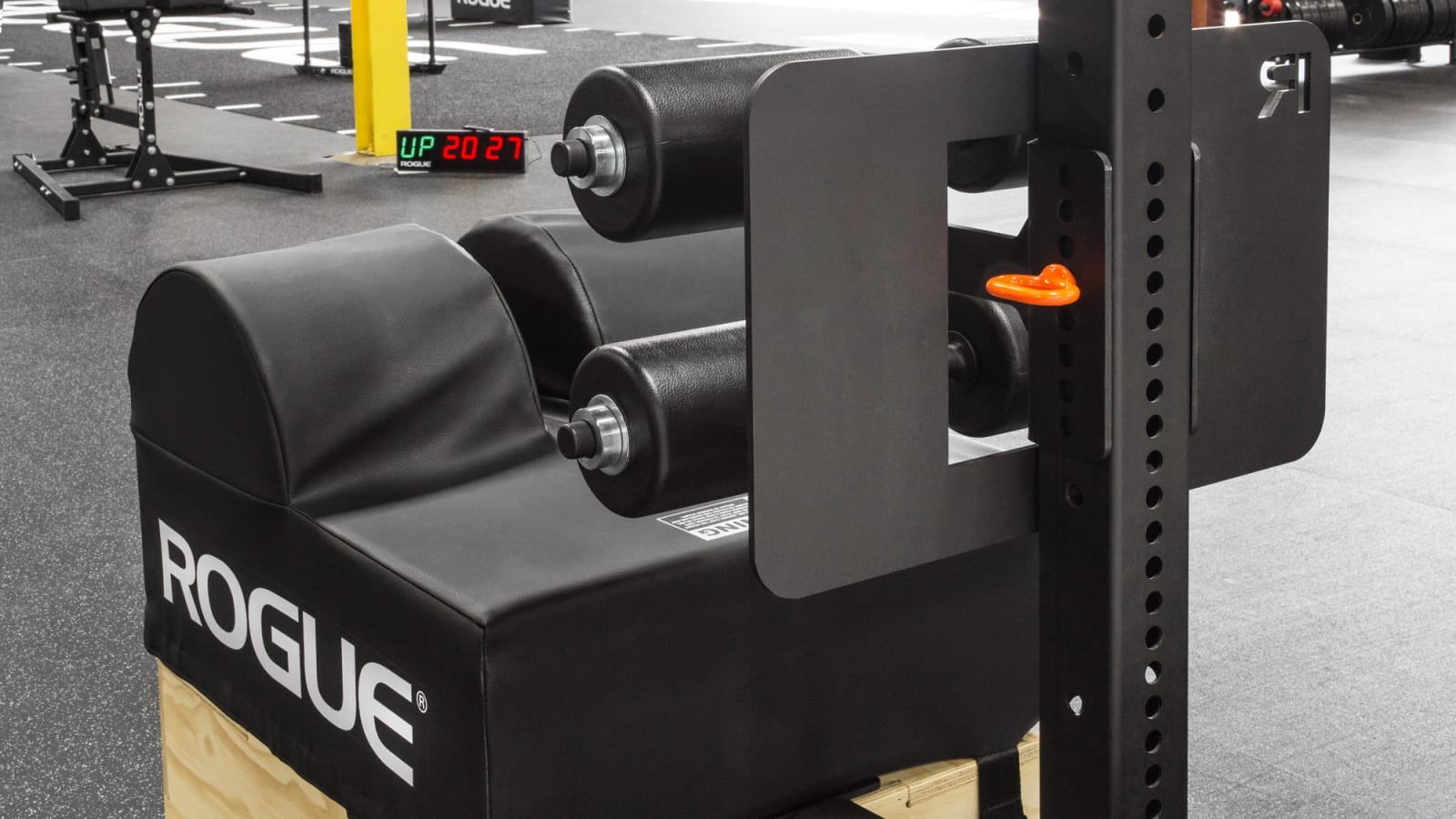
The current Rogue 3×3 Echo GHD package includes a pad and roller assembly. The pad measures 30 by 24 inches and is 10 inches high. A Games Box and stabilizer kit are optional additions. Those distinctions matter when a product photograph shows several components together: confirm the exact items selected at checkout instead of assuming the entire pictured arrangement is included.
Draw your proposed station from the side as well as from above. Mark the supporting box, the upright used for the rollers, your entry route and the area through which your body will move. The pad dimensions describe one component; they cannot tell you whether a door opens into the exercise area or whether another rack attachment obstructs access.
Next, write an inventory of what you already own. A compatible mounting point, suitable supporting box and appropriate floor arrangement are useful assets only if they are available in the position where you intend to train. Equipment that must be borrowed from another station has a changeover cost, even when it does not add to the purchase price.
This is the central tradeoff with modular equipment. You may be able to put components away after training, but you also become responsible for reconstructing the same usable arrangement. Compare the complete process with a freestanding GHD that stays adjusted, rather than comparing a compact pad with the footprint of a whole machine.
Treat the roller mounting point as a compatibility check
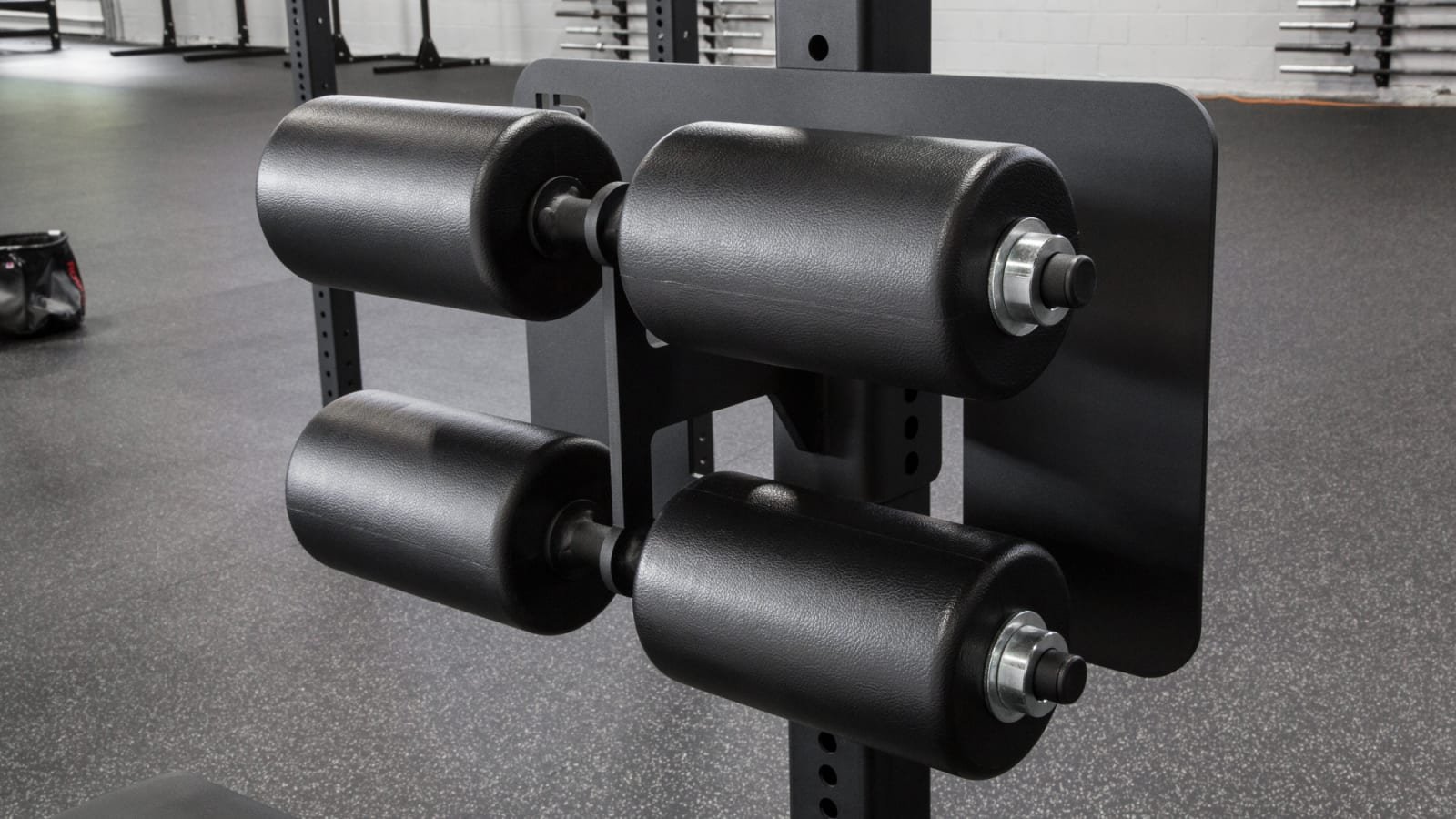
For this 3×3 version, the current listing restricts the roller assembly to Rogue Monster Lite uprights or The Strip. It explicitly says not to mount it on other upright types. A nominally similar rack is therefore not enough evidence of compatibility. Confirm the exact rack series and mounting arrangement with the manufacturer before ordering.
The assembly instructions also require the mounting upright or Strip to be securely fastened to the floor or wall. That is more specific than asking whether the attachment pin appears to fit. A correct connection between two parts does not establish that the structure supporting those parts is installed appropriately.
Before purchasing, photograph the intended mounting location and identify the rack or mounting accessory precisely. If you need advice, those details let the manufacturer answer a concrete fit question. Include other attachments occupying the same area. An arrangement that works with an empty upright may become inconvenient when a bar holder or storage accessory is added.
Think about adjustment access too. You should be able to reach the mounting and adjustment points without squeezing between loaded equipment or lifting awkwardly around another station. If different people will use the setup, work through how each person will establish their position and return the station to storage.
Do not improvise a cross-brand mounting solution simply because the numbers on a specification sheet look similar. Treat an unresolved mounting question as a buying decision that needs a clear answer, rather than something to discover after the equipment arrives.
Check the box, pad and straps as one arrangement
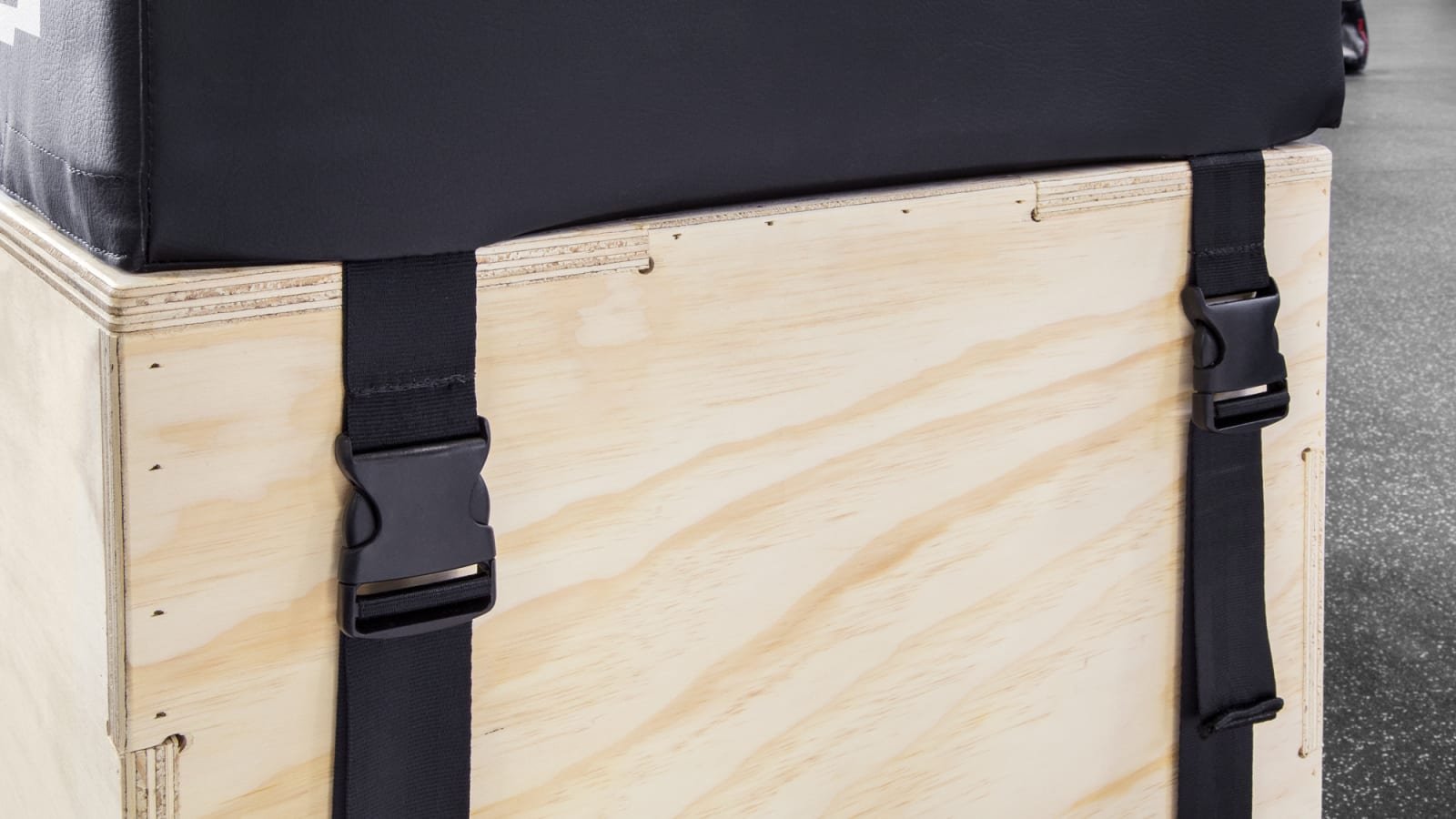
The pad is strapped to a Games Box or existing plyometric box in the product setup. Non-slip material is used on the pad underside and strap webbing. The instructions show buckling the pad to the box and tightening the straps. That connection deserves attention whenever you assemble the station.
Inspect the actual box you plan to use, including its supporting surfaces and condition. A box that is convenient for another exercise is not automatically the right choice here. Confirm its suitability for this application and avoid treating a social-media setup photograph as an installation specification.
Consider how the pad sits on the box before you think about adding training difficulty. The contact arrangement, strap route and available adjustment should make sense together. If something seems unstable or the components cannot be secured as instructed, solve the setup problem instead of using extra body tension to compensate.
Storage is part of this check. Decide where the pad and straps will go when removed, whether they can be kept clean and dry, and whether the box will be used for something else between sessions. A routine that involves repeated unpacking is easier to sustain when each piece has a designated place.
Make your setup repeatable without pretending that a written note replaces inspection. Record the configuration that fits you, then check the condition and assembly each time. If another user changes the arrangement, begin with their changes in mind rather than assuming your previous settings are still present.
Resolve stability and clearance before chasing repetitions
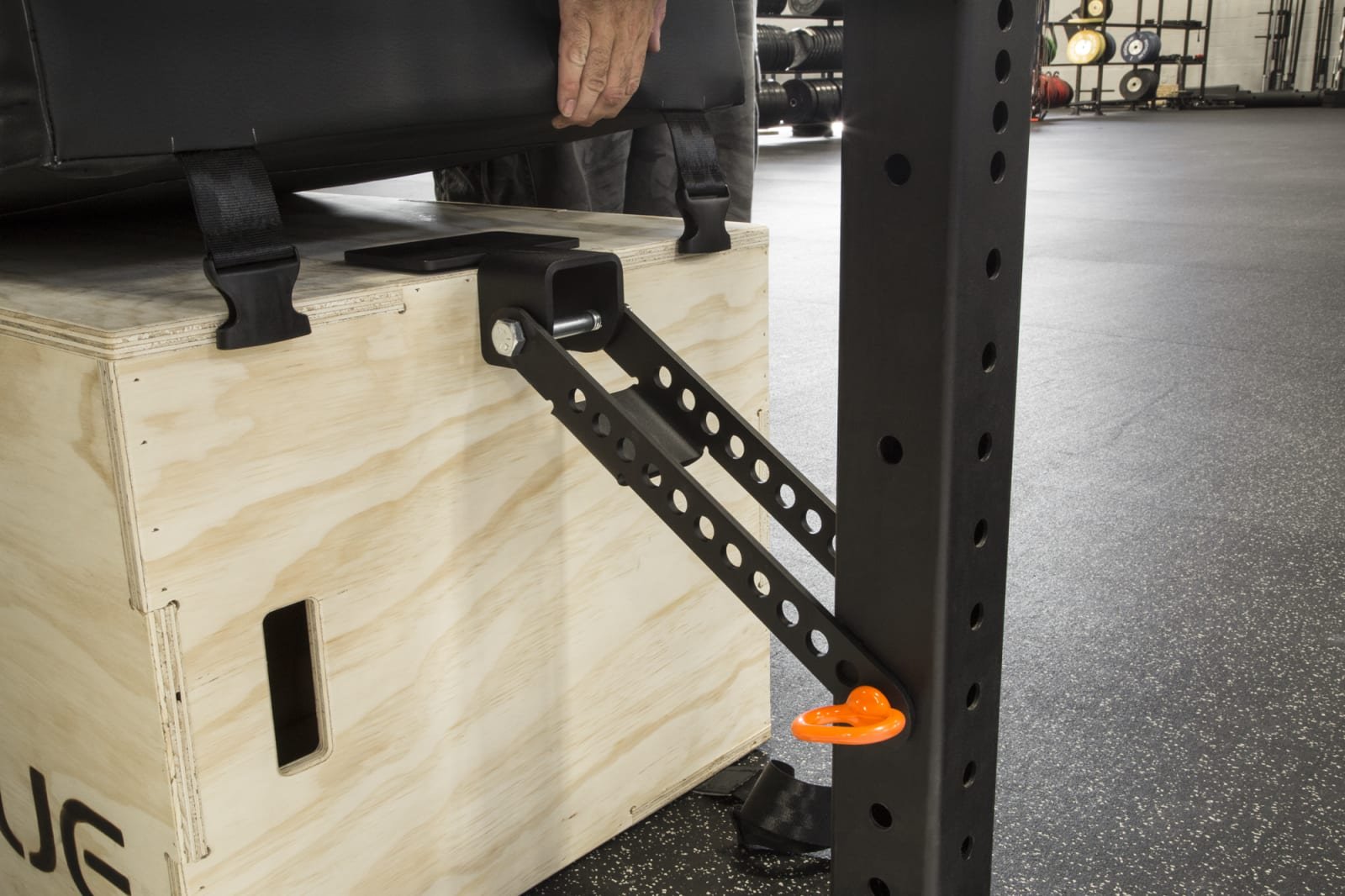
The assembly instructions specify a non-slip setup surface, discourage slick bare concrete and call for a stability check before every use. The optional stabilizer provides another way to limit unwanted movement; it does not make the condition of the floor, box or mounting structure irrelevant.
Look around the entire working area. Loose accessories, a nearby bench and an untidy route into the station can turn a compact arrangement into an awkward one. General equipment-maintenance guidance emphasizes secure connections, functional straps, sound padding and clear access. Apply those checks to the complete station rather than inspecting only the newest component.
A useful first-use sequence starts with the installation instructions and a careful inspection. Obtain appropriate movement instruction, establish a controlled starting position and assess the arrangement before treating it as ready for challenging training. This is an equipment familiarization process, not a strength test.
Keep separate notes for equipment problems and exercise difficulty. Movement of the box, a loosened connection or damaged padding needs attention as an equipment issue. Finishing a set is not evidence that the arrangement passed. Likewise, the fact that a station felt stable for a different user does not answer every question about your positioning.
Allow enough room to get out of position deliberately. Consider the beginning and end of the exercise, not only the middle of a repetition. If the gym is shared, make sure another person will not move equipment into the same space while you are using it. A small storage footprint is valuable only when the working configuration remains practical.

Equipment Worth Exploring
Explore equipment, accessories and gear from our carefully selected range.

Glute Ham Developer GHD-820
Adjustable glute-ham developer with contoured pads and a fold-out knee support.

45° Hyperextension HPX-650
Angled back-extension trainer with split padding, a ribbed footplate and resistance-band pegs.


Foldable Wall Rack
Wall-mounted folding squat rack designed to save floor space between workouts.

Multi Pull Smith Rack MPHR-780
All-in-one rack with a Smith machine, functional trainer, lat pulldown and low row.


Competition Plates
Competition-style bumper plates for Olympic lifts and loaded strength training.

Rubber Hex Dumbbells
Rubber-coated hex dumbbell pairs with a stable shape for home and commercial strength training.
Buy for a training role you can keep using
Decide what job the station will perform in your program. A posterior-chain accessory, a particular GHD movement and general back-extension endurance are different goals. They can lead you toward different equipment choices, adjustment priorities and coaching needs. Avoid buying a versatile-looking station before identifying the movement you actually want to practice.
Exercise research also deserves appropriate limits. A small trial using a variable-angle Roman chair improved static back-extension endurance without showing improved isolated lumbar-extension strength. That was not an Echo GHD trial, and it does not predict results from this product. It illustrates why an exercise benefit, a tested outcome and a product claim should remain separate.
Compare realistic alternatives for your goal. A dedicated GHD offers a different setup workflow; a back-extension station or Nordic arrangement serves a more specific role; a dumbbell hip-hinge exercise may already cover part of your training needs. Those options are not interchangeable, but identifying their roles helps you avoid purchasing equipment for a problem your program does not have.
Consistency and an appropriate progression matter more than owning a particular station. Choose an arrangement you can install correctly, fit comfortably into the room and use regularly. Keep initial training conservative while learning the movement, and seek suitable instruction when the exercise is unfamiliar.
Before ordering, review five things together: confirmed mounting compatibility, the complete package, the supporting box, the working floor area and the setup routine. If those answers are clear, the Echo GHD can be evaluated as a modular equipment choice. If they remain vague, its compact appearance has not yet answered the important questions.
Finally, compare total ownership cost rather than one advertised figure. Include the components and installation your intended arrangement requires, delivery to your location and the value of the space it occupies while in use. Keep that estimate alongside the cost of a complete alternative. The right comparison is between two usable stations that serve your training, not between two isolated catalogue prices.

Funny Gym Shirts & Workout Gear
Funny gym shirts, tanks, hoodies and workout gear for lifters who like training hard.

Shirt – Home Is Where Your Is Hilarious Homegym, T-Shirt
Heavy lifts, good laughs, and a little “Home Is Where Your Gym Is Hilarious” energy.

Basement Gym Crewneck Pullover Sweater for Home Gym Lif T-Shirt
Bring “Basement” humor to your everyday gym style.

Anti Gym Home Gym Club Muscle Shirt Athletic Vest for H Tank Top
Your gym-day look, with a playful “Anti Gym Home Gym Club” twist.

Home Gym Nerd Hooded Pullover for Garage Gym Lifters Wo Hoodie
Make your off-duty look more fun with “Home Gym Nerd”.

Home Is Where The Gym Is Tee
Heavy lifts, good laughs, and a little “Home Is Where The Gym Is Funny Home” energy.

Funny Home Gym Owner Gym Crewneck Pullover Sweater for T-Shirt
Show some gym-day personality with “Home Gym Owner”.

No Cars Allowed In My Garage Gym Decal for Garage Gym E Sticker
Stick a little “No Cars Allowed In My Garage” humor on your favorite gear.

Funny Basement Gym Hooded Pullover for Home Gym Lifters Hoodie
Make your off-duty look more fun with “Basement”.

Mind Muscle Perfection Brain and Biceps Gym for Science T-Shirt
Show some gym-day personality with “Mind Muscle Perfection Brain and Biceps”.

Never Skip Leg Day Chicken Legs Meme Sweater & Bros T-Shirt
Show some gym-day personality with “Never Skip Leg Day”.