Advertising disclosure: This page includes affiliate product links that may earn us a commission, as well as products from our own store.
Squats and leg extensions both train the quadriceps, but they create different training tasks. A ten-week comparison found an advantage for squats in several measured adaptations. The useful lesson is more specific than declaring machines inferior: the participants, movement range and resistance profile shape what that result means. For a lifter building a leg routine, the goal is to choose exercises that serve a clear purpose and then assess progress on comparable terms.
What the ten-week comparison found
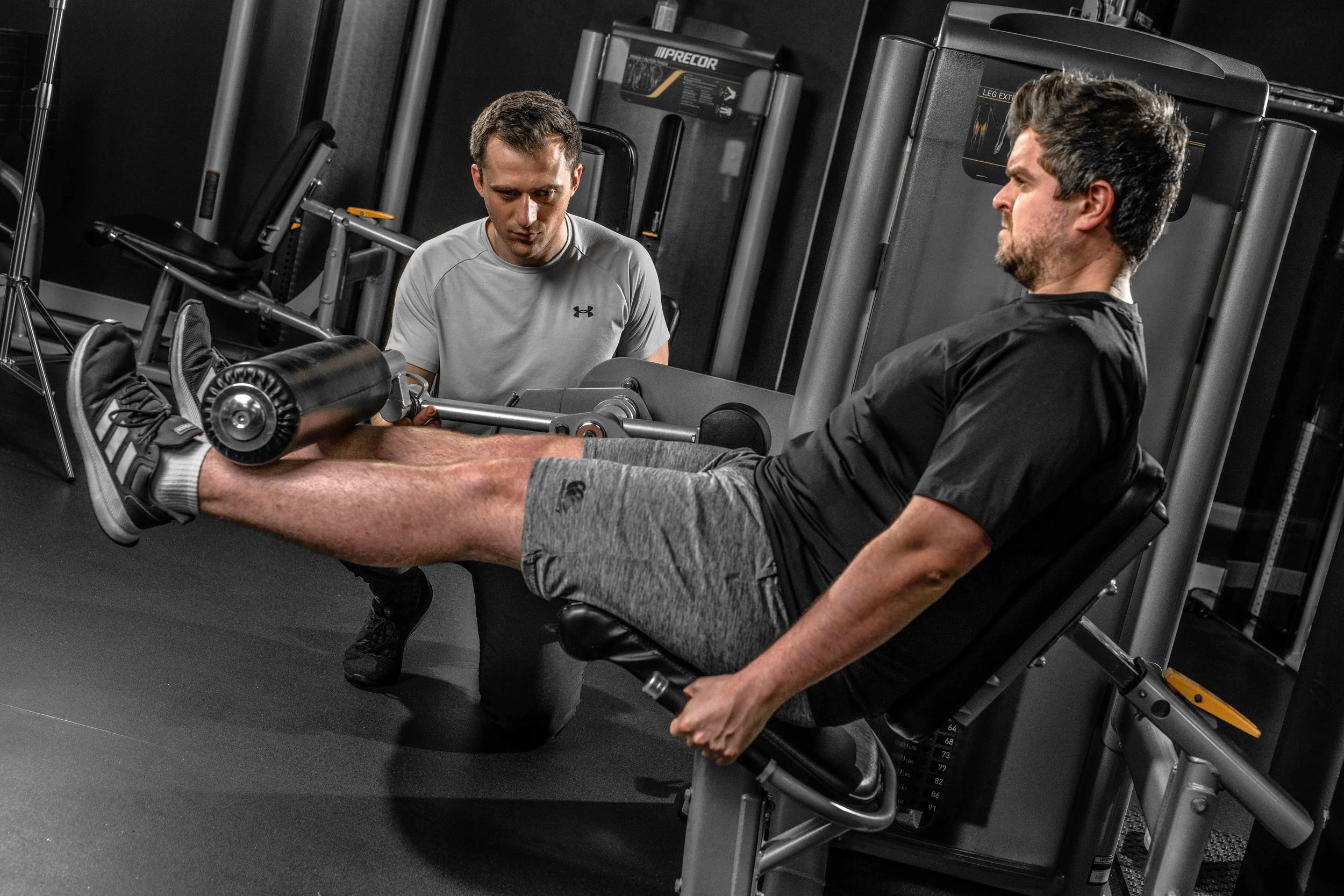
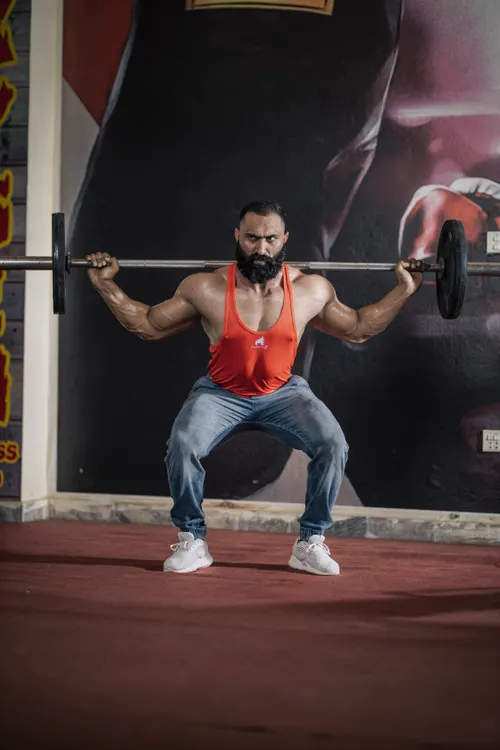
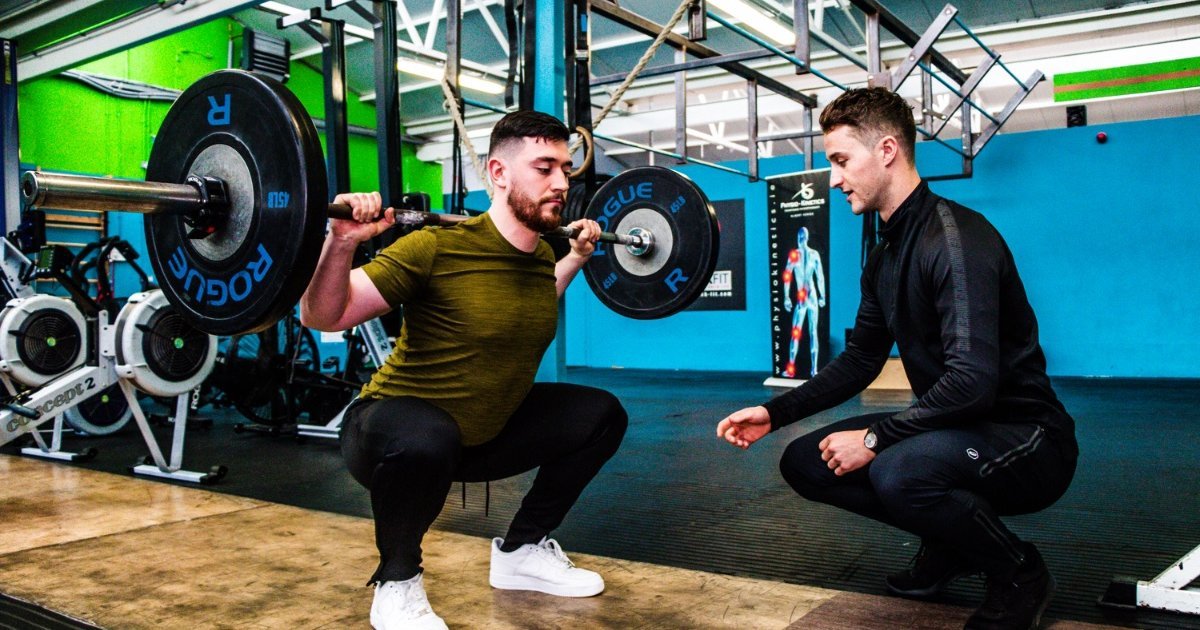
Twenty-four untrained men were assigned to barbell back squats or leg extensions. Repetition number, relative intensity and knee movement range were standardized. Both groups improved muscle thickness and exercise strength, with larger average thickness gains in the squat group. Squat training also produced a larger transfer to the other exercise. This was a comparison of two specific training programs, not a test of every squat variation against every leg-extension machine.
The study's leg-extension machine had a resistance profile that peaked near full knee extension. Its knee movement range was matched to the squat condition, from full extension to 90 degrees of knee flexion. Those details matter when applying the findings to a different machine or a differently performed squat.
A small study in inexperienced participants is useful evidence about that comparison. It cannot establish the ideal program for an experienced bodybuilder, prove that isolation exercises are unnecessary, or predict an individual's exact result. Early strength progress also includes learning the movement, so performance changes need to be read alongside the size measurements.
Treat the result as a reason to examine your exercise choices rather than a demand to delete one movement. Ask what you want from each exercise, how you perform it and what outcome would count as success. That produces a more useful training decision than ranking exercises from one headline.
Equal repetitions do not guarantee equal muscular loading
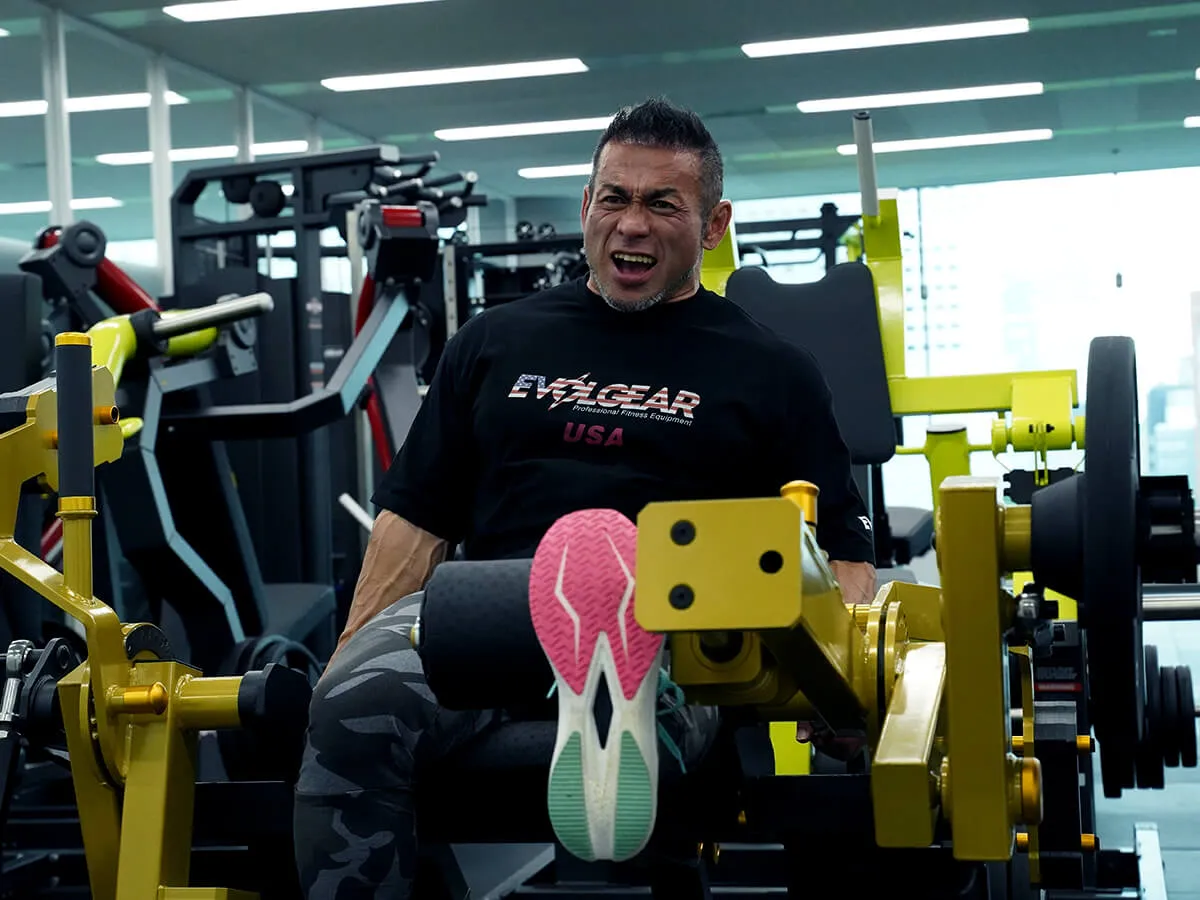
A training log can describe sets, repetitions and percentage of maximum without fully describing what happens at the knee. External load travels through a movement whose leverage changes with position. Two exercises can therefore share familiar programming numbers while feeling challenging in different parts of the range.
On a leg-extension machine, the lever and cam help determine how resistance changes as the knee straightens. A different machine can alter that experience. The amount printed on one weight stack should not be treated as a universal knee-extension load that transfers directly to another machine.
Squatting adds a different coordination problem. You move through the hips, knees and ankles while controlling the bar and your body position. That makes it a whole movement to practice, not simply another way to display a number for the quadriceps. Technique and the range you can repeat are part of the exercise being trained.
For practical comparisons, record more than the weight. On squats, note the variation and the depth standard you intend to maintain. On leg extensions, note the machine, seat position and pad setting. If those change, flag the session instead of treating the new number as directly comparable progress.
This does not require calculating joint torque during an ordinary workout. It requires recognizing what your log leaves out. Use load and repetitions as useful tracking tools while keeping the movement itself sufficiently consistent to make the numbers meaningful.
Read a thickness measurement differently from a physique photo
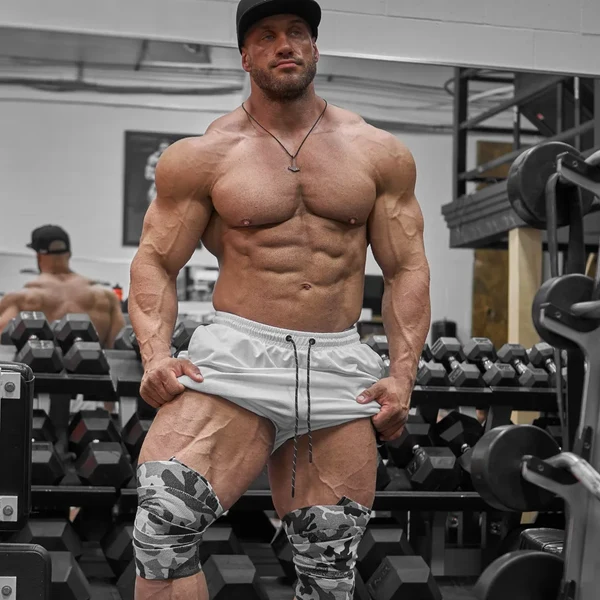
Muscle thickness, muscle volume and a performance test answer different questions. A thickness measurement samples a dimension at a defined site. A volume assessment describes a different property. A successful maximum repetition measures the ability to complete a particular task under its testing rules.
That is why a larger average thickness change should not become a claim that every region of every quadriceps muscle grew by the same amount. Nor should a visible pump after one session be used as a substitute for standardized longer-term measurements. These observations operate on different time scales and capture different things.
The same care applies to strength transfer. Improving an exercise you did not train is useful, but it is not identical to improving your practiced lift. If your main goal is a stronger squat, your squat performance deserves its own assessment. If you care about knee-extension performance, measure that task consistently too.
Broader training research helps keep the result in perspective. A network meta-analysis found that several combinations of load, sets and frequency improved strength and hypertrophy compared with no exercise. Higher loads were prominent among the strongest prescriptions for strength, while multiple sets featured among the highest-ranked hypertrophy prescriptions. Those findings support purposeful programming rather than one universally mandatory exercise.
For your own review, keep outcome categories separate. Look at exercise performance, the consistency of your technique and any physique measurements you collect under comparable conditions. When these do not move together, investigate the difference instead of forcing them into a single story about whether an exercise works.
Give the main lift priority without making accessories compete
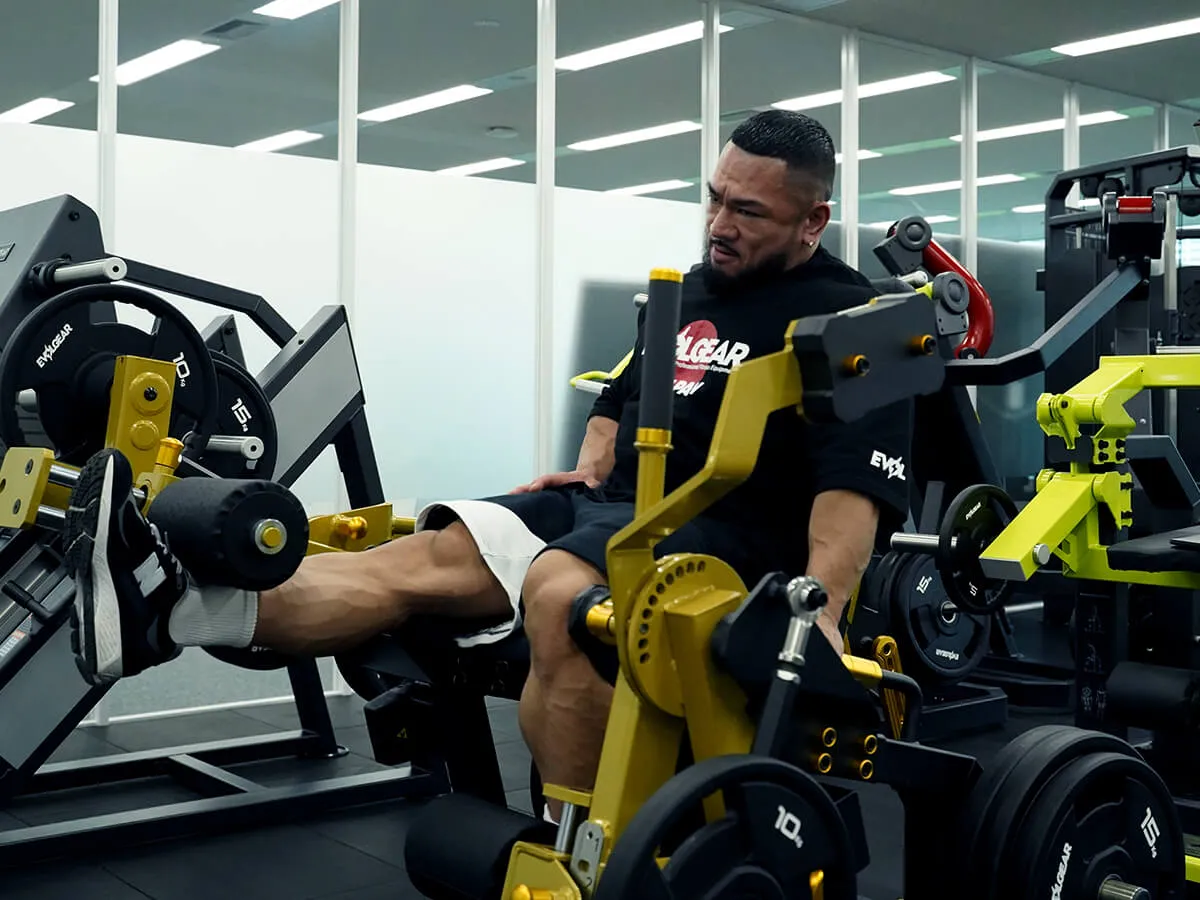
A routine can include squats and leg extensions without pretending that they are interchangeable. Squats can provide the movement you want to practice and progress. Leg extensions can provide a separate, focused knee-extension task. The appropriate balance depends on your goals, current workload and the exercises you can perform consistently.
Exercise order is one practical decision. A systematic review found that strength gains tended to favor exercises performed earlier in the session, while exercise order did not show a clear overall hypertrophy advantage. That supports putting your priority lift first when its performance matters most, rather than assuming one order is best for every goal.
An illustrative arrangement is to perform your planned squat work first and keep a smaller amount of leg-extension work afterward. This is an example of organizing priorities, not the tested protocol or a proven optimal set allocation. Keep the amount of work within your existing program rather than adding a new block simply because both exercises have benefits.
A useful alternative for someone prioritizing machine knee-extension performance may be to organize the session differently. Make that choice deliberately and recognize that later exercises are being assessed after some work has already occurred. Comparing a fresh first exercise with a fatigued final exercise can create a misleading impression of progress.
Equipment choices should follow the task. Check a rack's installation instructions and safety arrangements before squatting. For a leg-extension machine or attachment, establish an appropriate fit and secure setup. A familiar exercise name does not make different pieces of equipment mechanically identical or establish attachment compatibility.

Equipment Worth Exploring
Explore equipment, accessories and gear from our carefully selected range.

Leg Extension/Curl BCO-780
Leg extension and lying leg curl combo with plate loading, band pegs and a cable-loading option.

Seated Leg Combo BCO-680
Adjustable seated leg extension and leg curl machine with band pegs for added resistance.

HUSLA Leg Extension Pad
Pad attachment designed to increase usable range of motion on compatible leg-extension machines.

Studio V-Squat
Plate-loaded V-squat machine for supported lower-body strength training.

Leg Press/Hack Squat BPR-790
Convertible 45-degree leg press and hack squat machine with a broad footplate and band pegs.

Compact Leg Press CLP-700
Compact reverse-style leg press with a moving seat carriage and an adjustable footplate.

Foldable Wall Rack
Wall-mounted folding squat rack designed to save floor space between workouts.


Run a comparison your training log can explain

Begin by identifying the question you actually want answered. Are you trying to improve squat performance, add focused quad work, manage session length or replace an exercise that does not fit your routine? Write that question down before changing the program. Otherwise, it is easy to judge the result using whichever outcome looks best afterward.
Keep the first change modest. For example, retain your squat variation and schedule while adding or adjusting a limited amount of leg-extension work within your planned weekly workload. Hold the machine setup and repetition standard steady. The value of this example is its clarity, not a promise that adding an accessory improves every program.
Record load, completed repetitions, an estimate of effort and any meaningful setup change. Note whether later sets keep the same movement standard. A repeated improvement in comparable work is more informative than a single heavier set achieved with a shorter range or a changed position.
Review the pattern over several sessions before changing another variable. If your priority lift improves and the accessory work remains manageable, you have useful feedback. If the additional work makes the rest of the routine erratic, reassess the allocation and sequence instead of assuming that more variety automatically means a better program.
Decide in advance when you will review the change. A few sessions can help you assess setup and repeatability, but they cannot establish a dependable muscle-growth comparison. Keep short-term performance observations separate from longer-term physique goals, and avoid interpreting a good pump as evidence that one exercise has won.
General resistance-training guidance emphasizes consistency and individualization. Apply that principle here: choose a repeatable approach that fits your goal and can be maintained. You do not need to recreate a research laboratory to make a better training decision, but you do need enough consistency to understand what changed.
The practical conclusion is to give squats and leg extensions distinct jobs. The study supports the squat program under its tested conditions; it does not erase the usefulness of focused knee-extension work. Build the routine around your priorities, preserve a clear movement standard and let a credible training record guide the next adjustment.

Funny Gym Shirts & Workout Gear
Funny gym shirts, tanks, hoodies and workout gear for lifters who like training hard.

Don'T Fart Squats & Leg Day Meme Hoodie
Show off your leg-day humor in a laid-back “Don't Fart Squats” hoodie.

Leg Day Squats Deadlifts Sweater Meme T-Shirt
Show some gym-day personality with “Leg Day”.

Anti Leg Day Leg Day Club & Meme Fans Vest Tank Top
Bring “Anti Leg Day Leg Day Club” humor to your next lifting session.

Leg Day Is Calling You Decal Water Bottles & Sticker
Bring “Leg Day Is Calling You” attitude to your water bottle or laptop.

Negative Leg Day Review 1 Star Not Recommended Decal Sticker
Stick a little “Negative Leg Day Review” humor on your favorite gear.

Never Skip Leg Day Flamingo – Fitness Meme Hooded Pullo Hoodie
Bring “Never Skip Leg Day Flamingo” gym humor to lazy days and post-workout plans.

Everyday Is Leg Day Octopus Meme & Top T-Shirt
Show some leg-day attitude with a playful “Everyday Is Leg Day Funny Octopus” tee.

Gainsonomics Shirt: Bro Science Muscle Graph T-Shirt
Rep “Gainsonomics” humor in and out of the gym.


Leg Day Thou Shalt Not Skip Leg Day Medieval Gym Crewne T-Shirt
Show some gym-day personality with “Leg Day”.