Advertising disclosure: This page includes affiliate product links that may earn us a commission, as well as products from our own store.
Can a shorter chest session build the same muscle and strength as traditional sets? In an eight-week comparison involving 22 trained men, a Myo-Rep approach produced no detected disadvantage in those outcomes while accumulating about 30% less volume load. That sounds like a major shortcut, but the study is more useful as a lesson in training density than as a licence to chase failure on every lift. Here is what was actually tested, where the findings apply and how to experiment without sacrificing controlled reps.
Myo-Reps compress work without making every rep easier
Myo-Reps are a rest-pause style of resistance training. Instead of completing a conventional set, resting two or three minutes and repeating the entire set, you perform one challenging activation set followed by short pauses and small clusters of repetitions. The clusters keep effort high while reducing the time spent waiting for another full set. The attraction is obvious if a packed schedule makes an extra half-hour in the gym difficult.
Imagine a controlled cable fly with a load you can lift for about 15 smooth repetitions. You reach a demanding point with perhaps one good rep left, let the handles return safely, pause for roughly 15–25 seconds, then perform another three or four clean reps. After another brief pause, you might manage three more. This is an illustrative application, not a claim about the exact repetitions or pauses used in the trial discussed below. Different studies and coaches use different Myo-Rep prescriptions.
The activation set matters because it brings the working muscle close to substantial fatigue. The short breaks restore enough immediate capacity for a few more repetitions without fully resetting the effort. It is not the same as casually scattering easy sets across a workout, and it should not mean abandoning tempo or range of motion to squeeze out another repetition.
Straight sets have their own logic: complete a planned number of reps, recover long enough to maintain performance, then repeat. They are easier to load and compare week after week, especially for heavy compound lifts. The useful question is not which system sounds more intense. It is whether the denser structure delivers comparable results while giving up something important.
What the study measured in 22 trained men over eight weeks

An eight-week experiment assigned 22 resistance-trained men to either a Myo-Rep program or traditional straight sets. The training was deliberately specific: flat barbell bench press, incline barbell bench press and seated cable fly, performed twice per week. Both groups improved muscle size and strength over the intervention, and the researchers did not identify a statistically significant difference between the groups on those outcomes.
The Myo-Rep group accumulated roughly 30% less volume load, with a reported between-group difference of p = 0.001. Volume load is a practical tally of weight multiplied by completed repetitions. It tells us that less load was moved across the recorded work, not how many high-quality repetitions stimulated a particular muscle or how hard any single rep felt.
A separate acute crossover comparison involved nine participants who experienced both bench-press structures. The Myo-Rep session was significantly shorter, while the study did not detect differences in the measured muscle excitation or average barbell velocity. Those electrical and velocity measurements are narrow snapshots. Neither one can be converted into a direct long-term prediction of hypertrophy.
The wording matters. ‘No significant difference detected’ is not mathematical proof that the methods are equivalent in every setting. A trial with 22 men, one upper-body exercise menu and eight weeks of follow-up is limited in its power to uncover smaller differences. The result supports Myo-Reps as a credible time-saving option in that setting; it does not establish that denser training is superior or universally interchangeable with straight sets.
Also, no amount of statistical significance in the improvement within each group eliminates the question of between-group uncertainty. The clearest practical distinction here is reduced session time and lower measured volume load, not an extra muscle-growth advantage.

Equipment Worth Exploring
Explore equipment, accessories and gear from our carefully selected range.



FID Bench MAX
Adjustable bench offering flat, incline, and decline positions + adjustable headrest.

Multi Bench MBX-650 2.0
Adjustable multi-bench with roller adjustment, 15 backrest positions and accessory mounts.


Rubber Hex Dumbbells
Rubber-coated hex dumbbell pairs with a stable shape for home and commercial strength training.

Competition Plates
Competition-style bumper plates for Olympic lifts and loaded strength training.
Why thirty percent less volume load is not thirty percent less training stimulus
A simple way to misread the finding is to equate total tonnage with the dose that produces muscle growth. Lift 60 kilograms for ten reps and the volume-load total for that set is 600 kilograms; lift the same weight for six reps and it becomes 360. But the calculation treats every repetition as identical, regardless of whether the first was easy, the last was close to failure, or the target muscle was even the limiting factor.
Myo-Reps tend to concentrate demanding repetitions into a shorter period. After an activation set, the next brief cluster starts with more residual fatigue than the opening reps of a fully rested straight set. This can make a lower repetition count feel surprisingly difficult. That is a plausible reason total tonnage can fall while training remains productive, although the study did not isolate a single physiological mechanism that explains every result.
Mechanical loading, exercise technique, proximity to failure, total recoverable work and long-term progression all influence adaptation. None can be reduced to a catchy claim about ‘only the last five reps counting.’ If that slogan causes you to rush into sloppy failure, its simplified explanation stops being useful.
The practical test is whether your working weights, honest repetitions and recovery trend in the right direction over several weeks. If the dense block shrinks from four neat mini-sets to two swinging, shortened sets, your effort is no longer comparable. If it reliably fits your schedule and performance rises, the saved minutes may be more valuable than matching an arbitrary tonnage target.
More is not automatically better either. A time-saving method is most persuasive when you preserve repeatable movement quality and sufficient weekly work, rather than treating the clock as the only scoreboard.

Powerlifting Shirts & Lifting Gear
Powerlifting shirts and gym gear for squat, bench and deadlift lifters who live for heavy numbers.


My Bench Press Is Stuck Tee
Heavy lifts, good laughs, and a little “My Bench Press is Stuck Funny Horror” energy.


Bench Press and Chill Funny Gym T
Make gym days more fun with “Bench Press and Chill” style.

Gym Sir Swole of Benchalot Medieval Knight Bench Press Hoodie
Show off your medieval humor in a laid-back “Sir Swole of Benchalot Medieval Knight” hoodie.


If You're Reading This Its Chest Day
Keep things casual with a little “If You're Reading This Its Chest Day Drake” attitude.

I Want You To Bench Press Uncle Sam – 4th of July Patri Tank Top
Train hard, laugh a little, and rep “I Want You To Bench Press Uncle Sam”.

I Love Bench Press Gym | Heart Plate Chest Day Funny Wo T-Shirt
For laid-back days and powerlifting humor: “I Love Bench Press”.

Gym Sir Swole of Benchalot Medieval Knight Bench Press Sticker
Give your everyday gear a playful “Sir Swole of Benchalot Medieval Knight” twist.
Where short rests collide with bar speed and safety
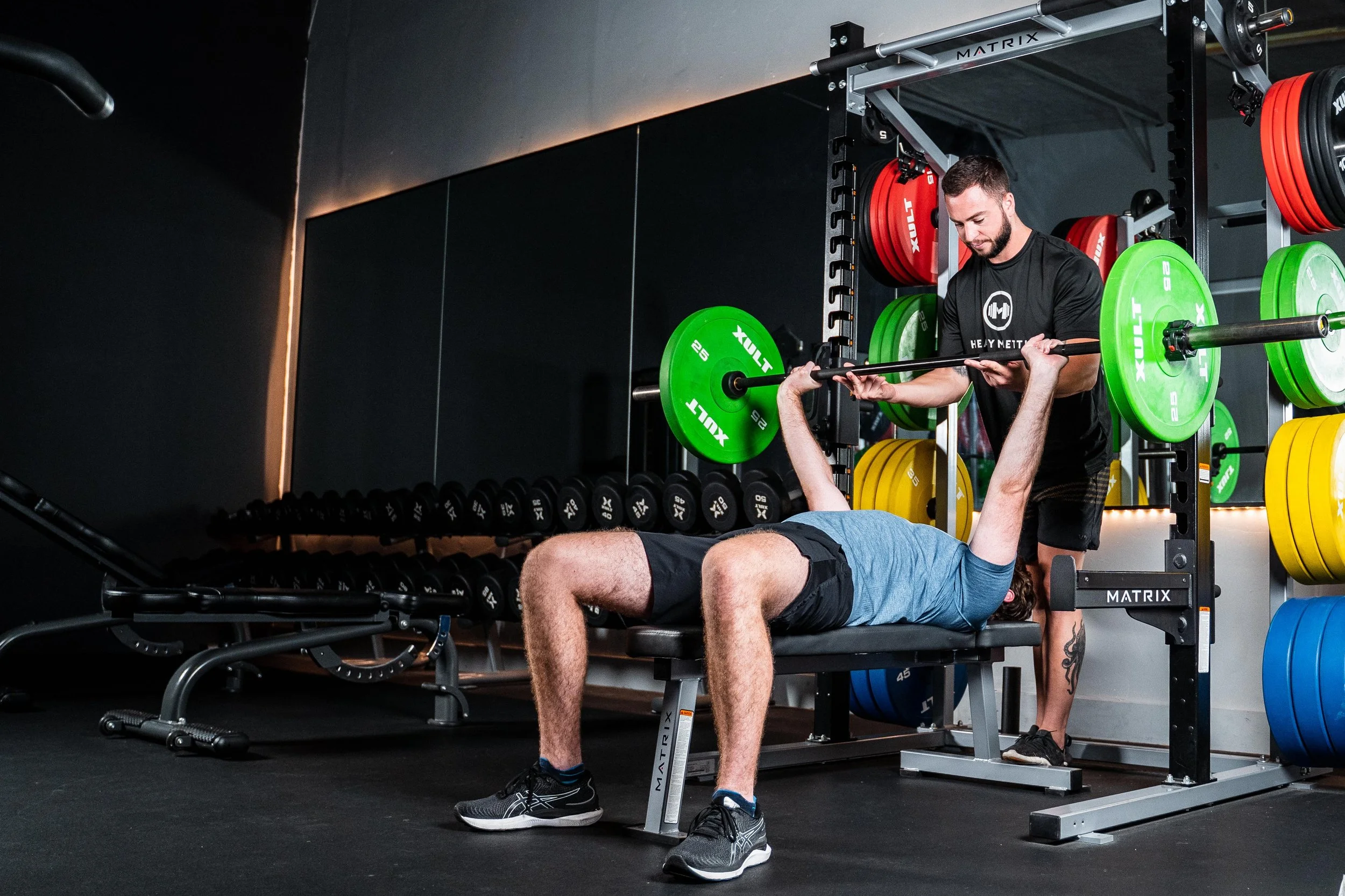
The biggest disadvantage of tightly packed mini-sets is accumulating fatigue before your positioning has had time to reset. On a cable fly or machine chest press, returning the handle or allowing the weight stack to settle can be straightforward. Under a heavy free-weight barbell, becoming tired while the bar is still above your chest has a much less forgiving downside.
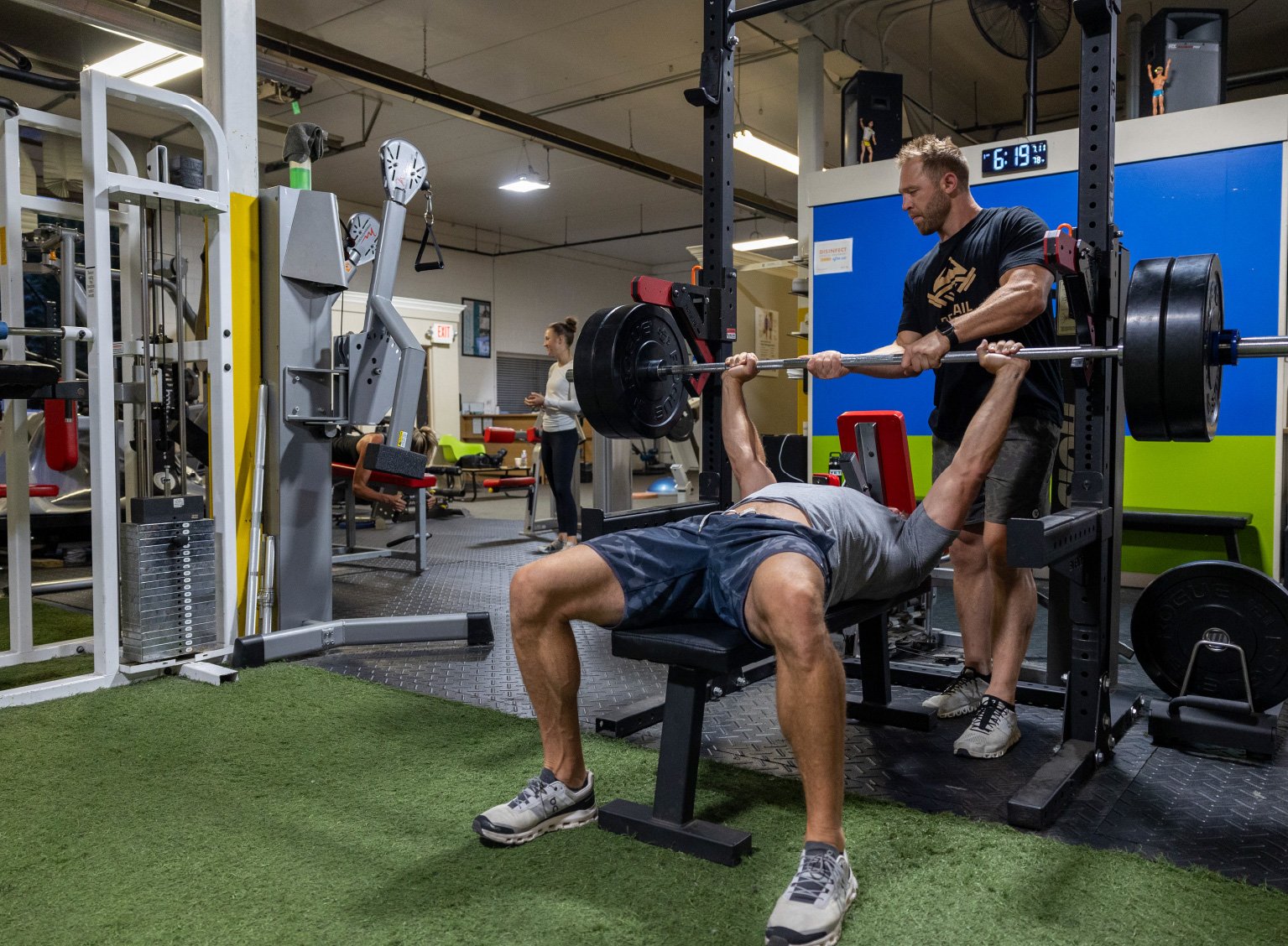
For that reason, start by using Myo-Reps on exercises you can stop safely without complicated unloading. A selectorized press or cable fly lets you park the load after a clean final repetition. If you choose a barbell or dumbbell bench press, use an appropriate rack and safety arms or an attentive spotter, and favor conventional sets for high-intensity work where balance and bar control demand a full recovery.
Stop a mini-set when the same movement can no longer be reproduced. Watch for an arch that suddenly changes, shoulders rolling forward, a shortened pressing range, or a rep that requires aggressive bouncing. These are not extra training points; they are changes in the task. Rest-pause work is supposed to reorganize high-quality effort, not reward an unsafe struggle.
Do not assume reduced session time means reduced recovery cost. A hard Myo-Rep block can feel more metabolically demanding, and its effect on the next day’s training depends on your total volume, exercise selection and effort. Keep other training consistent while testing the method. If shoulders or elbows become irritated, or the next upper-body session collapses, reduce the dense work or revert to straight sets.
Shorter rest periods are an implementation choice, not a badge of commitment. If you cannot resume with a stable movement and normal breathing, take a longer break rather than honoring an arbitrary stopwatch.
Build the equipment setup around repeatable mini-sets
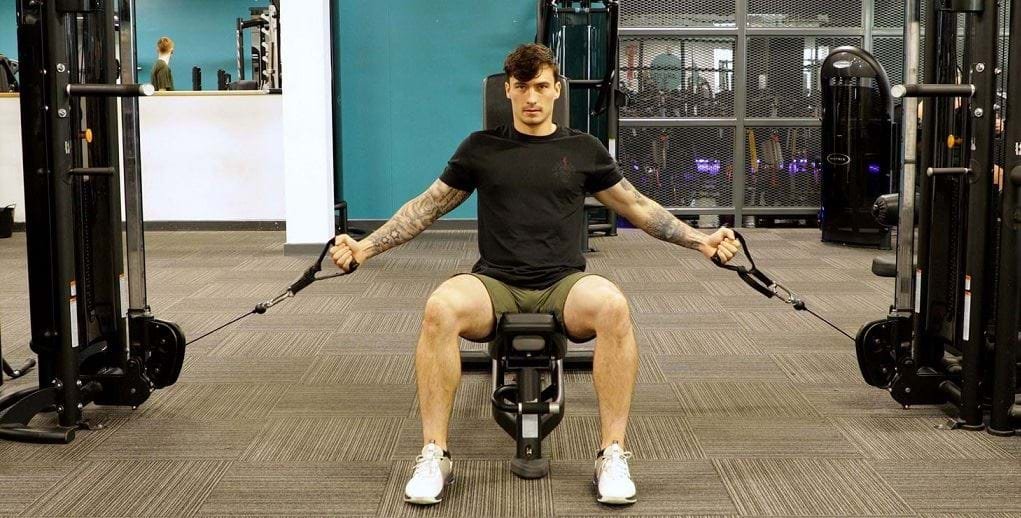
Equipment is not the secret ingredient, but convenience and control matter more when rest intervals are brief. A stable adjustable bench, predictable resistance increments and a cable path you can reproduce make it easier to compare one mini-set to the next. Use the same seat position and handle selection whenever you can. Mark bench angles rather than guessing them from memory.
On a seated cable fly, arrange the seat so the handles travel toward a comfortable point in front of the chest without dragging the shoulders into an extreme position. Keep a modest bend in the elbows and avoid turning the movement into a press midway through the fatigue sequence. A machine’s load pin can make small progression steps easier than hunting down the next pair of heavy dumbbells.
On an incline press, a modest angle is often easier to stabilize than an excessively upright setup. Decide whether the exercise is meant to train chest pressing or to test how much shoulder compensation you can tolerate. Your first rep and your last clean rep should look like versions of the same movement.
If you’re working in a compact gym, arrange the session so you don’t need to adjust four attachments while the short rest is running. Prepare the bench, handles and next load beforehand. Avoid occupying several pieces of communal equipment while waiting; one station used deliberately is often enough.
Choose the product or tool because it solves a real setup constraint. Extra bars and gadgets cannot replace sensible effort regulation. A cable machine with an easy-to-reach resistance selector may be ideal for dense flyes; a plain bench and dumbbells can still deliver excellent straight sets when the setup is controlled.
Equipment Worth Exploring
Explore equipment, accessories and gear from our carefully selected range.

Pec Fly/Rear Delt PEC-650
Combination machine with adjustable movement limits for chest fly and rear-delt exercises.

Standing Chest Press SCP-760
Standing chest-press machine with adjustable handle positions for chest and close-grip pressing.

Lever Arm Multi Press LMP-650
Multi-press with independent lever arms and an integrated adjustable bench for upper-body training.

Multi Pull Smith Rack MPHR-780
All-in-one rack with a Smith machine, functional trainer, lat pulldown and low row.

VForce Wall Trainer
Space-saving wall-mounted functional trainer with pivoting cable arms and variable resistance ratios.

VForce 3IN1 Max
Six-post all-in-one rack with Smith machine, functional trainer, and variable-force cables.

GymPin D Handle Bar
Multi-use steel D-handle bar for cable rows, pulldowns and other cable exercises.

GymPin Ergo Handles
Pair of ergonomic cable handles shaped for comfortable triceps and pulling exercises.


A four-week Myo-Rep experiment you can actually judge
Keep this as a controlled trial in your own training rather than an immediate overhaul. In week one, continue the majority of your normal pressing work as straight sets and select just one chest isolation exercise to convert into a Myo-Rep block. For example, perform a controlled activation set in the 12–20-rep range near technical failure, rest around 20 seconds, then complete two to four clusters of three to five clean reps. These numbers are an example protocol, not a reproduction of the published experiment.
In week two, repeat the same exercise and setup while recording total reps, weight, cluster count and how long the block took. Do not raise the load simply because the activation set felt hard. First ensure that every follow-up cluster is repeatable without losing control. If you routinely finish at the top of your target with consistent technique, add a small load increment on a later session.
In week three, look at recovery. Are your pressing sessions still improving? Does the chest feel ready by the next scheduled day? Are your elbows and shoulders comfortable? If a Myo-Rep block consistently interferes with barbell pressing or turns into shortened repetitions, remove a cluster or switch the exercise back to ordinary sets.
In week four, compare the numbers that matter: time actually saved, performance on your main straight-set press, repeatable technique, workout enjoyment and the cost in next-session fatigue. Do not expect four weeks of tape measurements to establish a meaningful muscle-size difference. Training adaptations are noisy, and short personal experiments are better at revealing adherence and tolerability than proving biological equivalence.
A workable weekly pattern is one main bench-press day with normal recovery between heavy sets, and one or two carefully chosen chest-accessory exposures where the dense method may save time. Keep overall training frequency and other major muscle groups intact. The research gives a good reason to test Myo-Reps, not a reason to dismantle a program that already works.
The conclusion is deliberately modest: in a small, chest-focused eight-week study, Myo-Reps produced detectable gains similar to straight sets while using less recorded volume load and less session time. That is worthwhile for busy lifters, provided the abbreviated structure stays safe, progressive and honest.
Bodybuilding Shirts & Workout Gear
Bodybuilding shirts, tanks and gym gear for lifters chasing muscle, size, symmetry and the pump.

The Chestfather Arnold – Big Chest , Meme Shirt, T-Shirt
Bring “The Chestfather Arnold” humor to your next gym day.


Bear Winnie The Bodybuilder Tank Top
Show some personality between sets with “Bodybuilding Bear”.

Jurassic Pump Gym | Funny Dinosaur Workout Decal for Wa Sticker
Bring “Jurassic Pump” attitude to your water bottle or laptop.

Kanye Chest Bodybuilding Parody | Workout Crewneck Pull T-Shirt
Keep things casual with a little “Kanye Chest Bodybuilding Parody” attitude.

Pumped & Furious – Vin Diesel Gym Meme Workout Jumper T T-Shirt
For laid-back days and bodybuilding humor: “Pumped & Furious”.

Pumping Love Strong Heart Stronger Soul Valentine’s Day Tank Top
Bring “Pumping Love Strong Heart Stronger Soul” humor to your next lifting session.


Dost Thou Even Fly Tee
Make gym days more fun with “Dost Thou Even Fly Medieval Knight Pec Fly” style.
Some product links may be affiliate links, which can support our independent testing and reporting at no additional cost to you.