Advertising disclosure: This page includes affiliate product links that may earn us a commission, as well as products from our own store.
Cable Glute Kickbacks: Ankle Cuff Setup, Hip Control and a Six-Week Plan
The cable glute kickback looks simple: clip a cuff around your ankle, face the machine and drive one leg behind you. Yet a small change in strap position, starting distance or pelvis control can turn it into a balance test or an improvised lower-back extension. A useful repetition should look almost boring: the torso stays quiet, the working hip moves, and the weight returns under control.
This guide explains how to fit the cuff, choose a manageable load, work around crowded gyms and add kickbacks to a sensible leg routine. The goal is stronger and more repeatable hip extension, not a claim that one isolation exercise replaces a squat, hinge or thrust.
1. What a cable glute kickback trains and where it fits
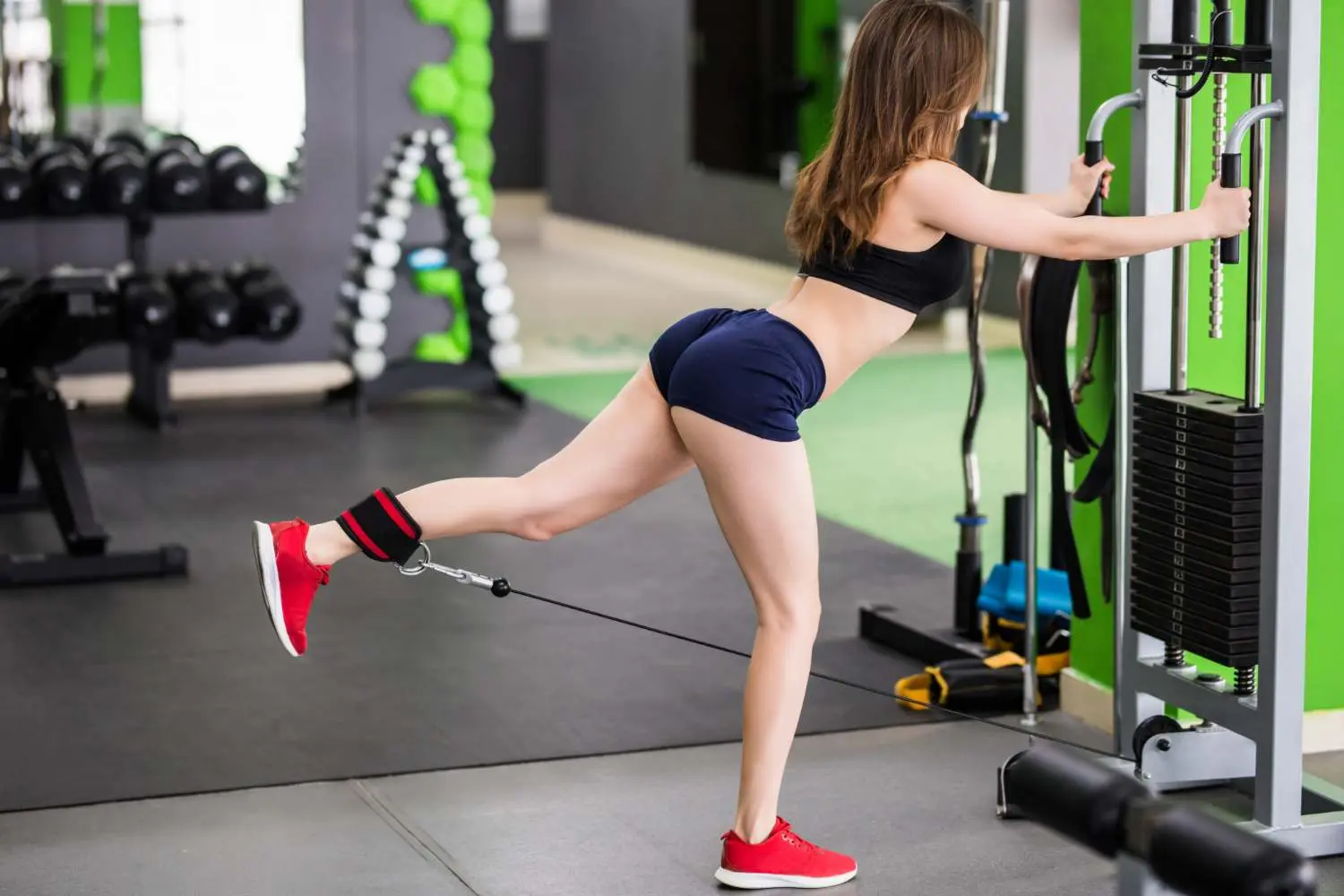
The gluteus maximus helps extend the hip: moving the thigh backward relative to the pelvis. In a standing cable kickback, a low pulley resists this motion through an ankle cuff. Your hamstrings can contribute too, especially with a straighter working knee; the stance-side glutes and trunk help keep the pelvis balanced. This explains why a cable kickback often feels surprisingly demanding in the leg you are standing on.
The exercise is not simply a miniature squat. Squats require coordinated knee and hip extension while the body carries a larger overall load. A kickback reduces the knee-extension task and places attention on one working hip at a time. This makes it useful after heavier compound lifting, for deliberately training each side, or when a small amount of additional glute-focused work makes sense.
The cable maintains a connection to the stack, but the turning effect at the hip changes with the direction of the cable and the position of your leg. Descriptions such as “perfect constant resistance at every angle” oversimplify the biomechanics. Neither a large pump nor strong immediate muscle sensation proves superior long-term growth. The useful outcomes to measure are consistent range, controlled repetitions and gradual performance improvements over weeks.
Most lifters should use kickbacks as an accessory rather than an ego lift. A lighter stack setting, repeatable hip motion and a brief pause are worth more than throwing a much heavier plate stack backward. If your program already includes squats, hinges and hip thrusts, kickbacks can complement that work without taking over the session or exhausting your stabilizing leg before the big lifts.
2. Fit your ankle cuff and low pulley before adding load
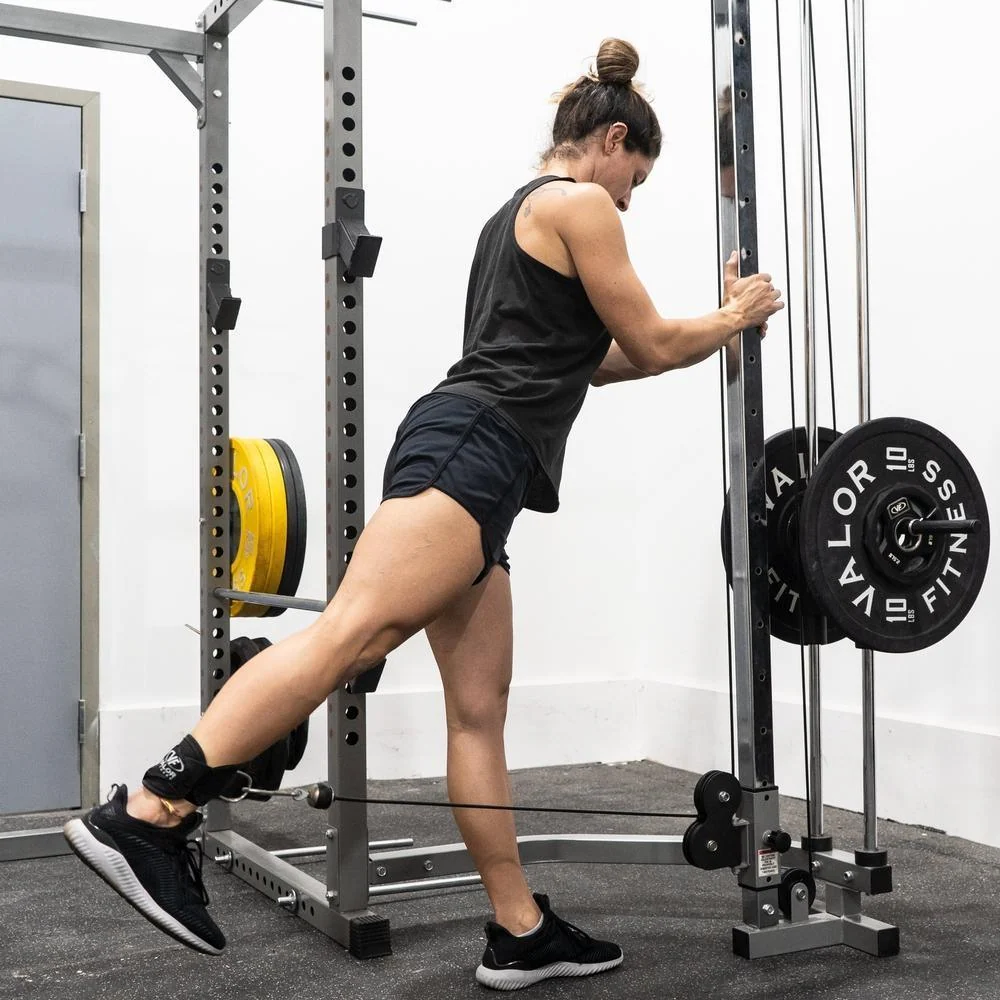
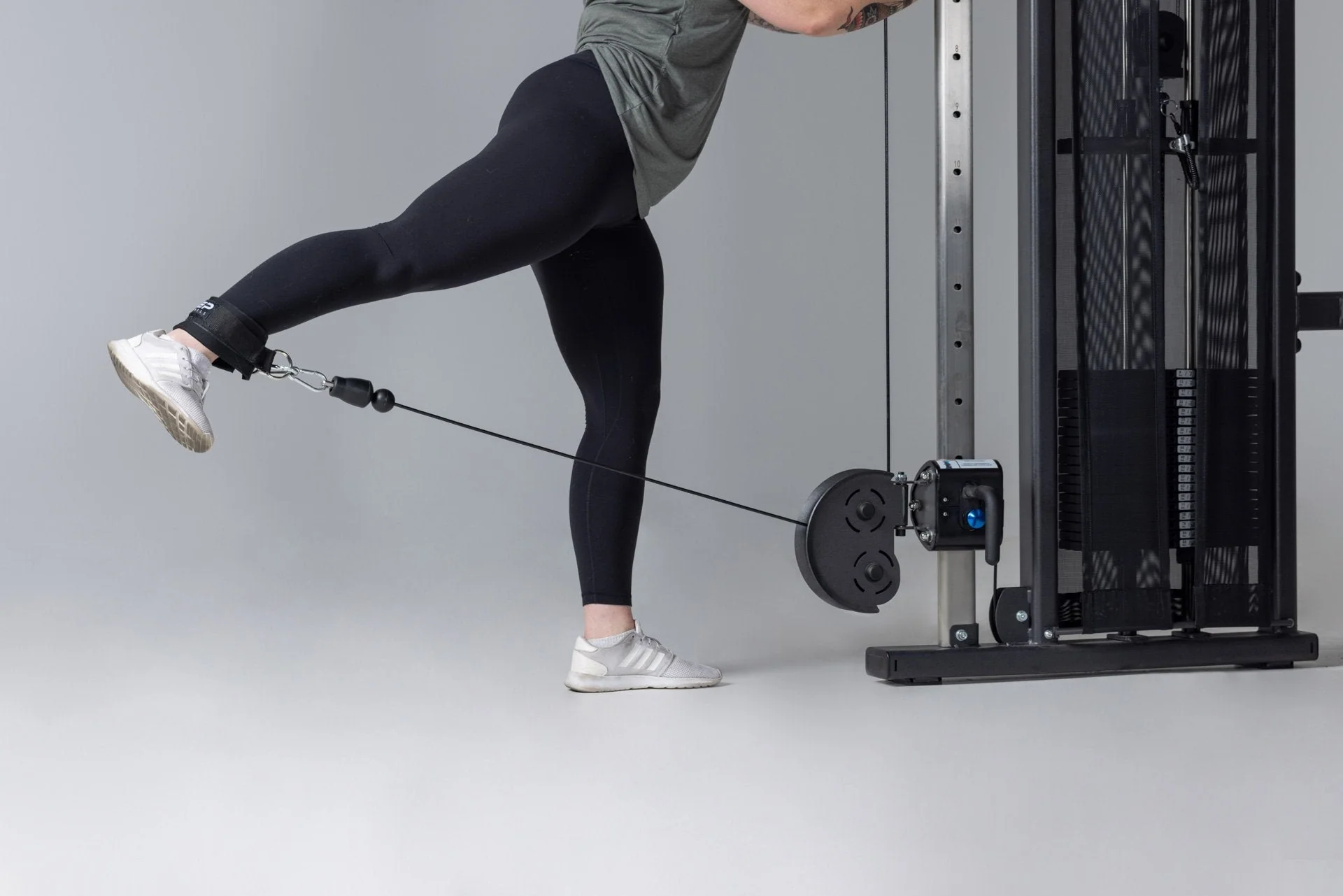
Use an ankle cuff made for cable exercise, with a secure closure and a suitable metal attachment point. Fasten it snugly around the working leg just above the ankle bone, following its manufacturer’s guidance. It should not twist, slide over the shoe or dig painfully into the skin. Inspect the cuff stitching, clips and machine cable before use. If any component looks damaged, do not load it.
Move the pulley to the lowest practical setting and secure the adjustment mechanism. Connect the cuff with a properly closing carabiner. Make sure the cable path stays clear of your shoes, hands and machine supports. Choose a light weight while the stack is at rest, rather than changing the selector while plates are suspended. If the machine cable is visibly frayed or a safety mechanism fails to lock, choose a different station.
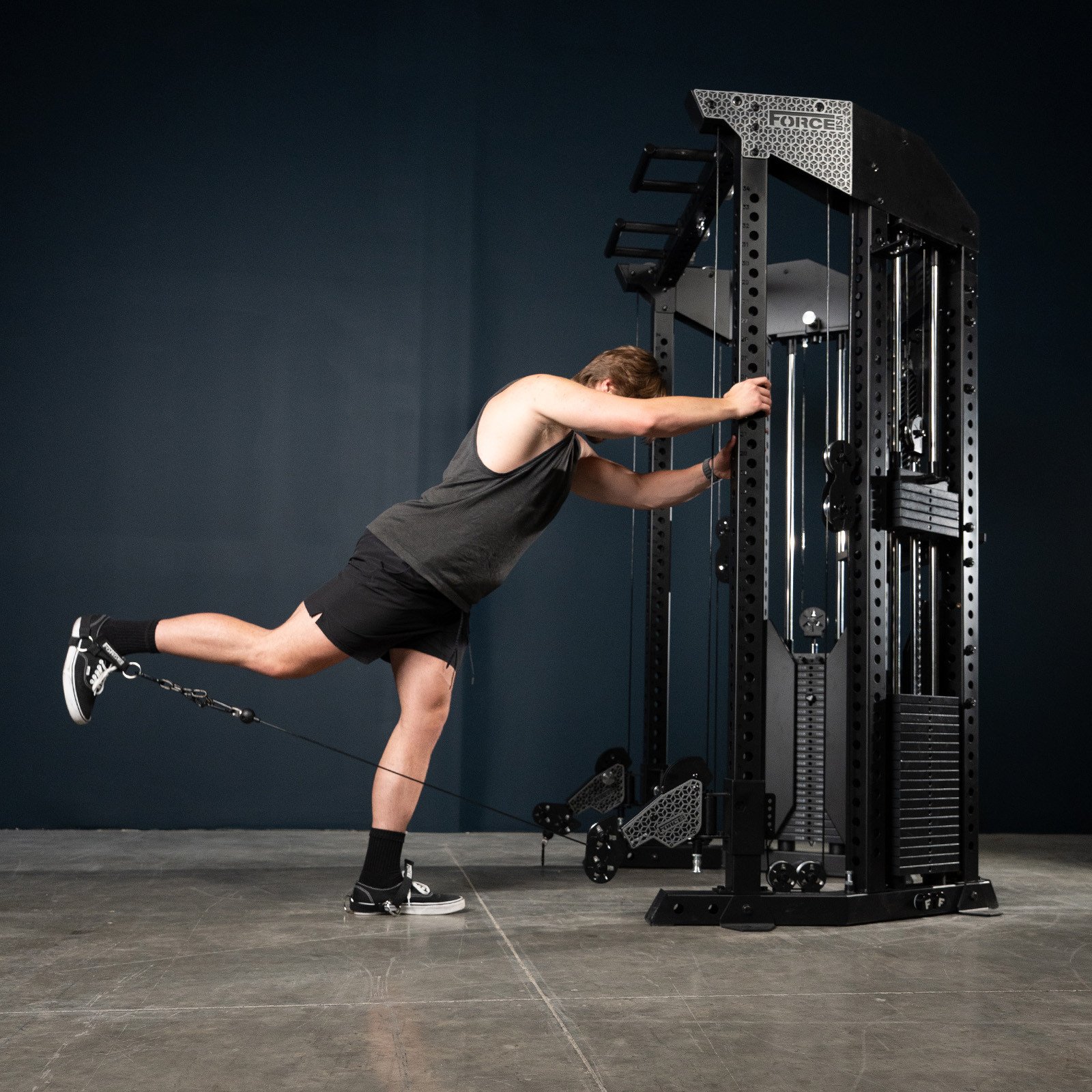
Face the tower with the strapped leg near or slightly behind the planted foot. Step backward until the cable has just enough tension to move smoothly without dragging you forward. Put your hands on a solid, nonmoving part of the frame or a purpose-made support. Keep the stance foot flat, its knee softly bent and your torso tipped slightly forward by hinging at the hips. You do not need to fold nearly horizontal to train the glute.
Try two slow test repetitions before counting the working set. Check that the cuff stays in place at both endpoints, that the cable does not rub a leg and that the stack does not crash on the return. If you run out of cable travel or the pulley pulls the ankle sideways, adjust your stance rather than forcing the motion. Machines vary in their pulley height and loading ratio, so a number printed on one weight stack should not be treated as identical to the number on another.

Equipment Worth Exploring
Explore equipment, accessories and gear from our carefully selected range.
VOLTRA
Compact digital cable trainer with smooth, adjustable resistance.

Go-Tone Pro
Portable digital cable trainer with up to 66 lb (30 kg) of adjustable resistance.

GymPin D Cuffs
Adjustable wrist cuffs with textured grips for supported cable-machine exercises.

VForce Wall Trainer
Space-saving wall-mounted functional trainer with pivoting cable arms and variable resistance ratios.

VForce 2IN1
Half rack and pivot-arm functional trainer with switchable 1:1 and 2:1 pulley ratios.

VForce 3IN1
All-in-one rack combining an adjustable Smith machine, functional trainer, and free-weight station.

Multi Pull Smith Rack MPHR-780
All-in-one rack with a Smith machine, functional trainer, lat pulldown and low row.
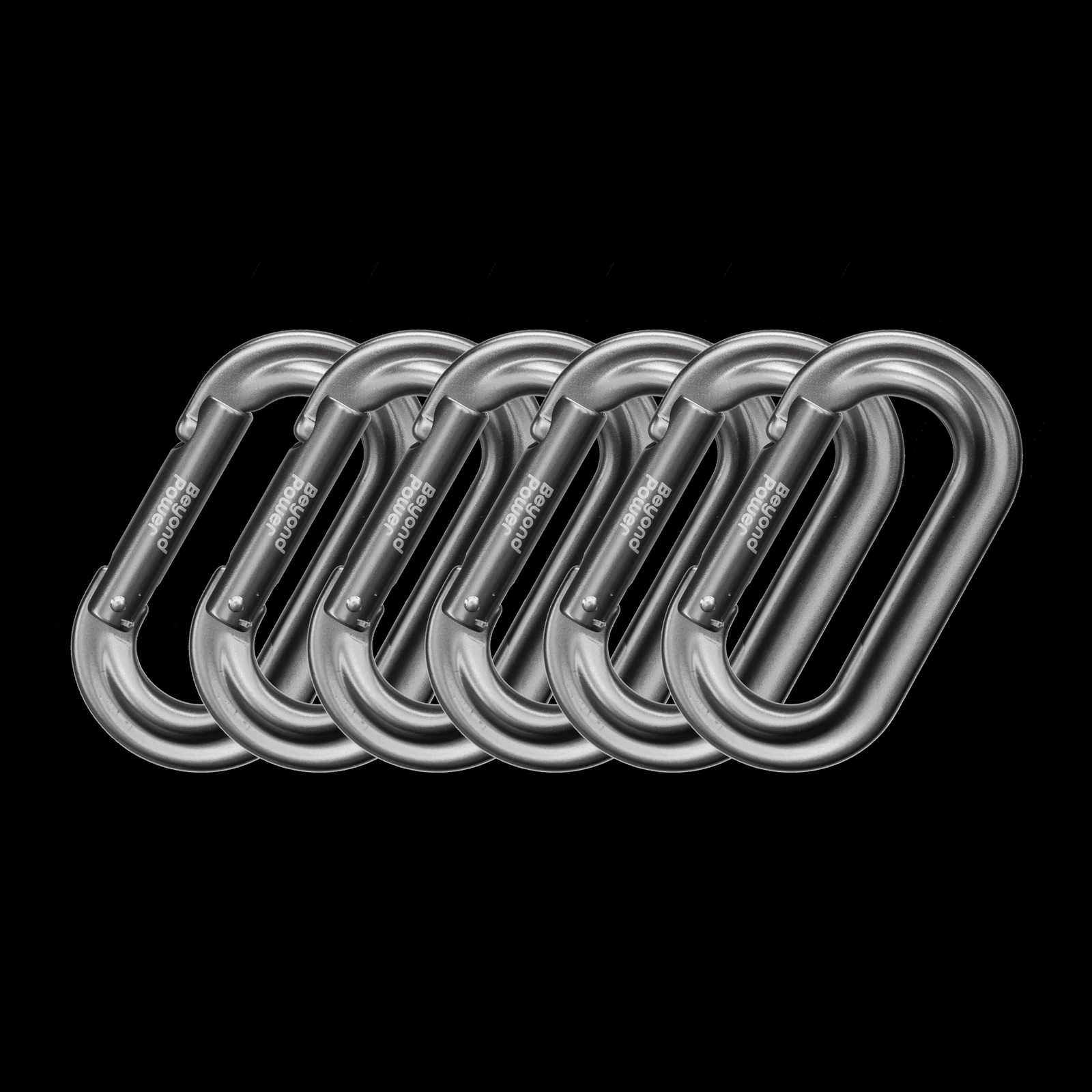
Premium Carabiner
Durable carabiner for connecting cable attachments and training accessories.

Original GymPin
Adds Olympic plates to compatible cable-machine weight stacks for extra resistance.

GymPin MiniPin
Compact Olympic-plate loading pin for compatible cable stacks with limited clearance.
3. Move the working leg from the hip while staying stable
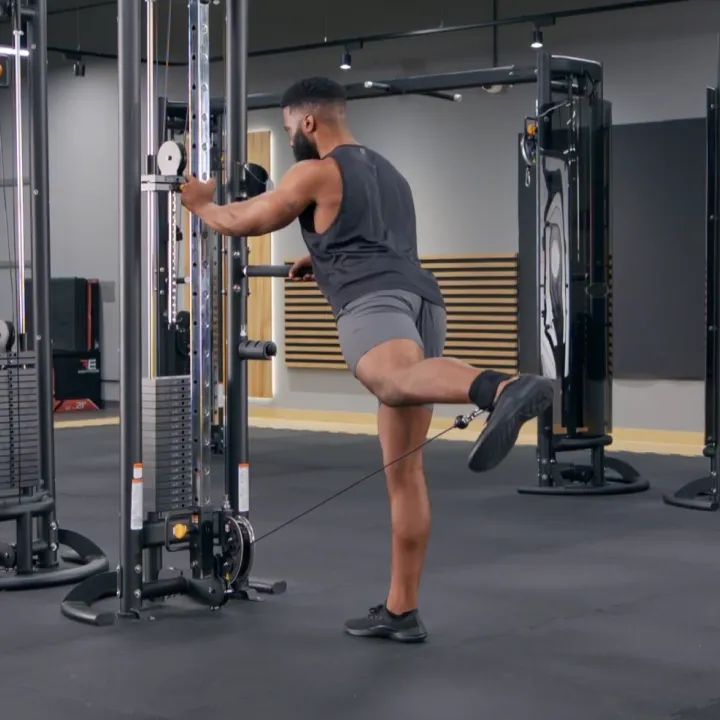
Set your shoulders over a quiet rib cage, look toward the machine and lightly brace your abdomen. Keeping the working knee at a consistent comfortable angle, push the thigh backward by extending the hip. Think about moving the thigh behind you, not sending the foot toward the ceiling. A nearly straight leg or a slightly bent knee can both work, but switching knee angles mid-set makes the movement harder to compare.
Stop when the thigh cannot travel farther without the pelvis tilting or the lower back arching. For most people this endpoint is much less dramatic than a high kick. Hold it briefly, then let the leg return in roughly two seconds while resisting the cable. Keep the weight stack from slamming. You should finish in the same trunk position you started, rather than rising up or twisting as the repetitions become harder.
The planted leg provides support and keeps the hips level. Some effort in that glute is expected; however, if balance or foot fatigue ends every set before the moving leg becomes challenged, reduce the weight and use more secure hand support. You can also alternate sides with short rests rather than forcing a long balancing act. The objective is controlled hip extension, not proving how long you can stand on one leg.
You do not need to rotate your toes out to “find the upper glute.” Moving the thigh straight backward emphasizes hip extension; taking it sideways changes the task toward abduction. Small changes may feel different because bodies and machines vary, but rotating the entire pelvis to lift the foot higher defeats the purpose. Choose the direction and range you can repeat without hip pinching or twisting your spine.

Leg Day Shirts & Workout Gear
Leg-day gym shirts and workout gear for lifters who never skip squats, lunges and lower-body punishment.

Fantastic Booty Leg Day Squats & Glute Building Vest Tank Top
Train hard, laugh a little, and rep “Fantastic Booty”.

Let It Grow Booty Builder Sweater Leg Day & Hip T-Shirt
Show some gym-day personality with “Let It Grow”.

Hippo Thrust Meme Leg Day Booty Workouts & Glute Tank Top
Add some leg-day attitude to training with “Hippo Thrust Gym Meme”.

Adventure Girl Booty Builder Decal Leg Day Meme Sticker
Bring “Adventure Girl” attitude to your water bottle or laptop.

Girl Booty Builder Leg Day Decal Water Bottles & Gear Sticker
Stick a little “Gym Girl Booty Builder” humor on your favorite gear.

Booty Building Mode Hoodie
Bring “Booty Building Mode” gym humor to lazy days and post-workout plans.


Brains Beauty Booty Focused On Glute Gains & Memes Hoodie
Keep it laid-back with a little “Brains Beauty Booty” attitude.

I Love Booty Peach Meme – Leg Day Top T-Shirt
Bring “I Love Booty Peach Gym Meme” humor to your next gym day.

Bunny Squats & Booty Motivation Decal Cute Water Sticker
Give your everyday gear a playful “Gym Bunny” twist.
4. Fix momentum, pelvis rotation and lower-back takeover
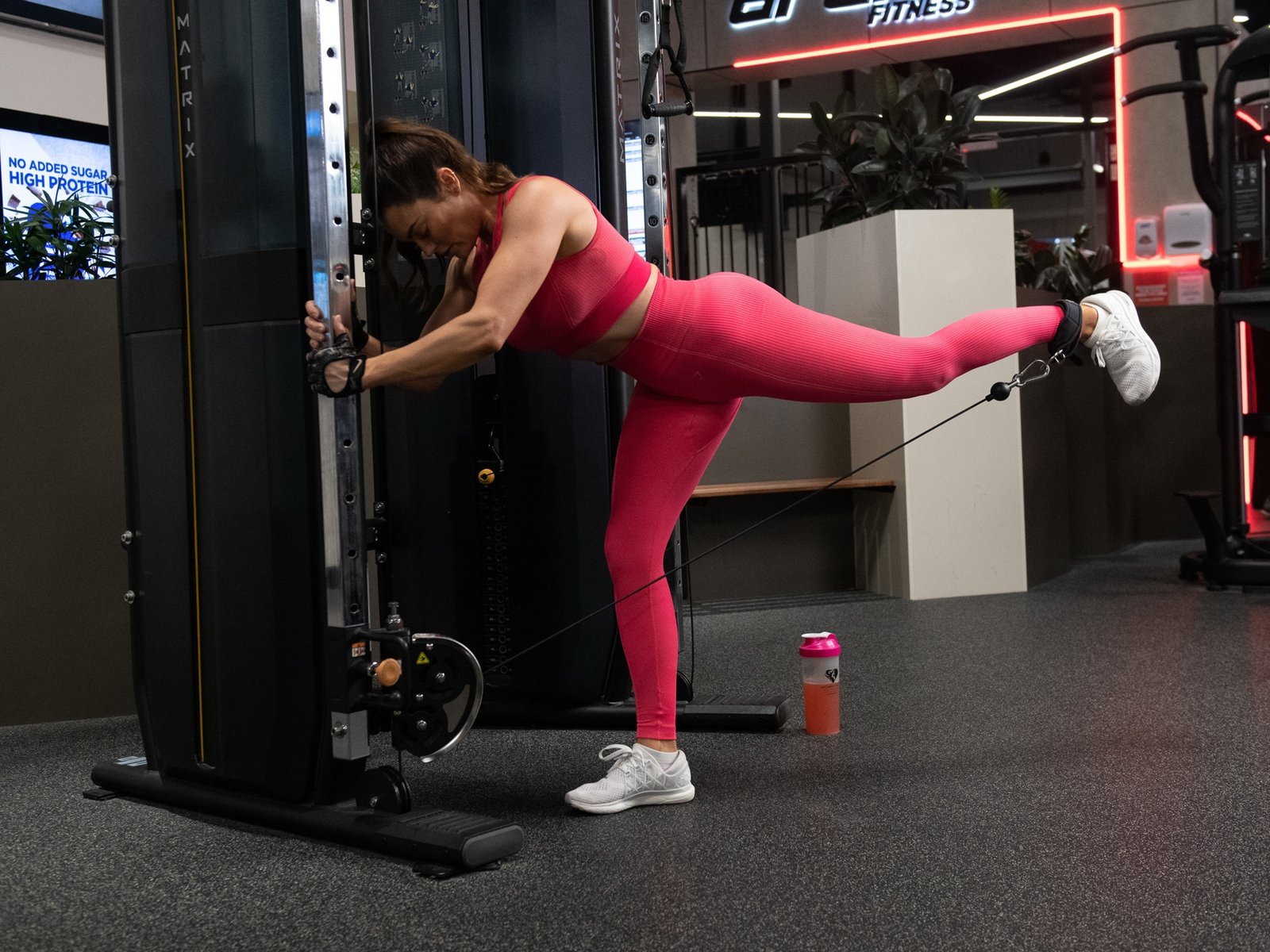
The most common mistake is using too much stack weight. When it becomes overwhelming, the athlete swings the foot backward, shifts the chest forward and bounces on the return. The movement gets bigger, but the target hip does less deliberate work. Lower the resistance until you can stop the backward motion for one count and return without the stack pulling you off balance.
A second mistake is turning the finish into lumbar extension. If your belt line tilts sharply forward or your chest rises as the leg travels backward, part of the motion is coming from your back. Maintain a steady trunk and stop at the last position you can reach without changing the pelvis. Recording a short side-view clip can reveal this better than chasing a stronger sensation. A mirror can help with rotation, though repeatedly craning your neck may itself disturb the movement.
Watch the standing knee, too. Locking it rigidly, rolling the foot outward or letting the torso spiral around the frame often means stability is becoming the limiting factor. Step to a comfortable distance, soften the knee and brace using a stable support. If the ankle cuff twists or rides down, stop and refit it. Do not solve a loose cuff by wedging a cable handle under a shoe or clipping directly onto shoelaces.
Finally, avoid racing through a set. Rapidly kicking backward and surrendering the return makes progress difficult to judge. A practical rhythm is one or two seconds of extension, a short controlled pause and about two seconds back. If you experience sharp hip or lower-back pain rather than normal muscular effort, stop and substitute a comfortable exercise; persistent or recurring symptoms merit qualified assessment.
5. Compare cable kickbacks with other glute exercises
A cable kickback differs from a bodyweight donkey kick because the ankle is loaded by a cable rather than just gravity and the weight of the leg. A resistance-band kickback uses elastic tension that typically rises as the band stretches. Both can be useful lower-equipment options. They still require a secure anchor, an appropriate range and a quiet pelvis, but their loading and progression will feel different from a weight stack.
A dedicated kickback machine may guide the leg along a fixed path or against a padded lever. It can be easier for someone whose balance limits cable work, provided the pad and pivot fit their anatomy. A hip-abduction machine targets a different direction of thigh movement, not the identical kickback under another name. Squats, leg presses and Romanian deadlifts ask larger muscle groups to work together; they should not be abandoned merely because an isolation exercise gives a stronger local feeling.
Hip thrusts and glute bridges also extend the hip, but they support the body in a different position and can be loaded more heavily. A bench-supported thrust may be easier to track as a main progression, while a kickback fits naturally into a small single-leg accessory slot. If you have only one cable tower in a home gym, it may be more helpful to use the station for several genuinely different patterns rather than collect redundant variations that all compete for the same training time.
A simple training week could pair squats with a few controlled kickback sets on one day and Romanian deadlifts with another hip-extension choice on a second day. This is a programming example, not proof that one exercise pairing is uniquely best. Choose equipment that offers useful load adjustments, stable support and a movement path compatible with your body, then prioritize consistency instead of novelty.
Equipment Worth Exploring
Explore equipment, accessories and gear from our carefully selected range.

Standing Abductor
Plate-loaded standing hip abductor for targeted outer-glute and hip-stability training.

Studio Glute Drive
Plate-loaded hip-thrust machine with supported back pad and adjustable foot platform.



Glute Ham Developer GHD-820
Adjustable glute-ham developer with contoured pads and a fold-out knee support.

Leg Press/Hack Squat BPR-790
Convertible 45-degree leg press and hack squat machine with a broad footplate and band pegs.

Studio V-Squat
Plate-loaded V-squat machine for supported lower-body strength training.

Cast Iron Kettlebells
Textured cast-iron kettlebells for swings, squats, carries, and full-body training.

FID Bench MAX
Adjustable bench offering flat, incline, and decline positions + adjustable headrest.

6. Follow a six-week accessory progression
Perform kickbacks once or twice weekly after the main lower-body movement. Pick a load that leaves about two or three technically clean repetitions in reserve. Use the same cuff, pulley height, stance distance and endpoint standard whenever possible across six weeks. If you switch machines, establish a new baseline rather than comparing printed weights directly.
| Weeks | Day A: cable kickback | Day B: optional kickback | What to improve |
|---|---|---|---|
| 1–2 | 2 × 12 per leg | 2 × 15 per leg | Secure cuff, steady pelvis |
| 3–4 | 3 × 12–15 per leg | 2 × 12–15 per leg | Extra clean repetitions |
| 5–6 | 3 × 10–15 per leg | 2–3 × 12–15 per leg | Better pause and return |
Take approximately 45–90 seconds between moderate isolation sets, extending the rest when balance, bracing or breathing affects technique. You can do all repetitions on one side before changing the cuff or alternate sides between sets. Make the first day somewhat more demanding and the second day deliberately easier if your overall leg volume is already high. Two or three meaningful sets can be enough when squats, lunges or hinges are also present.
When every set reaches the top of the target rep range without shrinking the movement, increase load by a small amount next time and start at the lower rep target. If stack jumps are too large, progress with another clean repetition or a better pause rather than giving up your hip position. Never keep adding resistance just because the movement still “counts” when the torso is swinging. Record which ankle went first, the pulley setting, load, repetitions and whether the supporting leg was the limiting factor.
Review progress after week six. If you gained repeatable repetitions or a little load while holding the same posture, the exercise is doing its job. If balance constantly limits effort, seek better hand support or a more guided machine. If your main leg lifts feel under-recovered, reduce accessory volume before adding more. The best cable kickback is the variation you can safely set up, control and repeat for months.
Bodybuilding Shirts & Workout Gear
Bodybuilding shirts, tanks and gym gear for lifters chasing muscle, size, symmetry and the pump.

In My Muscle Mommy Era for Gym Girls, Lifting, Bodybuil T-Shirt
Heavy lifts, good laughs, and a little “In My Muscle Mommy Era” energy.

Gains Bond Secret Agent Gym | Funny Muscle Shirt & Body Tank Top
Add some lifting attitude to training with “Gains Bond Secret Agent”.

Funny Brick House Gym | Get Built Muscle Shirt & Bodybu Tank Top
Show some personality between sets with “Brick House”.

Funny Bodybuilder LEGO Gym | Muscle Shirt & Gym Bros | Tank Top
Your gym-day look, with a playful “Bodybuilder LEGO” twist.

Doctor Strong Doctor Strange Magic Strength Bodybuildin Hoodie
Keep it laid-back with a little “Doctor Strong” attitude.

Sweet Gains O' Mine Crewneck
For laid-back days and rock-and-lifting humor: “Sweet Gains O' Mine Rock Music”.

Hallowed Be Thy Gains Iron Maiden Heavy Metal Gym , Bod Hoodie
Show off your metalhead humor in a laid-back “Hallowed Be Thy Gains” hoodie.

Great Muscles Responsibility Tee
Rep “With Great Muscles Comes Great” humor in and out of the gym.

Mike Mentzer Heavy Duty Old School Bodybuilding Gym Shi T-Shirt
Heavy lifts, good laughs, and a little “Mike Mentzer Heavy Duty” energy.

Flexter Dexter Gym Parody for Bodybuilders, Lifters & H T-Shirt
Make gym days more fun with “Flexter” style.