Advertising disclosure: This page includes affiliate product links that may earn us a commission, as well as products from our own store.
November 2026 equipment buying guide. The best Bells of Steel Black Friday deal depends on the equipment you already have, the lifts you want to train, and what actually fits your home gym. US sale prices mentioned here were observed November 7 and can change before checkout.
Bells of Steel Black Friday 2026: start with the real deal, not the biggest percentage
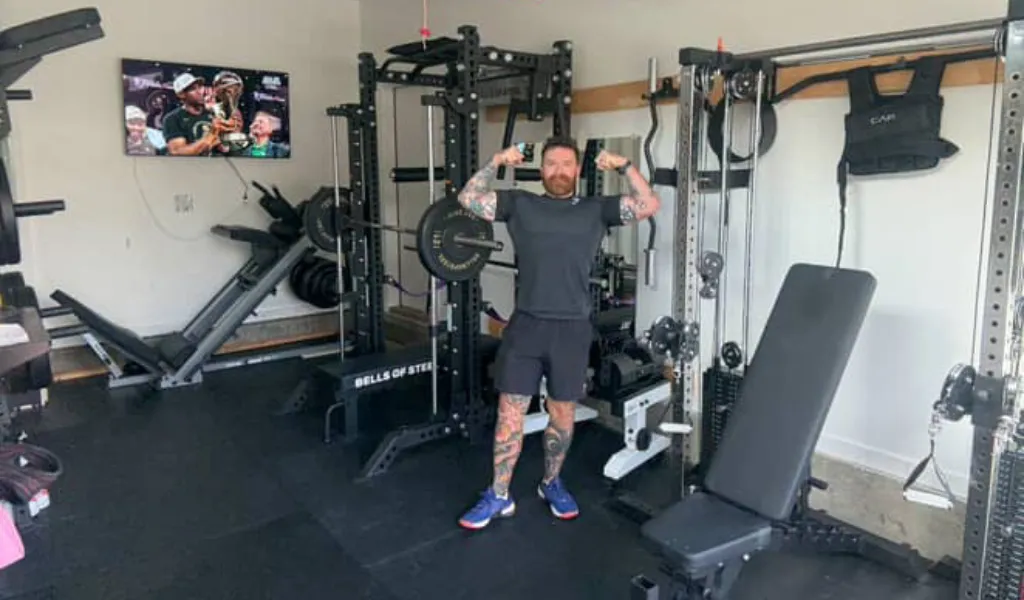
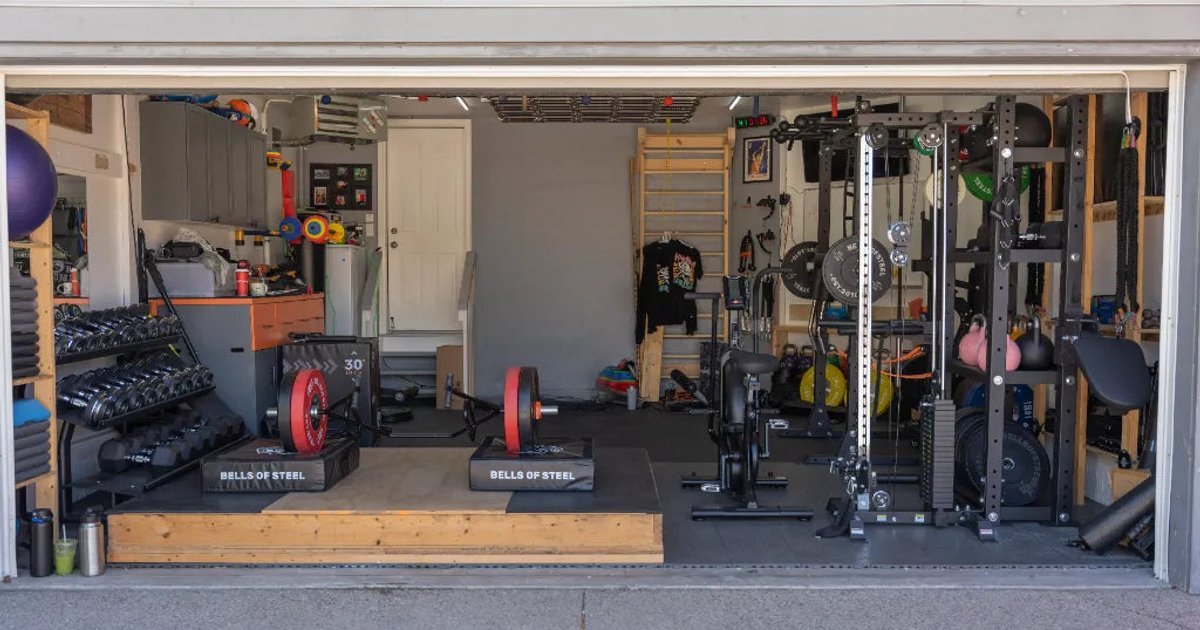
Bells of Steel opened its November 2026 equipment sale on November 6, with separate markdowns across power racks, cables, bars, benches, plates, and accessories. The US storefront advertised up to 30 percent off racks and barbells, up to 35 percent off rack attachments, and category-specific reductions elsewhere. Those are maximum category offers, not automatic discounts on every configuration. A rack builder that starts at a headline price can cost substantially more once uprights, depth, safety hardware, storage, and shipping are selected.
On the US sale page checked November 7, the cable tower was listed from $349.99 versus $434.99, the Buzz-Saw adjustable bench from $399.99 versus $516.99, and the open trap bar at $219.99 versus $323.99. Prices are in US dollars and are a dated snapshot, not a guarantee that a particular variation remains in stock or discounted at checkout. The store listed hundreds of discounted configurations, so compare the precise variant, not the category banner.
The useful question is which piece removes the biggest limitation from your current training. A person without a safe rack should not buy another specialty bar because its discount looks dramatic. Someone with a complete barbell station but no adjustable resistance may get more weekly training options from a cable station. Begin with the movements and available floor area, then work backward to the sale price.
Power racks: Manticore, Hydra, and the space you actually have
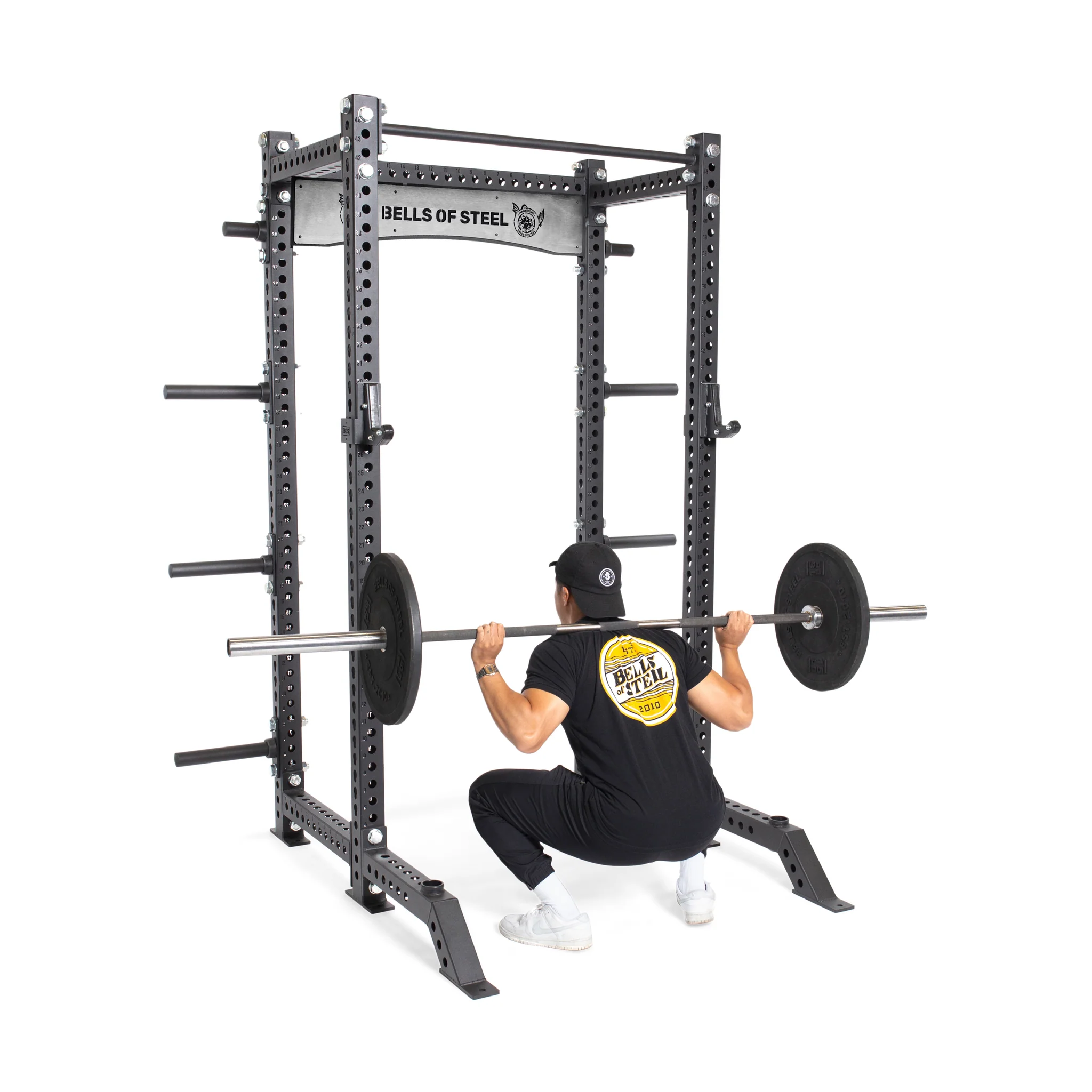
Bells of Steel’s Manticore line uses true three-by-three-inch uprights with one-inch holes; Hydra is also built around three-by-three-inch posts but uses five-eighths-inch holes. They are distinct attachment ecosystems. A discounted accessory that looks visually compatible may not use the correct pin diameter, hole spacing, or mounting pattern. If you already own a rack, note its upright dimensions and hole size before buying any J-cups, spotter arms, pulley brackets, or storage pieces.
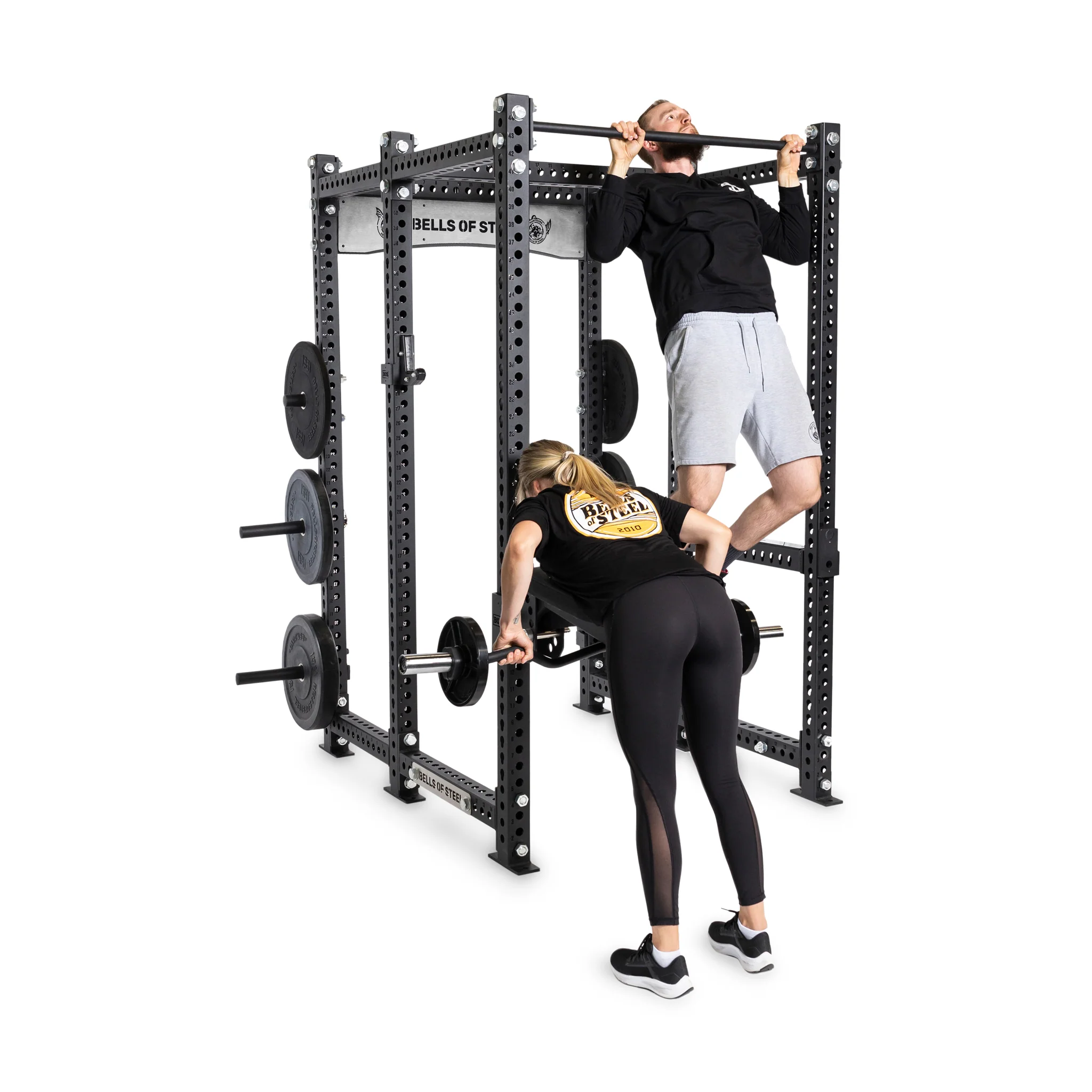
The US sale listed Manticore four-post rack builders from $844.99, squat-stand builders from $648.99, and several folding versions; each base price depends on chosen configuration. A four-post rack provides a protected lifting bay when used with appropriate safeties. A squat stand leaves more room around the uprights but may demand carefully matched spotter arms and stabilization. Folding installations trade permanent footprint for mounting requirements and a few extra setup steps before every session.
Measure ceiling height at the low point, not the middle of the room. Then mark the barbell’s full sleeve-to-sleeve clearance, the space needed to load plates, and the room behind the bench when inclined. Verify whether the chosen rack must be anchored and whether the ceiling permits pull-ups. A 15 percent rack saving does not outweigh buying something that cannot be assembled safely in your actual space.

Powerlifting Shirts & Lifting Gear
Powerlifting shirts and gym gear for squat, bench and deadlift lifters who live for heavy numbers.

Squat Bench Deadlift Read Shirt Literary Bookworm Top T-Shirt
Bring “Squat Bench Deadlift Read” humor to your next gym day.

Deadlift Skull Pink Heavy Metal Crewneck for Powerlifti T-Shirt
Show some gym-day personality with “Deadlift Skull”.

Ultimate : Meme Squat Rack Gains & Humor T-Shirt
Rep “Ultimate Powerlifting” humor in and out of the gym.

Deadlift Cyberpunk Skull Gym Decal for Powerlifters, Sc Sticker
Stick a little “Deadlift” humor on your favorite gear.


Powerlift Deadlifts Tee
Show some metalhead attitude with a playful “Powerlift Deadlifts” tee.
Barbells and Suffering – Satanic Heavy Metal Gym Shirt T-Shirt
A t-shirt featuring the Barbells and Suffering – Satanic Heavy Metal Gym Shirt for Powerlifters and Bodybuilders artwork, bringing lifting-inspired humor and distinctive gym graphics to your everyday gear.

Never Skip Leg Day | LEGO Workout Sweater For Squats & T-Shirt
Keep things casual with a little “Never Skip Leg Day” attitude.

I’m Strong Barbell Heartbeat Muscle Shirt for Powerlift Tank Top
Show some personality between sets with “I’m Strong Barbell Heartbeat”.

Deadlift Frozen Skull Gym Shirt for Powerlifters, Hardc T-Shirt
Bring “Deadlift” humor to your next gym day.
Cable towers and functional trainers: buy the movement you are missing
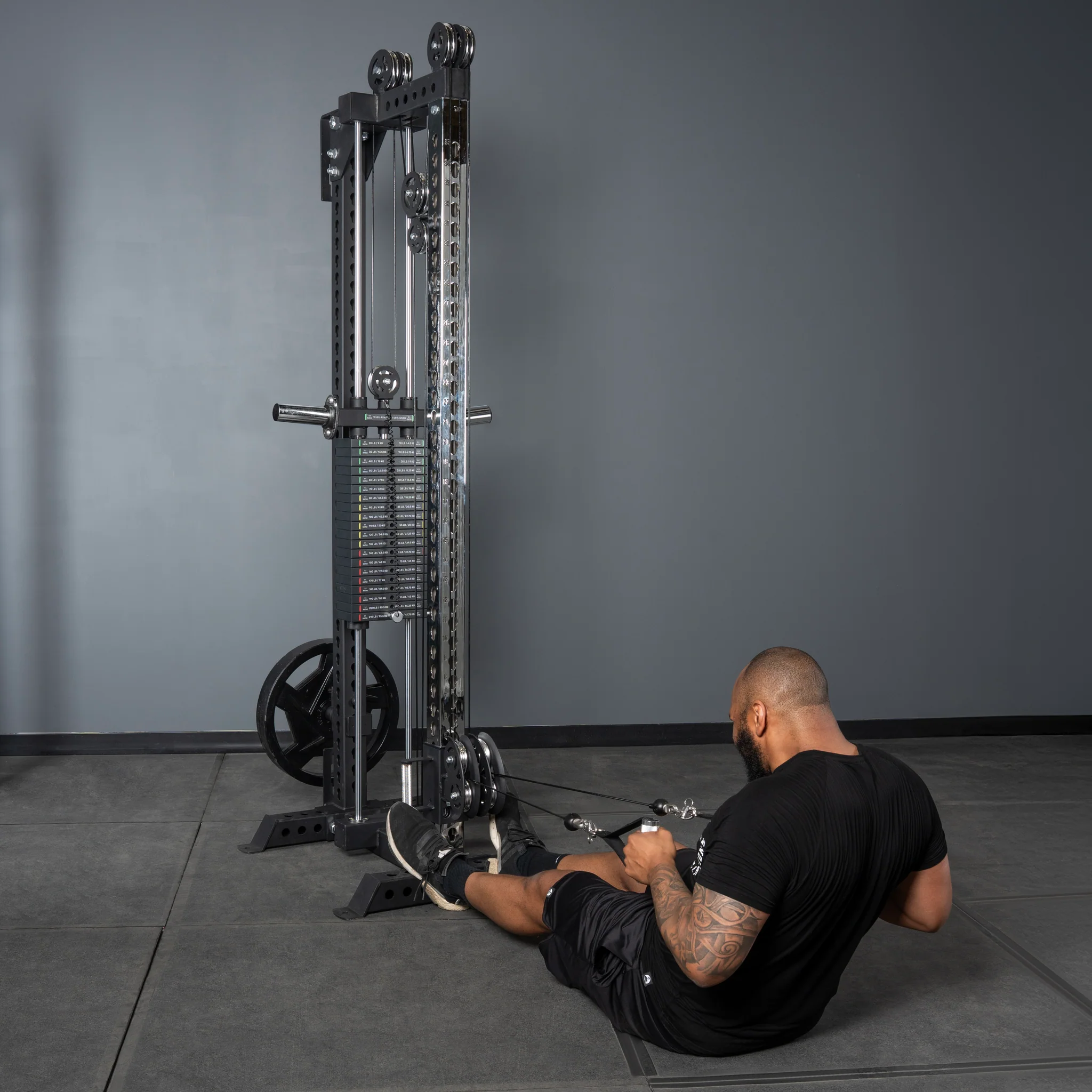
Cables add adjustable resistance for rows, pulldowns, chest flyes, lateral raises, curls, and triceps work. They are especially valuable when a barbell setup already covers squats, hinges, and presses. The most affordable plate-loaded or compact cable tower is not automatically equivalent to a dual-stack functional trainer. Check whether the listed version includes a weight stack, requires plates you already own, permits two independent handles, and provides the pulley travel you need.
The advertised US sale showed a cable tower from $349.99 and a functional trainer from $959.99 on November 7. Those starting prices refer to different products and configurations, not competing versions of an identical station. If your routine relies on bilateral chest flyes, a dual-column unit can make life simpler. If you mostly need pulldowns, single-arm rows, and lateral raises, one compact tower can provide substantial variety for less floor space.
Allow for the machine’s working area: a user stepping back for cable flyes needs clear floor beyond the machine itself. Review the pulley ratio and actual delivered resistance rather than assuming the stack label equals handle resistance. Wall-mounted towers require suitable structure and proper installation. Do not confuse the 3×3 Oblivyon station with the standard tower: their hardware, frame, and anchoring needs can differ. Prefer the system that expands your exercises with the least friction.

Equipment Worth Exploring
Explore equipment, accessories and gear from our carefully selected range.

VForce Wall Trainer
Space-saving wall-mounted functional trainer with pivoting cable arms and variable resistance ratios.

VForce 2IN1
Half rack and pivot-arm functional trainer with switchable 1:1 and 2:1 pulley ratios.

VForce 3IN1
All-in-one rack combining an adjustable Smith machine, functional trainer, and free-weight station.

VForce Lat Tower
Wall-mounted cable tower with pivot arms and adjustable 1:1 or 2:1 pulley ratios.

VForce 3IN1 Max
Six-post all-in-one rack with Smith machine, functional trainer, and variable-force cables.

Foldable Wall Rack
Wall-mounted folding squat rack designed to save floor space between workouts.


VForce Lat Seat
Rack-mounted seat attachment for supported lat pulldowns and seated cable exercises.
VOLTRA
Compact digital cable trainer with smooth, adjustable resistance.

GymPin Mag Pin V2
Magnetic selector pin designed to secure weight selection on compatible pin-loaded machines.
Open trap bars, power bars, and plates: match your lifting style
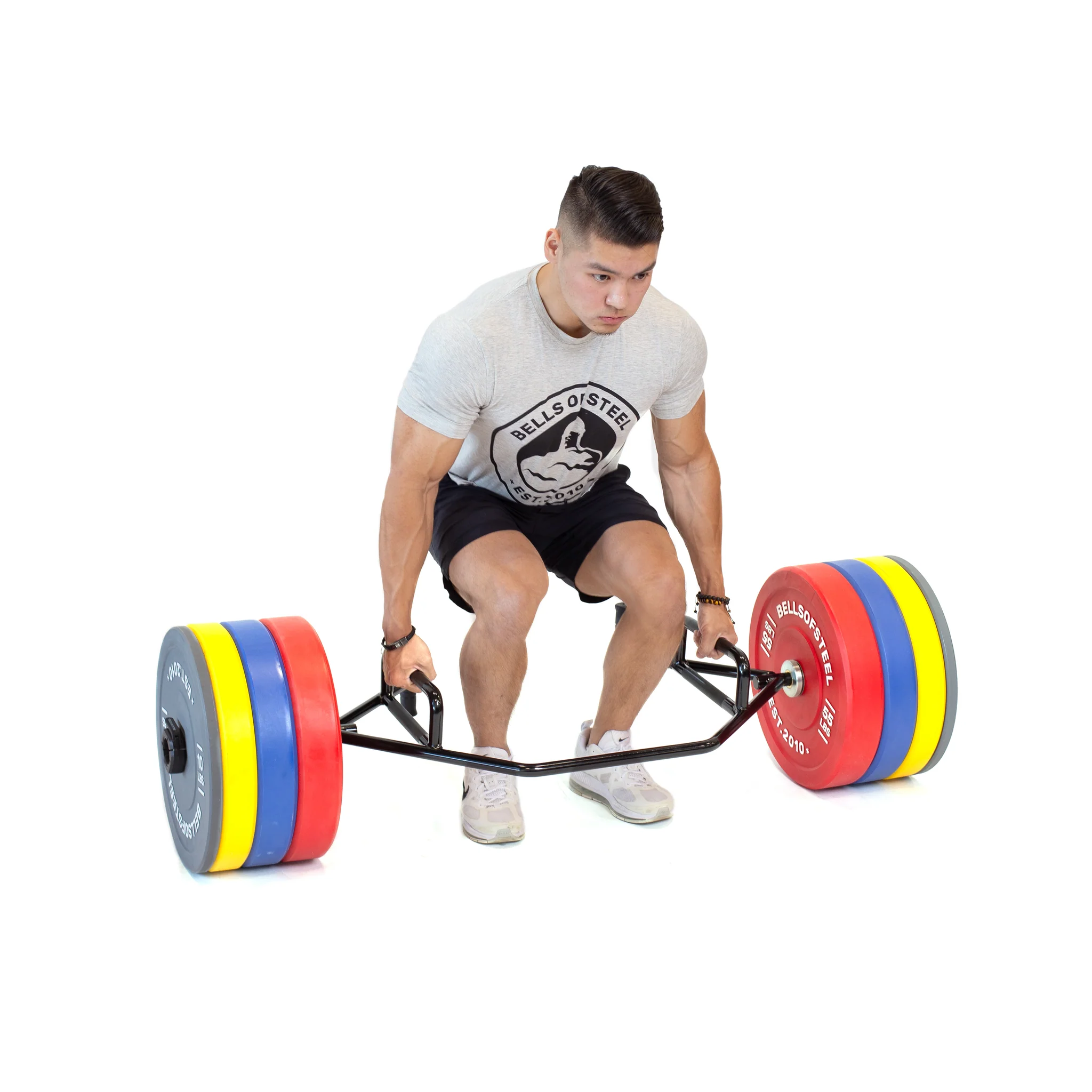
The open trap bar was one of the clearest single-item discounts in the US sale snapshot: $219.99 compared with $323.99, about 32 percent off. Its open side and neutral handles can be practical for trap-bar deadlifts, carries, lunges, and other movements where an ordinary closed hexagonal bar limits access. That does not make it superior to a straight bar for every goal. If your priority is conventional deadlift technique, barbell benching, or Olympic-style lifts, a straight bar still serves roles a trap bar cannot.
Check shaft diameter, knurl placement, whip, sleeve fit, and intended load before committing to a discounted bar. A power bar usually prioritizes a grippier shaft and stiffness for heavy squat, bench, and deadlift work; a multi-purpose bar may feel better for mixed training. Specialty bars should solve a shoulder, grip, space, or exercise-selection problem rather than simply add another piece of steel to storage.
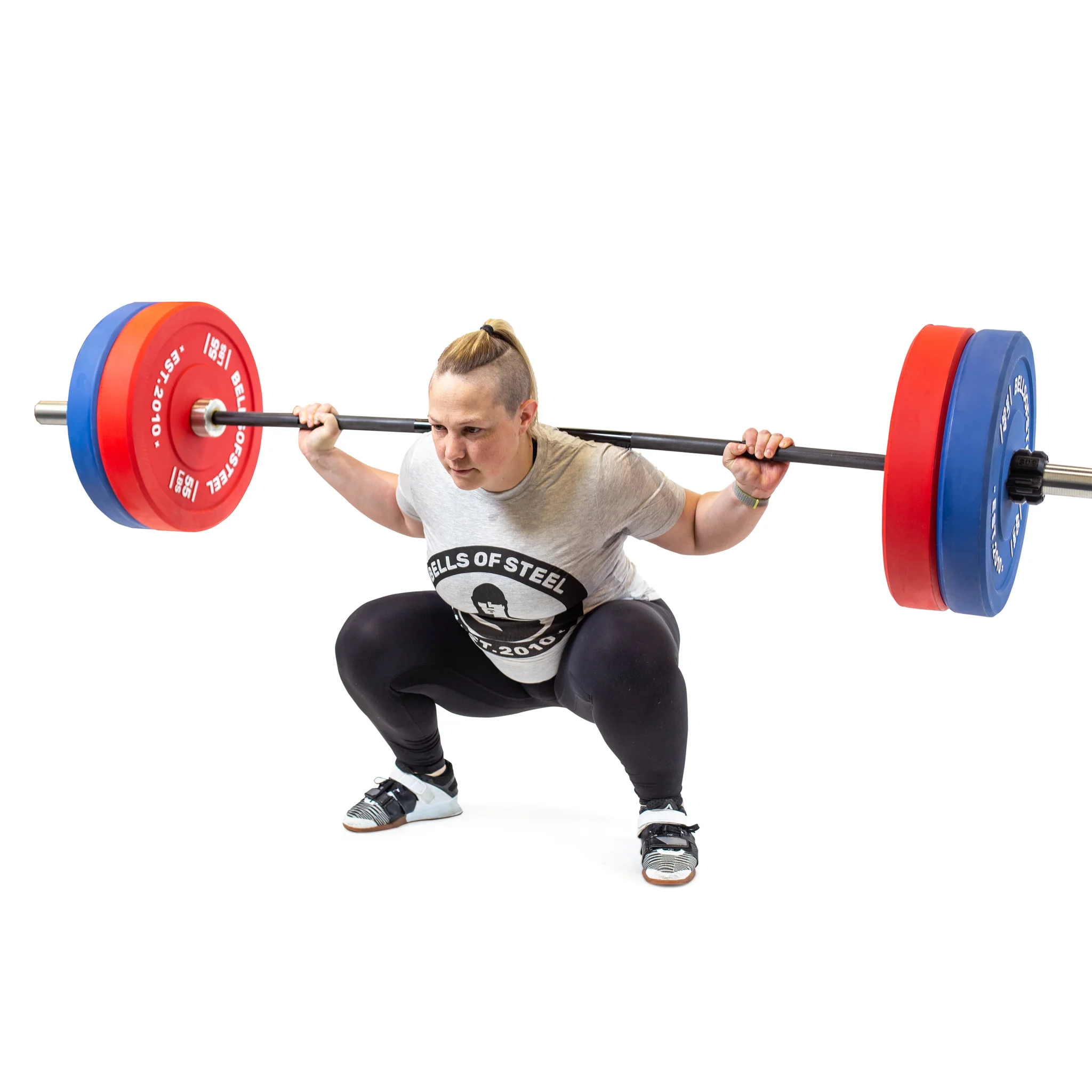
For plates, calculate total working weight before comparing bundle prices. A pair of heavy plates can look inexpensive until you realize that your program also needs smaller jumps, collars, and storage. Bumper plates are convenient for some floor-based lifts; iron or coated grip plates may be more space-efficient for others. Make sure the bar’s sleeve diameter, collars, floor protection, and noise constraints suit your room. A good November purchase is a complete training setup, not a bar surrounded by missing essentials.
Equipment Worth Exploring
Explore equipment, accessories and gear from our carefully selected range.


Open Hex Bar
Open-frame trap bar with multiple handles for deadlifts, carries, and lower-body training.


Competition Plates
Competition-style bumper plates for Olympic lifts and loaded strength training.


FID Bench MAX
Adjustable bench offering flat, incline, and decline positions + adjustable headrest.


Rubber Hex Dumbbells
Rubber-coated hex dumbbell pairs with a stable shape for home and commercial strength training.

Cast Iron Kettlebells
Textured cast-iron kettlebells for swings, squats, carries, and full-body training.
Benches, safeties, and attachments: where modest upgrades matter
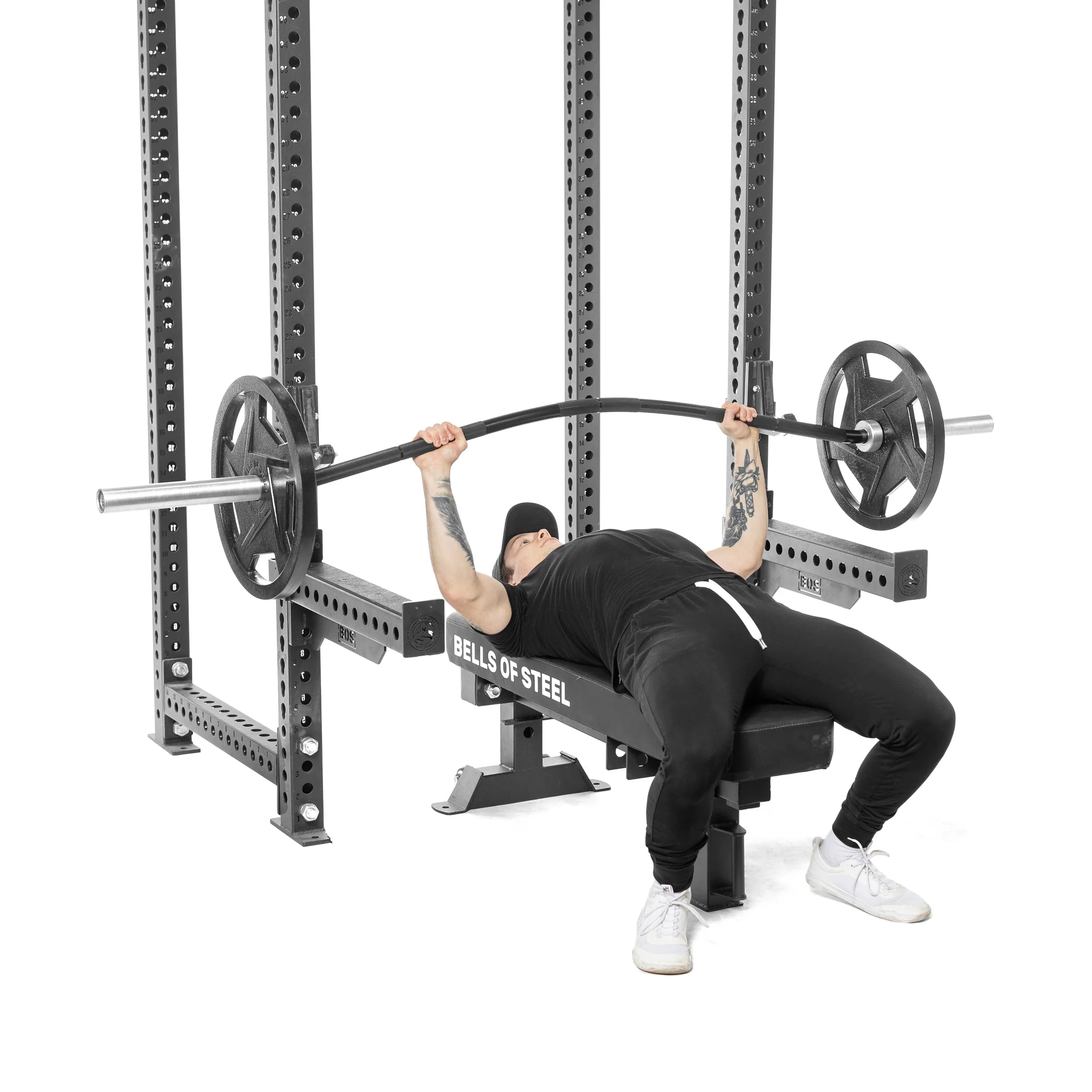
The Buzz-Saw heavy-duty adjustable bench was listed at a US starting sale price of $399.99 versus $516.99. It is worth evaluating against a basic flat bench only if you actually train multiple angles or want its adjustment and capacity features. A stable bench with repeatable positions makes incline pressing, supported rows, seated shoulder presses, and dumbbell work easier to program. Buying the most expensive bench to save a percentage is less useful than buying the bench that fits your rack and body.
Compare pad length and width, backrest gap, low and high incline options, wheel placement, and how easily it rolls out of a rack. A bench used in a power rack must allow enough space for the bar path and safety configuration. When benching alone, choose compatible safeties and set them for the lift. Attachment discounts are appealing, but one poorly matched accessory can turn a promising rack system into an awkward, unstable experiment.
Prioritize upgrades by sessions per week. If you press twice a week and your current bench wobbles, a sound adjustable bench may beat a niche machine. If the bench is already excellent but the rack lacks spotter arms or functional storage, fix those first. Ask whether each new attachment has at least two meaningful training uses and a safe place to live when not installed. A discounted accessory that blocks your primary lifts is not an upgrade.
Dumbbells and kettlebells: choose flexibility without overbuying
The sale includes dumbbells, adjustable competition kettlebells, and general free weights, with different discounts by category. A fixed dumbbell set offers immediate changes between exercises and is convenient for shared households, but it demands space and usually costs more as weight choices grow. An adjustable pair compresses storage substantially, though changing loads between sets can interrupt a fast workout and some designs require more careful handling.
Decide how the equipment fits your actual training log. A lifter who performs rows, presses, split squats, and accessory curls with several loads can benefit from adjustable dumbbells. A person who trains swings, goblet squats, cleans, and carries may use a kettlebell more frequently. There is no reason to buy both categories purely because they are on sale. Check each product’s usable weight range, increment size, handle comfort, replacement-part support, and compatibility with your exercise plan.
Also inspect how heavy equipment will reach the room. A sale price that looks strong can lose its advantage with complicated freight, delivery restrictions, stairs, or a long pre-order window. If you already have plates and a bar, a small add-on that makes the existing set more versatile may outperform another large purchase. Keep a few dollars in the budget for floor mats, proper collars, and storage. Those quiet details often determine whether a new gym is enjoyable to use.
The smarter checkout: design a complete home gym and verify every condition
Before checkout, make a three-column list: equipment you already own, movements you cannot perform well, and the single purchase that would close each gap. For a first home gym, a suitable rack or stand, barbell, enough plates, adjustable bench, and floor protection form a practical starting point. Add cables or dumbbells according to the movements that matter to you. For an experienced lifter, look for a weak link rather than a larger shopping cart.
Run the budget through the actual storefront configuration. The main November discounts appear without a code, while limited flash sales use separate subscriber codes and strict quantities. The US flash-sale schedule describes a sequence of Tuesday and Friday releases with a November 27 encore; those limited products can sell out quickly and should not be treated as guaranteed savings. The normal sale page showed an end date of November 29 at 11:59 p.m., while other regional pages and event FAQs have shown differing dates. Verify the date, price, stock, and currency on your own checkout screen.
Finally, check the product’s restock or pre-order label, weight and dimensions, installation needs, shipping total, and return terms. The store notes that mixed in-stock and pre-order orders may ship together when the later item becomes available. That can delay a complete gym even when one box is ready. A rack that fits, a cable tower you can anchor, or a bench you will use weekly is a better purchase than the biggest percentage on a device you do not need. Start with the current Bells of Steel US sale listings, compare the exact configuration, and make the training plan—not the countdown timer—the final decision.
Home Gym Shirts & Garage Gym Gear
Home, garage and basement gym shirts and workout gear for lifters who built their own place to train.

Home Hero – Garage & Basement – Meme Shirt T-Shirt
Make gym days more fun with “Home Gym Hero” style.

Funny Home Gym Gym Hooded Pullover for Garage Gym Lifte Hoodie
Keep it laid-back with a little “Funny Home Gym Gym Hoodie Hooded” attitude.

Funny Garage Gym Muscle Shirt Athletic Vest Garage Work Tank Top
Train hard, laugh a little, and rep “Garage”.

Basement Gym Muscle Shirt Athletic Vest for Home Gym Li Tank Top
Show some personality between sets with “Basement”.

Anti Gym Home Gym Club Decal for Garage Gym Equipment W Sticker
Bring “Anti Gym Home Gym Club” attitude to your water bottle or laptop.

Anti Social Home Gym Club Hooded Pullover for Solo Home Hoodie
Bring “Anti Social Home Gym Club” gym humor to lazy days and post-workout plans.

Home Gym Nerd Muscle Shirt Athletic Vest for Garage Gym Tank Top
Show some personality between sets with “Home Gym Nerd”.

Home Gym Built Not Bought Decal for Garage Gym Equipmen Sticker
A fun “Home Gym Built Not Bought” touch for bottles, laptops, and lockers.

Funny Home Gym Owner Gym Hooded Pullover for Garage Gym Hoodie
Show off your lifting humor in a laid-back “Home Gym Owner” hoodie.

No Cars Allowed In My Garage Gym Hooded Pullover for Ga Hoodie
Bring “No Cars Allowed In My Garage” gym humor to lazy days and post-workout plans.