Advertising disclosure: This page includes affiliate product links that may earn us a commission, as well as products from our own store.
Rest Between Sets: Use Your Reps Without Letting the Clock Run the Workout
A rest timer is useful until you start treating it as a command to lift regardless of what happened in the previous set. If your repetitions collapse, your setup becomes rushed or the session runs far beyond the time available, the interval deserves a closer look.
A 2026 experiment tested a practical middle ground between fixed breaks and resting entirely by feel: adjusting recovery from the previous set’s repetition count. The useful question is whether that approach preserves worthwhile work at an acceptable time cost. It is not whether a timer can identify a universally perfect number of seconds.
Here is how to interpret the evidence, separate performance from efficiency, and make your own training log more informative without pretending to reproduce an unavailable research formula.
1. What the repetition-based experiment actually tested
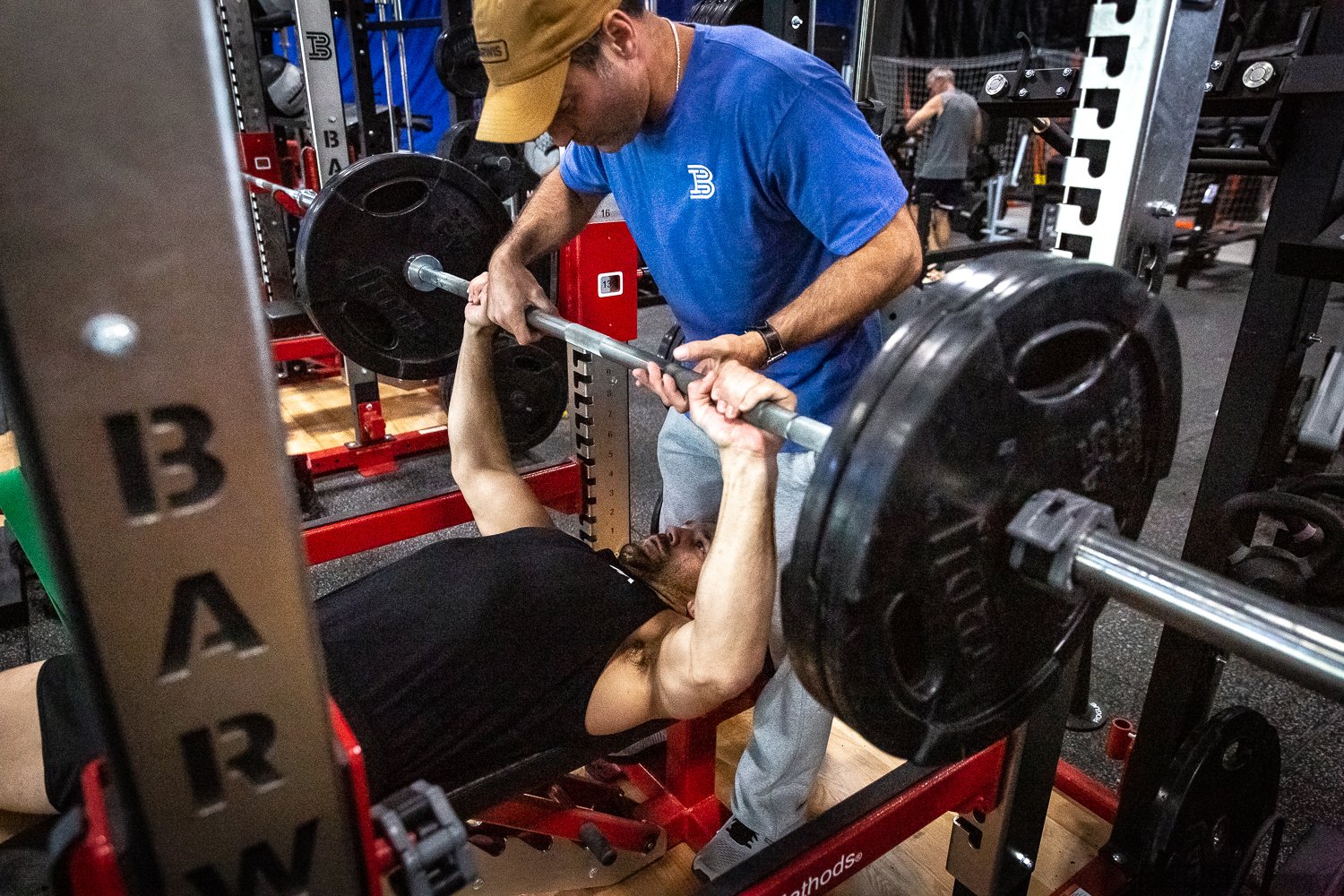
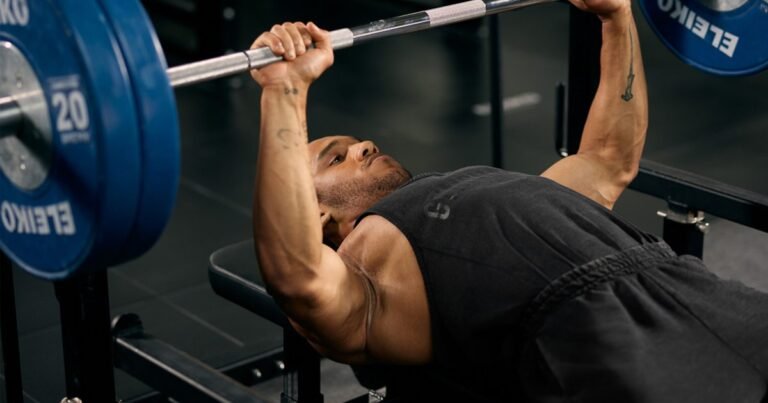
Twenty young adults completed three protocols in randomized order. Each involved five sets of bench press and bench pull at approximately 75% of one-repetition maximum, performed close to failure. Recovery was either fixed at three minutes, chosen by the participant, or adjusted using the preceding set’s repetitions.
Both the self-selected and adjustable approaches produced more total repetitions than the fixed condition. The fastest-set velocity difference was only 0.01 metres per second, while average set velocity, blood lactate and perceived exertion did not differ significantly. Fixed rest was fastest overall, adjustable rest came next, and self-selected rest took longest.
That is a tradeoff, not a clean victory for one method. An acute experiment does not establish which approach grows the most muscle over months. The accessible abstract does not give a usable seconds-per-repetition formula, so this guide does not invent one or claim its practical examples duplicate the tested method.
Notice how many things were controlled before the rest strategy was compared. The exercises, relative load, set count and effort target were specified. In an ordinary workout, changing all those variables while also changing recovery would make the result much harder to interpret. A better session cannot automatically be credited to a longer break if you also selected an easier load or stopped further from failure.
The practical lesson is to treat repetition performance as feedback. It can reveal a problem worth investigating, but it cannot diagnose the cause by itself.
2. Read a falling rep count before changing the interval
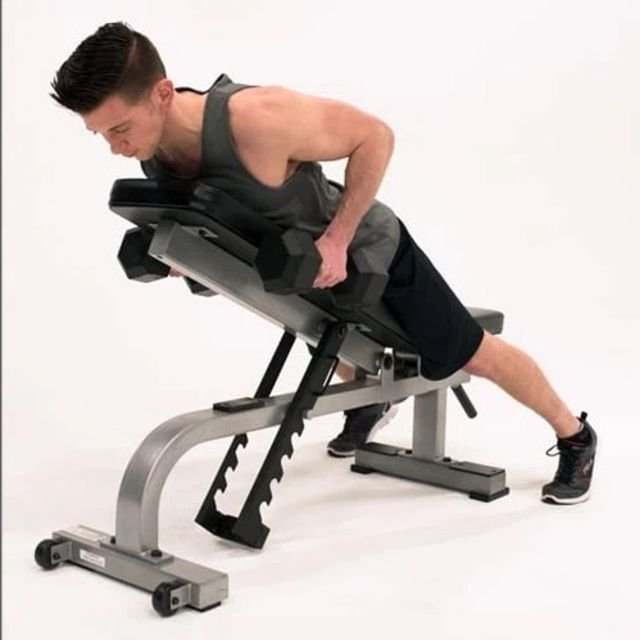
Suppose you complete ten controlled repetitions, then seven, then six with the same load. That pattern may suggest accumulating fatigue, but it does not prove that your rest was too short. Consider whether the first set was much closer to failure than planned, whether the range changed, and whether the exercise setup was consistent.
A supported row makes the distinction easy to picture. If the first set keeps the chest on the pad but later sets involve lifting the torso and shortening the pull, counting those repetitions together hides a technique change. Extra time may help readiness, but it does not make two different movement standards comparable.
Record the load, completed repetitions and a brief effort estimate alongside the interval. You do not need to turn every set into a laboratory measurement. A note such as “same range, last clean rep” is more informative than a bare number that includes assisted or shortened repetitions.
Check the obvious confounders before adding minutes: an unexpectedly heavy first set, a different bench angle, a rushed hand position or a recent increase in total work. If several sessions show the same sharp decline despite a consistent setup and sensible starting effort, recovery becomes a more useful variable to adjust.
Some drop-off across demanding sets is normal. The objective is not necessarily to force every set to match the first. It is to keep the work appropriate to the plan and understand why performance changes. Repeatedly grinding to equal a number can create a different fatigue problem from the one you were trying to solve.

Equipment Worth Exploring
Explore equipment, accessories and gear from our carefully selected range.

Rubber Hex Dumbbells
Rubber-coated hex dumbbell pairs with a stable shape for home and commercial strength training.


FID Bench MAX
Adjustable bench offering flat, incline, and decline positions + adjustable headrest.

Multi Bench MBX-650 2.0
Adjustable multi-bench with roller adjustment, 15 backrest positions and accessory mounts.

Linear Row LRX-750
Dual-sided rowing machine for supported rows, bent-over rows and varied pulling movements.

Lateral Row Machine LRM-720
Rowing machine with independent lever arms, an adjustable seat and chest support.


3. Separate feeling recovered from being ready to lift well
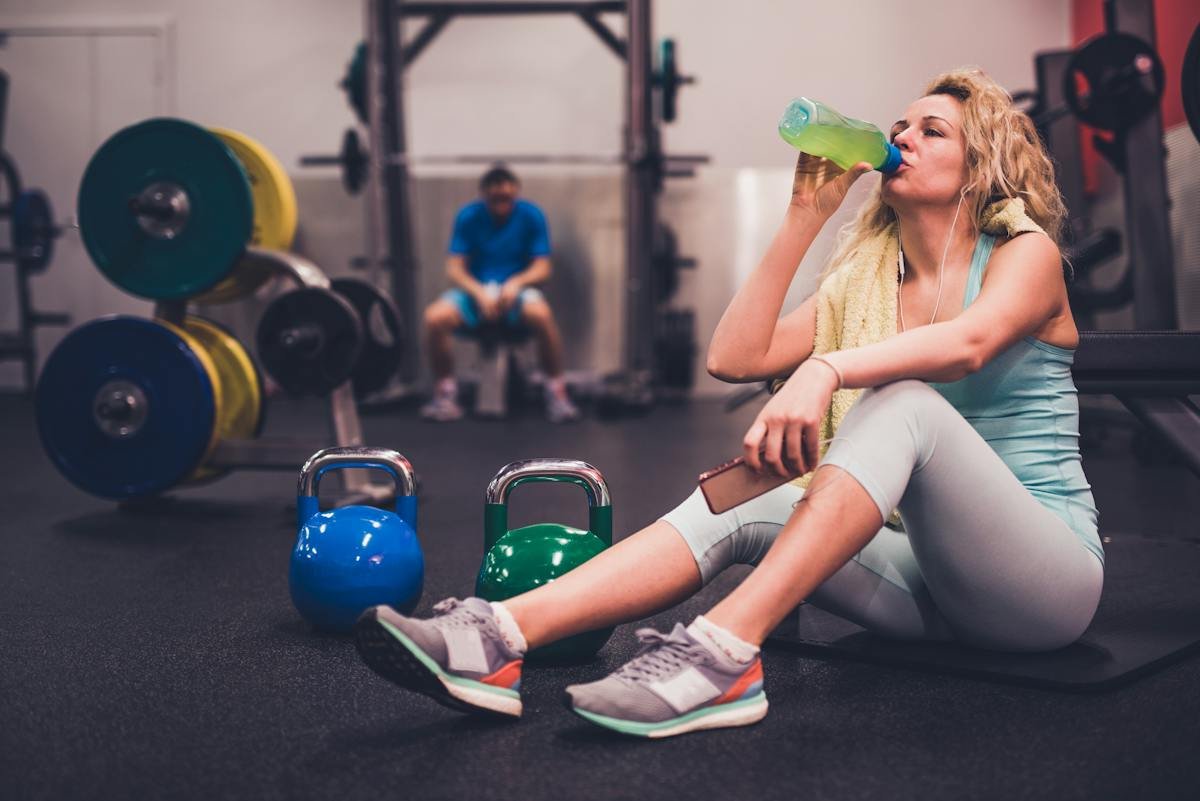
Breathing, local muscular fatigue and concentration do not always recover at the same rate. You might feel calm while the muscles involved still struggle to reproduce the movement, or feel mentally distracted despite having spent plenty of time sitting down. A clock measures elapsed time; it does not measure those qualities directly.
Use a brief readiness check rather than a ceremonial countdown. Can you establish the usual position, maintain control and approach the planned effort without rushing? If not, identify what is missing. Sometimes a little more recovery is reasonable. Sometimes the better decision is reducing the load, changing the planned effort or ending the exercise.
Coaching guidance on rest adjustment considers cardiovascular, local muscular and mental fatigue together. That is broader than using one sensation as a universal green light. It also explains why recovery needs can change as a session progresses even when the exercise and load remain the same.
Do not fill a break with demanding work for the same muscles and then treat the interval as passive recovery. That can be a legitimate training method, but it changes the task. Likewise, a conversation, a long walk across the gym and quiet seated rest are different practical experiences even if the timer records equal durations.
For bench pressing, arrange appropriate spotting or safety provisions before the set begins. Do not let the countdown pressure you into starting while equipment or help is still being organized. A set that begins with a compromised setup is not a useful demonstration of disciplined time management.
4. Decide whether today’s priority is output or time
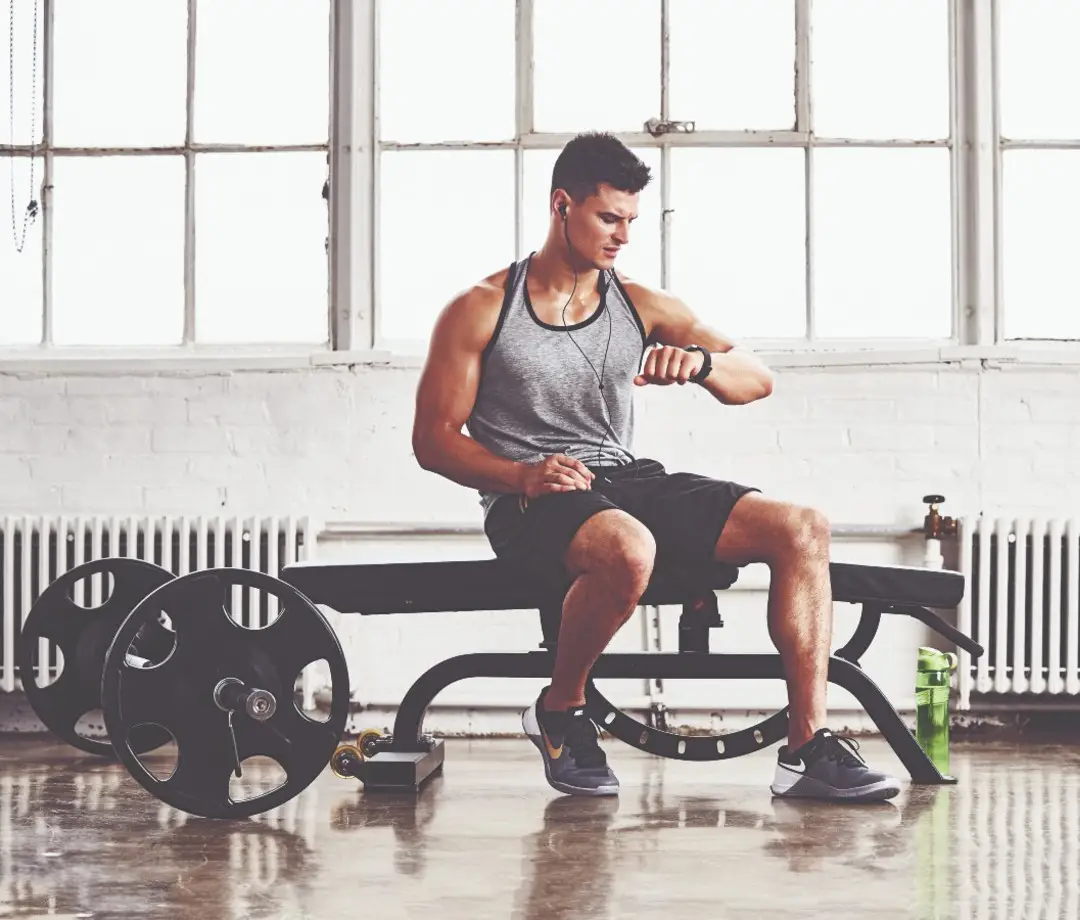
A session that produces more repetitions can still be less time-efficient. That matters when you have a fixed lunch break, need to share equipment or have several other exercises left. “More work” and “more work per minute” answer different questions.
Research pooling longer-term training studies suggests a small average muscle-growth advantage for rests longer than a minute, but uncertainty remains and it does not identify one ideal interval for everyone. The broader evidence also leaves room for different successful training prescriptions. Avoid turning one comparison into an absolute rule that every set needs the same long break.
Set a time budget before the session. If you have forty minutes, include warm-up, equipment changes and the transition out of the gym rather than pretending all forty are available for working sets. Decide which exercise matters most. It is easier to allocate recovery intelligently when you know what you are protecting.
As an illustration, extending four breaks by thirty seconds adds two minutes to an exercise. That may be a sensible exchange if it preserves useful work. Extending every break without a boundary can quietly remove an entire later exercise. Neither choice is automatically wrong; the cost should be visible.
Efficiency can also come from preparing equipment and avoiding unnecessary setup changes. It does not have to come from squeezing every rest period. If you choose paired exercises or another denser method, record that change rather than treating the resulting session as directly equivalent to traditional straight sets. A productive workout is one you can complete repeatedly, not just optimize on paper.
5. Run a simple comparison without inventing a research protocol
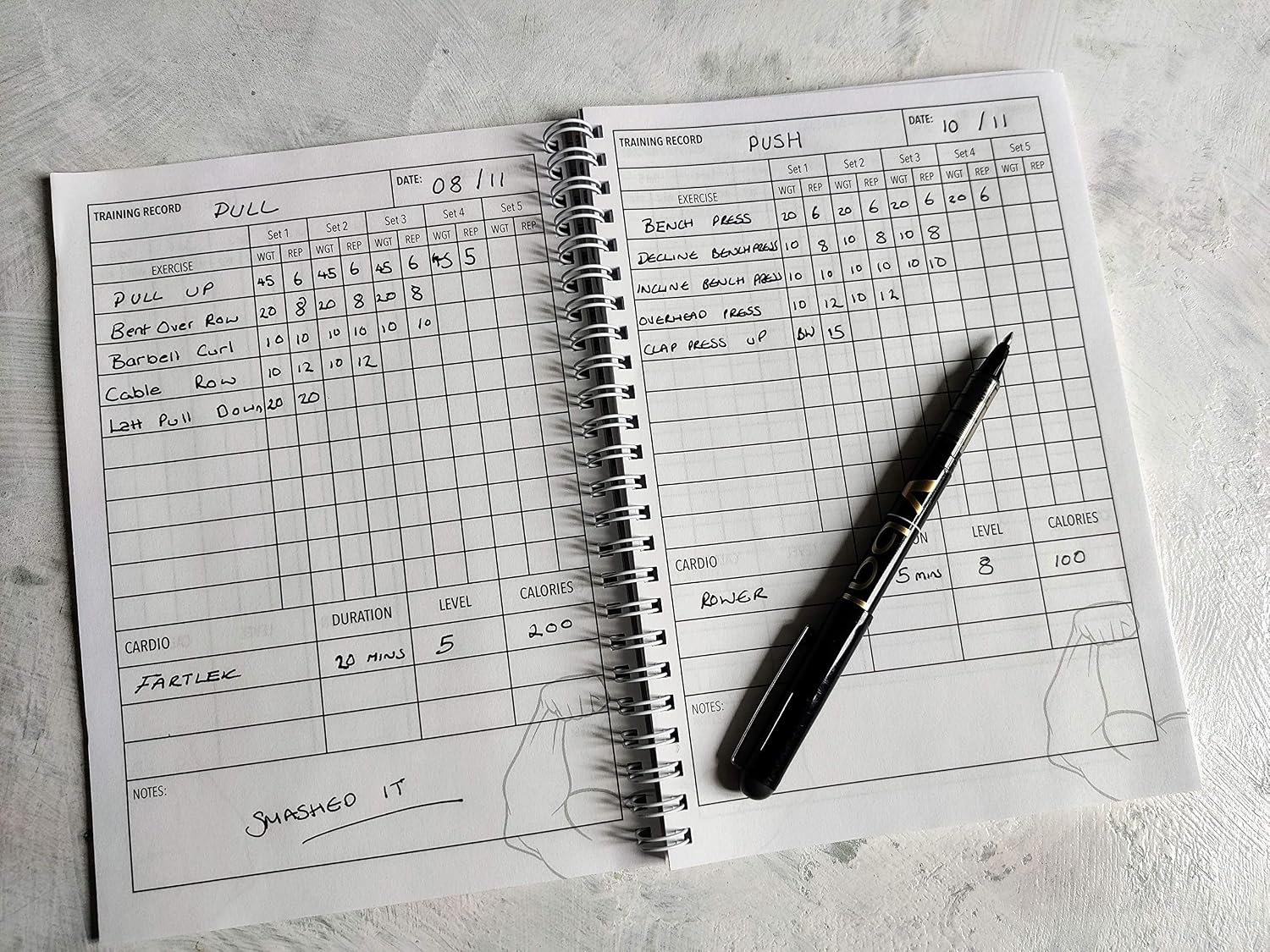
Choose a familiar exercise and keep its load, setup, exercise order and effort target recognizable across comparable sessions. Start with the interval already in your program. Record actual breaks, repetitions and roughly how long the exercise takes. Your baseline is what you really did, not the timer setting you intended to follow.
If performance repeatedly falls more than you want, try a modest, planned extension while keeping the other variables steady. Adding thirty seconds is an example of a manageable adjustment, not a validated universal dose or the experimental formula. Decide in advance what improvement would justify the extra time.
Compare total clean repetitions, the pattern across sets and whether the session still fits your schedule. Note obvious context such as an unusually poor night’s sleep or a different exercise earlier in the workout. A single excellent day is interesting; a repeatable pattern is more useful for programming.
Keep the log simple enough to maintain. A row containing load, reps, rest and a short comment can answer most of the practical question. You do not need a new device to notice that your breaks doubled or that later repetitions stopped meeting the same standard. Change the plan deliberately rather than rewriting it after each memorable set.
Finally, keep muscle growth and strength progress on a longer timeline. An extra repetition today is a session outcome, not proof of superior long-term adaptation. Use the timer to support consistent work, use your repetitions to question the plan, and judge the adjustment against both performance and the time you can realistically invest.

Bodybuilding Shirts & Workout Gear
Bodybuilding shirts, tanks and gym gear for lifters chasing muscle, size, symmetry and the pump.


I Love Bench Press Gym | Funny Bench Press Meme Crewnec T-Shirt
For laid-back days and gym-girl humor: “I Love Bench Press”.

Gym Sir Swole of Benchalot Medieval Knight Chest Day Mu Tank Top
Bring “Sir Swole of Benchalot Medieval Knight” humor to your next lifting session.

Safety Practice Safe Sets Hooded Jumper Top Hoodie
Show off your bodybuilding humor in a laid-back “Gym Safety” hoodie.

Lift Eat Repeat Sweater & Meme Fans T-Shirt
For laid-back days and lifting humor: “Lift Eat Repeat”.

No Reps No Glory Viking Gym – Funny Norse Workout Decal Sticker
Give your everyday gear a playful “No Reps No Glory Viking” twist.

Bench Press and Chill Funny Gym T
Make gym days more fun with “Bench Press and Chill” style.

Shirt: Good Argument But I Bench More Than You – T-Shirt
Make gym days more fun with “: Good Argument But I Bench More Than You” style.

Consistency Is Key Stoic Greek God Marble Sculpture T-Shirt
Make gym days more fun with “Consistency is Key Stoic Greek God Marble” style.

Ultimate Bench Press Tee
Heavy lifts, good laughs, and a little “Ultimate Bench Press” energy.