Advertising disclosure: This page includes affiliate product links that may earn us a commission, as well as products from our own store.
An adjustable dumbbell earns its place through the sets you actually perform. The important questions are whether it covers your working weights, whether the next load increase is manageable, and whether the handle and ends move comfortably around your body. A quick adjustment is useful only after those questions have good answers.
The REP QuickDraw uses steel Lock-N-Load switches, with smaller add-on plates providing finer adjustments. This guide examines the pound version as an equipment choice, rather than reporting an MMP hands-on test. Work through your current training log and the space around your bench before deciding what a pair would replace.
Start with your hardest exercise and the 60 lb ceiling
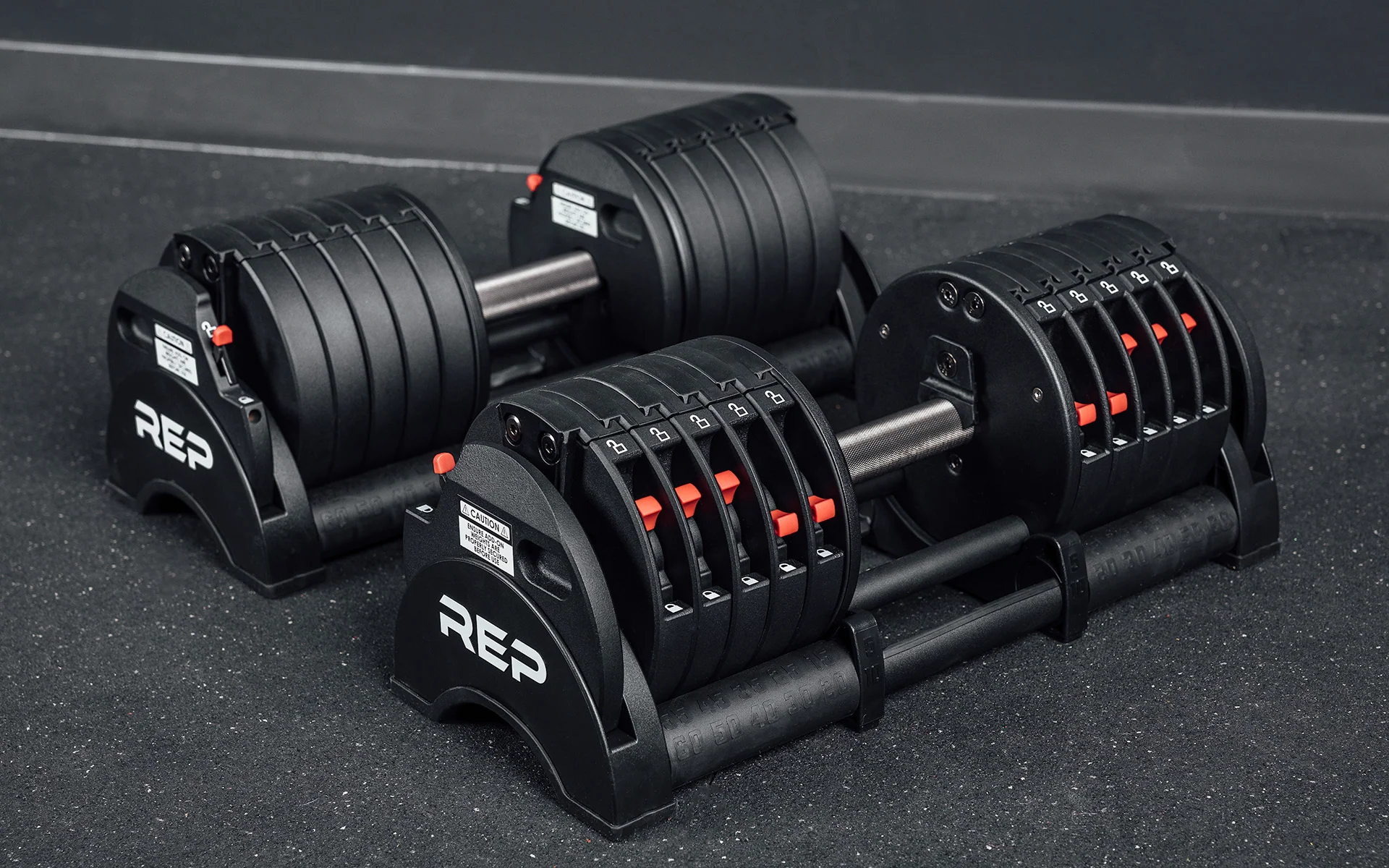
The QuickDraw starts at 5 lb per dumbbell. Its base package reaches 30 lb, with expansions taking it to 40, 50 or 60 lb per hand. The maximum is therefore 60 lb for each dumbbell, not the pair combined. Choose the package around your actual requirements rather than assuming every set includes every expansion.
Write down the loads you use for dumbbell bench presses, rows, curls and any squat variation. Then identify the exercise most likely to exceed the available range. A pair might cover your arm work for a long time while becoming limiting for a stronger row. The reverse is also possible: a heavier maximum adds little value if the lightest useful settings and smaller jumps are what your sessions need.
Leave room for progress without pretending to predict exactly how fast it will happen. If an exercise is already near the upper setting, decide whether you would keep heavier fixed dumbbells, change equipment later, or accept the range. Changing repetitions can make training harder, but it does not turn a lighter dumbbell into a heavier one for every purpose.
Compare the complete loading ladder when considering alternatives. Our Freak Athlete adjustable-dumbbell buying checks explain why the maximum number alone can conceal an important gap. The useful comparison is the sequence of loads available to you, together with the equipment needed to reach them.
Separate the main switches from the smaller load changes
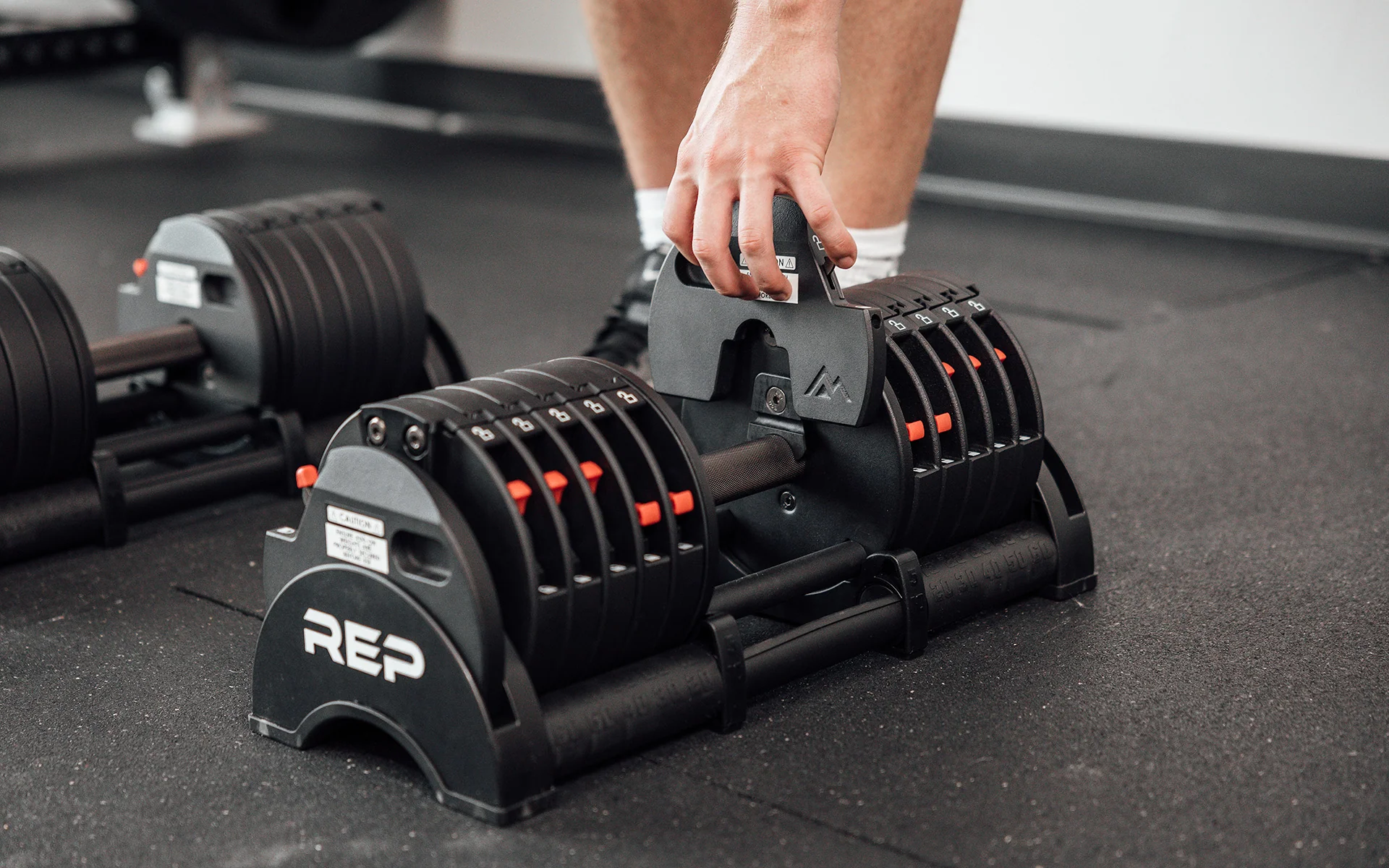
Main QuickDraw plate changes produce 10 lb steps per dumbbell. Two 2.5 lb micro-adjustment plates provide another 5 lb; using one permits a 2.5 lb adjustment with a small imbalance. Those finer changes involve handling the microplates, so do not picture every intermediate weight as a switch-only change.
That distinction matters most when a small muscle group makes a large percentage jump feel abrupt. Choose a repeatable progression rule: hold the load while building controlled repetitions, then move up when your planned range is achieved. Do not make speed of adjustment the reason to attempt a jump you cannot manage. Equipment should accommodate the progression, while the training log shows whether the progression is working.
Check both dumbbells before a paired exercise. A rushed transition makes it easier to forget a small plate or select different settings. Develop a short reset routine: put the weights down, choose the intended configuration, check both sides, then lift. Follow the manufacturer instructions for secure engagement instead of treating the visible number as your entire inspection.
The system can be adjusted outside its cradle, but the dumbbell must be set down before operating the switches. Do not change its load while holding it over yourself. For a circuit, allow enough transition time to place the equipment securely and complete the check. If that interrupts the session you want, a separate light pair for the second exercise may be the more useful addition.
Check the handle and the space occupied by the ends
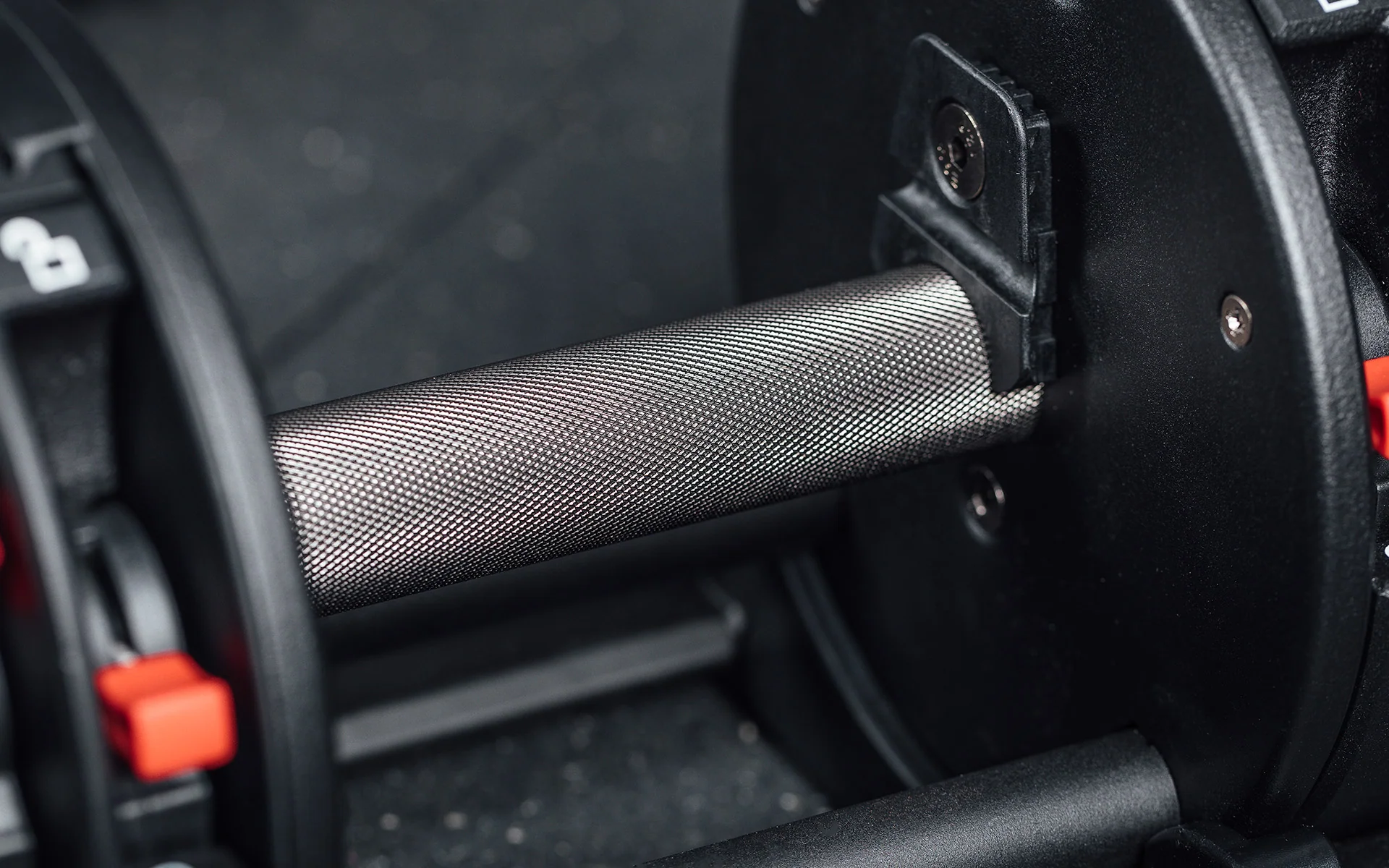
The nickel-plated handle is fully knurled and 32 mm in diameter. Usable handle length is 5.4 inches without the microplates and 4.9 inches with them. The loaded dumbbell also grows as capacity increases: the 30 lb configuration is 12.2 inches long, compared with 18.5 inches at 60 lb.
These measurements deserve more attention than a photograph showing an isolated pair. Hand size, wrist position and the space available between your forearm and the plates can affect how an implement feels. The reduced grip space with microplates is particularly worth considering if you have large hands. A handle specification describes its dimensions; it cannot tell you that every grip will feel comfortable.
For presses, think about the entire path from getting into position to returning the weights. For curls, consider whether the ends approach your thighs or torso. For rows, check the path beside the bench and your supporting leg. More compact dimensions at a lighter setting can be useful, but the heaviest setting is the one to evaluate if that is where you intend to train.
Handle behavior is another comparison point. Our guide to rotating versus fixed dumbbell handles looks at a different design choice. Neither rotation nor aggressive texture automatically makes a dumbbell better for everyone. Evaluate the actual grip, movement and loading arrangement together rather than ranking products by one isolated feature.
Plan the reset area as carefully as the storage footprint
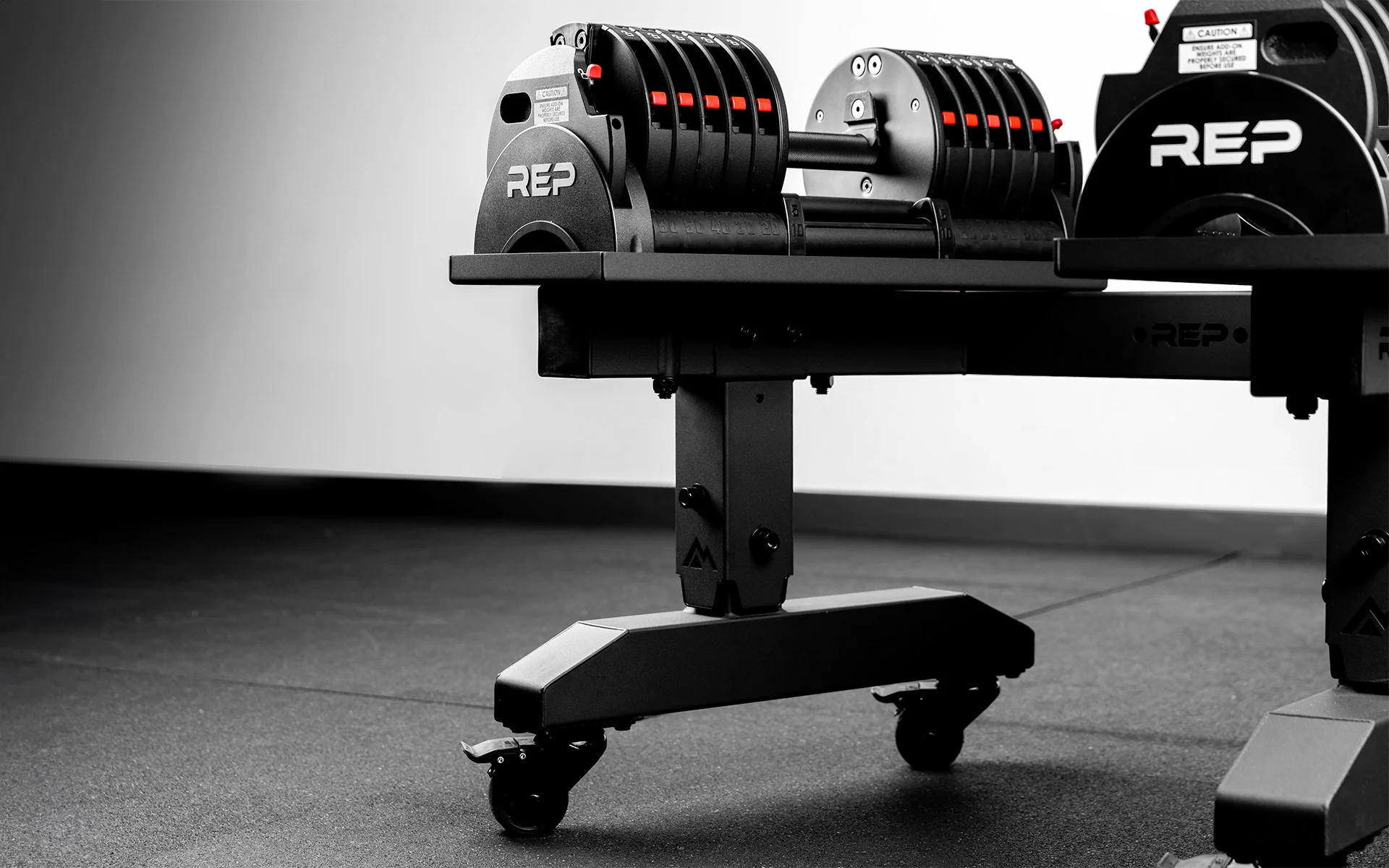
Each QuickDraw cradle measures 20.6 inches long and 8.45 inches wide. REP also offers separate stand and cart options. These are storage and access choices, not equipment that should be assumed included with a dumbbell package.
Measure a usable station rather than drawing two rectangles on the floor. You need access to the handles and switches, room to set the weights down, and a clear route to your bench. Avoid placing the cradles where your feet land when finishing a press or where another person needs to walk. Storage efficiency loses its appeal when every set begins by moving something else.
A stand may reduce how far you bend to collect the weights, while a floor arrangement can keep the station lower. Decide using your room and lifting routine. Any raised support needs to be suitable and stable for its intended load; an improvised shelf is not automatically a dumbbell stand. Keep loose microplates somewhere deliberate so they do not become small obstacles around the bench.
This is a practical home-gym decision, whether your training area is in a garage, basement or spare room. Position the dumbbells where a solo session flows naturally: collect them, perform the set, return them securely and record the work. The best arrangement is one you can repeat without shifting the bench and storage between every exercise.

Home Gym Shirts & Garage Gym Gear
Home, garage and basement gym shirts and workout gear for lifters who built their own place to train.

Anti Basement Club , Gymbros & Basement Dwellers T-Shirt
Heavy lifts, good laughs, and a little “Anti Gym Basement Gym Club” energy.

Funny Home Gym Gym Hooded Pullover for Garage Gym Lifte Hoodie
Keep it laid-back with a little “Funny Home Gym Gym Hoodie Hooded” attitude.

Anti Social Home Gym Club Crewneck Pullover Sweater for T-Shirt
Keep things casual with a little “Anti Social Home Gym Club” attitude.

Anti Gym Garage Gym Club Muscle Shirt Athletic Vest for Tank Top
Bring “Anti Gym Garage Gym Club” humor to your next lifting session.

Funny Basement Gym Decal for Home Gym Water Bottles Lap Sticker
A fun “Basement” touch for bottles, laptops, and lockers.

Home Shirt – Home Nerd – & Meme Gymbros T-Shirt
Make gym days more fun with “Funny Home Gym” style.

Home Is Where The Gym Is Funny Home Gym Garage Basement Hoodie
Make your off-duty look more fun with “Home Is Where The Gym Is Funny Home”.

Funny Garage Gym Crewneck Pullover Sweater for Garage G T-Shirt
Add a playful “Garage” touch to your casual rotation.

Home Gym Hero Muscle Shirt Athletic Vest for Garage Gym Tank Top
Train hard, laugh a little, and rep “Home Gym Hero”.

Garage Shirt – Garage Meme Top Home Gains & Gymbros T-Shirt
Bring “Garage” humor to your next gym day.
Judge the pair by a complete training session
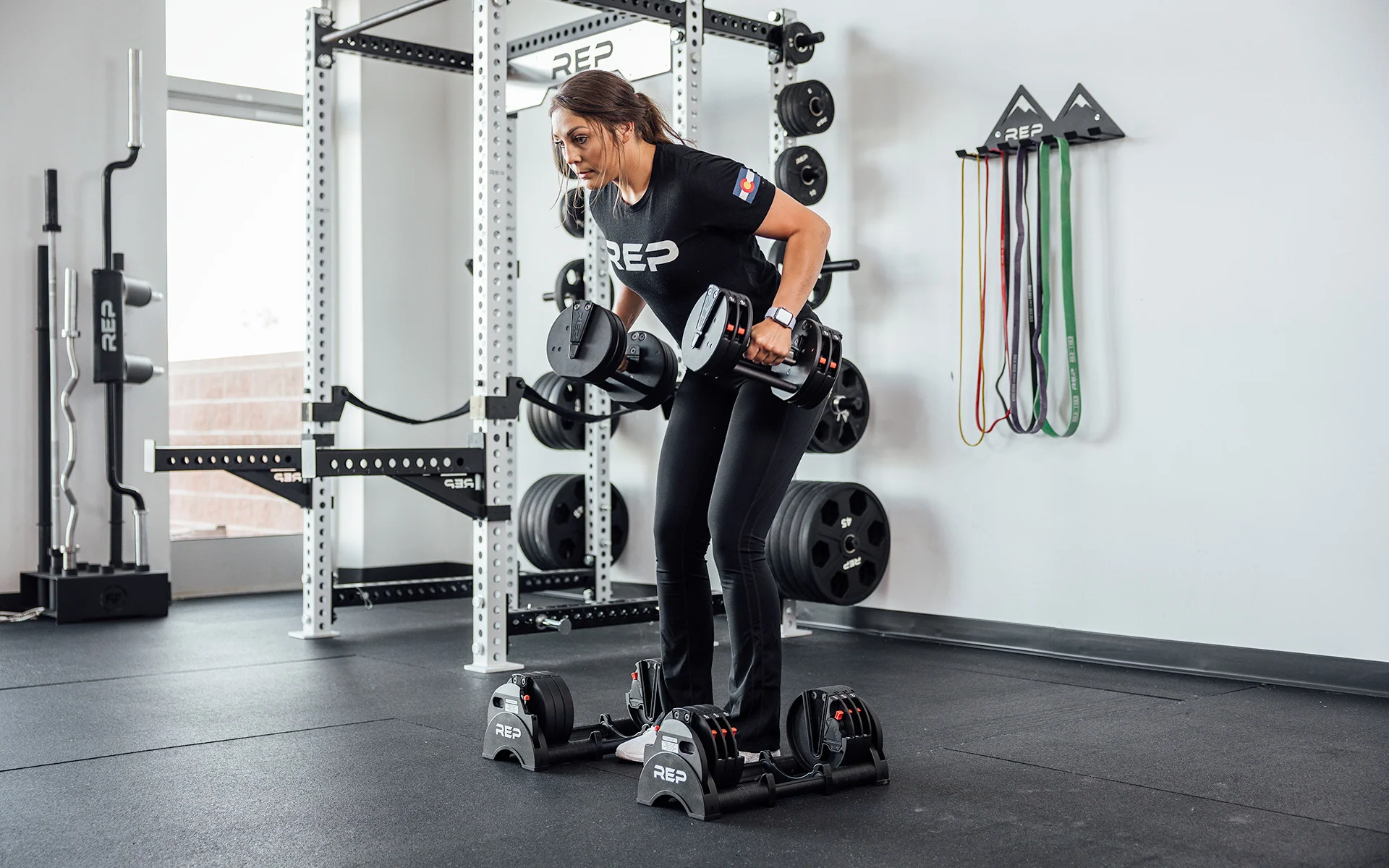
Before committing to one adjustable system, walk through a representative press, row and curl session on paper. Include warm-up loads, your working sets and the next increase. Add getting into position and returning the equipment. This exposes practical differences that a single heavy demonstration does not show, especially when two people share the same pair.
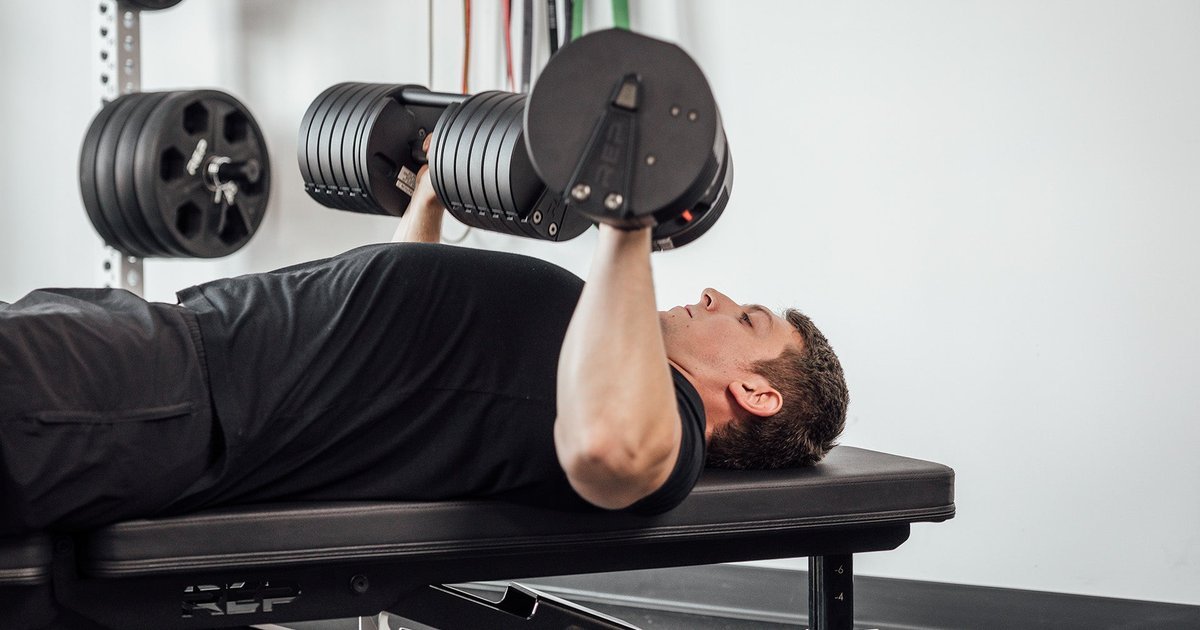
During a dumbbell bench press, stable contact with the bench and floor, a secure grip and controlled movement matter more than rushing the next change. Use help when needed to get the weights into position and finish safely. A manageable dumbbell is still awkward if the bench is poorly placed or the return route is cluttered. Equipment convenience should support controlled repetitions rather than replace them.
When comparing a complete setup, include a suitable bench and any complementary weights. Fixed dumbbells remove adjustment steps; plate-loaded handles use a different loading routine; a kettlebell offers another shape for movements that suit it. Check compatibility before combining handles with plates, and do not assume another brand’s change plates belong on QuickDraw. These are alternatives and complements, not interchangeable parts of one system.

Equipment Worth Exploring
Explore equipment, accessories and gear from our carefully selected range.


Rubber Hex Dumbbells
Rubber-coated hex dumbbell pairs with a stable shape for home and commercial strength training.

FID Bench MAX
Adjustable bench offering flat, incline, and decline positions + adjustable headrest.


Multi Bench MBX-650 2.0
Adjustable multi-bench with roller adjustment, 15 backrest positions and accessory mounts.



Choose based on your training goals, current ability and the movements you can perform consistently. QuickDraw’s relevant tradeoff is a defined load range with two kinds of adjustment, plus dimensions that change with the configuration. If those match your real sessions, the pair has a clear purpose. If they do not, identify the missing capability before buying around a feature you will rarely use.