Advertising disclosure: This page includes affiliate product links that may earn us a commission, as well as products from our own store.
A Lu raise takes the familiar side raise beyond shoulder height into an overhead arc. That extra travel changes the exercise: you need a light enough load to keep moving smoothly, room for the shoulder blades to move, and a return you can control. It can be useful accessory work for lifters who want to practise loaded overhead movement. It is not a requirement for big shoulders, a substitute for pressing, or a reason to force a painful range. This guide describes the overhead version, using either small plates or dumbbells, with a practical way to introduce it without turning a shoulder exercise into a full-body swing.
What the overhead version adds
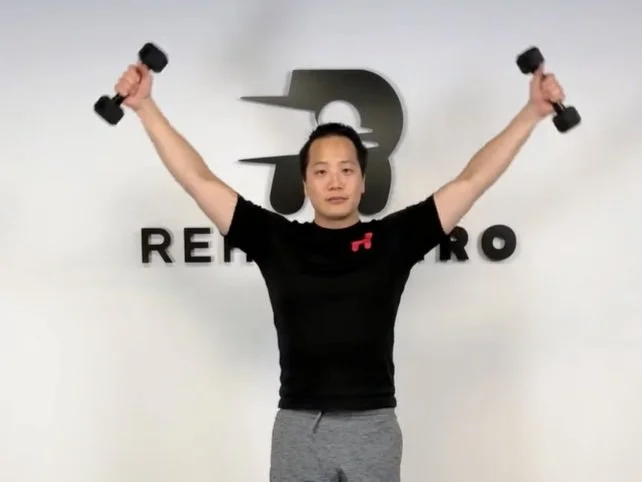
Start by distinguishing the movements. In a conventional dumbbell lateral raise, the arms commonly finish around shoulder level. In the overhead Lu raise, they continue upward. Your upper arms move through a larger arc, so the movement demands more than simply repeating a side raise with a higher endpoint. Both versions can belong in a shoulder routine; choose deliberately instead of changing between them as fatigue accumulates.
The side deltoids contribute to raising the arms, while the shoulder girdle and upper back participate as the arms travel higher. Treat that participation as part of this version. Trying to isolate the side delts by preventing every movement around the shoulder blades conflicts with the overhead task. Equally, an exaggerated shrug at the beginning does not replace a smooth arm raise.
The exercise is associated with weightlifter Lü Xiaojun, but an elite athlete's use does not establish a universal prescription. Nor does a larger range prove greater muscle growth than a shoulder-height raise. The sensible reason to choose it is specific: you want to train an overhead arc that you can already access comfortably under a modest load.
Before using weights, rehearse several repetitions with empty hands. Notice whether you can reach overhead without throwing your chest upward, bending your knees to launch the arms, or changing the motion halfway through. This is a rehearsal, not a diagnostic test. If the unloaded version is uncomfortable, adding resistance is not the next step.
Choose a secure pair of dumbbells or plates
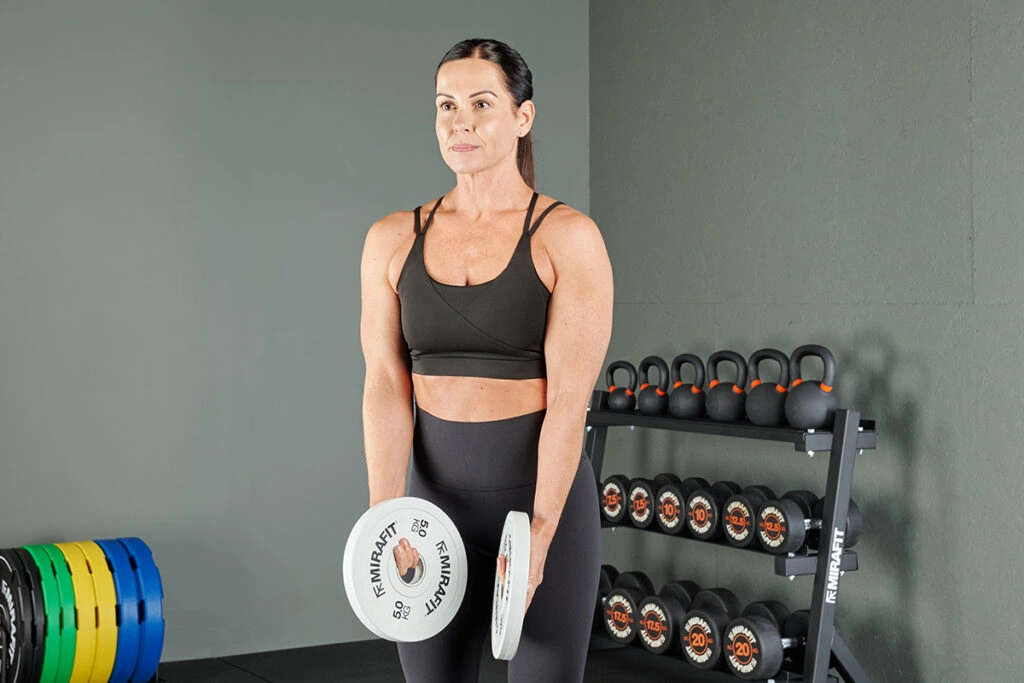
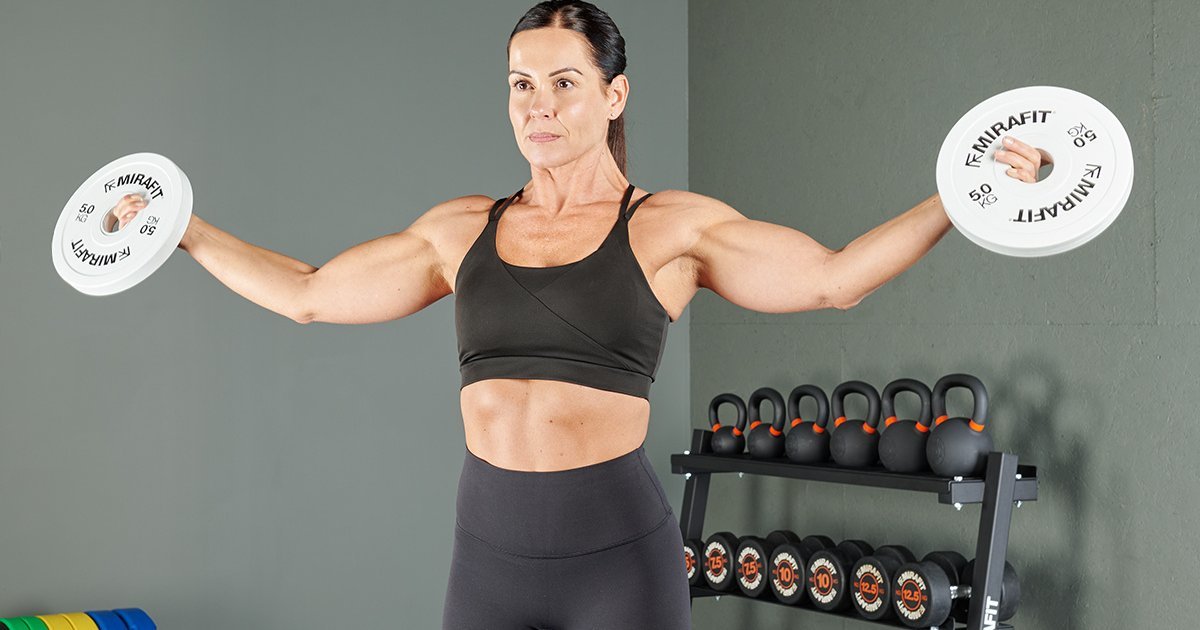
Begin with much less than your usual lateral-raise working weight. Small fixed dumbbells are straightforward because they offer a full handle. Compact change plates can also work, provided the holes or handles suit your fingers and you can maintain a secure grip through the entire movement. Neither implement automatically makes the exercise more effective.
Check the actual minimum weight of an adjustable dumbbell before choosing it for this task. A model that is excellent for rows or presses may start too heavy for a controlled overhead raise. Its body may also be bulky near the head. Do not buy maximum capacity when the immediate problem is finding a comfortable, very light starting pair.
Plate diameter and grip matter alongside the number printed on the plate. A large plate can interfere with the path even when its mass is manageable. Test the grip with your hands low before raising anything overhead. If your fingers slip, pinch, or must change position during the rep, use a handled dumbbell instead. Clip-on fractional plates need a compatible host implement; they are not standalone hand weights.
Clear space on both sides and above you, then set the unused equipment down safely. Benches and cable stations can support other shoulder exercises, but they are not necessary for the standing Lu raise. A cable lateral raise is a separate option with a different line of resistance; copying the same endpoint does not make it mechanically identical. Choose the exercise first, then the equipment.

Equipment Worth Exploring
Explore equipment, accessories and gear from our carefully selected range.


Rubber Hex Dumbbells
Rubber-coated hex dumbbell pairs with a stable shape for home and commercial strength training.


GymPin Ergo Handles
Pair of ergonomic cable handles shaped for comfortable triceps and pulling exercises.


Grip Plates
Rubber-coated weight plates with handholds for loading barbells and machines.


VForce Wall Trainer
Space-saving wall-mounted functional trainer with pivoting cable arms and variable resistance ratios.
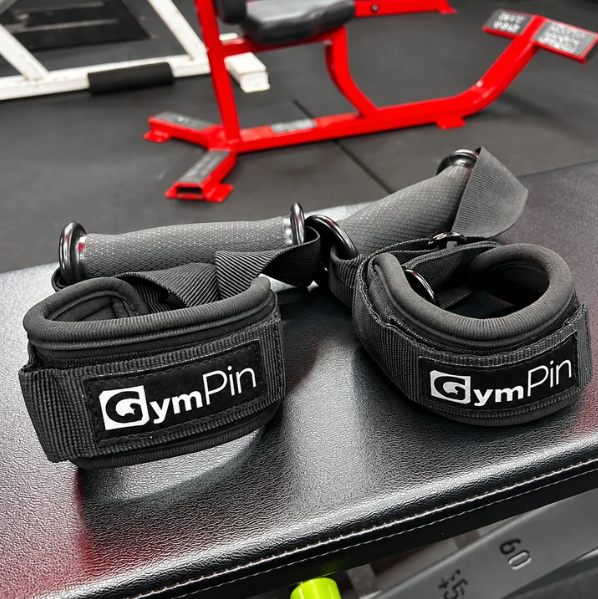
GymPin D Cuffs
Adjustable wrist cuffs with textured grips for supported cable-machine exercises.
Let the shoulder blades move while the torso stays quiet
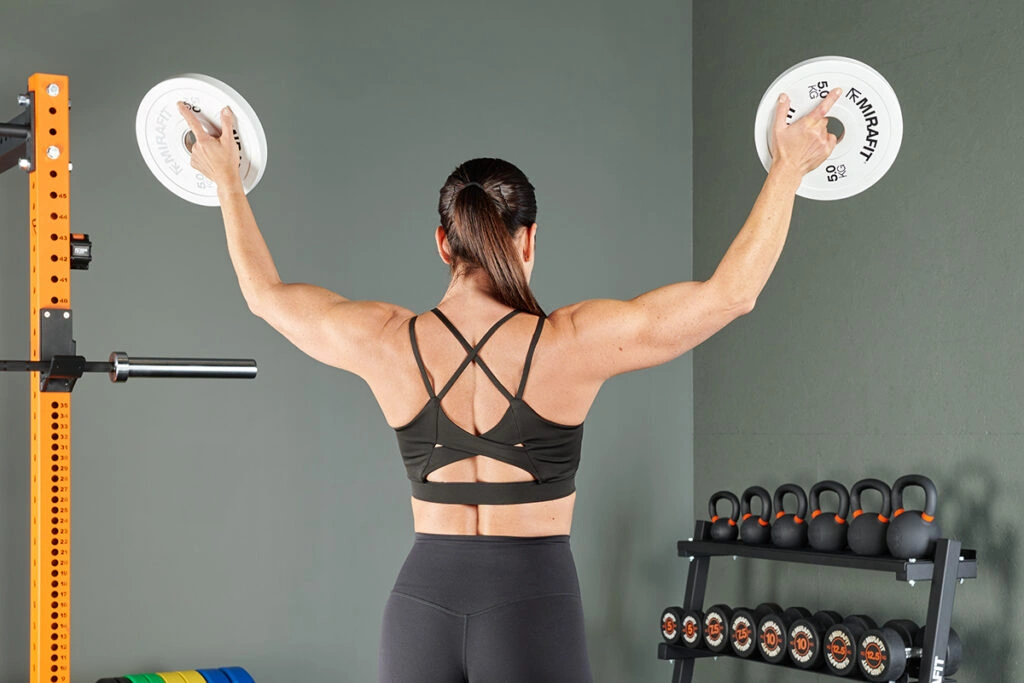
Stand with a comfortable base, knees relaxed and the weights near your sides. A small forward inclination can be used, but establish it before the repetition. Avoid repeatedly hinging forward and snapping upright to accelerate the weights. The objective is a repeatable arm path over a stable trunk, not the appearance of a rigid pose at every joint.
Sweep the arms out and upward with a small, reasonably consistent elbow bend. Allow the shoulders to move naturally as your hands approach overhead. For this version, do not try to clamp the shoulder blades permanently downward. Upper-back and shoulder-girdle movement belongs to reaching overhead; an instruction useful for another exercise need not transfer unchanged.
Hand orientation varies between demonstrations. With dumbbells, allow a comfortable natural rotation rather than forcing your wrists to twist at the last moment. With plates, preserve the secure grip you tested below shoulder height. Do not chase a photograph's exact palm angle if reproducing it makes the movement uncomfortable. The implements need not touch at the top.
Film a light set from the front and another from the side if you want a simple form check. Look for a stable base, a consistent elbow shape and a smooth endpoint. A video can reveal an obvious swing or rib flare; it cannot identify the medical cause of discomfort. Reduce load or range when control disappears, and get individual assessment for persistent pain.
Keep the top and the descent under control
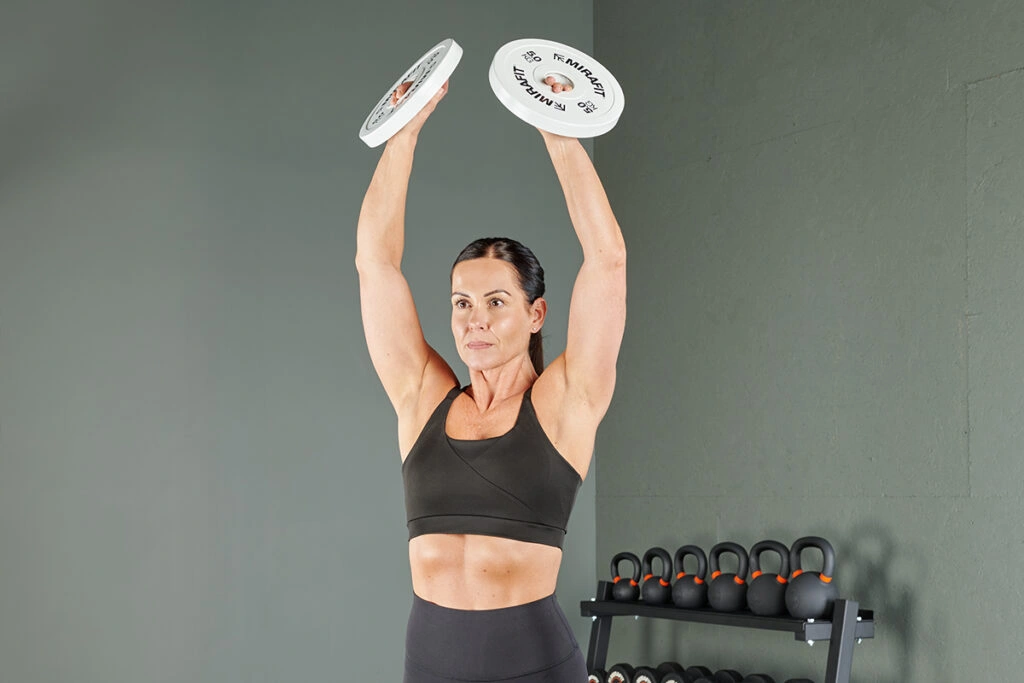
The overhead position is a destination you arrive at smoothly. Avoid flinging the weights upward and catching their momentum with straight arms. Once you reach your comfortable endpoint, briefly steady the implements, then reverse the movement. Lower through the same broad arc rather than letting the final half of the repetition collapse toward your thighs.
A useful practice cue is to make the descent visibly slower than a drop. You do not need to claim that an exact number of seconds has special muscle-building properties. Choose a pace you can reproduce across the set. If the first repetitions are deliberate but the last ones become free falls, stop the set or reduce the weight.
Three changes can make a repetition look successful while altering the task. Increasing the elbow bend shortens the arm's lever. Throwing the hips adds momentum. Finishing progressively lower reduces the range. None belongs hidden inside a log entry claiming identical full-range repetitions. Keep the method consistent so an extra rep means something useful.
Do not turn shoulder fatigue into a challenge to push through joint pain. Muscular effort and discomfort in the joint are different signals. Stop an exercise that hurts, especially if symptoms persist afterward, and seek suitable professional guidance. This accessory is optional; a comfortable shoulder-height raise or a different tolerated shoulder exercise can remain productive while you resolve the problem.
A simple introduction and progression plan
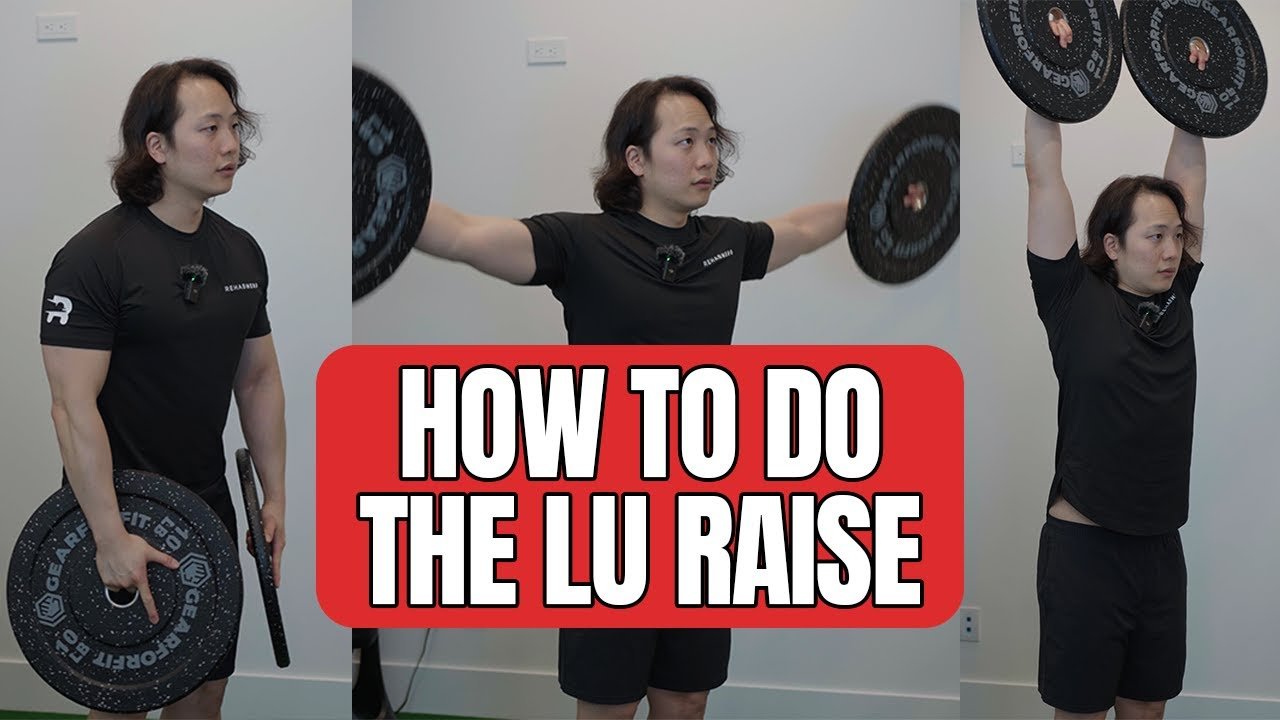
Here is a conservative example for an otherwise healthy lifter who can already perform the unloaded movement comfortably. It is an illustration, not a tested Lu-raise protocol. Twice in the first week, after your main lifting, try two sets of eight light repetitions. Rest about 60–90 seconds, extending that interval if you cannot reproduce the same control. Finish with repetitions still available.
Record the weight of each implement, the chosen endpoint and the repetitions in each set. Add one brief technique note, such as whether you maintained the same elbow bend. In week two, keep the load fixed and work toward ten repetitions per set. Keep the previous number if the higher target brings a swing or a shorter arc.
For week three, build toward twelve repetitions only if the movement remains comfortable and controlled. In week four, either repeat that work or use the smallest practical increase and return to eight repetitions. A move from a 2 kg dumbbell to a 3 kg one is a 50% load increase, so the next rack position may be too large a step. Remaining at the lighter load is a valid choice.
Change one variable at a time. If you add repetitions, slow the lowering phase and extend the endpoint in the same session, the next performance is difficult to compare with the previous one. Use a simple log such as “2 kg each, overhead arc, 10 and 10 reps, no torso swing.” The exact wording is unimportant; what matters is making the load and movement identifiable when you look back. If one side repeatedly loses control first, end the bilateral set there rather than pulling the weaker arm through with momentum. A coach can help adjust the exercise when a persistent difference makes the intended motion difficult.
Keep demanding overhead presses and technical barbell lifts before fatigue-producing accessory sets. If you use a few unloaded raises in a warm-up, distinguish that rehearsal from several hard sets. Count the rest of your shoulder work before adding more volume. The aim is a small, repeatable addition to training, with progression earned through control and consistency rather than a heavier pair at any cost.

Funny Gym Shirts & Workout Gear
Funny gym shirts, tanks, hoodies and workout gear for lifters who like training hard.

Dost Thou Even Press Hoodie
Show off your medieval humor in a laid-back “Shoulder Press” hoodie.

Lift Smart Brain Weight Plate Mind Muscle Connection 45 Sticker
Put “Lift Smart Brain Weight Plate” gym humor on your laptop, bottle, or gym gear.

Control Your Gains Stoic Greek God Marble Sculpture T-Shirt
Make gym days more fun with “Control Your Gains Stoic Greek God Marble” style.

Repetition Stoic Sigma : Meme & Greek God T-Shirt
Rep “Repetition Stoic Sigma” humor in and out of the gym.

Brain and Biceps Tee
Make gym days more fun with “Mind Muscle Perfection Brain and Biceps” style.

Gymhead Lifting Is On My Mind Skull Vest Tank Top
Your gym-day look, with a playful “Gymhead” twist.

Dumbbell Heartbeat Crewneck Pullover Sweater Workout Fa T-Shirt
Add a playful “Dumbbell Heartbeat” touch to your casual rotation.


Safety Practice Safe Sets Hooded Jumper Top Hoodie
Show off your bodybuilding humor in a laid-back “Gym Safety” hoodie.