Advertising disclosure: This page includes affiliate product links that may earn us a commission, as well as products from our own store.
Reverse Crunches: Curl the Pelvis, Control the Return and Build Better Repetitions
A reverse crunch is more than bringing your knees towards your chest. The useful movement is a controlled curl of the pelvis while the upper body stays supported. Swinging the legs can make the repetition look large without giving you the same task to practise.
Start with a version you can repeat comfortably, then judge the lift and the lowering together. You do not need a decline bench, ankle weights or a dramatic hip lift to begin. A clear setup and a consistent stopping point make progress easier to see than an impressive repetition count with changing technique.
1. Set up so the pelvis can move without the shoulders chasing it
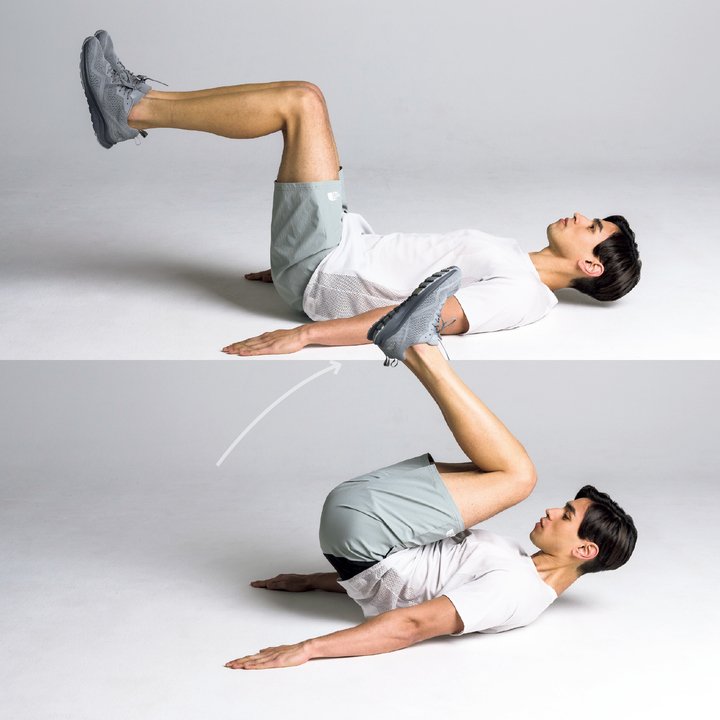
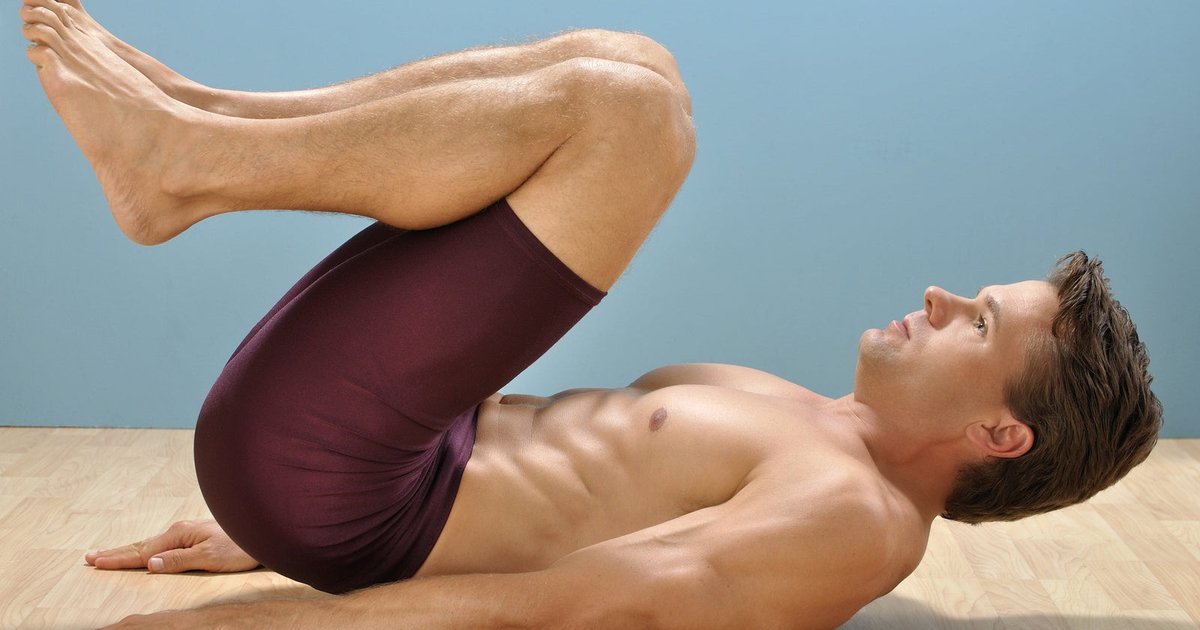
Lie on your back on a comfortable, stable surface with enough room for your legs. Bend the knees and organise the position before starting the set. The head and upper body should be supported rather than repeatedly reaching forward as though you were performing a conventional crunch.
A floor version can use the arms alongside the body. Another version uses a secure support behind the head. If you choose that option, confirm that the support will not move or tip when you pull against it. A loose weight on the floor is not automatically a reliable anchor simply because it is heavy.
Begin with the knees bent and the feet lifted to a manageable starting position. There is no prize for starting with the legs extended close to the floor if you immediately lose control. Choose a position from which you can initiate the pelvic curl without a preliminary kick.
Check your breathing before the first repetition. You should be able to organise the movement without holding one long breath through the entire set. If you are already bracing so aggressively that you cannot repeat the setup comfortably, reduce the difficulty and rehearse a smaller movement.
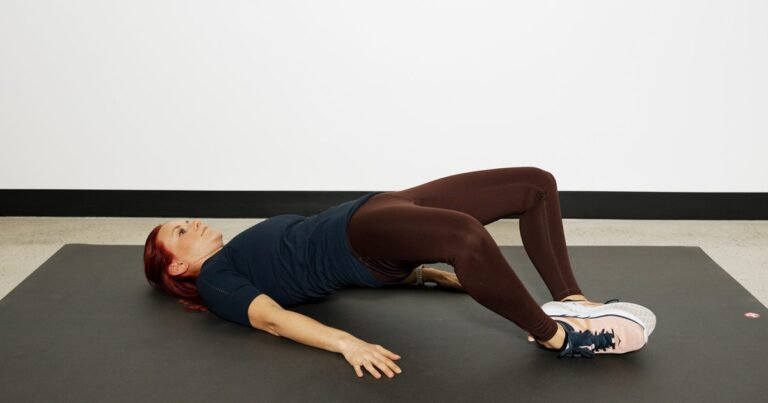
The two-position photograph illustrates a floor variation with bent knees. Use it to understand the change in pelvic position, not as a demand to match another person’s exact joint angles. Body proportions, available range and the version you choose affect how the exercise looks.
2. Make the hip curl the repetition, rather than the leg swing
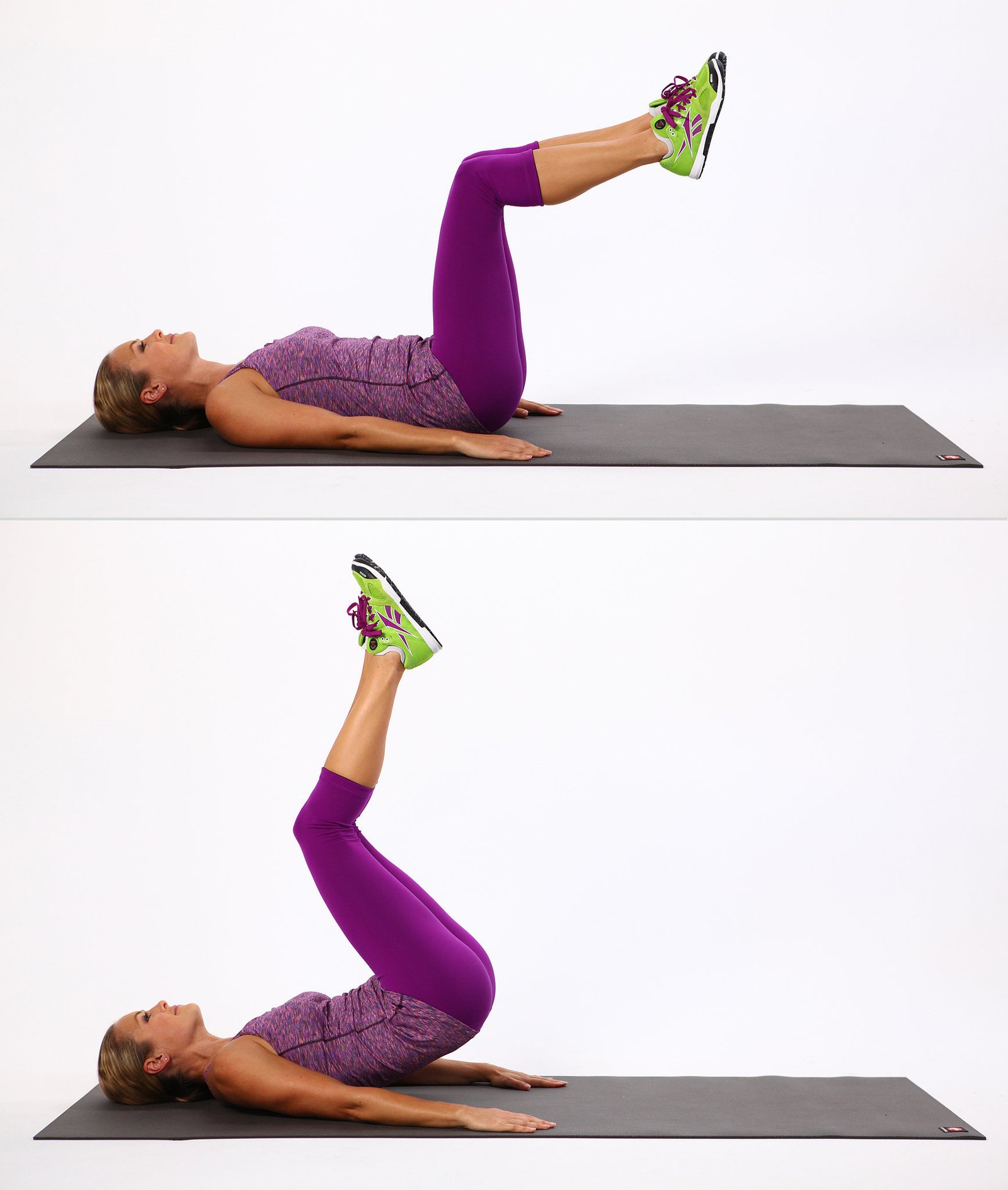
Bring the pelvis towards the ribcage by curling the hips up from the surface. The knees travel with that movement. Keep their bend reasonably consistent so that the repetition does not become a kick followed by a catch.
Think about lifting the hips a small, deliberate amount rather than throwing the feet towards the ceiling. The movement may look modest when performed slowly. That is acceptable. A large swing that moves the legs but leaves you unable to identify the pelvic curl is a different task.
Watch the first repetition before deciding how many to perform. Can you begin from a still position? Does the pelvis lift without a sudden push from the feet? Can you recognise the top position without rolling the weight onto the neck? Those observations are more useful than whether the set immediately produces a strong burning sensation.
The abdominal wall contributes to the curl, while the hips and legs also take part in the overall movement. Do not interpret the exercise name as proof that one isolated patch of the lower abdomen does all the work. Equally, raising the knees is not enough to establish that the desired curl occurred.
If you cannot distinguish the two actions, pause between practice repetitions. Reset the feet and knees, then try a smaller lift. A short side-view recording can help you check whether the pelvis actually moved, provided that filming does not interfere with the setup or other gym users.
3. Own the return instead of letting the legs pull you down
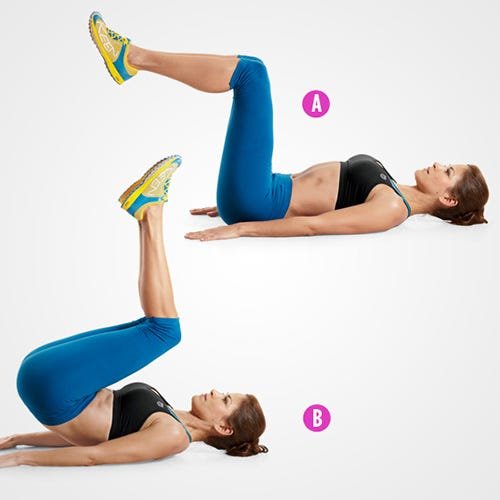
Lower the pelvis back to the surface deliberately. Then return the legs only as far as you can without losing the position you intended to maintain. Avoid finishing each repetition by dropping the hips and letting the lower back arch sharply.
The two stages matter: the curl up and the organised return. If the upward movement is controlled but the lowering becomes a quick fall, the next repetition starts from a different situation. Slow down enough to recognise the starting position again.
You do not have to lower the feet to a fixed height above the floor. Select a range that suits your current control, then record it consistently. Reaching farther on one repetition and shortening the next makes the total difficult to compare, even when the knee bend looks similar.
Use the first few repetitions as a reference for the rest of the set. If the legs begin swinging, the hips stop curling or the return becomes rushed, end the set or reset. Completing several clear repetitions is more useful practice than adding a final sequence that removes the movement you were trying to train.
A controlled return should not be confused with forcing an unusually slow tempo at any cost. Choose a rhythm you can repeat and breathe through. If discomfort appears, stop rather than assuming that a more intense abdominal exercise must be a better one.
4. Change the challenge without copying the most dramatic variation
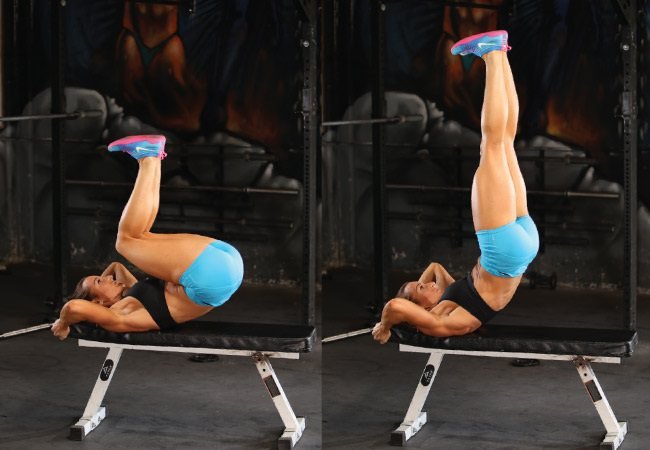
Keep the floor version long enough to learn what is improving. You might first repeat the same range more consistently, then add a few repetitions. Only after that is a harder setup worth considering. Increasing difficulty before the basic curl is clear can disguise the original problem.
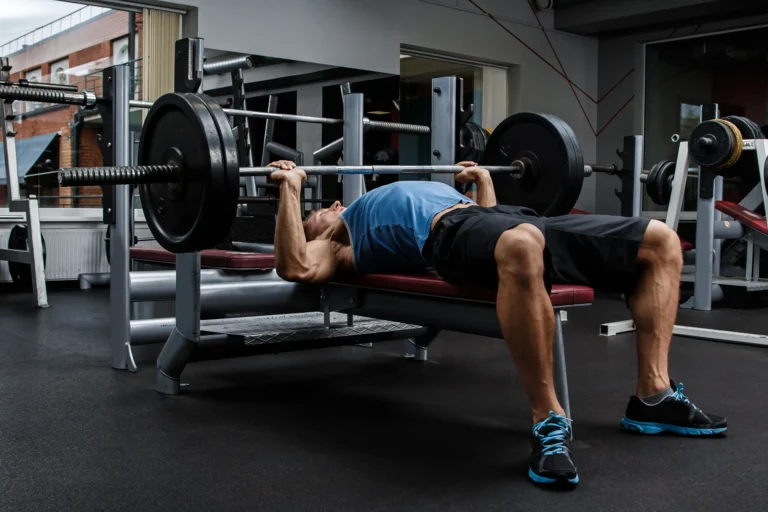
A bench changes the support surface, available hand position and space around the legs. Check its stability and adjustment locks before using it. The bench photograph shows a more extended-leg variation; it is a comparison, not a height target or an instruction to roll onto the neck.
If you change to a bench, establish the starting position again without chasing the range shown by another person. The fact that your legs can travel beyond the edge does not mean that you should use all that space. Keep the movement comfortable and retain control of the return.
More specialised glute-ham equipment can change the available range further. That makes it an advanced setup to learn, not a necessary purchase for reverse crunches. Do not improvise a deep extension position just because a machine has pads that appear to support it.
Also distinguish harder reverse crunches from different core exercises. A hanging knee raise adds grip and hanging-body control. A cable anti-rotation press asks you to resist turning rather than curl the pelvis. Either may have a place in a broader programme, but neither is simply the same repetition with a larger number attached.
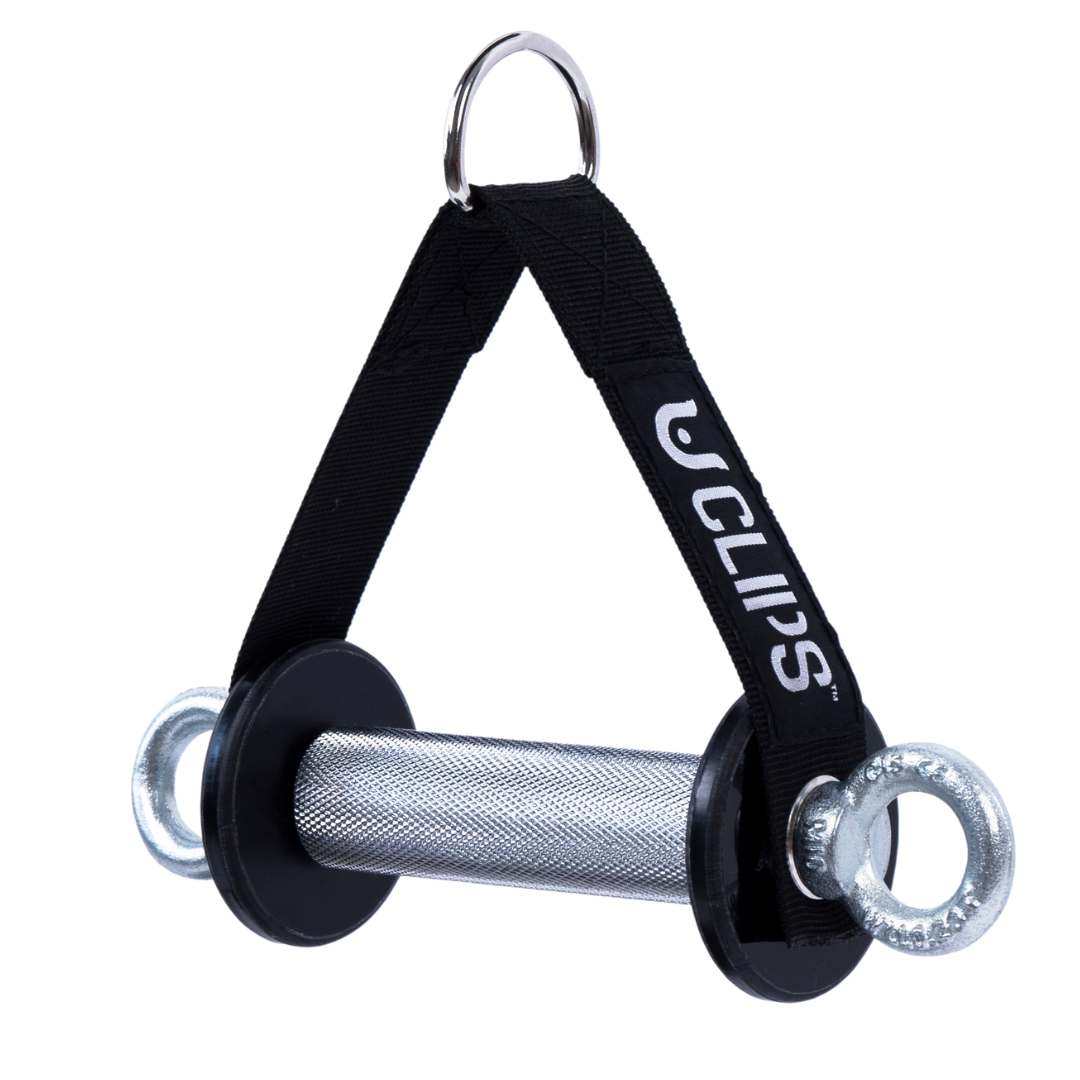
The equipment options below relate to supported bench variations and broader core training. Basic floor repetitions remain a complete exercise choice. Check the actual equipment’s instructions and fit; an adjustable bench, cable device or pull-up station does not guarantee that every variation is suitable for you.

Equipment Worth Exploring
Explore equipment, accessories and gear from our carefully selected range.


FID Bench MAX
Adjustable bench offering flat, incline, and decline positions + adjustable headrest.


Multi Bench MBX-650 2.0
Adjustable multi-bench with roller adjustment, 15 backrest positions and accessory mounts.



Glute Ham Developer GHD-820
Adjustable glute-ham developer with contoured pads and a fold-out knee support.

Power Tower
Freestanding pull-up and dip station with adjustable handles for bodyweight training.
VOLTRA
Compact digital cable trainer with smooth, adjustable resistance.
5. Use a repeatable practice block and record what counts
Choose a small amount of work that fits your existing training. An illustrative starting experiment is two sets of six to ten controlled repetitions on two days in the week, with enough rest to reproduce the movement. This is a practical trial of your setup, not a research-proven universal prescription.
If six repetitions are not controlled, use fewer. If ten are easy, first check that the hip curl and return are still visible before adding more. Avoid treating the upper end of a suggested range as an obligation that overrides the movement standard.
Record the version, repetitions and one useful observation. “Floor, bent knees, eight controlled repetitions; final return rushed” tells you what to work on next. A bare total of eight does not distinguish a consistent set from one that gradually changed into leg swings.
Keep other core work in perspective. Reverse crunches train a movement pattern; they do not need to replace every plank, carry or anti-rotation exercise. Select exercises for the tasks you want to develop rather than collecting variations until the session becomes too long to repeat.
Judge progress across several exposures. A stronger burning sensation, a sweatier session or a more dramatic video is not the only way to improve. Better control, a repeatable range and a manageable addition to your week are meaningful results. Keep the exercise you can perform well, and progress the challenge when the existing version is clearly established.

Bodybuilding Shirts & Workout Gear
Bodybuilding shirts, tanks and gym gear for lifters chasing muscle, size, symmetry and the pump.

Meme I Have Abs-Olutely No Idea What I'M Doing T-Shirt
For laid-back days and bodybuilding humor: “I Have Abs-olutely No Idea What I'm Doing”.

Check Out My Six Pack Tacos – Taco Six Pack Meme Decal Sticker
Stick a little “Check Out My Six Pack Tacos” humor on your favorite gear.

Be Stronger Than Your Excuses – Motivational T-Shirt
Rep “Be Stronger Than Your Excuses” humor in and out of the gym.

One More Rep Shirt: Motivational & T-Shirt
Make gym days more fun with “One More Rep” style.

Safety Practice Safe Sets Sweater Jumper T-Shirt
Show some gym-day personality with “Gym Safety”.

Consistency Is Key Stoic Greek God Marble Sculpture T-Shirt
Make gym days more fun with “Consistency is Key Stoic Greek God Marble” style.

Lift Eat Sleep Repeat Meme Sweater & T-Shirt
Bring “Lift Eat Sleep Repeat” humor to your everyday gym style.

Lift Eat Repeat – Weightlifting & – Meme Bros & T-Shirt
Make gym days more fun with “Lift Eat Repeat” style.


Just Lift It Shirt – Meme & Gymbros Top T-Shirt
Make gym days more fun with “Just Lift It” style.