Advertising disclosure: This page includes affiliate product links that may earn us a commission, as well as products from our own store.
Renegade rows can train your back and core in the same set, but the exercise only works as intended when you resist twisting rather than use it to yank a heavy dumbbell. This guide explains how to set your stance, pull with control, choose stable weights, manage wrist discomfort and build a six-week progression without confusing a plank challenge with a heavy back workout.
What renegade rows train: back, trunk and anti-rotation
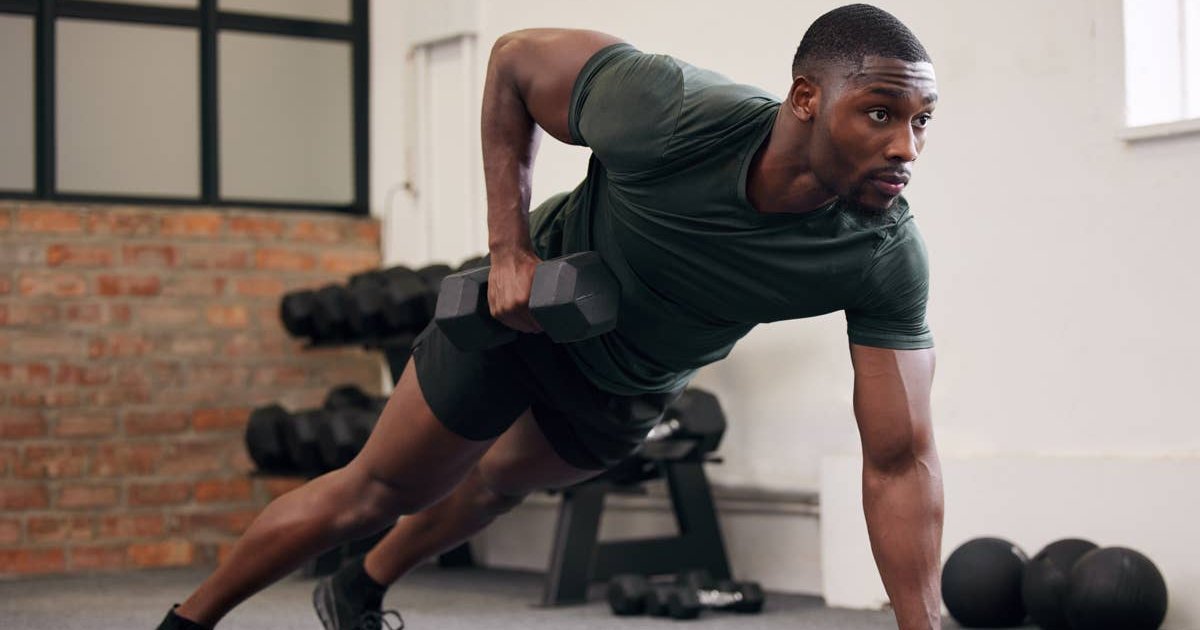
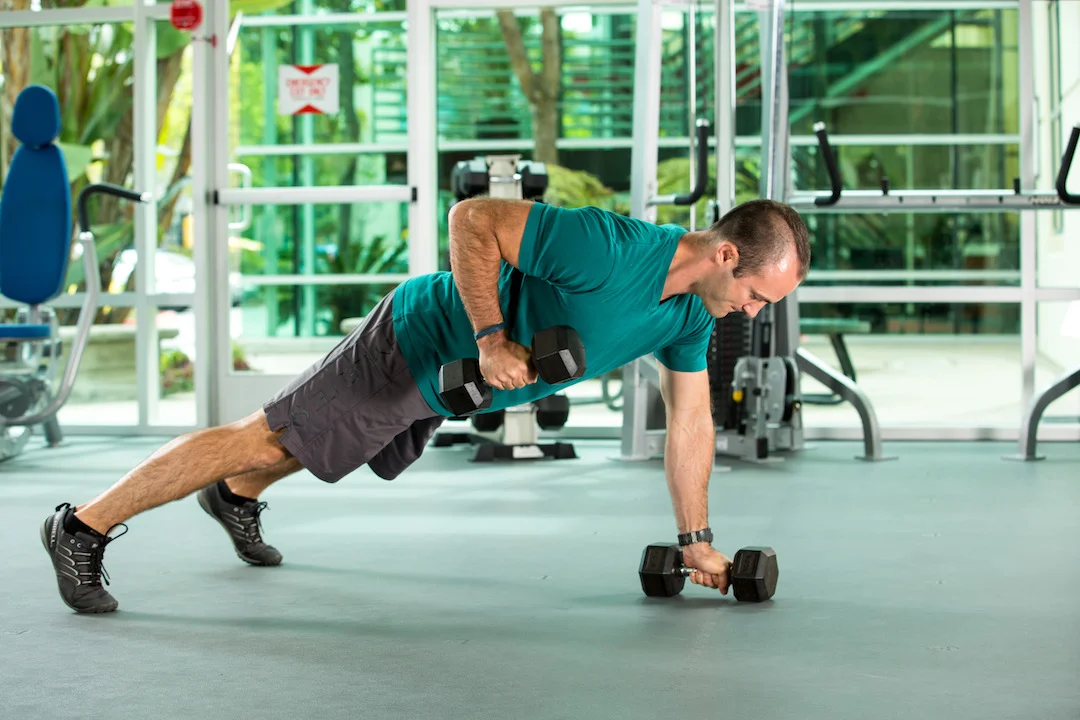
The renegade row is a one-arm dumbbell pull performed from a high plank. Its unusual feature is what happens between the pulling repetitions. Every time one hand leaves the floor, your body must prevent the trunk from turning toward the lifting side. The support arm, abdominal wall, hips and feet work together to keep a stable platform. That makes this a combination of a row and an anti-rotation drill, rather than simply a harder version of a conventional dumbbell row.
The pulling side recruits the lats, upper-back muscles, rear shoulder and elbow flexors. The other shoulder, triceps and chest stabilize the planted arm while the obliques and deeper abdominal muscles help resist unwanted rotation. The glutes and legs are not spectators: a loose lower body makes the plank harder to control. All of these roles matter, but they do not mean every muscle receives an equally strong muscle-building stimulus.
For muscle size, a supported dumbbell row or machine row usually allows greater back-specific loading because you are no longer restricted by the balance of your supporting arm. If your goal is bigger lats, retain conventional rows as the main work and use renegade rows to train coordination, trunk stability and upper-body endurance. If your goal is learning to control a shifting load, the renegade row can be a productive accessory on its own.
Notice whether the torso twists more on one side. That difference tells you where your technique needs attention, not that you have a diagnosed imbalance. Begin with a load light enough to make the two sides look similar before you increase the dumbbells.
Build a stable high plank before you move a weight
Select a pair of stable dumbbells and place them on a nonslip surface. Hex dumbbells often resist rolling better than round ones, but the handle, end caps and overall shape must still support your weight securely. Check both dumbbells before you start. Some adjustable weights are not intended to be used as push-up handles, even when their ends look flat; follow their manufacturer’s instructions.
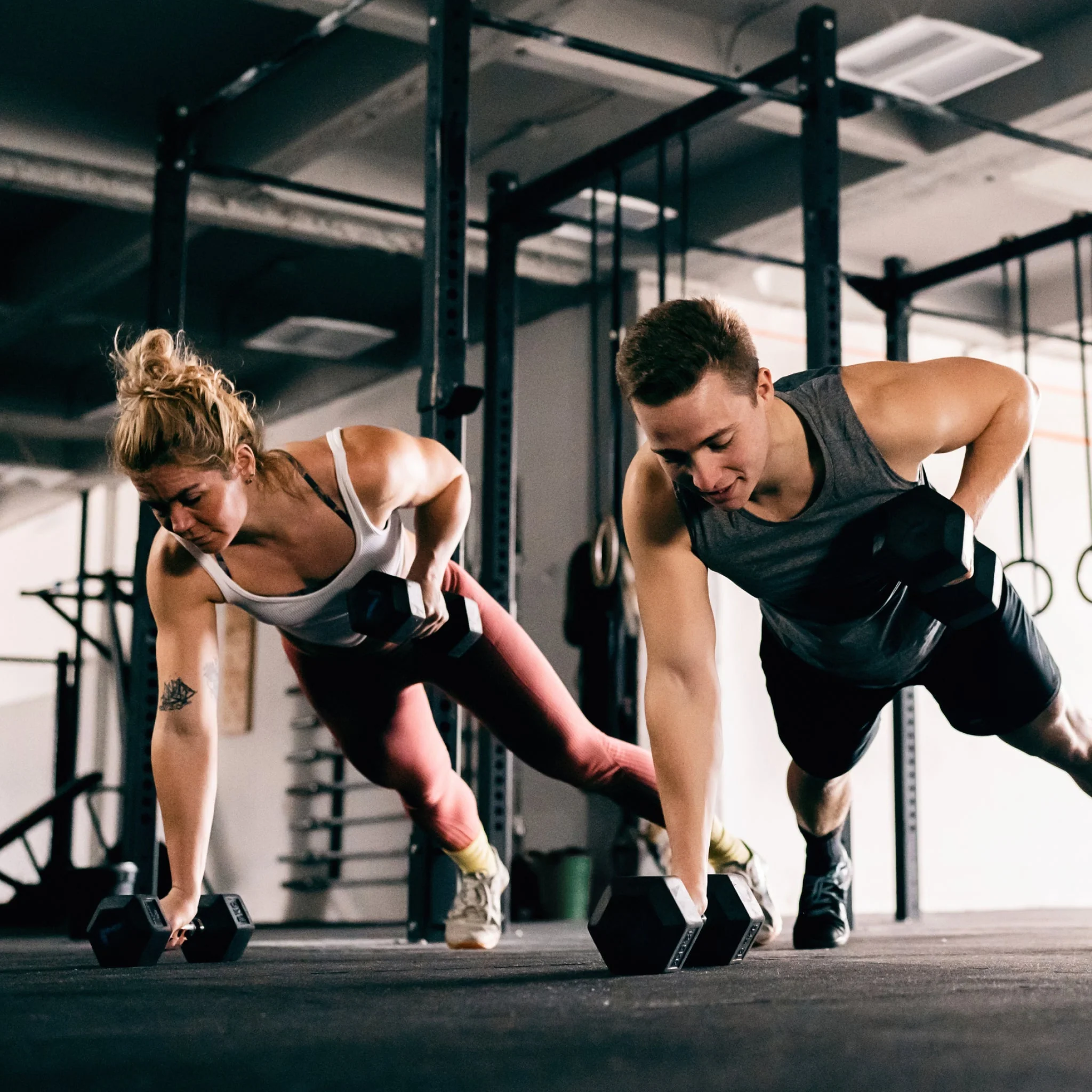
Place your shoulders roughly over the handles, extend your legs behind you and spread your feet at least hip width, often a little wider than your ordinary push-up stance. The wider base makes the first single-arm support easier. Brace your abdomen, gently squeeze the glutes and keep a straight, comfortable line from head to heels. Look toward the floor rather than at a mirror ahead.
Take a calm breath and push both dumbbells into the floor. You should be able to hold the position without the lower back sinking, the hips rising high, or the shoulders shrugging toward the ears. Then transfer a small amount of pressure toward one hand before attempting the row. If that movement creates a major twist, use a plank shoulder tap or hands-on-floor alternative first.
- Confirm both weights are stable under downward pressure.
- Stack the support shoulder above its hand without reaching too far forward.
- Spread the feet enough to keep the hips approximately level.
- Brace the trunk and glutes without holding your breath for the entire set.
- Try a slow test repetition on each side before beginning working reps.
The goal is a repeatable setup, not a universally prescribed foot distance. Longer limbs, wrist range and dumbbell geometry can change the most comfortable position.
Pull toward your hip while resisting the twist
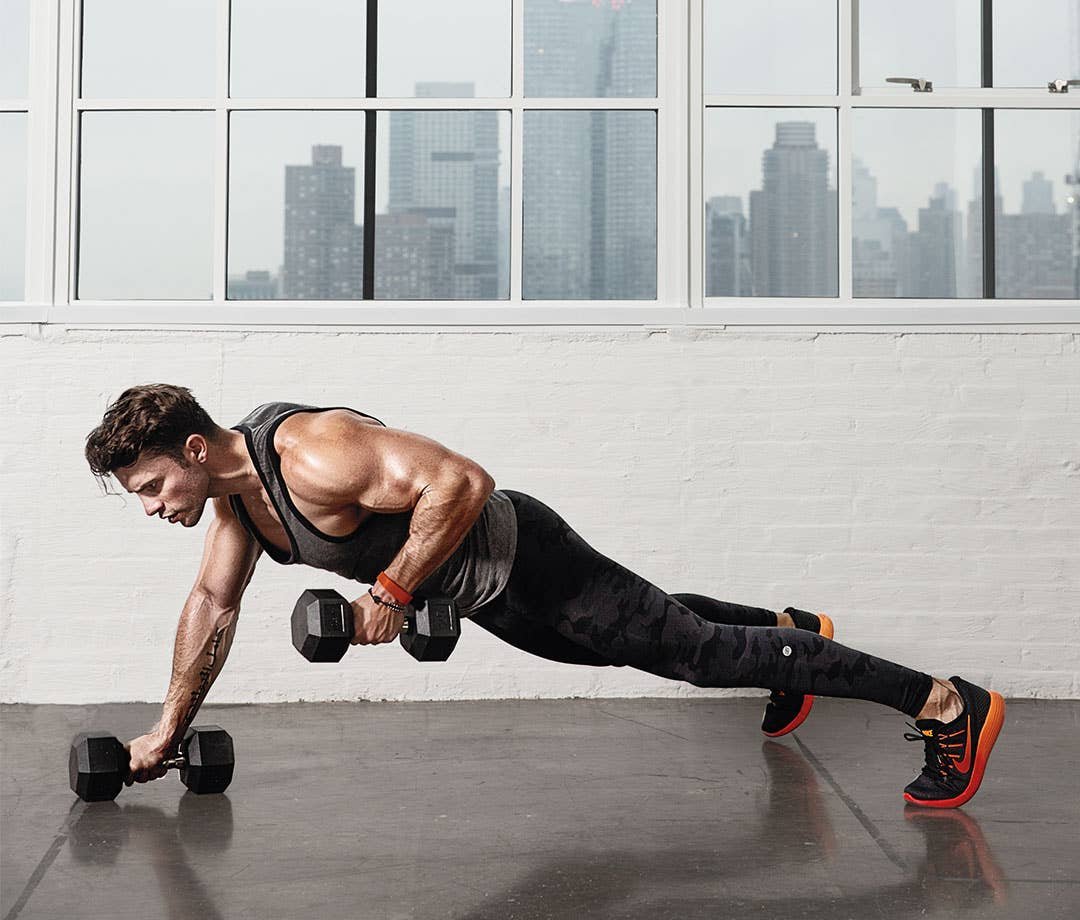
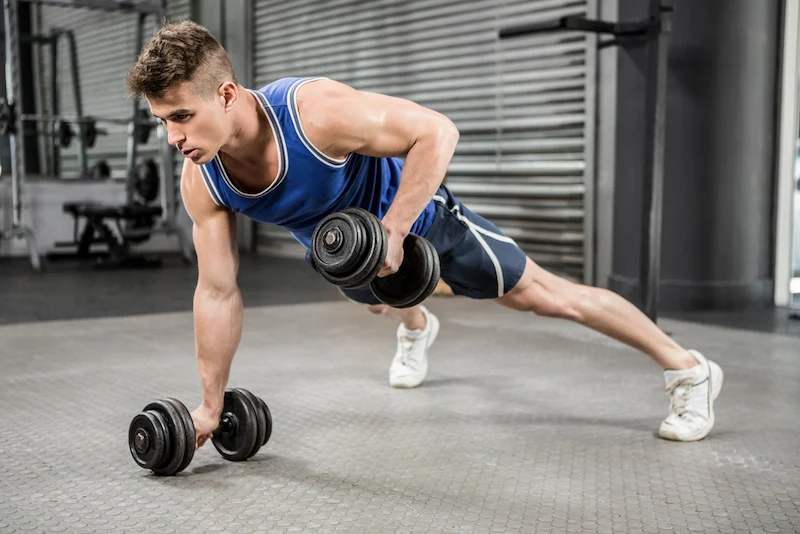
While the left hand presses firmly into the floor, pull the right elbow back toward your lower ribs or pocket. Think about moving the elbow rather than lifting the dumbbell straight toward the ceiling. The weight may come close to the waist, but it does not need to touch your torso to be a good rep. The working shoulder blade should be allowed to move naturally as the arm draws backward.
Keep the belt buckle and chest facing toward the floor. Small shifts in pressure are inevitable, but you should not deliberately rotate the chest open to bring the weight higher. Pause briefly, then lower the dumbbell under control until it rests quietly on the floor. Rebuild your plank before performing the left-side repetition. An unhurried rhythm makes errors easy to detect.
If the planted shoulder seems to collapse, actively push the floor away while keeping your elbow comfortably extended. If the lower back begins to arch, reduce load, widen the feet or end the set. A practical target for a learning set is five to eight clean rows on each side, not an arbitrarily high total.
Count per-side repetitions explicitly in the training log: six right and six left is twelve individual pulls. It is also acceptable to take a short reset between sides; an uninterrupted alternating rhythm is not worth abandoning the anti-rotation challenge. Focus on stable weight transfer and a controlled lowering phase, not how fast you can finish the set.

Equipment Worth Exploring
Explore equipment, accessories and gear from our carefully selected range.

Rubber Hex Dumbbells
Rubber-coated hex dumbbell pairs with a stable shape for home and commercial strength training.





FID Bench MAX
Adjustable bench offering flat, incline, and decline positions + adjustable headrest.
The mistakes that make the movement look easier than it is
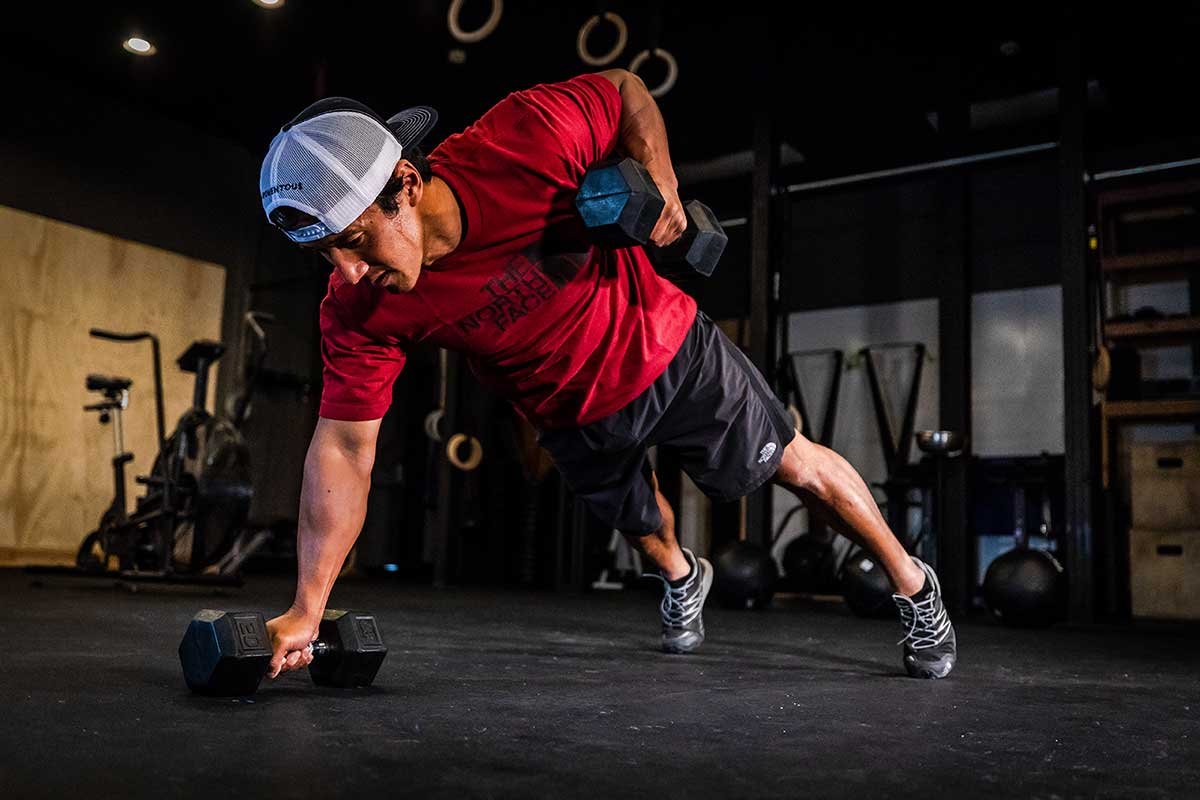
Twisting to chase a heavy weight. When the pulling-side hip shoots upward, the body helps swing the dumbbell. You may move more weight while getting less of the anti-rotation challenge that makes this exercise valuable. Choose a load that lets you keep the hips relatively quiet.
Starting with feet together. A narrow stance can become an advanced progression, but it is a poor learning default. Spread your feet and compare two slow repetitions. A tiny setup change often reduces unnecessary wobbling without changing the dumbbells.
Letting the pelvis sink. A collapsed plank makes the movement uncomfortable and harder to reproduce. Tighten the glutes and ribs, lower the load, or reduce the set length. Do not try to power through sharp back or shoulder pain; persistent symptoms warrant appropriate clinical advice.
Rushing the lowering phase. Slamming the dumbbell onto the floor creates a noisy reset and can shift the other weight. Lower it with control, find the support position and then row the other arm. A pause at the bottom is preferable to a frantic alternating sequence.
Using the pulling arm as a measuring stick for back growth. You cannot necessarily challenge the lats heavily while one shoulder and the trunk must also stabilize the entire body. Use a heavier supported row as your main back exercise if muscle growth is the priority, then do renegade rows for quality work.
Filming a set from behind and slightly to one side makes hip rotation and weight placement visible. Compare the first two repetitions to the last two and stop before the movement changes dramatically. Clean form is something you can log and progress.

Bodybuilding Shirts & Workout Gear
Bodybuilding shirts, tanks and gym gear for lifters chasing muscle, size, symmetry and the pump.


Strong Back Bodybuilder | Meme Sweater | The Simpsons W T-Shirt
Keep things casual with a little “Strong Back Bodybuilder” attitude.

Big Back SpongeBob Bodybuilders Back Day Vest Tank Top
Show some personality between sets with “Big Back”.

Demon Back Big Back Bodybuilders & Meme Hoodie
Stay casual and show some lifting attitude with “Demon Back”.

Lat Man Big Back – Decal With Huge Lats – Meme Back Sticker
Bring “Lat Man Big Back” attitude to your water bottle or laptop.

Shirt Pull Day – Back & Biceps Meme Top T-Shirt
Heavy lifts, good laughs, and a little “Pull Day Graphic” energy.

Back Sabbath Back Day Heavy Metal Back Training Workout Tank Top
Train hard, laugh a little, and rep “Back Sabbath Back Day”.


Nice Traps Big Back Tee
Heavy lifts, good laughs, and a little “Nice Traps Big Back” energy.

Hardcore Gains Gym | Funny No Pain No Gain Workout Swea T-Shirt
For laid-back days and lifting humor: “Hardcore Gains”.
Dumbbells, wrist comfort and a small safe training area
Renegade rows need surprisingly little equipment: two dumbbells, enough floor space for a full plank and a surface that does not slide. Fixed rubber hex dumbbells are a practical option, because the flat ends generally resist rolling. Rounded or tall adjustable weights can shift under load, and some selectors or internal mechanisms may not be rated to hold a person’s body weight. Do not assume all adjustable dumbbells are safe to stand on.
With your hands gripping a handle, the wrist sits in a different orientation than when your palms lie flat. That may feel easier for some people, but it can also be uncomfortable under prolonged body-weight support. If the pressure causes wrist pain, place the supporting hand on the floor and pick up only the rowing dumbbell. The transition takes a little longer but preserves a useful single-arm plank challenge.
A firm nonslip mat can be helpful where it meets the knees in a kneeling regression. A very soft mat directly under both weights can make them tilt or roll, which is the opposite of what you want. Test the floor and dumbbells with both hands before transferring weight to one side.
Kettlebells change the exercise’s geometry and are not an automatic substitute. Their narrow bases and raised handles can increase instability; use them only when the equipment is designed to support you safely and you already control the movement. A bench is not required for the renegade row but is often useful for heavier rows that better isolate the back.
Equipment Worth Exploring
Explore equipment, accessories and gear from our carefully selected range.

Cast Iron Kettlebells
Textured cast-iron kettlebells for swings, squats, carries, and full-body training.


T-Bar Row Attachment
Welded barbell attachment that connects a D-handle bar for landmine and T-bar rows.

GymPin Barbell Row Handle
Heavy-duty handle attachment for barbell, landmine and T-bar rows.

Linear Row LRX-750
Dual-sided rowing machine for supported rows, bent-over rows and varied pulling movements.

Lateral Row Machine LRM-720
Rowing machine with independent lever arms, an adjustable seat and chest support.


VForce Lat Tower
Wall-mounted cable tower with pivot arms and adjustable 1:1 or 2:1 pulley ratios.
VOLTRA
Compact digital cable trainer with smooth, adjustable resistance.
Regressions and alternatives for core control or back growth
If you cannot maintain a plank while unloading one hand, start with plank shoulder taps. Widen the feet, raise one palm and lightly touch the opposite shoulder. Resist rolling your hips and use slow deliberate repetitions. This develops the weight-transfer skill without introducing a dumbbell pull.
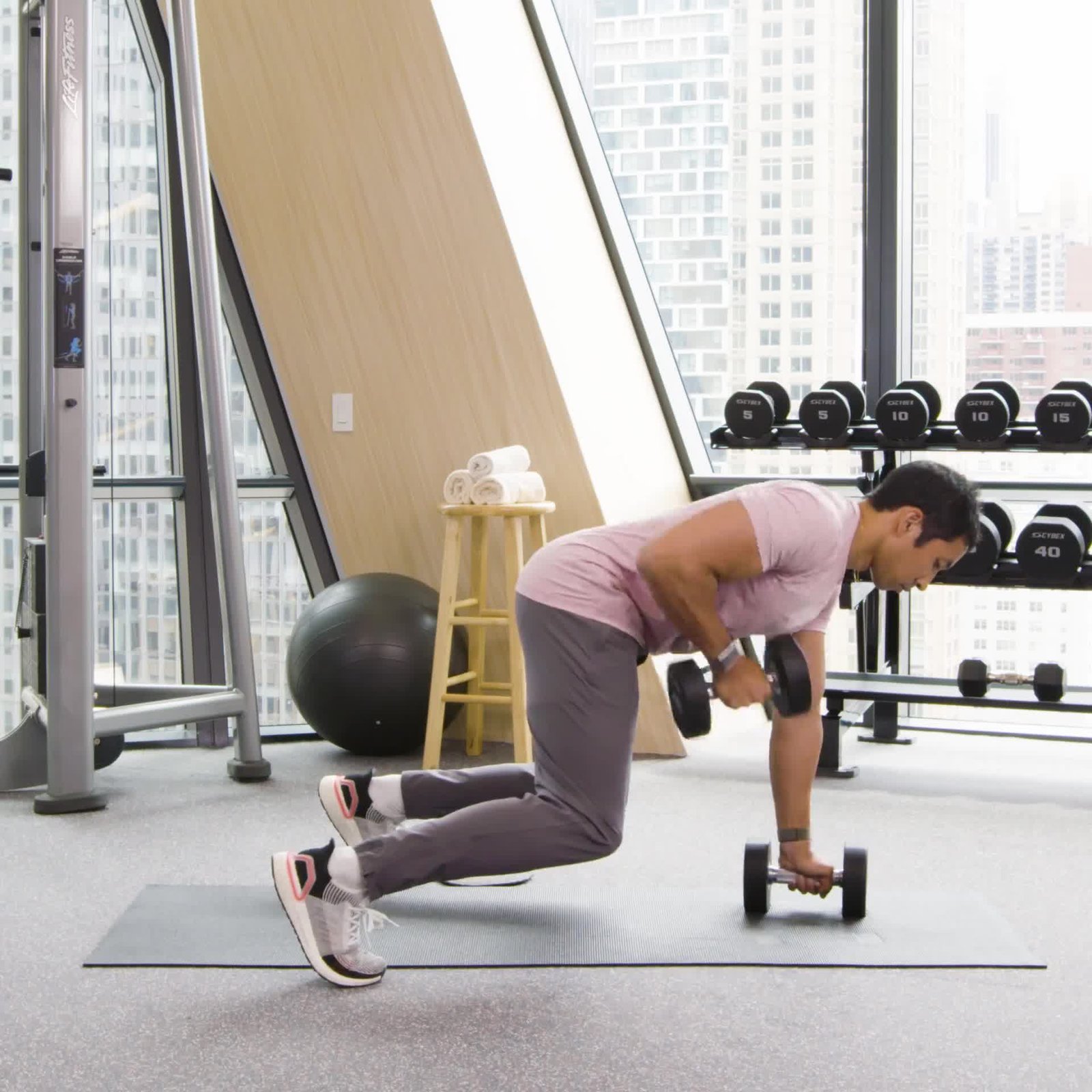
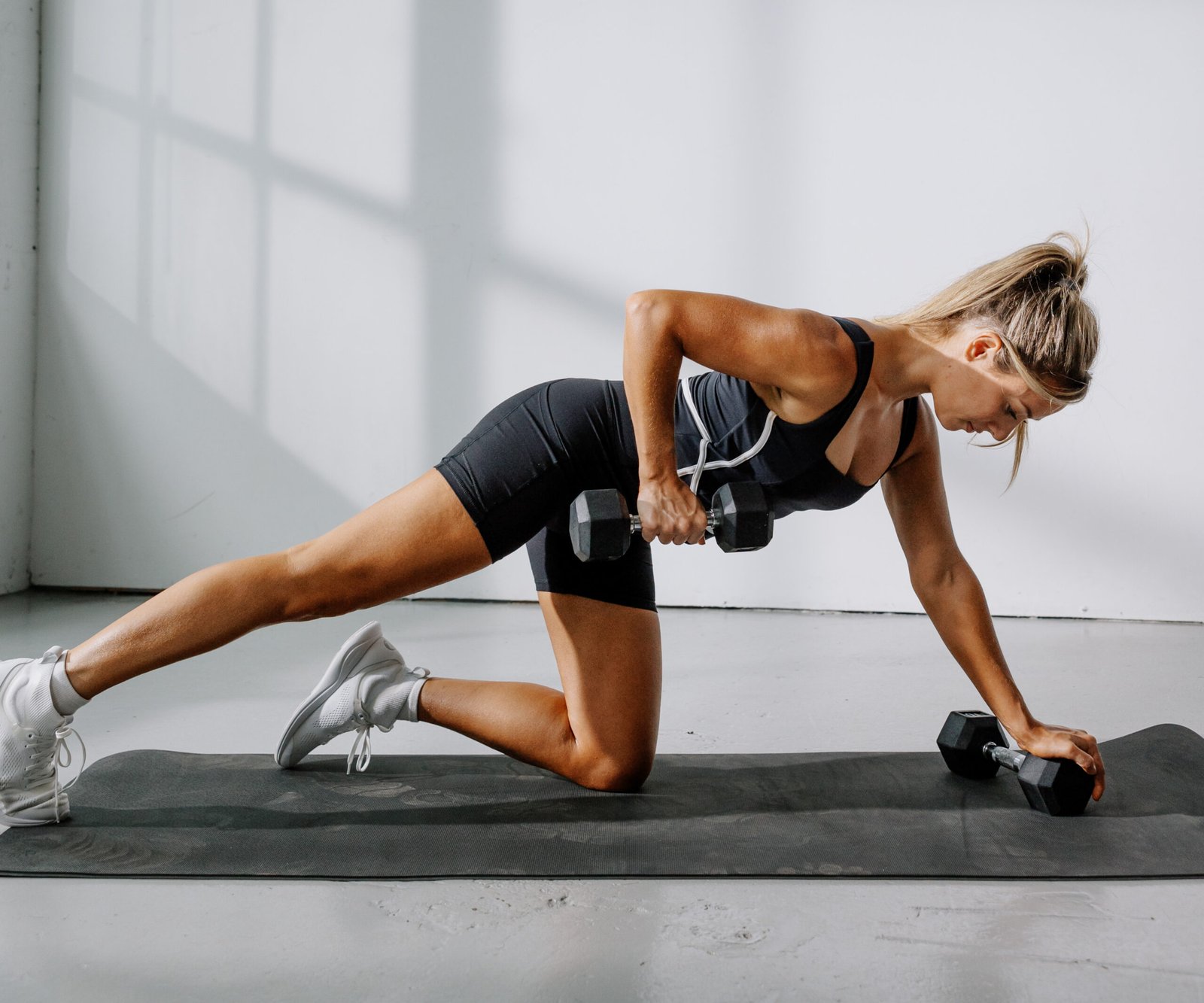
A bear plank row starts with bent knees hovering just above the floor. The shorter lever can make it easier for some lifters to control the lumbar spine, although it remains a demanding position for the supporting shoulder. Use light dumbbells, a stable base and short sets. It is an alternative, not a magical cure for every shoulder or wrist complaint.
For building the lats and upper back more directly, use a one-arm dumbbell row with your free hand or knee supported on a sturdy bench. You can also perform chest-supported rows, cable rows or a well-set-up machine row. These are not exact substitutes for the anti-rotation aspect, but they are often better choices when the goal is applying a high level of pulling tension.
Advanced trainees can combine a controlled push-up with alternating rows. This increases the total pressing and trunk demands, but fatigue makes technical errors more likely. Master the plain row first. If all you want is a short core finisher, keeping the simple version crisp is often better than stacking more movements into one complicated circuit.
There is no obligation to keep this exercise if your wrist, balance or equipment makes it consistently unpleasant. Choose the variation that lets you train your intended quality reliably, and keep heavy rowing separate where useful.
Funny Gym Shirts & Workout Gear
Funny gym shirts, tanks, hoodies and workout gear for lifters who like training hard.

Back To The Sci-Fi Meme Decal Water Bottles & Gear Sticker
Stick a little “Back to” humor on your favorite gear.

Dumbbell Heartbeat Decal for Water Bottles Laptops Gym Sticker
Bring “Dumbbell Heartbeat” attitude to your water bottle or laptop.

The Empire Lifts Back – Star Wars Back Day Meme Pullove T-Shirt
Add a playful “The Empire Lifts Back” touch to your casual rotation.


Funny I Love Gym Valentine's Day – Gym Lovers Workout H Hoodie
Show off your gym-girl humor in a laid-back “I Love Gym Valentine's Day” hoodie.


Dumbbelldore | Wizard Workout | Harry Potter T-Shirt
Show some bodybuilding attitude with a playful “Dumbbelldore” tee.

Shirt – Liftionaire Golden Dumbbell Gymbros & Gains T-Shirt
Make gym days more fun with “Liftionaire Golden Dumbbell” style.

Meme Pink Dumbbells Top & Gymbros T-Shirt
Rep “Pink Dumbbells” humor in and out of the gym.

Back In Gym Back In Black Album Cover Parody AC/DC Heav Sticker
Bring “Back In” attitude to your water bottle or laptop.
A six-week renegade-row plan with measurable progress
Train the exercise twice weekly, preferably after your main strength movements or in a short dedicated core block, with at least a day between sessions. The sample below prioritizes controlled repetitions rather than fatigue at any cost. It is a practical progression for someone comfortable with a high plank, not a promise of specific muscle-growth outcomes.
| Weeks | Sets × reps per side | Main focus |
|---|---|---|
| 1–2 | 2 × 5–6 | Find a stable stance and quiet hips |
| 3–4 | 3 × 6–8 | Add clean reps without changing torso position |
| 5 | 3 × 8 | Pause briefly at the top of each pull |
| 6 | 3 × 8–10 | Earn a small weight increase only if all reps stay crisp |
Rest around one to two minutes between sets, longer if your support arm or trunk is still unstable. Avoid repeatedly taking the plank position to failure. Stop the set when the weight starts pulling your pelvis into a pronounced rotation or when the supporting wrist becomes the limiter.
Record the weight, reps on each side, foot position and a short technique note. A successful progression might mean the same dumbbells feel smoother and more controlled, not necessarily that the load rises every week. Use an occasional rear-quarter video to compare hip position across sessions.
On a back-growth day, perform your heavier supported rows before the renegade rows. On a conditioning day, pair a small number of quality renegade reps with lower-body or aerobic work that does not immediately exhaust the supporting shoulders. Either approach lets you benefit from the movement without confusing total-body fatigue with effective back training.
At the six-week checkpoint, ask whether you row equally well on both sides and whether you can hold a stable plank while unloading one hand. If the answer is yes, progress carefully or maintain it as an accessory. If not, revisit a lighter weight or a bear-row regression; progress should make the movement more repeatable, not just more dramatic.