Advertising disclosure: This page includes affiliate product links that may earn us a commission, as well as products from our own store.
Cottage cheese can make a useful protein-containing meal without cooking, mixing a shake or opening several different ingredients. The difficult part is often deciding what belongs around it. A spoonful over toast, a large fruit bowl and a savoury lunch can all start with the same tub, yet finish as very different meals.
For lifters, the practical questions are straightforward: which texture will you actually eat, how much goes into the bowl, and what do the toppings contribute? Treat cottage cheese as an ingredient with its own label, rather than a promise of muscle gain or weight loss. That approach leaves room for a meal you enjoy and can repeat.
Choose the cottage cheese you actually enjoy
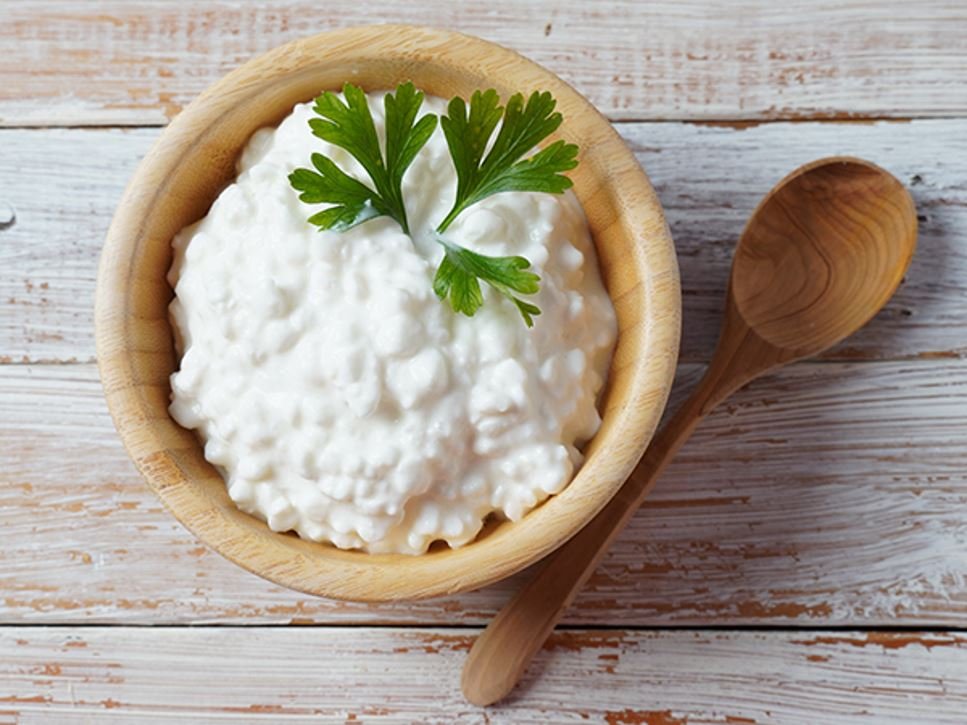
Cottage cheese is a fresh cheese made by separating milk into curds and whey. The curds are processed and drained, and the finished product may include salt, cream or other ingredients. Those differences help explain why two tubs can taste and feel noticeably different even when the front labels look similar.
Start with texture. Small curds, large curds and whipped versions offer different eating experiences. If you dislike distinct curds, a smoother product may be more useful than buying the same uncomfortable texture because it has an attractive protein number. Try a smaller tub before committing to a large one.
Fat percentage is another choice, rather than a universal ranking. Fat-free, 1%, 2% and fuller-fat versions can differ in energy, fat and mouthfeel. Compare the actual products on the shelf. A lower-fat label does not tell you whether the finished bowl, with its toppings included, will suit your needs better.
Plain cottage cheese gives you control over the flavour. A ready-flavoured tub may be convenient, but check whether sweetness comes with added sugar and whether the stated serving is the amount you would eat. Some products contain live cultures; do not assume that every tub does, or use that feature to predict a particular digestive benefit.
If lactose content matters to your own food choices, look for a specifically labelled lactose-free option rather than guessing from the word cheese. For an ordinary shopping decision, a useful first comparison is simply plain versus flavoured, texture, fat percentage and the ingredient list. Choose the version that will become food, rather than sit untouched in the fridge.
Count the portion you put in the bowl
The nutrition panel describes a stated amount. Your bowl may contain more or less. Check whether the numbers apply to 100 g, a particular serving weight or the entire container before using them to plan a meal. A serving size is a labelling reference, not an instruction about how much you personally must eat.
Here is an illustrative calculation, not the nutrition of the photographed bowl or a specific brand. Imagine a cottage cheese with 12 g of protein and 90 kcal per 100 g. A 200 g portion supplies 24 g of protein and 180 kcal before toppings. A 150 g portion supplies 18 g and 135 kcal. The calculation changes when the label changes.
A kitchen scale can make the first few portions easier to understand. Put the empty bowl on it, zero the display and add the cottage cheese. You do not need to interpret the apparent size of curds, the depth of a spoon or a photograph to estimate the amount. Once you know what your usual portion looks like, you have a more useful reference.
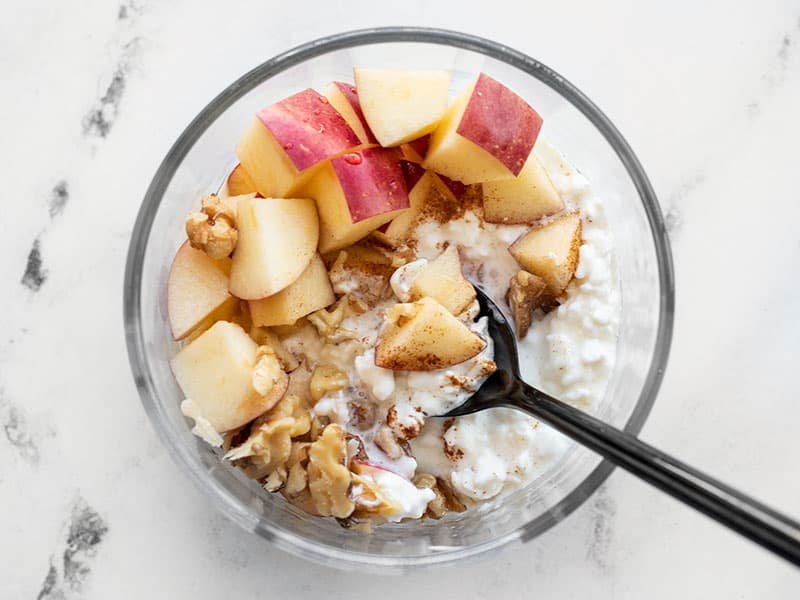
Keep the cheese and topping calculations separate. Apples, walnuts or cereal do not become part of the dairy label because they share a bowl. Our guide to serving sizes and per-100 g food-label maths explains how to keep those comparisons consistent when packaging uses different reference amounts.
Consistency matters more than claiming an impressive number. If you alternate between weighing the cheese alone and estimating a finished mixed bowl, your records describe different things. Pick a method you can repeat and label any calculation clearly enough that tomorrow’s breakfast can be compared with today’s.
Make sweet toppings earn their place
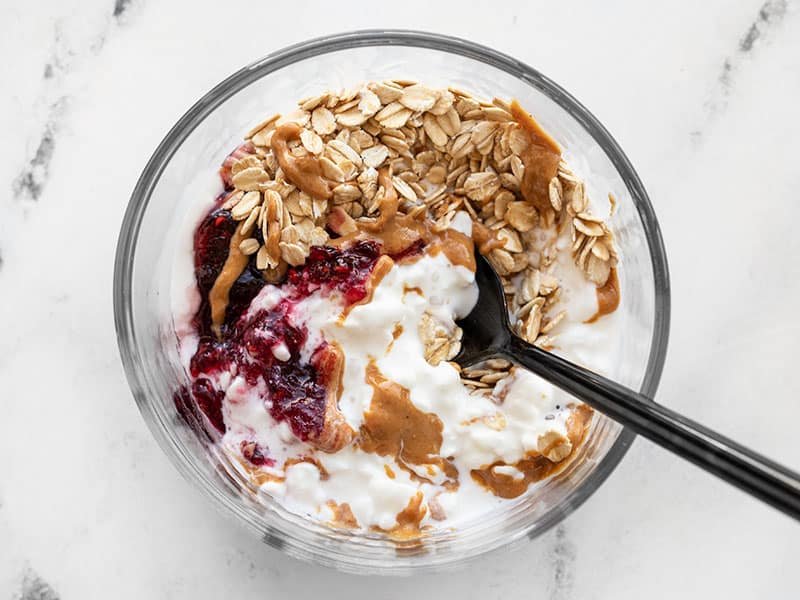
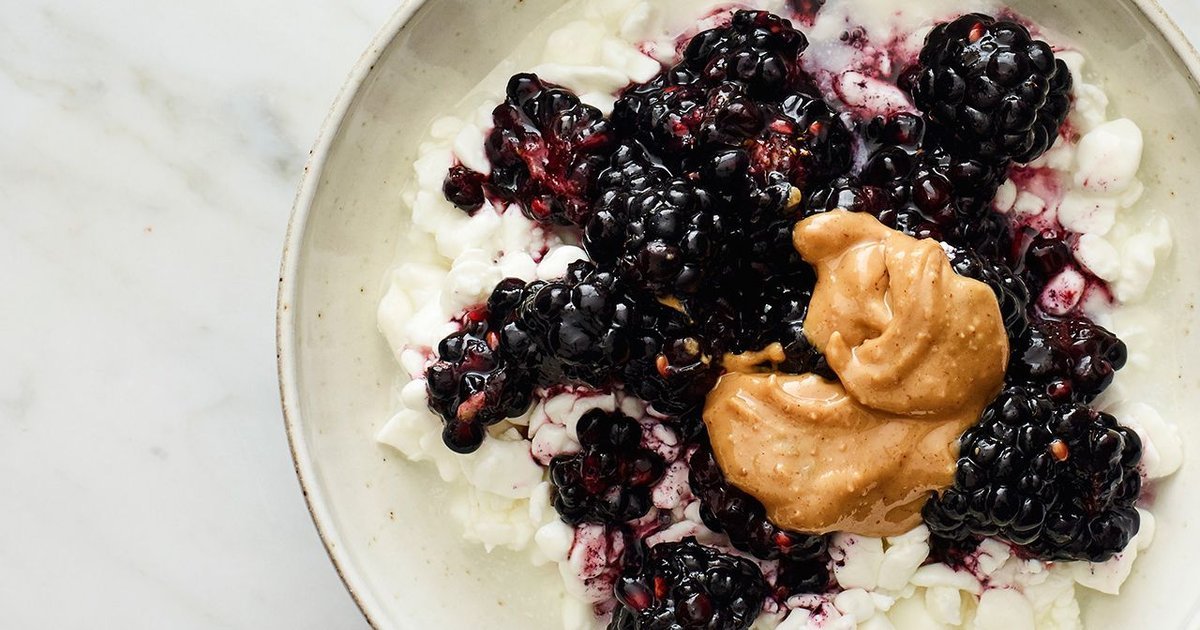
Fruit can make the tangy base more appealing. Apple pieces add crunch; berries add a different texture and flavour. Peanut butter, nuts, oats, cereal and jam offer other directions. The useful question is what you want the topping to do: add sweetness, crunch, more food energy or simply variety.
Begin with a cottage cheese portion you already understand, then choose one or two additions. For example, fruit plus a measured amount of nuts creates a different bowl from fruit plus oats. Neither needs a health halo or a guilty label. They are different combinations, and their portions determine the finished meal.
Peanut butter and jam can be enjoyable together, but spoon size is an unreliable unit. If you track the meal, measure the amount you actually use and use each product’s label. Adding several toppings because each looks small can make the finished bowl much larger than the plain base you originally planned.
Check sweetness at the end. A sweetened dairy base, jam and a sweet cereal may duplicate the same job. You might prefer plain cheese with one sweet topping, or fruit with a little cinnamon. Start with less, taste it and add more if wanted. This is a way to control the flavour, rather than a rule that sweetness must be removed.
For busy mornings, decide the combination before opening every cupboard. Keep crunchy ingredients separate until you are ready to eat if you prefer their original texture. You can repeat the same base portion while changing the fruit or crunch, giving breakfast some variety without rebuilding the entire calculation.

Funny Gym Shirts & Workout Gear
Funny gym shirts, tanks, hoodies and workout gear for lifters who like training hard.

Shredded Cheese – Muscle Meme Vest Athletic Shirt Tank Top
Your gym-day look, with a playful “Shredded Cheese” twist.

Protein Miami Gym Meme for Bodybuilders, Lifters & Movi Tank Top
Bring “Protein” humor to your next lifting session.

Protein Gym Cosmic Decal , Workout Macros Energy Design Sticker
Give your everyday gear a playful “Protein” twist.

Funny Brotein Bar Gym | Workout Sweater For Gym Bros & T-Shirt
Add a playful “Brotein Bar” touch to your casual rotation.

Protein King Gym | Funny Burger King Parody Workout | E Hoodie
Keep it laid-back with a little “Protein King” attitude.

Lift Eat Repeat Weightlifting & Hooded Hoodie
Keep it laid-back with a little “Lift Eat Repeat” attitude.

Everything Hurts And I'M Hungry Motivation T-Shirt
Keep things casual with a little “Everything Hurts And I'm Hungry” attitude.

Work Hard Eat Hard Bulk Hoodie
Stay casual and show some lifting attitude with “Work Hard Eat Hard”.

This Is Your Body On Protein Shirt – Meme & Top T-Shirt
Bring “This Is Your Body On Protein” humor to your next gym day.

Protein Monster Gym Hoodie for Protein Lovers
Bring “Protein Monster” gym humor to lazy days and post-workout plans.
Build a savoury meal around it
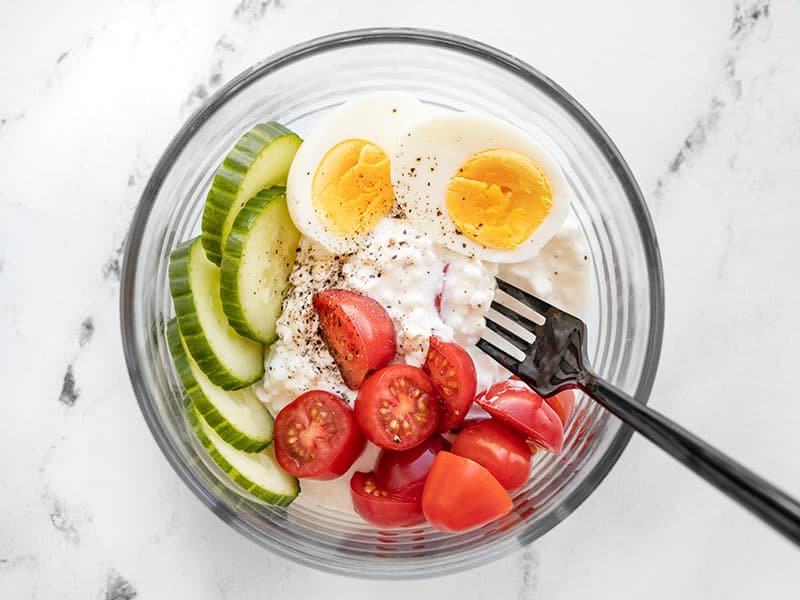
Cottage cheese does not have to be a dessert-style bowl. Cucumber, tomatoes, pepper and herbs can take it towards a savoury lunch. Eggs, toast, potatoes or rice can then change the scale and character of the meal. Choose the format first: a topping, a side or the centre of the plate.
On toast, consider how much the bread can hold and how wet the topping is. A modest layer with chopped vegetables may be easier to eat than a towering pile. In a bowl, you have more room to combine ingredients without everything falling apart. These are practical differences that matter when lunch has to travel or fit into a short break.
An egg adds another ingredient with its own nutrition. Choose whole eggs, whites or neither to fit the meal you want, rather than assuming every protein-containing food needs another protein addition. Our comparison of whole eggs and egg whites in a complete meal helps explain that choice without declaring one the winner for everyone.
Taste before adding salt. Cottage cheese can already contain a substantial amount, and different brands vary. A salty topping or seasoning blend can contribute more. Check the relevant labels and consider pepper, herbs or other flavours when the bowl already tastes sufficiently salty. Avoid assuming that plain automatically means unsalted.
If you use a portion as a dip or side, count that portion rather than the entire tub on the table. Bread, crackers or vegetables eaten alongside it still belong in the meal. The same basic ingredient can serve several roles; what changes is the combination and quantity, not whether cottage cheese suddenly becomes a different food.
Compare the complete meal before buying a bigger tub
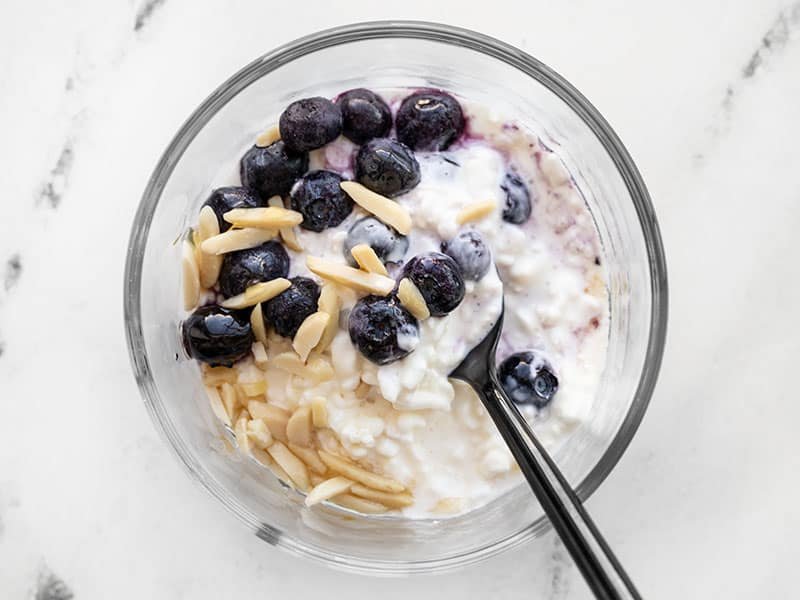
A bigger pack is useful only if you will use it. Compare the price per unit of weight, then consider how often the food fits your routine. A small saving on a large tub disappears if much of it is wasted. Follow the package’s refrigeration and opened-storage instructions rather than assuming every brand keeps for the same period.
When comparing cottage cheese with yoghurt or another food, start with equal weights or clearly stated portions. Then compare the meals you would actually eat. A plain dairy product with fruit is not the same purchase as a flavoured pot with separate toppings. Texture, taste, cost and convenience can matter alongside the protein total.
There is also no requirement to build every meal around dairy. Our guide to tofu, tempeh and edamame offers other ingredient choices when you want variety. Keep their labels and preparation separate instead of treating every protein source as a direct spoon-for-spoon replacement.
Try one sweet meal and one savoury meal before stocking up. Note which texture you liked, the amount you used and whether the finished plate suited the occasion. That small trial gives you a more useful shopping decision than buying a tub because an online bowl looks impressive. Cottage cheese earns its place when it makes an enjoyable meal easier to assemble.