Advertising disclosure: This page includes affiliate product links that may earn us a commission, as well as products from our own store.
Taking every leg-extension set to failure feels like a reliable way to prove you worked hard. The more useful question is whether that final failed repetition improves the result enough to justify using it every time. An eight-week comparison in trained lifters gives stopping close to failure a credible place in quad training. To use that finding, you need an honest definition of reps in reserve, repeatable technique and a way to judge progress beyond how wrecked your legs feel.
What the leg-extension comparison actually tested
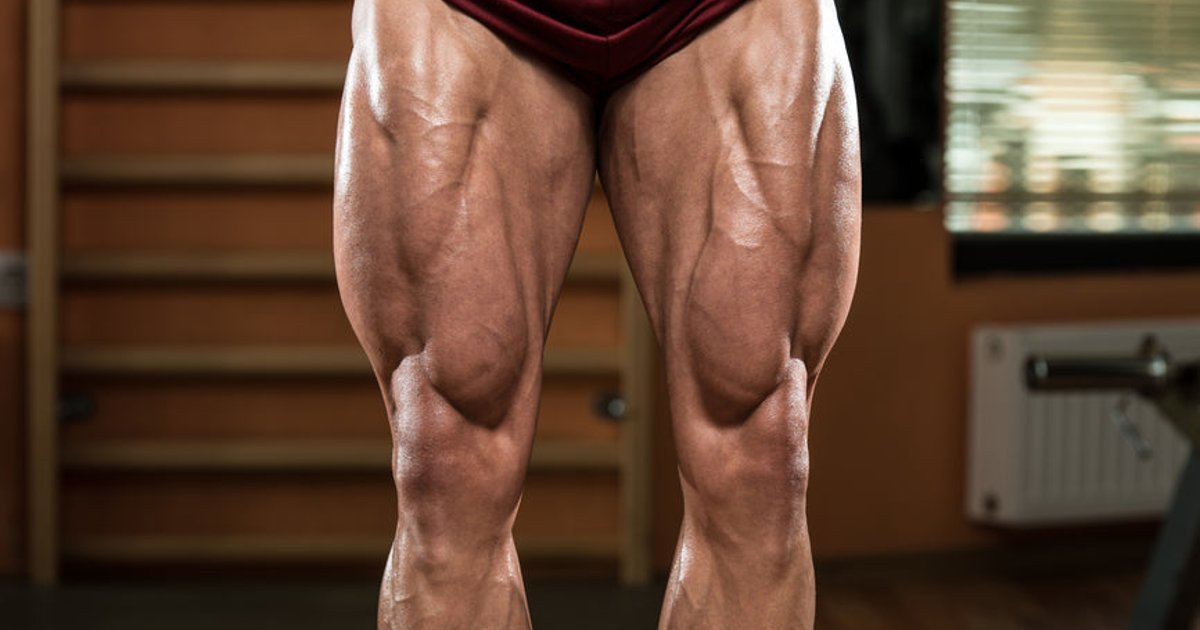
Nineteen trained participants—11 men and eight women—completed eight weeks of unilateral leg extensions. One leg was randomly assigned to momentary muscular failure; the other used a repetitions-in-reserve approach. Ultrasound muscle thickness and one-repetition maximum strength were assessed before and after training. The estimated differences between protocols were small, with no clear overall advantage for either approach. The findings support one to three reps in reserve as a practical option for the knee extensors under these conditions.
That is a useful comparison because each person contributed both training conditions. Differences in background, daily routine and many individual characteristics were therefore shared across the two legs. It still leaves important boundaries: this was a small sample, a particular exercise and a limited training period. It cannot establish identical responses for every lifter or every muscle, and it does not compare hard sets with casually stopping whenever the burn appears.
For your program, treat the result as permission to make a deliberate effort choice. A repeatable stopping rule is more informative than deciding during every set that the hardest possible finish must be best. If your current leg-extension work is progressing and fits the rest of your training, there is no need to turn one comparison into a complete routine overhaul.
One to three reps in reserve still means a hard set
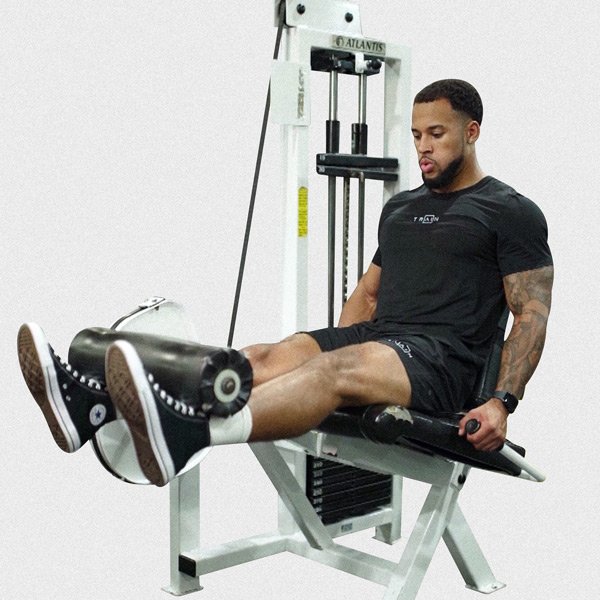
Reps in reserve, or RIR, estimates how many additional repetitions you could complete before reaching the chosen failure standard. Two RIR means you believe two more full repetitions remain. It does not mean resting for two seconds, using two fewer repetitions than last week, or stopping with the vague feeling that you have done enough.
Define a successful repetition before judging the reserve. On a seated leg extension, keep the same seat position, shin-pad placement and controlled movement range. If you suddenly lift your hips, throw your torso or shorten the motion, you have changed the task. Counting those improvised repetitions as spare capacity makes the original estimate difficult to interpret.
The uncomfortable part is distinguishing effort from inability. Burning quads can make the next repetition seem impossible before the target muscles have reached the actual stopping point. Conversely, a confident prediction can be wrong when the next full repetition unexpectedly stalls. RIR is a skill you refine with experience rather than an exact measurement delivered automatically by motivation.
A systematic review of RIR accuracy found estimates generally improved closer to failure and became less accurate with more repetitions and lighter relative loads. That does not require testing every set to the limit. An occasional comparison on a familiar, stable exercise can be informative: make an estimate, then observe the additional clean repetitions you can actually perform. Keep this separate from exercises where a failed repetition creates an awkward escape or requires help.
Read muscle-size and strength results separately
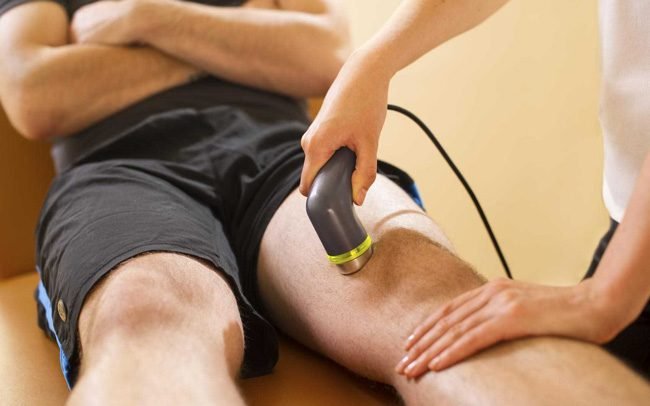
A stronger leg extension and a larger quadriceps are related training goals, but they are different outcomes. Strength testing measures performance on a defined task. Muscle-size assessment measures tissue dimensions at specified locations. A better score in one cannot simply be translated into a matching percentage improvement in the other.
Ultrasound also deserves a more careful reading than a transformation photograph. Probe placement, the muscle being examined and the measurement location all matter. A local thickness result is not a complete three-dimensional map of every quadriceps muscle. Comparing standardized measurements is useful; treating one location as proof of uniform growth throughout the thigh goes beyond what it can show.
The broader evidence adds context without supplying one universal stopping number. An exploratory meta-regression found a relationship between training closer to failure and greater hypertrophy, while strength gains showed a much weaker relationship with estimated RIR. Its authors also highlighted uncertainty in how reserve had been estimated across the underlying studies.
That pattern is compatible with taking sets seriously while keeping some reserve. It does not establish a precise point at which every additional repetition becomes essential. A separate meta-analysis of 20 studies found no significant overall hypertrophy difference between failure and non-failure training, alongside a small dynamic-strength advantage for non-failure training. Different designs, participants and training prescriptions limit how neatly those pooled findings map onto one person's leg day.
Use several observations when judging your own program: comparable repetitions and loads, consistent technique, and longer-term changes assessed under similar conditions. A single difficult session is a poor substitute for that record.
Put hard quad work inside the whole leg session
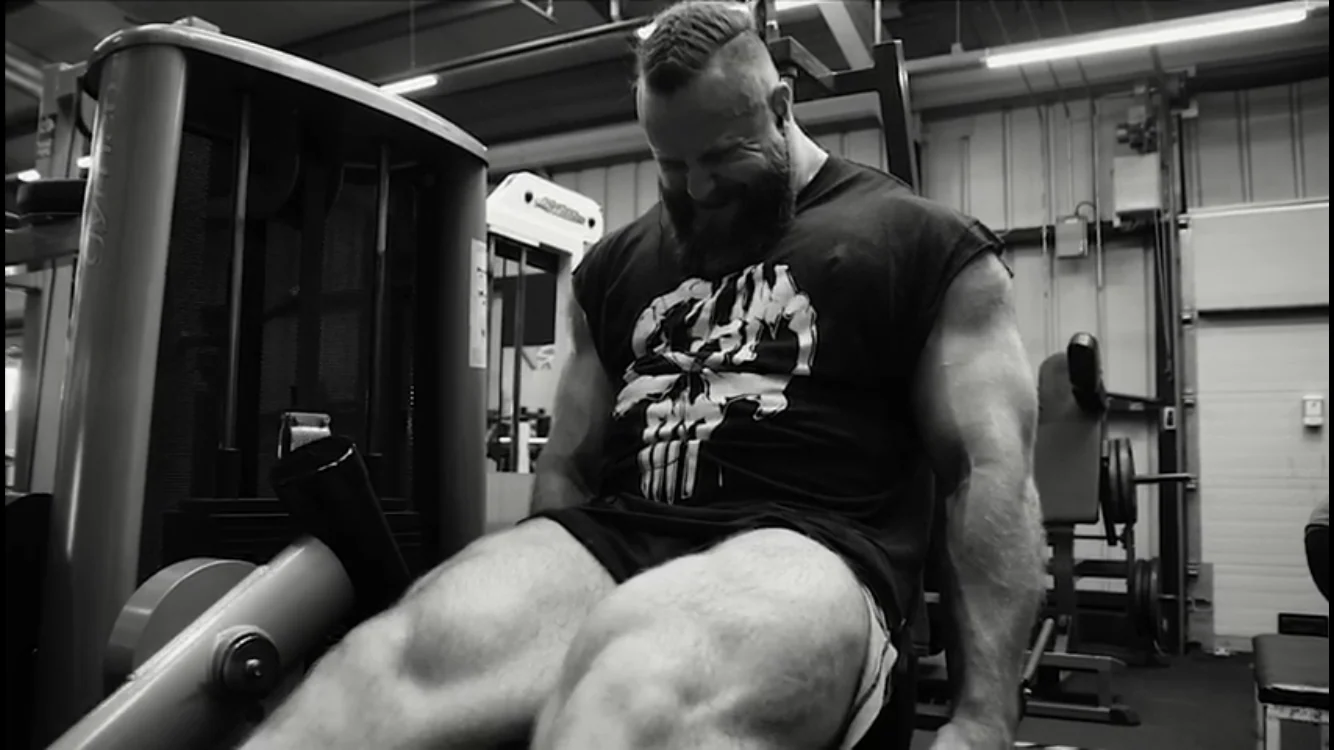
The practical reason to choose an effort target is that a workout contains more than one isolated set. Leg extensions may follow squats or leg presses, or appear before other lower-body work. Decide what you want the exercise to contribute and how its placement affects the work that follows. Exhausting the quads before the lift you care most about can make that session harder to compare with previous sessions.
A sensible experiment is to hold your usual exercise selection and set count steady while changing the stopping rule on leg extensions. Keep most working sets around an honest one to three RIR, then record what happens to repetitions, technique and subsequent training. This is an example of managing a program variable, not the exact protocol or a prescription proven optimal by the comparison.
Do not automatically compensate for stopping short by adding a pile of extra sets. That changes both effort and volume at once. If performance improves, you will have difficulty identifying which change helped. The same problem appears when you change machine, repetition range and exercise order simultaneously.
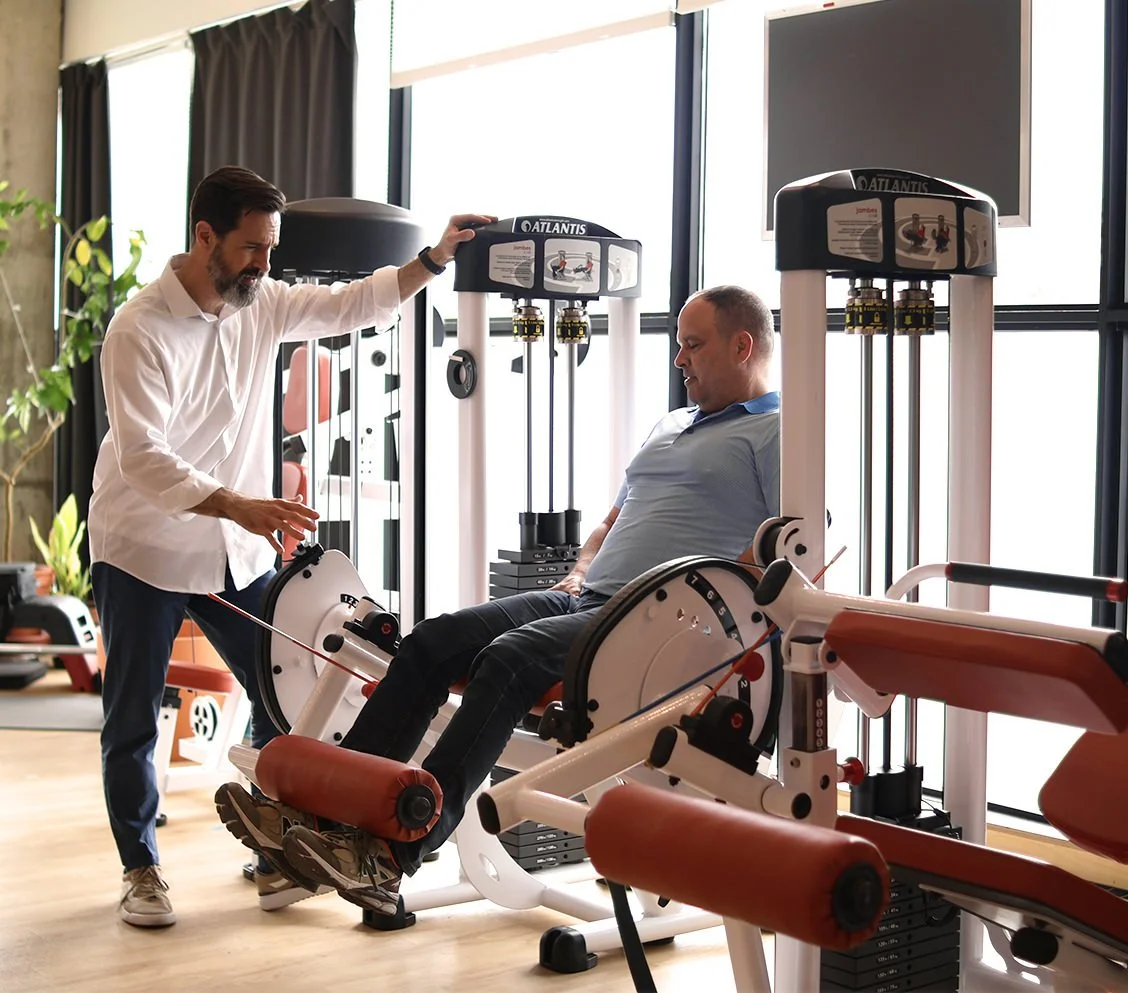
Equipment setup can also change the experience of effort. A seated machine, a plate-loaded leg attachment and a cable arrangement may load the movement differently. Use the same setup for comparisons, follow its adjustment instructions and establish a stable position before challenging sets. An accessory needs a compatible base and secure attachment; an exercise label alone does not establish that compatibility.
Reserve is not a reason to ignore joint discomfort or force a repetition through a changed position. Keep the stopping decision tied to the planned movement. The aim is productive quad work that you can assess and repeat, rather than a competition to make the last repetition look dramatic.

Equipment Worth Exploring
Explore equipment, accessories and gear from our carefully selected range.

Leg Extension/Curl BCO-780
Leg extension and lying leg curl combo with plate loading, band pegs and a cable-loading option.

Seated Leg Combo BCO-680
Adjustable seated leg extension and leg curl machine with band pegs for added resistance.

HUSLA Leg Extension Pad
Pad attachment designed to increase usable range of motion on compatible leg-extension machines.


Leg Press/Hack Squat BPR-790
Convertible 45-degree leg press and hack squat machine with a broad footplate and band pegs.

Compact Leg Press CLP-700
Compact reverse-style leg press with a moving seat carriage and an adjustable footplate.

Studio V-Squat
Plate-loaded V-squat machine for supported lower-body strength training.

Rubber Hex Dumbbells
Rubber-coated hex dumbbell pairs with a stable shape for home and commercial strength training.

Use a training log to make the decision personal
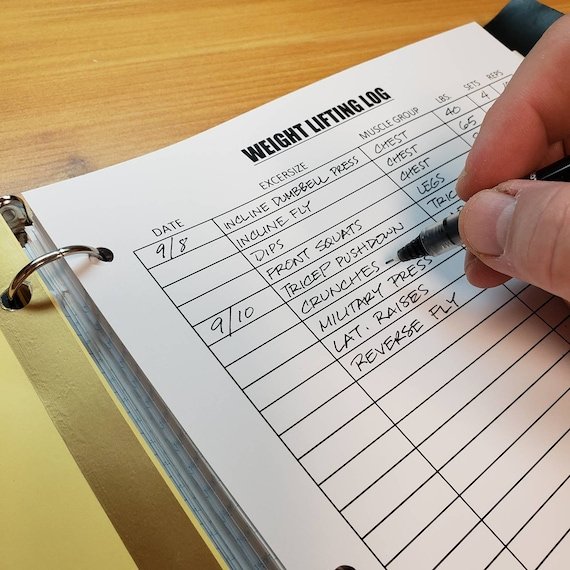
Before your next session, write down the leg-extension setup, intended repetition range, working-set count and RIR target. During the workout, record load, completed repetitions and estimated reserve for each set. Add one brief note if your range shortened, your seat position changed or the movement felt different. Those details make a later comparison much more useful.
For example, imagine you normally perform three working sets. Keep those three sets and the same machine while trying two RIR as your stopping target. This is a practical illustration, not a claim that three sets or two RIR is the best dose. The useful feature is that you have changed one identifiable element and can judge the consequences.
At the next comparable session, look beyond whether you matched the first set. Did later sets retain their technique? Did the intended reserve seem plausible? Could you progress within your chosen repetition range without gradually shrinking the movement? A change that produces one impressive set followed by erratic work may need a different interpretation from steady progress across the session.
Keep the record simple enough to use while training. A notebook or basic phone note is sufficient if the entries mean the same thing each time. There is little value in a detailed spreadsheet whose reserve numbers are guessed afterward. Make the effort estimate immediately after the set, while the last repetition is still easy to remember.
Review the pattern over several sessions before making another adjustment. If progress is good, keep the approach long enough to learn from it. If the reserve estimate is consistently too generous, improve the estimate before deciding that stopping short failed. If performance deteriorates, consider the wider program and recovery context rather than blaming a single variable immediately.
The useful lesson is to make effort deliberate and observable. You can train the quads hard, retain a small reserve and still take progression seriously. Let repeatable performance and the quality of your training record determine whether that approach earns a lasting place in your routine.

Funny Gym Shirts & Workout Gear
Funny gym shirts, tanks, hoodies and workout gear for lifters who like training hard.

| Pencilneck Science-Based Lifting Pullover for Gym Ner T-Shirt
Keep things casual with a little “Pencilneck Science-Based Lifting” attitude.

Broscientology Hooded Pullover Bro Science Gymbros Top Hoodie
Show off your bodybuilding humor in a laid-back “Broscientology” hoodie.


Rest Day Sloth – Essential T-Shirt
Show some bodybuilding attitude with a playful “Rest Day Sloth” tee.

Anti Leg Day Leg Day Club & Meme Fans Hoodie
Show off your leg-day humor in a laid-back “Anti Leg Day Leg Day Club” hoodie.

Negative Leg Day Review 1 Star Not Recommended Decal Sticker
Stick a little “Negative Leg Day Review” humor on your favorite gear.

Never Skip Leg Day Chicken Legs Meme Sweater & Bros T-Shirt
Show some gym-day personality with “Never Skip Leg Day”.

Leg Day Is Calling You Decal Water Bottles & Sticker
Bring “Leg Day Is Calling You” attitude to your water bottle or laptop.

Off-Season Rest Day & Meme Fans Athletic Shirt Tank Top
Add some lifting attitude to training with “Off-Season Rest Day”.

Bro Science Periodic Table Tee
Heavy lifts, good laughs, and a little “Bro Science Periodic Table Graphic” energy.