Advertising disclosure: This page includes affiliate product links that may earn us a commission, as well as products from our own store.
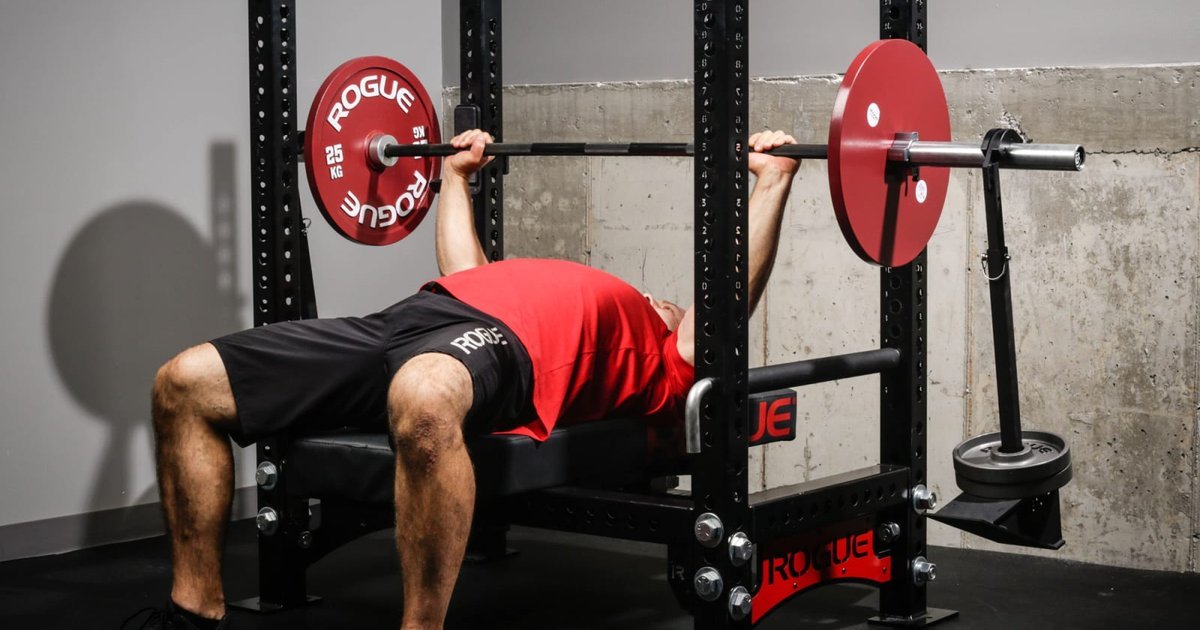
Rogue Weight Releasers add load during the lowering phase, then disengage at floor contact so the barbell is lighter for the ascent. That makes them a specialized setup problem before they become a programming choice. They are not recommended for beginners, inexperienced lifters or people rehabbing an injury. This specifications-based guide explains the load accounting, height and clearance questions an experienced lifter should resolve with qualified supervision; it is not an MMP hands-on review or a prescription for supramaximal lifting.
1. Record two loads, including the hooks
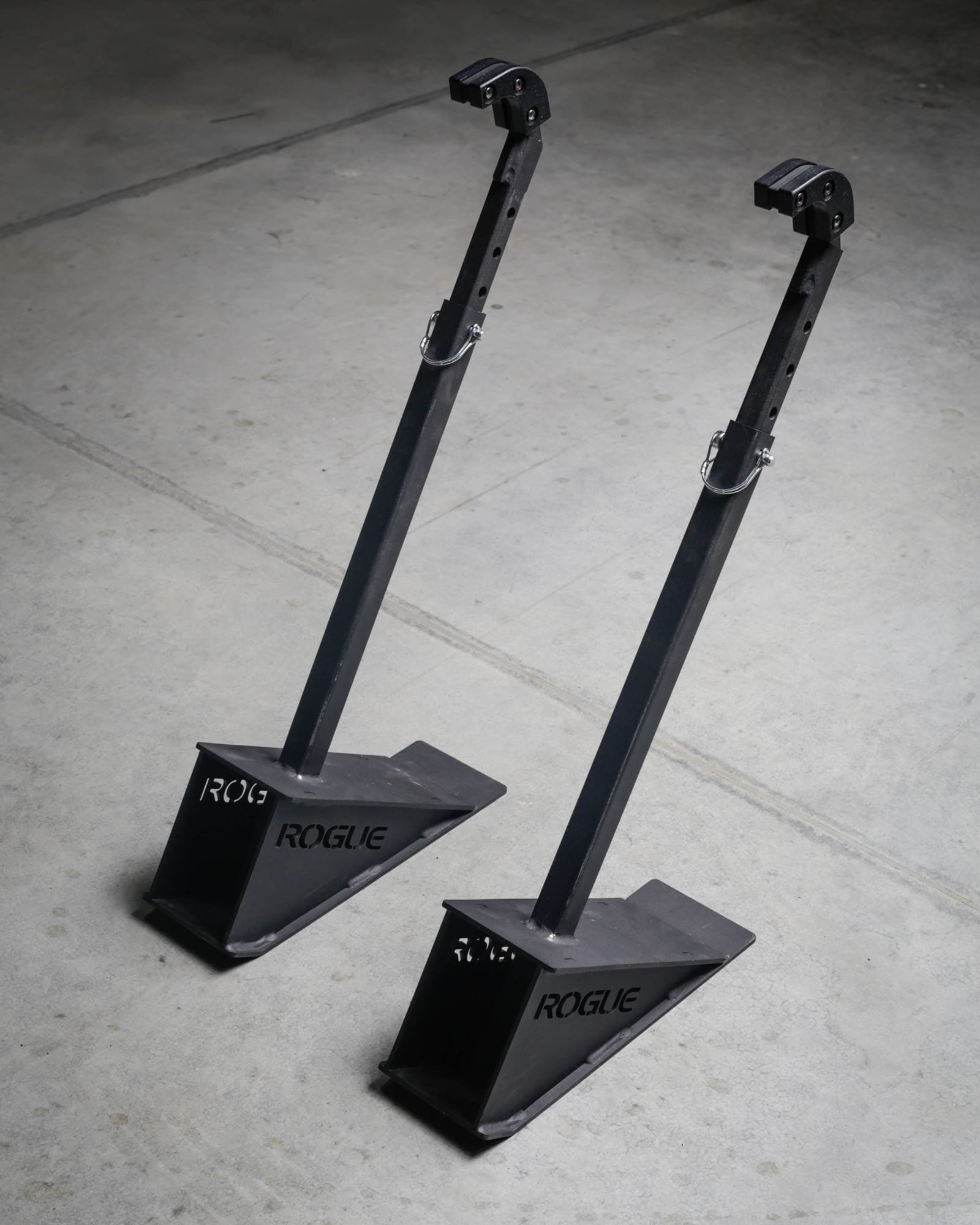
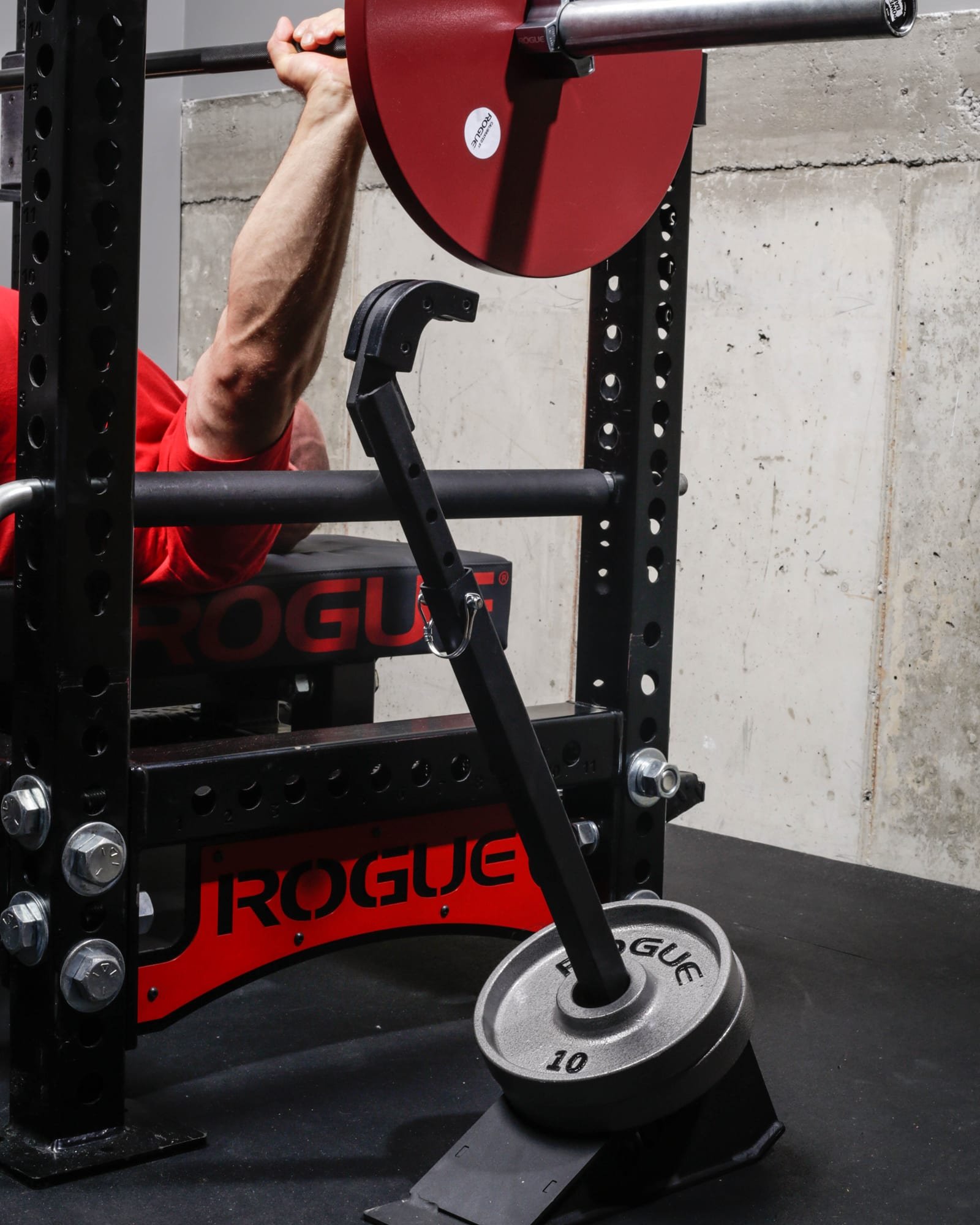
Each Rogue releaser is listed at 17.5 lb, with a tolerance of half a pound. The unloaded pair therefore contributes approximately 35 lb before any additional plates. Ignoring the hardware makes the eccentric load in your training log incomplete.
Consider a purely arithmetic example. A barbell assembly weighing 200 lb, plus the 35 lb pair and one 10 lb plate on each releaser, totals approximately 255 lb before release. After the extra equipment disengages, the barbell assembly remains 200 lb. These figures illustrate bookkeeping only; they do not suggest an appropriate load for any lifter.
Keep three separate entries: the barbell assembly, the releaser pair and the plates carried by that pair. Include collars and other suspended hardware in the appropriate assembly. If exact comparison matters, weigh the actual equipment rather than assuming a nominal specification gives its precise mass. Write the units beside every entry so pounds and kilograms cannot quietly enter the same calculation.
The most useful log then shows the lowering load and the subsequent pressing load separately. A heavier descent followed by a lighter ascent is a different performance from a normal repetition with one unchanged load. Neither number should replace the other. This distinction also helps a coach compare sessions without reconstructing the entire equipment arrangement from a single impressive total.
2. Set release height around the actual movement
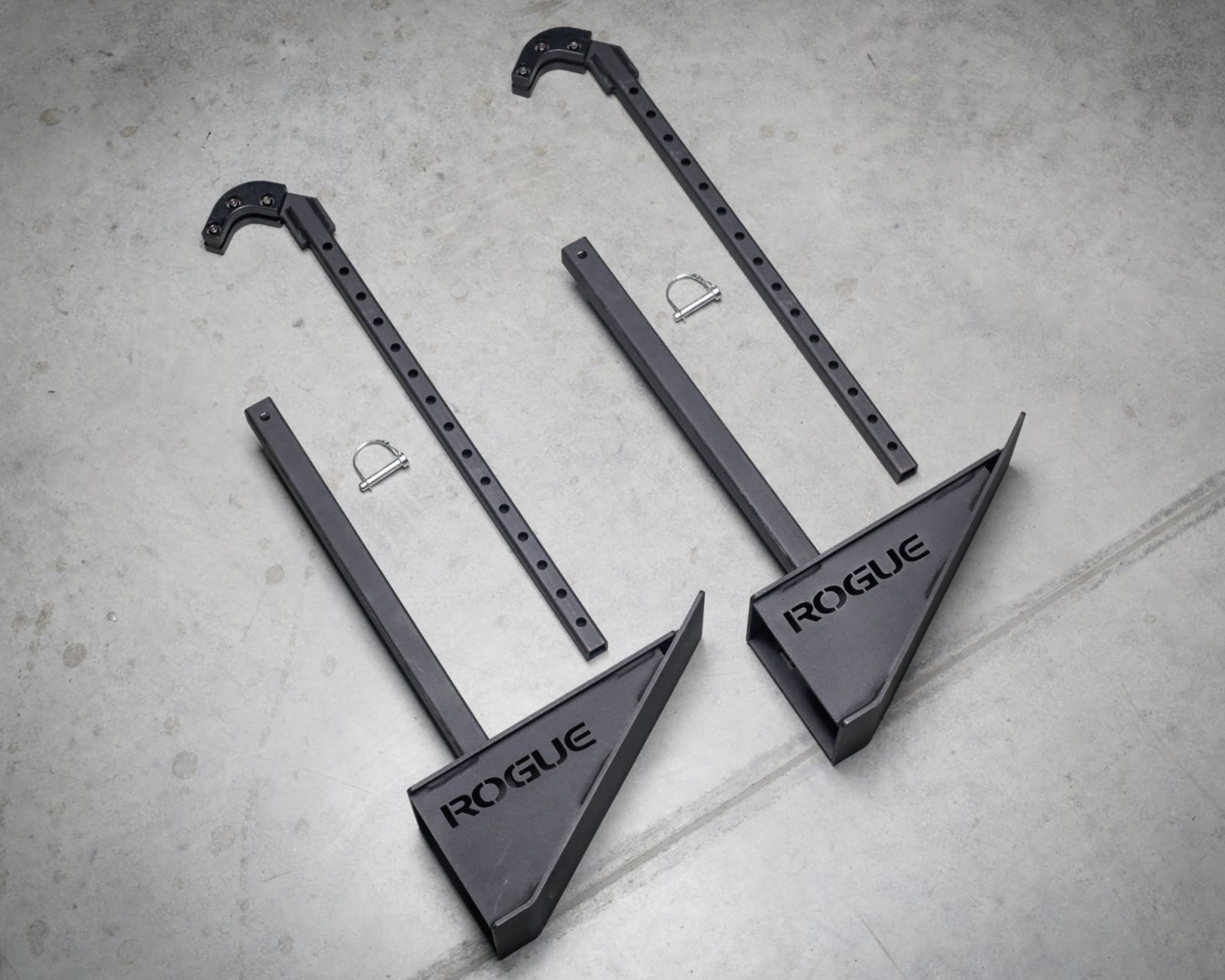
The telescoping design has 15 height positions across an overall range of 28.75–49.75 inches, with holes spaced 1.5 inches apart. That is a mechanical adjustment range, not proof that every setting suits your bench, body or intended movement.
The relevant relationship is between the bar's path, the length of each releaser and the floor beneath its base. A different bench height, lifting position or floor surface changes that relationship. Even a familiar rack can become a different setup after the bench moves. Record the complete arrangement rather than assuming a remembered hole number will always produce the same release point.
Resolve the setup with a qualified coach and the manufacturer's instructions before considering training loads. Both sides need to function as intended within the same movement. A release that happens too early changes the exercise; one that fails to happen leaves the athlete handling a different load from the planned pressing load. The release mechanism deserves its own check rather than being treated as a small accessory detail.
Do not shorten the movement merely to make a chosen setting appear suitable. Decide which movement you intend to perform, then establish whether the equipment can support it. If the arrangement cannot be made predictable, ordinary bench work is a valid alternative. A specialized attachment is useful only when it fits the session's requirements.
3. Check the whole sleeve and floor area
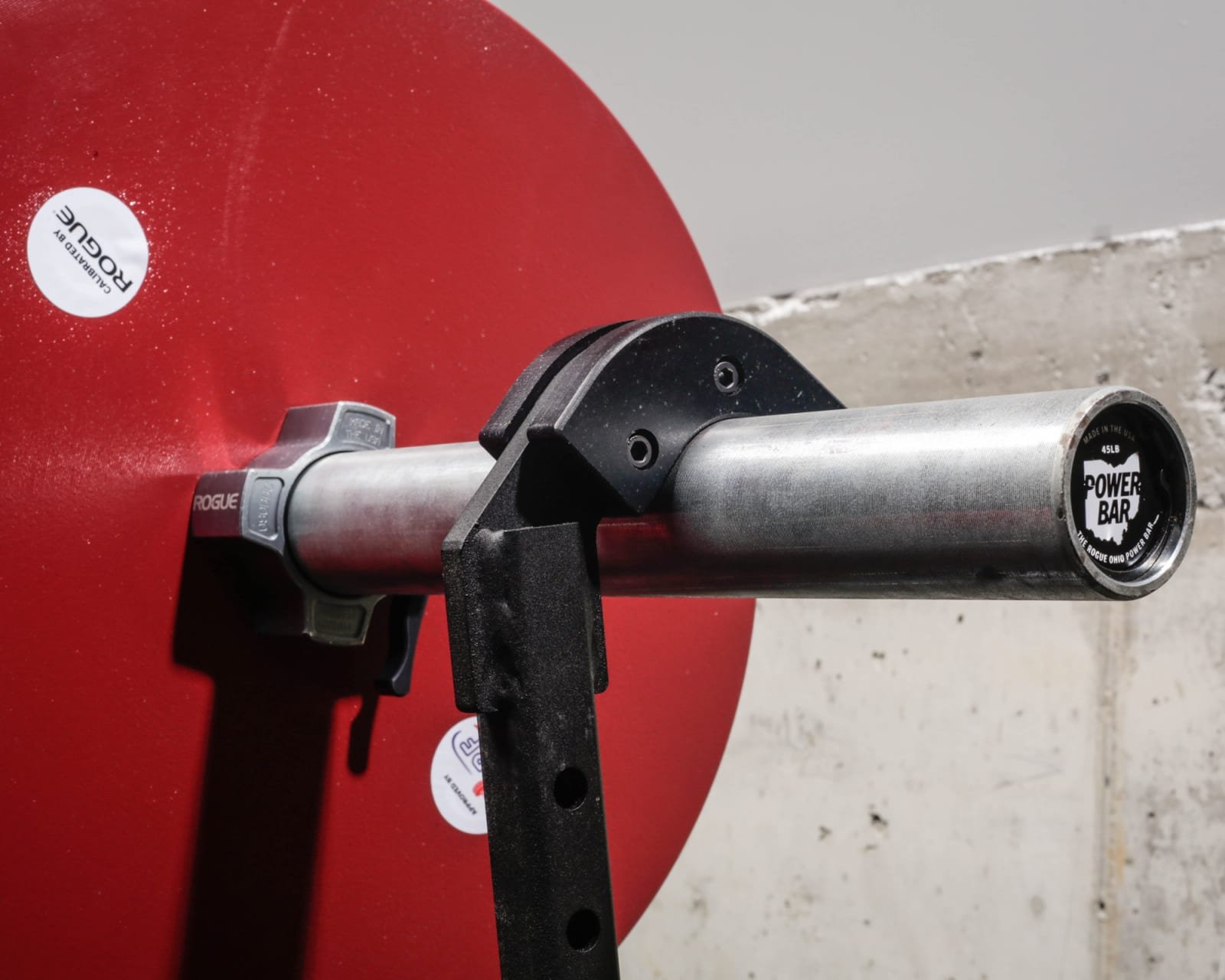
Rogue's hooks use half-inch UHMW plastic at the bar-contact surfaces. Their bases measure 15.5 inches long and 5 inches wide, and accept Olympic plates. Those details describe the product; they do not establish compatibility with every sleeve, collar, plate stack or rack arrangement.
Look at the complete sleeve assembly before you buy. Barbell plates occupy space, collars occupy space, and the releaser needs its own secure contact area. A long-looking sleeve in a product photograph does not show how much room your usual plates leave. Ask the manufacturer about your exact configuration when the fit is uncertain, particularly if a specialty bar or unusual plate shape is involved.
The floor area matters too. Consider where both bases will contact and where the detached equipment will rest. Keep that area separate from people's feet, loose plates and other equipment. A rack's published footprint does not describe this additional working space. The exercise needs room for the attachment's movement as well as room for the bar and the lifter.
Use appropriate rack safeties and an experienced spotting arrangement; the releasers do not replace either. Check how all the equipment interacts, rather than evaluating each item independently. A bench, barbell, collars, plates and rack may each be useful products while still requiring careful compatibility checks as a complete system. Never infer that a shop's suggested accessories guarantee a safe combined setup.
4. Distinguish a release from a complete set
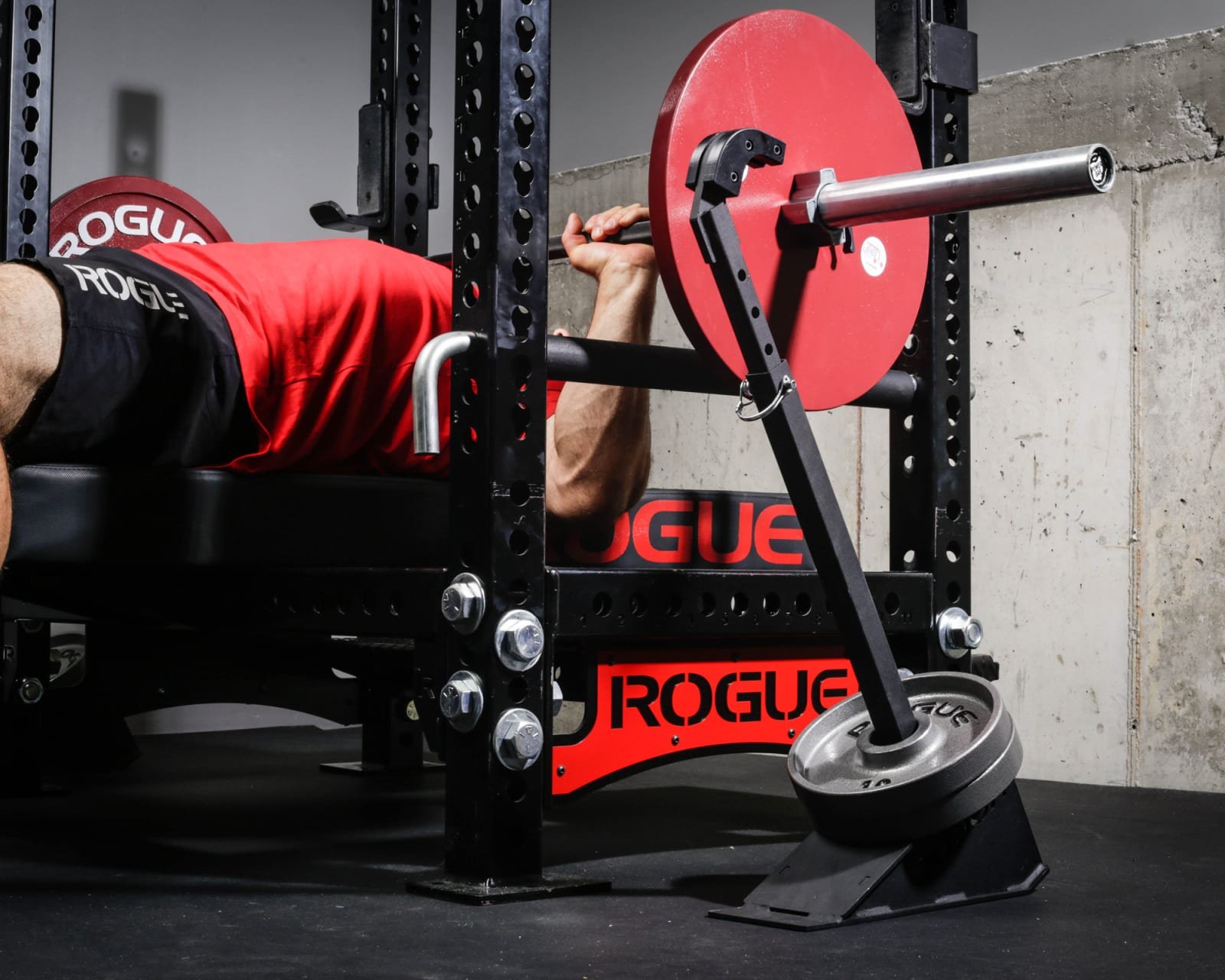
Once the extra equipment has detached, subsequent repetitions do not automatically have the same heavier lowering load. Restoring that condition requires resetting the releasers. A set with only its first descent accentuated differs from a series of separately reset repetitions.
That distinction should appear in the session plan. Identify which repetitions have the extra lowering load, who handles the reset and when the reset takes place. Do not improvise equipment handling beneath a moving bar. If the planned sequence cannot be performed with clear control and communication, choose a simpler loading method instead.
For comparison, imagine two hypothetical logs. One says three repetitions with an accentuated first descent. Another says three individual repetitions with a reset between each. Even if the initial weights match, the exposure and rest pattern differ. Calling both three eccentric reps hides information a coach needs to interpret the work. Recording the actual sequence is more useful than inventing a single combined tonnage score.
This is also why a catalogue demonstration should not become a complete workout by itself. A photograph can show the hardware and a moment in the movement. It cannot establish the lifter's preparation, supervision, fatigue or reason for selecting that protocol. Treat it as a view of the equipment, then build any training decision around the athlete and the full session.
A reset also changes how you interpret rest. Time spent arranging hardware is part of the session, even if it is absent from a simple reps-times-weight entry. Record whether the lifter rested between individual attempts or performed consecutive repetitions after the first release. That information helps distinguish equipment logistics from a deliberate change in work density.

Equipment Worth Exploring
Explore equipment, accessories and gear from our carefully selected range.


Competition Plates
Competition-style bumper plates for Olympic lifts and loaded strength training.

Grip Plates
Rubber-coated weight plates with handholds for loading barbells and machines.


Speed Collar
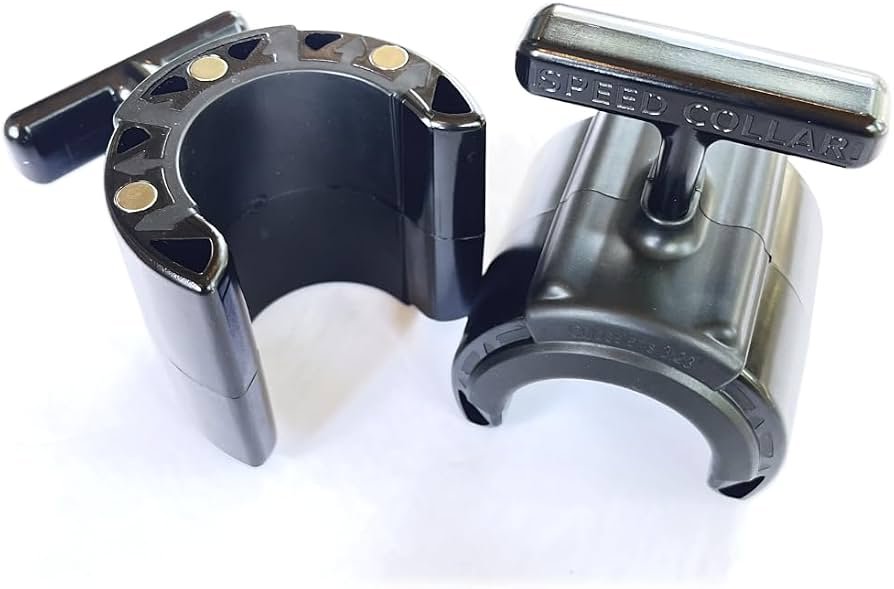
Quick-release collars designed to secure weight plates on standard two-inch Olympic bars.


Multi Bench MBX-650 2.0
Adjustable multi-bench with roller adjustment, 15 backrest positions and accessory mounts.
5. Keep performance claims separate from the mechanism
Accentuated eccentric loading means prescribing a greater lowering load than the load used for the coupled upward phase. Research has examined several methods and protocols, so evidence for the broad approach is not a guarantee for one commercial attachment or every loading choice.
A 2025 bench-press experiment involving 18 trained men found that concentric load influenced performance metrics more than the loading condition, with no consistent performance enhancement from the accentuated protocols. A separate experiment in 12 trained men found little evidence that the heavier downward phase improved the subsequent upward phase. These are acute findings, not direct long-term muscle-growth tests of this Rogue product.
A broader review also identified inconsistent research responses across participants, exercises, prescriptions and methods. The useful conclusion is to ask which outcome a particular protocol is meant to improve. An attachment that changes load as intended has demonstrated its mechanical function; that alone has not demonstrated better future strength, more hypertrophy or a faster press for the person using it.
For many lifters, consistent barbell or dumbbell pressing with a stable bench and suitable equipment remains easier to plan and repeat. Experienced athletes considering releasers should have a specific purpose, appropriate supervision and a clear record of both loads and the reset sequence. Keep ordinary sessions as a comparison rather than assuming extra complexity earns a permanent place. The strongest buying decision starts with a training problem that this mechanism can actually address.
Before adding a new tool, name the observation that would justify keeping it: a repeatable technical task, an outcome selected by the coach, or a specific training requirement. Keep the test conditions consistent and avoid changing several major variables at once. If the only result is that the session looks more advanced, that is not enough information to judge its value.

Funny Gym Shirts & Workout Gear
Funny gym shirts, tanks, hoodies and workout gear for lifters who like training hard.

Safety Practice Safe Sets Vest Weightlifting Tank Top
Bring “Gym Safety” humor to your next lifting session.

Meme – "Shhh I'M Doing Plate Math" Sweater & Jumper T-Shirt
Keep things casual with a little “"Shhh I'm Doing Plate Math" Workout Sweater” attitude.

Chest Day Decal Water Bottles & Equipment Meme Sticker
Bring “Chest Day” attitude to your water bottle or laptop.

I Love Bench Press | Black Heart Weight Plate Graphic S T-Shirt
Show some powerlifting attitude with a playful “I Love Bench Press” tee.

Gym Sir Swole of Benchalot Medieval Knight Bench Press Hoodie
Show off your medieval humor in a laid-back “Sir Swole of Benchalot Medieval Knight” hoodie.

Six Plates Bench Club Meme Shirt – Chest Day T-Shirt
Heavy lifts, good laughs, and a little “Six Plates Bench Club” energy.

Shirt: Good Argument But I Bench More Than You – T-Shirt
Make gym days more fun with “: Good Argument But I Bench More Than You” style.

Ultimate Bench Press Tee
Heavy lifts, good laughs, and a little “Ultimate Bench Press” energy.

Defy Gravity Shirt Old School Weight Strongman Meme T-Shirt
Bring “Defy Gravity” humor to your next gym day.

Consistency Is Key Stoic Greek God Marble Sculpture T-Shirt
Make gym days more fun with “Consistency is Key Stoic Greek God Marble” style.