Advertising disclosure: This page includes affiliate product links that may earn us a commission, as well as products from our own store.
A landmine hack squat uses an anchored barbell behind the shoulders to create a knee-dominant, rear-supported squat. It can be a smart way to train the quadriceps, but the equipment geometry, stance and shoulder contact all matter. Here is how to make the movement repeatable, how it differs from a front-held landmine squat and how to progress without confusing extra plates with better form.
Secure the landmine first, then choose a load you can control
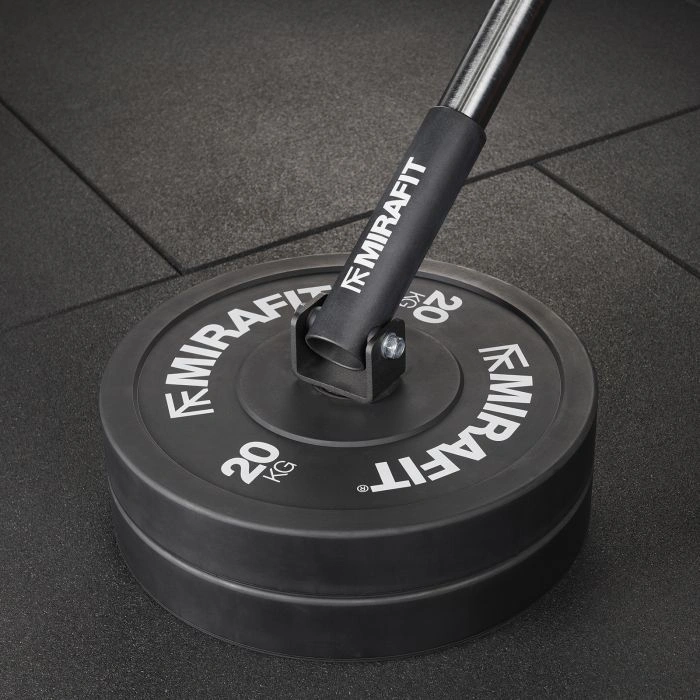
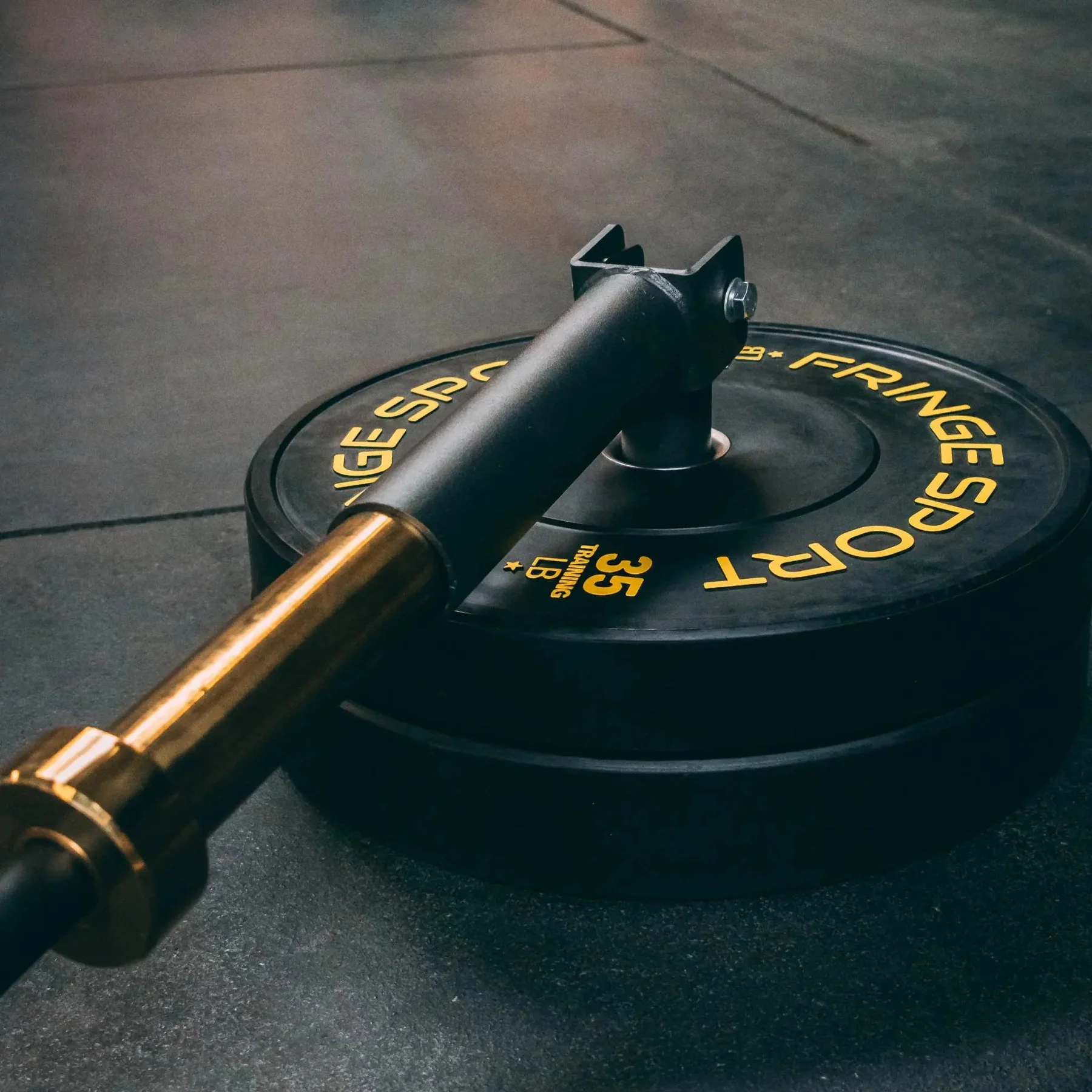
A landmine hack squat starts at the pivot, not at the weight plates. One end of an Olympic barbell sits inside a properly mounted landmine sleeve. The other end rises as the bar traces an arc. This is a different system from a freely moving barbell: the attachment must rotate smoothly without tipping, scraping or pulling its mounting point loose. Check that the sleeve fits the bar, any retaining mechanism is engaged and the base is appropriate for the intended load. Do not assume a loose bar jammed into an unprotected wall corner is equivalent to an anchored station.
The loaded end sits behind the lifter, so clear the area where the bar travels and check the floor for plates, collars and trip hazards. A modest plate can be enough to learn the movement; the bar’s own weight contributes and its leverage is not equivalent to the same number shown on a conventional hack-squat machine. Use secure collars where required by the setup. The plates and bar must move as one controllable assembly, not slide around the sleeve as the angle changes.
Before a working set, rehearse a few unloaded repetitions or use a very light load with someone available to help position the bar. Think through how you will start and finish: can you safely get under the end, stand tall and lower it into a stable resting position afterward? If the starting position forces you to jerk the loaded end up or twist your neck to escape, the setup needs changing. A stable starting arrangement is more valuable than adding another plate.
Find the rear-supported shoulder position and the right foot distance
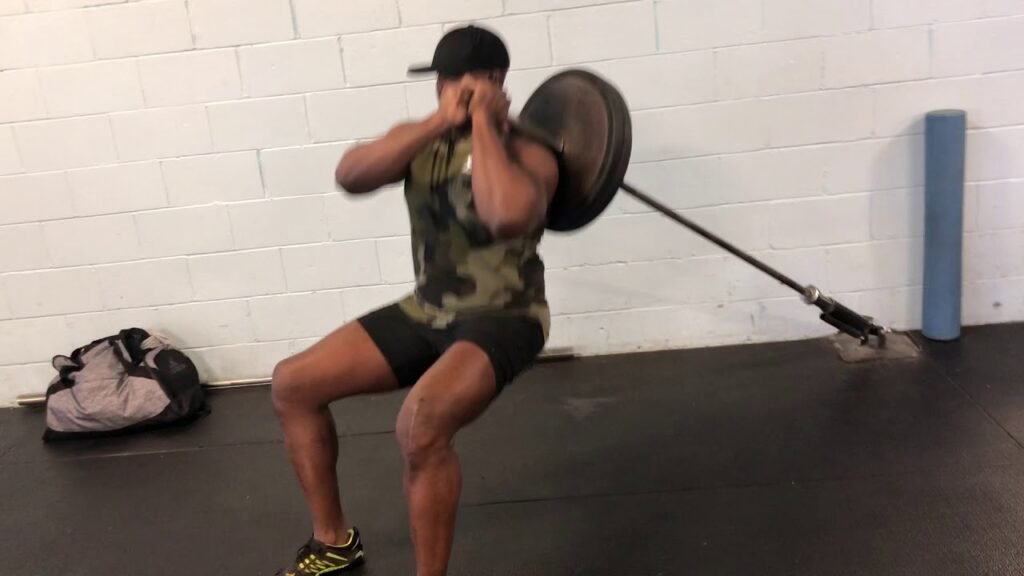
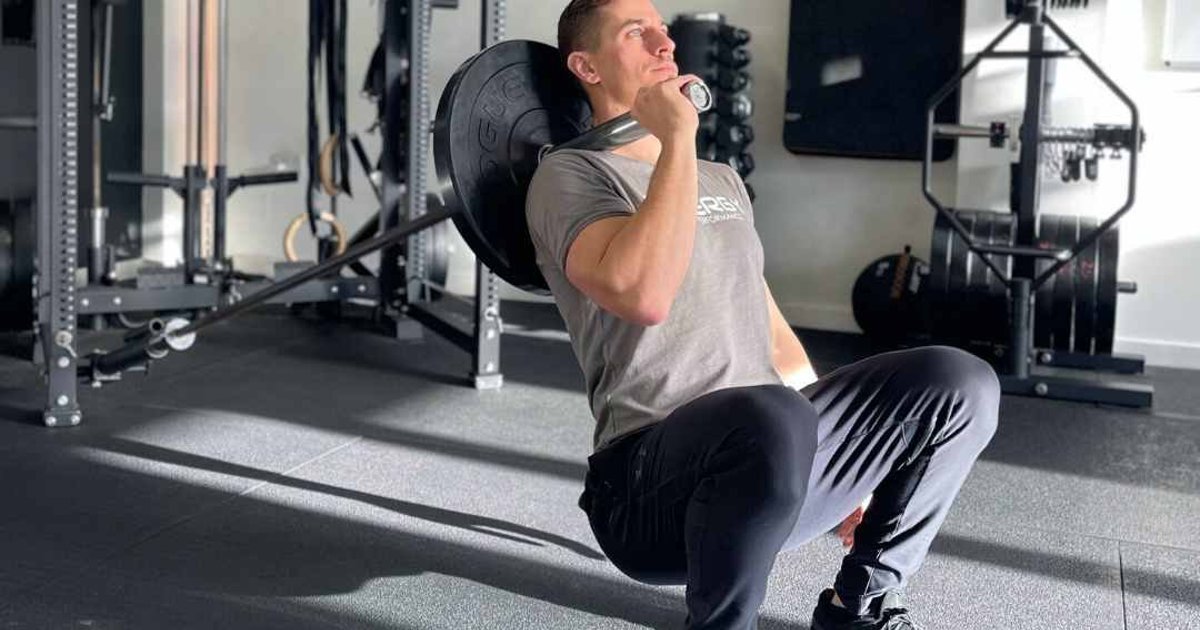
Face away from the anchored end. With the free end raised to a manageable height, position the plate or padded contact surface against the upper-back and shoulder area, not on the neck itself. Keep the head neutral and hold the sleeve or plate securely according to the equipment’s shape. The bar normally tracks off one side rather than through the exact centre of the body, so avoid turning the shoulders into the load. Swap sides between sets if that produces a more comfortable, symmetrical training exposure.
Now move the feet slightly forward from the hips, using the bar as a rearward support. Start with about shoulder-width stance and a modest toe-out angle, then refine one detail at a time. Your goal is a reliable balance between the heel staying planted, the knee moving naturally in the direction of the toes and the torso remaining relatively tall. Too close to the pivot and you may feel crowded. Too far forward and the feet may slip or the shoulders may be pressed uncomfortably into the load.
Do not copy another lifter’s exact shoe position in centimetres. Bar length, pivot height, shoe shape and individual limb proportions all change where the comfortable arc sits. Before each set, brace the abdominal wall, feel pressure across the whole foot and check that the upper-back contact does not move unexpectedly. During the descent, allow the knees to bend rather than reaching the hips far backward as you might in a conventional hinge. If you must rise onto your toes, twist or shove the load with your arms, shorten the range and change the stance.
Follow the bar’s arc without forcing a deeper squat
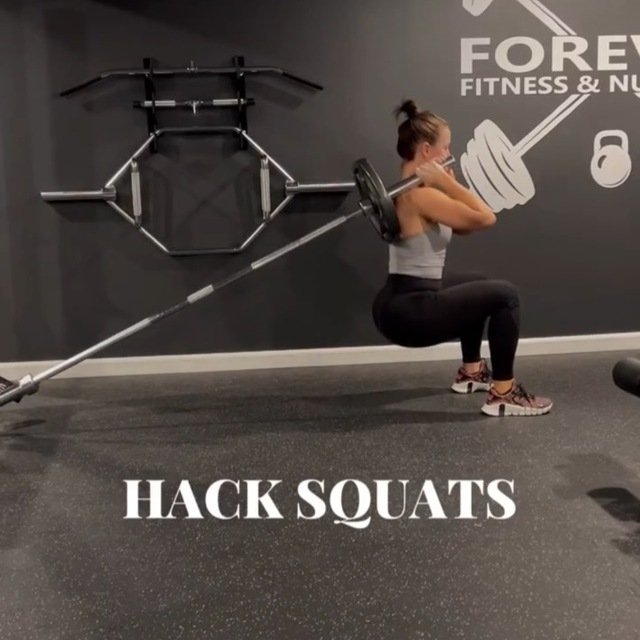
The most useful cue is to travel with the bar rather than fight its path. In a standard standing barbell squat you can adjust the bar in multiple directions as you balance. Here the pivot fixes one end of the bar, and the loaded sleeve sweeps an arc. Your shoulder contact point follows that arc too. The body position can feel surprisingly upright, but that does not guarantee every lifter will find the same depth or knee angle.
Take a controlled breath and descend by bending the knees and hips together. Keep the heel in contact with the floor, the knee broadly aligned with the foot and the rib cage stacked over the pelvis. A comfortable level around parallel is a practical initial target, not a universal depth requirement. If you can go deeper while retaining stable feet and an acceptable pelvis and back position, you may gradually explore it. If the knees, shoulders or ankles object, an earlier stopping point is sensible.
At the bottom, avoid bouncing off your own tissues or deliberately letting the bar crash into its end range. Pause briefly to confirm you still own the position. Drive the floor away through the full foot and extend the knees and hips as you rise along the same guided path. Keep pressure even rather than snapping the hips forward at the top. The squat should feel like legs moving the load; the hands simply stabilise the bar at shoulder height.
It helps to film from the side for one learning set. You can assess heel contact, how the plate sits on the upper back, whether the knees track consistently and whether the lift is smooth. A single image cannot prove force distribution or movement speed, so compare a few repetitions rather than treating one frozen pose as the entire technique.

Equipment Worth Exploring
Explore equipment, accessories and gear from our carefully selected range.


GymPin Squat Wedges
Non-slip 15-degree squat wedges help elevate the heels for deeper quad-focused squats.

Competition Plates
Competition-style bumper plates for Olympic lifts and loaded strength training.

Grip Plates
Rubber-coated weight plates with handholds for loading barbells and machines.

Studio V-Squat
Plate-loaded V-squat machine for supported lower-body strength training.
Understand the quadriceps emphasis and the mistakes that hide it
The quadriceps extend the knee, which makes them central to a squat that allows meaningful knee bending with a tall torso. The glutes contribute at the hip; the adductors and trunk help control the movement. A rear-supported landmine position can offer a useful quad-training option even when a dedicated hack-squat sled is unavailable. It is still a squat with several muscle groups working, not an isolation machine or a scientifically proven superior hypertrophy exercise.
A common mistake is loading beyond the point where the feet, shoulders and bar move together. You might begin pushing the plate upward with the arms, throwing the torso forward or shortening the bottom half of the repetition. Another is changing stance and depth on every rep, making progress hard to measure. Some lifters deliberately keep their knees very far behind their toes because they have heard that forward travel is dangerous. A more useful approach is to let the knee move as needed within a comfortable range while maintaining stable heel contact and good control.
Shoulder pressure deserves separate attention. The sleeve and plate arrangement can be awkward compared with a machine’s wide padded yoke. If the narrow contact point irritates a shoulder or neck, reduce the load and try an appropriate compatible pad or a different exercise; do not endure sharp discomfort for the sake of a variation. Similarly, someone dealing with current knee pain should not interpret a guided arc as a treatment. Exercise selection depends on the individual’s symptoms, tolerance and medical context. A coach or clinician may help when pain is persistent or the setup is hard to control.
The goal is not to win a contest for the strangest loading position. Use the variation if it lets you perform controlled knee-dominant repetitions with a clear progression. If it does not, a supported split squat, leg press or well-executed conventional squat remains a perfectly legitimate route to stronger legs.
Compare the landmine hack squat with other squat patterns
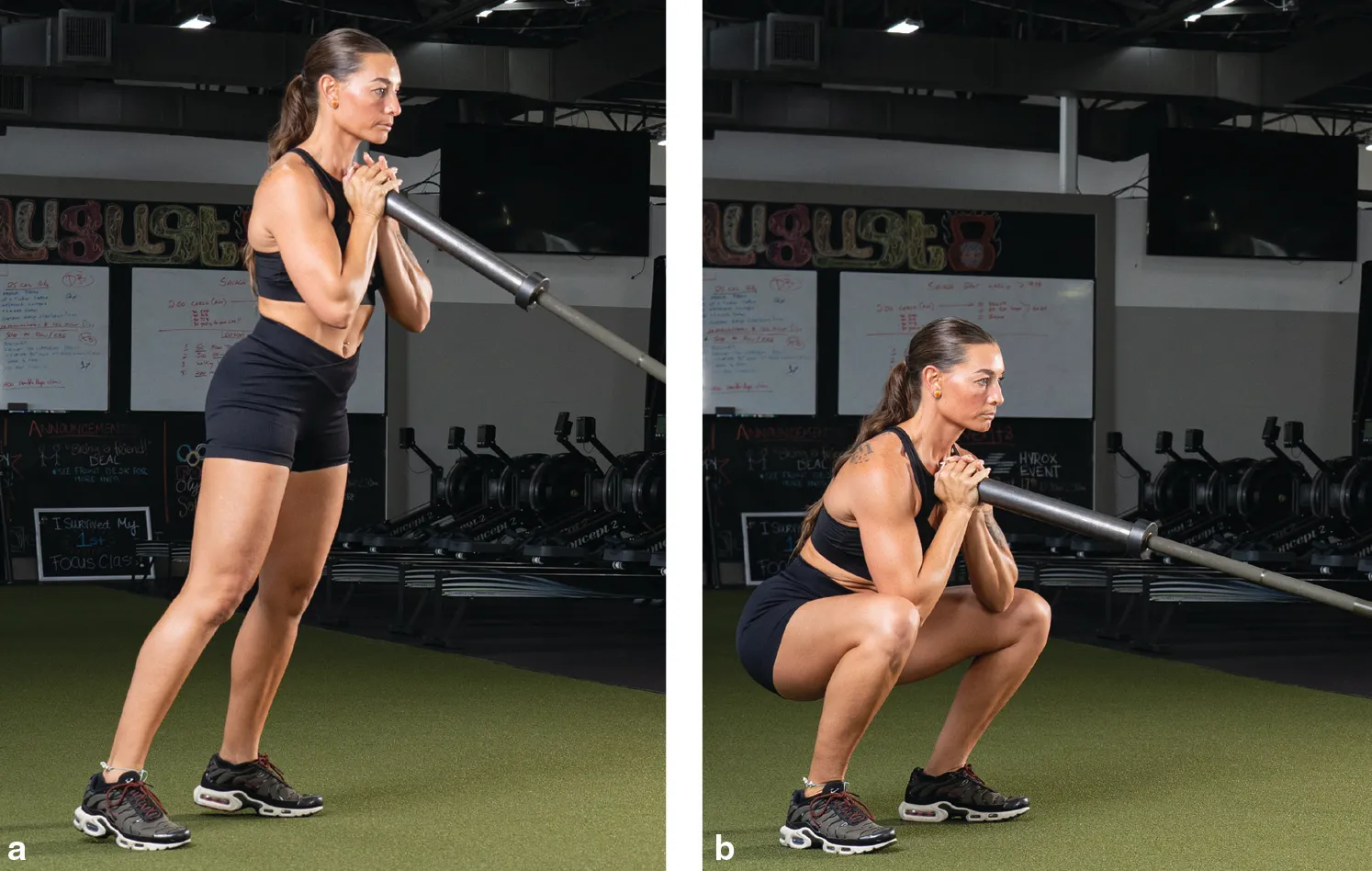
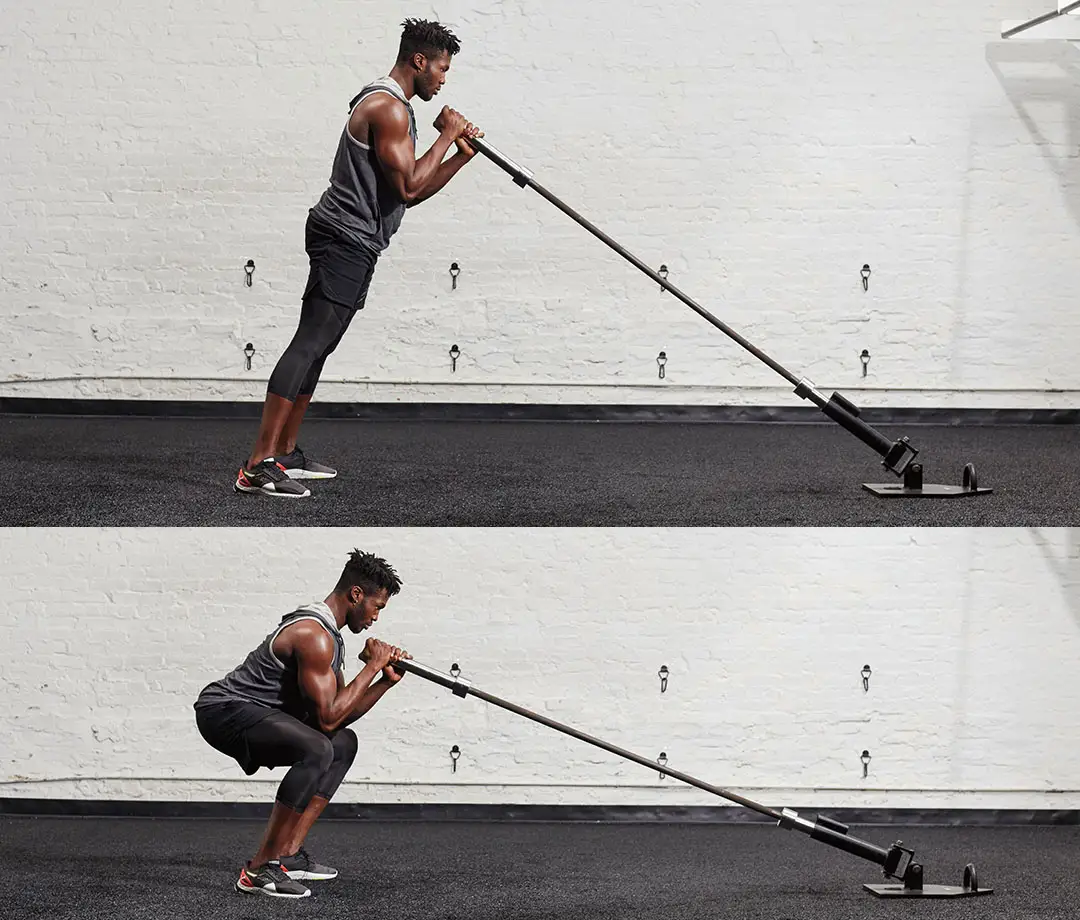
A front-held landmine squat looks similar in a photograph because both employ a pivoting barbell, but the load position changes the exercise. When you face the anchor and cradle the end in front of the chest, the bar offers an anterior counterbalance. In the hack version you face away and place the loaded end behind the shoulders, using the backward lean and forward feet to produce a different knee-dominant pattern. Calling both merely “landmine squats” without naming the load position can confuse technique instructions.
A traditional hack-squat machine guides a sled along rails and usually provides an integrated shoulder platform and a dedicated footplate. That setup can simplify loading and offer different foot positions, although its path and resistance profile are not identical to a pivoting bar. A Smith-machine squat also uses rails, often vertically; it does not automatically copy either the landmine arc or a hack-squat sled. A barbell back squat, meanwhile, requires more independent whole-body balance and has a very different method of racking and spotting the load.
There is no universal numerical conversion between a landmine plate load and a machine stack. The effective resistance at the shoulder depends on the geometry and angle as well as plate mass, and it changes through the repetition. Compare your own sessions using the same equipment, consistent foot position, range and tempo instead of claiming that a 25-kilogram plate equals a particular sled setting.
When selecting a quad accessory, ask what gap it fills. If heavy barbell squats already create enough fatigue, the landmine variation may fit as a lighter, higher-repetition follow-up. If your priority is a heavily loaded stable squat, a well-maintained machine may be easier to progress. If you need one-leg work or side-to-side control, split squats serve a different purpose. None replaces thoughtful training volume, effort and recovery.
Build a repeatable four-week progression without chasing plate math
Use the first week to learn a position you can reproduce. After a general warm-up and a few lighter squat repetitions, try two working sets of eight to twelve landmine hack squats with a load that leaves several clean repetitions in reserve. Rest long enough to repeat the same depth and bar path rather than racing the clock. Write down the plate load, stance notes, the shoulder side used and any contact discomfort. If you are unsure about the return to the floor, practise that part before increasing weight.
In week two, aim for three sets of eight to twelve using the same bar and stance, but only if the earlier sets were controlled. Add a rep or two before adding resistance. In week three, consider a small load increase if every set reaches the upper end of the rep range without a shallower squat or faster collapse. If plates available are too large an increment, stay with the current load and make the repetitions more consistent. Week four can consolidate the progression rather than forcing a new personal record; maintain the same movement standard and leave room for the rest of your leg training.
This is an example progression, not a studied optimum or a prescription for rehabilitation. One or two appearances a week may be plenty when the session also includes squats, lunges or leg pressing. Track total hard sets across those exercises so a new variation does not silently double your quadriceps workload. A squat that leaves you able to train again productively is more useful than a single punishing finisher with sloppy mechanics.
Finally, distinguish improvement in the exercise from improvement in the setup. If you change the pivot location, bar length, heel elevation, shoe or placement of the plate, treat that as a new configuration and recalibrate the load. Progress comes from repeating a controlled pattern and gradually asking more of your legs, not from treating every landmine angle as interchangeable.

Leg Day Shirts & Workout Gear
Leg-day gym shirts and workout gear for lifters who never skip squats, lunges and lower-body punishment.


Quadzilla Massive Quads Leg Day Squatting Meme Tank Top
Train hard, laugh a little, and rep “Quadzilla”.

Heavy Squatter Meme Squats & Gains Leg Day Wizard Top T-Shirt
Heavy lifts, good laughs, and a little “Heavy Squatter” energy.

Never Skip Leg Day Chicken Legs Meme & Bros Hoodie
Show off your leg-day humor in a laid-back “Never Skip Leg Day” hoodie.

Leg Day Squats Deadlifts Sweater Meme T-Shirt
Show some gym-day personality with “Leg Day”.

Negative Leg Day Review Leg Day Sucks Meme Squats, T-Shirt
Show some leg-day attitude with a playful “Negative Leg Day Review” tee.

Squat Here Adult Humor With Meme Pickup Line , & T-Shirt
Make gym days more fun with “Squat Here” style.

Barbie & Barbells Decal Water Bottles & Laptops Meme Sticker
Stick a little “Barbie & Barbells” humor on your favorite gear.

Shirt – Legendary Leg Day Meme Gymbros, & Fans T-Shirt
Make gym days more fun with “Legendary Leg Day Meme” style.