Advertising disclosure: This page includes affiliate product links that may earn us a commission, as well as products from our own store.
Lengthened Partial Preacher Curls: What a 13-Lifter Trial Means for Arm Day
Shorter reps can look like smart programming or an excuse to lift more weight. The difference is whether you deliberately choose a useful range and keep it consistent. An eight-week preacher-curl experiment gives lengthened partials some support, but the results are far less dramatic than the idea that full repetitions have become obsolete. Here is how to interpret the comparison, set up a supported curl and test a change without turning every arm day into a different workout.
1. Read the small regional result without declaring a winner
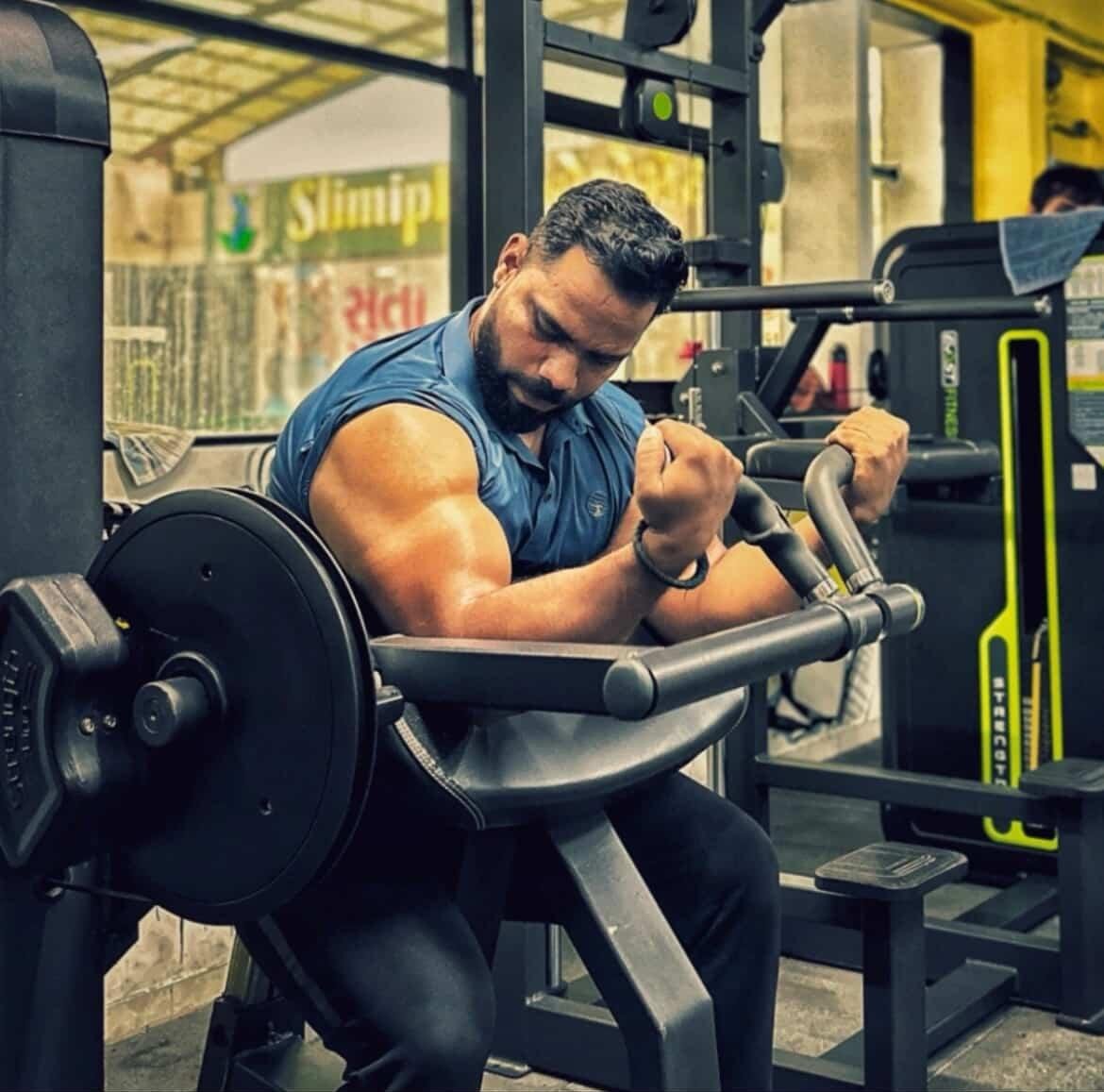
A randomized trial published in November 2025 compared machine preacher curls in 13 resistance-trained adults: 11 men and two women. Each person trained one arm through approximately 0–70 degrees of elbow flexion and the other through approximately 0–140 degrees. Training lasted eight weeks, with two sessions weekly and five sets per arm per session.
Both approaches increased elbow-flexor thickness. The lower-range partials had a small estimated advantage at the more distal measurement site; results were similar at the other site. Full-range training produced a somewhat larger one-repetition-maximum improvement. The estimated differences were small and uncertain, so this was evidence for a possible programming option, rather than a clear replacement for full repetitions.
Those details matter when deciding what to change. A measurement nearer the elbow is one location, not a photograph of the entire upper arm. A short experiment also cannot tell you which method will work best over several years. Avoid translating a regional result into a promise about a visibly bigger biceps peak.
A useful question is therefore personal and practical: does a deliberately restricted range let you perform productive, repeatable work while keeping the rest of your training intact? If your current curls are progressing and comfortable, this result supplies an option to investigate. It does not create a problem you must solve.
2. Make the support and endpoints repeatable
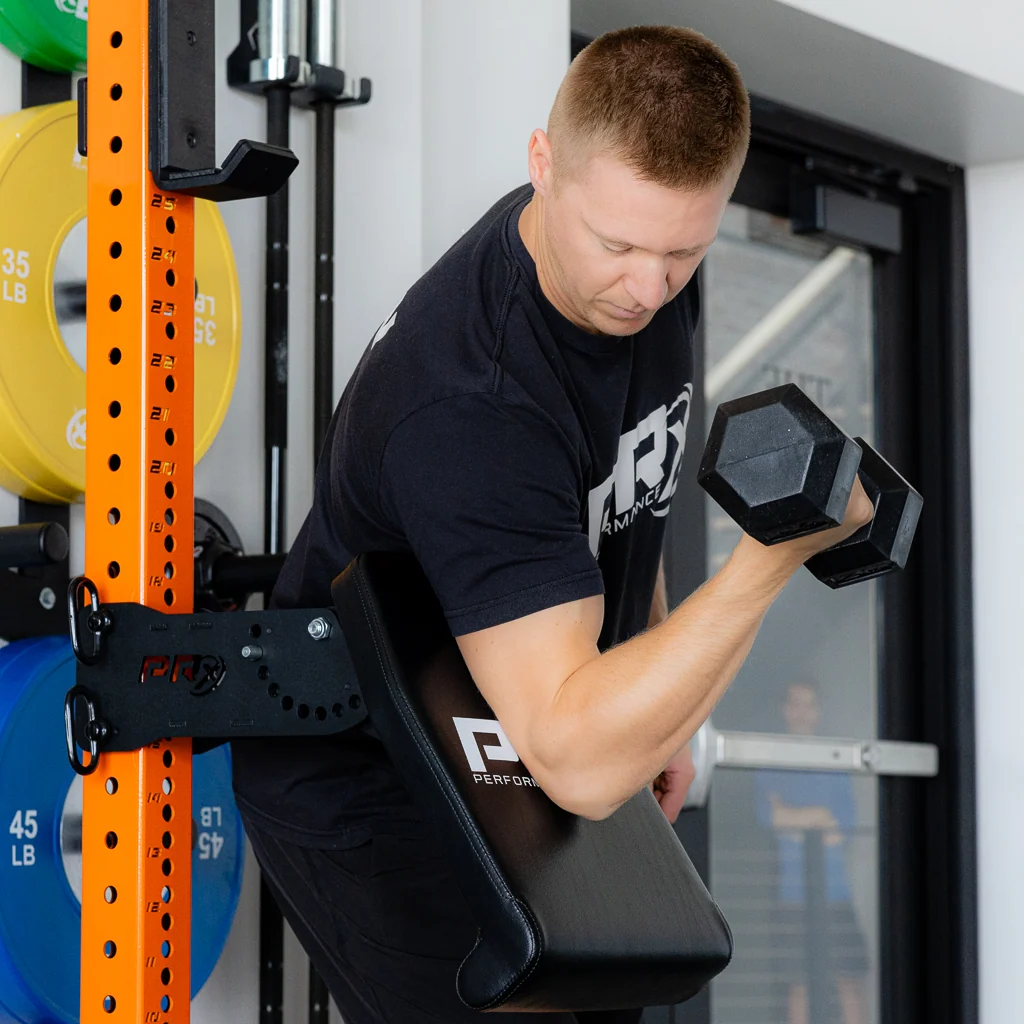
The preacher pad should support the upper arm rather than serve as a place to bounce the elbow. Set the seat so you can reach the handles or weight without lifting your shoulder or sliding forward. Keep your feet planted, and rehearse the movement with a light load before deciding where the working repetition will begin and end.
Machines differ. One model may provide a starting-position adjustment; another may have a fixed lever that does not suit your proportions. Follow that machine’s adjustment instructions. A particular manufacturer’s numbered position is not a universal elbow angle, and changing seats between sessions can alter what feels like the same repetition.
For a full repetition, choose your available controlled range. For a lengthened partial, deliberately use the lower part of the curl, where the elbow is more extended, with a clearly defined upper endpoint. This differs from keeping only the easy top portion. Neither version requires aggressively snapping the elbow straight or letting a heavy weight pull you into an uncomfortable position.
Try writing a setup description before increasing the load: seat position, upper-arm contact, starting point and finishing point. A short side-view video can reveal whether your shoulder lifts as the set becomes difficult. If you cannot reproduce the endpoints with a lighter weight, adding plates will make the comparison less useful.
With a dumbbell and an inclined support, also confirm that the bench is stable and intended to support the position. Keep the weight clear of the frame. An adjustable bench is useful equipment, but it is not automatically equivalent to a dedicated preacher station.
3. Separate a shorter range from a different resistance profile
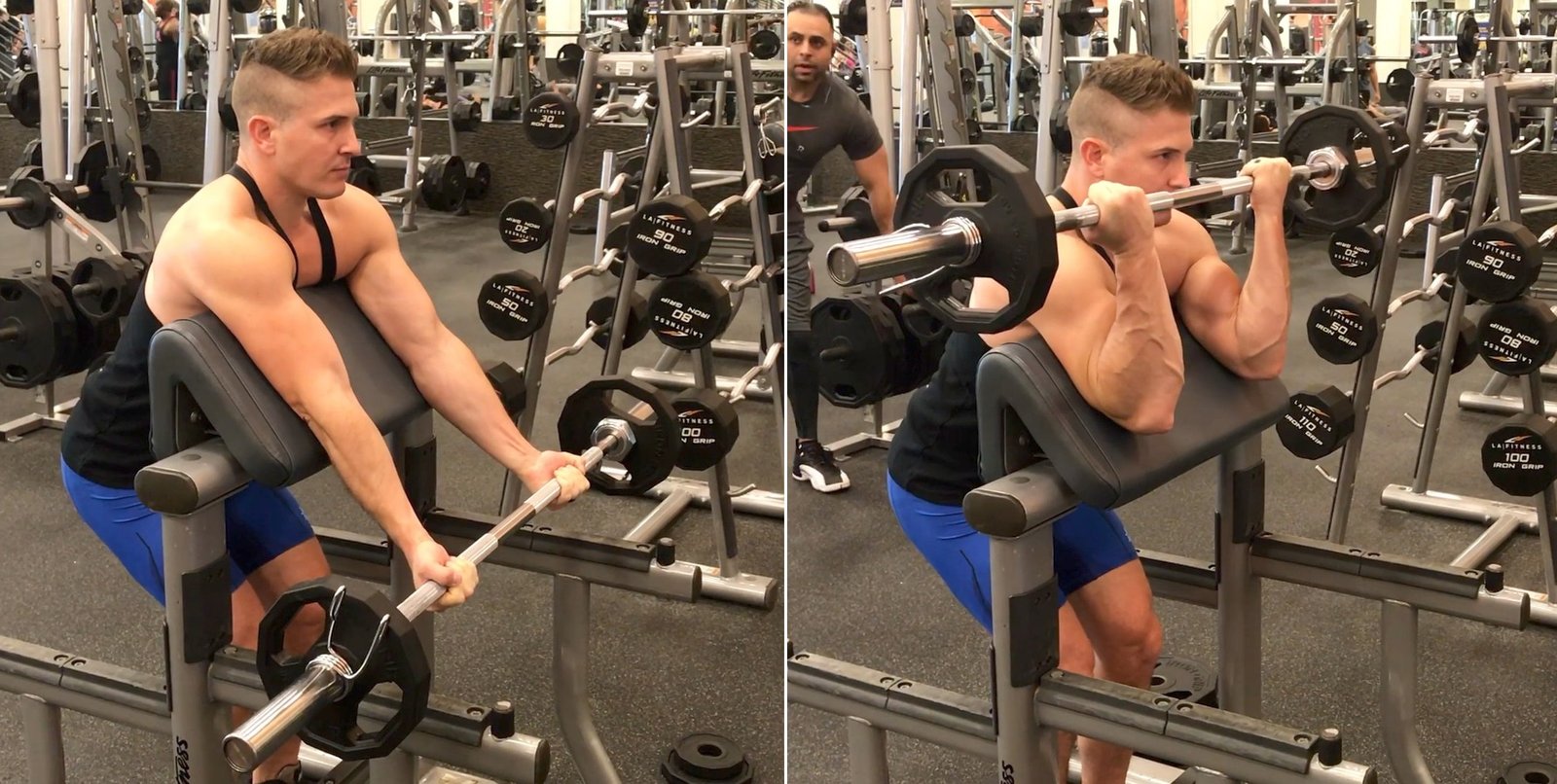
A free-weight preacher curl, a cable version and a selectorized machine can feel different even when the elbow travels through similar angles. Gravity pulls the free weight downward; a cable pulls toward its pulley; a machine adds the geometry of its lever and cam. The portion that feels hardest can change with the equipment and setup.
A separate ten-week study comparing barbell and cable preacher curls found similar increases in measured biceps thickness, while strength differences depended on the testing angle. That comparison changed the resistance arrangement rather than simply removing the upper half of a repetition. It is a reason to describe your exercise precisely, not to treat every curl with a pad as the same stimulus.
If you switch from a barbell to a cable and simultaneously shorten the range, you have changed two things. You may prefer the result, but your log cannot tell you which change explains it. For a cleaner practical comparison, retain the same station, grip and support while changing the chosen range.
Use the same caution with a heavier number. A machine stack, adjustable dumbbell and plate-loaded handle cannot be compared by their labels alone. Even within one setup, a bigger load through a shorter path is not the same performance as a full repetition with less weight. Record each version separately.
Small load increments can help once technique is stable. They should come from equipment designed for that purpose; avoid improvised stack stops or attachments. A research setup is not an instruction to modify a commercial machine. Choose the available equipment that lets you train consistently, rather than buying a new station to reproduce one experimental condition.

Equipment Worth Exploring
Explore equipment, accessories and gear from our carefully selected range.



Rubber Hex Dumbbells
Rubber-coated hex dumbbell pairs with a stable shape for home and commercial strength training.


VForce Wall Trainer
Space-saving wall-mounted functional trainer with pivoting cable arms and variable resistance ratios.


Multi Bench MBX-650 2.0
Adjustable multi-bench with roller adjustment, 15 backrest positions and accessory mounts.
4. Keep full-range strength and total workload in the picture
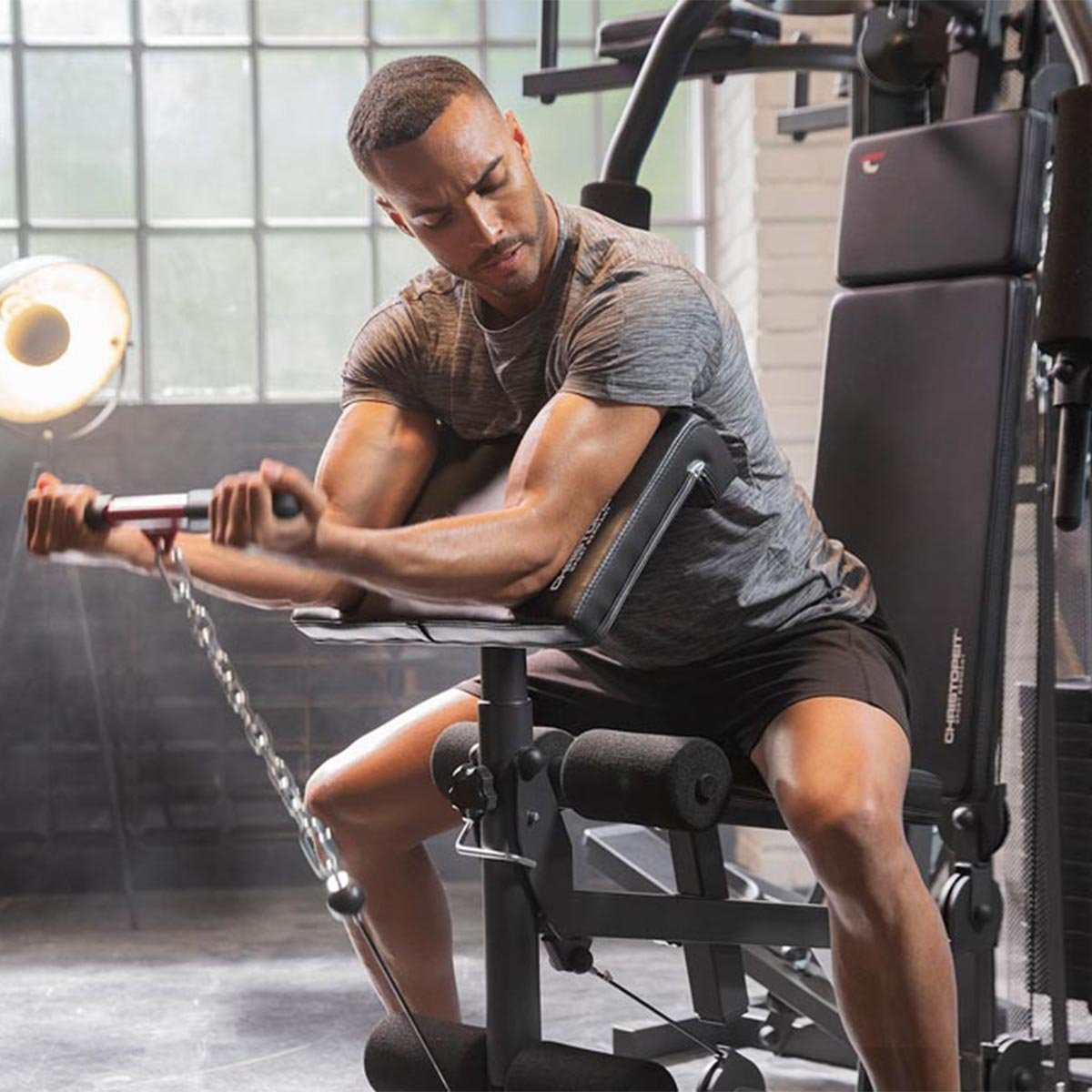
Your goal determines what counts as a useful result. If you want a stronger full-range curl, continuing to practise that task makes sense. If your main interest is muscle size, a controlled partial can be an accessory option, provided it fits your overall arm training and does not crowd out productive work.
Broader resistance-training evidence supports progressive training and indicates that complete ranges can benefit strength development. It also shows that training to momentary failure is not consistently necessary for improved outcomes. You do not need to copy an experimental workload or take every curl set to failure simply because a study used that approach.
As a conservative trial, replace a small amount of existing curl work instead of adding another exercise to every session. For example, retain your usual full-range work and substitute one or two accessory sets with clearly defined lower-range repetitions. That is a practical testing example, not a claim that this exact combination has been proved optimal.
Count the surrounding work as well. Rows, chin-ups and other pulling exercises already involve the elbow flexors, even though they are not interchangeable with isolation curls. Placing a demanding curl experiment after a much harder pulling session may change your performance for reasons unrelated to the new range.
During bodybuilding arm day, the aim is a useful training stimulus you can recover from and repeat. More discomfort, more soreness or a bigger pump does not independently demonstrate more muscle growth. If the change disrupts the next workout or makes the movement difficult to control, reduce the experimental work before assuming you need to push harder.

Bodybuilding Shirts & Workout Gear
Bodybuilding shirts, tanks and gym gear for lifters chasing muscle, size, symmetry and the pump.

OnlyGains Big Biceps & Meme Fans Hooded Hoodie
Make your off-duty look more fun with “OnlyGains Big Biceps”.

Big Biceps Theory Meme Sweater Bro Science T-Shirt
Add a playful “Big Biceps Theory” touch to your casual rotation.

Micro Biceps Club President Gym | Funny Muscle Shirt | Tank Top
Train hard, laugh a little, and rep “Micro Biceps Club President”.

Curls The Girls Shirt – Bicep Curls Top & Gymbros T-Shirt
Rep “Curls For The Girls” humor in and out of the gym.

Control Your Gains Stoic Greek God Marble Sculpture T-Shirt
Make gym days more fun with “Control Your Gains Stoic Greek God Marble” style.

Consistency Is Key Stoic Greek God Marble Sculpture T-Shirt
Make gym days more fun with “Consistency is Key Stoic Greek God Marble” style.

Lift Smart Brain Plate Tee
Show some lifting attitude with a playful “Lift Smart Brain Weight Plate” tee.

Gym Dost Thou Even Curl Medieval Knight Bicep Decal & B Sticker
Give your everyday gear a playful “Dost Thou Even Curl Medieval Knight Bicep” twist.

Gym If You're Reading This It's Arm Day Drake Parody & Sticker
Stick a little “If You're Reading This It's Arm Day Drake” humor on your favorite gear.

Mind Muscle Perfection Brain and Biceps Gym for Science T-Shirt
Show some gym-day personality with “Mind Muscle Perfection Brain and Biceps”.
5. Judge the experiment with a log that preserves the comparison
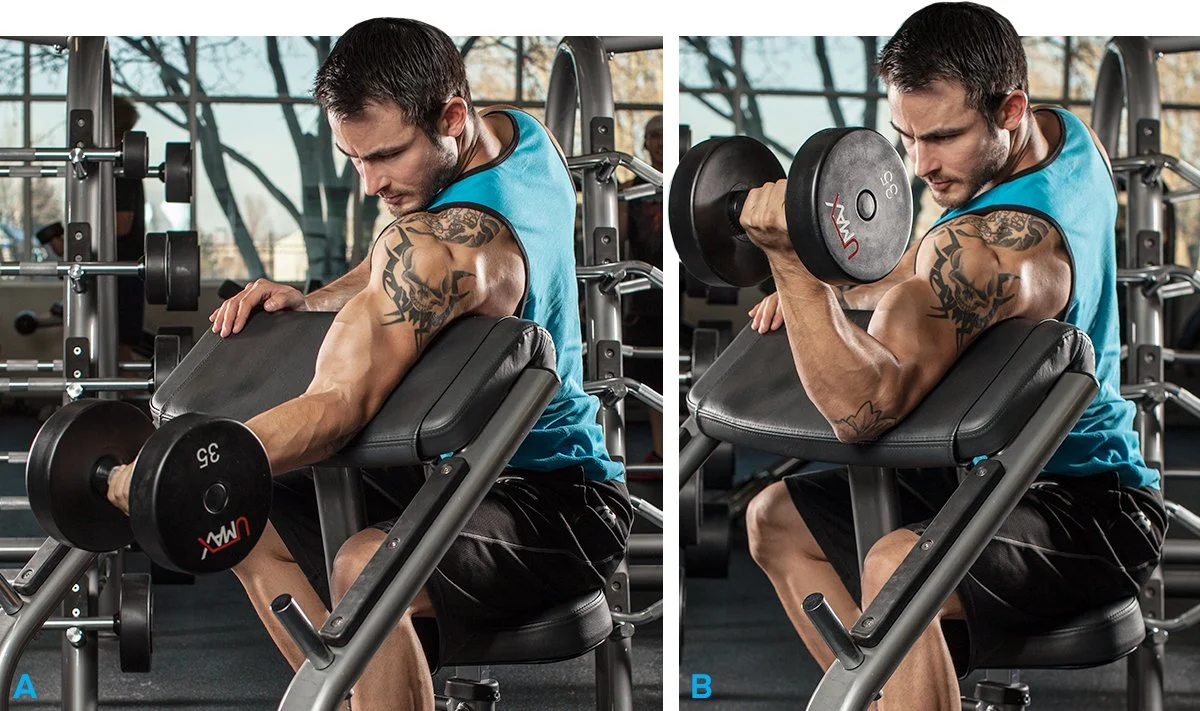
Give each version its own name in your training notes. “Preacher curl, full range” and “preacher curl, lower-range partial” are more informative than putting both under “biceps.” Include the machine or implement, seat setting, load, repetitions, rest interval and a brief note about how close the set felt to your technical limit.
Start with a familiarization period. An unfamiliar movement can improve quickly because you learn its rhythm, not because your arms have already grown. Once the setup is settled, keep the main details stable for several sessions. A planned comparison becomes much harder to interpret when the grip, tempo and endpoint change every week.
Progress repetitions within your chosen range before making the smallest sensible load increase. Suppose your target is ten to fifteen controlled repetitions: fourteen comparable reps tell you more than sixteen in which the final six become tiny movements. When increasing the load, check that the original lower endpoint and upper endpoint still appear in the set.
Review performance alongside comfort and the rest of the programme. Can you repeat the exercise without avoiding part of the movement? Is your ordinary full-range work stable? Are you recovering well enough to train as planned? These observations help decide whether the variation belongs in your routine, even though a personal training log cannot establish which method grows a particular muscle region fastest.
Keep the decision simple: retain the variation if it adds useful, manageable work; adjust it if the setup keeps drifting; remove it if it offers no practical benefit. Full repetitions remain a sound starting point. Lengthened partials earn their place through consistent execution and a clear purpose, rather than the novelty of doing less of the movement.