Advertising disclosure: This page includes affiliate product links that may earn us a commission, as well as products from our own store.
Straps on Lat Pulldowns? What a 12-Man Study Actually Found
Your fingers start opening before the last repetition reaches the bottom. It is tempting to assume a pair of straps will immediately turn that set into better back training. Sometimes a more secure connection is useful. But a plausible reason to use an accessory is different from evidence that it improves every lifter’s performance.
A small pulldown experiment makes that distinction clear. It compared trained men with and without straps and found no performance advantage under its test conditions. The useful response is to examine what ended your own set, preserve the exercise you intended to perform and judge the tool against a specific problem.
1. Start with the test, not the promise
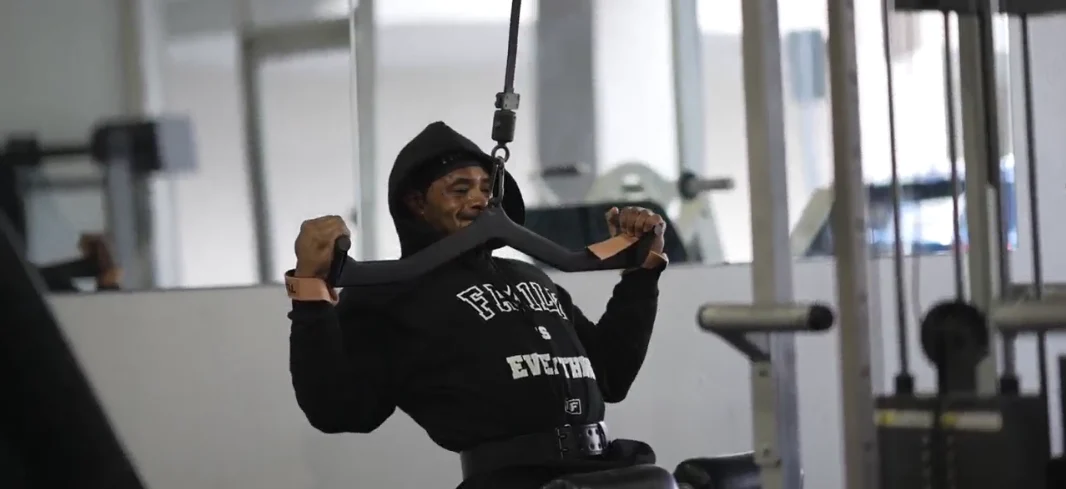
Twelve resistance-trained men took part in a comparison of lat pulldowns performed with and without lifting straps. Their average training experience was about six and a half years. The sessions included three sets to concentric failure at 70% of one-repetition maximum, separated by 60-second rest intervals.
The measured one-repetition maximum was essentially unchanged: 96.5 kg with straps and 96.6 kg without them. The study also found no statistically significant benefit for repetitions or the measured muscle-activation outcomes. That is evidence about this particular exercise and protocol, rather than a guarantee that every individual responds identically.
It was an acute performance comparison, not a long-term muscle-growth trial. It cannot establish that straps build more muscle, prevent growth or replace grip training. Nor does it prove they are useless whenever a handle genuinely slips. The question tested was narrower than either an enthusiastic sales pitch or a blanket rejection of the accessory.
Use the finding to challenge an automatic assumption: putting straps on does not, by itself, demonstrate that the back received a better workout.
2. Keep pulldowns separate from other pulling tasks

A deadlift, a heavy hold and a seated pulldown all involve the hands, but they do not ask the same thing of the body. The load, duration, handle shape, movement path and point of fatigue can differ. A lifter who feels a clear benefit from straps in one task should not assume the same improvement appears in every pulling exercise.
Consider two ordinary situations. On a deadlift, the bar might roll toward the fingertips even while the lifter can maintain the intended body position. On a pulldown, the hands might remain secure while the upper arms can no longer complete the planned movement. Both sets feel hard. Only the first description clearly identifies a slipping connection as the immediate problem.
This is a practical distinction, not a claim that you can diagnose a muscle’s remaining capacity perfectly from sensation. Several things can limit a set together. Breathing, discomfort, technique and local fatigue can overlap, especially when rest is short or the preceding exercises were demanding.
Define the task before judging the accessory. If your objective is a controlled pulldown, evaluate controlled pulldown repetitions. A stronger fixed-bar pull or a longer hold is a different result. Treating them as interchangeable makes it easy to buy a solution without checking the problem.
3. Notice what your hands are actually doing

Grip fatigue and grip failure are not identical descriptions. Your forearms can feel heavily worked while the handle remains secure. Conversely, an awkward handle may begin moving in the hand before the rest of the exercise feels close to its limit. Record the visible event rather than relying only on the strongest sensation.
Watch for fingers opening, repeated regripping or a handle rolling toward the fingertips. Also notice whether wrist position changes as you try to keep hold. Those observations give you something concrete to compare when you try a grip aid. They do not prove that the accessory will add repetitions or improve a long-term outcome.
A conventional loop strap creates a connection around the wrist and handle. It is different from a wrist wrap used for support, and different styles do not all attach or release in the same way. Follow the instructions for your own model and practise its setup with a light, controllable load before using it on a demanding set.
Keep both sides even and check that loose material cannot catch in the machine. You should understand how to unload and release the connection before starting. If the arrangement pinches, slips or forces an uncomfortable position, change the setup rather than treating discomfort as proof that the strap is working.

Equipment Worth Exploring
Explore equipment, accessories and gear from our carefully selected range.

Leather Lifting Straps
Padded leather straps support grip during heavy rows, deadlifts and pulling exercises.

Leather Wrist Grips
Padded leather lifting grips help support the hands and wrists on heavy pulling exercises.


48in Aluminum Lat Bar
48-inch aluminum lat pulldown bar with knurled grip and rotating center swivel.

Lat Pulldown Set
Multi-grip cable attachment set for pulldowns, rows, and varied upper-body training.

Trinity Lat Machine LSW-850
Weight-stack pulldown tower offering three cable directions and adjustable seated support.

VForce Lat Tower
Wall-mounted cable tower with pivot arms and adjustable 1:1 or 2:1 pulley ratios.
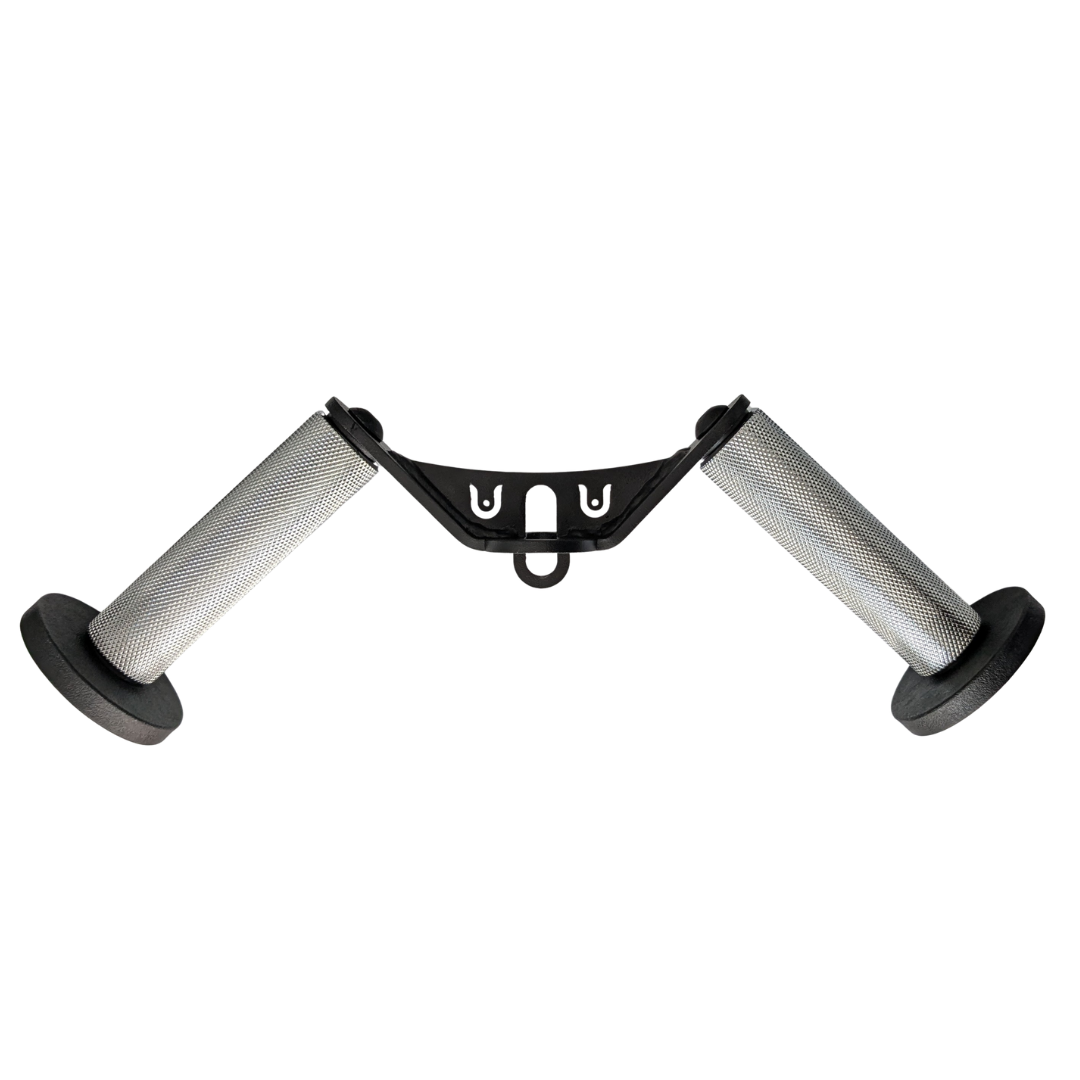
W Grip
Angled cable grip for comfortable rows, pushdowns, and curls.
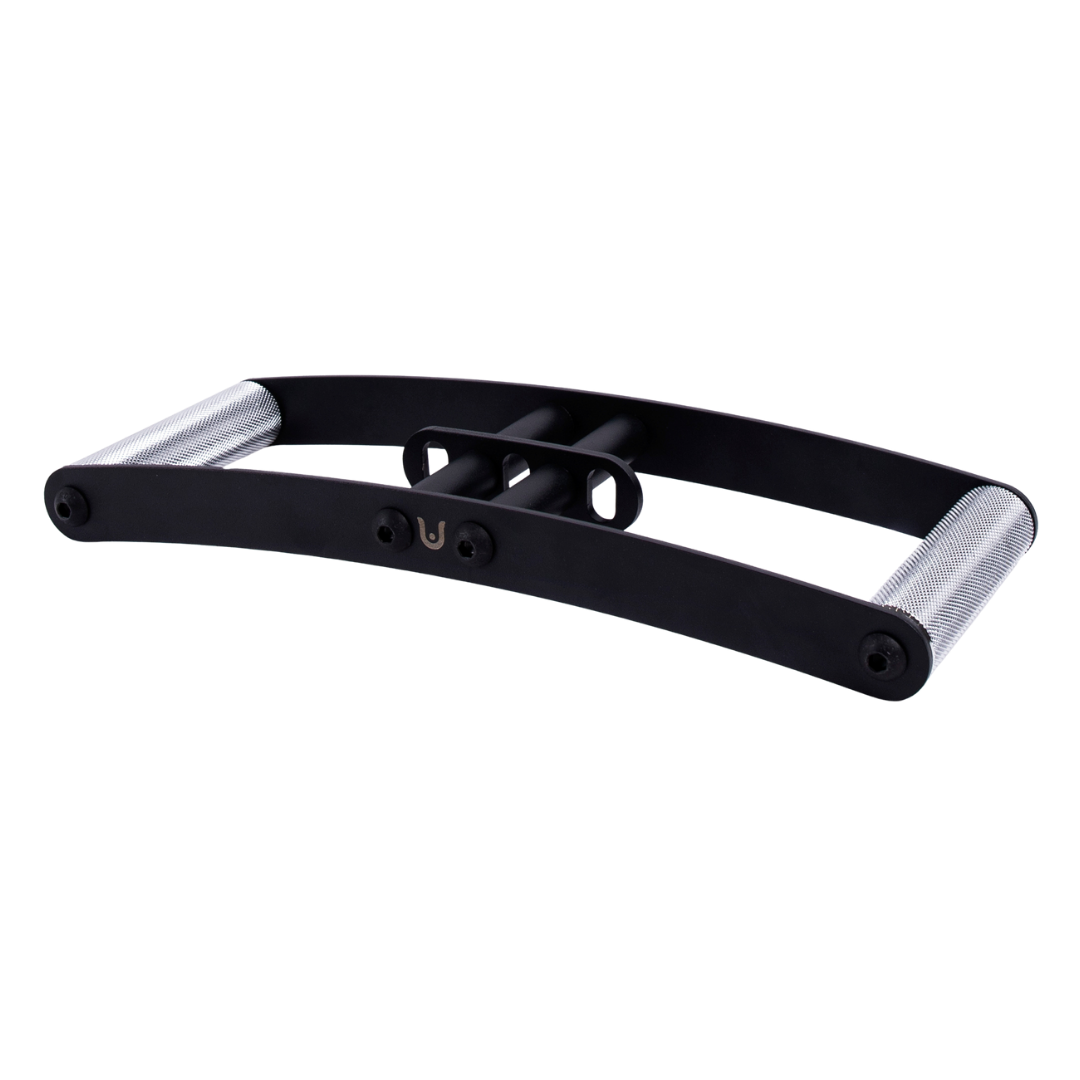
Horizon Grip
Ergonomic V-style cable grip for rows and back training.
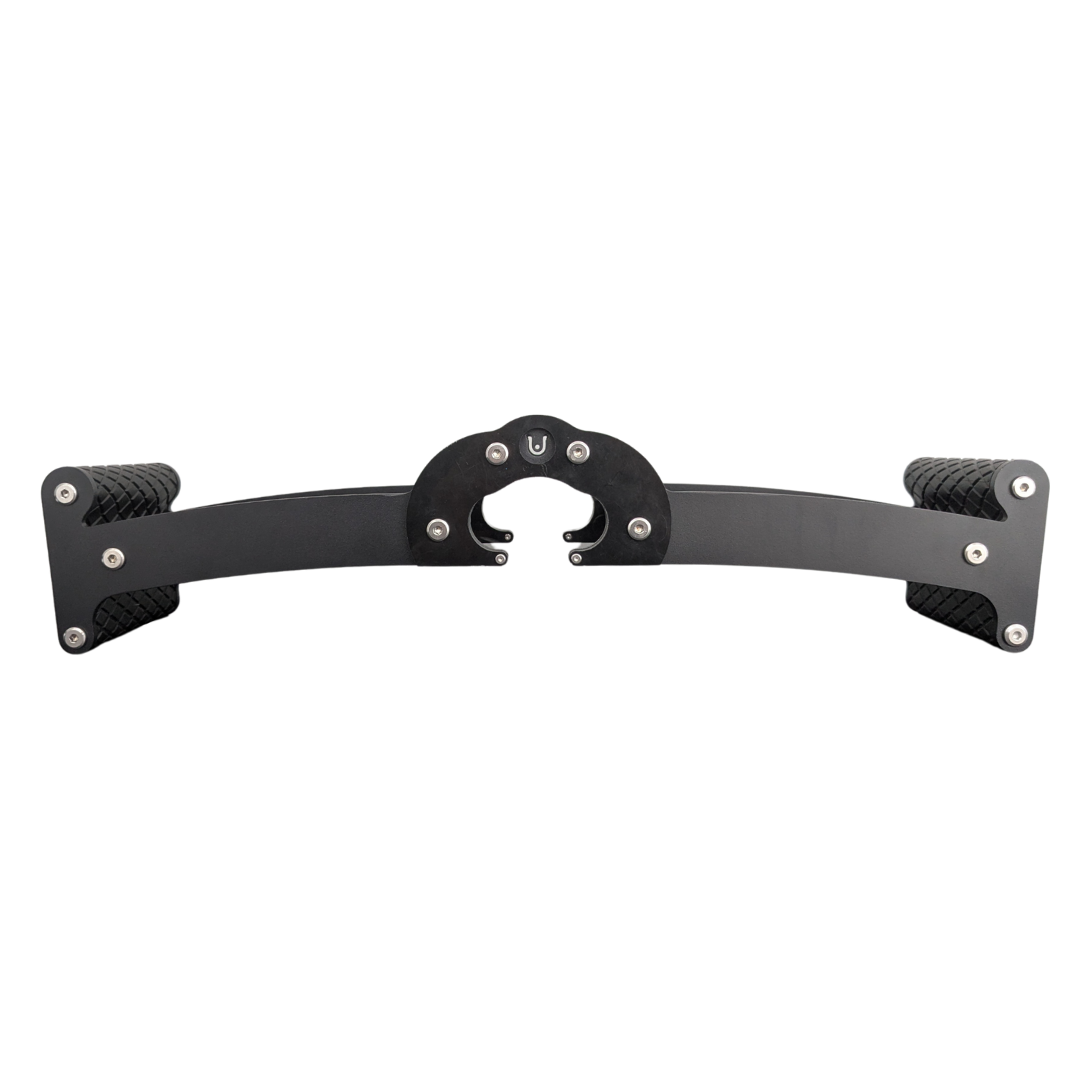
Back Bar
Multi-grip cable and landmine bar with a built-in deadlift jack.
4. Preserve the pulldown while changing the connection
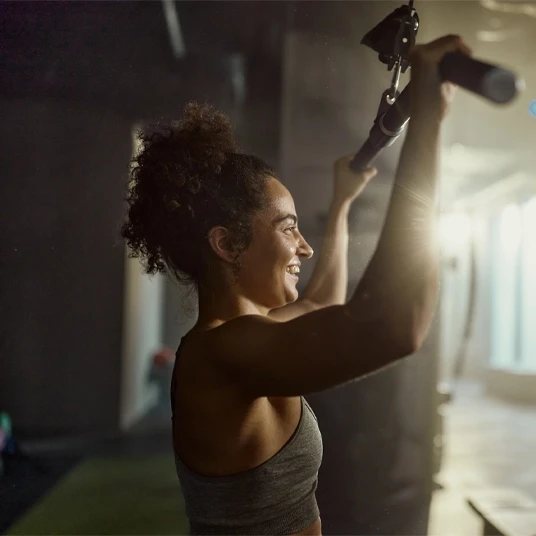
A grip aid should not quietly turn a pulldown into a different exercise. Start with a stable seat and thigh-pad setting, feet supported and a manageable load. Establish a small, consistent torso lean rather than progressively throwing the body backward to finish repetitions.
Pull the handle toward the upper chest while driving the elbows down, then control the return. Use a comfortable, repeatable range. Do not crane the head forward to manufacture contact or keep pulling simply because the cable can travel farther. The purpose is a reproducible movement, not a compulsory collision between the bar and your shirt.
Handle choice matters to the comparison. Switching from a wide bar without straps to a close neutral handle with them changes more than the connection. It can alter hand spacing, arm position and the movement you reproduce. Keep the same attachment when your question is specifically whether straps help that pulldown.
The same applies to load. If you add weight as soon as the straps feel secure, a shorter range or larger swing may explain the apparent improvement. First show that you can maintain the original movement. A heavier stack number is useful only when it represents the task you meant to train.
5. Give the accessory a fair, repeatable comparison

Choose a familiar session and keep the machine, attachment, exercise order, load and rest duration reasonably consistent. Allow enough practice that fumbling with a new strap is not the main difference. Then note your repetitions, whether your grip slipped and whether the last repetitions still resembled the first.
A log might say: same handle and load, three working sets, no slipping on the first two, repeated regripping on the third. That is more informative than writing that straps felt amazing. If the next strapped session uses a different machine or follows a much easier workout, record that context instead of crediting the accessory for everything that changed.
Look for a pattern across comparable sessions rather than declaring a winner after one extra repetition. Better sleep, more rest or greater familiarity can also change performance. Your observations can help make a training decision without becoming a controlled experiment or proof of future muscle growth.
Keep your goals explicit. If holding strength matters, include appropriate unassisted work rather than assuming assisted pulling covers every objective. If the aim is back training and your hands repeatedly end otherwise controlled sets, a grip aid is a reasonable tool to assess. Consistent, progressive training remains the main project; the accessory earns its place by solving a repeatable problem.

Funny Gym Shirts & Workout Gear
Funny gym shirts, tanks, hoodies and workout gear for lifters who like training hard.

Lat Man Big Back – Hooded With Huge Lats – Jumper Hoodie
Stay casual and show some superhero attitude with “Lat Man Big Back”.

Shirt Pull Day – Back & Biceps Meme Top T-Shirt
Heavy lifts, good laughs, and a little “Pull Day Graphic” energy.


Gym Dost Thou Even Pull Medieval Knight Back Day Muscle Tank Top
Bring “Dost Thou Even Pull Medieval Knight Back” humor to your next lifting session.


Grip Training Get A Grip Hoodie
Show off your lifting humor in a laid-back “Grip Training” hoodie.

Slip Not Grip Training – Heavy Metal Workout Decal for Sticker
A fun “Slip Not Grip Training” touch for bottles, laptops, and lockers.

Pumpeye Sweater Forearm & Grip Training Popeye Meme T-Shirt
For laid-back days and bodybuilding humor: “Pumpeye”.

Huh Huh Let'S Train Grip Beavis And Butt-Head T-Shirt
Make gym days more fun with “Huh Huh Let's Train Grip” style.

Lat Spread Mickey Mouse Decal Meme Water Bottles Sticker
A fun “Lat Spread” touch for bottles, laptops, and lockers.