Why a cable crunch is worth learning
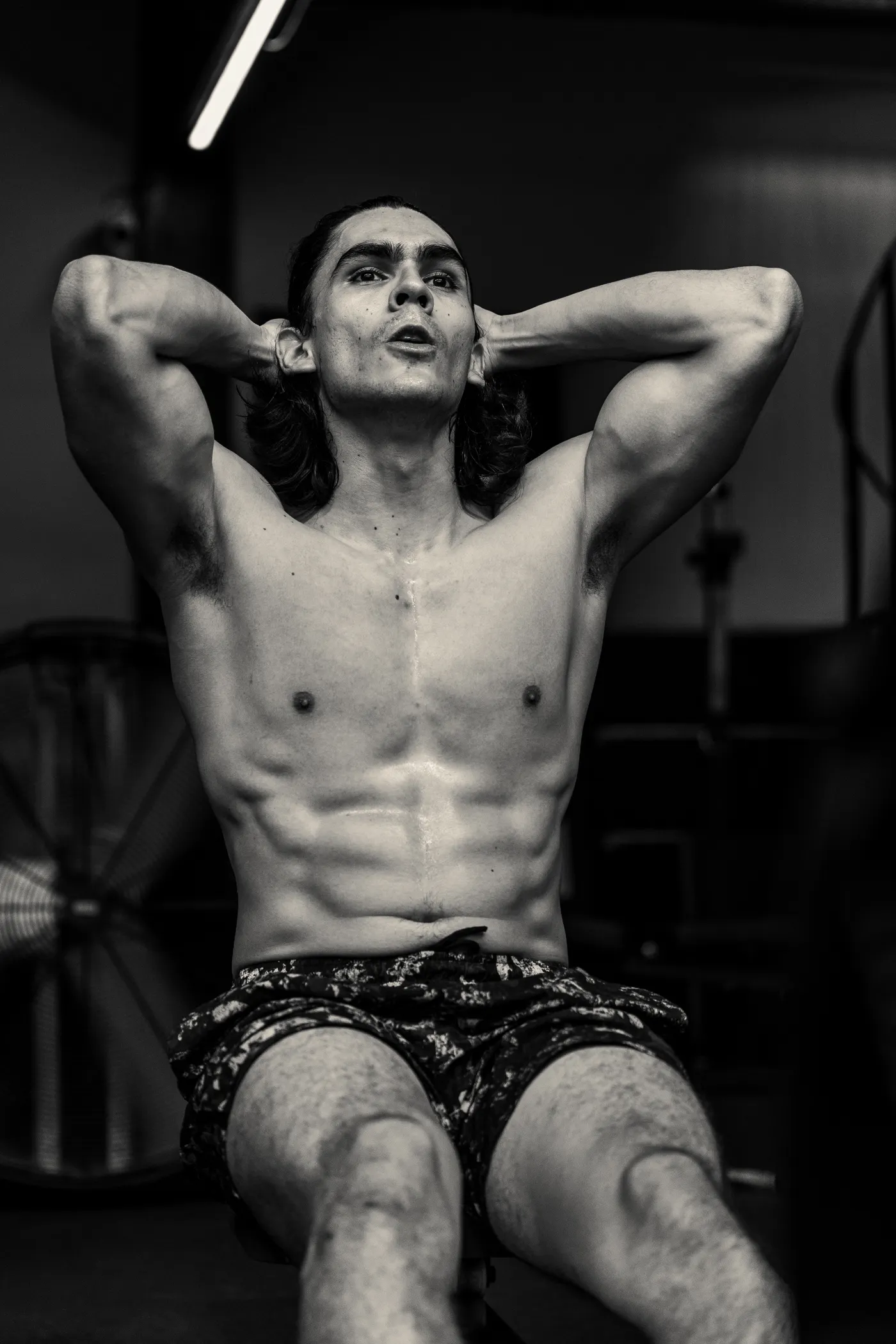
The cable crunch has one obvious advantage over endless unweighted floor repetitions: resistance is measurable. A high pulley, a comfortable attachment and a stable position create a repeatable abdominal exercise that can become gradually harder. The goal is controlled trunk flexion, not a dramatic bow at the hips or a contest to move the heaviest stack. You should be able to identify the same movement from the first repetition to the last.
Imagine the front of the rib cage moving toward the pelvis as the abdominal wall shortens. The rectus abdominis helps create that movement, while the obliques and other trunk muscles control position. The hips and knees act as a relatively steady base. You do not need to pull the rope downward with the arms or force the elbows to touch the floor. The effective range is the one you can control.
This is not a magic lower-abs isolation trick. Planks, curl-ups, hanging raises and anti-rotation exercises all offer different challenges. Laboratory measurements of muscle activation can describe what happens during a repetition, but they cannot by themselves prove which exercise will produce the most muscle growth over months. Progressive resistance training is useful, yet no single cable variation has a monopoly on results.
Consistency is the practical advantage. Record the pulley height, attachment, knee distance, resistance and repetitions, then reproduce the setup next week. A cable tower can also serve many other exercises without adding a dedicated ab machine. The cable crunch earns its place when it is comfortable, challenging and repeatable—not because a single set promises visible abs.
High-pulley setup: rope, knees and cable angle
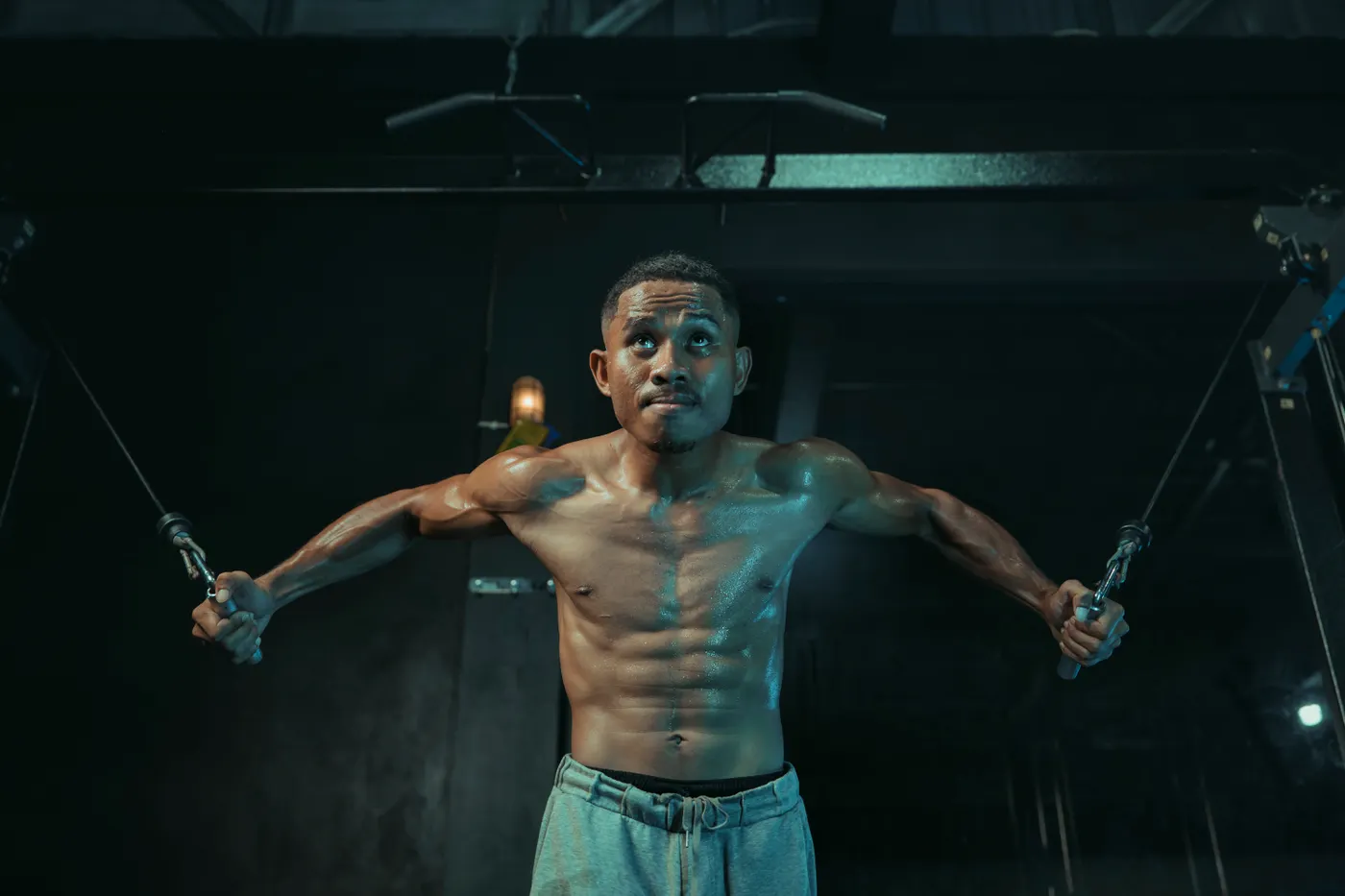
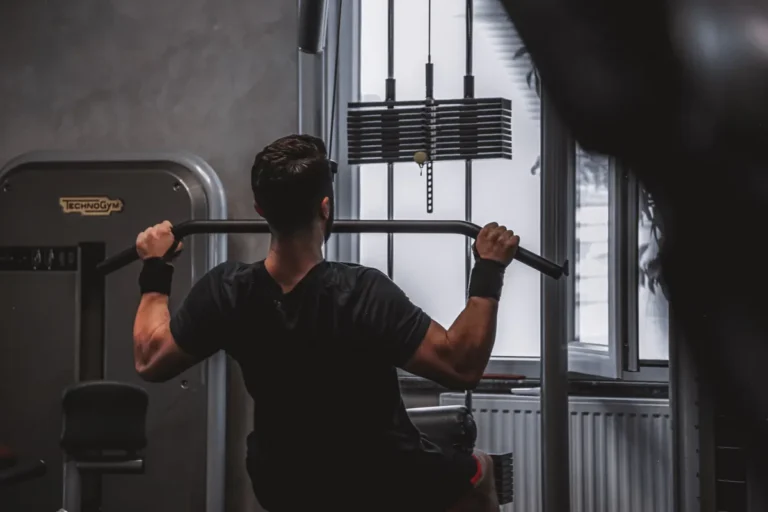
Attach a rope to a high pulley and begin with a light resistance. Kneel on a stable pad far enough from the stack to keep the cable under tension, but not so far that it drags you backward. Hold the rope ends near the sides of your head. Your hands should remain in approximately the same position relative to your head as the torso moves. The arms connect you to the cable rather than performing a pulldown.
Begin tall, allowing a comfortable lengthening of the abdominal wall without aggressively arching the lower back. Exhale as the sternum rolls toward the pelvis. Pause briefly at the bottom, then return over two or three seconds. Do not slam the weight stack or collapse into a deep stretch at the top. A small controlled arc is better than a large one created by momentum.
There is no universal perfect distance from the machine. The cable angle changes with pulley height, limb length and knee placement. Try several light repetitions in two nearby positions and choose the one that lets the rib cage move smoothly without pulling the shoulders toward the ears. Keep that position consistent as you add weight. If the line of pull feels awkward, change the setup before increasing resistance.
If kneeling hurts, do not force the exercise. A seated or standing variation may suit you better, although leverage and balance demands will change. Keep the mat clear of moving plates and cables. Remember that a two-to-one pulley ratio can make the displayed stack weight different from the force at the handle. Compare your own progress using the same equipment, not arbitrary numbers across machines.

Equipment Worth Exploring
Explore equipment, accessories and gear from our carefully selected range.
VOLTRA
Compact digital cable trainer with smooth, adjustable resistance.

Go-Tone Pro
Portable digital cable trainer with up to 66 lb (30 kg) of adjustable resistance.

Long Tricep ERGO Ropes
Extended triceps ropes with ergonomic grips for cable pressdowns and overhead extensions.
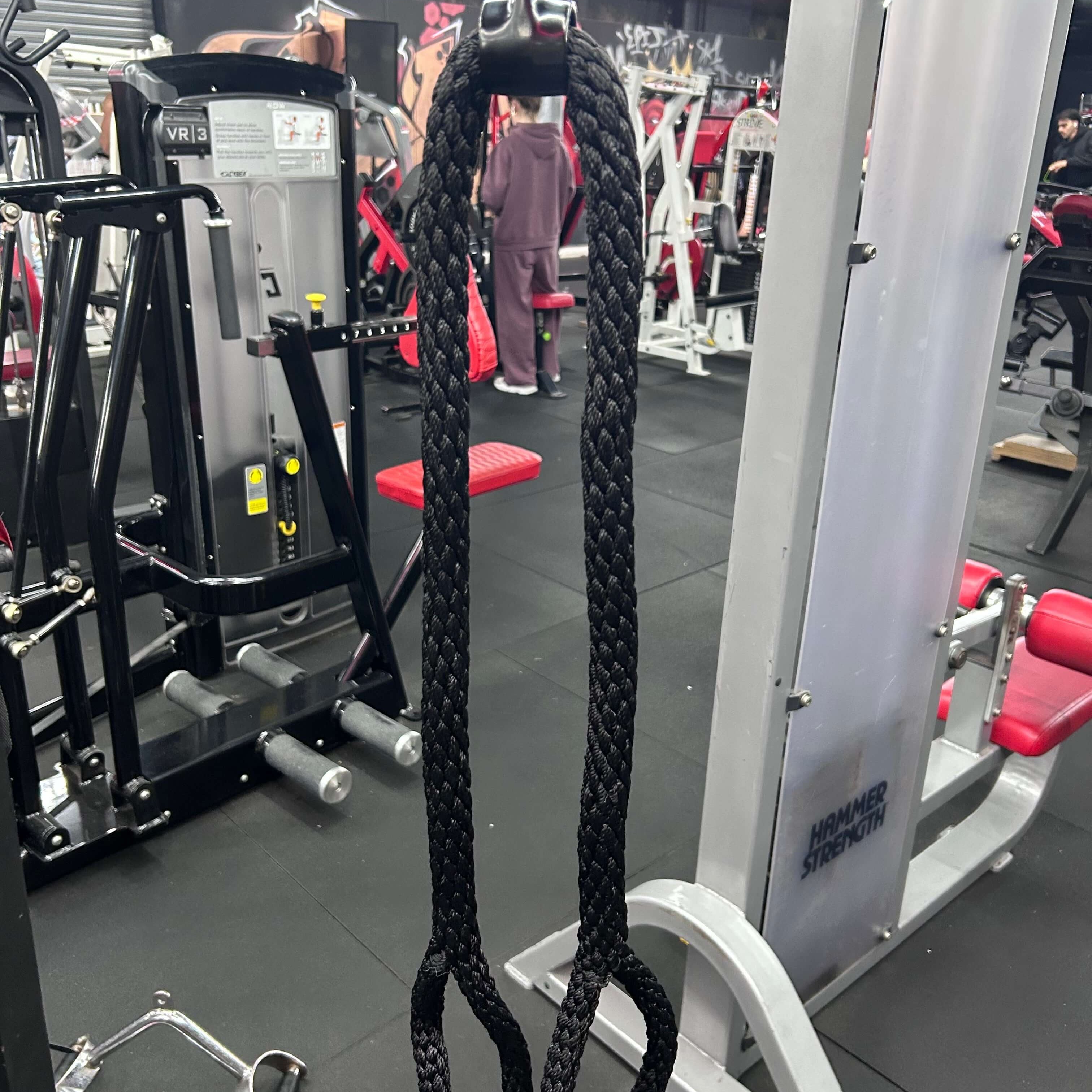
Super Long Tricep Rope
Extra-long looped cable rope for triceps pressdowns and overhead extensions.
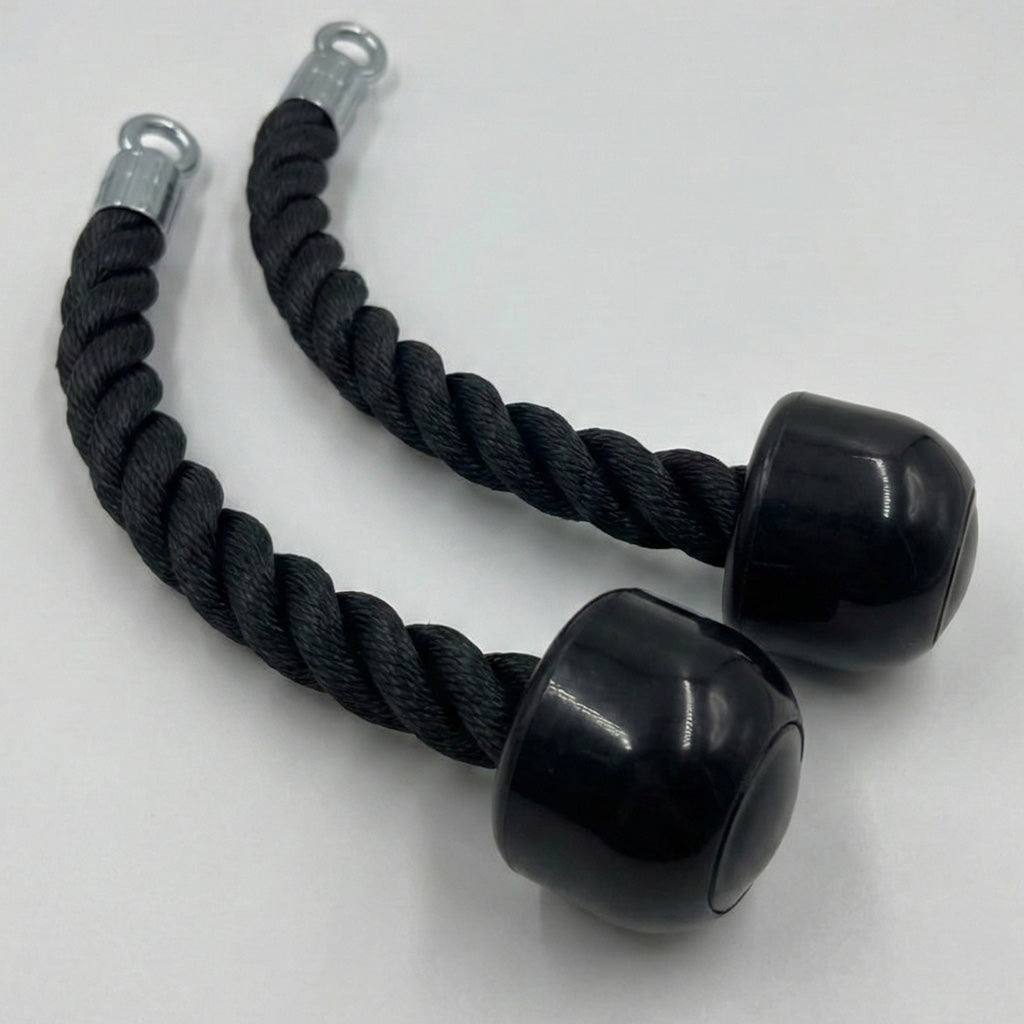
Individual Tricep Ropes
Pair of individual cable ropes for triceps pressdowns and cable hammer curls.
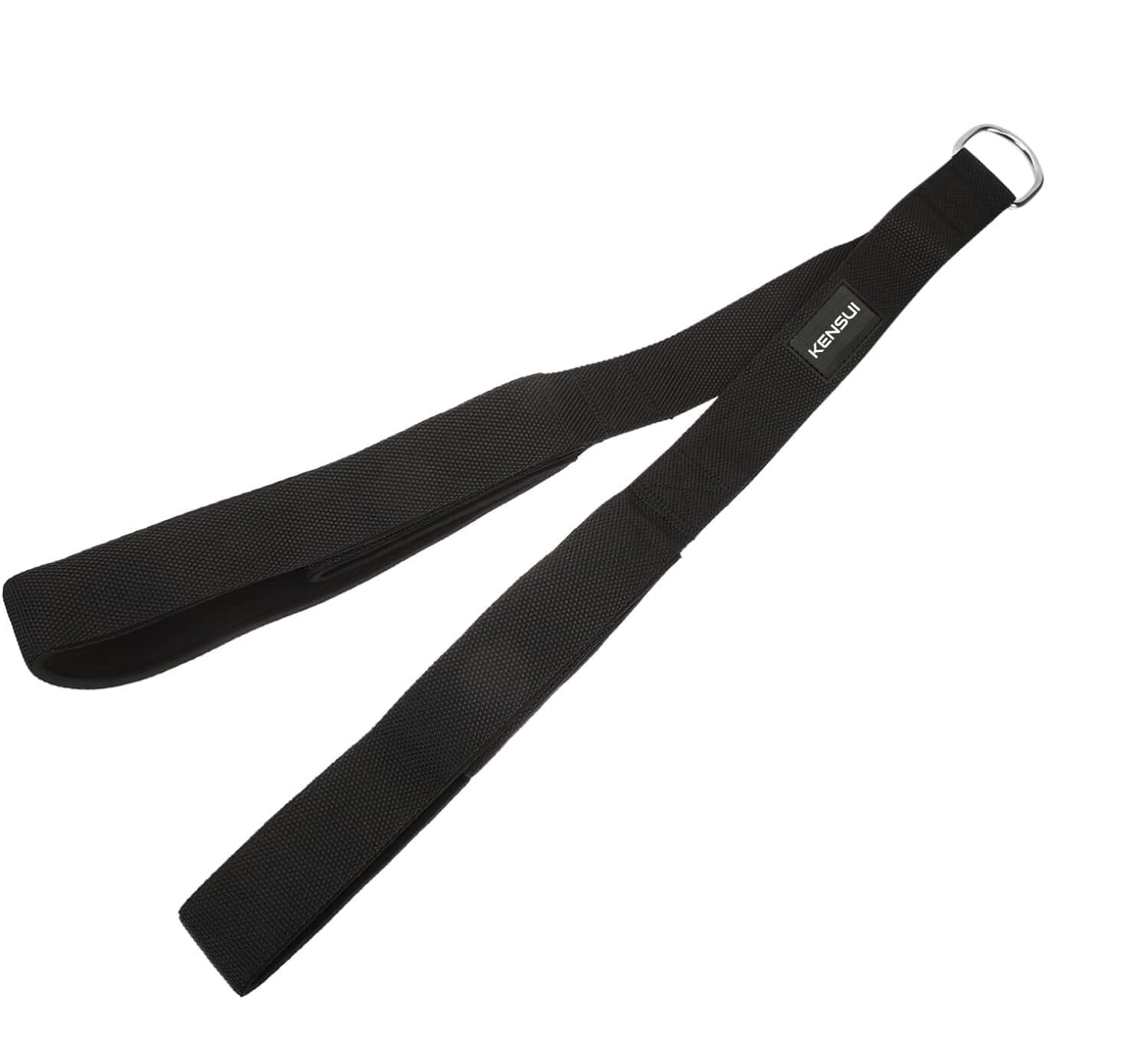
Multi-Length Tricep Strap
Adjustable-length cable strap for triceps, biceps and upper-body cable exercises.

GymPin Ergo Handles
Pair of ergonomic cable handles shaped for comfortable triceps and pulling exercises.

GymPin D Cuffs
Adjustable wrist cuffs with textured grips for supported cable-machine exercises.
Premium Carabiner
Durable carabiner for connecting cable attachments and training accessories.
Stop pulling with your arms and folding at your hips
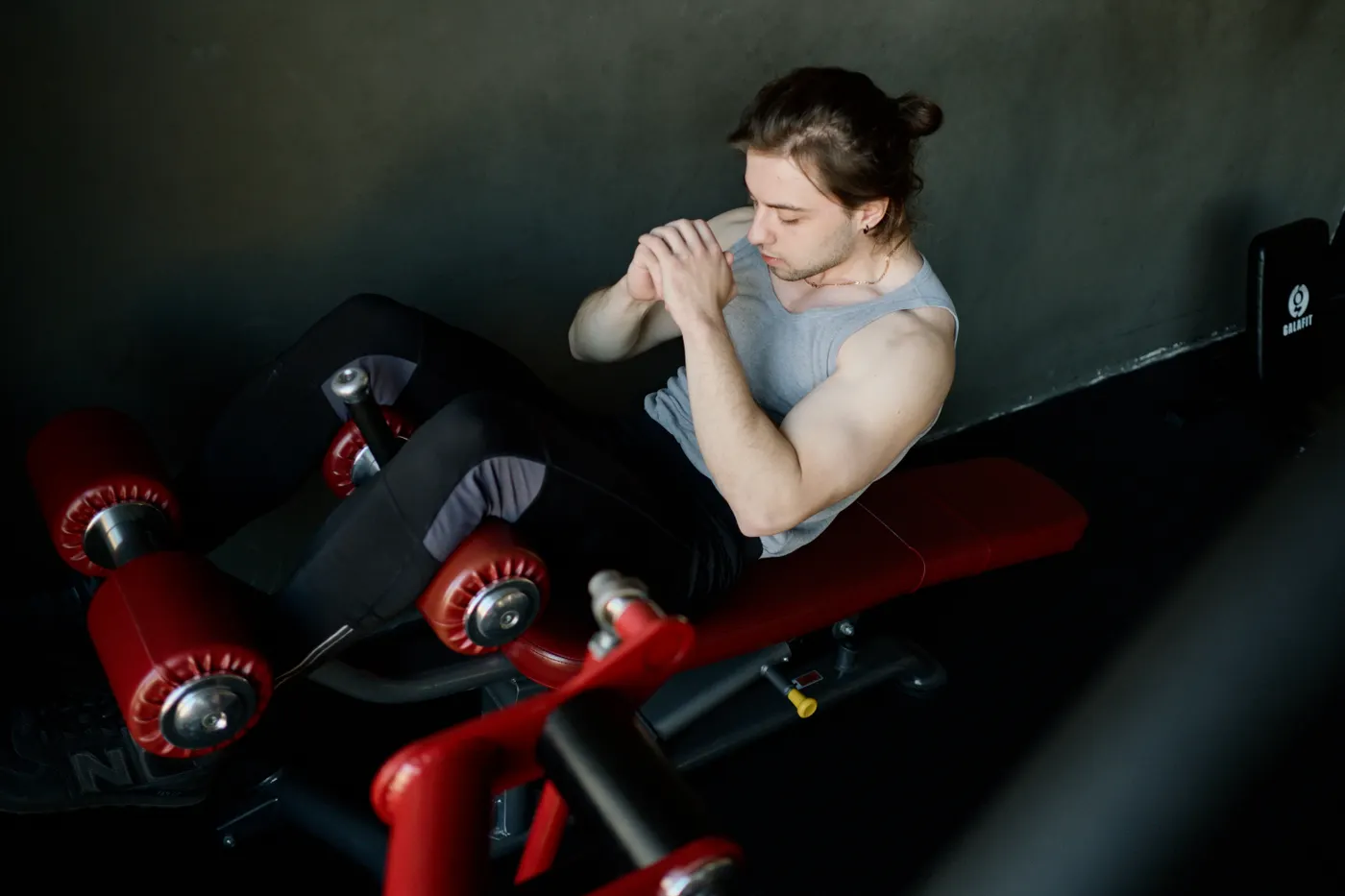
The most common error is a kneeling lat pulldown disguised as a crunch. The elbows sweep toward the thighs, the shoulders do most of the movement and the cable travels a long way, but the trunk hardly flexes. Another error is folding at the hips while the chest and pelvis travel together. These motions are not necessarily useless, but they do not reproduce the intended abdominal curl.
Rehearse three slow repetitions with almost no weight. Keep the rope near the temples, look down naturally and think about the front ribs approaching the waistband. Between sets, touch the abdominal wall briefly to understand the contraction, then repeat without using your hand. The movement may look smaller than a sit-up. That is acceptable when the muscle is doing the intended work.
Breathing can make the movement easier to coordinate. Exhale during the shortening phase and inhale as you return. You do not need to hold the same maximal brace used in a heavy squat, because this exercise requires trunk motion. A short pause at both ends exposes momentum. If you cannot lower the resistance slowly, the load is too high for your current technique.
Sharp spinal pain, radiating symptoms or dizziness are reasons to stop. If light cable crunches repeatedly aggravate your back, choose another comfortable core exercise rather than forcing an end range. Dead bugs, planks and anti-rotation presses challenge the trunk differently. The best movement is one you can perform safely and progressively, not the one you feel obligated to use.

Funny Gym Shirts & Workout Gear
Funny gym shirts, tanks, hoodies and workout gear for lifters who like training hard.


Check Out My Six Pack Donut – Donut Meme Decal for Shak Sticker
A fun “Check Out My Six Pack Donut” touch for bottles, laptops, and lockers.

Safety Practice Safe Sets Hooded Jumper Top Hoodie
Show off your bodybuilding humor in a laid-back “Gym Safety” hoodie.

Gym Makes Me Happy Smiley Face Hooded Pullover Top Hoodie
Stay casual and show some powerlifting attitude with “Gym Makes Me Happy”.

Gymhead Lifting On My Mind Meme Bro Athletic Shirt Tank Top
Bring “Gymhead” humor to your next lifting session.

Let It Grow Motivation Decal Water Bottles Meme Vinyl Sticker
A fun “Let It Grow” touch for bottles, laptops, and lockers.

Shirt Rats – & Bros – Meme Gains & T-Shirt
Bring “for Gym Rats” humor to your next gym day.

My Therapy – Bodybuilding Powerlifting Meme Sweater T-Shirt
Add a playful “My Therapy” touch to your casual rotation.

Bicep Heart I Love Gym Funny Workout | Swole Heart Musc Tank Top
Train hard, laugh a little, and rep “Bicep Heart I Love Gym”.

Core strength is not the same thing as visible abs
Performing heavier cable crunches demonstrates improved ability in a loaded trunk-flexion task. It does not directly measure abdominal muscle growth and it does not show that fat has disappeared from the waist. Visible definition depends on muscle development, anatomy and overall body-fat levels. Repeated crunches cannot select the body area from which stored energy is used.
Core exercises also emphasize different actions. Cable crunches and curl-ups involve spinal flexion. Planks and dead bugs emphasize maintaining trunk position. Pallof presses resist rotation, while loaded carries combine walking, grip and trunk control. They recruit overlapping muscles without being interchangeable. A balanced routine may combine one challenging flexion exercise with one stabilization pattern rather than doing every variation each session.
Small electromyography experiments help describe the muscle activity of different abdominal movements, but they do not predict an individual’s physique changes. Research comparing several crunch and leg-raise variations has not established neatly isolated upper and lower compartments of the rectus abdominis. Avoid selecting exercises from an activation percentage alone. Instead, ask whether the movement can be performed well and progressively challenged.
Squats, hinges, rows and overhead presses already require trunk control, yet they do not automatically replace direct abdominal work. Conversely, a lifter doing hard gymnastics or hanging core exercises may need very little additional flexion volume. If aesthetics are the main goal, nutrition and overall training consistency matter more than doubling crunch repetitions whenever the mirror disappoints.
How many sets, how heavy and how to progress
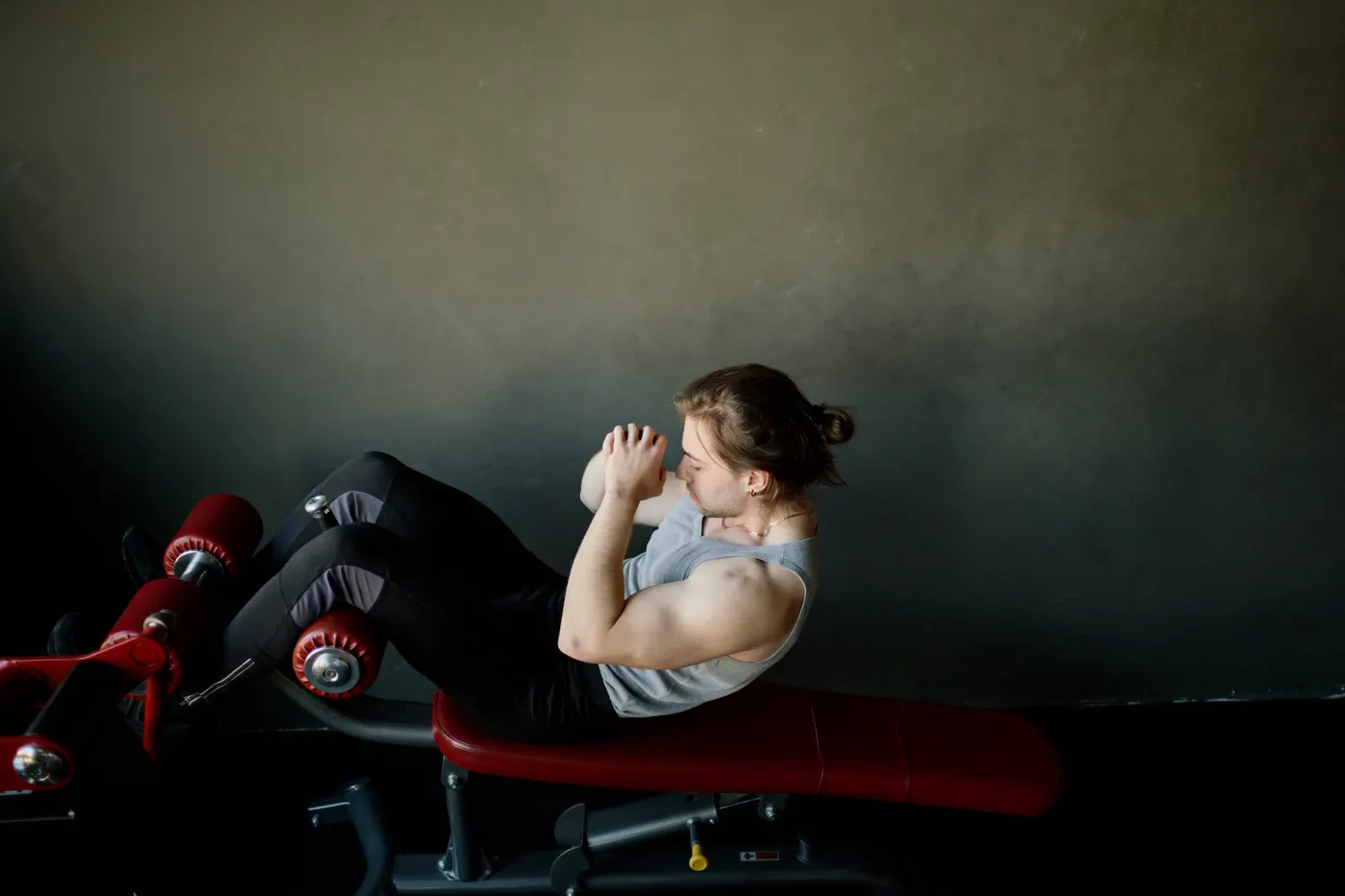
Begin with two or three working sets of eight to fifteen controlled repetitions once or twice weekly. Choose a load that leaves roughly one to three clean repetitions in reserve. If the final reps require jerking the hips, yanking with the arms or losing the breathing rhythm, stop the set. Rest about sixty to ninety seconds, or longer if needed to keep the technique consistent.
Use double progression. Suppose you begin with three sets of ten tidy repetitions. Keep the same pulley height, attachment and knee position. Add a repetition or two over several sessions until all sets reach fifteen. Then increase resistance by the smallest available step and return to ten or eleven repetitions. A small increase beats a dramatic jump that turns the movement into a pulldown.
Training volume influences hypertrophy in broad resistance-training research, but more is not automatically better. The evidence does not establish a mandatory abdominal set quota. Begin with four to six challenging direct flexion sets per week and account for the other core work already in your routine. Increase volume only when technique, recovery and progress justify it.
Put demanding cable crunches after heavy squats or deadlifts if those lifts require your freshest trunk control. If abdominal training is the main priority, place it earlier. Track load, clean repetitions, perceived effort and setup details. Do not change weight, tempo, range and knee distance all at once. A repeatable stimulus tells you far more than a single session that leaves the abs sore.
Equipment Worth Exploring
Explore equipment, accessories and gear from our carefully selected range.
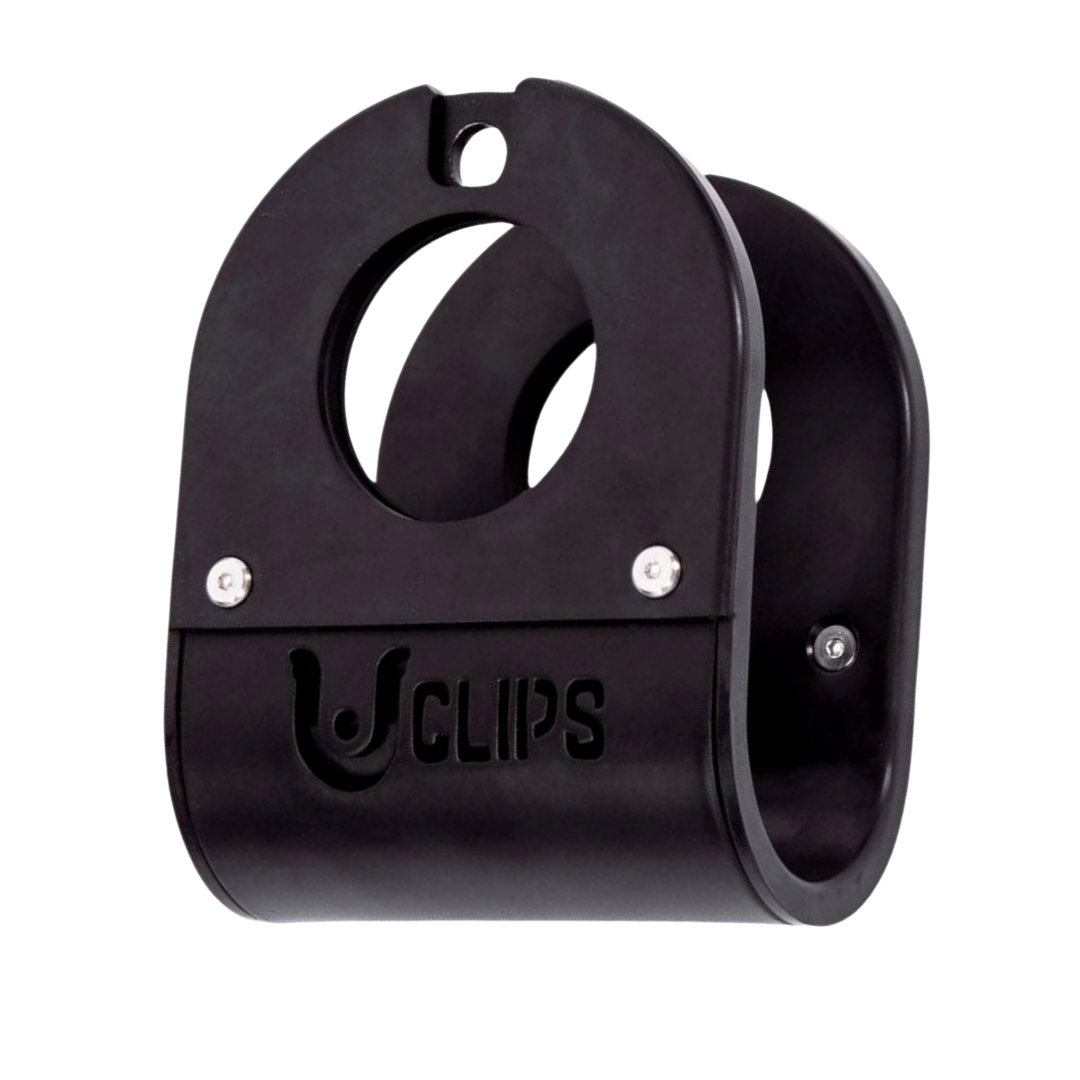
U Clips
Versatile gym clips for barbell, landmine, and attachment setups.

Original GymPin
Adds Olympic plates to compatible cable-machine weight stacks for extra resistance.

GymPin MiniPin
Compact Olympic-plate loading pin for compatible cable stacks with limited clearance.
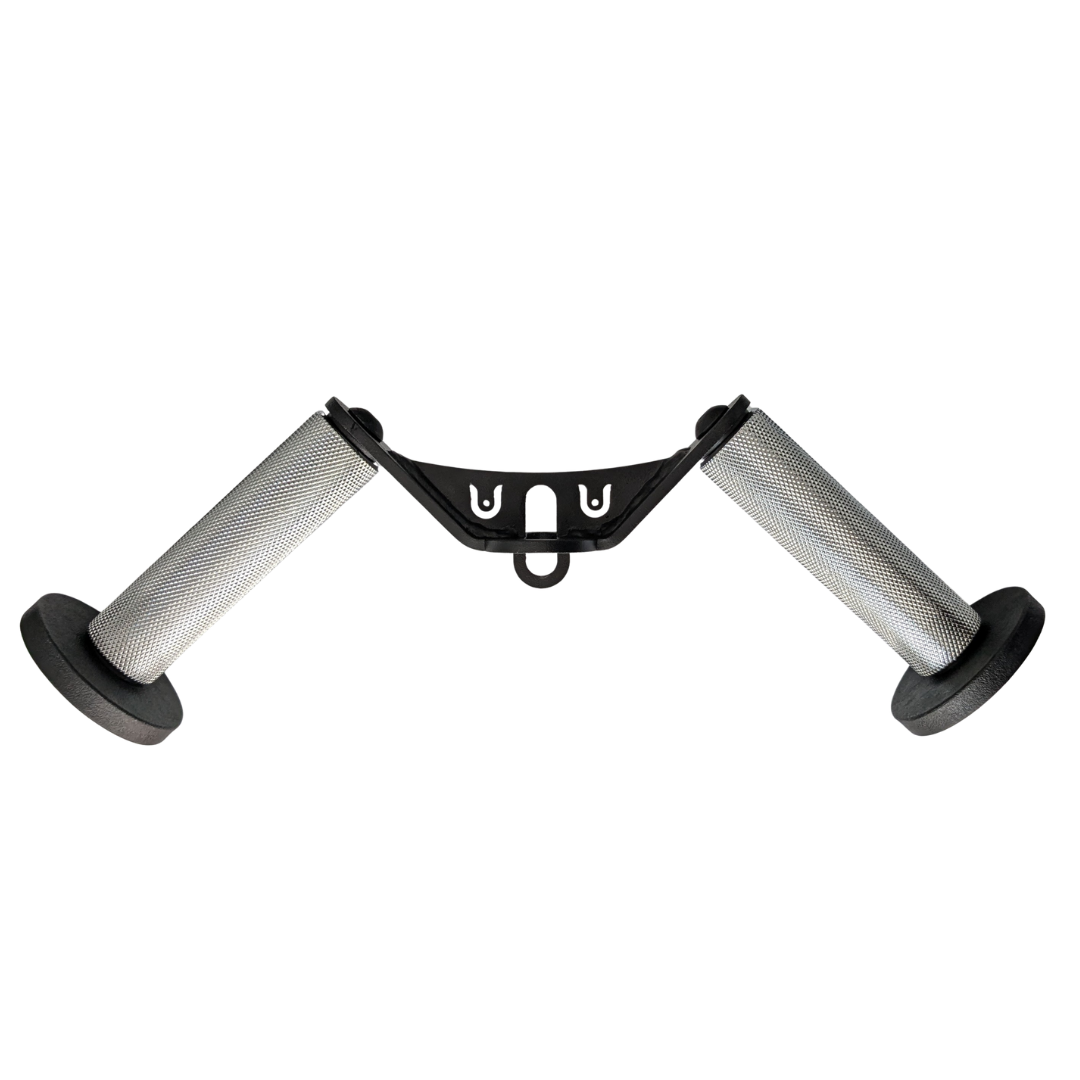
W Grip
Angled cable grip for comfortable rows, pushdowns, and curls.


FID Bench MAX
Adjustable bench offering flat, incline, and decline positions + adjustable headrest.


Variations and equipment that make practical sense
A rope is convenient but not compulsory. Independent handles may suit some wrists better, provided the hands remain relatively fixed as the trunk moves. A padded strap can be comfortable for certain lifters, but should never force pressure into the neck. On a single cable, check that the attachment does not twist and the carabiner is securely closed before each set.
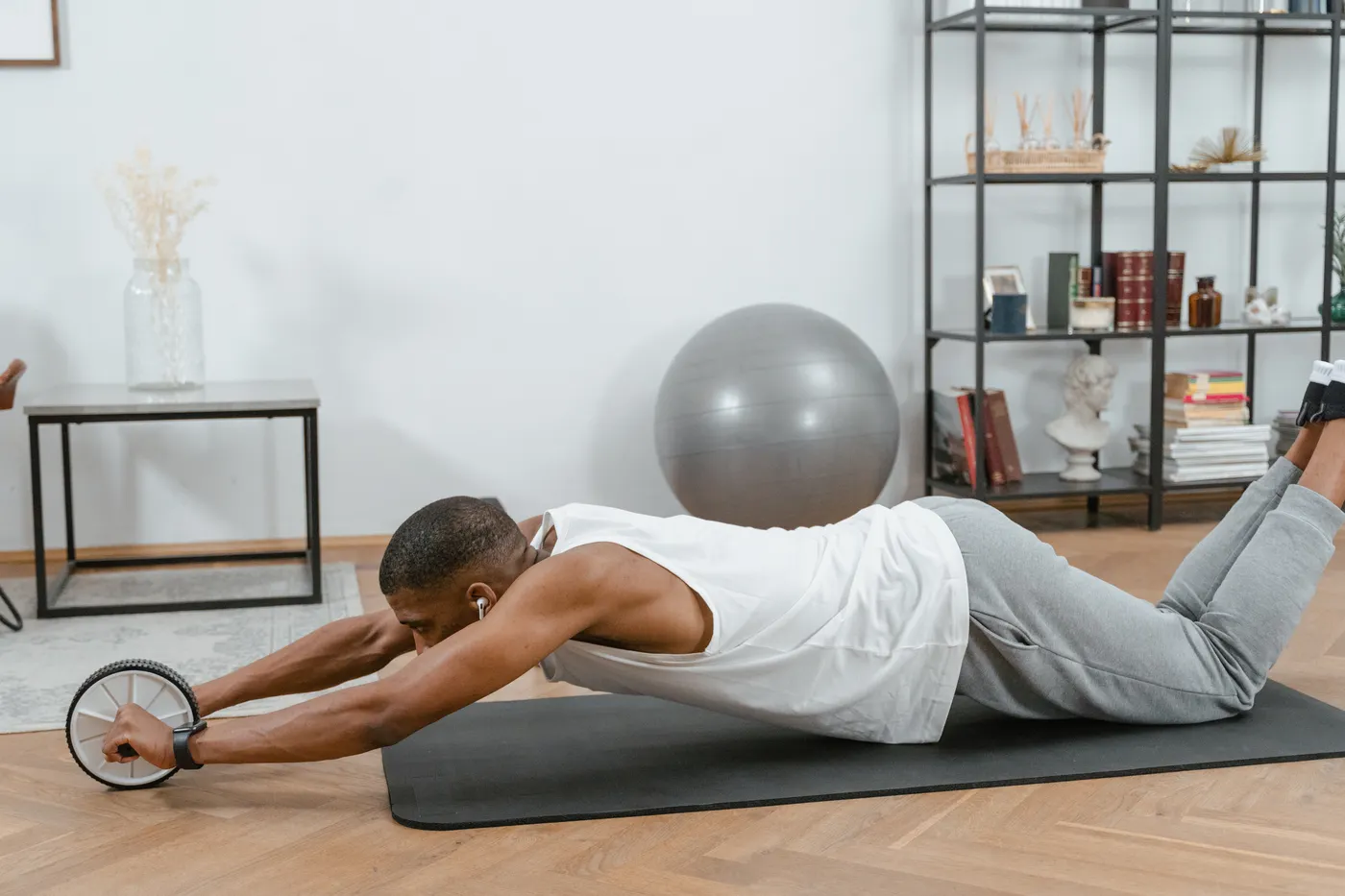
A seated cable crunch is useful when kneeling is uncomfortable. Standing crunches remove knee contact but add balance and hip-control demands. If a cable tower has insufficient travel, a weighted floor curl-up or decline-bench crunch may be easier to standardize. Dead bugs can help with breathing and pelvic control; an ab wheel is a demanding anti-extension variation that should be introduced gradually.
The most important equipment feature is a predictable resistance path. A functional trainer, rack-mounted cable system or compact cable tower can all work when the pulley height and travel suit your body. A reliable rope and knee pad often matter more than a dedicated abdominal machine. Remember that pulley ratios vary, so a bigger stack number does not necessarily represent more resistance at the hands.
Keep the training area clear of loose clothing, moving plates and cables. If space is limited, store the rope and pad on the rack instead of adding another station. If the cable angle remains awkward despite sensible adjustments, use a simpler loaded crunch. The best choice is the one you can reproduce comfortably for months.
Bodybuilding Shirts & Workout Gear
Bodybuilding shirts, tanks and gym gear for lifters chasing muscle, size, symmetry and the pump.

Shredded – Heavy Metal Gym Crewneck for Hardcore Bodybu T-Shirt
Show some gym-day personality with “Shredded”.

Gym O'Clock | Funny Workout & Fitness Meme Fans | Hoode Hoodie
Keep it laid-back with a little “Gym O'Clock” attitude.

Funny Gymrats – Gym Rat Meme Decal for Water Bottles & Sticker
A fun “Gymrats” touch for bottles, laptops, and lockers.

Survival of the Fittest – Darwin Gym Meme Hooded Pullov Hoodie
Show off your bodybuilding humor in a laid-back “Survival of the Fittest” hoodie.

The Real Alps Muscle Mountain – Muscle Peak Workout Dec Sticker
Put “The Real Alps Muscle Mountain” gym humor on your laptop, bottle, or gym gear.

All You Need Is Lift | Beatles Inspired Meme Jumper for T-Shirt
Show some gym-day personality with “All You Need Is Lift”.

Meme Shirt: The Ultimate & Gains Top T-Shirt
Bring “: The Ultimate” humor to your next gym day.

– "I Would Have Quit Already But My Trainer Scares Tank Top
Train hard, laugh a little, and rep “"I Would Have Quit Already But My Trainer”.

Whole Lotta Reps AC/DC Heavy Metal Rock Music Workout f Hoodie
Make your off-duty look more fun with “Whole Lotta Reps”.

Die Hard Lift Harder Gym | Funny Workout Vest for Muscl Tank Top
Bring “Die Hard Lift Harder” humor to your next lifting session.
A six-week plan and checkpoints that actually matter
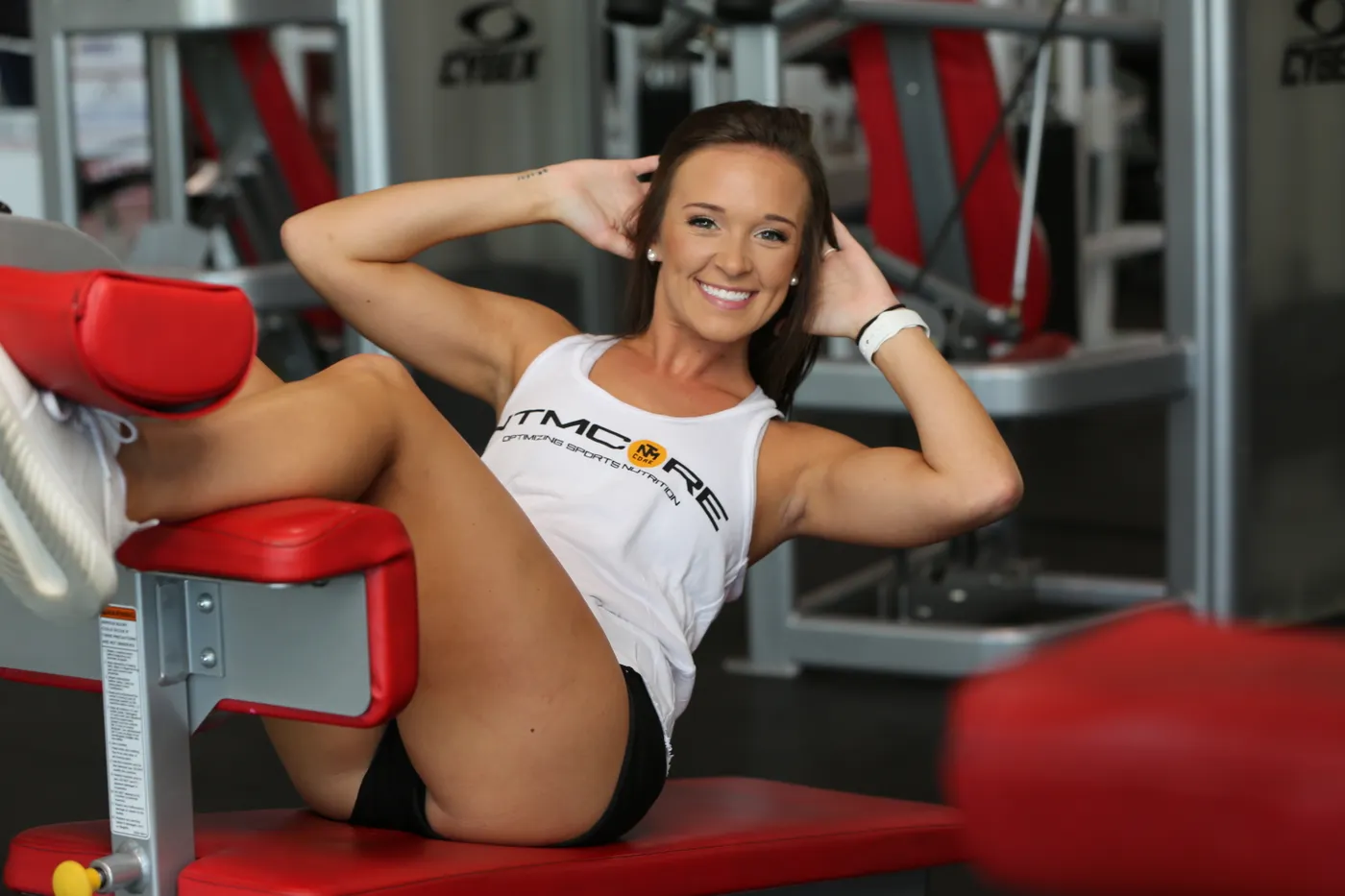
Weeks one and two are for learning the movement. Train twice a week after your main lifts. Perform two sets of ten to twelve controlled repetitions with a deliberate lowering phase and a short bottom pause. Keep the hips steady and hands near the head. Add a plank or dead bug if you want a second trunk-training pattern. A side-on video can reveal whether the ribs really move toward the pelvis.
In weeks three and four, increase to three sets per session and work toward fifteen clean repetitions. Add reps before adding weight. If technique or recovery deteriorates, repeat the previous load rather than forcing progress. Keep the same rope, mat, pulley height and knee distance. Leave at least a day between demanding direct abdominal sessions and adjust the variation if discomfort appears.
During weeks five and six, increase the resistance modestly once all three sets reach fifteen with consistent control. Do not shorten the lowering phase just to claim a heavier number. At the end of the block, compare a matched-load set with the first week. Count clean repetitions, note perceived effort and look for steadier movement. These are legitimate results even when waist circumference and body weight remain unchanged.
This is a starting template, not a clinical prescription or a guarantee of visible muscle growth within six weeks. Beginners may need less work; experienced lifters may require a different load or rep range. If your current routine already includes demanding direct abdominal training, keep additional cable volume modest. Make the intended muscles perform the movement, progress patiently and measure outcomes the exercise can actually demonstrate.