Advertising disclosure: This page includes affiliate product links that may earn us a commission, as well as products from our own store.
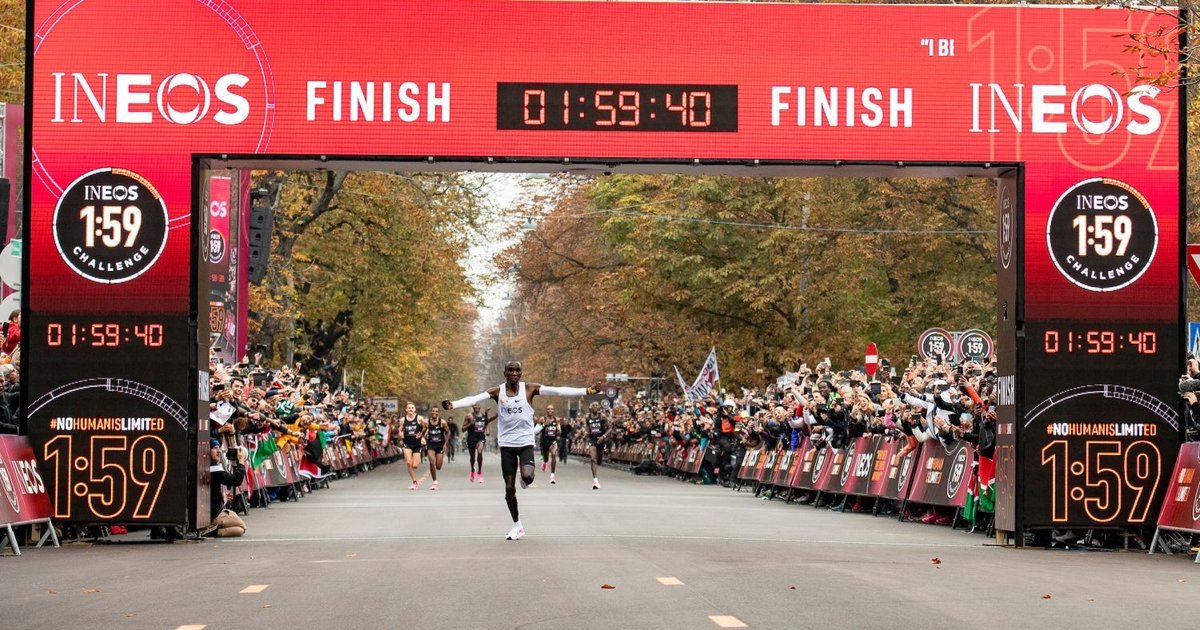
On 12 October 2019, Eliud Kipchoge covered the marathon distance in Vienna in 1:59:40.2. The clock stopped below two hours, but the performance was not ratified as an official marathon world record. Both statements are essential to understanding the achievement.
The INEOS 1:59 Challenge was organised around one runner and one target. Pacemakers, a pace vehicle and a carefully selected course helped create an unusually controlled attempt. Kipchoge still had to run the distance. The interesting question is how to appreciate that extraordinary physical effort while keeping its conditions visible—and what an ordinary runner can use without trying to copy an elite athlete’s speed.
Make the pace concrete before judging the time
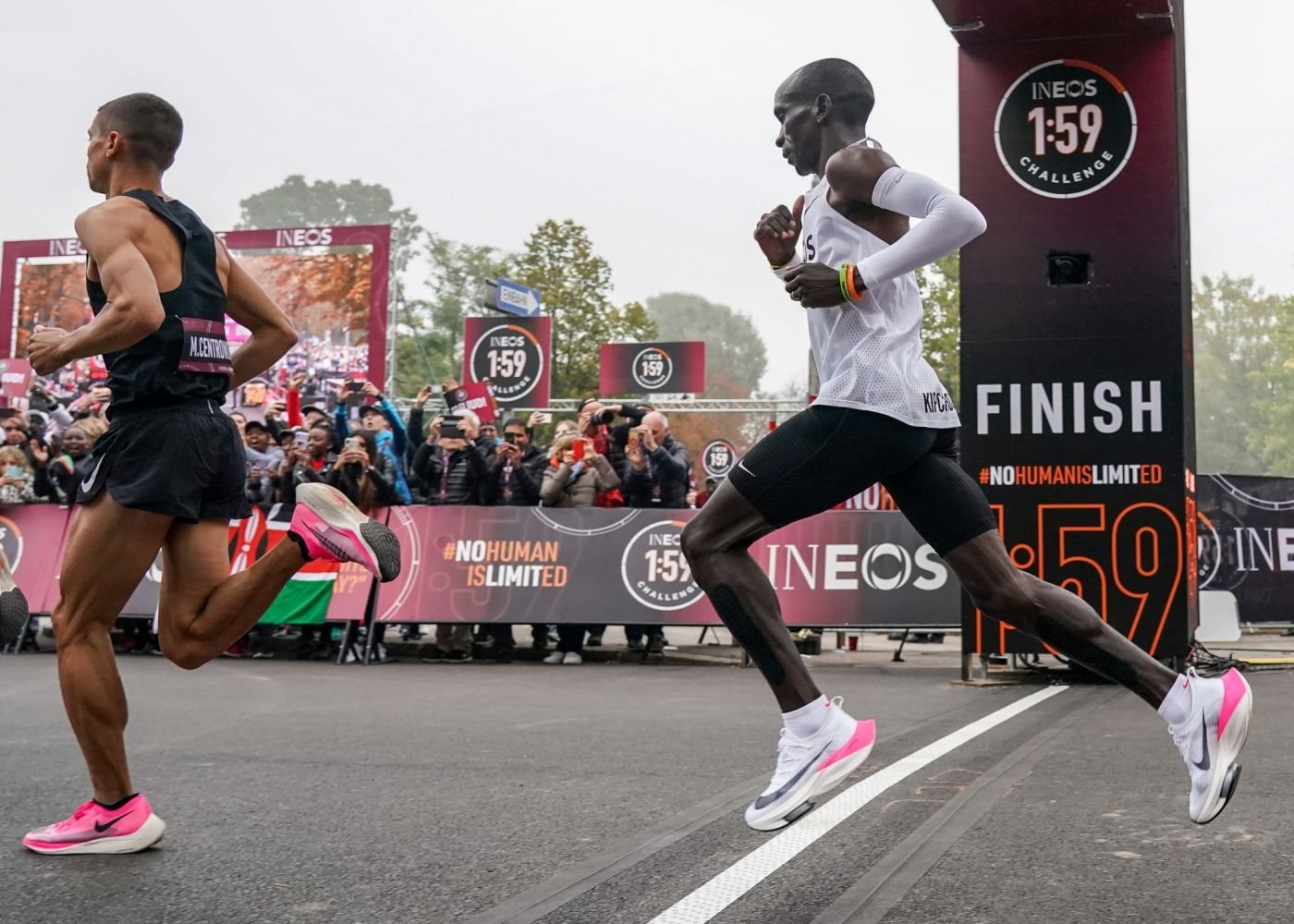
A marathon is 42.195 kilometres. Dividing Kipchoge’s finishing time by that distance gives an average of about 2:50.2 per kilometre. At the same average speed, a 400-metre lap would take roughly 68.1 seconds. These are calculations from the distance and time, not claims that he ran every lap or kilometre identically.
The margin below two hours was 19.8 seconds. Spread across an entire marathon, that is a small amount of spare time. It helps explain why the attempt was organised around repeatable pacing rather than dramatic surges. A few seconds gained or lost early would not necessarily decide the outcome, but unnecessary changes could complicate an already demanding task.
Those numbers are useful for understanding scale, not for prescribing your next workout. Running one fast lap and sustaining that speed for a marathon are different challenges. Likewise, setting a treadmill to a similar speed does not reproduce the course, the pacing formation or the demands of maintaining the effort outdoors.
For your own training, reverse the comparison. Begin with a recent performance you can substantiate, then choose a session that fits your present ability. Our guide to finding a sustainable training pace offers a more useful starting point than borrowing an elite marathon split. A memorable number can inspire a goal without becoming your immediate target.
The pacemakers were a working system
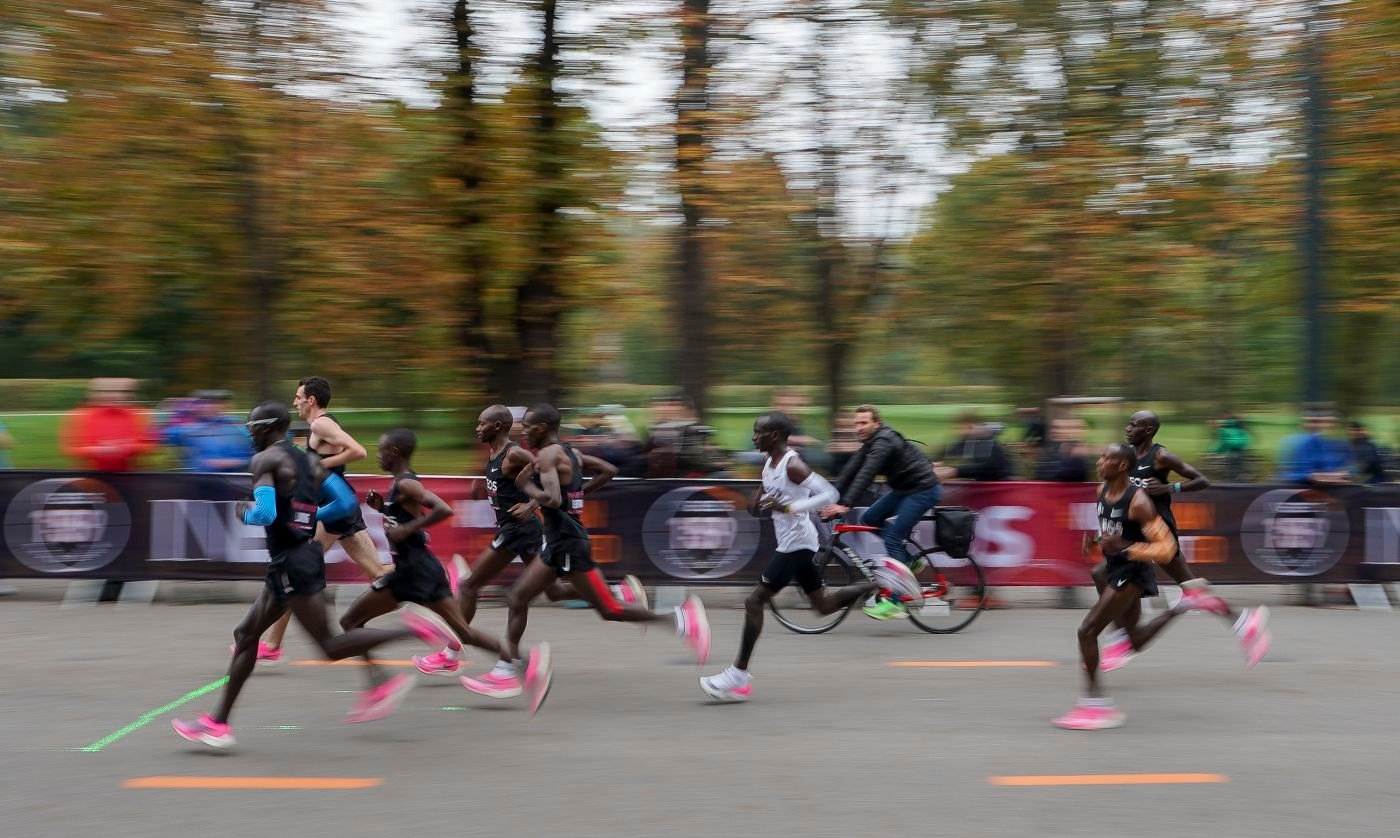
Forty-one pacemakers were involved in the Vienna effort. They did not all run the full distance alongside Kipchoge. Fresh groups entered and left, allowing the support around him to be maintained throughout the attempt. That arrangement was a defining feature of the event.
The formation also had a purpose beyond giving him people to follow. Runners ahead of another runner can provide shelter from air resistance. The Vienna team developed and rehearsed a specific arrangement rather than simply asking several fast athletes to gather around him. Positions and changeovers had to work on an actual road, with runners moving at speed.
It is tempting to turn that into a claim that the pacemakers did the running for him. They could reduce some external demands and help regulate speed; they could not supply his muscular effort for almost two hours. The opposite simplification is also unhelpful: calling the support irrelevant ignores why so much preparation went into it.
A normal running group can borrow the organisational lesson without imitating the formation. Agree on the intended pace, who leads and what happens if someone needs to slow down. A social run becomes frustrating when half the group expects conversation and the rest treats every incline as a race. Clear expectations are a much more accessible improvement than elaborate drafting tactics.
The car and course reduced decisions
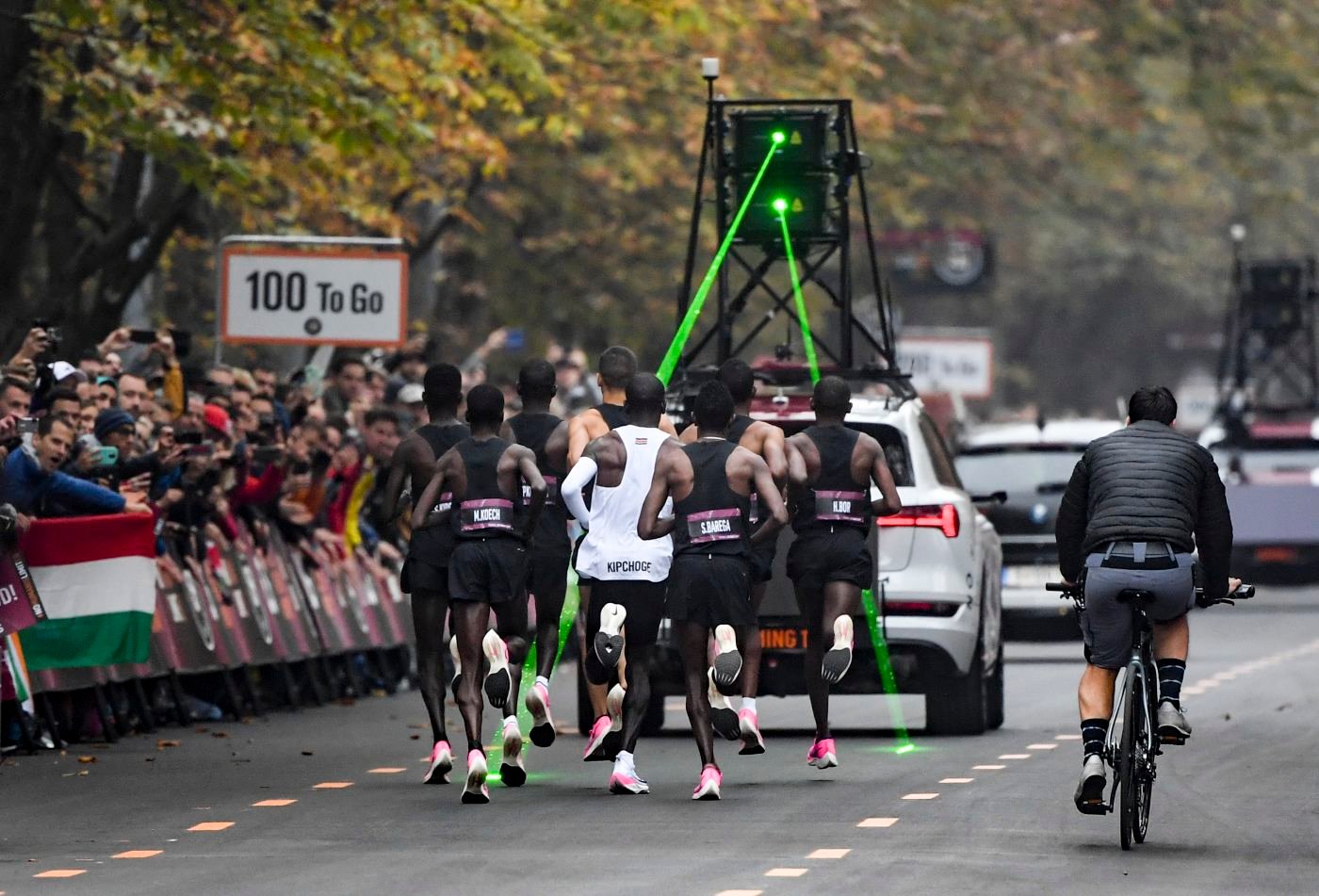
The run started on the Reichsbrücke before moving into Vienna’s Prater. Much of the effort took place on the tree-lined Hauptallee. An electric pace car projected green laser guidance onto the road, helping the athletes maintain the intended speed and position.
These details matter because a performance includes more than an athlete’s internal effort. Route layout, turns, exposure and the way pace is communicated all affect the task a runner must manage. Designing the attempt around a clear target made it possible to plan many of those details in advance.
That does not mean a particular car, road or weather condition explains a measurable share of the final time on its own. The event combined multiple forms of support. Without an appropriate comparison, assigning a precise number of seconds to each element would be guesswork. A photograph of a laser line is evidence of the setup, not a controlled test of its effect.
The practical version is straightforward. When assessing your own progress, repeat a familiar route or record what changed. A hilly, crowded run and a flat, clear run are not identical tests. Note the conditions before deciding that one faster result proves your fitness transformed overnight. Consistent measurement helps you judge a trend while still enjoying different places to run.
A landmark performance is not the same as a ratified record
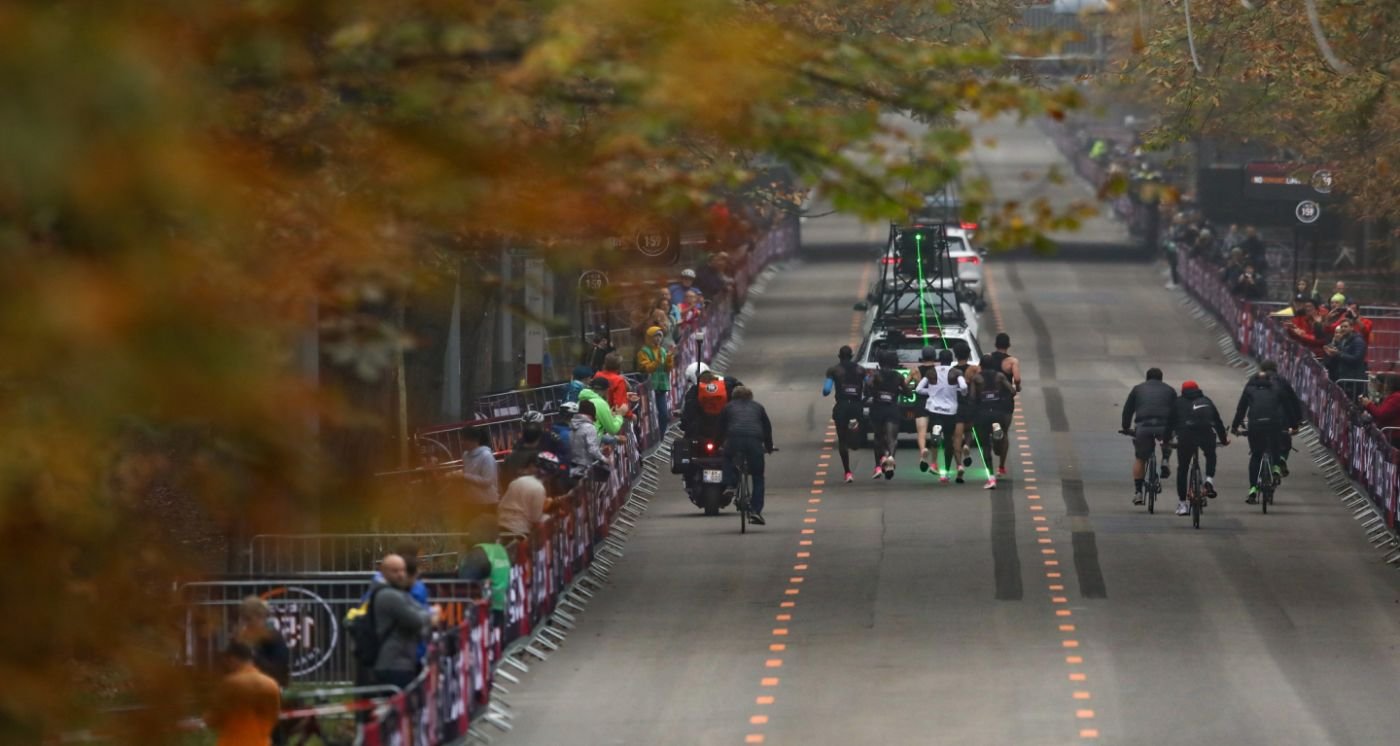
Vienna’s time did not become an official marathon world record. The specially organised attempt used support arrangements outside the normal record-eligible competition format, including rotating pacemakers. Its historical significance does not remove that distinction.
In September 2018, Kipchoge had run 2:01:39 in Berlin, an official world record at the time. Comparing that race with the Vienna attempt shows why context belongs beside a number. The same athlete can produce performances in different formats, with different meanings attached to the result.
A useful description therefore keeps three things together: the distance, the recorded time and the conditions under which it happened. Leaving out the time understates the feat. Leaving out the conditions misrepresents what the clock establishes. Calling the attempt meaningless because it was not ratified makes a different mistake: official record eligibility is not the only reason a sporting performance can matter.
The same habit helps with ordinary fitness claims. Before comparing two personal bests, ask whether the course, distance measurement, assistance and timing method were comparable. You do not need to turn every training run into a formal competition. You simply need to know which question the result can answer. An encouraging session can be valuable even when it is not a new race personal best.
Borrow the preparation, not the workload
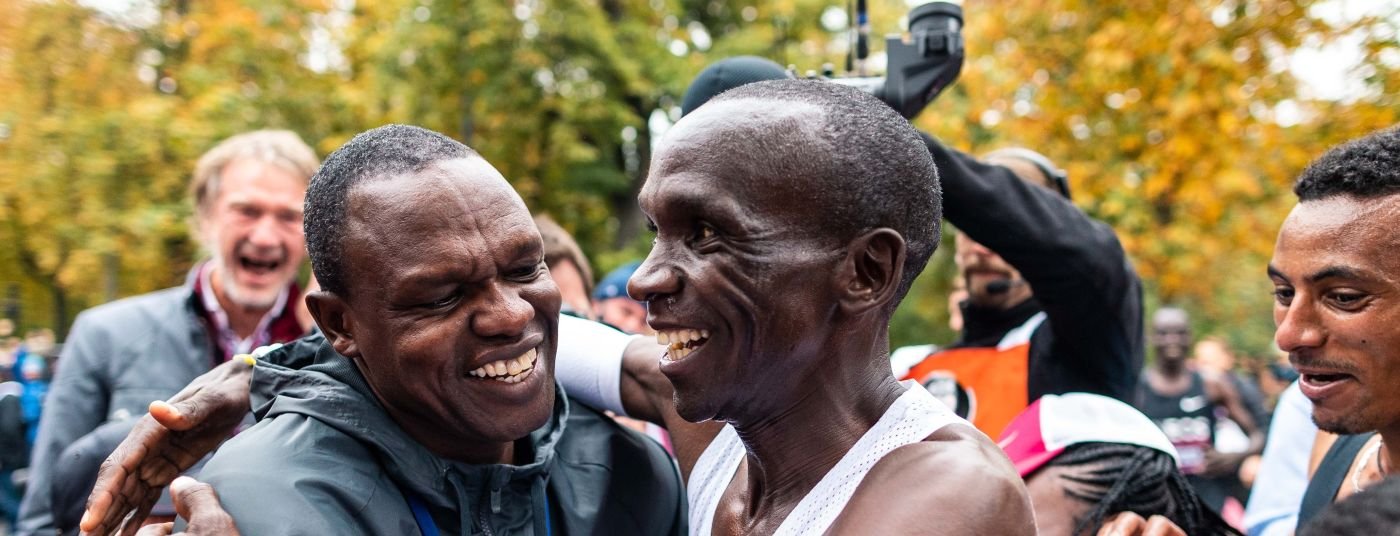
Kipchoge’s finish is often remembered as a solitary image: one runner moving towards the clock. The celebration afterwards makes the wider project visible again. Coaches, pacemakers and organisers had contributed to the attempt, while the decisive sustained effort still belonged to the athlete.
For a recreational runner, the accessible lesson is to make a goal easier to execute consistently. Choose a realistic event, decide which sessions matter and arrange the practical details that often derail them. That might mean planning a safe route, leaving enough time for a warm-up or finding a partner who genuinely wants the same kind of run.
If you are returning to running, the first useful milestone may be attending a local event and finishing comfortably. Our guide to your first parkrun, including walking and finishing explains that process without requiring an elite pace. The training decision should fit the runner who is actually showing up.
Keep the basic record simple: intended session, what you completed, how it felt and anything unusual about the conditions. Review several weeks rather than drawing a conclusion from one exceptional day. If your plan repeatedly leaves you unable to complete the next important session, adjust it instead of treating fatigue as proof of commitment.
Vienna remains compelling because the target was so clear and the execution so demanding. Understanding the support does not diminish Kipchoge’s effort. It makes the achievement more specific—and leaves a better lesson than the idea that motivation alone can replace preparation.

Cardio Shirts & Workout Gear
Cardio and conditioning gym gear for runners, endurance athletes and anyone who earns the sweat.


Cardio Is Calling Decline Bros Meme Hooded Hoodie
Make your off-duty look more fun with “Cardio Is Calling”.

Negative Cardio Review Cardio Sucks 1 Star Vest Tank Top
Bring “Negative Cardio Review” humor to your next lifting session.

Don't Quit Do It – Motivational Jumper Pullover For Wor T-Shirt
Show some gym-day personality with “Don't Quit Do It”.

Cardio Is Hardio – Workout Meme Decal for Water Bottles Sticker
Put “Cardio Is Hardio” gym humor on your laptop, bottle, or gym gear.

Everything Hurts And I'M Tired Motivation Hooded Hoodie
Stay casual and show some cardio attitude with “Everything Hurts And I'm Tired”.

Anti Running Club Tee
Heavy lifts, good laughs, and a little “Anti Running Running Club” energy.

Anti Jogging Jogging Club Shirt – & Meme Top T-Shirt
Bring “Anti Jogging Jogging Club” humor to your next gym day.

Cardio Heartbeat for Runners, Cyclists and Endurance Fa Tank Top
Bring “Cardio Heartbeat” humor to your next lifting session.

Skip Cardio Exit Cardio Meme Sweater Top T-Shirt
For laid-back days and cardio humor: “Skip Cardio”.