Advertising disclosure: This page includes affiliate product links that may earn us a commission, as well as products from our own store.
Runners do not need to train like competitive bodybuilders to become stronger. But if the goal is to build useful strength and keep it through a busy racing season, the weight on the bar and the consistency of the work both matter. A 2026 trial in recreational male runners offers a useful comparison: lighter resistance taken to muscular failure versus much heavier resistance taken to the same endpoint.
Both approaches produced adaptations after twelve weeks. The heavier program generally produced more, and a subsequent four-week period without lifting exposed an important limitation of treating strength work as a temporary project. Here is how to interpret those results without confusing larger muscles, a stronger leg press and faster race times.
What the 12-week runner study actually tested

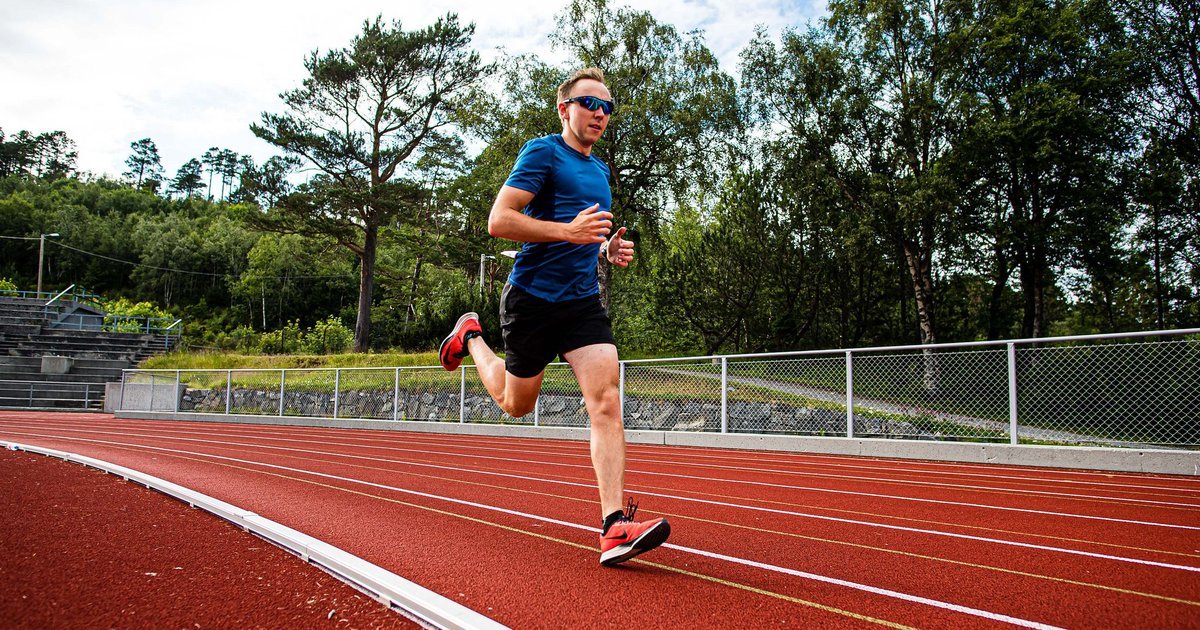
The experiment involved 45 healthy male recreational runners, averaging about 21 years old. They already ran regularly, approximately 30 kilometres a week over three sessions, and had been running for at least two years. They were not elite distance runners and were not recruited from a population of older or injured athletes. That context matters when considering who might get similar results.
Fifteen participants were allocated to each of three groups. One performed resistance work using loads of 70–85% of their one-repetition maximum (1RM). Another used 30–45% of 1RM. Both groups completed three sets to failure under their respective protocols. The remaining group served as a control. After twelve weeks, the runners in the resistance-training groups stopped resistance training for another four weeks.
Rather than assuming that lifting makes runners faster, the researchers examined changes in muscle thickness, strength, muscular endurance and circulating hormones. The two training groups improved muscle thickness in the upper arm and quadriceps, along with measures of muscular function. The heavy-load group generally had the advantage. The important distinction is that these measures are not the same as a timed 5K or marathon. Greater force capacity can be useful for running, but it does not automatically establish how much faster an individual will race.
There is another limitation worth keeping in mind: three sets to failure with very light resistance can demand a lot of repetitions. The comparison is not between two equally short, equally comfortable sessions. The training effort and the loading prescription need to be understood together.
Heavy or light loads: what changes in the gym?
Suppose your estimated maximum on a particular lift is 100 kilograms. The heavy prescription corresponds to about 70–85 kilograms, while the light prescription would use about 30–45 kilograms. This is only an illustration; you do not need to test a true maximum on every exercise before you begin. A conservative estimate and a sensible repetition range can give you a workable starting load.
Heavy sets usually end sooner because the resistance is greater. They provide repeated practice producing high force, which is particularly useful when you are trying to raise your maximum strength. Light sets taken close to failure can still stimulate muscle growth, but you may spend considerably longer accumulating repetitions. For a runner with a demanding interval session the next morning, that extra local muscular fatigue is not necessarily a bargain.
Independent research on running economy has also found benefits from adding heavy resistance training to endurance programs. Running economy concerns the energy or oxygen required to sustain a given submaximal pace. It is not identical to maximal oxygen uptake. A stronger runner might be able to produce the force required for each stride at a lower fraction of their available strength, but that explanation should not be treated as a guaranteed individual response.
A broader synthesis of middle- and long-distance running studies found that high-load or combined strength-training methods can improve running performance, with little evidence of meaningful improvements in maximal oxygen uptake from those methods alone. Strength work complements rather than replaces endurance training. The runners still need the aerobic base, threshold efforts and event-specific practice that their race demands.
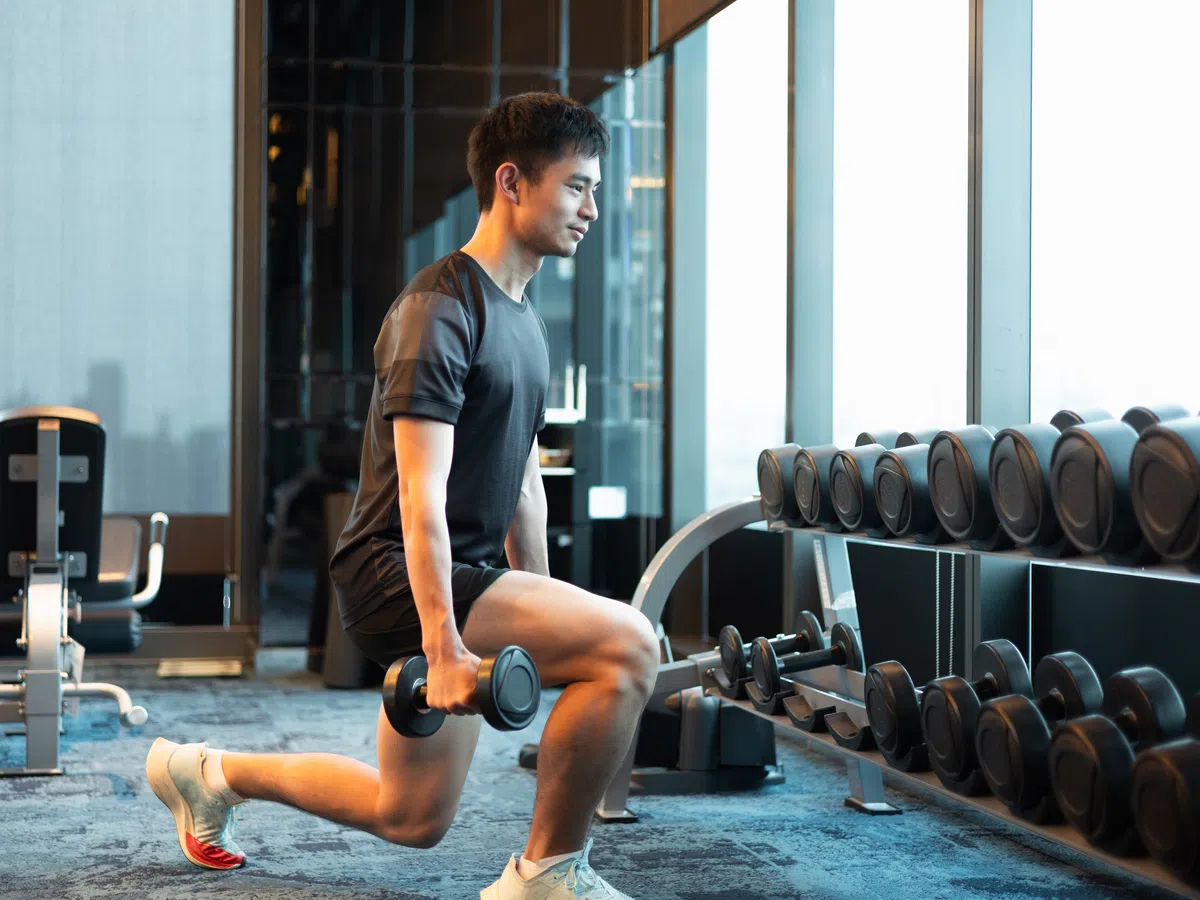
Choose resistance according to the movement and your experience. A leg press or squat can be a sensible place to gradually introduce heavier sets. A calf raise, single-leg movement or accessory exercise may be easier to learn with moderate resistance. If you have limited home equipment, a controlled split squat with dumbbells can make a relatively modest external load challenging without forcing you into an endless set of bilateral bodyweight squats.

Equipment Worth Exploring
Explore equipment, accessories and gear from our carefully selected range.

Leg Press/Hack Squat BPR-790
Convertible 45-degree leg press and hack squat machine with a broad footplate and band pegs.

Compact Leg Press CLP-700
Compact reverse-style leg press with a moving seat carriage and an adjustable footplate.

Studio V-Squat
Plate-loaded V-squat machine for supported lower-body strength training.


Rubber Hex Dumbbells
Rubber-coated hex dumbbell pairs with a stable shape for home and commercial strength training.




FID Bench MAX
Adjustable bench offering flat, incline, and decline positions + adjustable headrest.

Why the hormone spike is not the training goal
Blood was sampled around the training period, including one and twenty-four hours after the final resistance session. Both lifting groups experienced short-term increases in testosterone and cortisol, while the higher-load group also showed an increase in IGF-1. The immediate hormonal responses were not maintained at the twenty-four-hour measurement. These samples tell us something about the body’s response to exercise, not that the participants lived in a permanently elevated anabolic state.
It is tempting to turn these measurements into a workout-selection rule: choose whatever creates the greatest hormonal spike. That is not the lesson. Your objective is to progressively improve the muscles’ capacity to produce force and tolerate the work you ask of them. A transient blood measurement is not a direct prescription for the number of sets you should perform, the rest interval you should use or the amount of muscle you will ultimately gain.
Runners can also benefit from training beyond their legs. Pulling and pressing movements help build general upper-body strength, while trunk work can be incorporated without making the session unnecessarily long. The trial measured upper-arm as well as thigh muscle thickness, which is a reminder that resistance training affects more than the muscles you most obviously use during a run.
When running is the priority, use a manageable strength workload that lets you make steady progress. Track the load, repetitions, movement quality and how recovered you feel at your next key run. These are easier to act on than trying to interpret hormonal changes that most recreational athletes cannot measure anyway.
What happens when runners stop lifting for four weeks?
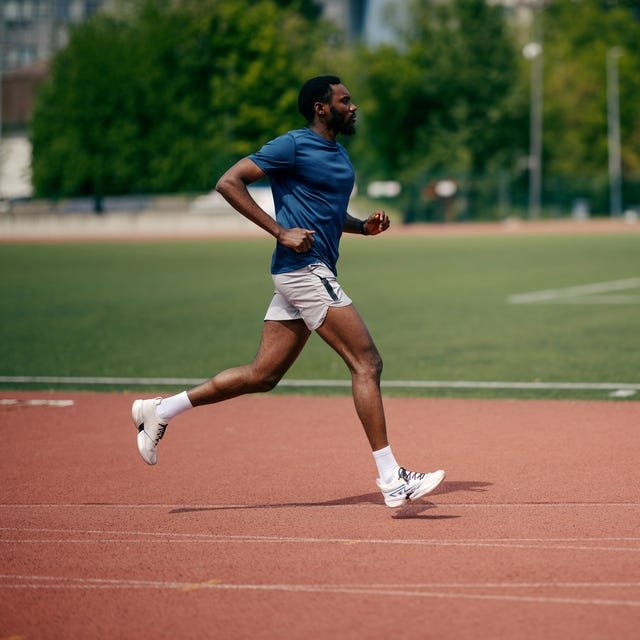
After four weeks without resistance training, many of the improvements were reduced or no longer evident relative to the earlier measurements. Not all of the adaptations disappeared at the same rate. The quadriceps and some aspects of lower-body function retained part of their benefit. This is more informative than simply saying that you lose all your gains after a month: different qualities have different patterns of retention.
The result does not show that a planned recovery week is harmful. Four weeks of complete resistance-training cessation is different from a short deload, a race taper or a reduction in training volume that retains some lifting. Nor does it mean that an injury or medical reason for rest should be ignored. Recovery and safety take priority over a training schedule.
Separate research in previously untrained adults compared continuous training with a program interrupted by a longer break. When lifting resumed, strength and muscle size returned relatively quickly, and the groups ultimately made broadly comparable progress. That finding cannot establish the exact recovery timetable for experienced runners, but it illustrates why a break is not necessarily a permanent setback.
For the healthy runner whose work or race schedule gets busy, the practical idea is to preserve some exposure to resistance training when feasible. Instead of dropping both weekly sessions indefinitely, consider one shorter session using familiar movements and fewer sets. This is a pragmatic option, not a minimum dose proven by this specific experiment. If the aim is maintenance, avoid adding novel exercises that create disproportionate soreness just before important runs.
After an extended layoff, return below your previous loads or volume and rebuild gradually. A good first session should leave you capable of running comfortably afterwards. There is no reason to cram four missed weeks of strength work into one evening.

Leg Day Shirts & Workout Gear
Leg-day gym shirts and workout gear for lifters who never skip squats, lunges and lower-body punishment.


Leg Day Gains | LEGO Inspired Workout For Squat & Deadl Hoodie
Stay casual and show some leg-day attitude with “Leg Day Gains”.

1 Plate Squat Club Meme – Essential Top T-Shirt
Heavy lifts, good laughs, and a little “1 Plate Squat Club” energy.

Funny Squat Game Gym | Squid Game Parody Workout Sweate T-Shirt
Add a playful “Squat Game” touch to your casual rotation.

Squatbucks Gym | Funny Starbucks Parody Muscle Shirt | Tank Top
Train hard, laugh a little, and rep “Squatbucks”.

Never Skip Leg Day | LEGO Muscle Shirt For Squats & Dea Tank Top
Train hard, laugh a little, and rep “Never Skip Leg Day”.

Leg Day Thou Shalt Not Skip Leg Day Medieval Knight Gym Sticker
Give your everyday gear a playful “Leg Day” twist.

I Love Squats | Leg Day Pink Heart Plate Decal Meme Sticker
Put “I Love Squats” gym humor on your laptop, bottle, or gym gear.

Squat Here | Edgy Workout Decal for Water Bottles & Gym Sticker
A fun “Squat Here” touch for bottles, laptops, and lockers.

Never Skip Leg Day Flamingo – Fitness Meme Vest Muscle Tank Top
Train hard, laugh a little, and rep “Never Skip Leg Day Flamingo”.
A practical strength plan around your running week
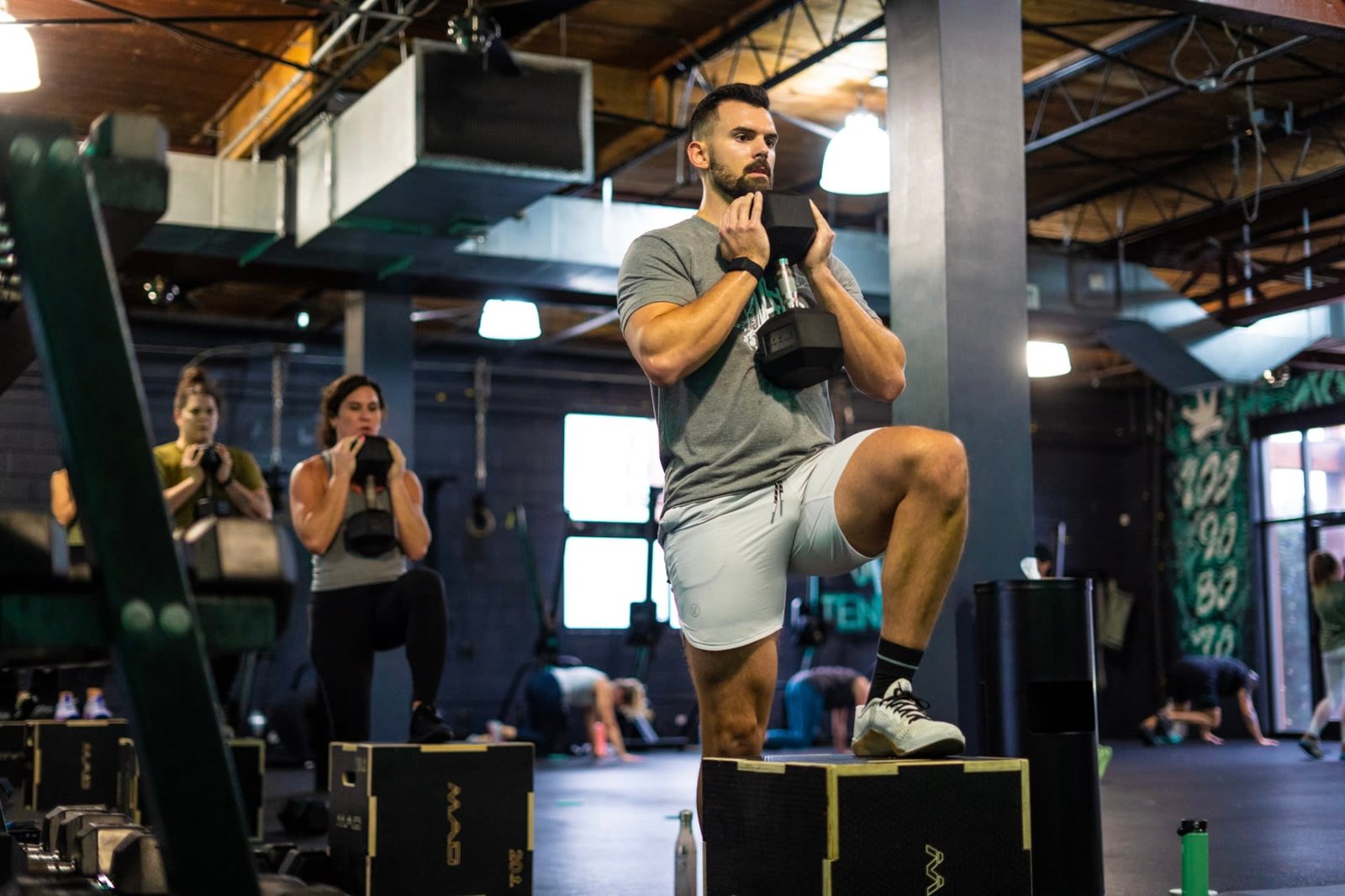
Start with two strength sessions on days that fit your current endurance program. This example is for a healthy recreational runner who is already accustomed to basic resistance exercises. It is an original practical template, not a replication of the study’s failure-based protocol.
- Session A: squat or leg press, two to three sets of five to eight repetitions; dumbbell Romanian deadlift, two sets of eight to ten; standing calf raise, two sets of ten to fifteen; dumbbell row, two sets of eight to twelve.
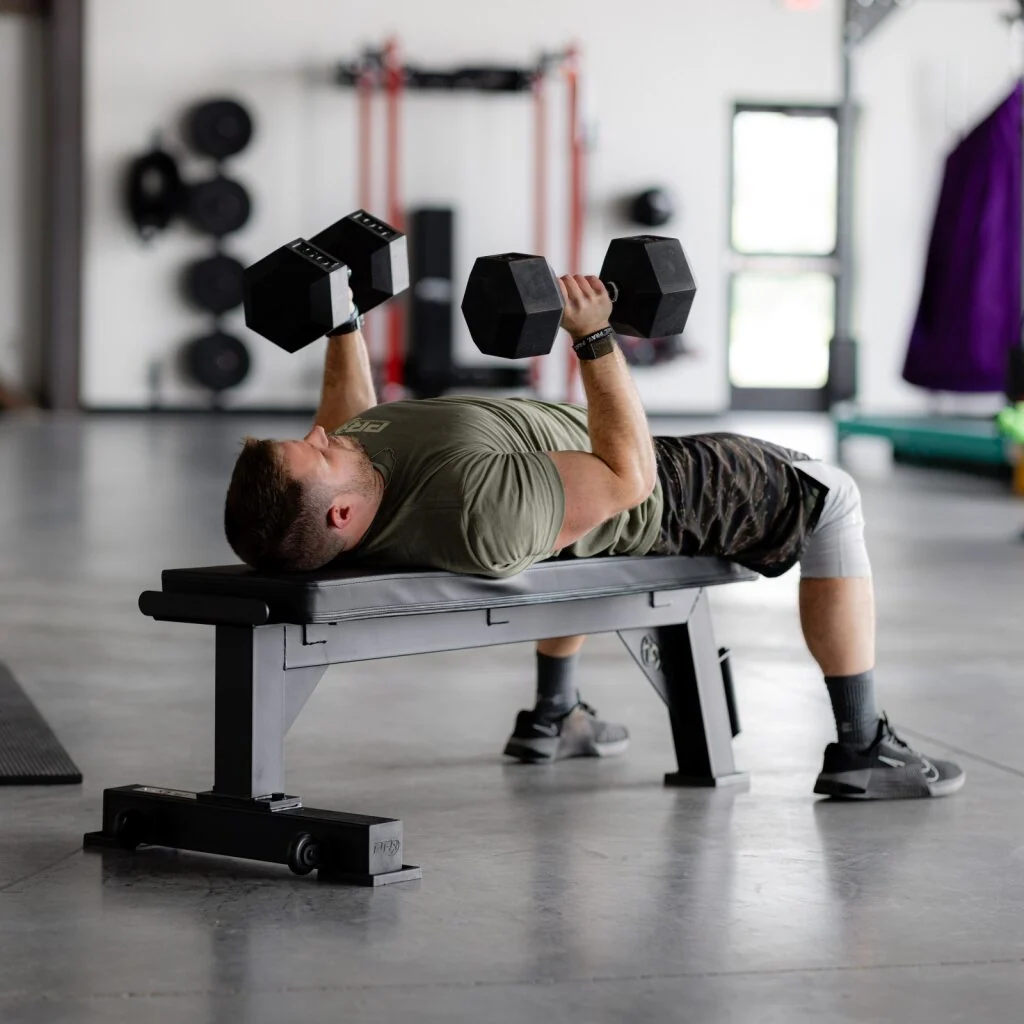
- Session B: split squat or step-up, two sets of six to ten per leg; hip hinge, two sets of six to ten; seated or standing calf raise, two sets of ten to fifteen; dumbbell press, two sets of eight to twelve.
For the first two weeks, choose loads that leave about three repetitions in reserve and learn consistent movement technique. In weeks three and four, increase the load slightly when all sets reach the top of the prescribed repetition range without a loss of form. Keep roughly two repetitions in reserve on most sets. Training to failure was part of the research comparison, not a requirement that every runner must copy.
For a typical three-run schedule, you might run easy on Monday, lift on Tuesday, perform intervals or tempo work on Thursday, lift on Friday and run longer on Sunday. If the Friday session leaves your Sunday long run compromised, cut a set from the lower-body exercises or move the lifting to a day with more recovery space. A different runner may prefer a short strength session after a demanding running day to preserve completely easy days between hard sessions.
Rest long enough between heavy sets to keep the next set technically sound. Do not convert a strength workout into a timed circuit merely to make it feel more like endurance training. When your run volume increases, maintain the most useful strength exercises and reduce accessory work before you abandon resistance training altogether.
The central takeaway is straightforward: both heavier and lighter resistance can improve muscular function, but the heavy protocol had a general advantage in this young male runner sample. Consistency also mattered after the initial training period. Build a manageable program, adjust it around your most important runs, and judge it by sustainable progress rather than by exhaustion or short-lived hormone changes.