Advertising disclosure: This page includes affiliate product links that may earn us a commission, as well as products from our own store.
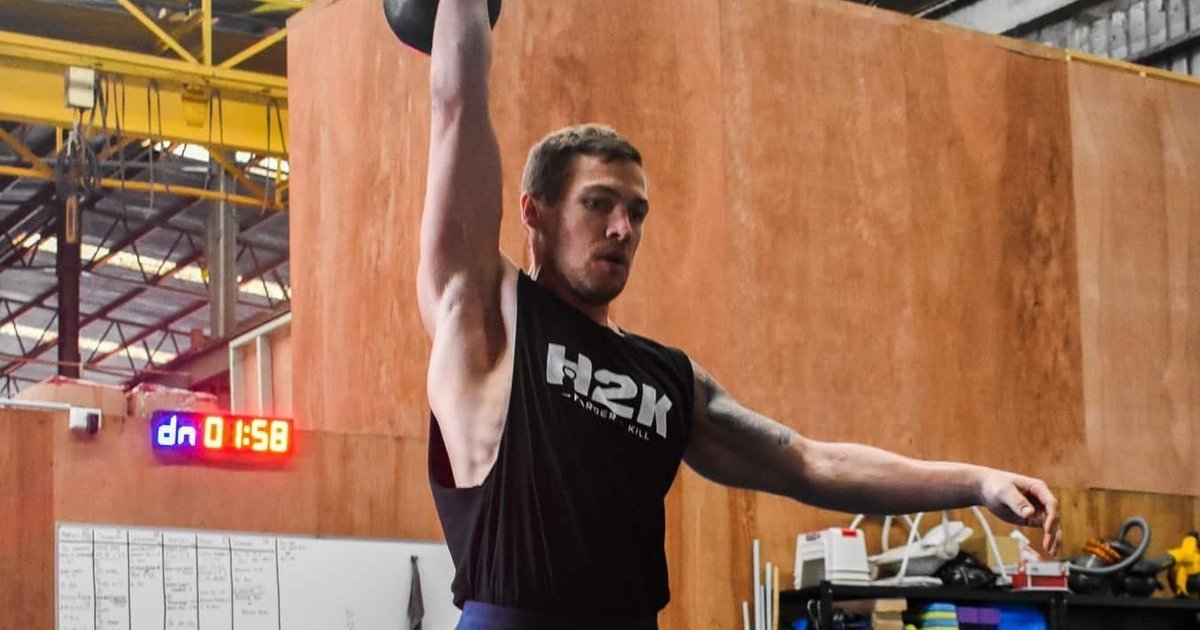
A dumbbell and a kettlebell can both travel overhead, yet the two presses can feel quite different. Separate the physical handling of the implement from claims about muscle activity, then compare recognisable movements instead of treating every difficult repetition as evidence of a better exercise.
A muscle-activity result is not a growth ranking
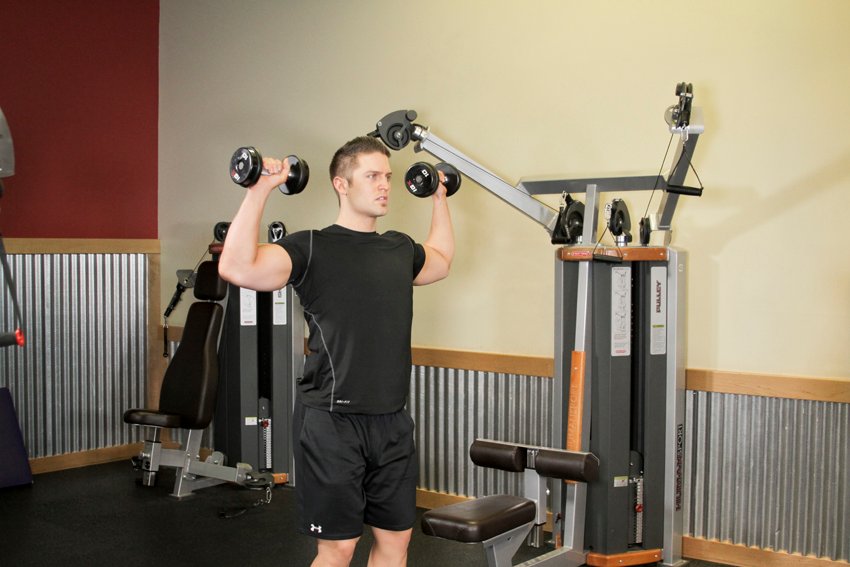
A 2018 experiment compared overhead pressing with dumbbells and kettlebells in 21 subjects. Surface electrodes measured activity in the anterior deltoid and pectoralis major while technique and pace were controlled. Normalized anterior-deltoid activity was higher with the dumbbell: 63.3% versus 57.9% of the reference maximum voluntary contraction. That result challenges the simple assumption that an implement which feels less stable must always produce more activity in the main pressing muscle.
The measurement was electrical activity during the tested task. It was not a comparison of muscle growth after months of training, a guarantee about shoulder comfort, or a ranking of equipment brands. The result also does not mean that a kettlebell is ineffective. It tells you that the relationship between balance demands and measured muscle activity is more complicated than a slogan.
For practical exercise selection, begin with the task you want to perform. You might want to improve a familiar dumbbell press, learn a controlled kettlebell press, or train a particular overhead movement for a sport. Those are legitimate goals without needing to declare one implement the winner of all shoulder training. A specific strength goal can reasonably favour practising that specific lift.
Keep the evidence attached to its conditions. A single-arm standing press is different from a two-arm seated press, even when both use free weights. A heavier load, a different grip or a faster repetition introduces another change. Do not let an interesting comparison quietly become a claim about every variation you can perform with the same equipment.
Notice where the load sits before judging how it feels
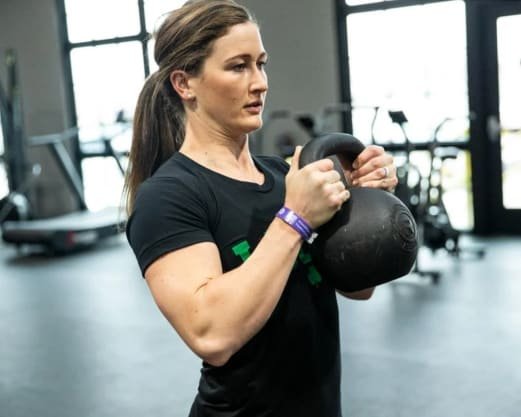
A dumbbell places its mass around the handle. A kettlebell has a handle above the body of the weight, so its position relative to the hand and forearm changes the feel of the rack and press. That physical difference is useful to notice directly. It does not need to be translated into an automatic promise of better results or a special ability to protect a joint.
Start by finding a comfortable, repeatable rack position with a manageable weight. Wrap the hand around the handle rather than allowing it to drift into an insecure grip. With a kettlebell, pay attention to how the handle lies in the hand and how the body rests near the forearm. Do not force the wrist into an exaggerated bend merely to imitate a photograph.
The route into position matters too. Cleaning a kettlebell and pressing it are separate skills, even when they are linked in a workout. Likewise, getting two dumbbells to shoulder height can become the limiting part of a set. A weight you can move once it is overhead may still be unsuitable if you cannot start and finish the exercise under control.
If the handle, forearm contact or wrist position feels wrong, adjust the setup or use a lighter implement. Persistent pain is a reason to stop and seek individual guidance, not proof that a difficult variation is working harder. Comfort alone does not measure training effectiveness, but discomfort is not a useful prize to chase.
Keep a strict press distinct from a push press
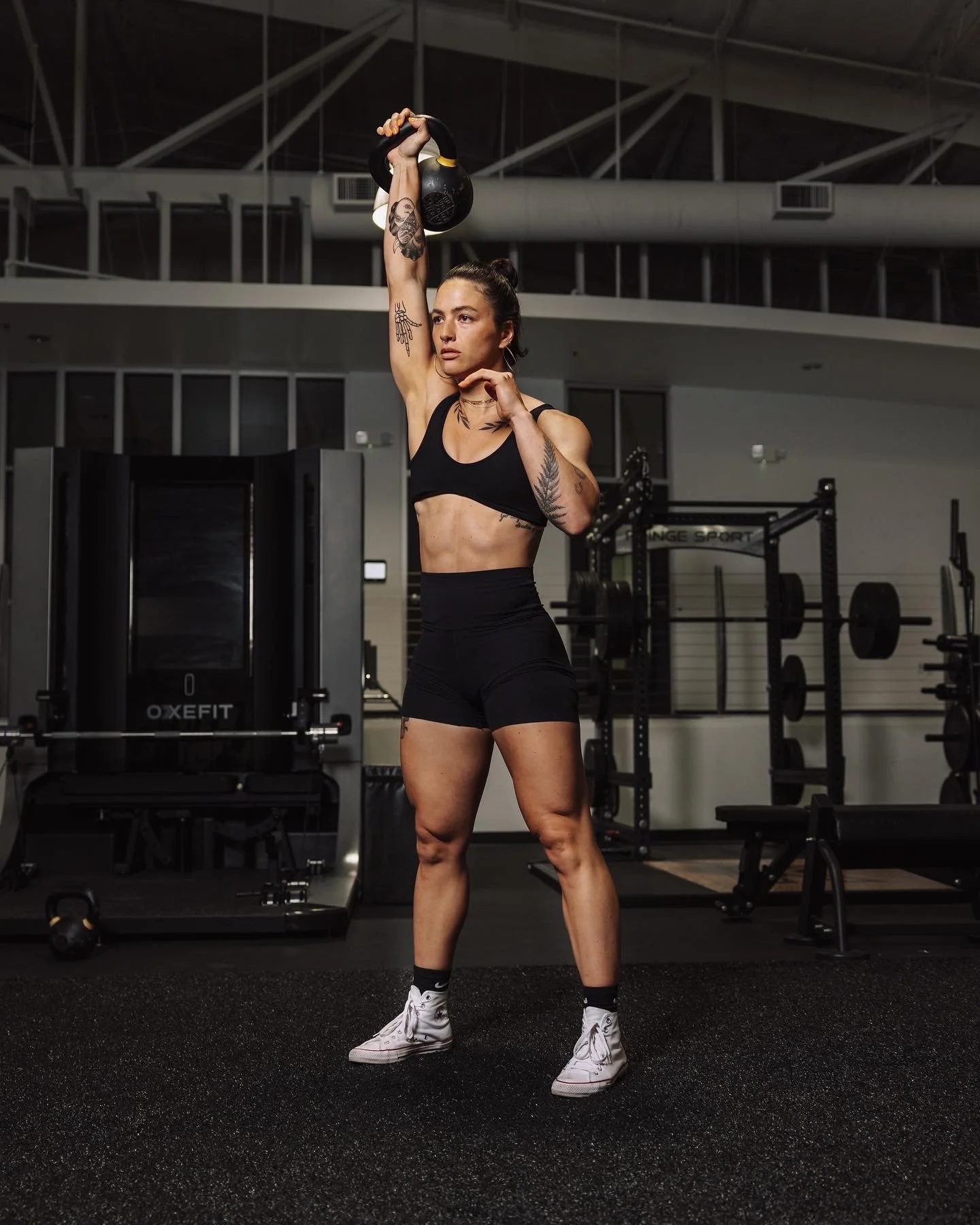
A strict press asks the upper body to move the load without a deliberate leg drive. A push press uses a coordinated dip and drive to help accelerate it. Both can belong in training, but a set which changes from one to the other is no longer a clean record of progress on the same task. Decide which movement you are doing before the first repetition.
In a standing strict press, establish your stance and keep the trunk controlled as the weight travels overhead. Avoid turning the finish into a large backward lean or a sideways bend. With one kettlebell, the free arm does not have to provide a theatrical counterweight. Choose a position that lets you remain balanced and repeat the same pressing action.
Lowering deserves the same attention as lifting. Guide the weight back to a position you can control instead of letting it fall into the rack or pulling your torso after it. Pause and reset if the implement starts arriving differently each time. A consistent return gives the next repetition a recognisable starting point.
Watch what changes when fatigue builds. A small knee dip, a shortened lowering phase or a growing lean may let the next repetition happen, but it also changes the exercise. You can end the set, reduce the load or explicitly record a different variation. The useful habit is naming the change honestly rather than counting every upward movement as the same kind of rep.
Compare implementations by changing one variable at a time
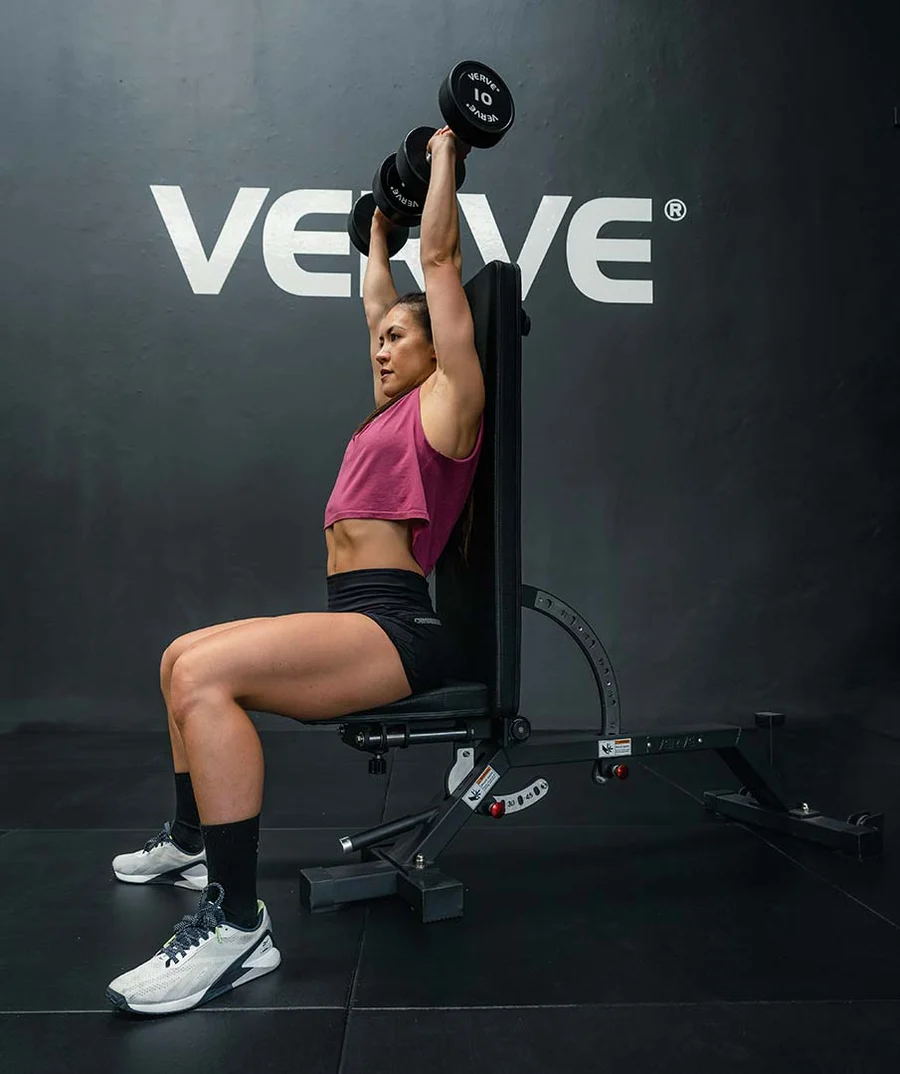
Suppose you want to compare dumbbells with kettlebells in your own routine. Keep the broad exercise configuration recognisable: standing or seated, one arm or two, grip, intended range and stopping point. Otherwise, a difference caused by the support position or total work may be credited to the implement. Your session can still be useful training without being a controlled experiment.
Seated pressing introduces another setup to record. A stable bench, a backrest position you can repeat and firm foot placement help define the task. Keep the load manageable enough that you do not have to lift your hips or dramatically arch away from the support. A supported dumbbell press is an alternative pressing task, not a replica of every standing kettlebell protocol.
Use the equipment selection here as a set of options, not a shopping list of requirements. Dumbbells and kettlebells are the direct implements under discussion. A suitable bench supports a seated variation. Other pressing attachments or resistance systems create different movements, so their performance numbers should have their own entries rather than being treated as interchangeable.
A short familiarisation period can prevent a first attempt with unfamiliar equipment from becoming a verdict about its quality. Learn the rack, the press and the finish with a load you control. If the available weight increments are large, improve repeatability before forcing the next jump. There is no need to make the comparison more dramatic than the equipment allows.

Equipment Worth Exploring
Explore equipment, accessories and gear from our carefully selected range.


Rubber Hex Dumbbells
Rubber-coated hex dumbbell pairs with a stable shape for home and commercial strength training.


Cast Iron Kettlebells
Textured cast-iron kettlebells for swings, squats, carries, and full-body training.


FID Bench MAX
Adjustable bench offering flat, incline, and decline positions + adjustable headrest.

Multi Bench MBX-650 2.0
Adjustable multi-bench with roller adjustment, 15 backrest positions and accessory mounts.
VOLTRA
Compact digital cable trainer with smooth, adjustable resistance.
Give each press its own training record
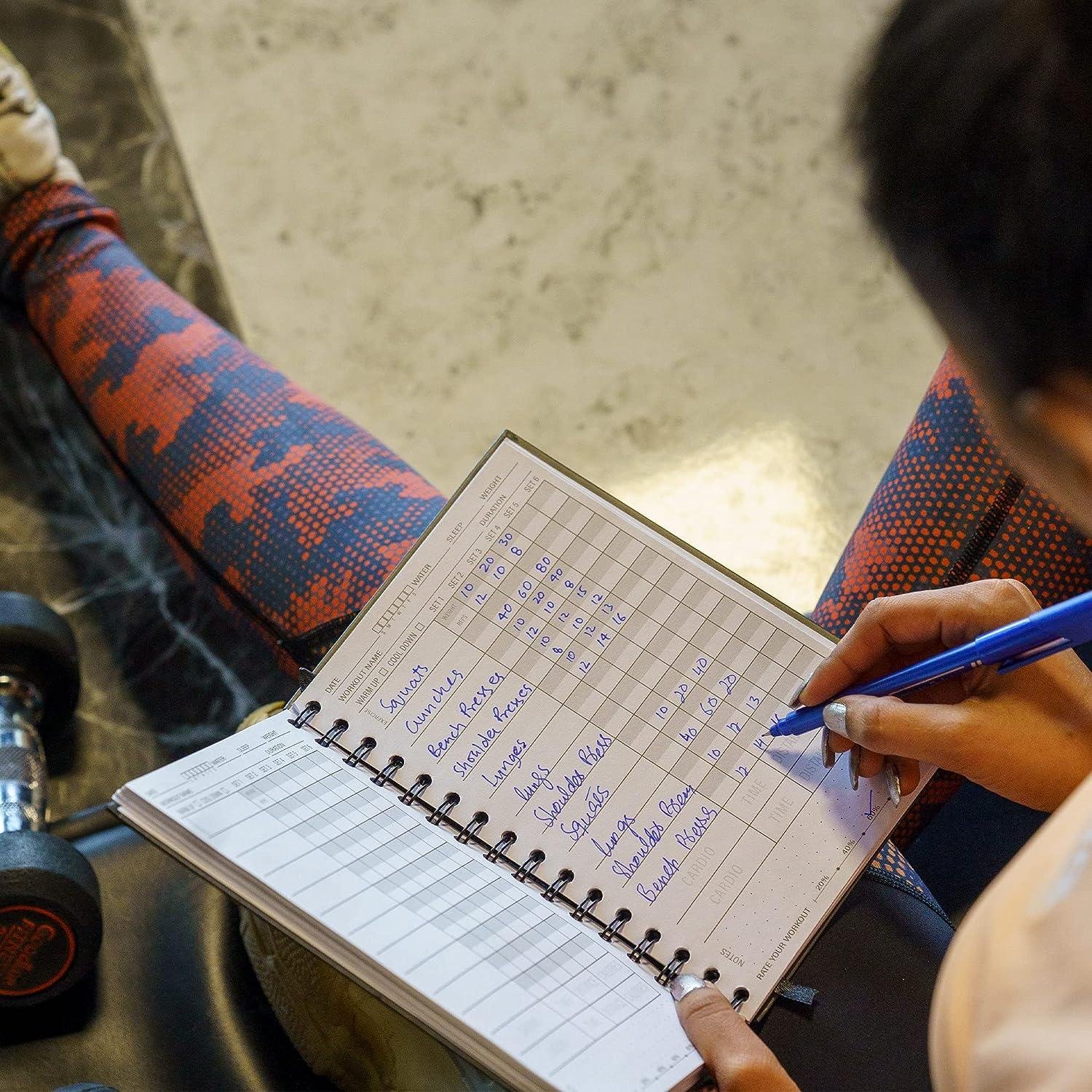
Record the implement, load per hand, side, body position, repetitions and the way you ended the set. A note such as standing single-arm kettlebell strict press is more useful than shoulder press alone. It distinguishes the exercise from a seated two-dumbbell press and from a push press performed later in the same workout.
Add a short observation when it explains the numbers. For example, a set might end because the rack became inconsistent rather than because you could not press the weight again. Another might feel smooth but use a shorter range than usual. Those details help you choose the next session’s task without inventing a measurement of muscle activation.
Look for progress within the same variation first. More controlled repetitions, a repeatable start and finish, or a sensible load increase can all be useful observations. None requires a claim that you have reproduced an electrode study in the gym. A training log is a practical record, not a substitute for measurements you did not perform.
Finally, choose an exercise you can practise consistently alongside the rest of your programme. The best fit may change with equipment access, your training goal or the skills you want to develop. Keep the dumbbell and kettlebell as different tools with different handling demands. Let the quality of the task and the clarity of your record matter more than a universal ranking.
For a practical starting point, choose just one main press per workout and keep the weight comfortably below a maximum effort while learning its setup. A simple illustration is two or three controlled working sets, with the same implement and posture throughout. The right number of repetitions depends on your recent training and the load available, so adjust the set before technique unravels. If you want both implements in one week, perform them as separate named exercises, not as disguised substitutes in the same progression. After several exposures, compare the stability of your starting position and the quality of the final rep. Consistent technique is more informative than the weight label alone, particularly when the two implements have different handle geometry and ways of settling against your arm. That is a useful experiment in your own training habits, not a measurement of EMG or a claim that one design causes more growth.

Bodybuilding Shirts & Workout Gear
Bodybuilding shirts, tanks and gym gear for lifters chasing muscle, size, symmetry and the pump.


Kettlebell Heartbeat Crewneck Pullover Sweater Workout T-Shirt
For laid-back days and bodybuilding humor: “Kettlebell Heartbeat”.

Dumbbell Heartbeat Hooded Pullover Fitness Fans Hoodie
Stay casual and show some bodybuilding attitude with “Dumbbell Heartbeat”.


Gym Equation Kettlebell Happiness Muscle Shirt for Lift Tank Top
Show some personality between sets with “Gym Equation”.

Happy Kettlebell Emoji Smiley Kettlebell Fitness Decal Sticker
Give your everyday gear a playful “Happy Kettlebell Emoji” twist.

Gold Skull , Uplift Iron Club Crewneck, Hardcore Fitnes T-Shirt
For laid-back days and powerlifting humor: “Gold Skull”.

Lightning Skull Muscle Shirt Gym Training Gift Uplift I Tank Top
Train hard, laugh a little, and rep “Tank Top Lightning Skull Muscle”.

Gym Is My Happy Place Happy Kettlebell Smiley Face Emoj Tank Top
Bring “Gym Is My Happy Place” humor to your next lifting session.

Is Calling Answer Decline Meme Top Tank Top
Train hard, laugh a little, and rep “Gym Is Calling”.