Advertising disclosure: This page includes affiliate links that may earn us a commission at no additional cost to you.
A boxer can be strong in the gym and still find that moving quickly around the ring is exhausting. Jumping rope has long been part of boxing preparation, but it is worth asking what that repeated bouncing movement can actually improve. Is the benefit primarily conditioning, a quicker response from the legs, better timing, or the ability to produce more force during a punch?
An eight-week comparison involving 24 junior amateur boxers offers a useful answer, with an important catch: the exercise described as jump rope training in the experiment was performed without an actual rope. The results are interesting precisely because they help separate the contribution of the legs from the familiar coordination challenge of skipping. They also reveal why a faster jab should not automatically be interpreted as a more powerful punch.
What the eight-week boxing study actually tested
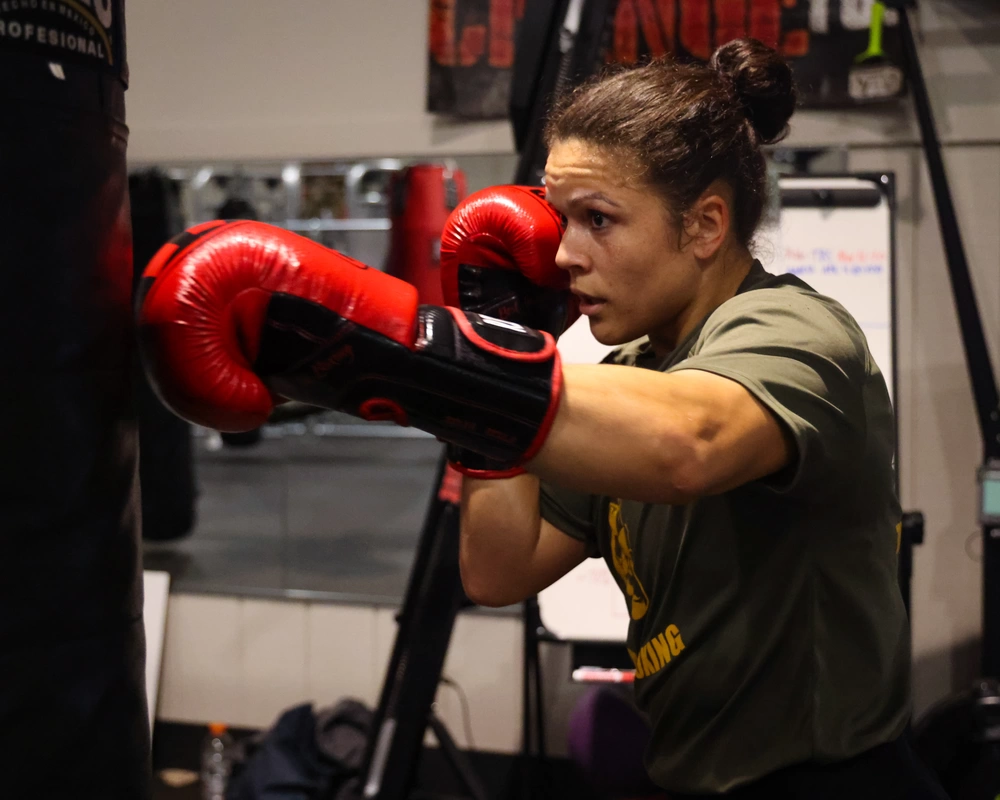
The participants were male high-school boxers aged 12 to 18, with three to five years of boxing experience. They were randomly allocated to two groups of 12. One performed plyometric exercises, while the other performed simulated rope jumping. Both completed three training sessions per week for eight weeks, with sessions lasting approximately 30 minutes, including a warm-up.
The researchers attempted to keep the training volume comparable by matching ground contacts. The simulated jumping group worked to a metronome at 120 beats per minute. Removing the rope and the associated arm movements was intended to reduce the influence of upper-body activity, allowing a more focused comparison of lower-body training.
Following the intervention, both groups showed improvements in several measured outcomes: rate of force development during a countermovement jump, jab reaction time, rear-leg peak ground reaction force and jab velocity. The researchers did not find significant differences between the two training groups for these improvements. Importantly, they did not establish a significant increase in the measured force of the jab or cross.
That last detail deserves attention. A faster punch, quicker initiation and an increase in the force applied to the ground are not interchangeable measurements. If a boxer wants to improve an aspect of performance, testing it directly is more useful than assuming that every positive change in the gym will carry over equally to the ring.
There are limitations. Twenty-four young athletes represent a small and specific sample, and the experiment did not include a third group that continued normal training without the additional jumping work. Consequently, we cannot confidently isolate every observed improvement from ordinary practice, maturation or repeated exposure to the tests. The findings are a reason to explore these training methods, not a guarantee that they will produce identical results in adult boxers or beginners.
Why quicker force production is not the same as harder punching
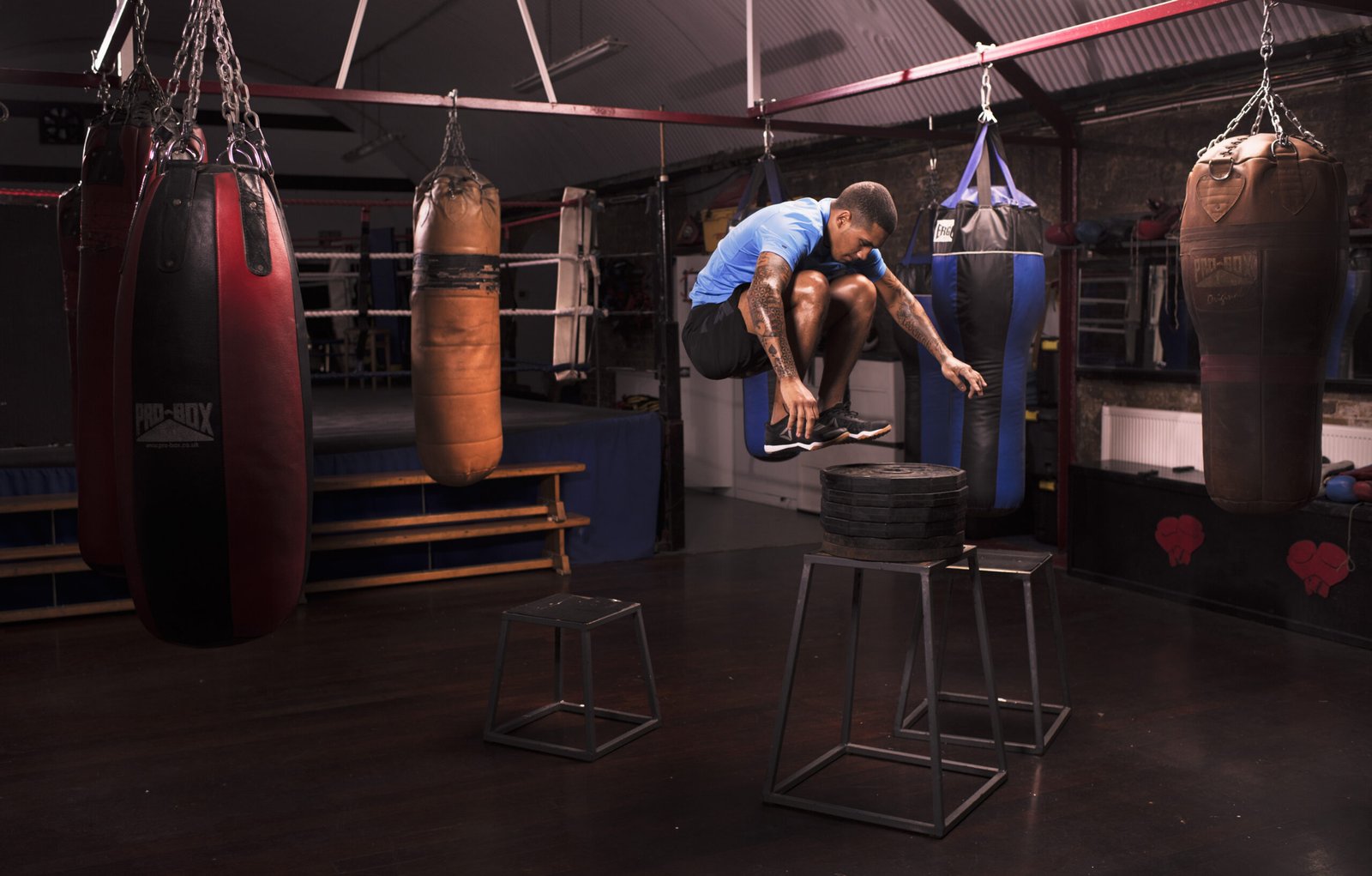
During a jump, the muscles and tendons of the lower limbs must absorb force and then produce force again. Repeated low-amplitude hops emphasize a quick, rhythmic contact with the floor. More demanding plyometric exercises can involve a greater displacement of the body, different landing positions or a larger force requirement.
The term rate of force development describes how rapidly force rises after muscular action begins. This is different from the maximum force that an athlete could produce given more time. A heavy squat can be an excellent exercise for increasing strength, yet a boxer also needs to express movement rapidly and repeatedly within a very different sporting environment.
Research comparing the physical characteristics of highly trained amateur boxers has found associations between measures of lower-body strength and punching impact. An association does not establish that increasing a particular strength-test result will automatically cause a corresponding increase in punching force. Athletes differ in their size, movement experience, technical proficiency and ability to coordinate the whole body.
The same caution applies to the jumping study. Better performance in a countermovement jump can indicate useful physical adaptation. It does not prove that the athlete will improve every movement in boxing, and it cannot replace assessments made during supervised sport-specific practice.
For a recreational athlete, this distinction helps clarify exercise selection. Use conventional resistance training to develop strength, appropriately dosed jumps to develop the ability to produce force quickly, and boxing instruction to develop the actual sporting skills. Treat them as complementary rather than expecting one exercise to fulfill every role.
Where skipping fits into a boxer’s training
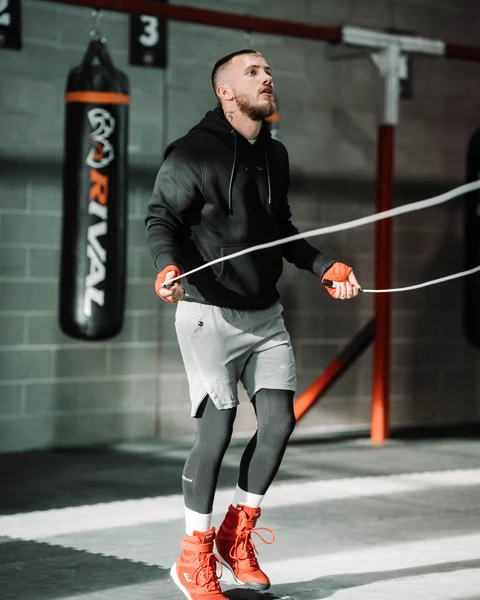
Traditional rope skipping has advantages that go beyond what was measured in the simulated-jumping experiment. The rope provides immediate feedback: if the hands and feet are not coordinated, the rhythm breaks. It also makes an inexpensive, compact tool for a warm-up or a short conditioning session. The exercise can be performed continuously or in intervals, and a beginner can adjust the speed and duration without purchasing a more complex machine.
Research synthesizing jump-rope interventions in children and adolescents has reported improvements across several fitness measures. However, the populations and training programs vary, and those findings should not be translated directly into a prediction of adult boxing performance.
Start with a rope that allows a comfortable, consistent rhythm. A conventional adjustable rope works well for learning. A lightweight speed rope can suit experienced users who prioritize rhythm, while heavy ropes create a different, more demanding exercise. They are not essential for this type of training and are not equivalent to the rope-free intervention described above.
For an athlete already completing several boxing sessions, the challenge is often deciding how much supplementary conditioning is useful. If a skipping session leaves the calves so sore that normal practice suffers, additional volume may be working against the main objective. Conversely, someone with little conditioning experience may find even a few short sets challenging enough to produce a useful adaptation.
Use short, manageable intervals at first, with relaxed shoulders, low jumps and controlled landings. An easy 20 to 30 seconds of skipping followed by a comfortable break can be sufficient for a first session. Increase the total work gradually rather than simultaneously adding speed, longer intervals and a heavier rope. Consider shoes, a suitable surface, space and existing lower-limb symptoms before increasing impact exposure.

Equipment Worth Exploring
Explore equipment, accessories and gear from our carefully selected range.


Rubber Hex Dumbbells
Rubber-coated hex dumbbell pairs with a stable shape for home and commercial strength training.


Cast Iron Kettlebells
Textured cast-iron kettlebells for swings, squats, carries, and full-body training.


A practical eight-week strength and jumping progression
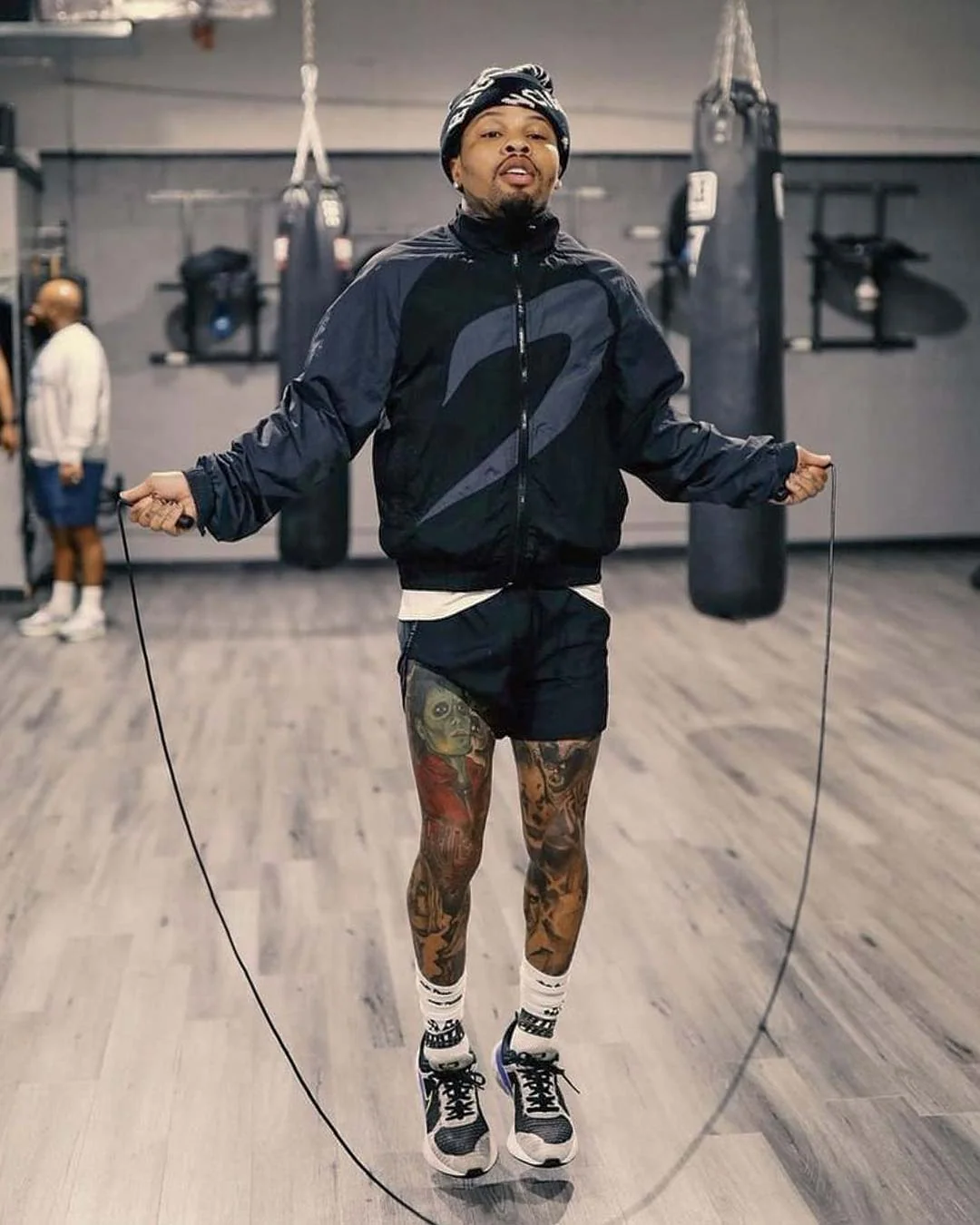
The following example is an independent training framework for a healthy adult who already has some resistance-training experience. It is not the exact intervention used in the junior boxing study. Younger athletes, people returning from injury and anyone with persistent joint or tendon pain should obtain individual guidance rather than copying a generic program.
Weeks 1 and 2: Establish a comfortable jumping rhythm. On two nonconsecutive days, begin with an easy warm-up and perform four to six short sets of low two-foot hops or rope skipping. Rest until the next set feels controlled. On separate strength sessions, work on a squat pattern, a hip hinge, a row and a pressing movement using manageable loads. Dumbbells, kettlebells or a conventional barbell are all reasonable tools; secure plates with appropriate collars when necessary.
Weeks 3 and 4: Maintain the same basic exercises. If recovery is good, add one or two sets or extend the skipping interval slightly. Introduce a small number of countermovement jumps, with full recovery between sets, rather than converting them into a continuous circuit. Land softly and stop when the quality of the movement deteriorates. A lower box may be used by experienced athletes, but higher boxes are not automatically more productive.
Weeks 5 and 6: Keep strength sessions challenging but avoid exhausting every set. A modest increase in load is appropriate when repetitions remain controlled. Continue one or two short jumping sessions and make the distinction between rhythm work and more demanding explosive exercise explicit. An easy rope session might be useful on a lighter day, whereas a few higher-quality jumps belong earlier in a session when the legs are fresh.
Weeks 7 and 8: Consolidate the training rather than chasing a dramatic final increase in volume. Keep the exercises familiar, allow adequate recovery and repeat your chosen fitness tests under comparable conditions. The purpose is to see whether your movement quality and physical capacity have improved, not to complete the most exhausting final session possible.
For strength work, there is no requirement to buy several types of free weight. An adjustable dumbbell pair can cover many basic movements. Fixed dumbbells are convenient when several people share a gym, while kettlebells can suit goblet squats, hinges and carries. A barbell is useful for progressive loading if you already have appropriate equipment and lifting experience. Choose the equipment that fits your training environment and current needs.
If you already train boxing several times per week, reduce the supplementary workload accordingly. Schedule the hardest sessions so they do not interfere with coached practice. At least initially, two brief exposures to jumping are preferable to adding another demanding session simply because the research used three per week.

Cardio Shirts & Workout Gear
Cardio and conditioning gym gear for runners, endurance athletes and anyone who earns the sweat.

Hero Jump Rope Cardio Speed Flash Inspired Gym Pullover Hoodie
Keep it laid-back with a little “Gym Hero Jump Rope Cardio Speed” attitude.

Jump Rope Wonder Woman | Superhero Cardio Workout Pullo Hoodie
Keep it laid-back with a little “Jump Rope Wonder Woman” attitude.

Anti Jump Rope Club Shirt Cardio Meme Top & Gymbros T-Shirt
Rep “Anti Jump Rope Club” humor in and out of the gym.

Burn Calories Human Torch Fantastic 4 Superhero Workout Sticker
Put “Burn Calories Human Torch Fantastic 4” gym humor on your laptop, bottle, or gym gear.

Cardio Speed Superhero Treadmill Running Decal Workout Sticker
A fun “Cardio Speed Superhero” touch for bottles, laptops, and lockers.

Cardio Heartbeat Hoodie
Show off your cardio humor in a laid-back “Cardio Heartbeat” hoodie.

Cardio Is Hardio – Workout Meme Vest Muscle Shirt For S Tank Top
Add some cardio attitude to training with “Cardio Is Hardio”.

Everything Hurts And I'M Tired Motivation Jumper T-Shirt
Add a playful “Everything Hurts And I'm Tired” touch to your casual rotation.

Exercise Your Demons | Cardio Workout From Hell Graphic T-Shirt
Show some cardio attitude with a playful “Exercise Your Demons” tee.

Don't Quit Do It – Motivational Jumper Pullover For Wor T-Shirt
Show some gym-day personality with “Don't Quit Do It”.
How to measure progress without confusing fatigue with power
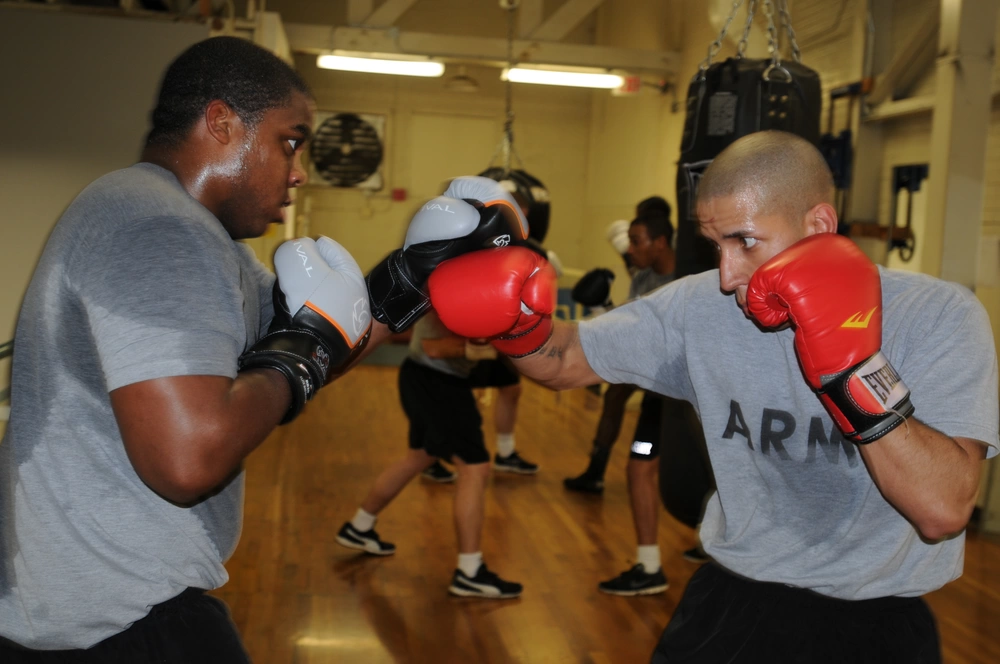
Fatigue is one reason why an athlete’s test result can be misleading. An experiment involving highly trained amateur boxers reported that an acute lower-body and trunk fatigue protocol on a rowing ergometer reduced measured punching force. The result is not a recommendation to stop rowing or lower-body training. Instead, it illustrates the distinction between developing capacity over time and temporarily reducing performance through a demanding session.
When assessing your own conditioning, avoid conducting the first test after a day of rest and the second after a particularly hard workout. Standardize the warm-up, time of day where practical, surface, footwear and recovery interval. For rope training, record how long you can maintain a comfortable rhythm without repeated trips, together with perceived exertion. For a jump assessment, use a consistent measurement method and allow full rest between attempts.
Keep a simple record of three variables: the amount of supplementary training completed, how you felt during normal sport practice and whether your chosen fitness measures improved. A higher workload is not inherently better when the quality of your primary training falls. If calf or Achilles discomfort persists, reduce the impact work and seek appropriate professional advice.
Competitive boxers should evaluate sporting performance with qualified coaches and appropriate equipment, not infer improvement from a home fitness test. For recreational lifters, the useful lesson is broader. Strength, speed, coordination and conditioning are related but distinct qualities. An intelligently designed program develops the ones that matter for the individual’s goal while giving each enough recovery.
The eight-week comparison shows that two different approaches to supplementary jumping were accompanied by improvements in several physical and performance measures among young boxers. It does not show that ordinary rope skipping alone increases punching force, or that plyometrics are universally superior. Choose the tool that suits your experience, progress the workload conservatively, and measure the outcome you actually want to improve.