Advertising disclosure: This page includes affiliate product links that may earn us a commission, as well as products from our own store.
Jefferson Curls: Start Light, Control the Round and Know When to Stop
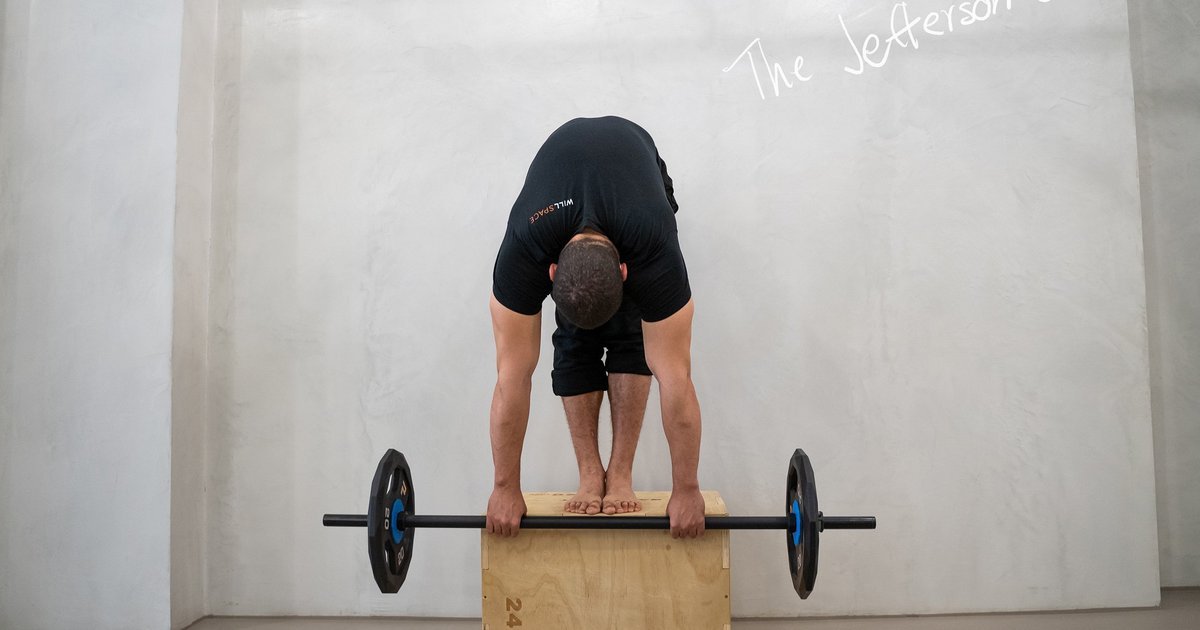
The Jefferson curl is an intentionally rounded, slow forward fold. Instead of keeping your back rigid as you would for a heavy Romanian deadlift, you gently roll downward through a comfortable range and return the same way. Some lifters use a very light weight; others begin with empty hands. Neither approach makes the exercise mandatory for a healthy back.
The important distinction is purpose. This is not a deadlift variation for chasing a personal record. It is a controlled exploration of spinal movement and posterior-chain tolerance. To get useful practice without turning it into a test of pain tolerance, start with a stable surface, small range, deliberate speed and a sensible progression.
1. Know what a Jefferson curl actually trains
Stand tall with your feet comfortably planted. Bring your chin slightly toward your chest and begin rounding forward from the upper back. Continue the fold gradually toward the lower back and hips, letting your arms hang beneath your shoulders. When you have reached an easy stopping point, reverse the sequence slowly until you stand upright again. Think of the movement as a controlled roll rather than a sudden bend and bounce.
The exercise combines trunk flexion with a hip and hamstring stretch as the torso approaches the thighs. Your back muscles and other trunk tissues must help manage the descent and return. That does not prove a Jefferson curl is better for building a large, powerful back than rows, deadlifts or extensions. Its distinguishing feature is the rounded movement path, not the ability to load the most weight.
People sometimes describe moving one vertebra at a time. In practice, individual vertebral motion is not something you can isolate perfectly by feel. Use that phrase as a reminder to move smoothly rather than as a demand for an exact anatomical sequence. Your own comfortable range may be shallower than someone else’s, particularly early in a session.
Unlike a standard hip hinge, in which the trunk is generally kept braced while the hips move backward, a Jefferson curl deliberately allows the spine to flex. Neither pattern is universally right for every lift. Use a braced hinge when your exercise calls for one and reserve deliberate rounding for an appropriately light movement you have chosen for a clear reason.
2. Choose a stable setup before worrying about load
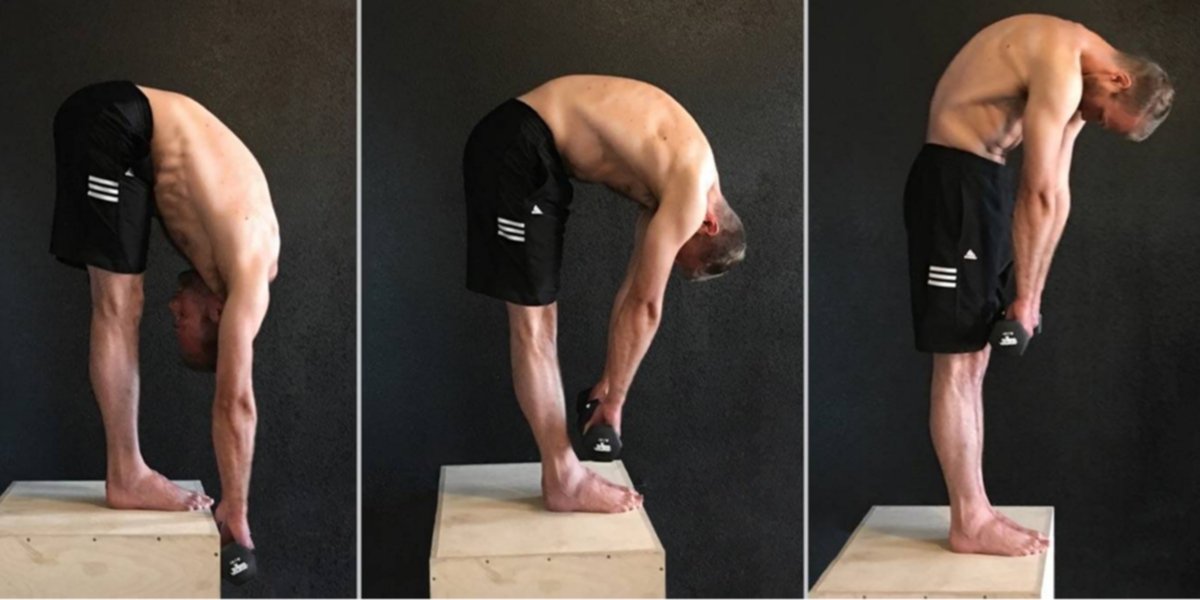
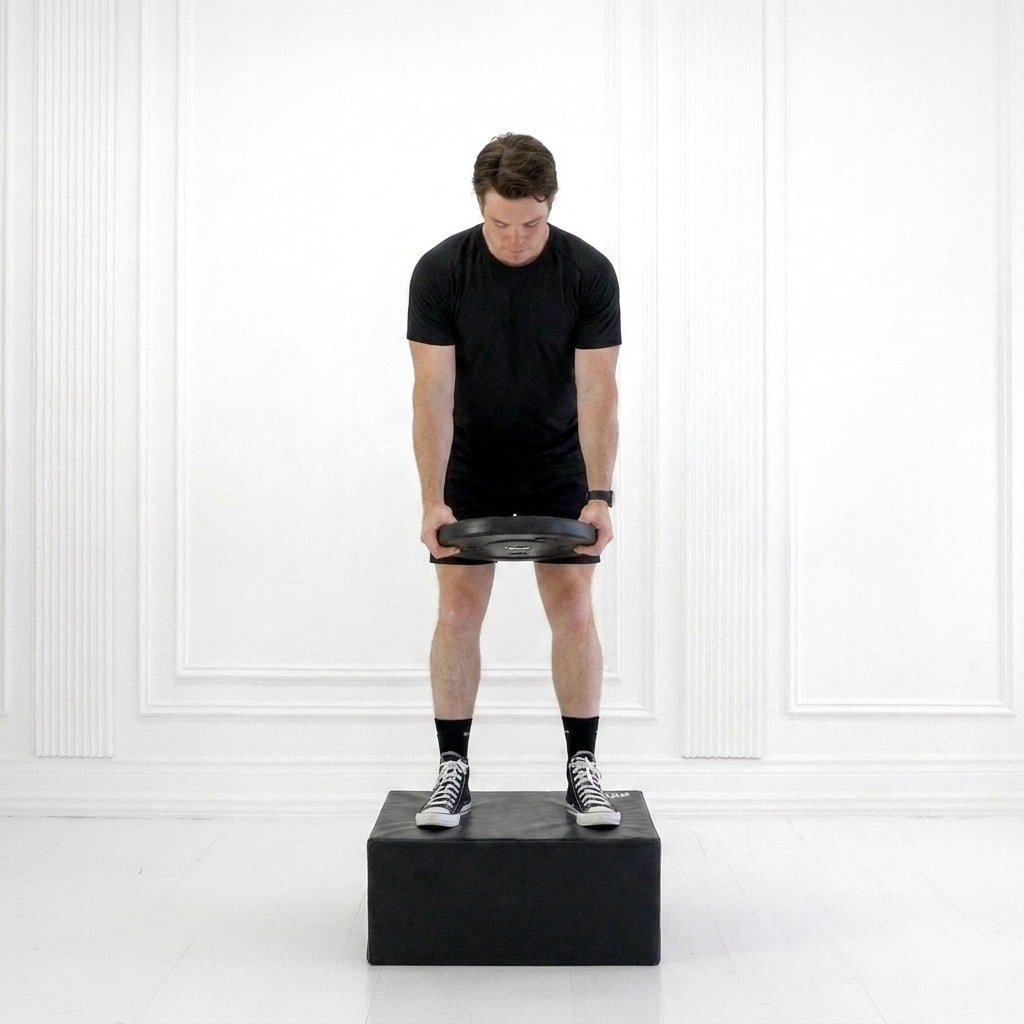
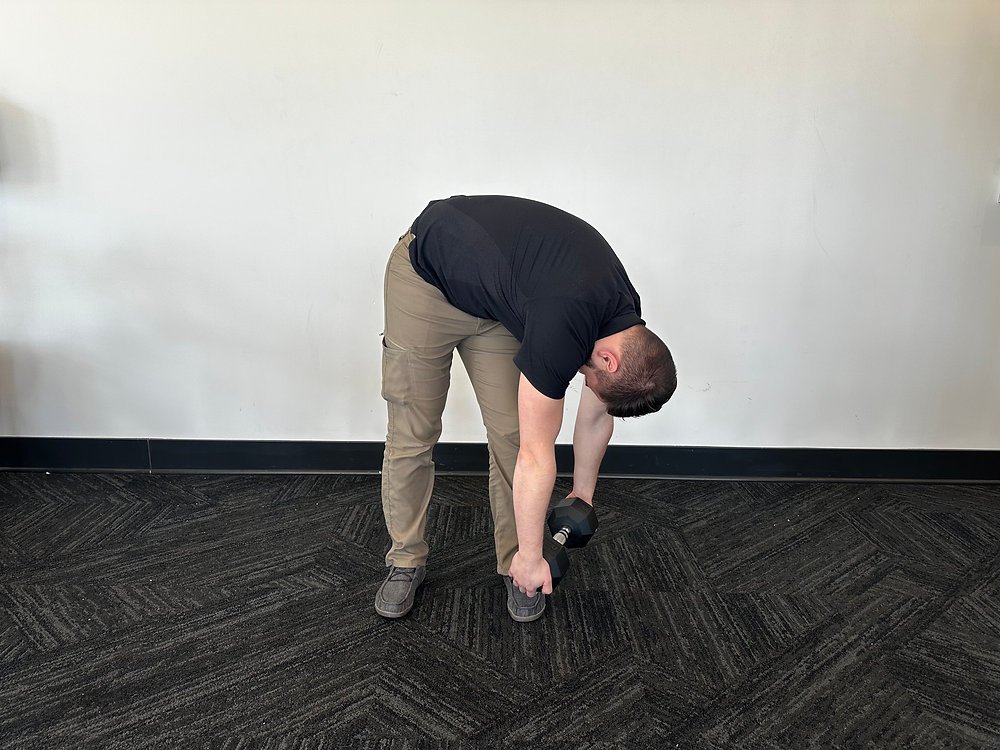
Try the first repetitions without added weight, standing on the floor. Wear stable footwear or work barefoot only where the surface is safe and permitted. Keep enough room ahead of you to fold without hitting equipment. If you later use a platform, it must be sturdy, level, broad enough for your feet and incapable of tipping or sliding. A wobbling bench, loose plate stack or improvised tower of blocks is a poor trade for a few extra centimeters of range.
From standing, let your arms hang naturally and start rolling forward. Your knees may stay mostly straight with a small comfortable softness; avoid aggressively locking them or forcing your heels down into a painful stretch. As you descend, stop when you lose smooth control, feel a sharp sensation or begin compensating just to reach farther. The floor is not a target you must touch.
A light dumbbell, small kettlebell or manageable bar can be held in front after unloaded movement feels ordinary. Many people will not need more than a very small weight, and there is no universal beginner kilogram prescription. The dumbbell simply adds resistance; it is not a requirement for the exercise to count. A heavier implement changes both the demand and the downside of losing position, so an adjustable load with small increments is preferable to a dramatic jump.
Keep the load close to the body rather than deliberately reaching it forward. If balance shifts toward your toes, if your hands begin tugging you deeper, or if you have to heave upward to finish, reduce the load or return to the floor version. A good setup is one you could repeat with the same control on the next session, not a setup that wins a range-of-motion contest.
3. Make the lowering and return equally deliberate
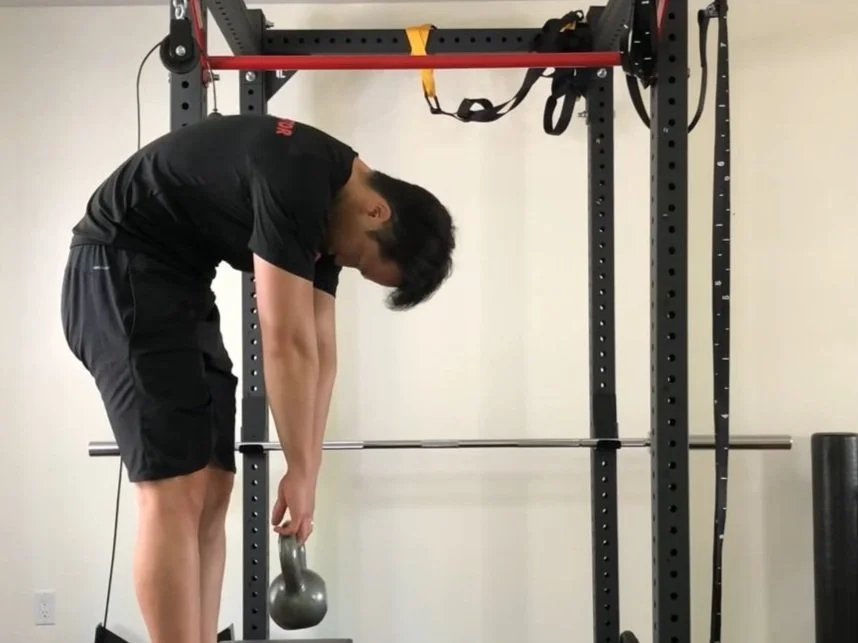
Use a slow, even descent, paying attention to the difference between a manageable stretch and a warning signal. Rounding should develop progressively instead of appearing as one sudden collapse in the lower back. At the bottom, pause briefly without bouncing. Then start the return with control rather than jerking the shoulders up and leaving the hips behind.
Breathe normally and avoid a prolonged, aggressive breath hold for a light mobility drill. You do not need to create a maximal bracing effort as though preparing for a heavy squat. If you are unsure how to coordinate the return, shorten the range until each repetition looks and feels similar. Record your movement from the side if that helps you see whether the weight is drifting far forward or the finish is rushed.
Fatigue can quietly alter the rep. The first three may be smooth, but the eighth might include a bounce, shoulder shrug or abrupt straighten-up. Treat those changes as a cue to end the set rather than push to a predetermined number. More repetition is useful only when its quality remains consistent. One or two modest sets can provide more honest feedback than several sets that turn into a stretch tolerance challenge.
You should also distinguish muscular effort from troubling symptoms. If you notice sharp pain, radiating discomfort, tingling, numbness or new weakness, stop and seek an appropriate medical assessment, especially if symptoms persist. People recovering from a significant spinal injury, dealing with acute back pain or following specific clinical restrictions should not interpret a general fitness guide as permission to load spinal flexion.

Equipment Worth Exploring
Explore equipment, accessories and gear from our carefully selected range.


Rubber Hex Dumbbells
Rubber-coated hex dumbbell pairs with a stable shape for home and commercial strength training.


Cast Iron Kettlebells
Textured cast-iron kettlebells for swings, squats, carries, and full-body training.


4. Compare it with Romanian deadlifts and ordinary stretching
Romanian deadlifts teach you to move mainly through the hips while maintaining a controlled trunk position under meaningful resistance. They are usually a better tool when the goal is progressively loading hip extension and hamstring strength. A Jefferson curl involves a different movement pattern and typically a much lighter load. Swapping every hinge for a Jefferson curl would leave an obvious gap in heavy posterior-chain training.
A relaxed toe-touch stretch also differs. In an easy forward fold you might hang with minimal deliberate muscular control; the Jefferson curl asks you to manage the way down and the way back. Yet this distinction does not automatically mean it generates larger long-term mobility gains. Comfort, exposure, technique and your broader training program can matter more than the exercise’s name.
Back extensions, reverse hypers and cable pull-throughs have their own roles, too. They challenge hip or trunk extension using different resistance profiles. They are not interchangeable with rounding under a small weight. Pick an exercise for the quality you want to practice, then measure whether it actually helps your training rather than treating any unusual movement as a secret fix.
Some lifters fear every rounded position; others insist everyone needs loaded spinal rounding. Both claims are too broad. The forces, range, history, symptoms, speed and load matter. Controlled, low-load practice for a symptom-free lifter and a fatigued heavy deadlift with a changing trunk position are not equivalent situations. You can keep the useful parts of conservative lifting technique while recognizing that the spine moves in real life.
5. Build an unhurried six-week practice progression
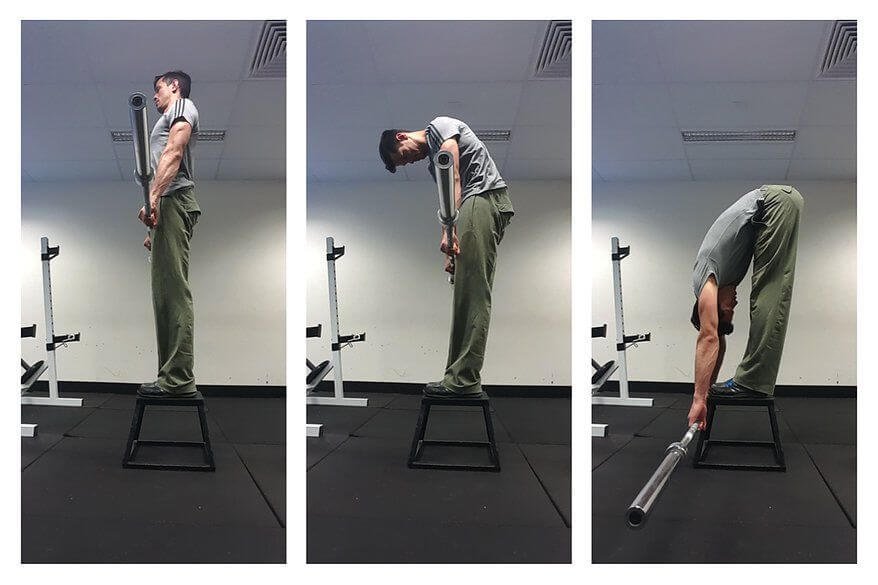
Use the following as an illustrative practice framework, not a protocol proven superior in a trial. In weeks one and two, test one set of five slow unloaded repetitions once or twice weekly. Work from the floor, stop before discomfort and write down whether the descent and return felt smooth. If five repetitions are already awkward, use three or a smaller range. Do not force the volume to match the calendar.
In weeks three and four, you might add a second easy set or slightly extend your comfortable range, but not both changes at once. A small, securely held load can be considered only if unloaded control has become routine and you have no concerning symptoms. Keep the same stable surface when you compare sessions. Changing shoes, elevation, load and range all at once makes it hard to learn what caused the difference.
During weeks five and six, repeat the version that feels reliable and progress just one variable if there is a reason. That might mean a smoother bottom pause, an extra well-controlled rep or a minimal weight increase. An elevated platform is optional and often unnecessary. Greater depth is not automatically better, especially if it replaces a calm return with a loaded swing.
Position the movement where it makes sense in your session: as a very light practice element, an optional accessory or an individually prescribed exercise. Do not exhaust your trunk with it just before a heavy lift that requires a different position and high stability. If you already do plenty of hinging, hamstring work and general movement, the Jefferson curl may add variety rather than solve a missing training requirement.
A useful training log could include the surface used, load, approximate range, reps, tempo quality and how the back felt later that day and the following morning. This is personal tracking, not a clinical diagnostic test. Use that information to decide whether to continue, adjust or drop the exercise. The best Jefferson curl is the one you can explain, control and tolerate, not the deepest or heaviest version on camera.

Funny Gym Shirts & Workout Gear
Funny gym shirts, tanks, hoodies and workout gear for lifters who like training hard.

Resilience Stoic Tee
Make gym days more fun with “Resilience Redefined: Stoic Sigma Greek God” style.


Lift Smart Brain Plate Tee
Show some lifting attitude with a playful “Lift Smart Brain Weight Plate” tee.

Vitruvian Kettlebell Tee
Heavy lifts, good laughs, and a little “Vitruvian Man With Kettlebells” energy.

Vive La Resistance Bands – Resistance Bands Warmup Reha Hoodie
Stay casual and show some lifting attitude with “Vive La Resistance Bands”.


Consistency King Tee
Make gym days more fun with “Consistency King Stoic Greek God Marble” style.

Grunge Gains Repeat Sticker
Bring “Grunge Gains Repeat” attitude to your water bottle or laptop.