Advertising disclosure: This page includes affiliate product links that may earn us a commission, as well as products from our own store.
Dumbbell Scaption: A Diagonal Raise You Can Actually Control
Dumbbell scaption is a shoulder raise with a small but useful difference: your arms travel slightly forward of your sides, forming a wide V rather than moving directly sideways. Keep a neutral grip, lift with control and finish around shoulder height. The weights can be surprisingly light because the goal is a repeatable arm path, not the biggest number on the dumbbell rack.
That makes scaption worth understanding alongside front raises and lateral raises. It is another option for training shoulder elevation, not a guaranteed fix for pain or a shortcut to bigger delts. The useful questions are practical: where should your arms go, how much weight lets you control them, and when does a variation become a different exercise?
1. Find the diagonal before adding resistance
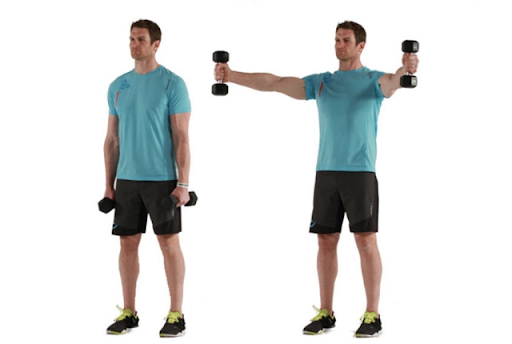
Start without weights. Stand comfortably and let your arms hang by your sides, with your thumbs pointing forward. Raise both arms along a diagonal between a front raise and a lateral raise. Think of opening into a wide V. In common demonstrations, that path sits roughly 30–45 degrees forward of directly sideways; it is an approximate orientation, not an angle you need to measure with a protractor.
Keep a small, comfortable bend in your elbows and avoid changing it noticeably during the repetition. Your hands should move with your upper arms rather than turning the exercise into an elbow curl. At the top, the arms are approximately level with your shoulders. Lower them along the same path instead of letting the weights swing inward or fall toward your thighs.
The neutral grip helps distinguish this version from raises performed with palms facing the floor. You do not need to twist the dumbbells sharply or force your thumbs into an exaggerated position. Let the grip remain comfortable while the upper arm follows its diagonal. Check the movement from the front and from an angle: a front view alone can hide whether your hands are drifting forward.
This is a shoulder movement, so some movement around the shoulder blades is expected. Do not interpret “stay controlled” as an instruction to freeze every joint above your ribs. The target is a smooth raise with a quiet torso, not a rigid pose that makes an otherwise comfortable movement awkward.
2. Set up for a light raise, not a heavy lift
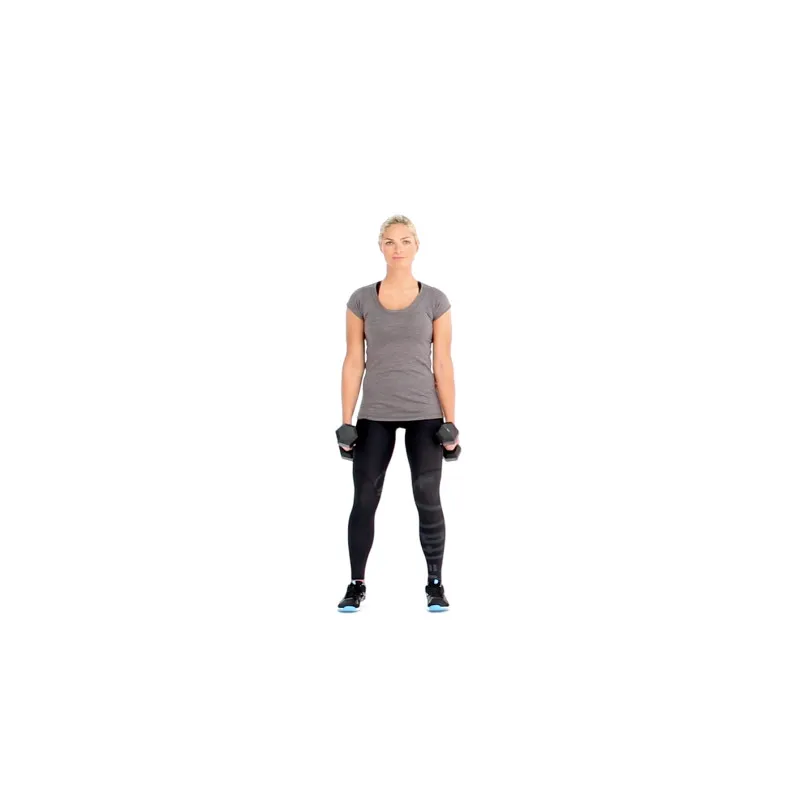
Choose two dumbbells you can lift without leaning backward, bending your knees to launch them or lifting your chest dramatically. A load that feels trivial during a curl can still provide noticeable work here. Begin with the lighter option when you are learning the path. You can add resistance after the movement is consistent; you cannot recover control simply by calling a swinging repetition intense.
Give yourself enough space for the wide V. Keep your feet in a stable stance, knees relaxed and trunk comfortable. Before the first loaded repetition, establish the same neutral grip you practiced empty-handed. Let the dumbbells settle at your sides rather than bouncing directly from the pickup into the first raise.
Equipment choice matters mainly because it changes how easily you can select an appropriate load. Light fixed dumbbells offer a straightforward starting point. Adjustable dumbbells are another option if their minimum setting and increments suit this exercise. A pair designed around much heavier lifting might not provide the small starting load you want. Check the actual range instead of assuming every adjustable model suits every movement.
A seated version can make torso movement easier to notice, although sitting does not automatically produce better technique. Use a stable seat and preserve the same arm path. Cable units and handles offer other shoulder-raise options, but their resistance direction and setup differ from dumbbells. Treat them as alternatives to evaluate, not interchangeable tools that reproduce an identical repetition.

Equipment Worth Exploring
Explore equipment, accessories and gear from our carefully selected range.


Rubber Hex Dumbbells
Rubber-coated hex dumbbell pairs with a stable shape for home and commercial strength training.


Multi Bench MBX-650 2.0
Adjustable multi-bench with roller adjustment, 15 backrest positions and accessory mounts.

VOLTRA
Compact digital cable trainer with smooth, adjustable resistance.

Go-Tone Pro
Portable digital cable trainer with up to 66 lb (30 kg) of adjustable resistance.


3. Keep the return as deliberate as the lift
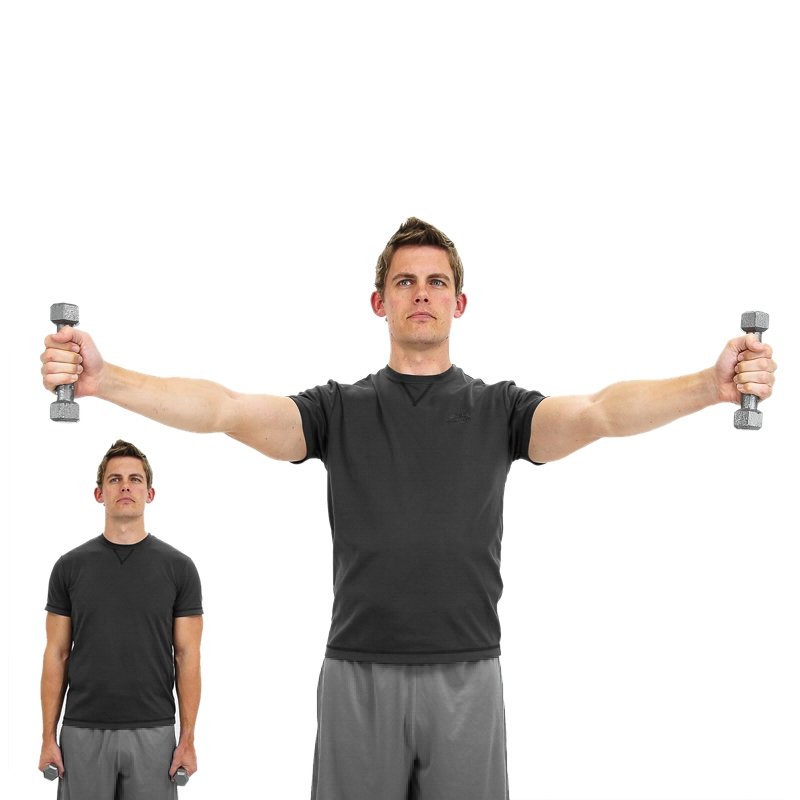
The upward phase usually gets the attention, but the return exposes whether you own the load. Lift smoothly, approach shoulder height without throwing the dumbbells upward, then lower them deliberately. You do not need an elaborate timing formula. An even movement that you can reproduce is more useful than a countdown that becomes impossible halfway through the set.
Watch for three changes as effort rises. First, the torso starts rocking to get the weights moving. Second, the elbows bend progressively more, shortening the movement and changing the setup. Third, the weights drop quickly while the lifter resets for another explosive launch. Any one of those changes is a reason to reduce the load, shorten the set or pause before continuing.
A little natural movement is different from turning every repetition into a new exercise. Compare the beginning and end of a set. Are your hands following a similar diagonal? Is the top position roughly consistent? Can you lower the dumbbells without chasing them? Those questions give you something observable instead of relying entirely on how hard the set feels.
For example, suppose the first six repetitions look controlled but the next four require a backward lean. Recording ten repetitions alone hides the change. Record six controlled repetitions, or select a lighter pair that lets you maintain the intended movement. That is an example of honest tracking, not a special six-repetition prescription for scaption.
4. Adjust the exercise without forcing a painful range
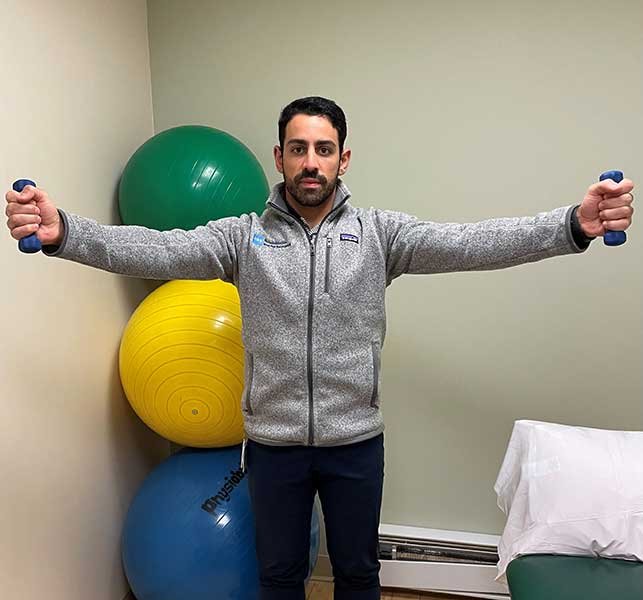
Shoulder height is a useful reference for this version, not a demand to force your hands into a position that hurts. Begin with a comfortable range and light resistance. If raising the arms produces pain, stop that attempt and reassess rather than adding momentum or repeatedly testing the same painful repetition. Persistent or recurring symptoms deserve individual assessment.
Scaption appears in both general training and rehabilitation settings, but those contexts are not identical. A technique article cannot determine the cause of shoulder pain or choose a rehabilitation dose for you. A clinician may use a particular range, load or progression for a specific person. That does not make the same choice a universal prescription for everyone with an uncomfortable shoulder.
For ordinary training, change one feature at a time when comparing options. Try a lighter load before changing grip, body position and range together. If you choose to sit, keep the dumbbells and arm path comparable. If you change to cables, note that you have also changed the direction of resistance. Otherwise, it becomes difficult to tell which adjustment made the exercise feel different.
A diagonal raise also does not need to replace every front raise, lateral raise or press. These movements have different setups and demands. Choose scaption because it fits the work you intend to do and you can perform it consistently, rather than because a diagram or exercise name promises that one path is automatically best.
5. Progress the repetition before chasing the dumbbell rack
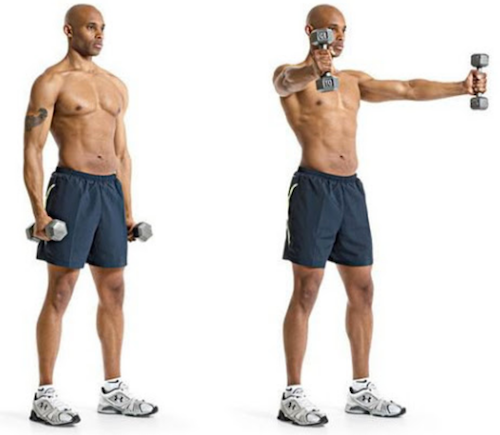
Use a simple record: dumbbell load, repetitions, chosen range and any meaningful technique change. A short note such as “controlled throughout” or “started leaning on the final two” is more useful than a dramatic description of the burn. Keep the same setup long enough to compare sessions. Consistency makes small improvements visible.
Progress can mean completing the planned work with steadier control before increasing resistance. When you do increase the load, check that the diagonal, elbow position and return still resemble the lighter version. If the next available dumbbell is too large a jump, keep practicing with the current pair. Compatible small increments may help with some equipment, but accessories are not universal and must suit the actual dumbbell system.
Decide what job the exercise has in the session. A few easy practice repetitions before other shoulder work serve a different purpose from an accessory set you want to track over time. Keep that purpose clear instead of making every warm-up progressively harder. If you regularly change the order of exercises, note it: a raise performed before pressing may feel different from the same raise afterward.
For comparison, repeat the same setup on another day before declaring the movement improved or ineffective. Ordinary session differences can change how the weight feels. A repeatable record helps separate a useful trend from one unusually good or poor set.
The central idea is modest: select a load you can manage, repeat the intended movement and let the record show what changed. Scaption earns its place through controlled practice, not by becoming a contest to lift heavier weights than the person beside you.

Funny Gym Shirts & Workout Gear
Funny gym shirts, tanks, hoodies and workout gear for lifters who like training hard.

Meme Pink Dumbbells Top & Gymbros T-Shirt
Rep “Pink Dumbbells” humor in and out of the gym.

Shirt – Liftionaire Golden Dumbbell Gymbros & Gains T-Shirt
Make gym days more fun with “Liftionaire Golden Dumbbell” style.


Discipline Stoic Tee
Show some lifting attitude with a playful “Discipline Stoic Sigma Bodybuilder” tee.

Progress Stoic Bodybuilder Greek God Marble Sculpture T-Shirt
Heavy lifts, good laughs, and a little “Progress Stoic Bodybuilder Greek God Marble” energy.


Safety Practice Safe Sets Hooded Jumper Top Hoodie
Show off your bodybuilding humor in a laid-back “Gym Safety” hoodie.

Mind Muscle Perfection Brain and Biceps Gym for Science Tank Top
Bring “Mind Muscle Perfection Brain and Biceps” humor to your next lifting session.

Break The Stereotype Gym | Feminist Workout Decal For S Sticker
Stick a little “Break The Stereotype” humor on your favorite gear.