Advertising disclosure: This page includes affiliate product links that may earn us a commission, as well as products from our own store.
A bigger range of motion is not automatically a bigger athletic payoff. In an eight-week experiment involving 27 adults, calf strengthening at long versus short muscle lengths produced distinct mechanical changes. The biggest difference appeared in Achilles tendon stiffness, while measured calf-fascicle behavior during running, hopping and jumping remained largely unchanged. Here is what the trial actually tells lifters about the lowering phase, ankle position and a sensible calf-training plan.
What the eight-week calf experiment actually tested
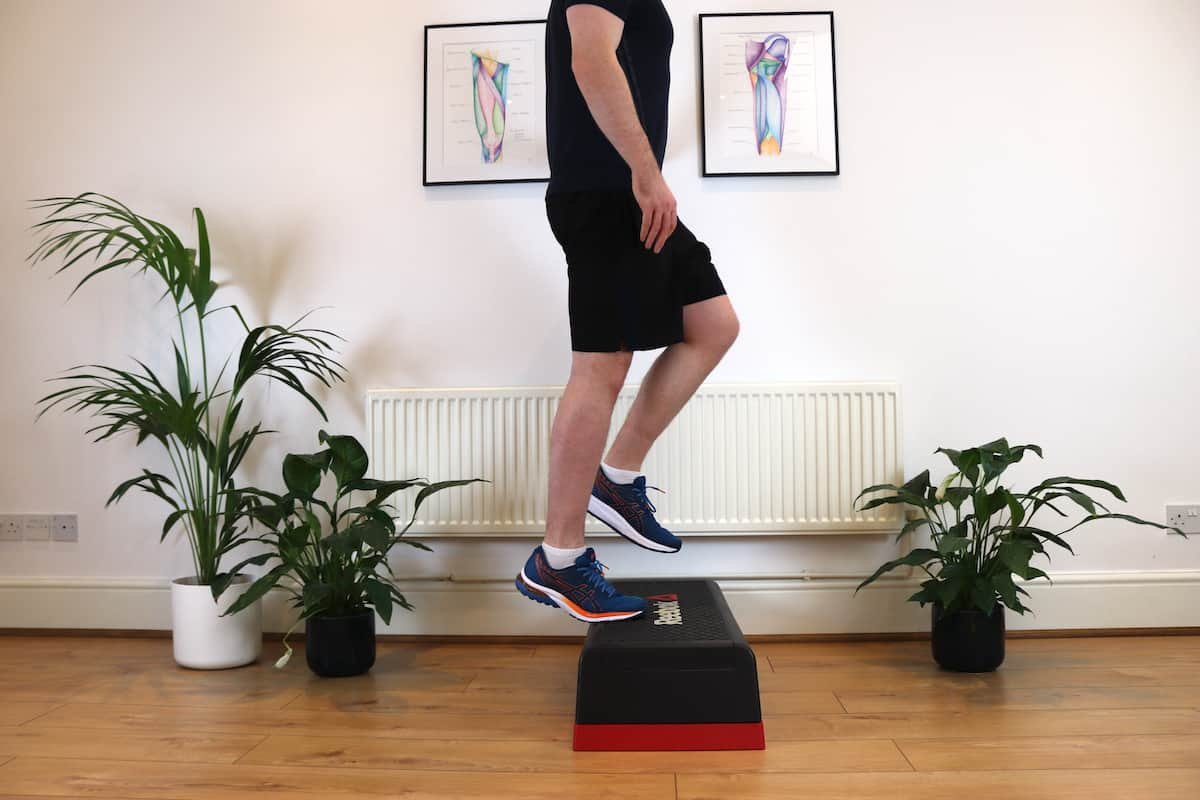
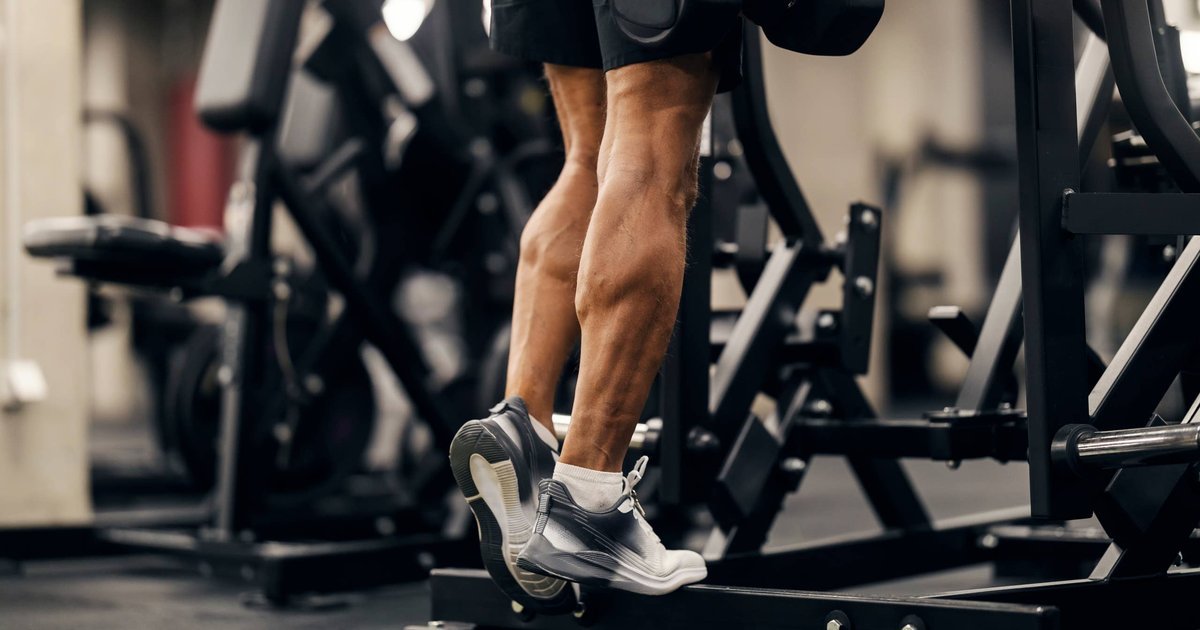
Calf training looks simple from across the gym: push onto your toes, lower your heels and repeat. Yet the portion of the movement where you load the calf can change what tissues experience. An eight-week controlled experiment involving 27 adults tested eccentric plantar-flexor work at different ankle angles. One group emphasized a shorter-muscle-length range, moving from roughly 30 degrees of plantar flexion toward neutral. The other emphasized a lengthened range, moving from neutral into as much dorsiflexion as each person could achieve.
Eccentric means the muscles are producing force while lengthening. In a calf raise this is usually the controlled descent, rather than the upward drive. The long-length condition therefore exposed the calf–Achilles system to loaded positions with the heel lower and the ankle more flexed. The investigators did not merely ask who could perform more raises. They measured maximal strength, tendon stiffness and the behavior of a specific calf-muscle fascicle during several tasks. Those are separate outcomes, and they cannot be collapsed into one claim that the longer stretch makes everyone a faster runner.
The useful question for a lifter is what the trial supports: whether the chosen range changes strength and measured tissue properties over eight weeks. It does not directly compare every popular standing and seated machine, it is not a bodybuilding contest, and it does not establish which routine prevents Achilles injury. Those distinctions matter when translating a laboratory protocol to a busy leg day.
Calf mechanics: muscle length, ankle angle and the Achilles tendon
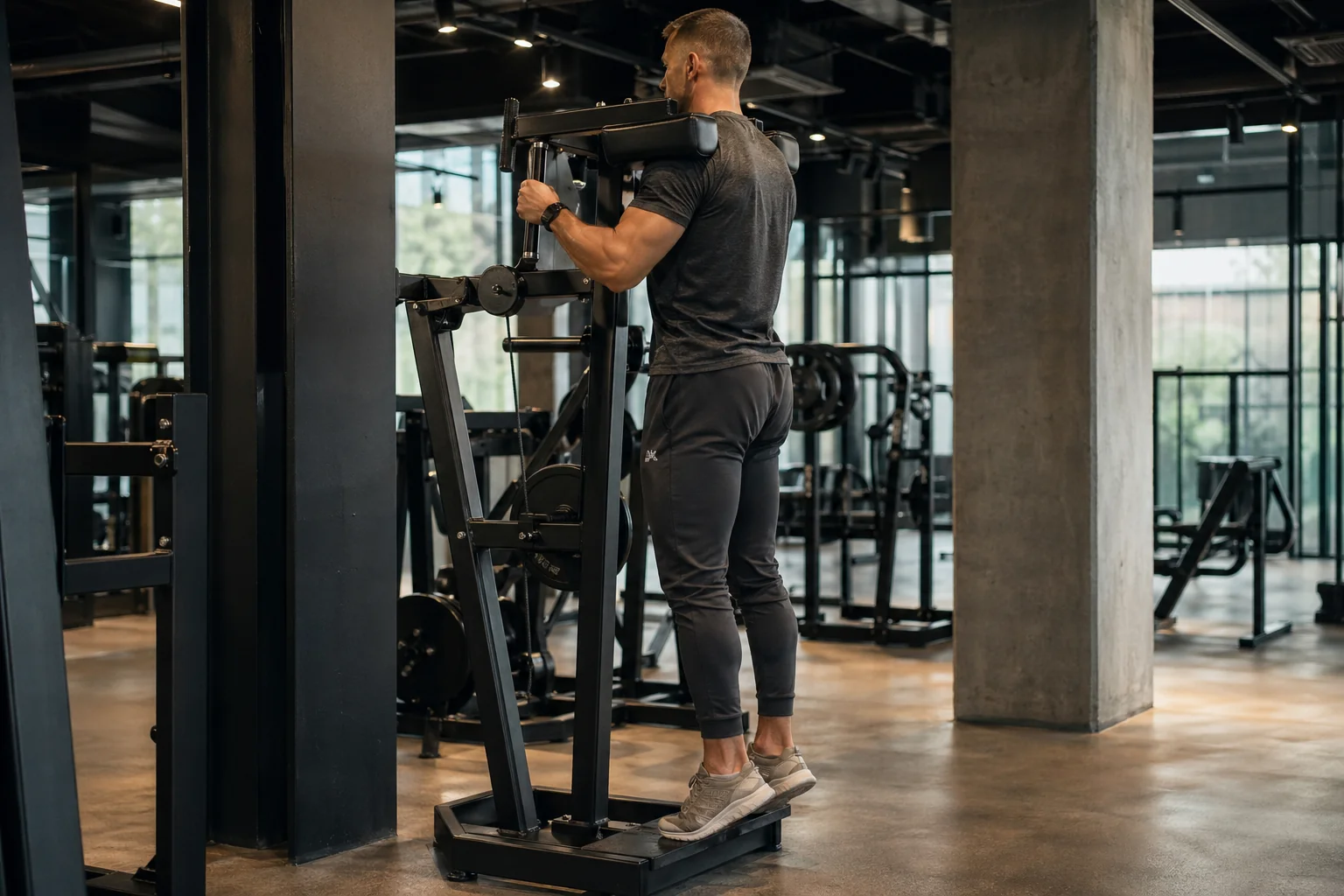
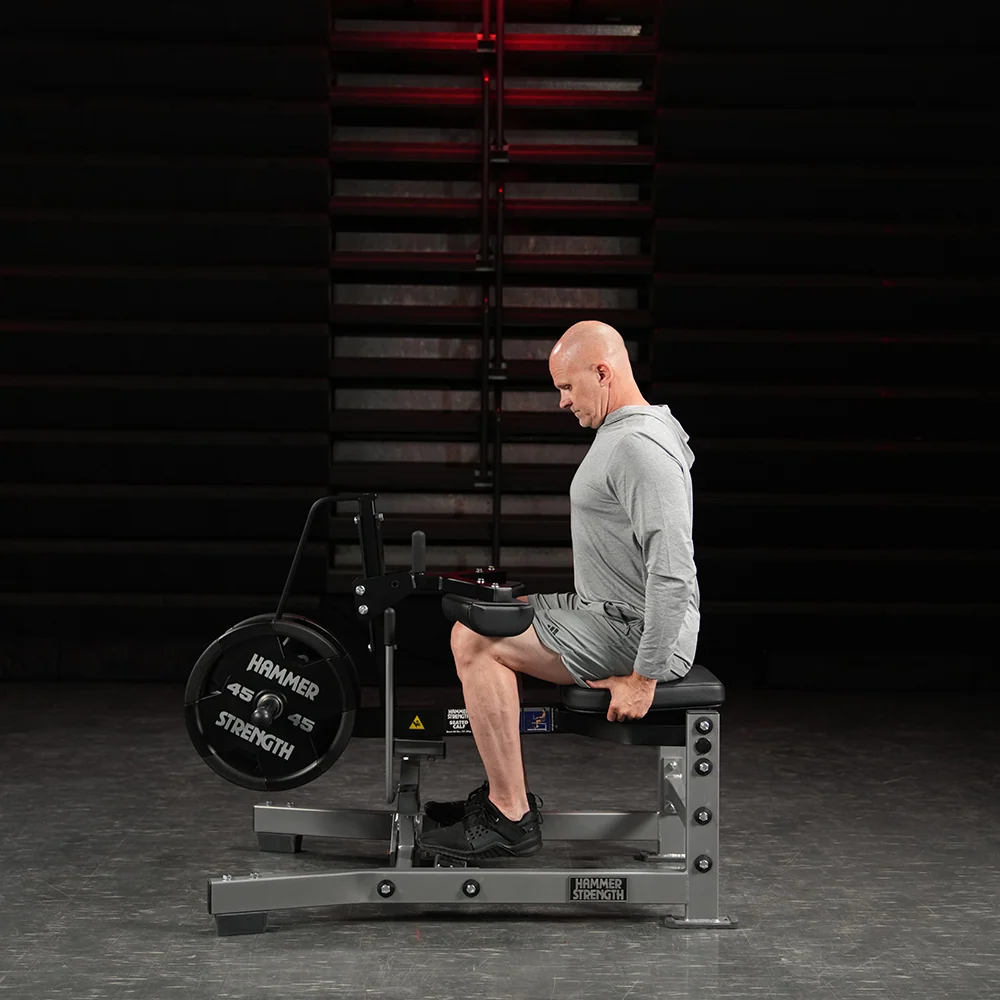
The gastrocnemius crosses the knee and the ankle, while the deeper soleus primarily spans the ankle. With the knee straighter, the gastrocnemius generally has more available length. With a bent knee, a seated raise shifts the relative contribution of the muscle group. Neither fact means one version is universally superior; it means that knee angle and ankle travel should be intentionally chosen rather than treated as interchangeable details.
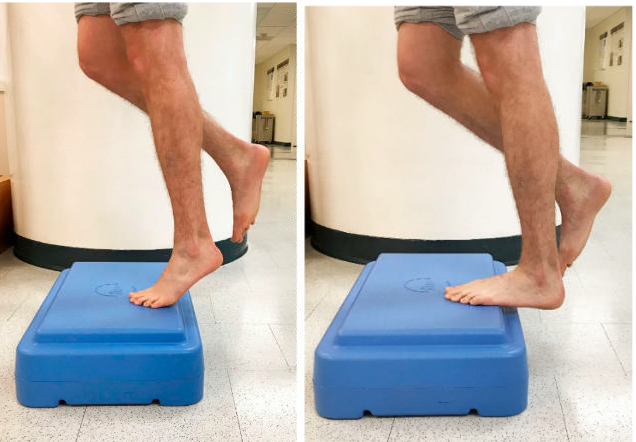
At the ankle, rising onto the forefoot is plantar flexion. Allowing the heel to move below the level of the forefoot produces dorsiflexion. Moving into that deeper bottom position while resisting the downward movement challenges the plantar flexors at a longer length. The Achilles tendon transmits force from the calf complex to the heel, so the muscle and tendon can adapt differently even if two lifters report the same burn.
Importantly, tendon stiffness is a mechanical measurement: how much a tendon resists elongation under force. In a healthy, progressively trained context, greater measured stiffness is not automatically bad and not automatically a guarantee of better athletic performance. Tendon pain, stiffness felt on waking and laboratory tendon stiffness are different ideas. Use terminology accurately before deciding that a particular percentage change is a clinical benefit.

Equipment Worth Exploring
Explore equipment, accessories and gear from our carefully selected range.


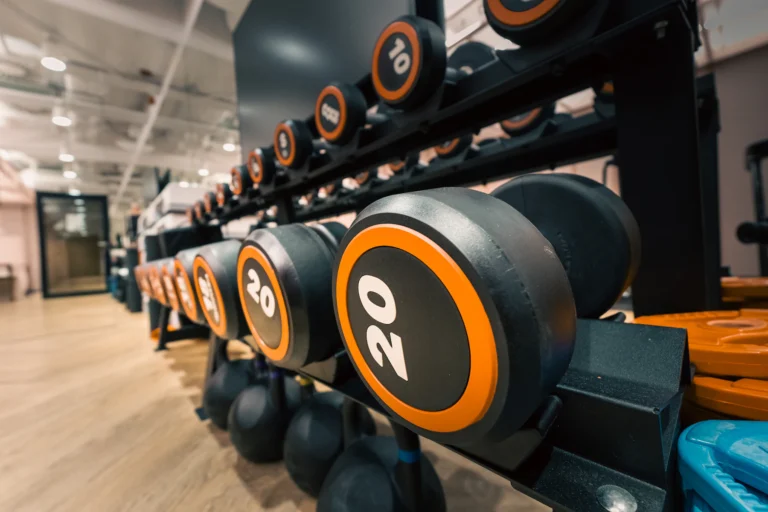
Rubber Hex Dumbbells
Rubber-coated hex dumbbell pairs with a stable shape for home and commercial strength training.


Cast Iron Kettlebells
Textured cast-iron kettlebells for swings, squats, carries, and full-body training.


Grip Plates
Rubber-coated weight plates with handholds for loading barbells and machines.


What changed in strength: two ranges, different responses
Both experimental groups increased maximal plantar-flexion strength over the training period. Average maximal isometric torque rose about 13.0 percent in the shorter-length group and 9.7 percent in the longer-length group. Average maximal eccentric torque rose about 7.2 percent with shorter-length work and 15.4 percent with longer-length work. These are within-group changes, not proof that one method definitively beat the other on every strength outcome.
Individual responses varied widely. The reported dispersion around the means was large: approximately 22.6 and 15.6 percentage points for isometric gains in the short- and long-length groups, and about 21.9 and 23.3 points for eccentric gains. In a sample of 27 people, that variation matters. A headline that reduces the study to a tidy percentage advantage would hide the noise and the fact that people can respond differently to the same training prescription.
For practical programming, the result is encouraging for consistent, progressively loaded calf work at either range. If your current routine uses only the high, shortened portion because you bounce through reps, adding controlled lower positions may expose a neglected portion of the strength curve. However, the study does not tell us that every lifter must abandon short-range training, nor that the largest change in one measurement predicts how much muscle mass someone will gain.

Leg Day Shirts & Workout Gear
Leg-day gym shirts and workout gear for lifters who never skip squats, lunges and lower-body punishment.

Leg Day Gains | LEGO Muscle Shirt For Squats & Deadlift Tank Top
Add some leg-day attitude to training with “Leg Day Gains”.

Squat Queen Gym | Funny Burger King Parody Workout Deca Sticker
Bring “Squat Queen” attitude to your water bottle or laptop.

Deadlift Melting Skull Graphic , Hardcore Workout Pullo Hoodie
Keep it laid-back with a little “Deadlift” attitude.

Let It Grow Booty Building Sweater Squats & Leg Day T-Shirt
Show some gym-day personality with “Let It Grow”.


Leg Day No Thanks Skip Leg Day Meme Squats Deadlifts Tank Top
Bring “Leg Day No Thanks” humor to your next lifting session.

OnlyGains Decal Water Bottles & Equipment Meme Sticker
Put “OnlyGains” gym humor on your laptop, bottle, or gym gear.

Thicc Butt Energy Sweater Leg Day & Squat Lovers Meme T-Shirt
Keep things casual with a little “Thicc Butt Energy” attitude.

The standout Achilles result—and what it does not mean
The most striking tissue measurement appeared in the long-muscle-length group. Average Achilles tendon stiffness increased by about 35 percent, with substantial person-to-person variation; the change reached statistical significance in that group but not in the short-length group. This supports the idea that eccentric loading at greater ankle dorsiflexion can be a meaningful mechanical stimulus for the tendon–muscle system over an eight-week period.
Still, it is too large a leap to promise a 35-percent improvement in tendon health, sprint speed or protection from injury. Those things were not demonstrated. The trial involved a relatively small adult sample and carefully controlled movements, with outcomes measured using specialized methods. A person with a painful Achilles, a recent rupture or a complex ankle problem is not interchangeable with a healthy participant. Deep weighted heel drops may be unsuitable during a symptomatic phase.
Injury rehabilitation deserves an individual progression. If you have persistent tendon pain or morning stiffness, use a qualified clinician to distinguish loading tolerance, symptoms and technique rather than copying an aggressive protocol because a tendon stiffness number looks attractive. For a healthy lifter, the finding is more useful as a reason to progress the bottom range gradually and monitor the next day’s response than as a prescription for maximal stretching under load.
Why stronger calves did not automatically improve running or jumps

Researchers also assessed how the medial gastrocnemius fascicles behaved during more complex movements: submaximal running, maximal countermovement jumps and hopping. Despite increased maximal force capacity and a change in Achilles stiffness in the longer-length group, the study did not detect significant changes in the measured dynamic fascicle behavior during those tasks. This is the surprising detail that prevents a simplistic performance headline.
A strength test isolates a capacity; running and jumping require coordination, timing, technique, elastic energy exchange and interaction among numerous joints. Improving an isolated calf torque measurement does not force the nervous system to use the new capacity in precisely the same way during a fast whole-body task. The absence of a detectable change in fascicle behavior is not identical to proving that sprint times or jump heights would never improve. Rather, this specific trial did not establish those performance benefits.
An athlete who wants faster acceleration or more spring should keep practicing the desired skill, include appropriate plyometrics or sprinting where safe, and treat calf raises as one supporting ingredient. A bodybuilder who wants more complete lower-leg development can train the calf through a well-controlled range without claiming that the workout automatically boosts running economy. Match the claim to the endpoint actually measured.
Equipment Worth Exploring
Explore equipment, accessories and gear from our carefully selected range.

GymPin Squat Wedges
Non-slip 15-degree squat wedges help elevate the heels for deeper quad-focused squats.


Pro Sled System
Heavy-duty push-pull training sled for loaded conditioning, speed, and strength work.


VOLTRA
Compact digital cable trainer with smooth, adjustable resistance.

Go-Tone Pro
Portable digital cable trainer with up to 66 lb (30 kg) of adjustable resistance.

VForce Wall Trainer
Space-saving wall-mounted functional trainer with pivoting cable arms and variable resistance ratios.
A practical two-day calf plan with deliberate eccentric control
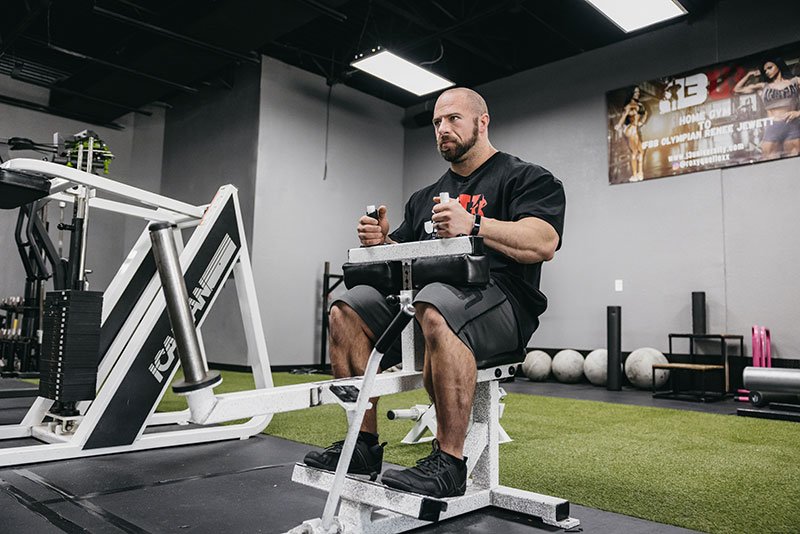
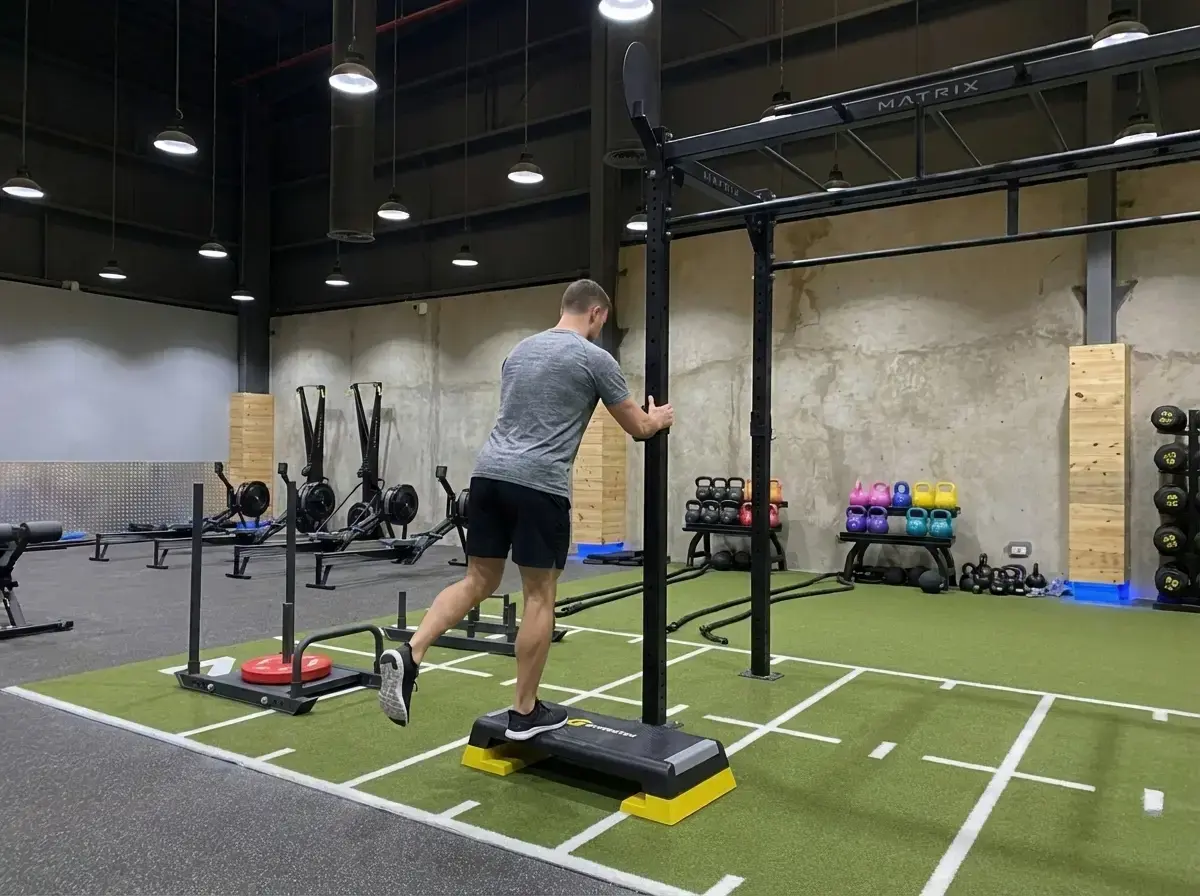
Here is a conservative gym-neutral template for healthy, pain-free lifters. It is an editorial example, not the exact experimental protocol. Train calves twice per week, separated by at least one day. On the first day, use a standing calf raise or a supported single-leg variation for three sets of eight to twelve controlled repetitions. Rise smoothly, briefly pause near the top, then lower over roughly two to three seconds. Stop the descent at a depth you can actively control without bouncing, twisting or losing foot contact.
On the second day, use a bent-knee seated calf raise or equivalent variation for three sets of twelve to fifteen repetitions, followed by one or two sets of light straight-knee heel raises emphasizing a comfortable bottom position. Start with a load that leaves about two or three clean repetitions in reserve. Increase resistance only when you can complete the prescribed work without shortening the descent or relying on momentum. The target is repeatable tension, not maximum soreness.
During weeks one and two, establish comfortable ankle travel on the floor or a stable step. In weeks three and four, add load or a small amount of controlled range as tolerated. In weeks five and six, maintain range while progressing reps or resistance; avoid increasing weight and stretch depth simultaneously. In weeks seven and eight, consolidate the technique, compare performance at the same range and reduce volume if fatigue or irritation rises. A stable hand support improves balance for single-leg work so balance does not become the limiting factor.
Make adjustments rather than treating the example as law. If deep dorsiflexion pinches the front of the ankle, do not force it. If a loaded heel drop provokes tendon pain that worsens afterward, reduce intensity and seek individualized guidance. If your calves already receive significant stress from running, sled pushes or court sports, count that workload when deciding how much isolated volume you can recover from. Consistency across weeks matters more than an impressive first session.
Bodybuilding Shirts & Workout Gear
Bodybuilding shirts, tanks and gym gear for lifters chasing muscle, size, symmetry and the pump.

Deadlift Flaming Skull Decal , Hardcore Gym Accessory G Sticker
Put “Deadlift” gym humor on your laptop, bottle, or gym gear.

Big Butt Energy Leg Day & Glute Gains Meme Hoodie
Keep it laid-back with a little “Big Butt Energy” attitude.

Motivation – Mermaid Leg Day Meme Strong , & Lovers T-Shirt
Show some leg-day attitude with a playful “Gym Motivation” tee.

Leg Day Squats Deadlifts Vest Meme Tank Top
Bring “Leg Day” humor to your next lifting session.

Bunny – Cutie With A Booty – Squats & Gains Meme Top T-Shirt
Heavy lifts, good laughs, and a little “Gym Bunny” energy.

Not Recommended Leg Day 1 Star Review Squats Hoodie
Bring “Not Recommended Leg Day” gym humor to lazy days and post-workout plans.

Adventure Girl Booty Builder Leg Day Meme Sweater T-Shirt
Add a playful “Adventure Girl” touch to your casual rotation.

Deadlift Stone Skull Gym Pullover for Powerlifters, Har Hoodie
Keep it laid-back with a little “Deadlift” attitude.

I Love Deadlifts Funny Gym T
Show some deadlift attitude with a playful “I Love Deadlifts” tee.

Never Skip Leg Day | LEGO Workout Sweater For Squats & T-Shirt
Keep things casual with a little “Never Skip Leg Day” attitude.
How to interpret the trial without overselling the stretch
The fairest conclusion is that eccentric calf training at both shorter and longer lengths improved measured maximal force in 27 adults, while the longer-length condition produced a significant increase in measured Achilles stiffness. The investigators did not detect a corresponding change in medial gastrocnemius fascicle behavior during the single- and multi-joint tasks they assessed. Stronger tissue capacity and visibly different movement mechanics are not the same result.
The study also has boundaries: eight weeks, a limited sample, particular ranges and a highly specific eccentric training method. It does not directly establish the ideal number of calf sets for hypertrophy, the superiority of a brand of machine, long-term injury rates, or a guaranteed improvement in running. Those would require different comparisons and outcome measures. Treat the percentages as a useful clue about adaptation, not as predictions for your next training block.
Your practical takeaway is simple: train through a controllable range, give the lowering phase real attention, progress load patiently and measure more than one outcome. If you care about calf size, track circumference or consistent photographs alongside strength. If you care about a sport, evaluate actual sport performance. If you care about tendon symptoms, separate rehabilitation from performance training. A deeper eccentric can be a worthwhile tool, but it earns its place through your goal, tolerance and progress—not because longer is always better.