Advertising disclosure: This page includes affiliate product links that may earn us a commission, as well as products from our own store.
The Ironmaster Quick-Lock kettlebell handle makes the most sense when you already own compatible plates and screws. Buying the handle is a different decision from buying a ready-to-train adjustable kettlebell. Before comparing headline capacities, check the parts in your basket, the complete assembled weight and the shape you will actually hold. This is a specifications-based buying guide, rather than an MMP hands-on review. The useful question is whether the system fits your exercises and the way you change equipment during a workout.
1. Start with the handle-only purchase
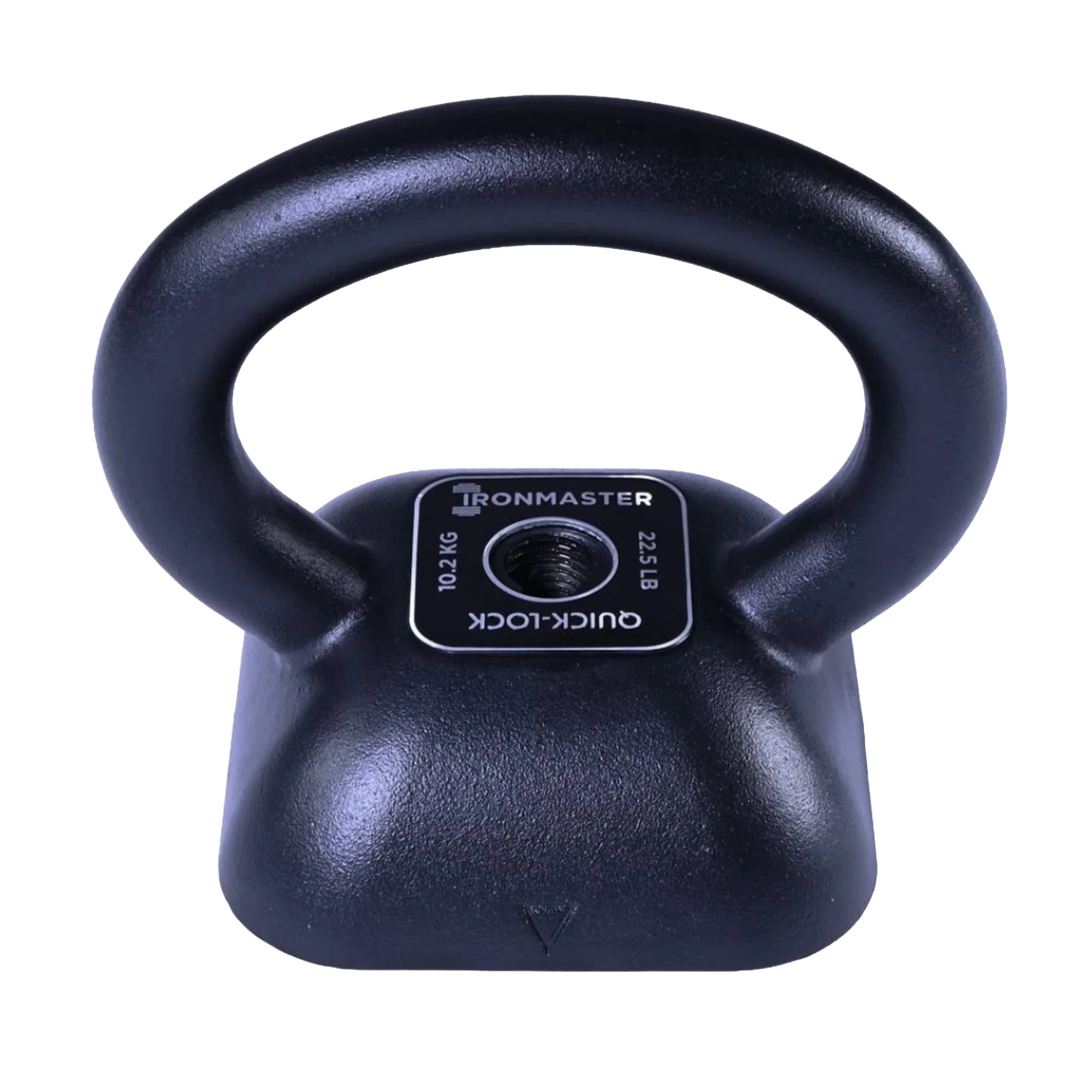
The 22.5 lb Quick-Lock handle is sold without plates or a locking screw. It uses Ironmaster Quick-Lock dumbbell plates and screws. That shared hardware is the central attraction for an existing owner, but it is also the first thing a new buyer needs to understand.
Build a complete shopping list before judging the advertised entry price. Separate the handle, the hardware required to secure a load, enough compatible plates for your intended range and any later upgrade. A product photograph can show an assembled configuration without making every visible part standard equipment. The written contents list should settle what arrives.
An existing dumbbell owner has another calculation to make: available parts are not always spare parts. If your dumbbells are loaded for presses while your kettlebell needs those same plates for swings, sharing can interrupt the session. Imagine alternating two exercises for several rounds. Rebuilding both implements each time might matter more than saving a little storage space between workouts.
Conversely, a workout that finishes its dumbbell work before starting kettlebell work can make sharing straightforward. Sketch one normal session and mark where plates would have to move. That small planning exercise is more informative than assuming shared equipment is either inconvenient or perfect for everyone. If several people train together, include their simultaneous equipment needs in the same sketch.
For a used bundle, put the seller's actual components next to that shopping list. Ask for the included plate weights and the screw type, and distinguish a complete assembly from extra loose plates. A missing component can change both the immediate cost and the useful range. Keep any unresolved identification question open until the correct part is confirmed, rather than guessing from a total bundle weight.
2. Count the screw as part of the lifted weight
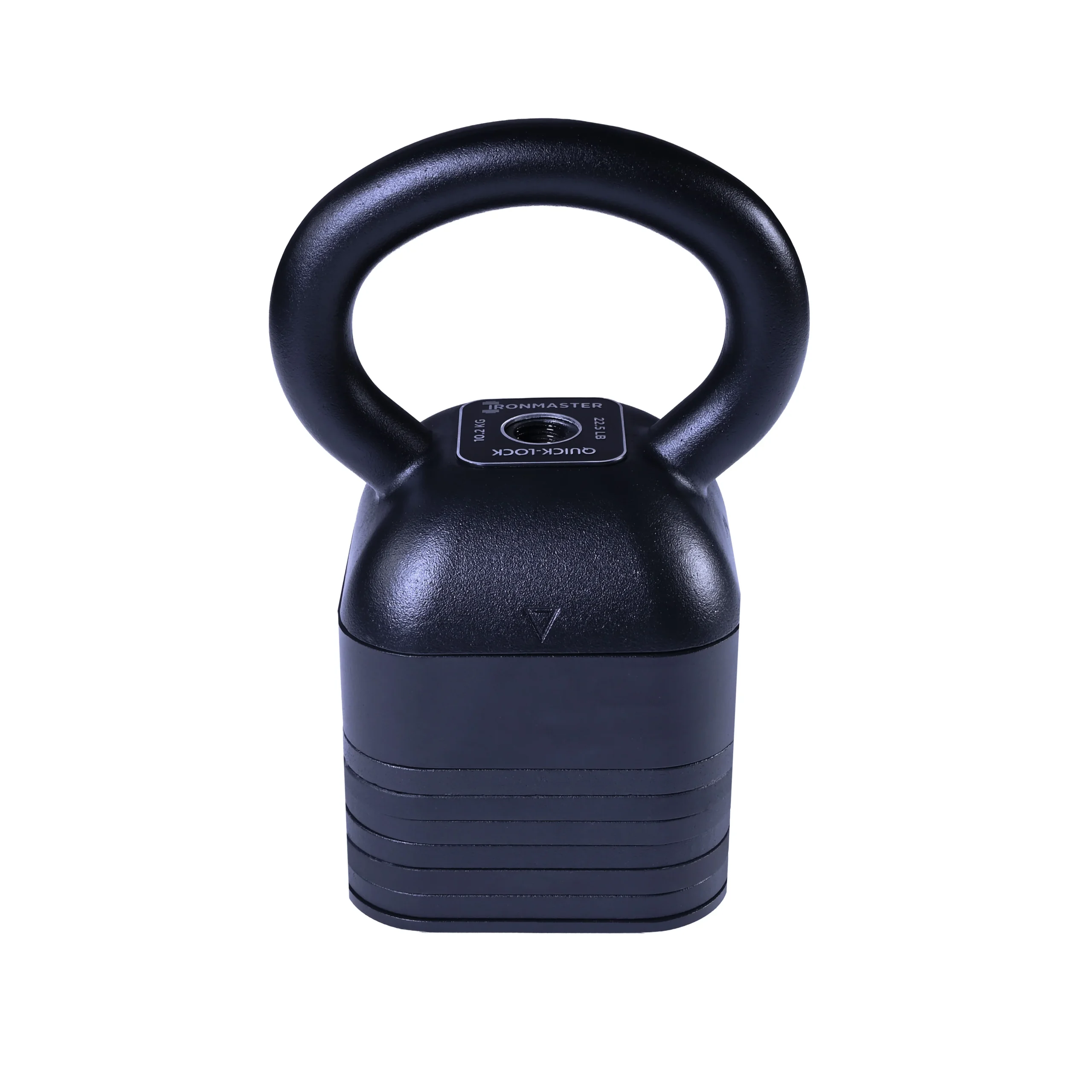
The operating manual distinguishes the bare handle from a secured assembly. The 22.5 lb handle plus its 2.5 lb screw starts at 25 lb before plates. Standard hardware reaches 57.5 lb; the longer add-on hardware supports the 80 lb configuration. Do not read the bare-handle figure as the minimum assembled training weight.
For example, adding two 5 lb plates to that 25 lb assembly gives 35 lb. Four 5 lb plates and one 2.5 lb plate produce 47.5 lb. These are simple arithmetic examples, not estimates of what you should lift. Keeping handle, screw and plates on separate lines makes the final number easy to verify and repeat.
The dedicated 57.5 lb kit supplies six 5 lb plates, one 2.5 lb plate and a standard screw. The 80 lb upgrade adds a 22.5 lb plate and a longer screw, and requires the handle and underlying kit first. An upgrade is therefore a step within a system, not a complete kettlebell purchase by itself.
Plan the lower end as carefully as the maximum. A bell that reaches a heavy squat load may still start above what you want for a new overhead movement. Write down the actual loads you expect to use for each exercise. If one essential movement needs less than the secured starting assembly, a higher maximum does not solve that mismatch. You may need another implement for that part of training.
3. Treat locking as a repeatable setup step
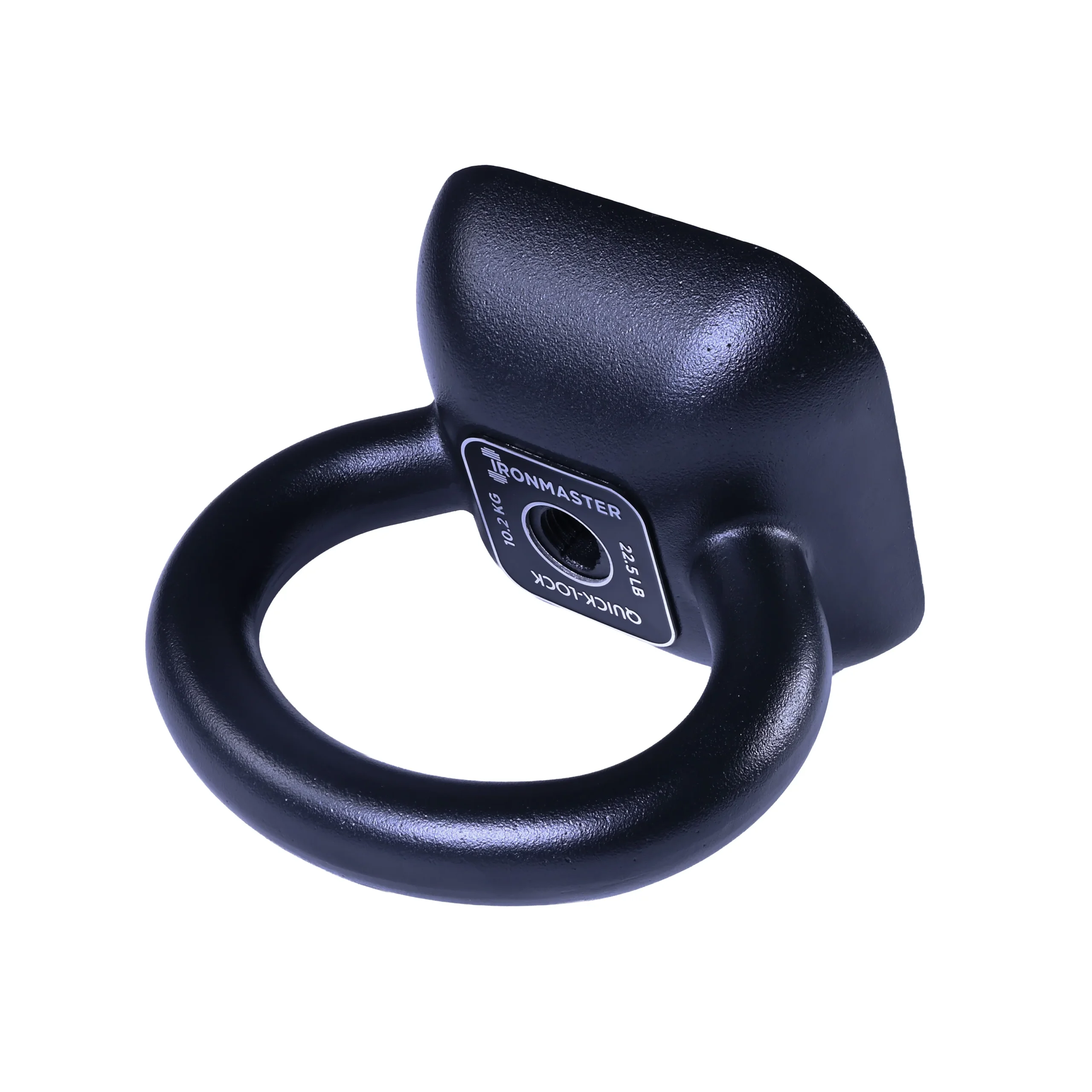
The manual describes aligning the screw's open notch with the handle's arrow for insertion or removal. Plates face outward with the Ironmaster logo visible; after insertion, turn clockwise to engage and hand-tighten. Check tightness between sets and stop if the mechanism feels or sounds loose. Do not over-tighten.
Read the full instructions supplied with your exact hardware before using it. A short buying guide cannot show every alignment detail, replace the diagrams or confirm the condition of a used unit. If you are buying secondhand, ask which handle, screw and plates are included, and request clear photographs of the actual parts rather than a catalogue screenshot.
Make adjustment part of the workout's planned rest instead of treating it as a race. A useful sequence is to finish the set, place the equipment securely, follow the manual to make the change, check the assembly, then prepare for the next set. The important outcome is the correct secured load, not beating an advertised change time.
This matters when you compare a shared-plate design with a selectorized bell. Count the entire transition: retrieving parts, making the adjustment, checking it and getting into position. Without timing those steps on the actual equipment, do not assume one mechanism will save a particular number of seconds. A clearly organized change area and a sensible exercise order may affect the session as much as the type of adjustment.
4. Check the loaded shape as well as capacity
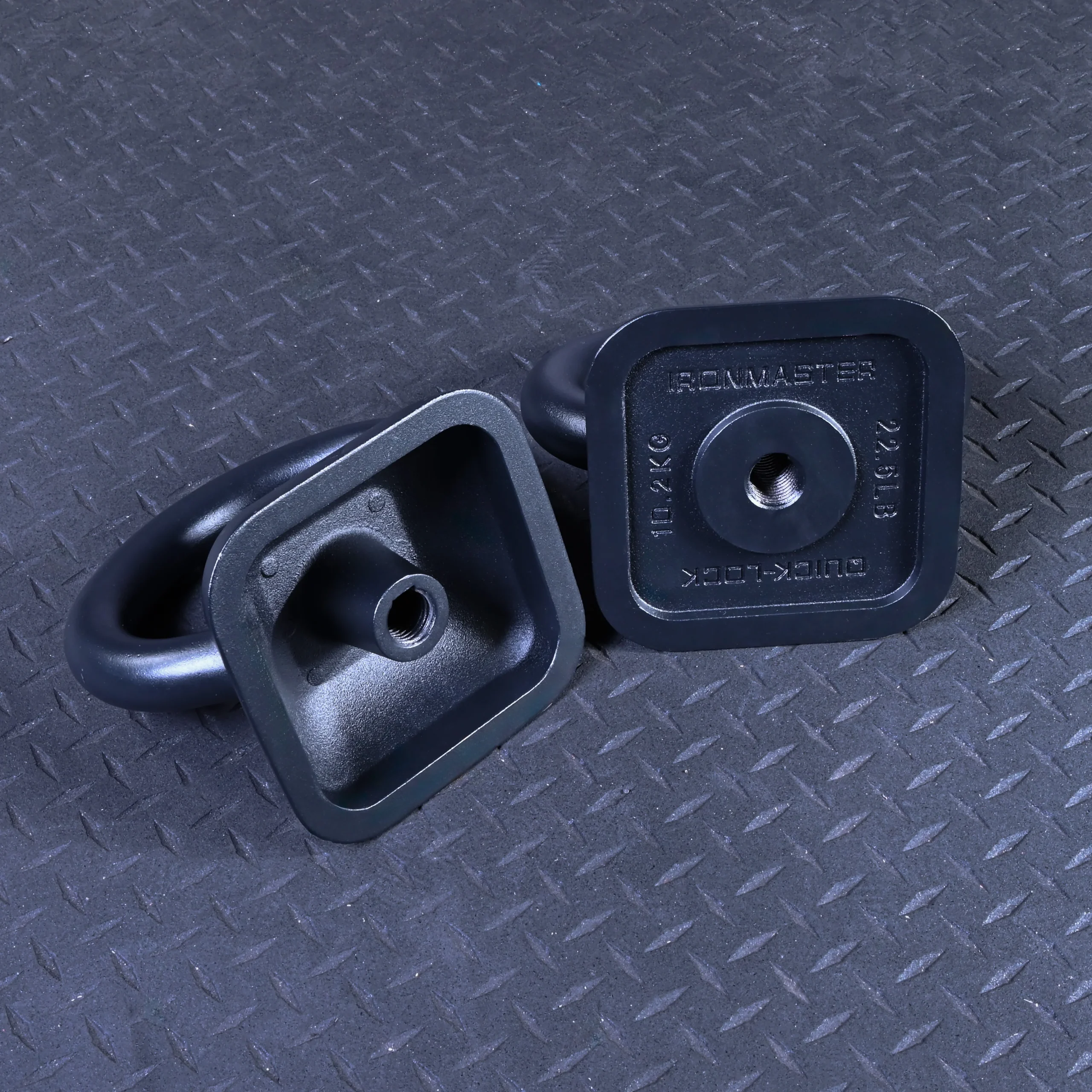
The listed handle width is 8.75 inches, with a 1.375-inch grip diameter. Listed height changes from 7.75 inches bare to 11.5 inches at 57.5 lb and 13.75 inches at 80 lb. Capacity increases therefore come with a changing physical envelope.
Those dimensions deserve an exercise-specific check. For a floor-start movement, look at the actual height of the grip from the floor. For a rack or goblet position, consider where the loaded body sits relative to your hands and torso. For storage, measure the shelf opening and allow room to place and retrieve the equipment. A quoted width alone does not answer all three questions.
You can use a tape measure and a simple cardboard outline to understand the listed size before ordering. That is a planning aid, not a substitute for handling the real kettlebell. It will not tell you how the coating feels, whether you like the grip or whether an exercise is comfortable. Keep those unanswered questions visible instead of turning dimensions into a promise of perfect ergonomics.
Separate the Quick-Lock parts from the rest of your gym's loading equipment. Ordinary Olympic plates, change plates, barbells and collars serve other systems; their presence in a shop carousel does not establish compatibility with this handle. The same applies to plate-loaded dumbbell handles. Check each manufacturer's requirements. Buying a familiar-looking weight or fastener is not a reliable way to extend a different locking mechanism.

Equipment Worth Exploring
Explore equipment, accessories and gear from our carefully selected range.


Cast Iron Kettlebells
Textured cast-iron kettlebells for swings, squats, carries, and full-body training.


Rubber Hex Dumbbells
Rubber-coated hex dumbbell pairs with a stable shape for home and commercial strength training.


Grip Plates
Rubber-coated weight plates with handholds for loading barbells and machines.

Competition Plates
Competition-style bumper plates for Olympic lifts and loaded strength training.
5. Choose the system around your sessions
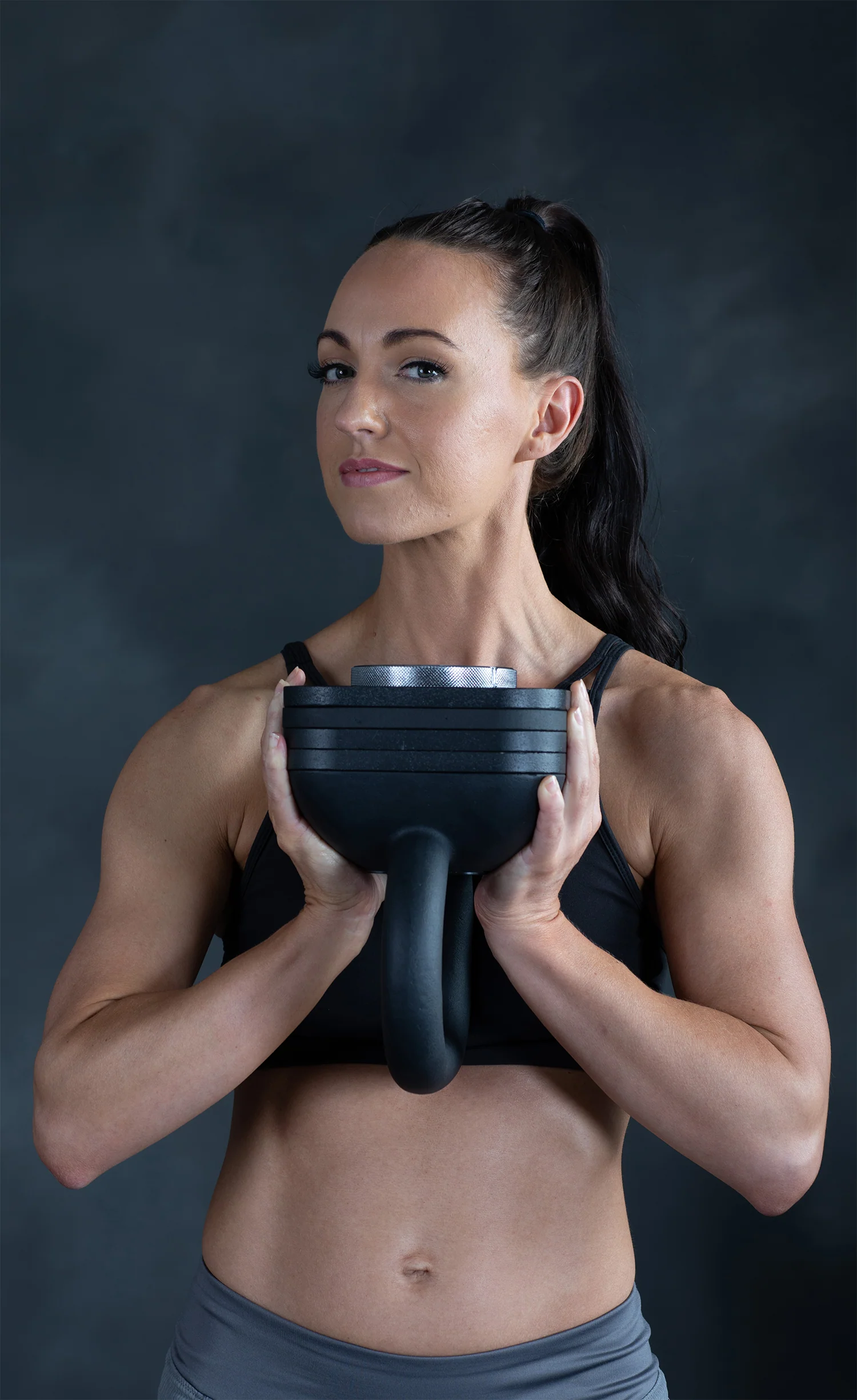
There are several useful alternatives to compare. The Freak Athlete adjustable kettlebell specifies a 12–32 kg range in 2 kg steps. Kensui's EZ-BELL uses Olympic plates with a different loading arrangement. A fixed kettlebell removes the weight-change step altogether, while a dumbbell remains an option when the exercise does not require a kettlebell handle or body shape. These are separate products, not interchangeable parts.
Choose the comparison that answers your main constraint. An existing Quick-Lock owner may prioritize sharing hardware. Someone who switches loads repeatedly may prioritize the complete adjustment sequence. A lifter using one weight for a whole circuit may prefer to leave a bell assembled. A person buying a first kettlebell should check the minimum usable load before paying for an impressive future maximum.
Also decide where the equipment will live between exercises. Shared plates need an accessible home while they are off the handle; an assembled kettlebell needs a stable resting place. Plan this around the equipment you actually own, including any dumbbells or barbell plates used elsewhere in the session. A smaller equipment collection still needs a workable arrangement, especially when a training partner uses the same space.
Keep a short comparison sheet with the complete purchase contents, usable load range, increments, adjustment method and loaded dimensions. Add one line for your actual exercises. For example: two-handed swings at one load, goblet squats at another, and dumbbell rows performed separately. This makes it easier to identify whether sharing plates is a saving or a recurring interruption. It also keeps optional upgrades separate from immediate needs.
The best reason to buy this handle is a clear match between its hardware system and your training. Confirm the basket contents, count the secured assembly correctly and choose a load configuration you can use with control. If those details work, the shared-plate approach has a practical role. If they do not, a different bell or a simpler fixed-weight setup may fit your sessions better.

Funny Gym Shirts & Workout Gear
Funny gym shirts, tanks, hoodies and workout gear for lifters who like training hard.

OnlyGains Kettlebell Meme Meme Athletic Shirt Tank Top
Train hard, laugh a little, and rep “OnlyGains”.

Dia De Los Muertos Kettlebell – Day of the Dead Workout Hoodie
Stay casual and show some lifting attitude with “Dia De Los Muertos Kettlebell”.

Kettlebell Heart X-Ray Meme Top T-Shirt
Show some lifting attitude with a playful “Kettlebell Heart X-Ray” tee.

Kettlebell Skull Tee
Heavy lifts, good laughs, and a little “Kettlebell Skull Gym Meme” energy.

Meme – "Shhh I'M Doing Plate Math" Hooded Hoodie
Bring “"Shhh I'm Doing Plate Math" Workout Hooded” gym humor to lazy days and post-workout plans.

Cheeseburger Kettlebell – Burger Swings Meme Jumper Pul T-Shirt
Keep things casual with a little “Cheeseburger Kettlebell” attitude.

Earth Kettlebell Meme Shirt – Lifting The Earth T-Shirt
Show some lifting attitude with a playful “Earth Kettlebell” tee.

Watermelon Kettlebell – Fruit Themed Workout Decal for Sticker
Stick a little “Watermelon Kettlebell” humor on your favorite gear.

Heavy Metal – Kettlebell Rock Music & Gymbros Meme T-Shirt
Heavy lifts, good laughs, and a little “Heavy Metal” energy.

Donut Kettlebell Meme Shirt – The Ultimate Bulking T-Shirt
Rep “Donut Kettlebell” humor in and out of the gym.