Advertising disclosure: This page includes affiliate product links that may earn us a commission, as well as products from our own store.
Frank Zane’s training is often reduced to a photograph of a small waist and a perfectly controlled pose. His approach to organising a workout deserves attention too. A session can contain a surprising amount of work without becoming a wandering tour of every machine in the building.
One leg-and-torso routine he described offers an interesting example of that distinction. It is useful for experienced lifters who enjoy bodybuilding but need a clearer plan for their available training time. The practical challenge is deciding which parts are transferable, which require particular equipment and which belong to the circumstances of the person describing them.
Read the routine in context before copying the clock
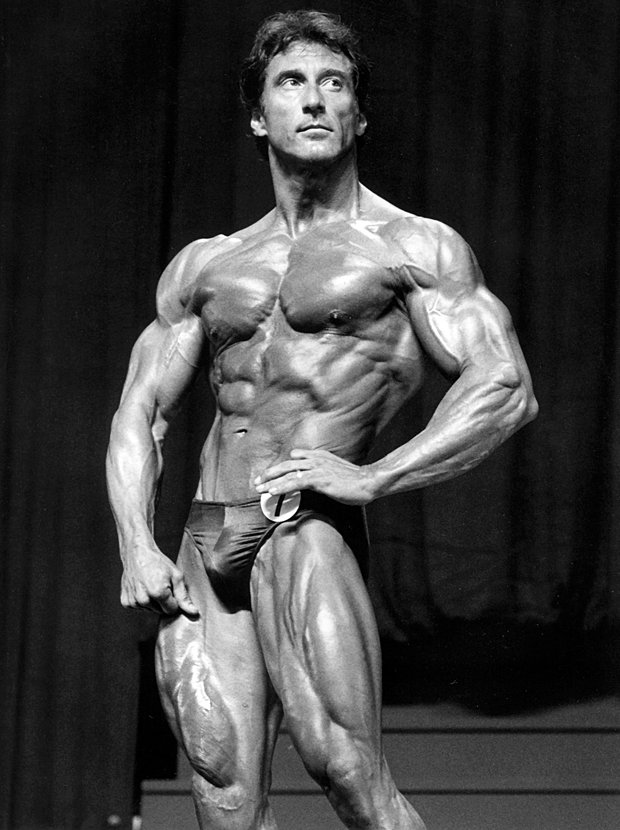
In an account published in September 2025, Zane described quick leg and torso sessions for winter maintenance after the competitive season. He put the leg work at roughly half an hour and the torso work below 45 minutes. The torso session still contained 20 sets arranged in seven trisets. Quick did not mean a handful of easy sets.
Those details describe a particular programme, not a universal explanation of how Zane built his physique. Nor should the publication date be mistaken for the date of every exercise photograph associated with him. An archival training account can be valuable without being presented as a newly filmed workout or a complete competition preparation plan.
The useful starting question is what you want your session to accomplish. Maintaining familiar movements during a busy week is different from testing a heavy squat, learning an unfamiliar exercise or increasing weekly training volume. The same arrangement can be convenient for one purpose and awkward for another.
Write down your non-negotiable work before adding anything for historical authenticity. If your priority is a high-quality leg press, protect that exercise’s performance. If your priority is a brief accessory session, a compact grouping may suit it. A famous name does not remove the need to choose an objective.
Also separate training time from total time. Getting changed, warming up and waiting for equipment remain part of the visit. A routine that fits on one page can still be impractical when its stations sit at opposite ends of a crowded gym.
Leg trisets concentrate fatigue as well as activity
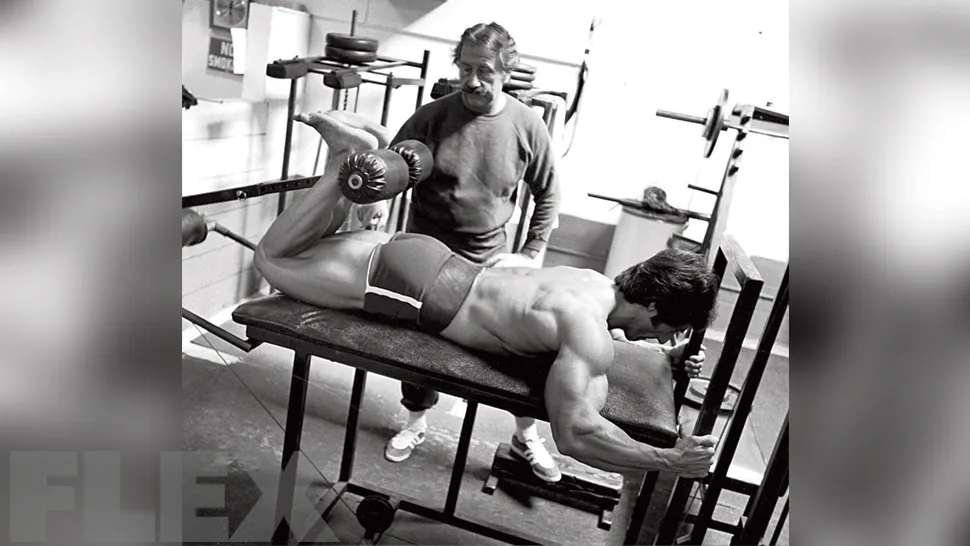
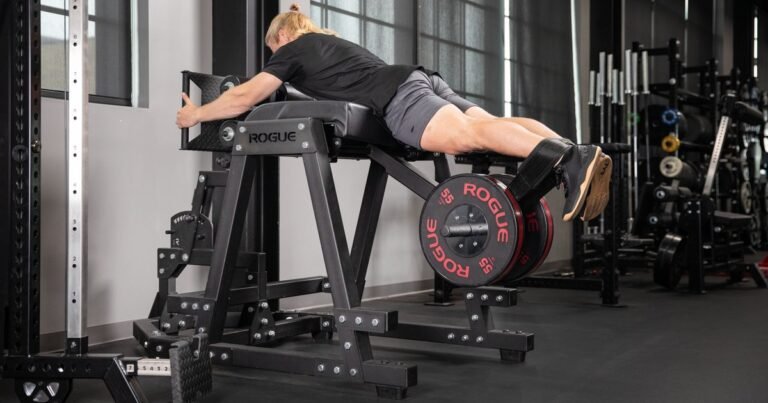
One of Zane’s thigh combinations repeated a leg curl around a hyperextension. Another repeated leg extensions around a leg press. These are more demanding local sequences than simply alternating unrelated body parts.
A triset means three exercise bouts grouped together. It does not automatically tell you how much rest occurs between movements or after the group. That missing detail matters when comparing two routines that appear identical in a training log. Moving rapidly between stations and taking a deliberate recovery period produce different experiences.
Repeating an exercise within the group also changes how you should read the second appearance. A lighter load or fewer repetitions after preceding work is not automatically evidence that you became weaker. You have changed the conditions. Compare the same position in the same sequence across sessions before drawing conclusions about progress.
For example, label the opening curl A1 and the later curl A3. Record their repetitions separately. If A1 stays stable while A3 collapses, first check whether you shortened recovery, rushed the setup or increased the intervening workload. Adding another round may conceal that problem rather than solve it.
Machine logistics deserve equal attention. A combination leg-extension and leg-curl unit can save floor space, yet switching its configuration takes time. Two separate stations may permit faster changes but require more equipment access. Neither arrangement makes it reasonable to reserve several busy machines while other people wait.
Choose equipment because it supports the movements you intend to train. A leg developer, leg press or hyperextension bench offers different functions; none is a compulsory purchase for borrowing a session-organising idea.

Equipment Worth Exploring
Explore equipment, accessories and gear from our carefully selected range.

Leg Press/Hack Squat BPR-790
Convertible 45-degree leg press and hack squat machine with a broad footplate and band pegs.

Leg Extension/Curl BCO-780
Leg extension and lying leg curl combo with plate loading, band pegs and a cable-loading option.

Seated Leg Combo BCO-680
Adjustable seated leg extension and leg curl machine with band pegs for added resistance.


HUSLA Leg Extension Pad
Pad attachment designed to increase usable range of motion on compatible leg-extension machines.

Glute Ham Developer GHD-820
Adjustable glute-ham developer with contoured pads and a fold-out knee support.

45° Hyperextension HPX-650
Angled back-extension trainer with split padding, a ribbed footplate and resistance-band pegs.


The torso sequence is not just chest and back alternation
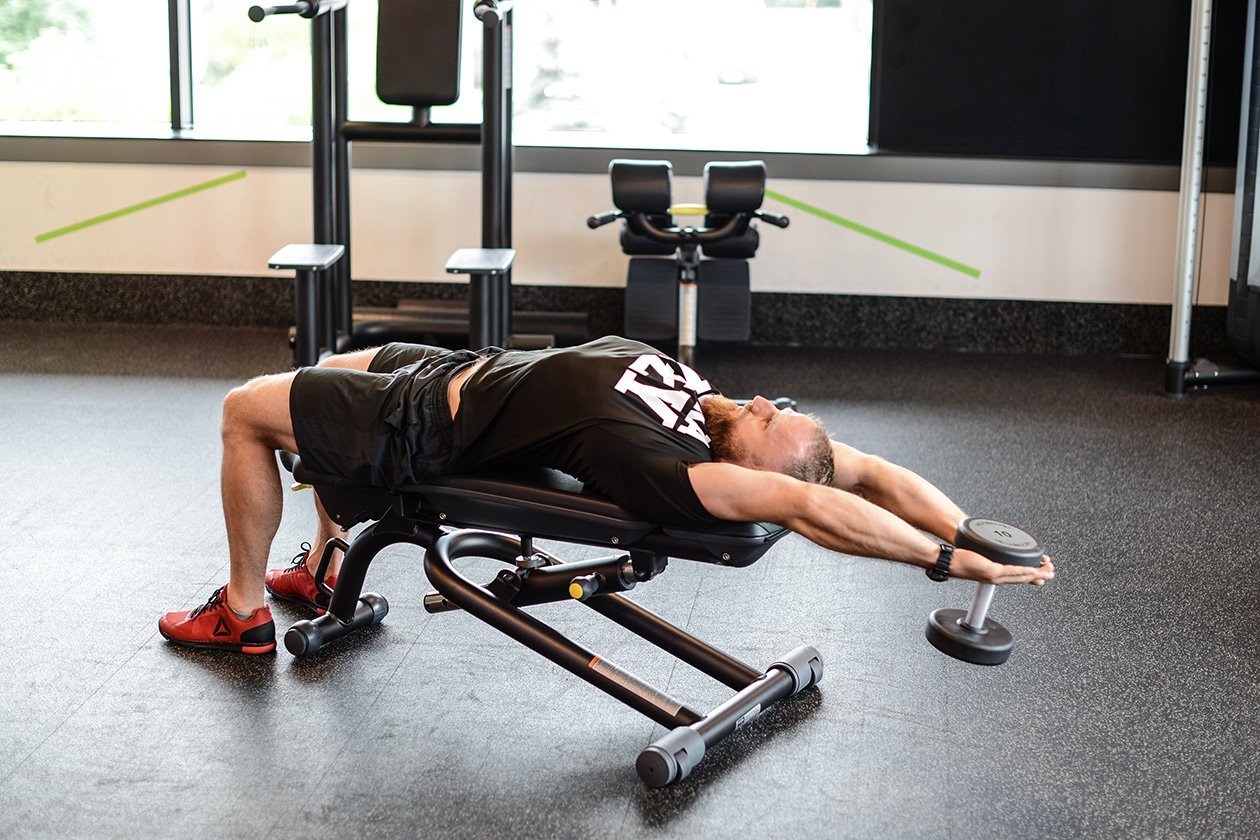
Zane’s torso outline included a pullover, close-grip pulldown and another pullover. It also used rows, presses, raises and fly movements elsewhere in the session. The exercise order deserves more attention than the attractive headline time.
A classic opposing superset pairs movements for different muscle groups, such as a chest press and a row. That can distribute local work while keeping the session moving. Repeating pullovers around a pulldown is a different arrangement. Treating every grouped workout as the same method makes its fatigue demands harder to understand.
For your own training, decide whether the grouping serves performance, convenience or a deliberately concentrated accessory effort. A bench and dumbbells can support several exercises without a long walk between stations. However, repeatedly changing adjustable dumbbell settings can consume much of the time supposedly saved. Set out a realistic transition plan.
Exercise execution still comes first. For a familiar dumbbell pullover, use a secure grip and a range you can control comfortably. Do not lower the weight farther merely to imitate somebody else’s photograph. The photo illustrates the movement; it cannot establish the right load or range for an individual shoulder.
There is also no reason to turn the exercise into a promise of skeletal transformation. A pullover can occupy a sensible place in a programme without claims that it will recreate Zane’s proportions. Evaluate the exercise through repeatable execution and its contribution to your training, rather than the outline of the athlete associated with it.
Equipment Worth Exploring
Explore equipment, accessories and gear from our carefully selected range.


Rubber Hex Dumbbells
Rubber-coated hex dumbbell pairs with a stable shape for home and commercial strength training.

FID Bench MAX
Adjustable bench offering flat, incline, and decline positions + adjustable headrest.

Pec Fly/Rear Delt PEC-650
Combination machine with adjustable movement limits for chest fly and rear-delt exercises.

Trinity Lat Machine LSW-850
Weight-stack pulldown tower offering three cable directions and adjustable seated support.
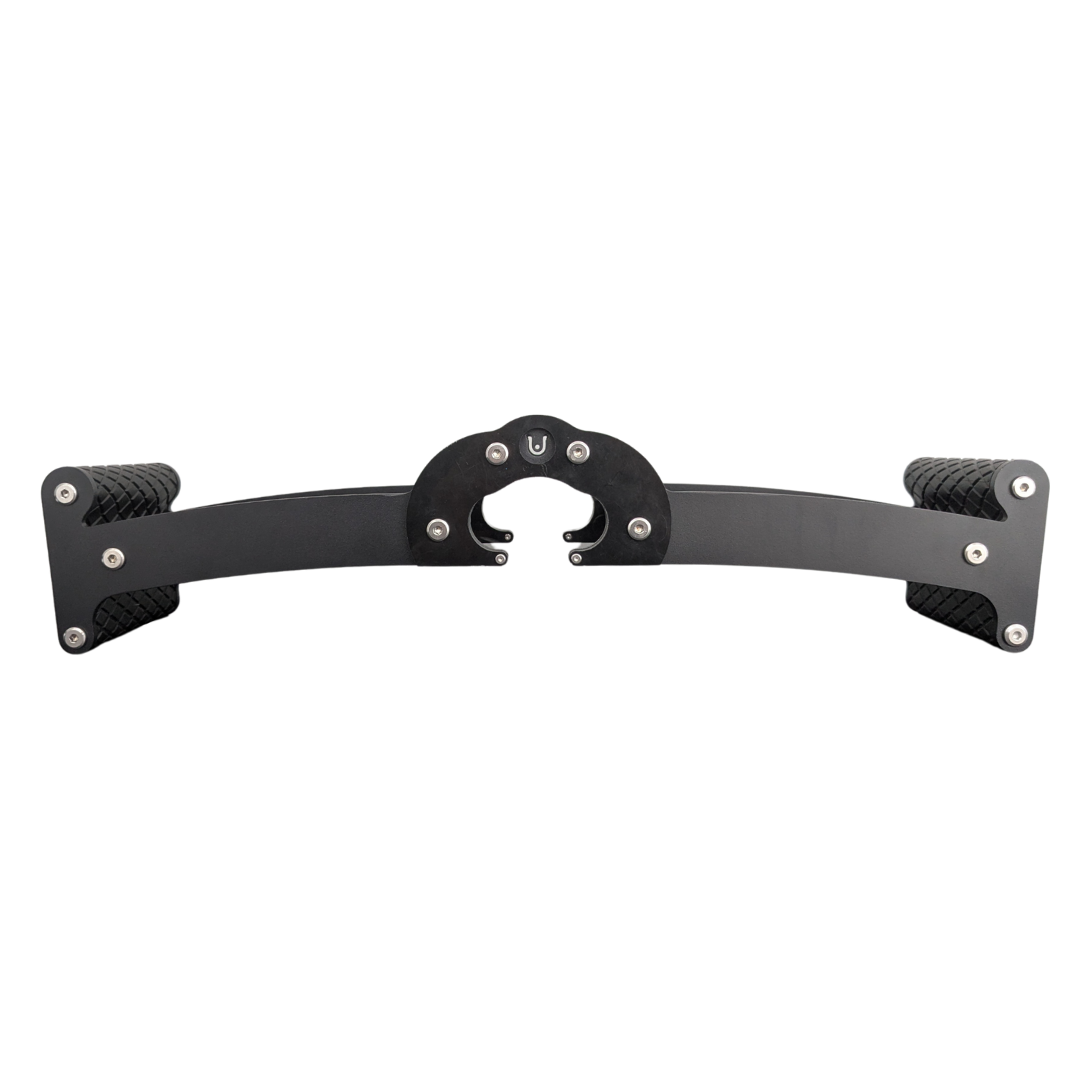
Back Bar
Multi-grip cable and landmine bar with a built-in deadlift jack.

48in Aluminum Lat Bar
48-inch aluminum lat pulldown bar with knurled grip and rotating center swivel.

VForce Lat Tower
Wall-mounted cable tower with pivot arms and adjustable 1:1 or 2:1 pulley ratios.

VForce Wall Trainer
Space-saving wall-mounted functional trainer with pivoting cable arms and variable resistance ratios.
Keep recovery and abdominal work inside the real budget
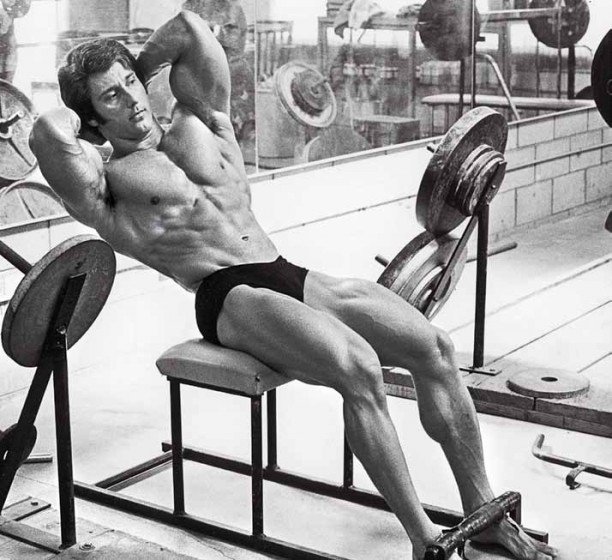
Zane’s account included substantial abdominal work and explicitly allowed more rest when breathing or pulse became excessive. The short session description should not be read as an instruction to race through every exercise regardless of how the work feels.
Time-efficient resistance training involves a tradeoff. Compressing rest can reduce later exercise performance, particularly when the same muscles repeatedly work. Research on grouped training arrangements does not establish that every same-muscle triset is superior to ordinary sets. A method that saves minutes still needs to deliver work you can perform and recover from.
Choose a stopping rule before starting. End a set when you can no longer maintain the intended movement, rather than chasing a total at any cost. If you need longer to regain control of breathing and prepare properly, take it. The clock is information, not a reason to ignore an uncomfortable or deteriorating movement.
Count abdominal training as training. Adding a long finishing block after declaring the main session complete does not make those minutes disappear. For a busy lifter, a brief planned amount of familiar trunk work is easier to evaluate than an escalating challenge driven by a famous routine’s reputation.
Likewise, soreness and exhaustion are poor scheduling tools on their own. Review whether the next planned workout remains manageable and whether your normal exercise performance is stable. A dense session that repeatedly disrupts the rest of the week may need less work, more rest or a different place in the schedule.
Try a smaller experiment before rebuilding your programme
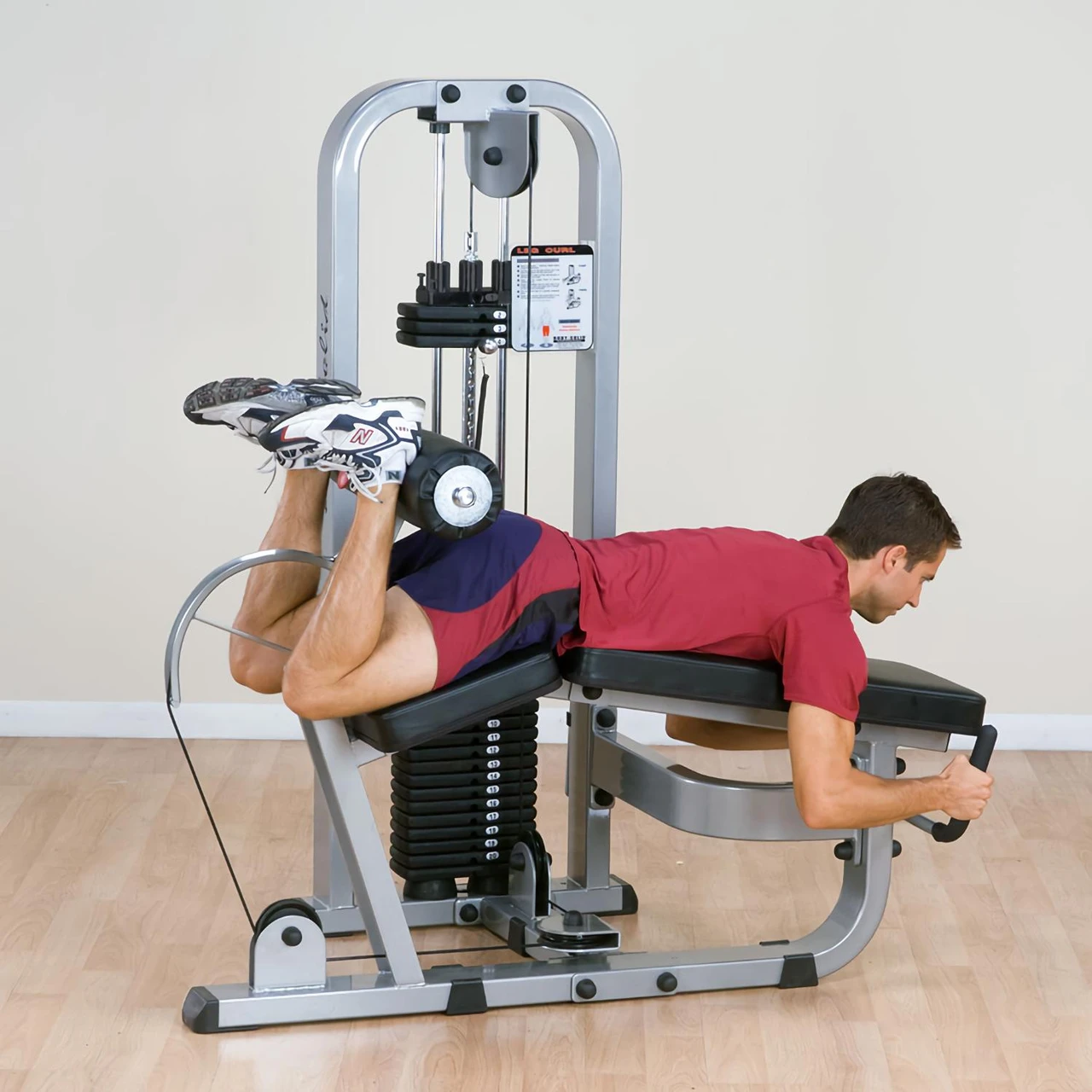
The following is an MMP programming example, not Zane’s original routine or a programme tested in a trial. For a lifter already comfortable with the exercises, pair one leg-curl set with one leg-extension set, then rest before repeating. Two rounds provide four working sets. Start conservatively and leave several controlled repetitions available.
Use a familiar repetition range, such as 10–12, and take around two minutes after each pair as an initial planning allowance. Extend that rest when needed. Warm up with suitable lighter practice sets first. The point of the example is to make the sequence measurable, not to impose a special repetition formula.
Record the load, repetitions, transition time and rest. Keep those conditions similar next time. If changing machine settings takes too long, ordinary straight sets may be the more efficient solution. If the second round becomes sloppy, reduce the demand before considering a third round.
A simple log might show 12 curls and 12 extensions in the first round, followed by 11 and 10 in the second. That is four separately recorded sets, not two sets because you completed two rounds. These are illustrative numbers, not expected results. Next time, improving the final extension set by one controlled repetition under similar conditions gives you a clearer comparison than completing more hurried repetitions with a shorter range.
Keep a separate note for waiting time. If another member needs the machine, finish one exercise before moving on or choose another arrangement. Good session design should survive ordinary gym etiquette; it should not depend on uninterrupted ownership of an entire training area.
Judge the experiment against your objective. Did it fit the available time? Could you repeat the planned movements cleanly? Did it leave the rest of your programme workable? Borrowing Zane’s attention to organisation is useful; copying the largest possible workload is optional.

Leg Day Shirts & Workout Gear
Leg-day gym shirts and workout gear for lifters who never skip squats, lunges and lower-body punishment.

Legday – Squats & Deadlifts , Meme Top Bros & T-Shirt
Bring “Legday” humor to your next gym day.

Never Skip Leg Day Chicken Legs Meme Sweater & Bros T-Shirt
Show some gym-day personality with “Never Skip Leg Day”.

Anti Leg Day Leg Day Club & Meme Fans Hoodie
Show off your leg-day humor in a laid-back “Anti Leg Day Leg Day Club” hoodie.

Leg Day Is Calling You Squats & Deadlifts Meme Vest Tank Top
Your gym-day look, with a playful “Leg Day Is Calling You” twist.

Negative Leg Day Review 1 Star Not Recommended Decal Sticker
Stick a little “Negative Leg Day Review” humor on your favorite gear.

Shirt Never Skip Leg Day Flamingo Meme – Gymbros, & T-Shirt
Rep “Never Skip Leg Day Flamingo Meme” humor in and out of the gym.

Squats R Us Shirt – Leg Day Gains & T-Shirt
Heavy lifts, good laughs, and a little “Squats R Us” energy.

Quadzilla Massive Quads Sweater Leg Day Squatting T-Shirt
Keep things casual with a little “Quadzilla” attitude.

Legendary Leg Day – Squat Meme Vest Muscle Shirt For At Tank Top
Add some leg-day attitude to training with “Legendary Leg Day”.

Leg Day No Thanks Skip Leg Day Meme Decal Water Sticker
Give your everyday gear a playful “Leg Day No Thanks” twist.