Advertising disclosure: This page includes affiliate product links that may earn us a commission, as well as products from our own store.
Reverse Hyperextensions: Machine Setup, Controlled Reps and a Six-Week Plan
Reverse hyperextensions look simple: lie face down, hold the machine and lift your legs behind you. But the difference between a useful posterior-chain accessory and a weight-swinging contest is usually determined before the first rep. The pad must support the torso without blocking the hips; the ankle attachment has to move freely; and the working range should come mainly from hip extension rather than a violent arch of the lower back.
This guide separates the reverse hyper’s real training uses from exaggerated back-repair claims. It walks through machine fitting, movement control, exercise substitutions and a six-week progression that can sit beside squats, deadlifts and hamstring work. You do not need enormous plates, a dramatic swinging arc or an uncomfortable spine to make the movement productive.
1. What reverse hyperextensions train, and what they do not prove

The gluteus maximus extends the hip, while the hamstrings contribute to moving the thigh backward. Your spinal erectors stabilize the torso against the forces created as the legs move. Because the upper body stays supported on the pad, the movement feels different from a conventional back extension, where the torso rises relative to largely anchored legs. They overlap, but they are not interchangeable exercises.
That difference matters when interpreting claims about reverse hypers. In a small biomechanical comparison involving 20 recreationally active adults, reverse hyperextensions and standard hyperextensions produced similar measured spinal-erector activity, while standard hyperextensions showed greater integrated glute and hamstring activity. Reverse hypers created a larger calculated lower-back extension moment despite using less measured lumbar flexion. It would be a mistake to turn any one of those measurements into a verdict that the machine is always safer, better for muscle growth or suitable for every painful back.
Range of motion and joint loading are not the same as long-term outcomes. Some lifters enjoy the supported position after a difficult lower-body session. Others notice discomfort when they swing through the bottom or hyperextend at the top. A reverse hyper can be programmed like any other accessory: stable technique, manageable resistance, enough recovery and measurable progression. It should not be sold as a medically proven spinal decompression treatment.
The most sensible goals are straightforward: build a repeatable hip-extension pattern, add glute and posterior-chain work, and vary the direction of resistance in a program already containing hinges and squats. If your back is currently painful, recently injured or producing radiating symptoms, seek individual assessment instead of attempting to treat it with loaded repetitions.
2. Fit the machine before adding weight
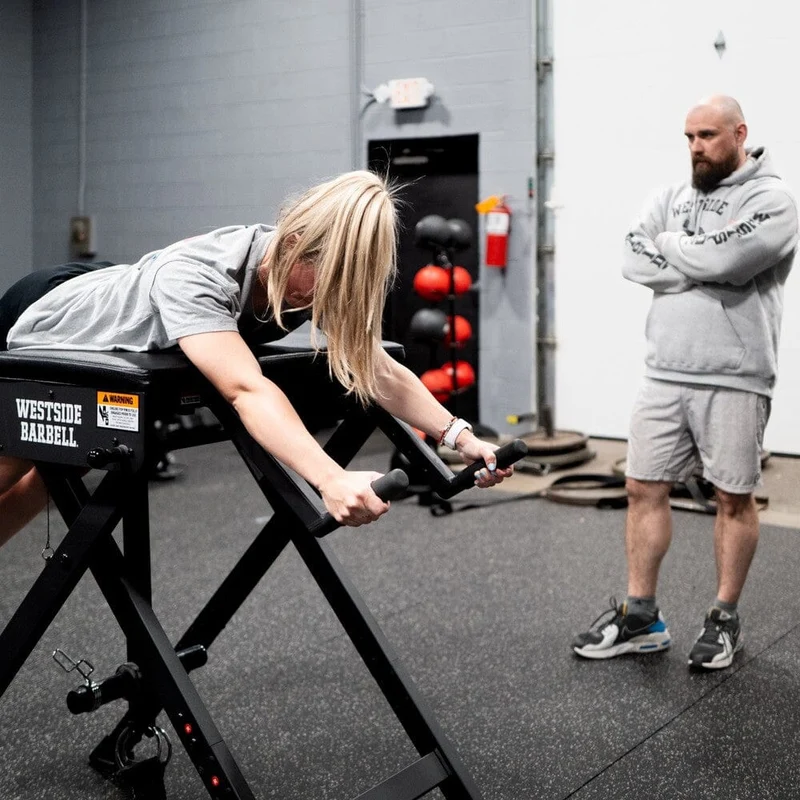
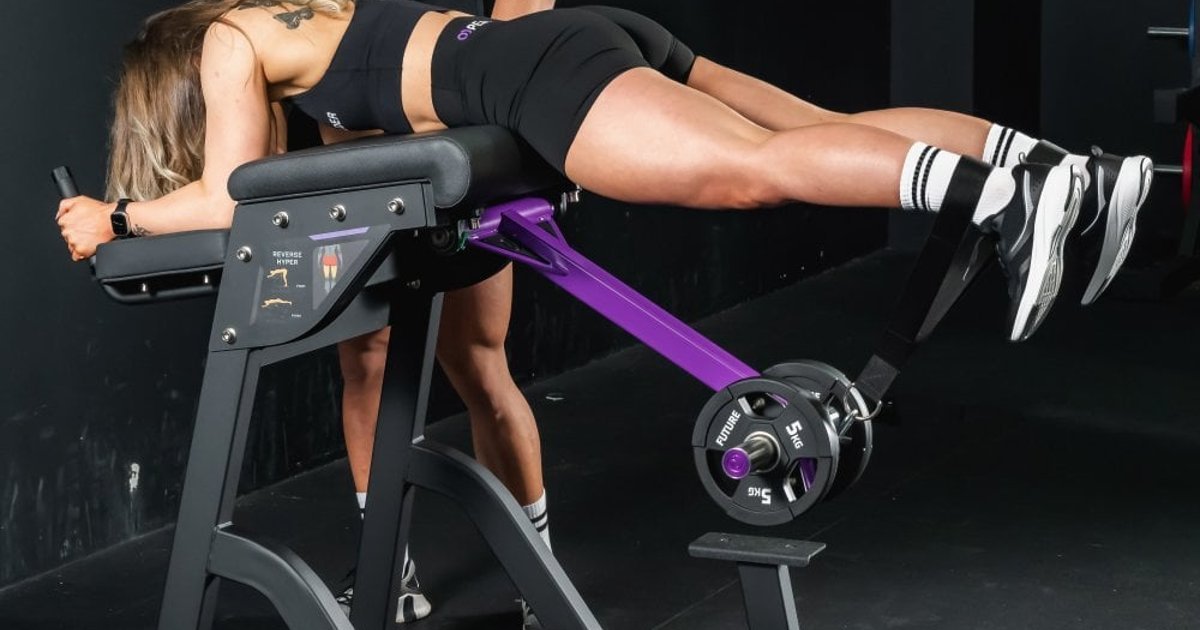
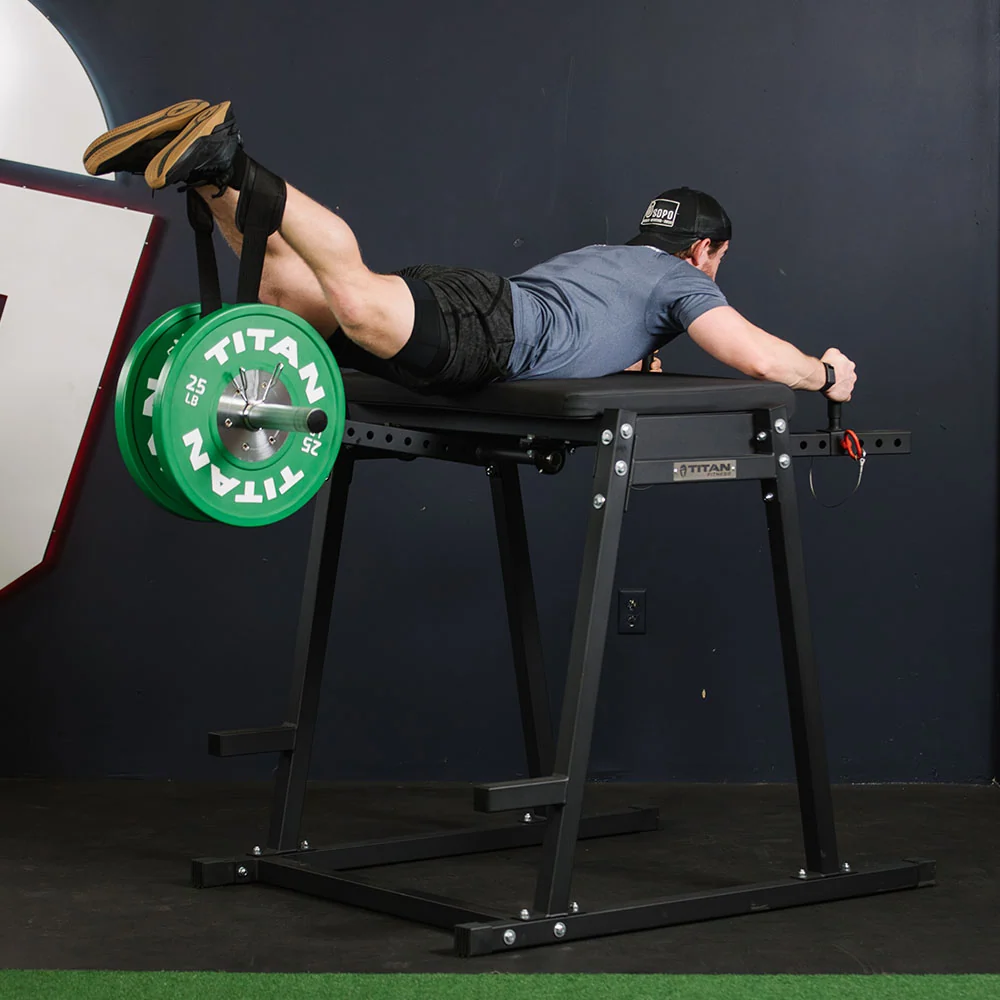
Start with an unloaded machine. Stand beside it and check how the lever or pendulum travels, where the ankle strap rests and whether the moving parts have enough clearance. Lie face down with your torso supported and your hips close to the pad’s rear edge. The hip crease must be able to move; if your thighs are trapped on the pad, the machine can force you to compensate by extending the lumbar spine.
Grip the front handles firmly without shrugging the shoulders. Brace your abdomen gently against the pad, keep the head approximately aligned with the torso and let the legs hang beneath the hips. Adjust the ankle strap or roller so both legs are supported evenly and the hardware does not press painfully into the ankles. Confirm that feet and plates cannot hit the floor or frame during the intended arc.
For your first test, perform five slow bodyweight or empty-lever reps. Notice whether the hip joint rotates comfortably while the torso remains settled. Tall lifters in particular should check that the legs clear the floor and the machine’s lever reaches an appropriate bottom position. Two reverse-hyper machines can have different pad lengths, pivot positions and straps; copying another lifter’s foot position blindly is less useful than fitting the equipment you actually have.
Only after that test should you add a small, symmetrical amount of resistance to a plate-loaded machine. Follow the manufacturer’s loading instructions and secure plates as intended. On machines with built-in resistance, start on a light setting. Record both the load and the exact machine used, because numbers from different models are not necessarily equivalent.

Equipment Worth Exploring
Explore equipment, accessories and gear from our carefully selected range.


45° Hyperextension HPX-650
Angled back-extension trainer with split padding, a ribbed footplate and resistance-band pegs.

Glute Ham Developer GHD-820
Adjustable glute-ham developer with contoured pads and a fold-out knee support.



FID Bench MAX
Adjustable bench offering flat, incline, and decline positions + adjustable headrest.

Multi Bench MBX-650 2.0
Adjustable multi-bench with roller adjustment, 15 backrest positions and accessory mounts.


Studio Glute Drive
Plate-loaded hip-thrust machine with supported back pad and adjustable foot platform.
3. Perform each rep without turning it into a swing
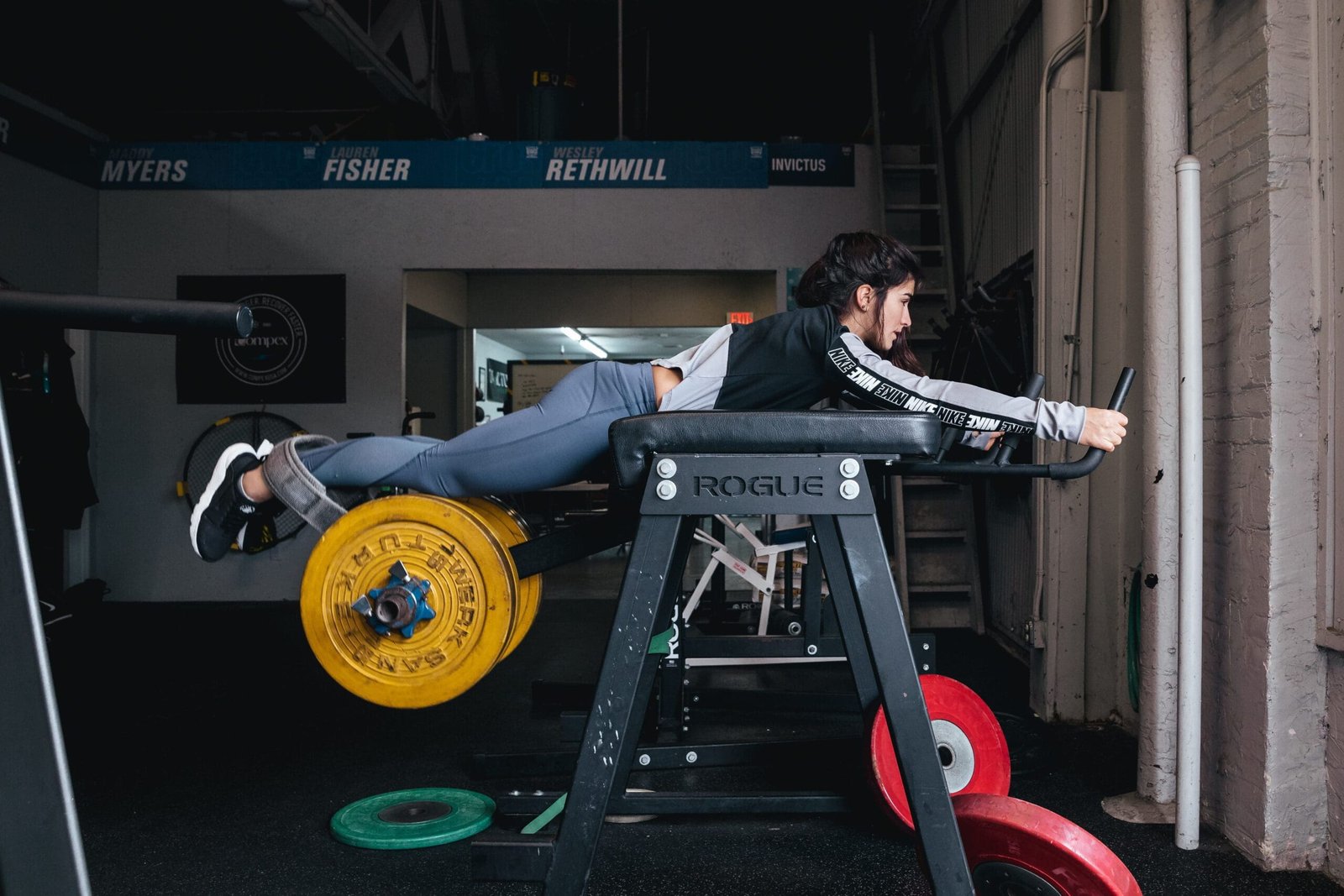
Begin with the legs hanging naturally, not with an aggressive forward kick. Take a breath, brace the trunk and drive the thighs backward by extending the hips. Maintain the same slight knee bend from start to finish. Aim to bring the legs roughly in line with the torso, stopping earlier if a neutral, controlled position is the limit of your comfortable range. A dramatic upward flourish is not required.
Pause briefly near the top, then guide the legs back toward the starting position. The descent is part of the rep, not a reset in which the plates freely crash forward. For learning, try approximately two seconds up, a short pause and two to three seconds down. That is a coaching tempo rather than a magic cadence; its purpose is to reveal whether you control the weight.
Five errors deserve attention. First, loading heavy before mastering the empty lever creates momentum that hides poor hip control. Second, throwing the legs above torso height can shift the movement into unwanted lumbar extension. Third, rapidly bending and straightening the knees changes the exercise between reps. Fourth, allowing the torso to peel away from the pad reduces stability. Finally, continuing despite sharp pain or increasing symptoms is not productive training.
Film a set from the side if possible. The useful checks are whether the hip is near the pad edge, the torso stays stable, the ankle attachment travels without a jerk and the top position can be repeated. If the twelfth repetition looks completely different from the second, shorten the set or lower the resistance. Good reps will usually feel more demanding at a lighter weight than uncontrolled swings do at a heavier one.

Leg Day Shirts & Workout Gear
Leg-day gym shirts and workout gear for lifters who never skip squats, lunges and lower-body punishment.

Let It Grow Hip Thrusts Elsa Frozen Booty T-Shirt
Make gym days more fun with “Let It Grow Hip Thrusts” style.

Booty Building Mode Decal Water Bottles & Laptops Sticker
Put “Booty Building Mode” gym humor on your laptop, bottle, or gym gear.

Doctor Deadlift Superhero Comic Book Meme , Villain T-Shirt
Show some superhero attitude with a playful “Doctor Deadlift” tee.

Deadpool Deadlift Crewneck Pullover Sweater Superhero W T-Shirt
Bring “Deadpool Deadlift” humor to your everyday gym style.

Stars Stripes & Dealifts Funny 4th Of July Gym – Patrio T-Shirt
Show some gym-day personality with “Stars Stripes & Dealifts Funny 4th Of July”.

Booty Building Mode Gym Tank Top
Train hard, laugh a little, and rep “Booty Building Mode”.

Thicc Booty Meme Glute Lovers Hooded Hoodie
Stay casual and show some gym-girl attitude with “Thicc Booty Gym Meme”.

I Love Booty – Valentine's Day Peach Meme Hooded Pullov Hoodie
Stay casual and show some gym-girl attitude with “I Love Booty”.

Deadlift Skull Pink Heavy Metal Pullover for Powerlifti Hoodie
Show off your metalhead humor in a laid-back “Deadlift Skull” hoodie.

Hippo Thrust Meme – Hip Thrusts & Leg Day , Gymbro, T-Shirt
Bring “Hippo Thrust Gym Meme” humor to your next gym day.
4. Reverse hyper versus back extensions, hip thrusts and bench versions
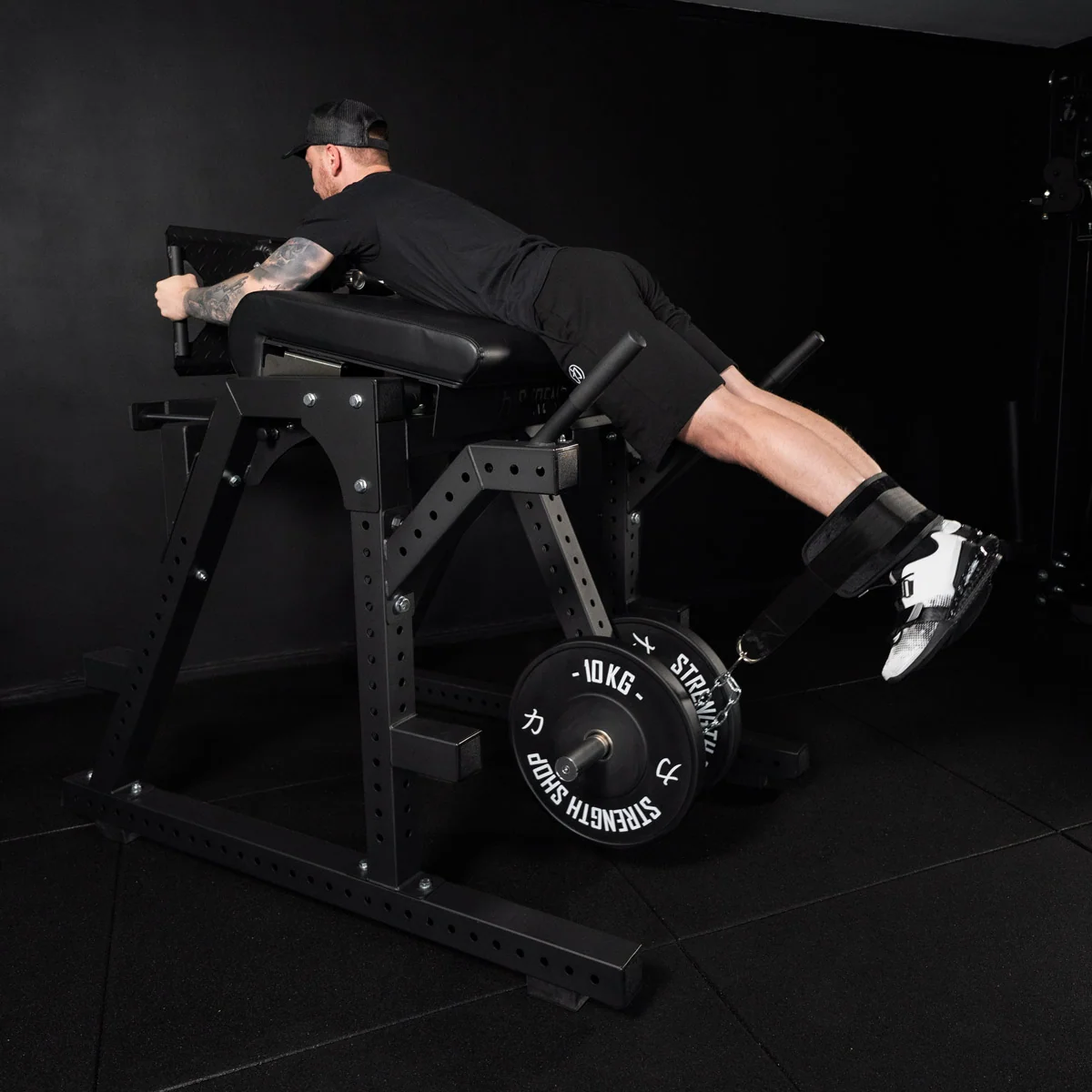
A 45-degree back extension anchors the legs while your torso moves. It can be loaded with a plate, dumbbell or resistance band and often offers a clear, adjustable range of trunk-and-hip motion. The reverse hyper does the opposite: torso supported, legs moving. Neither movement automatically wins for glute hypertrophy or lower-back health. Choose the one that you can perform consistently, that fits your body and that fills a genuine gap in your training.
Hip thrusts make heavy hip extension easier to load near the top, whereas reverse hypers typically create a changing resistance profile as the leg lever moves. Romanian deadlifts also train the posterior chain, but place a substantial external load in the hands and demand more whole-body bracing. A balanced lower-body program can use one heavier hinge, one knee-dominant lift and a modest amount of accessory hip extension without needing every variation.
A flat-bench reverse hyper can be attempted by lying prone with the hips near a stable bench edge and lifting the legs without a pendulum. It is not the same as a purpose-built weighted machine: resistance, range, stability and loading possibilities differ. Check that the bench cannot tip and that your feet clear the floor. Do not strap plates to the legs or attach improvised cables unless the equipment is designed for that use.
For a simple substitution decision, ask what you lack. If the gym has no reverse hyper, a controlled back extension or glute bridge can cover much of the hip-extension goal. If heavy hinges already leave your lower back fatigued, a lighter supported movement might be convenient, but it is still work your body must recover from. Exercise variety is useful only when it serves progressive training, not when novelty replaces consistency.
Equipment Worth Exploring
Explore equipment, accessories and gear from our carefully selected range.


VForce Wall Trainer
Space-saving wall-mounted functional trainer with pivoting cable arms and variable resistance ratios.
VOLTRA
Compact digital cable trainer with smooth, adjustable resistance.

Go-Tone Pro
Portable digital cable trainer with up to 66 lb (30 kg) of adjustable resistance.

VForce 2IN1
Half rack and pivot-arm functional trainer with switchable 1:1 and 2:1 pulley ratios.

VForce 3IN1
All-in-one rack combining an adjustable Smith machine, functional trainer, and free-weight station.

Multi Pull Smith Rack MPHR-780
All-in-one rack with a Smith machine, functional trainer, lat pulldown and low row.

Cast Iron Kettlebells
Textured cast-iron kettlebells for swings, squats, carries, and full-body training.

5. A six-week progression you can actually recover from
Use the reverse hyper once or twice per week after your main lower-body lift, not before a maximal deadlift attempt. Begin with two sets of 10–12 controlled repetitions and roughly two or three repetitions in reserve. Rest 60–120 seconds between sets; extend that if breathing or grip becomes the limiting factor. Your early target is consistent technique, not exhaustion.
Weeks 1–2: Perform two sets of 10–12 reps using the empty lever or a very light load. Mark the pad position and ankle-strap arrangement that let you move without discomfort. Finish each set while the final rep still resembles the first. If even bodyweight is difficult, shorten the range to the portion you can control.
Weeks 3–4: Build toward three sets of 10–15 reps. Increase repetitions before plates, provided the top pause and controlled lowering remain intact. When you reach 15 clean reps in all prescribed sets on two separate workouts, add the smallest reasonable load and return toward the bottom of the rep range. A small change is enough; this is an accessory, not a one-rep-max test.
Weeks 5–6: Keep three sets and explore 12–15 deliberate reps at a slightly higher resistance, or stay at the same weight while improving range and rep uniformity. If your deadlift, squat or hamstring sessions become noticeably worse, reduce one set or cut frequency to once weekly. Progress can mean a more reliable movement pattern rather than another plate on the machine.
Log five details: machine model, load, reps, controlled top position and next-day recovery. Most lifters will not need to chase soreness. If glutes are working but the lower back becomes progressively irritated, reassess pad placement, swing and total weekly hinge volume. A clean set that leaves capacity for tomorrow’s training is generally more useful than squeezing out several ugly reps.
Ultimately, the reverse hyper earns its place when it is comfortable, measurable and complementary. Use it to train hip extension—not as a guarantee against injury, a substitute for all other posterior-chain exercises or an excuse to ignore symptoms.
Leg Day Shirts & Workout Gear
Leg-day gym shirts and workout gear for lifters who never skip squats, lunges and lower-body punishment.

GymTok – TikTok Parody Peach Booty Training Muscle Shir Tank Top
Bring “GymTok” humor to your next lifting session.

Patriotic Statue of Liberty – 4th of July Workout Vest Tank Top
Your gym-day look, with a playful “Patriotic Statue of Liberty” twist.

Cutie With A Booty Bunny Meme Hoodie
Stay casual and show some gym-girl attitude with “Cutie With a Booty”.

Funny Patriotic Gym – The Only Thing To Fear Is Leg Day Sticker
Give your everyday gear a playful “Patriotic” twist.

Saint Thiccs Merry Liftmas | Festive Thicc Booty Workou T-Shirt
For laid-back days and Christmas humor: “Saint Thiccs Merry Liftmas”.

Muscle Mommy Princess – Waterproof Vinyl Decal & Bros Sticker
Bring “Muscle Mommy Gym Princess” attitude to your water bottle or laptop.

Christmas – I'M Still Gonna Squat You Monster Hoodie
Show off your Christmas humor in a laid-back “Christmas Gift” hoodie.

Muscle Mommy : Snow White & Squats Hooded Hoodie
Make your off-duty look more fun with “Muscle Mommy”.

Funny Booty Out Of This World Gym | Alien Meme Muscle S Tank Top
Train hard, laugh a little, and rep “Booty Out Of This World”.

Buttman Shirt – Booty & Batman Meme & T-Shirt
Show some superhero attitude with a playful “Buttman” tee.