Advertising disclosure: This page includes affiliate links that may earn us a commission at no additional cost to you.
Double-unders and speed steps look like variations of the same cardio drill. A comparison of competitive rope skippers suggests that the resemblance hides meaningful differences in lower-limb mechanics. Here is what the results mean for training, and what they cannot tell us about injury.
Why similar impact does not mean similar joint loading
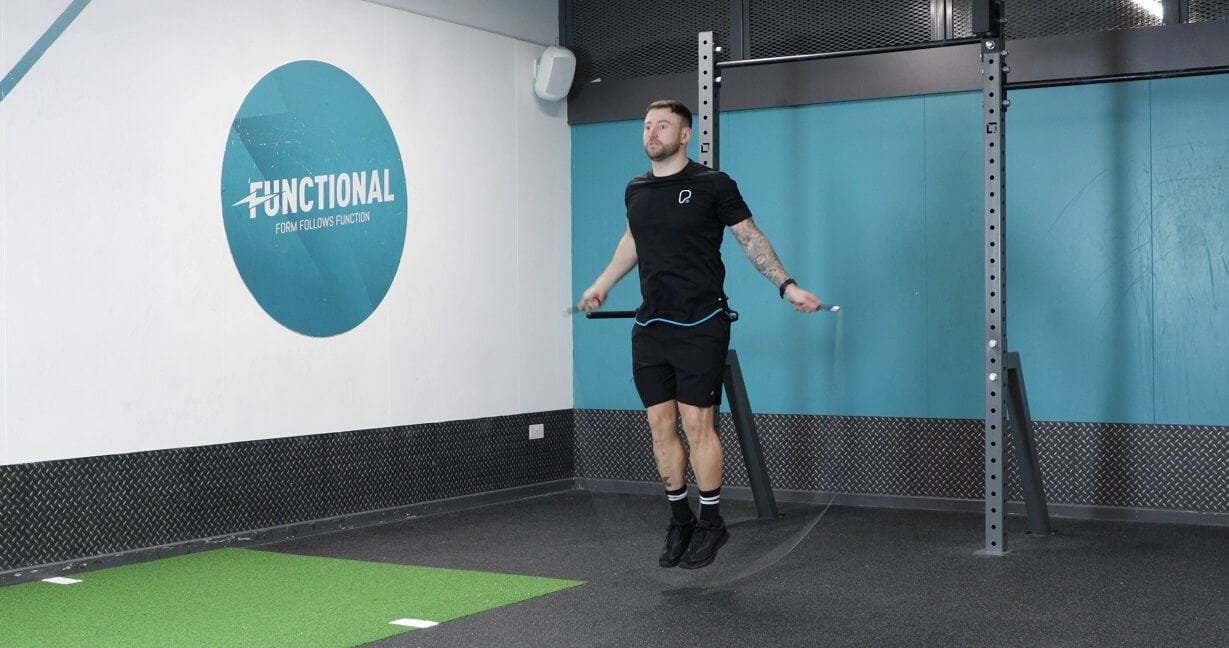
Jump rope has a reputation as compact cardio: grab the handles, find a patch of floor and start moving. But a minute of easy bouncing, a minute of double-unders and a minute of alternating speed steps are not interchangeable. The rope dictates when you must leave the floor, and your legs have to produce and absorb force on every successful repetition. That is a useful distinction for anyone who combines skipping with lifting, sprinting or functional fitness.
A laboratory comparison first published in 2020 examined 16 competitive adolescent rope skippers. They performed consecutive double-unders, speed-step sprints and running trials. Researchers combined force-platform measurements with motion tracking to estimate the mechanical demands at the ankle, knee and hip. These are joint-level estimates, not direct measurements of individual muscle forces.
The maximum force against the ground was broadly comparable across the three tasks in this experiment. Yet the way the legs dealt with that force differed. A force plate tells you how hard the athlete pushes against the floor. Joint moments describe the rotational demand around a joint; power describes how quickly mechanical energy is generated or absorbed. Neither quantity can be inferred reliably from the loudness of a landing alone.
That is why describing all rope work as either low impact or high impact misses something important. Two movements can have similar peak external force while distributing the demand differently through the leg. Training choices should therefore account for the skill, the number of repetitions and the surrounding workload, not just how long you have the rope in your hands.
The study was a short comparison in skilled young competitors, not an injury surveillance project or an adult exercise intervention. Its value is in showing why different rope skills deserve separate entries in a training log. It does not establish a universal safe number of contacts, predict injury for an individual or identify a single movement that everyone should avoid.
Double-unders: the knee does more of the work
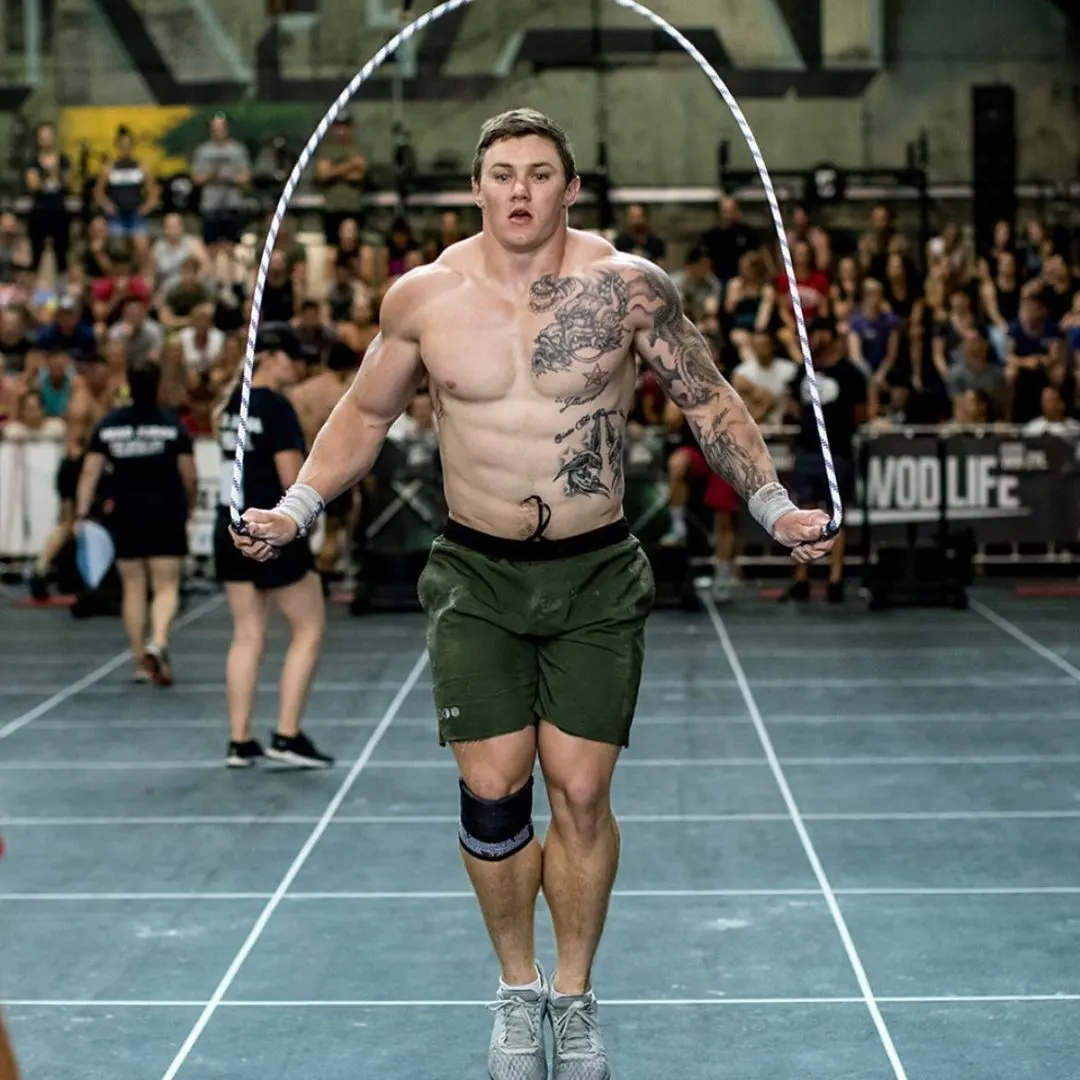
A double-under means the cable travels beneath the feet twice during one flight. The obvious way to buy more time is to jump higher, but that costs energy and changes the next landing. A more efficient solution is to coordinate cable speed with a repeatable vertical rebound. There is still a meaningful mechanical difference between the double-under and a casual single.
In the competitive-athlete experiment, double-unders shifted more of the lower-limb mechanical demand toward the knee compared with speed steps. That is not evidence that your knees are being damaged. It means the muscles and other structures around that joint contribute to managing the movement in a different proportion.
Consider a lifter who has just completed a hard squat session. Adding multiple sets of demanding double-unders is not necessarily a problem, but it is an additional task requiring repeated takeoffs and landings. A fatigued athlete may start bending more deeply on every contact or throwing the feet forward to gain clearance. Either compensation can also make the next rope pass less predictable.
Instead of judging practice by the number of minutes endured, record the longest repeatable cluster of clean doubles. For example, five sets of five successful repetitions provide 25 completed jumps, or 50 rope passes. A failed attempt is still a landing, so include it when estimating physical workload. Rest long enough that the next attempt looks like the first rather than a desperate extra jump.
High-level competition provides another useful perspective. A small 2026 comparison of champion skippers explored the mechanics of very fast double-unders; it reinforces the importance of compact movement and quick contacts at elite speeds. It is not a reason for beginners to imitate championship cadence. First make a comfortable rebound and reliable cable path. Our double-under rope sizing and timing guide explains how to troubleshoot clearance before adding more repetitions.
Speed steps: fast alternation changes the demand
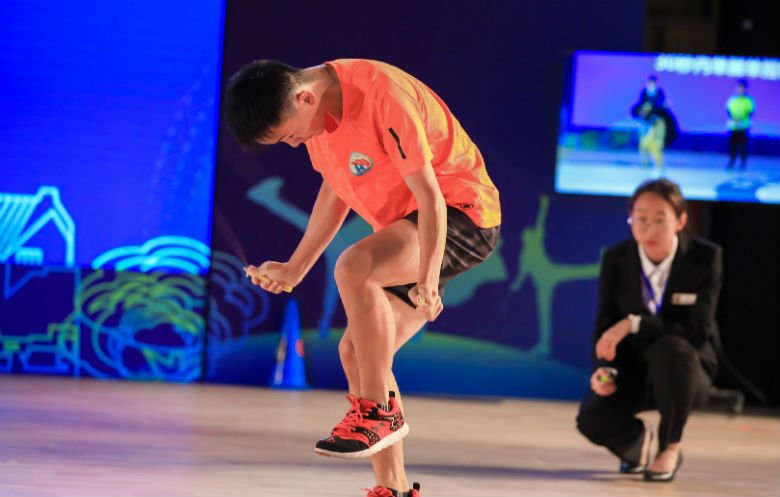
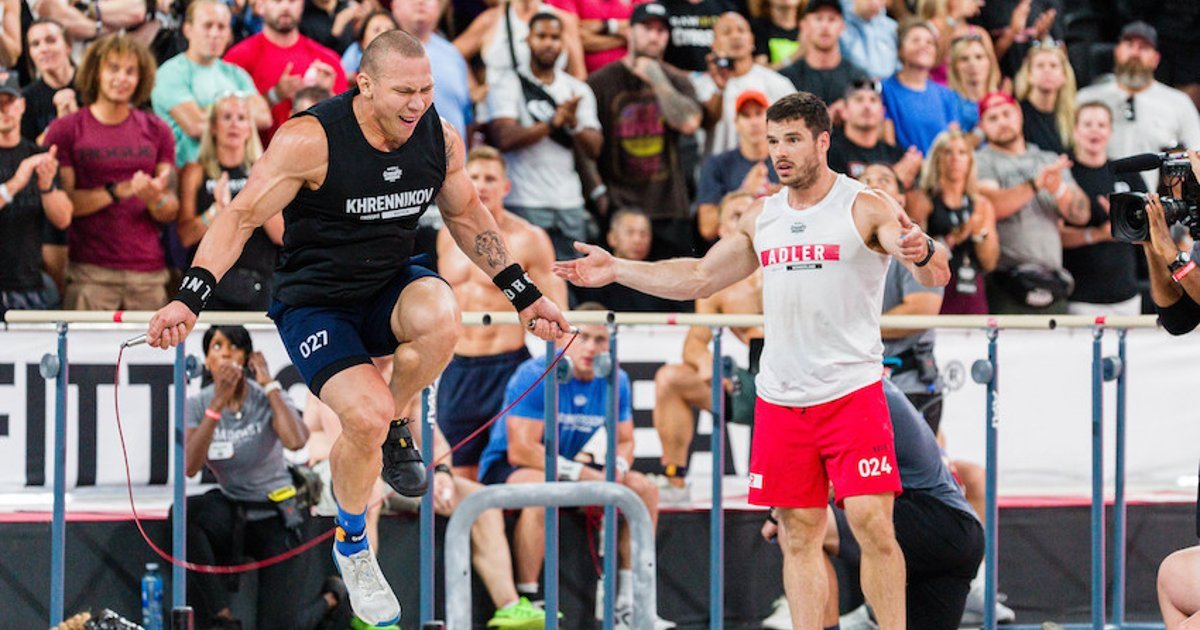
Speed step is an alternating-foot skill in which the athlete changes support rapidly while the cable keeps turning. Unlike a double-under, the objective is not to fit two cable revolutions into a bilateral jump. It is to maintain an exceptionally fast sequence of steps without interrupting the rotation.
In the 16-athlete comparison, the relative contribution of the hip was greater during speed step than during double-unders. The peak ankle rotational demand also exceeded that of the other two tasks by approximately 9 to 20 percent, depending on the comparison. The alternating pattern is therefore not simply a way to give the calves a rest. Its rapid rhythm introduces its own demands.
Watch what happens when an alternating drill gets too fast. A lifter may begin reaching forward with the swinging foot rather than placing it close beneath the body. The rope can catch a toe, and a frantic restart interrupts the intended rhythm. Try a short burst at a pace you can reproduce, then walk until you can begin again under control. Do not increase cadence just because a timer is counting down.
A separate 2022 footwear experiment compared rope-skipping landing conditions in ten participants. Single-leg and two-leg landings showed different loading characteristics. That small experiment cannot be translated directly into injury rates, but it supports treating changes in support pattern as real changes in exercise rather than cosmetic variations.
For hybrid athletes, this matters when alternating rope work with running or other conditioning. Both involve repeated leg contacts, and being able to run for thirty minutes does not automatically mean that your feet and calves are prepared for a high-cadence skipping sprint. Introduce speed steps as a skill in short doses. Count alternating steps separately from double-unders so that your records show which kind of practice is increasing.

Cardio Shirts & Workout Gear
Cardio and conditioning gym gear for runners, endurance athletes and anyone who earns the sweat.

Anti Jump Rope Jump Rope Club Shirt Meme Cardio & T-Shirt
Heavy lifts, good laughs, and a little “Anti Jump Rope Jump Rope Club” energy.

Cardio Is Hardio – Workout Meme Hooded Pullover Hoodie
Keep it laid-back with a little “Cardio Is Hardio” attitude.

Cardio Is Calling Decline Sweater Meme T-Shirt
Bring “Cardio Is Calling” humor to your everyday gym style.

Skip Cardio Exit Cardio Meme Decal Water Bottles & Sticker
Put “Skip Cardio” gym humor on your laptop, bottle, or gym gear.

Negative Cardio Review Cardio Sucks Running , Meme T-Shirt
Heavy lifts, good laughs, and a little “Negative Cardio Review” energy.

Cardio Heartbeat for Runners, Cyclists and Endurance Fa Tank Top
Bring “Cardio Heartbeat” humor to your next lifting session.

Don't Quit Do It – Motivational Workout Decal for Gym B Sticker
Give your everyday gear a playful “Don't Quit Do It” twist.

Everything Hurts And I'M Tired Motivation Jumper T-Shirt
Add a playful “Everything Hurts And I'm Tired” touch to your casual rotation.

Death By Cardio Shirt Meme & Top T-Shirt
Bring “Death By Cardio” humor to your next gym day.

Cardio Kills Gains Shirt 'S Meme & Top T-Shirt
Rep “Cardio Kills Gains” humor in and out of the gym.
What the ankle absorbs on every rebound
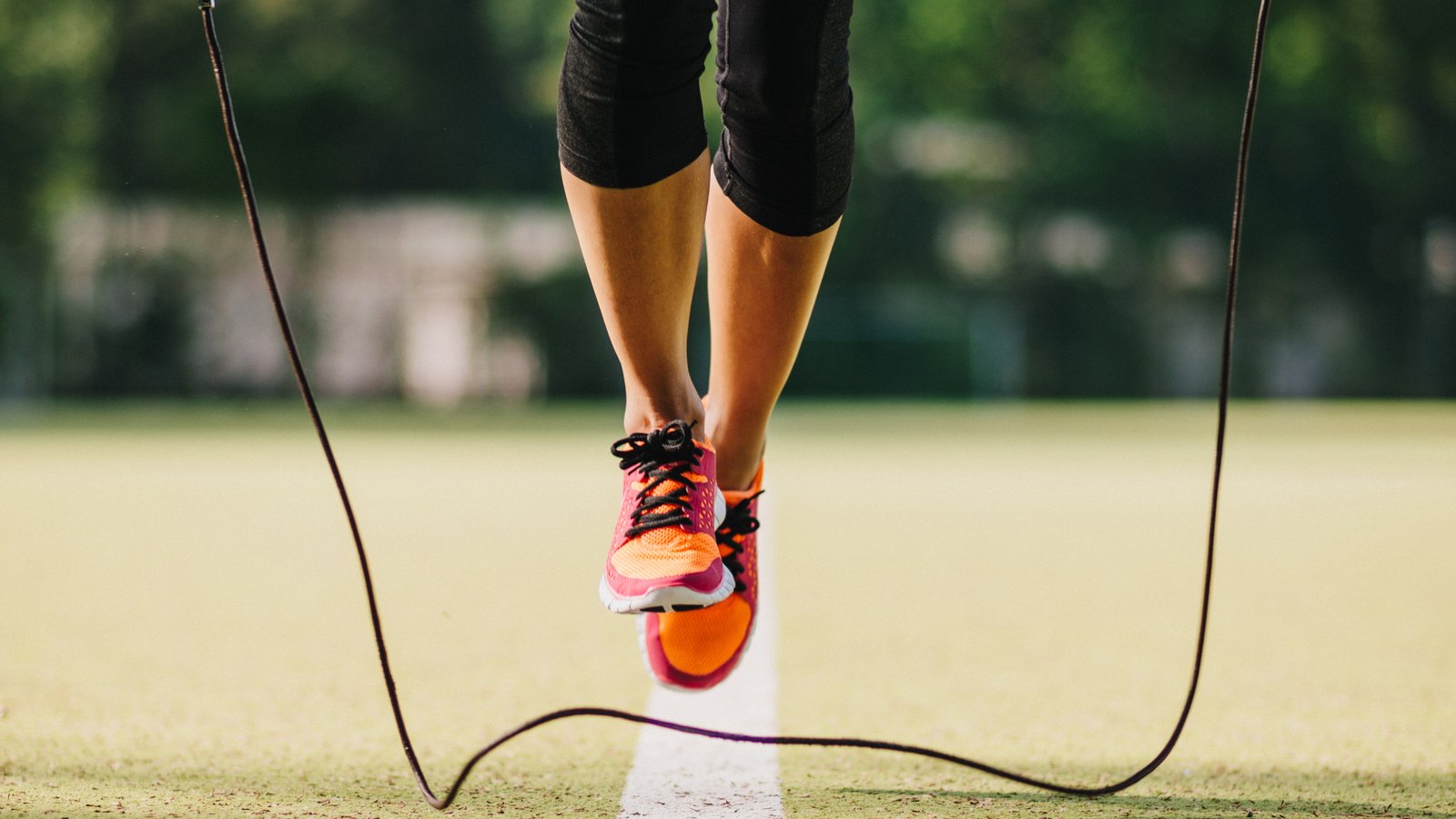
The ankle is particularly important because it helps convert a landing into the next takeoff. During the downward portion of a rebound, the calf muscle-tendon system manages the motion as the ankle moves under load. During push-off, that system helps return energy and generate the next jump. A rope workout can repeat this cycle hundreds of times.
In the laboratory comparison, the peak rate of mechanical energy absorption at the ankle was substantially higher in both competitive rope skills than in the running trials. The reported differences ranged from about 39 to 114 percent. That does not mean each repetition produced that much more total work, or that the risk of injury doubled. A peak power value describes the rate of energy transfer at a moment in time, not the accumulated dose for the entire session.
Context changes the result. A separate 2021 experiment comparing ordinary bounce skipping with walking and running found that several loading measures for bounce skipping fell below those of running but above walking. There is no contradiction: the skills, movement speeds and outcome measures differ. Ordinary comfortable singles are not the same task as maximal speed steps or consecutive competitive doubles.
Build tolerance with a comfortable floor, stable footwear and short repeatable practice. Calf raises with the knee straight and bent can be useful general strengthening exercises; choose resistance that permits controlled repetitions and progress it gradually. A dumbbell or kettlebell is enough to add load when bodyweight becomes easy. Neither heavy calf work nor additional skipping needs to be pushed to failure.
Pay attention to symptoms that persist or worsen between sessions, especially localized Achilles pain, swelling or a change in normal walking. Reduce the provoking activity and seek qualified assessment if symptoms persist. A laboratory average does not diagnose the source of pain. For the same reason, switching to a heavier cable is not an automatic progression: it changes handle effort, timing and potentially the way you jump. Choose the cable for the intended skill.
Build rope volume without turning it into a second leg day
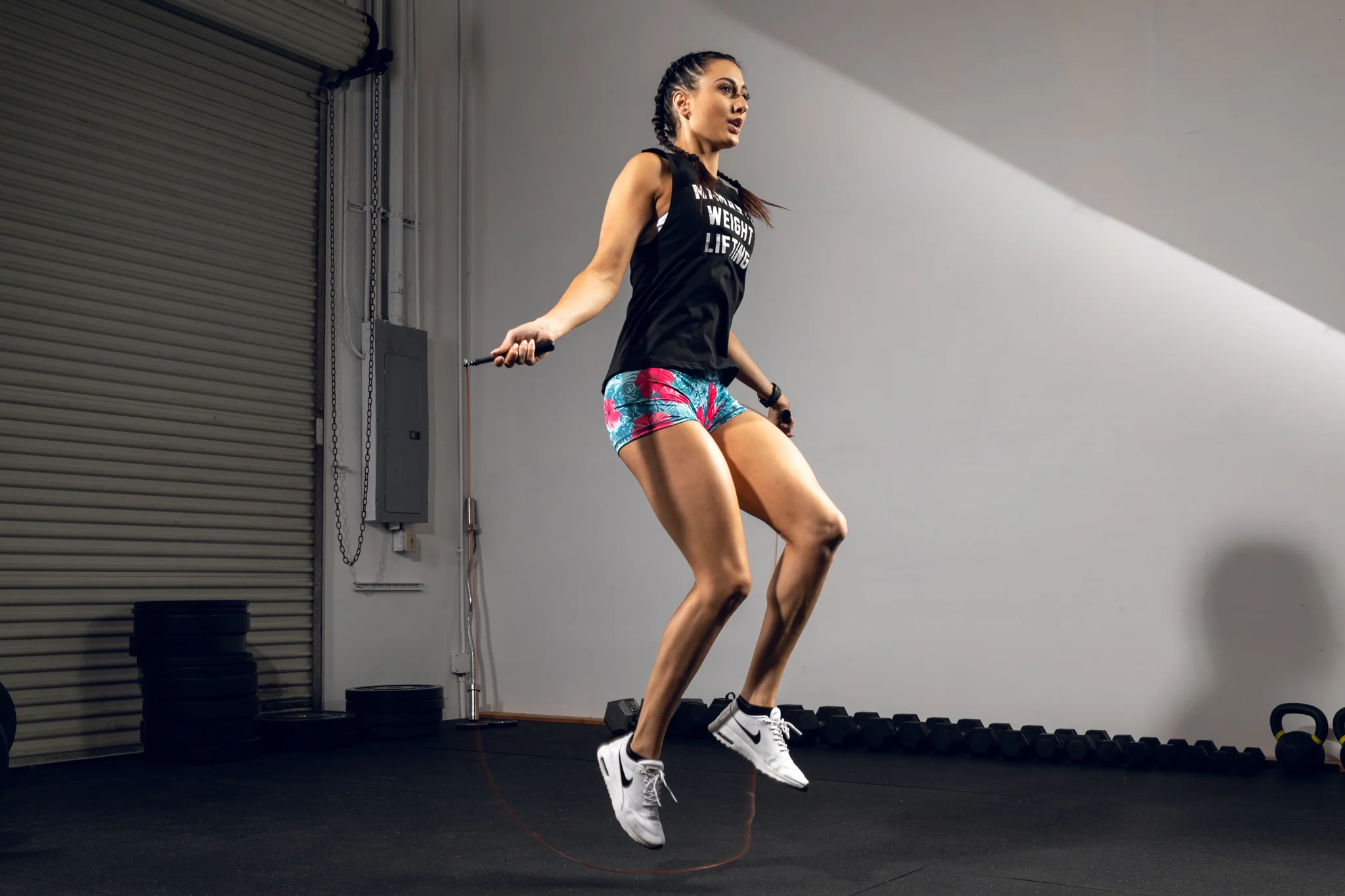
There is a compelling reason to include rope work in a training program: it can build coordination and conditioning with relatively little equipment. A 2022 synthesis of 21 training studies covering 1,021 participants reported improvements across several fitness measures, including aerobic endurance and jumping. Most included studies involved young people, and the results varied. The evidence supports rope work as a useful option, not as a replacement for every other method.
The following starting framework is an illustration for a healthy recreational lifter who can already perform comfortable singles. It is not a validated dose from the biomechanics experiment. On the first day, after a warm-up, perform six easy 20-second bouts with 40 to 60 seconds of rest. On a separate day, practice four clusters of five double-under attempts or short alternating steps, with ample recovery. Keep the skill work below the point where timing deteriorates.
Log successful jumps, failed attempts, skill type, and effort, along with any meaningful next-day soreness. Once that workload feels routine, increase only one variable: either another small cluster, slightly longer easy intervals, or a little more speed. Do not increase all three at the same time. If the next strength workout suffers, return to the earlier dose rather than trying to out-train fatigue.
Plan around your other exercise. On weeks with heavy squats, repeated sprints or a lot of running, use cycling, rowing or a ski trainer for some conditioning instead of accumulating additional rope landings. A fan bike is convenient for short intervals, a rower and ski trainer add different upper-body demands, and walking on a treadmill can be a gentler aerobic option than repeated jumping. These are alternative conditioning tools, not substitutes for actual rope-skill practice. Sled pushing can also provide conditioning without repeated airborne landings, though it is still demanding leg work.
For a lifter whose goal is general fitness rather than competitive skipping, the simplest progression might be to maintain easy singles and occasionally practice doubles while fresh. For someone training specifically for a speed-step event, high-quality alternating bursts will matter more. The takeaway is not to fear the rope; it is to treat its different skills as different exercises. Track what your ankles, knees and hips are being asked to do, choose the skill that serves your goal, and allow your weekly workload to grow at a rate you can recover from.

Equipment Worth Exploring
Explore equipment, accessories and gear from our carefully selected range.