Advertising disclosure: This page includes affiliate product links that may earn us a commission, as well as products from our own store.
Lat Pulldowns: Grip Width, Elbow Path and a Six-Week Back Plan
A wider grip does not automatically build wider lats. The pulldown works when the arms and upper back move through a controlled pulling pattern that you can repeat and progressively challenge. Yet attachment width, elbow direction, seat adjustment and even your posture can make two sets with the same stack pin feel like different exercises.
Use this guide to separate useful technique choices from claims that a single handle activates every back muscle perfectly. Then put the best-fitting grip into a six-week plan built around consistent training, not constant attachment changes.
1. The lats are not the only muscles working
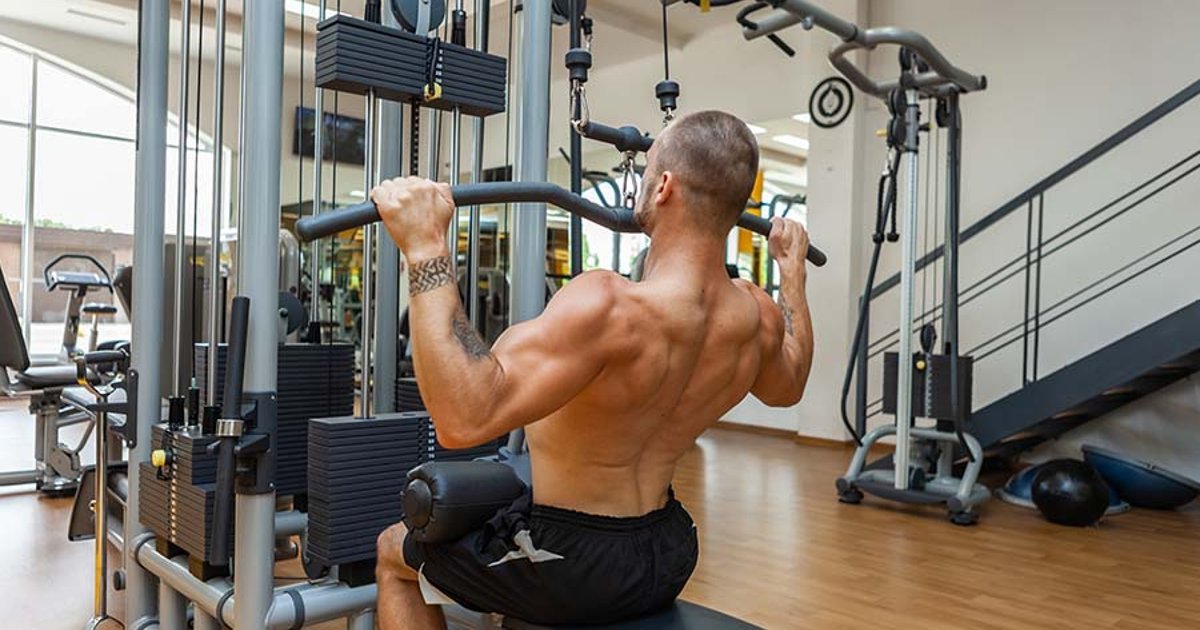
The lat pulldown is a vertical pulling exercise. Its main shoulder movement brings the upper arm down toward the trunk while the elbows bend and the shoulder blades move on the rib cage. The latissimus dorsi contributes strongly, with help from the teres major, elbow flexors and muscles controlling the shoulder blades. You cannot make an ordinary pulldown an isolation exercise simply by turning your hands.
That matters because a back exercise can feel very different without proving that one grip grows more back muscle. A wide straight bar increases the distance between the hands and often changes the elbow route. A compact neutral handle puts the palms toward each other and usually encourages the elbows to travel in front of or nearer the rib cage. Either can be productive if the movement is comfortable, repeatable and progressively loaded.
Evidence about which grip activates a muscle is not a direct measurement of long-term growth. One earlier comparison favored overhand pulling for lat electrical activity, while a later test involving forty trained men found no overall lat-activation advantage across seven variations. The experiments tested immediate muscle signals under defined conditions, not months of hypertrophy. The practical conclusion is to keep a good pulling pattern and avoid changing grips just because an online ranking promises a magic angle.
Start with a moderate attachment width and record which grip lets you complete your intended range without wrist bending, shoulder pinching or a shifting torso. If the handle feels awkward for your joints, that is a useful reason to change it regardless of what an EMG ranking suggests.
2. Fit the seat, thigh pads and handle before loading up
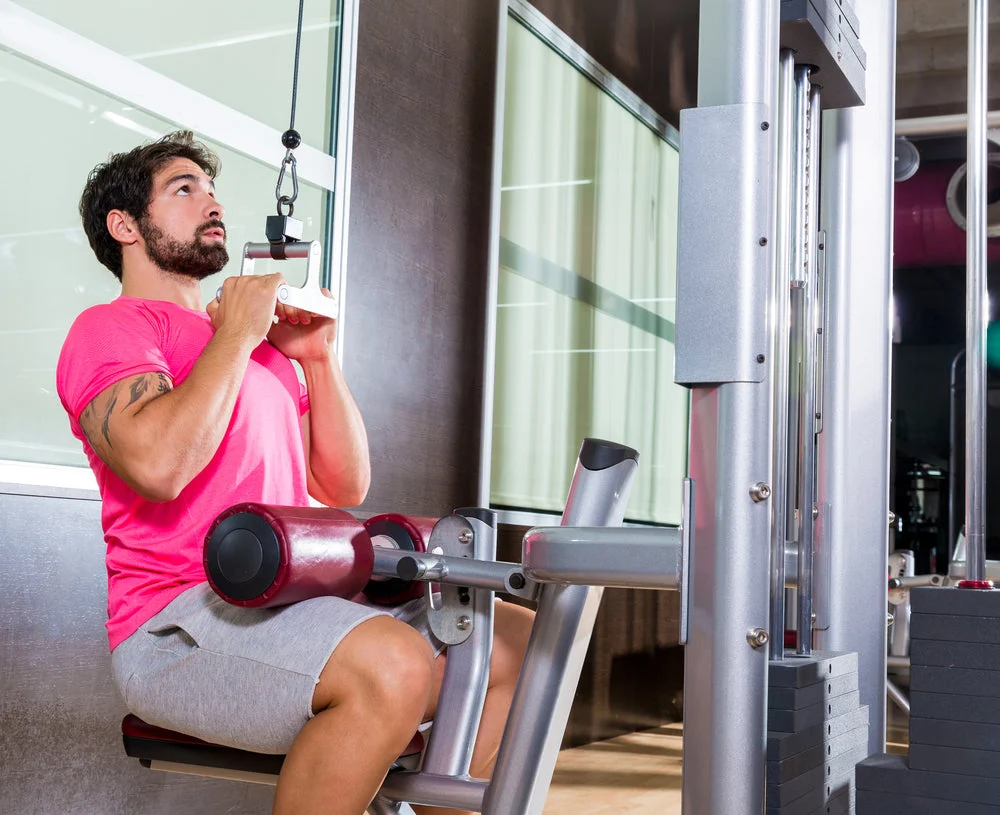
Set the thigh rollers snugly over the tops of the thighs so the seat does not become a launch pad when the cable pulls upward. Keep both feet secure on the floor. The rollers should stabilize you without crushing the legs; if you cannot settle into the seat normally, adjust the pad height or choose a station that fits your proportions.
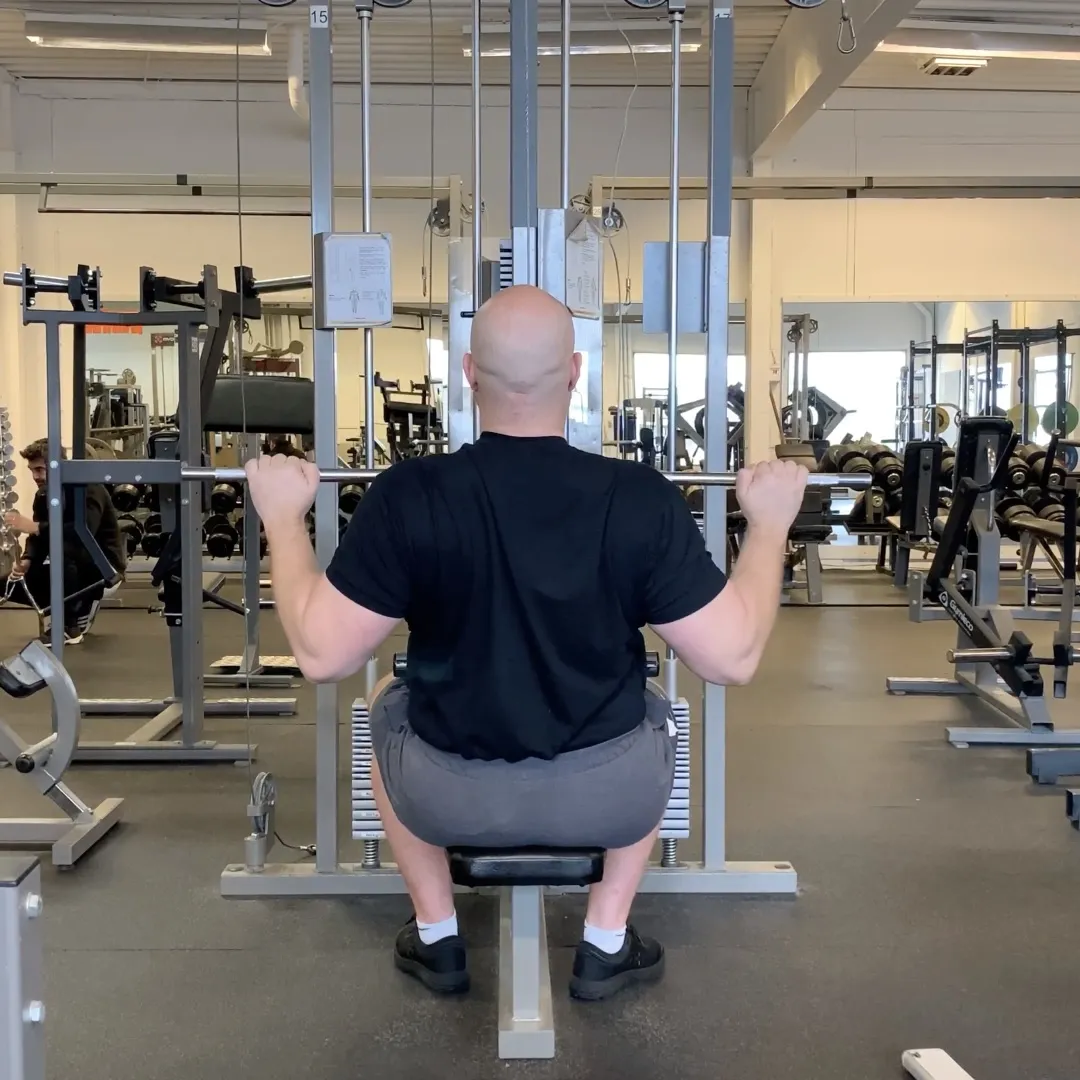
Reach overhead and take the attachment before pulling. A grip slightly wider than shoulder width is a reasonable starting point for a standard bar. For a neutral-grip handle, use the handle’s intended positions without forcing the wrists wider than they can comfortably travel. Check that the clip or carabiner closes fully and that the chosen bar or handle clears the face and chest throughout the movement.
Begin with the torso tall and a small, consistent backward inclination if it makes the cable path natural. Brace the abdomen just enough to prevent repeated rocking. Let the arms reach upward in the start position while keeping control of the weight stack; this is not a cue to hang passively on irritated shoulders. The first few warm-up repetitions should look like the repetitions you intend to count.
A common fitting error is choosing a load that lifts the hips off the seat, then interpreting the unstable final position as back strength. Lower the weight until the thigh pad is a restraint rather than the main force holding the whole body down. If there is no useful thigh restraint, a half-kneeling high-cable variation can be an alternative with its own separate load log.

Equipment Worth Exploring
Explore equipment, accessories and gear from our carefully selected range.

VForce Lat Tower
Wall-mounted cable tower with pivot arms and adjustable 1:1 or 2:1 pulley ratios.

Trinity Lat Machine LSW-850
Weight-stack pulldown tower offering three cable directions and adjustable seated support.

VForce Lat Seat
Rack-mounted seat attachment for supported lat pulldowns and seated cable exercises.

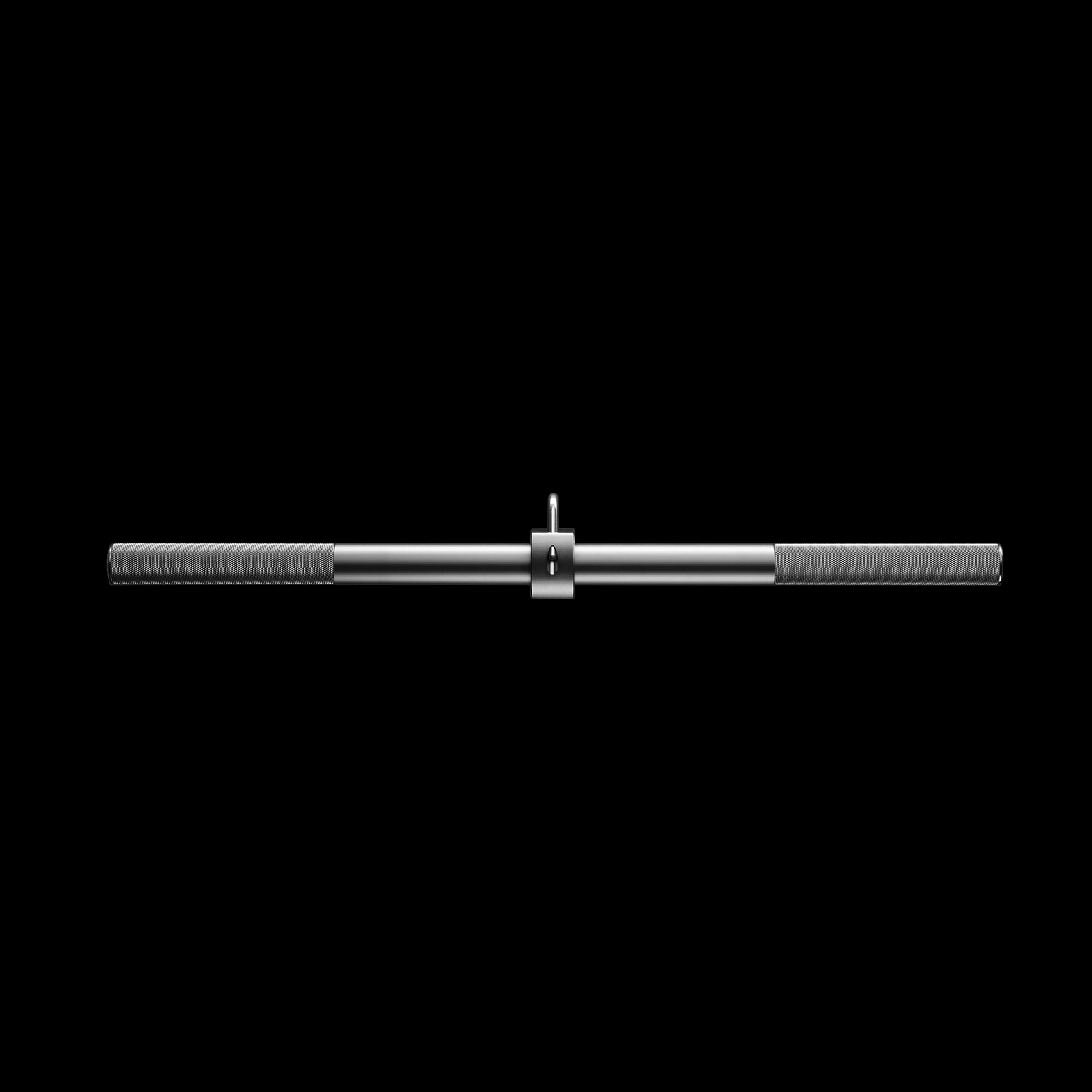
48in Aluminum Lat Bar
48-inch aluminum lat pulldown bar with knurled grip and rotating center swivel.

Lat Pulldown Set
Multi-grip cable attachment set for pulldowns, rows, and varied upper-body training.
VOLTRA
Compact digital cable trainer with smooth, adjustable resistance.
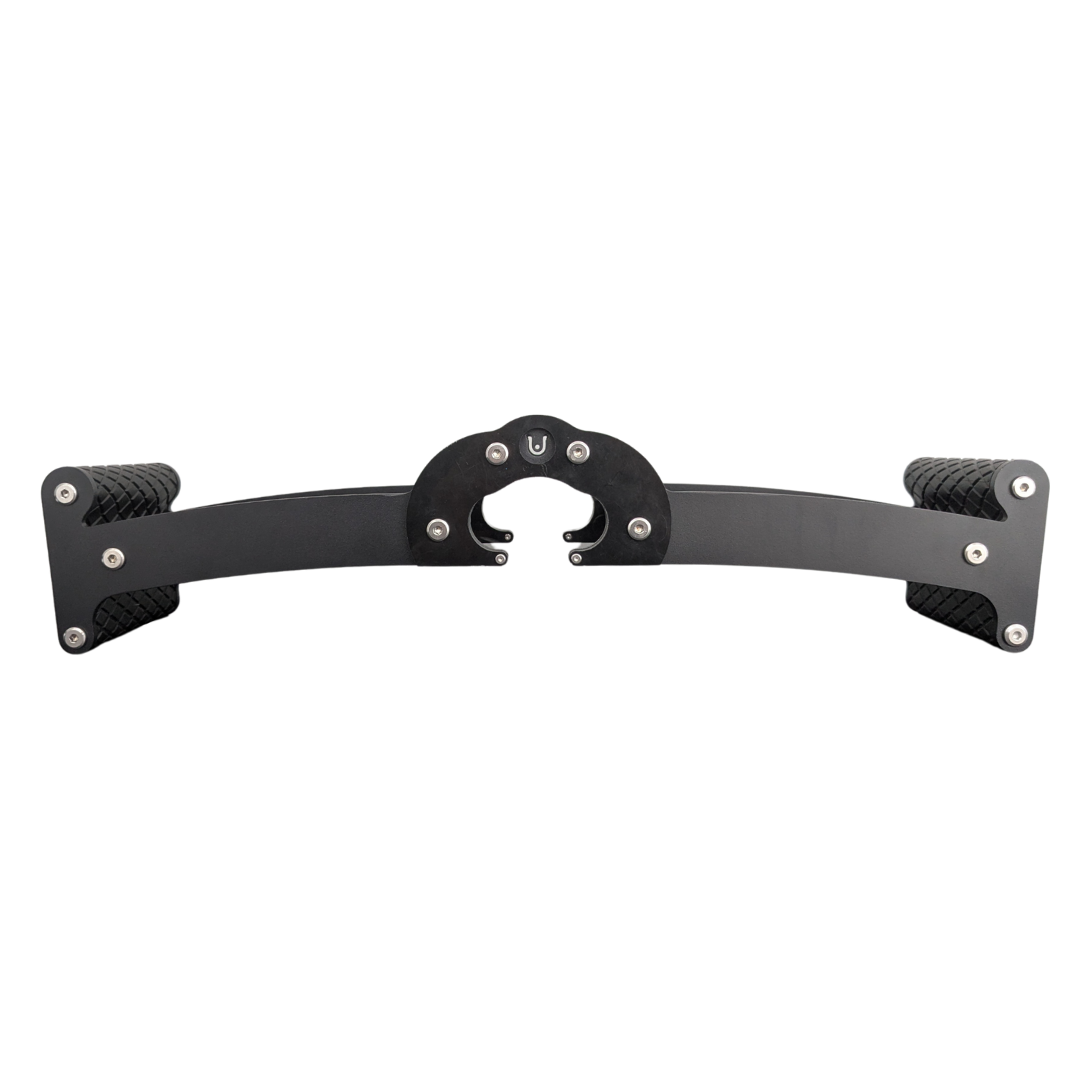
Back Bar
Multi-grip cable and landmine bar with a built-in deadlift jack.
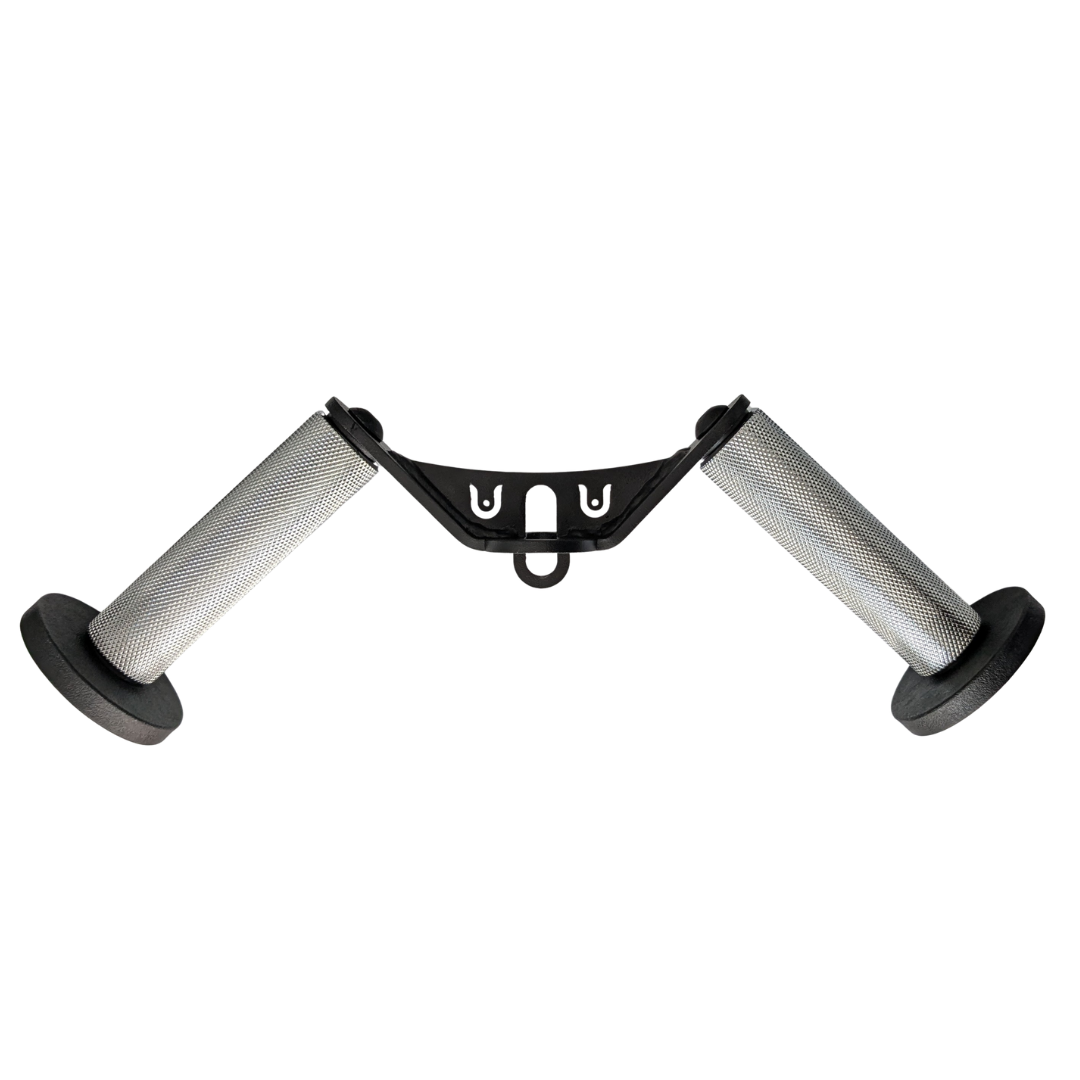
W Grip
Angled cable grip for comfortable rows, pushdowns, and curls.
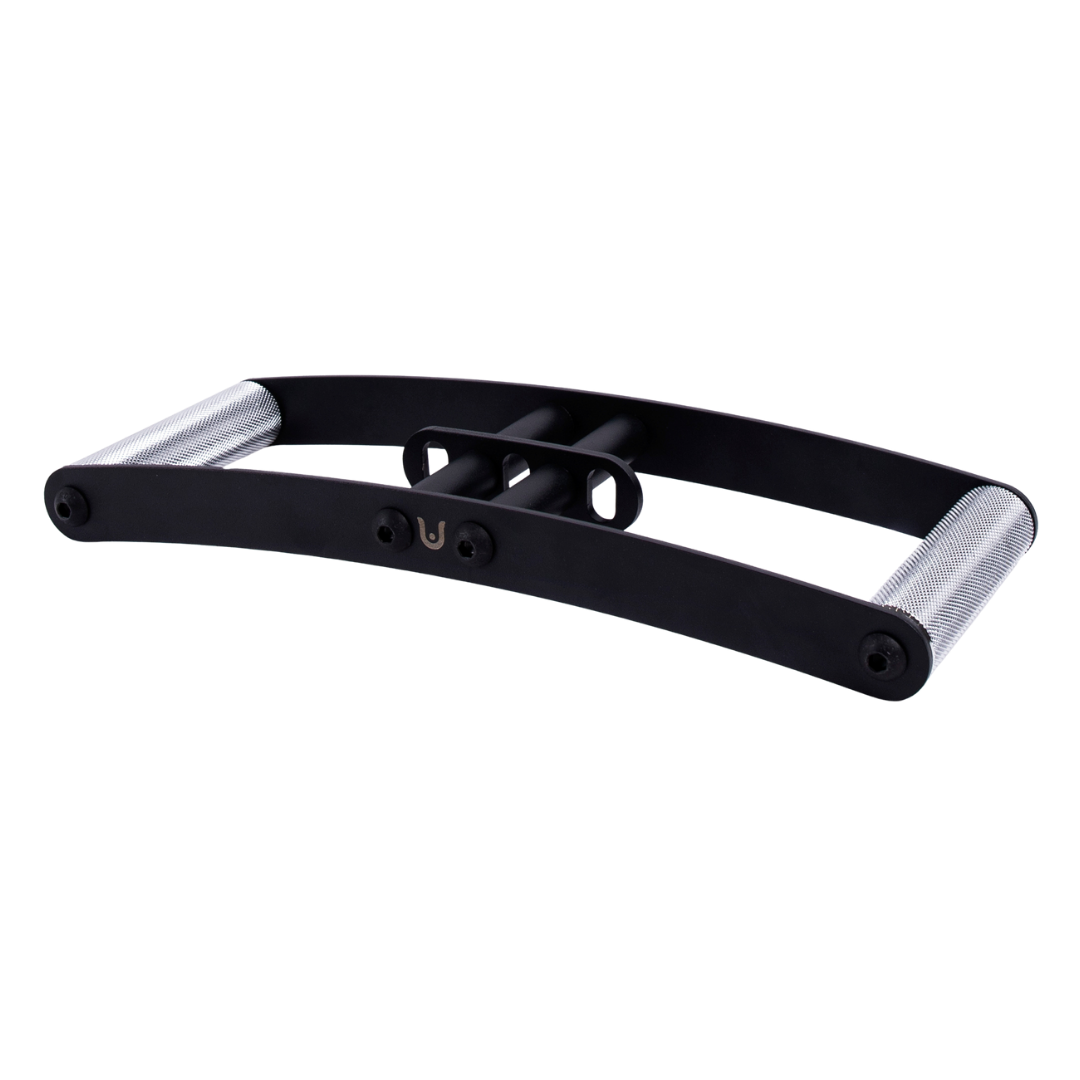
Horizon Grip
Ergonomic V-style cable grip for rows and back training.
3. Wide, shoulder-width, neutral and underhand are tools
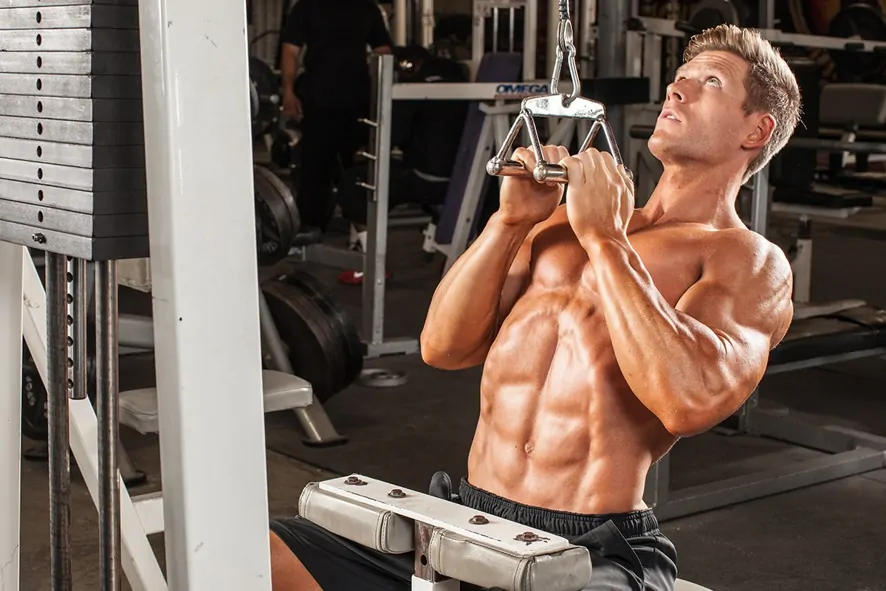
A wide overhand bar changes arm position, but excessively wide hands can shorten the useful travel and create an awkward finish. Do not turn the exercise into a contest to touch the farthest ends of a bar. A shoulder-width overhand grip often supplies a straightforward baseline for a controlled upper-chest pull with a manageable path for the elbows.
A close neutral handle can feel smoother for some wrists and shoulders, particularly when a straight bar makes you rotate or flare unnaturally. The hands face one another while the upper arms can travel down in front of the torso. The narrower handle may reach the upper chest with less bar-to-face clearance, but that does not mean every person must pull the same number of centimeters or achieve an extreme elbow position.
An underhand grip shifts the forearm orientation and often feels more biceps-heavy. This can be useful for variety or as a bridge toward chin-ups, but it may bother wrists or elbows if you force a wide underhand position. Rotate grips only as far as the joints can comfortably support, and use a stable bar rather than trying to twist a fixed attachment halfway through a heavy repetition.
Compare alternatives by repeated clean sets rather than by one impressive maximal effort. Keep the seat, torso angle, tempo, range target, and rest roughly constant, then judge whether a different attachment provides smoother reps and sustainable progression. An attachment that adds twenty kilograms only because you now lean back like a row is not evidence of a superior pulldown.

Bodybuilding Shirts & Workout Gear
Bodybuilding shirts, tanks and gym gear for lifters chasing muscle, size, symmetry and the pump.


Strong Back Bodybuilder Tee
Show some lifting attitude with a playful “Strong Back Bodybuilder” tee.

Shirt Pull Day – Back & Biceps Meme Top T-Shirt
Heavy lifts, good laughs, and a little “Pull Day Graphic” energy.

Back Sabbath Back Day Heavy Metal Back Training Workout T-Shirt
Bring “Back Sabbath Back Day” humor to your next gym day.


Gym Dost Thou Even Pull Medieval Knight Lat Pulldown Hoodie
Show off your medieval humor in a laid-back “Dost Thou Even Pull Medieval Knight Lat” hoodie.

Hardcore Gains Gym | Funny No Pain No Gain Workout Swea T-Shirt
For laid-back days and lifting humor: “Hardcore Gains”.


4. Drive the elbows down without turning the pulldown into a row

From the overhead start, think about moving the upper arms downward while the elbows bend. Bring the handle toward the upper chest or another comfortable upper-torso point that is consistent for that specific attachment. The neck stays neutral and the chest can rise slightly without a dramatic backward throw. You should not need to whip the weight stack into motion with your lower back.
Control the upward phase so the arms lengthen and the shoulders can rotate naturally overhead. Do not freeze the shoulder blades in a permanently pinched-down position; they need to move as the arms rise. A useful repetition includes both a strong pull and a controlled return, with no bouncing of the stack at the bottom. Finish the set when the intended path or torso angle no longer holds.
Pulling the bar behind the neck is not a prerequisite for wider lats. It demands an unusual combination of shoulder positioning and neck displacement for many people, without a proven requirement for hypertrophy. A front-of-body path normally makes it easier to keep the head neutral, check elbow travel and reproduce the same finishing position.
Watch two common substitutions: an exaggerated backward lean that makes the exercise a cable row, and a shortened descent that stops when the elbows have barely moved. If either appears only as the load rises, use a lighter stack setting. Two controlled reps with a consistent finish are more useful to compare than ten heaved reps with different mechanics.
Equipment Worth Exploring
Explore equipment, accessories and gear from our carefully selected range.

GymPin Ergo Handles
Pair of ergonomic cable handles shaped for comfortable triceps and pulling exercises.

Angles 90 Grips
Flexible grip attachments that allow natural wrist movement during pulling exercises.

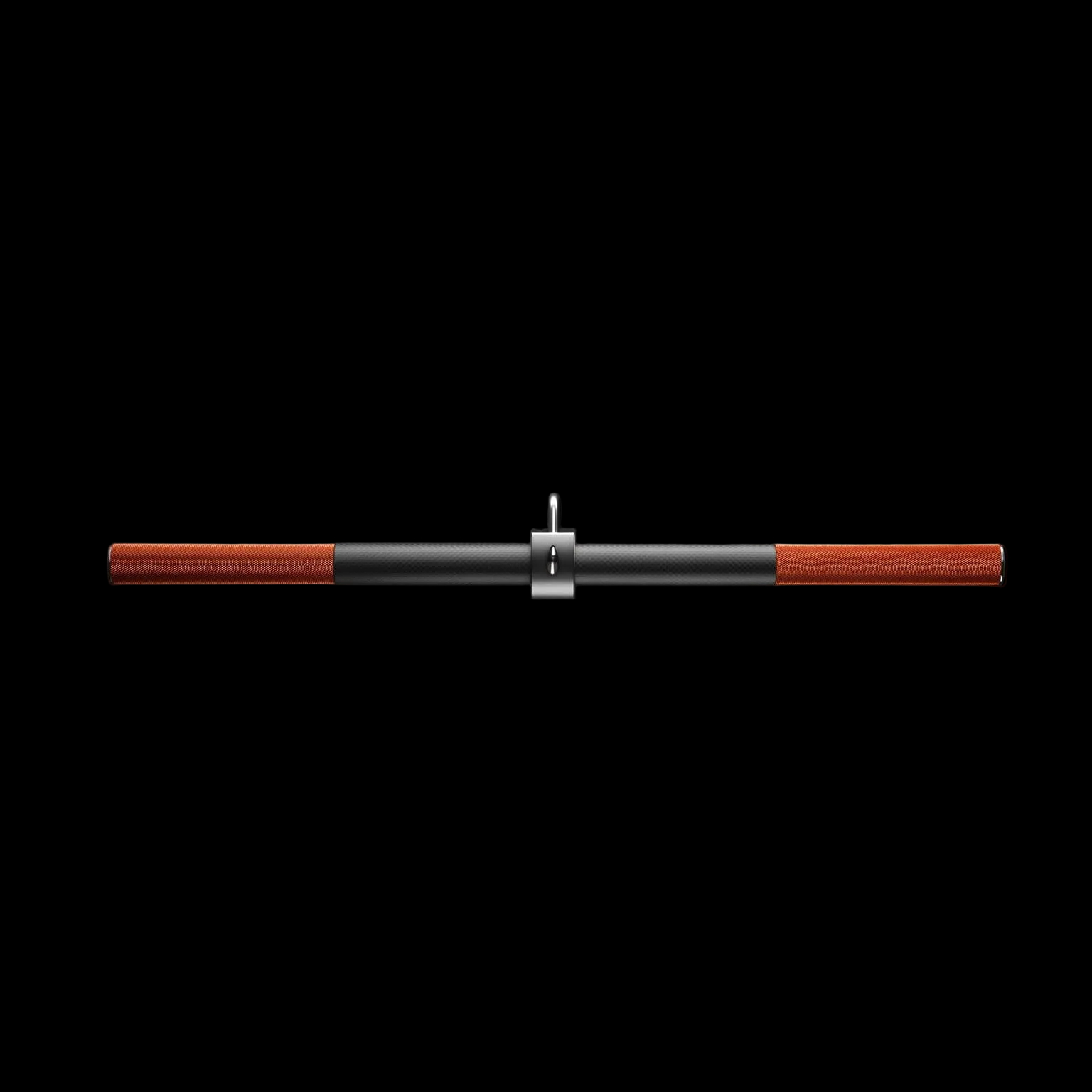
GymPin D Handle Bar
Multi-use steel D-handle bar for cable rows, pulldowns and other cable exercises.


Leather Lifting Straps
Padded leather straps support grip during heavy rows, deadlifts and pulling exercises.

Power Tower
Freestanding pull-up and dip station with adjustable handles for bodyweight training.

Multi Pull Smith Rack MPHR-780
All-in-one rack with a Smith machine, functional trainer, lat pulldown and low row.
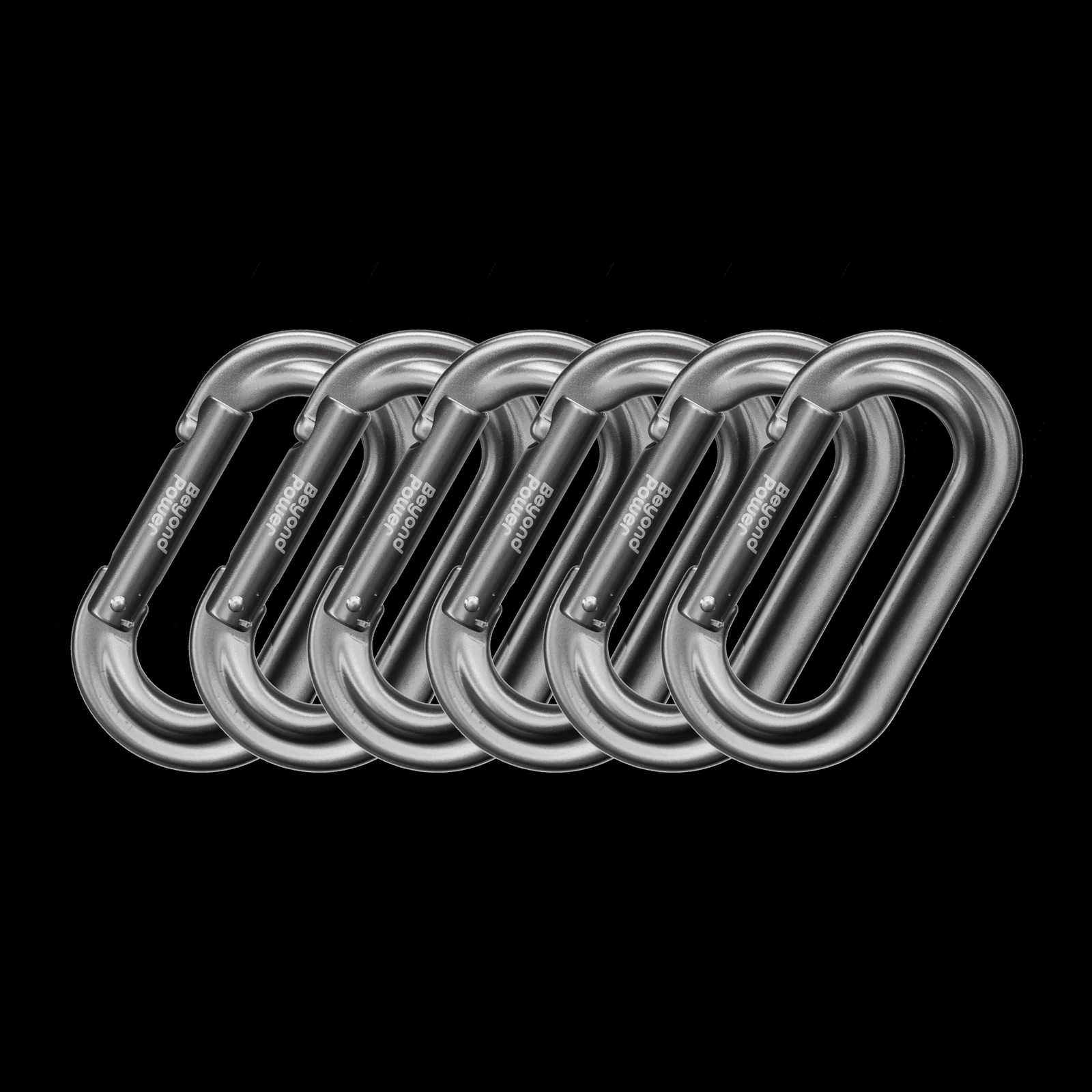
Premium Carabiner
Durable carabiner for connecting cable attachments and training accessories.
5. Single-arm cable work and pull-ups belong in the same toolkit
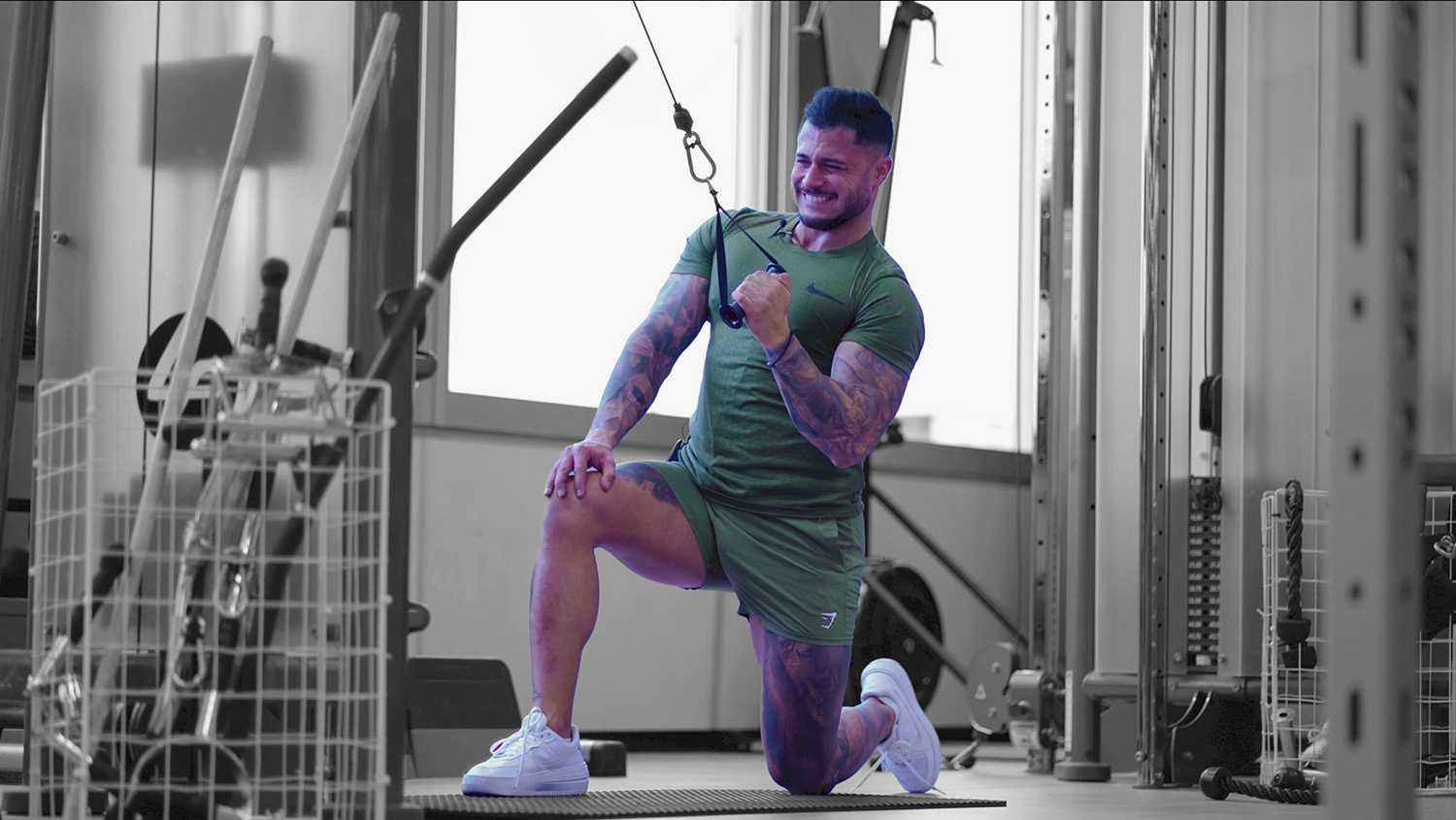
A single-handle high-cable pull lets each arm find a natural route. Stand or half-kneel in a repeatable position, begin with the arm reaching up, then pull the elbow down toward the side without rotating the whole torso to chase the handle. Keep the cable line and your distance from the pulley consistent. The independent handle can be useful if a two-handed bar creates a bothersome fixed wrist or shoulder position.
Single-arm sets make it easier to notice side-to-side differences in comfort, coordination and usable motion. They do not by themselves diagnose a muscle imbalance. Start with the side you can control less confidently, match the repetitions on the other side, and do not manufacture an imbalance by training one arm to a completely different standard.
Pull-ups and chin-ups are useful complements rather than an obligatory upgrade. A pulldown gives you fine load increments, which makes higher-repetition back work accessible even if your bodyweight is heavy or pull-ups fatigue quickly. Pull-ups add the challenge of controlling your whole body while moving it relative to a fixed bar. The overlap is substantial, but neither exercise exactly reproduces the other’s loading.
If you are building toward pull-ups, train assisted pull-ups or negatives only within the shoulder range you can own. Use lat pulldowns for measurable strength and volume, and add a modest amount of bodyweight skill work while fresh. Avoid doubling every vertical pulling set just because both movements appear in the same program.
6. A six-week back-day progression you can actually compare
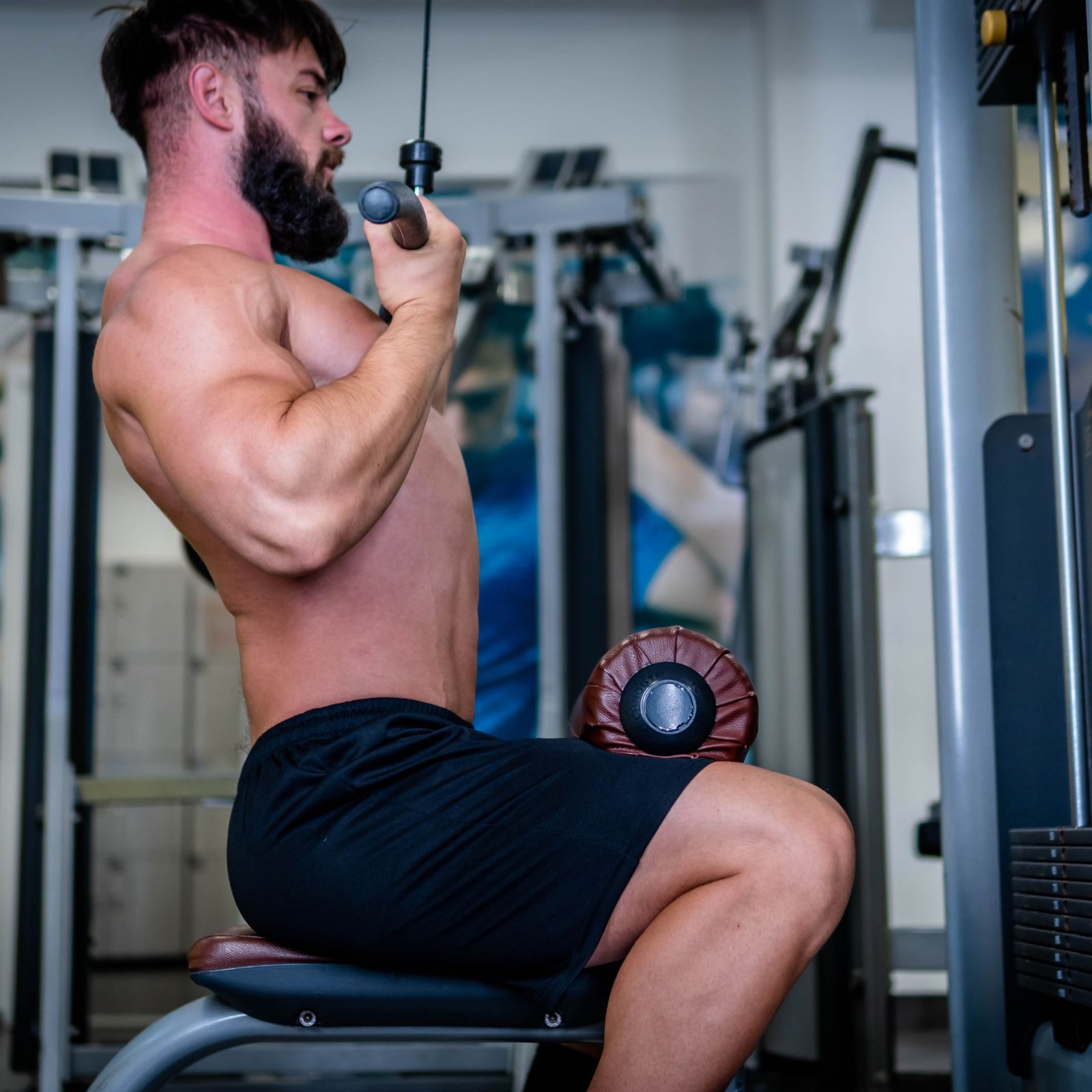
Choose one main pulldown grip that feels comfortable and stick with it for the first three weeks. On Back Day A, perform three working sets of six to ten repetitions after suitable warm-ups. Rest around two minutes or long enough to repeat the same technique; record the pin setting, handle, seat height, repetitions and approximate effort. Keep one or two clean repetitions in reserve on most sets.
On Back Day B, at least a couple of days later, use two working sets of ten to fifteen with the same grip and steady form. Add two or three sets of a horizontal row to train another pulling direction, and complete any elbow-flexor work your overall program requires. The row and curl are complementary work, not a reason to add more pulldown volume than you can recover from.
In weeks one and two, establish repeatable starting loads. When every set reaches the top of its assigned rep range without an altered torso or range, increase by the smallest practical stack increment next time. In weeks three and four, continue the same double-progression rule. If performance falls with unusually high fatigue, repeat the load rather than raising it automatically.
In weeks five and six, keep the main movement stable and optionally exchange one lower-load accessory set for a neutral-grip or single-arm variation. Record it as a different exercise rather than pretending its kilograms are interchangeable with a wide bar. By the end, compare clean repetitions, loads, and exercise consistency—not just the heaviest number written down.
Stop or adjust a variation that creates sharp shoulder, elbow or wrist pain. A handle change can resolve an awkward position, but it is not treatment for persistent symptoms. Progress depends on enough hard, technically stable work that you can repeat; the perfect grip is the one that lets you train the actual target muscles with sound mechanics over time.
Calisthenics Shirts & Street Workout Gear
Calisthenics and bodyweight-training gear for pull-ups, dips, handstands and street-workout athletes.


Always Pull Yourself Up Funny Gym T
Heavy lifts, good laughs, and a little “Always Pull Yourself Up” energy.

Shirt – Calisthenics Heartbeat Gymbros & Meme Lovers T-Shirt
Bring “Calisthenics Heartbeat” humor to your next gym day.

Calisthenics Evolution
Show some lifting attitude with a playful “Calisthenics Evolution” tee.


Lord of the Calisthenics Rings Gym | Gollum My Precious Sticker
Give your everyday gear a playful “Lord of the Calisthenics Rings” twist.

Always Pull Yourself Up Tank
Show some personality between sets with “Always Pull Yourself Up”.

Pullups Heartbeat Sticker
Stick a little “Calisthenics Pullups Heartbeat” humor on your favorite gear.

Turn Off Gravity Funny Calisthenics Gym Decal for Water Sticker
Give your everyday gear a playful “Turn Off Gravity Funny Calisthenics” twist.

Calisthenics Hanging Out Hoodie
Make your off-duty look more fun with “Calisthenics Hanging Out”.