Advertising disclosure: This page includes affiliate links that may earn us a commission at no additional cost to you.
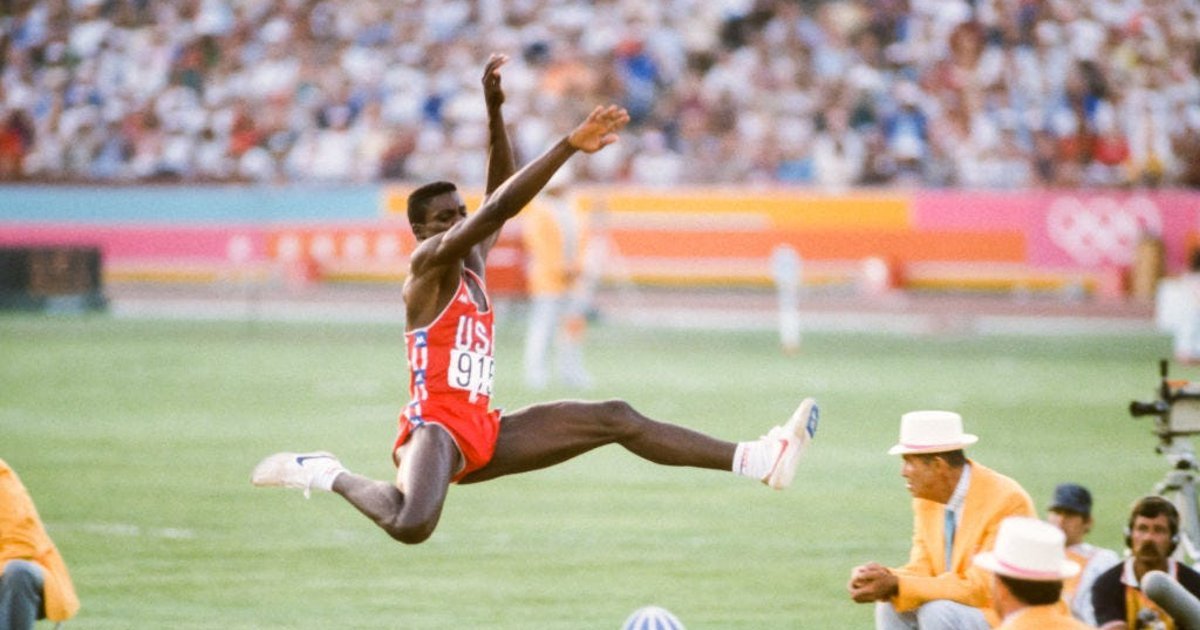
Carl Lewis won the Olympic long jump in 1984, 1988, 1992 and 1996. Four titles in the same event, across twelve years, form a remarkable part of a career that also included sprint and relay gold. They reveal a different kind of achievement from one spectacular afternoon or one record-breaking leap.
The interesting question is how to describe that career without flattening it into a medal total. Lewis could win several different events, return to defend one particular title, and produce an exceptional jump without winning that competition. Those are different measures of athletic performance, and each deserves its own explanation.
Four long-jump titles tell a twelve-year story
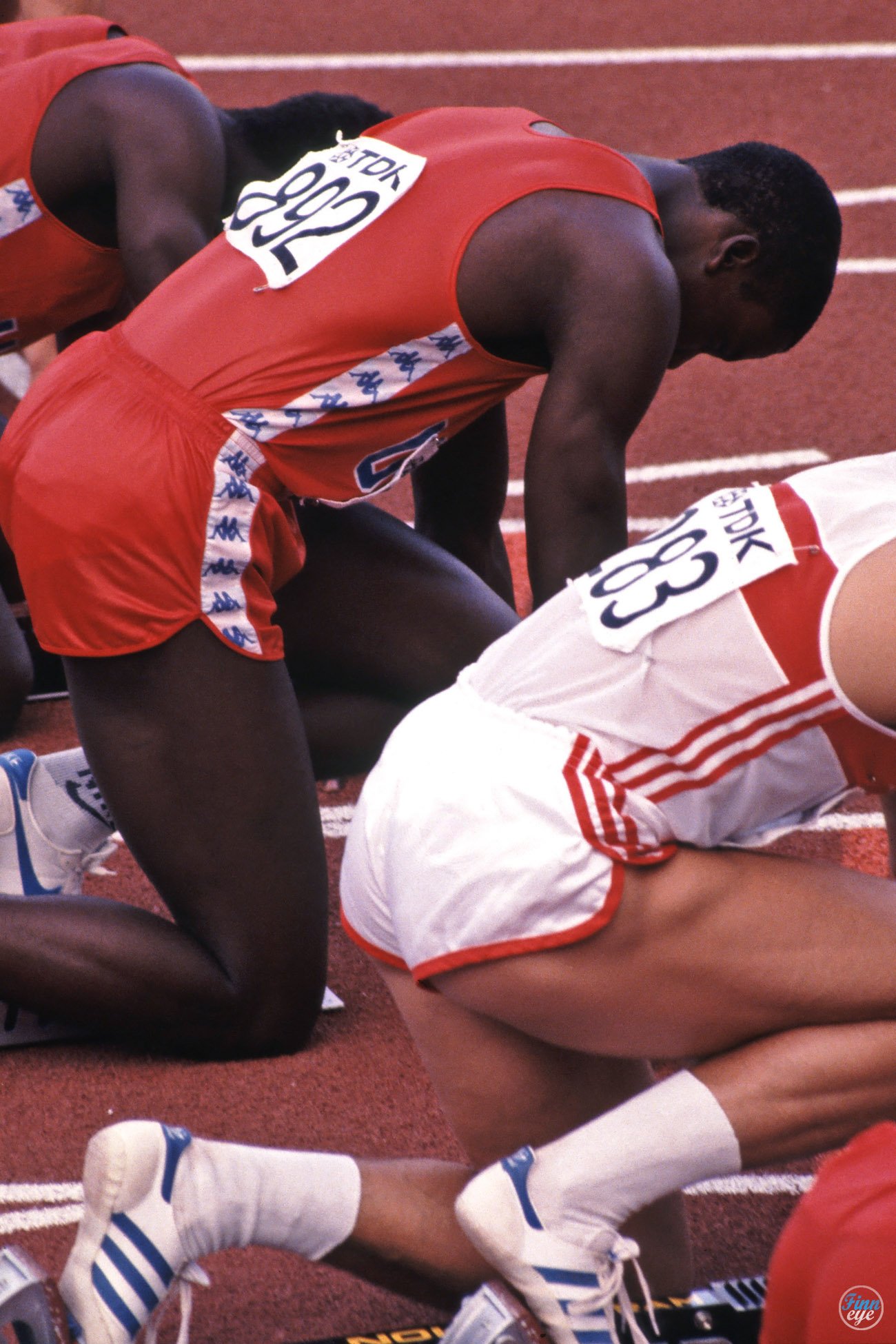
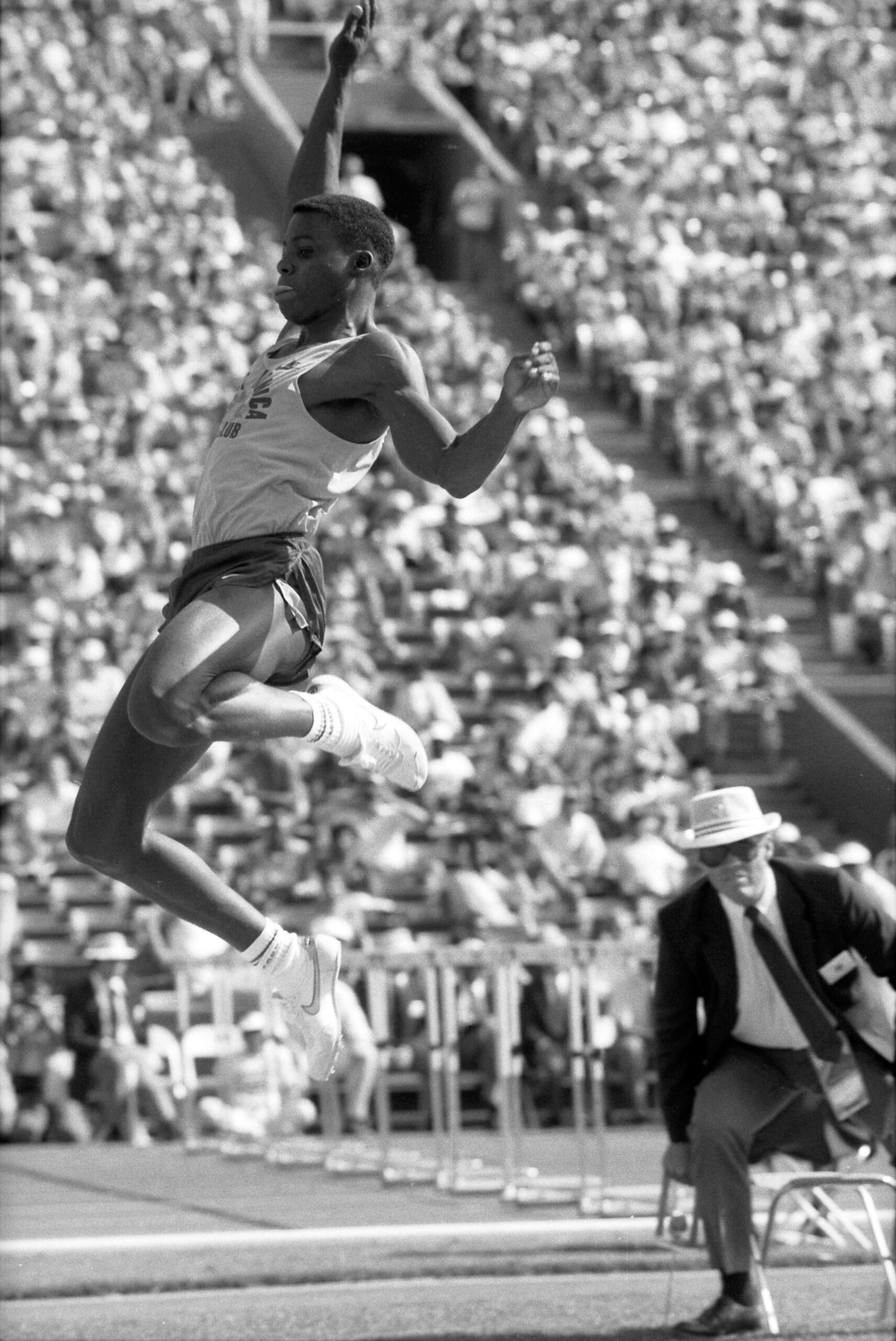
The sequence began in Los Angeles in 1984 and continued through Seoul, Barcelona and Atlanta. Lewis was 23 at the first of those Games and 35 at the last. The photograph accompanying this section comes from Helsinki in 1983, before that Olympic sequence began; it shows an already established international athlete.
| Olympic Games | Year | Long-jump result |
|---|---|---|
| Los Angeles | 1984 | Gold |
| Seoul | 1988 | Gold |
| Barcelona | 1992 | Gold |
| Atlanta | 1996 | Gold |
Four appearances in the winner’s position can look simple in a table. They were separated by years of competition and changing circumstances. The Olympic schedule creates a particularly demanding test of continuity: the next opportunity does not arrive next weekend, and a previous title cannot be carried forward as a qualifying performance or a winning mark.
The comparison with Al Oerter’s four Olympic discus victories and later career best helps put that span in perspective. Repeated titles and the greatest distance of a career answer different questions. Recognising both lets us discuss longevity without pretending every season has to produce a new personal best.
Los Angeles showcased breadth as well as a specialty
Lewis’s four gold medals in Los Angeles came in the 100 metres, 200 metres, long jump and 4×100-metre relay. That matched the event combination Jesse Owens had won in 1936. It was a successful Games across individual races, a field event and a team race, rather than four repetitions of the same task.
The long jump sits naturally beside sprinting because the approach run is part of the event. Still, a fast sprint time and a successful jump are separate results. A jump asks the athlete to turn the approach into a take-off and landing within the event’s constraints. Describing Lewis simply as fast misses why his long-jump record carries so much weight.
His Los Angeles competition also offers a revealing decision. He established the winning long-jump mark early and passed his later attempts while other races remained on his programme. For spectators hoping for a record, that could feel anticlimactic. For an athlete contesting several events, winning the current event and preserving the rest of the schedule were linked concerns.
That does not give us a universal rule to stop after one good effort. It illustrates a narrower point: a competition schedule can change the value of another attempt. The crowd’s preferred spectacle, the longest possible mark and the athlete’s overall objective need not be identical.
The longest jump and the strongest career are different debates
At the 1991 World Championships, Lewis recorded a wind-legal 8.87 metres, his personal best, but finished behind Mike Powell’s 8.95 metres. Lewis’s Olympic sequence remained intact even though another athlete won that extraordinary world-title contest. A career can contain both repeated championships and a famous defeat.
The difference between those two marks is eight centimetres. That arithmetic measures the gap between the listed distances; it does not tell us that either athlete was eight centimetres better in every relevant quality. A jump result condenses an approach, take-off, flight and landing into one measurement.
MMP’s account of Powell’s Tokyo record and the wind conditions surrounding the duel explains why apparently similar distances can have different record significance. Conditions and competition rules belong beside the number. Removing them makes a highlight easier to share but harder to compare properly.
When discussing the greatest athlete in an event, state what you value. Is it the best legal distance, repeated major titles, performance across different disciplines, or the length of the competitive career? Those criteria can point toward different arguments. Lewis’s four Olympic victories are powerful evidence of championship success without needing to erase Powell’s record.
The medal programme changed while the long-jump title remained

Lewis won long-jump gold and relay gold in Barcelona in 1992. In Atlanta in 1996, his Olympic medal came in the long jump. Across his career he collected nine Olympic gold medals and one silver, but their distribution changed from Games to Games.
That is easy to overlook when a biography opens with the final total. The four-gold Los Angeles programme can become the assumed template for everything that followed. The later results tell a more varied story: an athlete could remain successful in a particular event while the wider list of events and medals became different.
It would be too much to infer an exact training strategy from that distribution alone. A medal table does not reveal every selection decision, qualifying result or session behind it. What it does show is that continuity need not mean an unchanged competitive programme.
For someone balancing several fitness interests, that is a useful question to carry into planning. Which activity matters most right now, and what would count as maintaining another one? Choosing a priority makes tradeoffs visible. It does not mean the other interests have failed, and it does not require dressing an ordinary weekly decision up as an Olympic preparation plan.
Use the career to ask better training questions
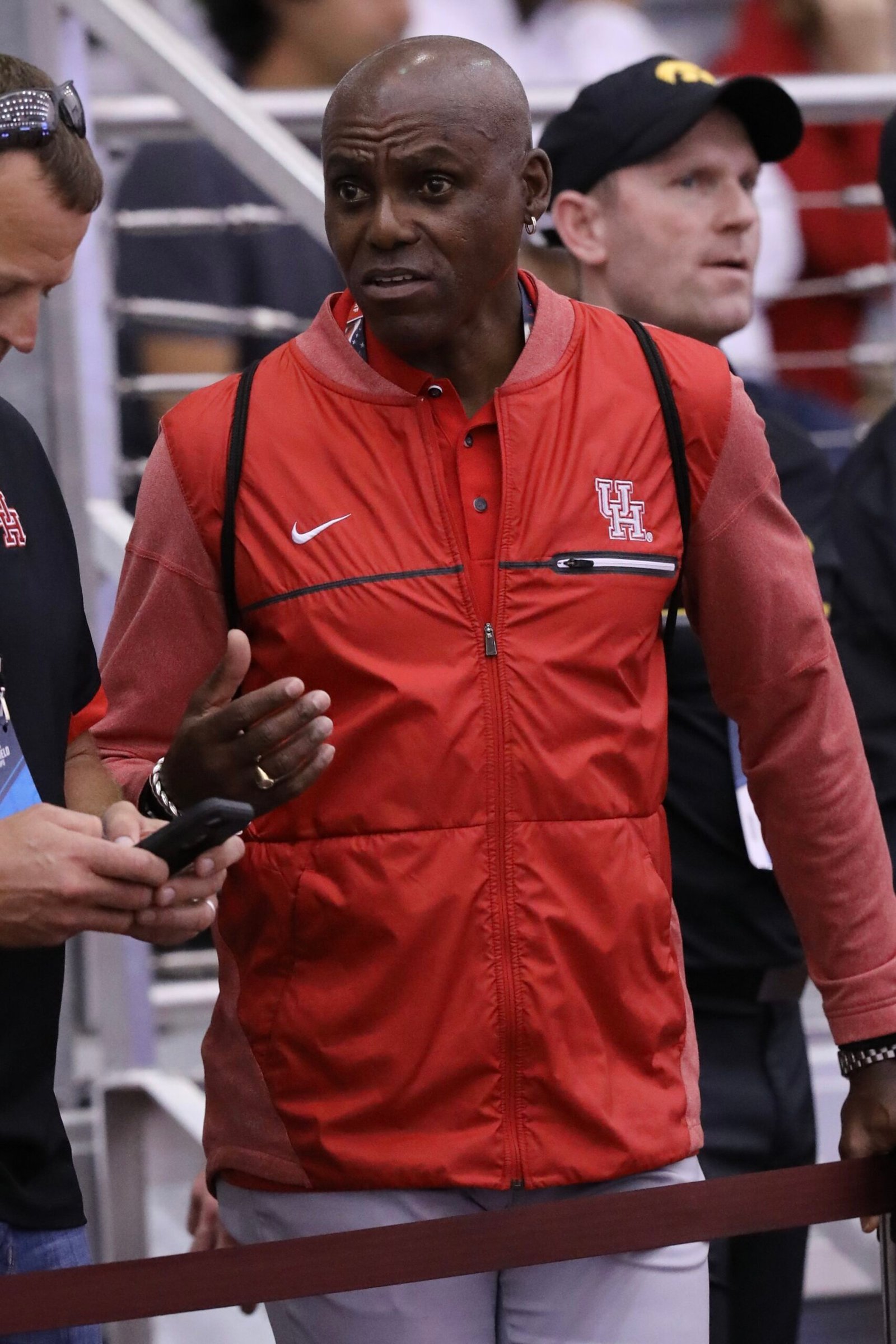
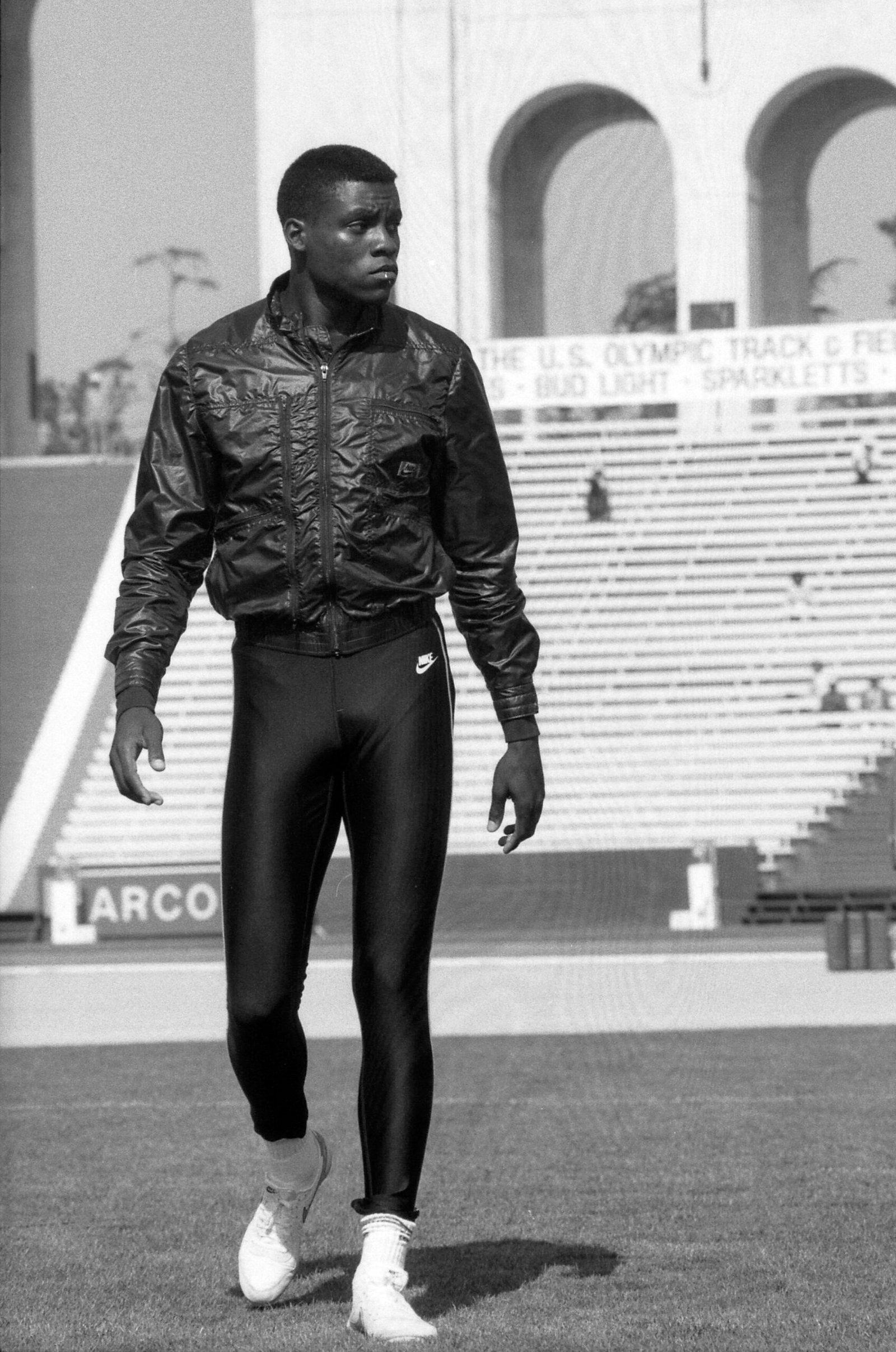
The later photograph shows Lewis at the 2018 NCAA indoor championships. It is a reminder that a life in athletics extends beyond the years represented in an Olympic results table. For readers, the enduring value of his career is the set of questions it raises about skill, speed, priorities and returning to competition.
If you combine lifting and running, decide which result you are trying to improve before copying an impressive-looking session. More work is not a description of what that work is supposed to achieve. A faster sprint, a better jump and a stronger lift each need their own way of being assessed.
Keep a simple record with the task, its conditions and the result. That might mean distinguishing a timed run from an untimed outing, or a repeatable jumping test from a casual attempt. The purpose is to make comparisons meaningful rather than manufacture precision. A personal best needs a recognisable test attached to it.
Lewis’s history supplies no single exercise list that explains four Olympic titles. It does show why a career deserves several measures: the best performance, the result in a particular competition and the ability to return years later. Keeping those measures separate makes the achievements easier to appreciate—and gives ordinary training goals a clearer frame.

Cardio Shirts & Workout Gear
Cardio and conditioning gym gear for runners, endurance athletes and anyone who earns the sweat.

Shirt – Don'T Quit Do It – Meme & Gains T-Shirt
Show some lifting attitude with a playful “Don't Quit Do It” tee.

Running Dost Thou Even Trot Medieval Treadmill Crewneck T-Shirt
Show some gym-day personality with “Running”.

Cardio Is Hardio – Workout Meme Pullover Jumper T-Shirt
For laid-back days and cardio humor: “Cardio Is Hardio”.

Straight Outta Shape Hoodie
Stay casual and show some cardio attitude with “Straight Outta Shape”.

Exercise Your Demons | Cardio Workout From Hell Muscle Tank Top
Add some cardio attitude to training with “Exercise Your Demons”.

Negative Cardio Review Cardio Sucks 1 Star Vest Tank Top
Bring “Negative Cardio Review” humor to your next lifting session.

Cardio Is Calling You , Meme Top Answer Or Decline? T-Shirt
Make gym days more fun with “Cardio Is Calling You” style.

Anti Running Club Tee
Heavy lifts, good laughs, and a little “Anti Running Running Club” energy.

Cardio Heartbeat for Runners, Cyclists, Rowers and Fitn Sticker
Give your everyday gear a playful “Cardio Heartbeat” twist.

Shirt: Does Running Out Of F*Cks Count As Cardio? & T-Shirt
Heavy lifts, good laughs, and a little “: Does Running Out Of F*cks Count As” energy.