Advertising disclosure: This page includes affiliate links that may earn us a commission at no additional cost to you.
A dip station can be surprisingly difficult to justify in a home gym where every piece of floor space already has a job. Ironmaster’s Bar Dip Handle takes a different approach: instead of buying another freestanding frame, you use a compatible Super Bench as the base. The updated black attachment gives you a set of angled handles, adjustable mounting height and a second orientation for supported knee and leg raises.
The important question is not whether dips are a good exercise in general. It is whether this particular bench-mounted system suits your build, your working load and the rest of your training setup. Here is how to make that decision before ordering, and how to use it once you have it.
Check which bench and handle version you own
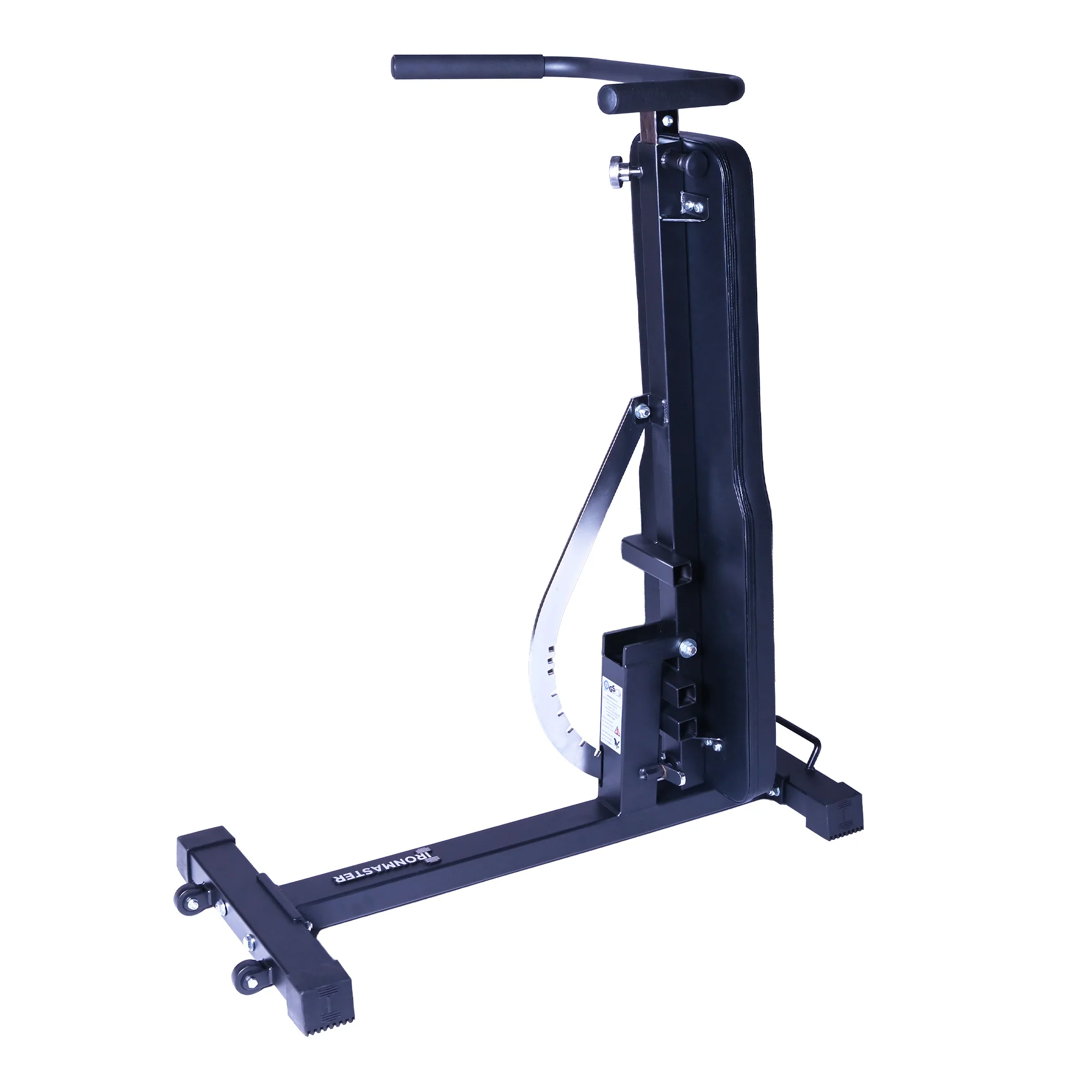
Start with the actual bench you own rather than the appearance of a product photograph. The handle is an attachment, not a complete dip station. The manufacturer lists the Super Bench family as the host system, but the relevant model and attachment interface should still be confirmed before purchase, especially with a second-hand bench or a piece of equipment that has been modified.
The current US listing shows the black handle assembly with a mounting post, pull-pin adjustment and four M10 assembly screws. The updated European listing identifies its version as the IM1005-2. There is also an older chrome attachment with a different handle layout. Photographs of the two generations can appear together in retailer listings, so compare the actual item, not simply the words “Ironmaster dip attachment.” The older model’s stated fixed width is around 58.5 cm; the updated version offers a range of hand positions.
Before the first session, assemble the unit as instructed, confirm the mounting post is fully seated and the locking mechanism engaged, and set the bench on a firm, level surface. Check for movement at the connection with your feet still on the floor. Do not substitute a generic pin or use a partly engaged attachment to obtain an extra height position. If your bench has play or an unexpected fit problem, resolve that before hanging your bodyweight from it.
Think about storage, too. A removable handle is useful only if you can get it in and out without reorganizing your gym every time. Give it a dedicated storage spot, check the approach from both sides and leave enough room to rotate or reposition the bench if your other exercises require it. A compact attachment may take little space when stored but still needs usable clearance when loaded.
Choose your grip width by feel, not the largest number
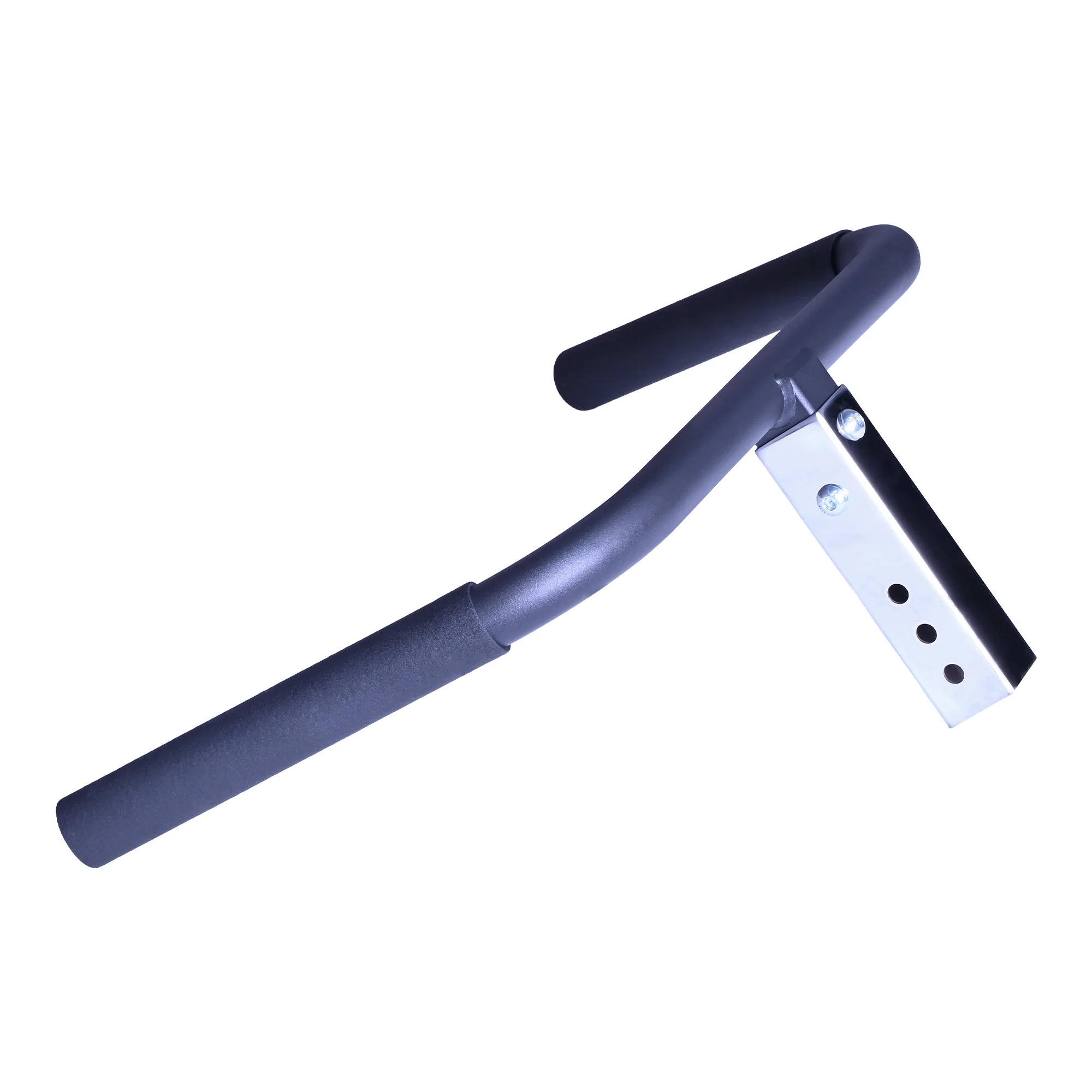
The current specification lists a grip spacing of roughly 20 to 25 inches measured center to center, depending on where you hold the angled bars. That is about 51 to 64 cm. The grips themselves are listed at 1.5 inches in diameter and 9.5 inches long. These are useful measurements because an angled handle offers a choice of positions rather than a single fixed distance between hands.
Do not interpret the widest option as the best chest position or the narrowest as a guaranteed triceps position. A dip involves the shoulder and elbow joints together, and your preferred hand spacing depends on your shoulder structure, forearm length, torso position and training history. A little more forward inclination may change how the movement feels, but it is not a reason to force an extreme angle.
Find a comfortable position by starting with a supported top hold and then trying a few shallow, controlled repetitions. Your wrists should feel secure on the actual gripping surface, your elbows should follow a repeatable path, and you should be able to stop and return without twisting. If your grip feels awkward at one end of the handle, try a different position before changing your technique elsewhere.
For larger hands, the relatively thick grip may feel reassuring. Smaller hands may find the same diameter less comfortable, especially during fatigue. This is a fit question, not a universal performance benefit. A person moving from narrow parallel bars may also need a few sessions to adapt to the new angle and spacing. Make those sessions about consistent repetitions rather than testing a maximum.
Measure your existing dip bars if you already like their spacing. Compare their center-to-center width and the usable part of the grip with the dimensions of the Ironmaster attachment. That simple comparison is more useful than trying to predict fit from your height alone.
Height, entry and the 350-pound rating
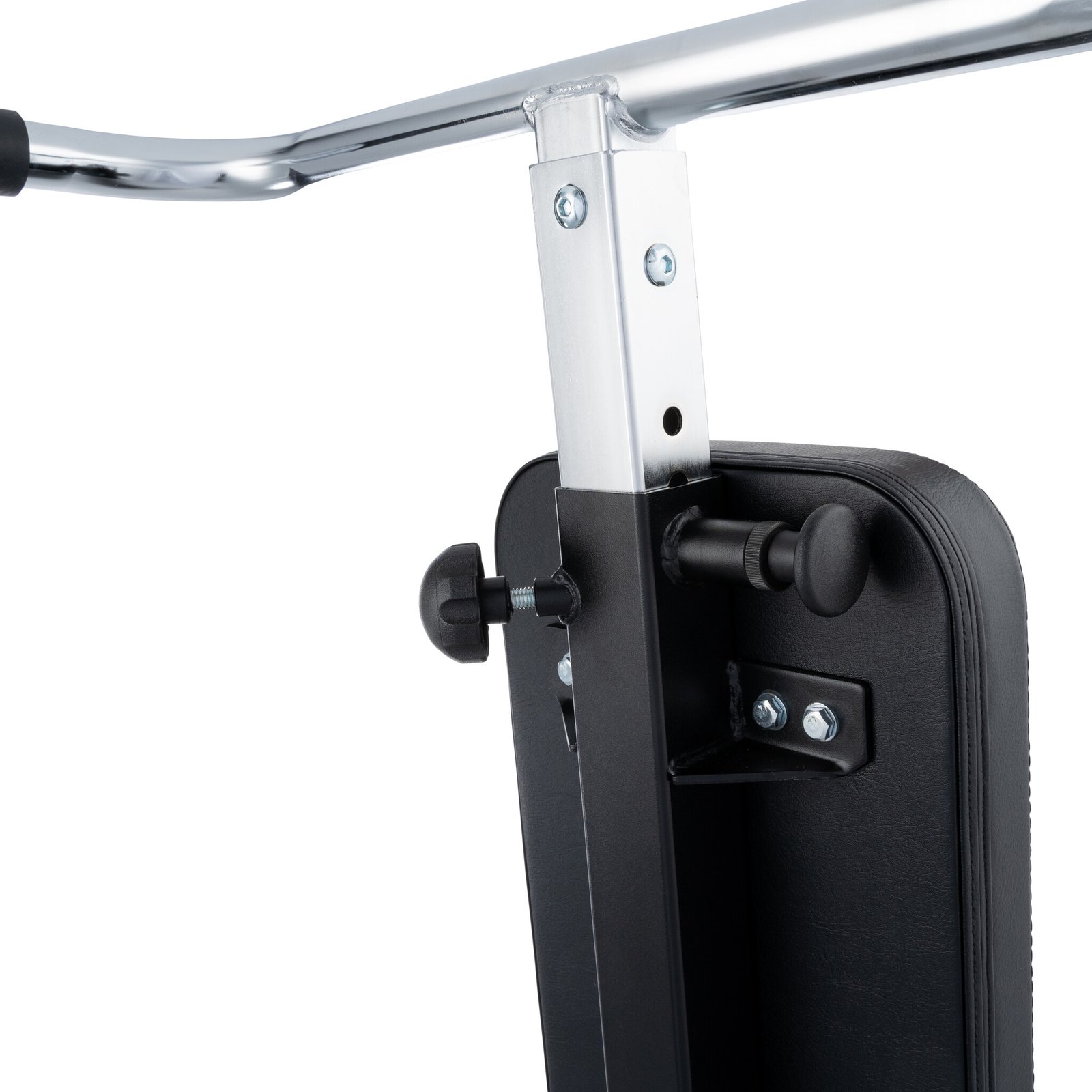
Ironmaster lists three height positions spanning approximately 50 to 52.5 inches, or 127 to 133 cm. The listed load rating is 350 lb, approximately 159 kg. Both figures matter in a home gym, but neither tells you everything about the exercise.
Height determines how comfortably you can get into and out of position. A tall lifter may need bent knees to keep the feet clear at the bottom. A shorter lifter might need a secure step to reach the top position without jumping. Check floor clearance and entry space with the bench in its intended position. Avoid balancing on an improvised stack of plates or furniture to reach the handles.
Treat the 350-pound figure as the manufacturer’s stated attachment rating, not an invitation to add 350 pounds to your bodyweight. For a 200-pound lifter, a 50-pound weighted vest means a nominal combined load of 250 pounds before considering dynamic effects. It does not follow that another 100 pounds is automatically safe. Confirm how the manufacturer defines the rating, respect any lower limit applying to the bench or mounting system, and avoid swinging or dropping into the bottom of the movement.
Loading also changes clearance. A belt with hanging plates can bring the weight near the bench or mounting hardware. A vest may be a more compact alternative when it is approved for the setup and within the combined rating. Test the movement unloaded and inspect the path of the load before attempting weighted repetitions. The older chrome mounting detail shown here illustrates why you should identify the locking arrangement for your own version rather than assuming every generation is identical.
If heavy weighted dips are a priority and your intended loads approach the system rating, a purpose-built station or a compatible rack-mounted dip attachment may make more sense. Compare stability, load limits, spacing and entry access rather than assuming the heavier-looking frame is automatically better.

Equipment Worth Exploring
Explore equipment, accessories and gear from our carefully selected range.

Power Tower
Freestanding pull-up and dip station with adjustable handles for bodyweight training.




FID Bench MAX
Adjustable bench offering flat, incline, and decline positions + adjustable headrest.


Multi Bench MBX-650 2.0
Adjustable multi-bench with roller adjustment, 15 backrest positions and accessory mounts.

Multi-Length Tricep Strap
Adjustable-length cable strap for triceps, biceps and upper-body cable exercises.
Program dips without chasing depth
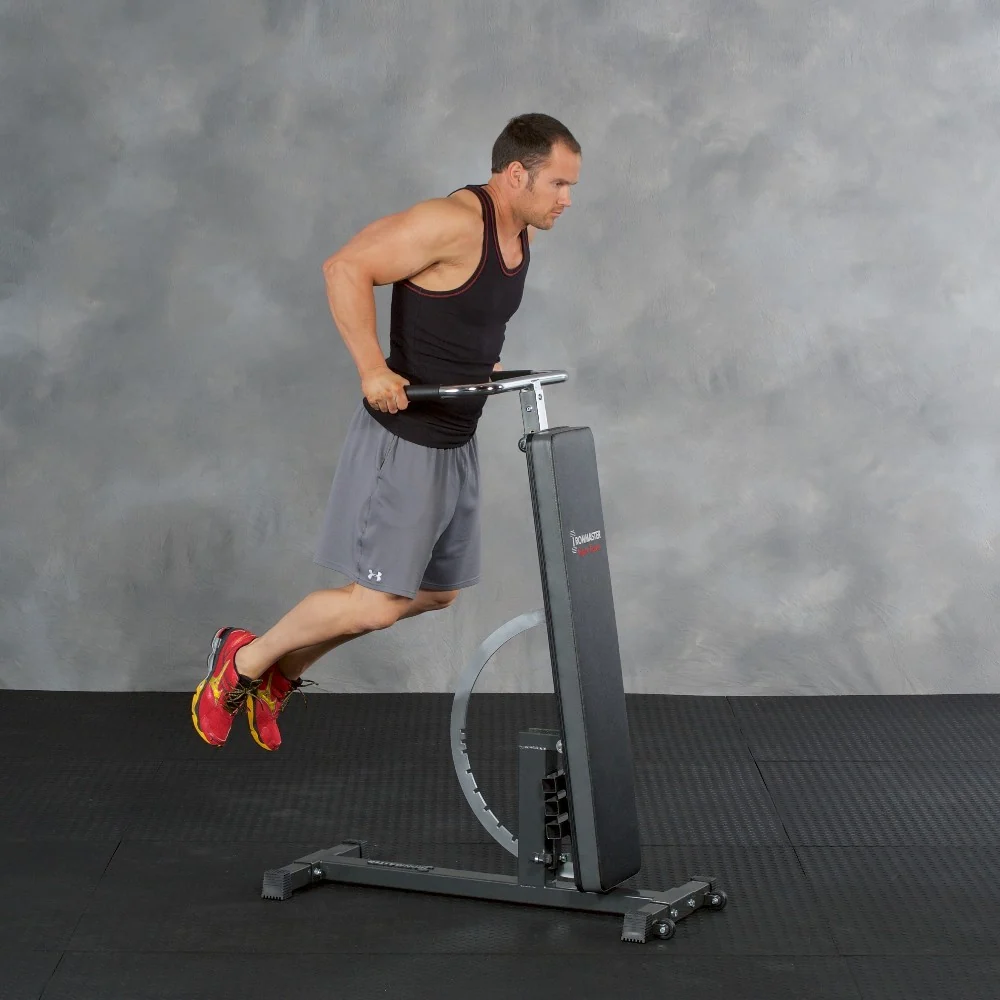
A parallel-bar dip can train the chest, triceps and anterior shoulder musculature, but the ability to descend deeply is not the same as the ability to control that depth. A comparison of bench, bar and ring dips involving 13 men found differences in muscle activity and joint motion, including greater shoulder extension in the bench dip. These were short-term exercise measurements, not proof that one version builds more muscle over months. For the Ironmaster handle, the practical lesson is to choose a repeatable range of motion that matches your capacity rather than copying the deepest-looking repetition online.
Start from a controlled support position. Lower without dropping, keep your grip secure and stop before a position you cannot reverse smoothly. Use a depth that is comfortable and consistent across repetitions. A mild muscular effort is expected; sharp joint pain, an unstable feeling or symptoms that persist after training are reasons to stop and reassess rather than push through.
For a lifter new to dips, one possible starting plan is two sessions per week with two or three sets of four to six controlled repetitions, provided those repetitions are comfortably within current ability. Leave a few repetitions in reserve and allow recovery between sessions. If full bodyweight dips are too demanding, build pressing strength with a more manageable exercise, such as an appropriately elevated push-up or controlled press, before returning to the bars. Use assisted dips only if the assistance method is secure and compatible with your equipment.
Once all your sets are repeatable, progress by adding a repetition or improving the control of the movement. A small increase in external load is an option only after bodyweight sets are established and the equipment’s instructions and rating permit it. Do not simultaneously add load, increase depth and reduce rest; it becomes difficult to tell which variable caused a change in performance.
Place dips where they support your existing program. If your main goal is pressing strength, doing them earlier can help preserve technique. If they are an accessory after bench pressing, a smaller dose may be enough. Balance the routine with pulling work and other upper-body training. The goal is productive training, not accumulating the most difficult possible calisthenics repetitions.

Calisthenics Shirts & Street Workout Gear
Calisthenics and bodyweight-training gear for pull-ups, dips, handstands and street-workout athletes.


T-Rex Hates Push Ups Muscle Shirt Athletic Vest for Cal Tank Top
Add some lifting attitude to training with “T-Rex Hates Push Ups”.

Calisthenics Evolution Sticker
Stick a little “Calisthenics Evolution” humor on your favorite gear.

Human Flag Crewneck Calisthenics Pullover Sweater Worko T-Shirt
Bring “Human Flag” humor to your everyday gym style.

Turn Off Gravity Funny Calisthenics Gym Crewneck Pullov T-Shirt
Show some gym-day personality with “Turn Off Gravity Funny Calisthenics”.

Funny Calisthenics Gym Muscle Shirt Athletic Vest for B Tank Top
Your gym-day look, with a playful “Calisthenics” twist.

Calisthenics Heartbeat Decal Human Flag Fitness Gymbros Sticker
Give your everyday gear a playful “Calisthenics Heartbeat” twist.

Pull Up or Shut Up Hooded Pullover for Calisthenics Pul Hoodie
Keep it laid-back with a little “Pull Up or Shut Up” attitude.

Always Pull Yourself Up Calisthenics Decal for Water Bo Sticker
A fun “Always Pull Yourself Up” touch for bottles, laptops, and lockers.

Calisthenics Workout Sweatshirt
Add a playful “Calisthenics” touch to your casual rotation.
Reverse it for core work and decide whether it fits your training
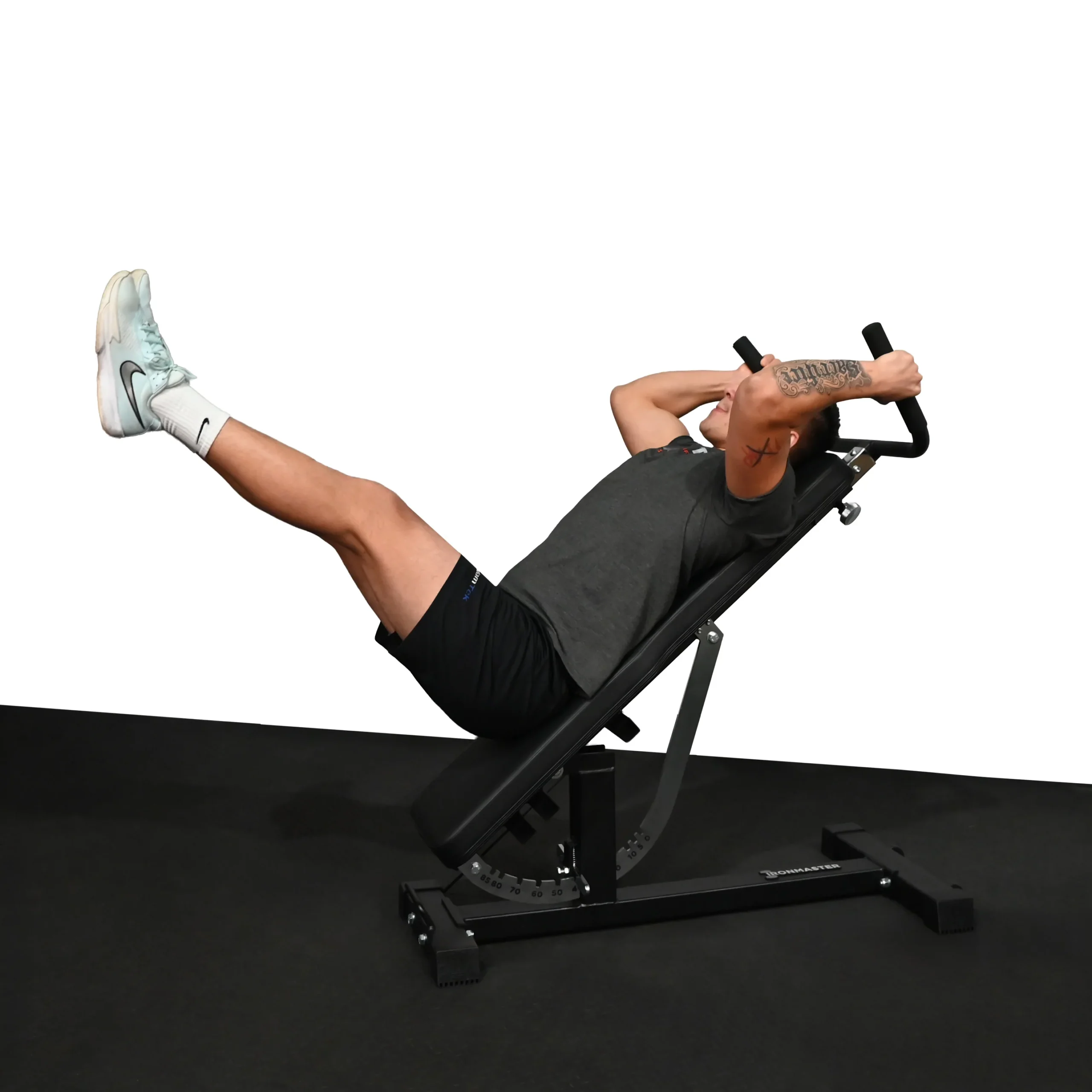
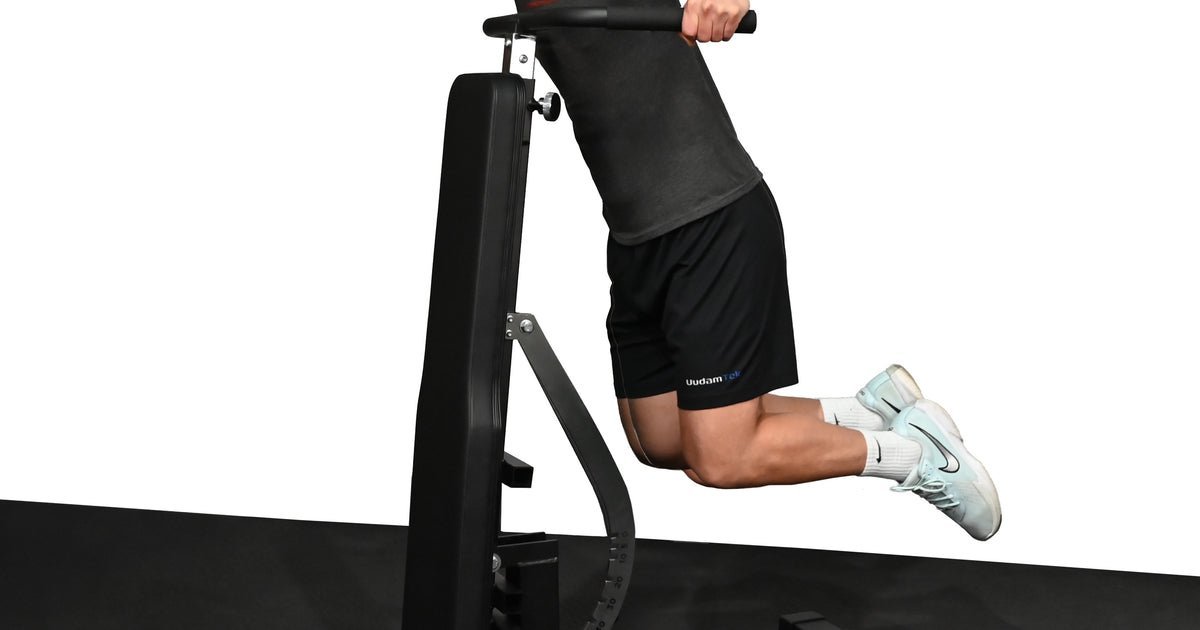
The updated attachment can also be mounted in the reverse orientation for supported knee or leg raises. That gives the bench a second role without a separate captain’s chair. Confirm the correct installation orientation and support position in the instructions before using this configuration. Start with bent-knee raises, keep the movement deliberate and avoid using momentum to swing the legs upward.
For core training, it is often more productive to control the pelvis and lower the legs smoothly than to chase the highest possible leg position. Straight-leg raises increase the challenge through a longer lever and may also make grip and upper-body support more demanding. Progress only when the shorter-lever variation is comfortable and stable. This is not a substitute for every core exercise, but it can be a convenient option for someone who already uses the bench.
Ultimately, the attraction of the Bar Dip Handle is its relationship with the rest of the Super Bench ecosystem. For someone who owns a compatible bench, likes dips and wants a removable attachment, its two uses and adjustable geometry are worth considering. For someone without the bench, the total cost and floor footprint of the full setup should be compared with dedicated bars or a power tower. And for someone who cannot perform controlled dips comfortably, the attachment will not resolve that limitation by itself.
Before ordering, verify the version, compatibility, grip width, height, load rating and access clearance. Then decide whether you will realistically use both dips and supported raises. Those checks turn an appealing equipment idea into a purchase based on how you actually train.