Advertising disclosure: This page includes affiliate links that may earn us a commission at no additional cost to you.
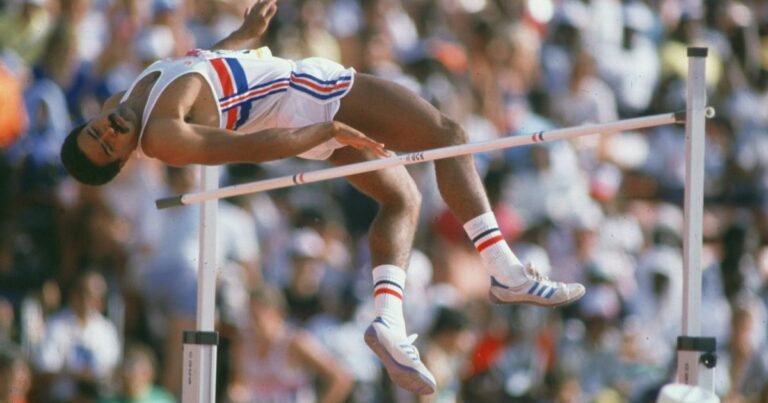
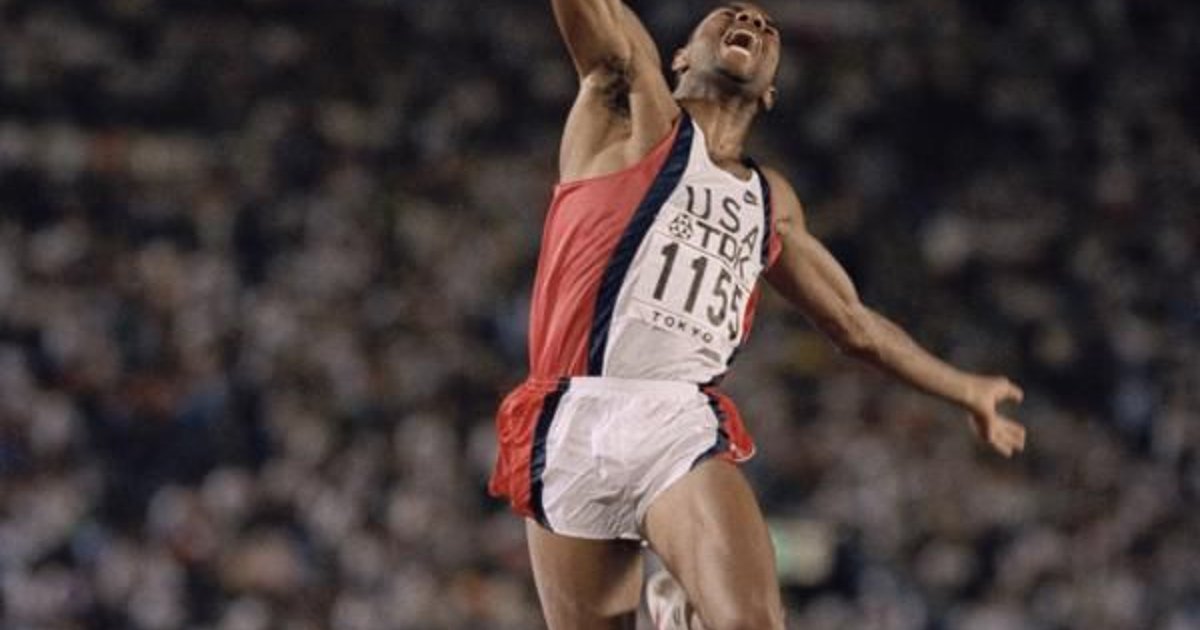
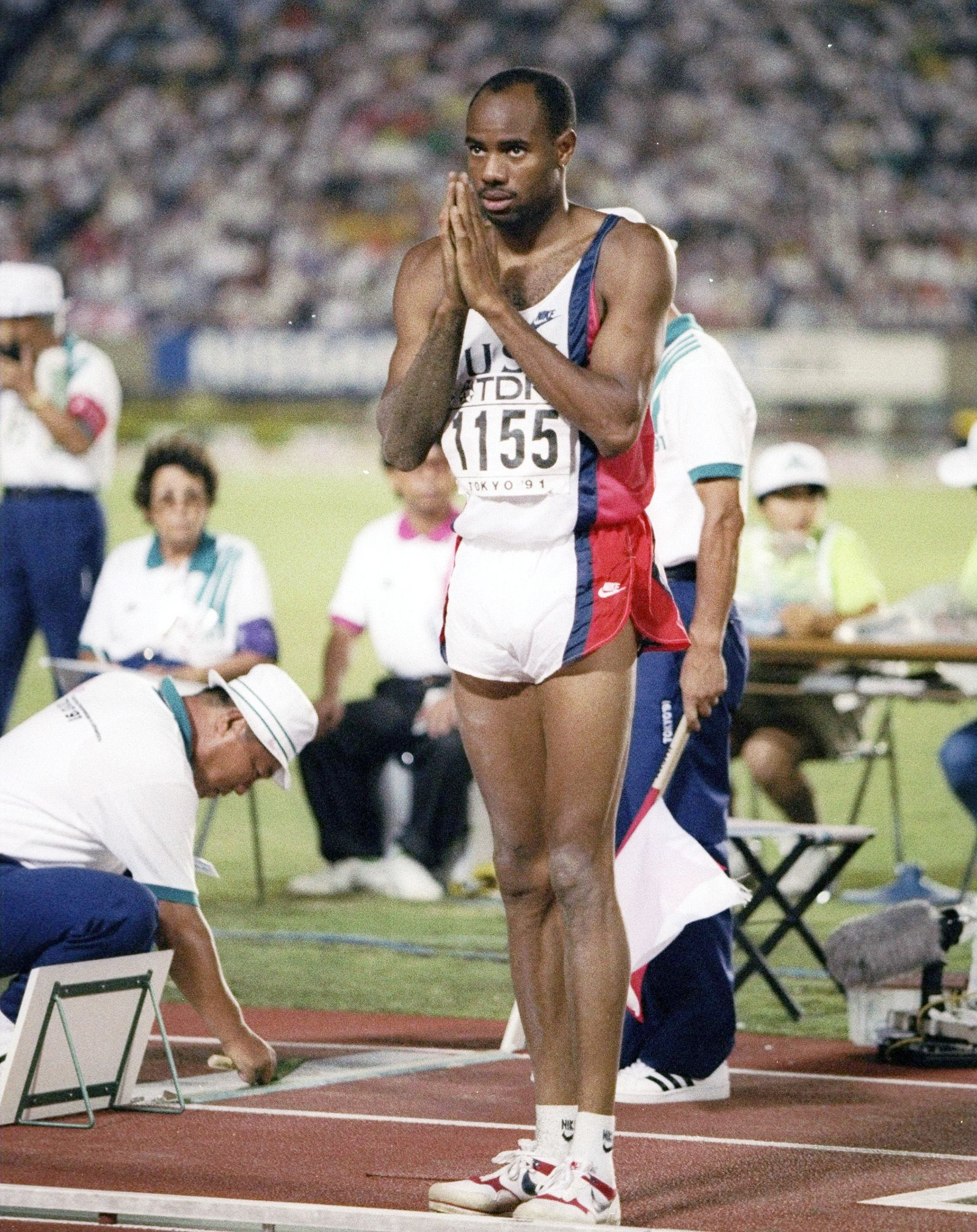
On 30 August 1991, Mike Powell jumped 8.95 metres in Tokyo and became the men’s long jump world record-holder. The distance was extraordinary, but the surrounding competition makes it more interesting: Carl Lewis had already jumped beyond the previous record distance, and Powell still had to produce a better mark under conditions that qualified for record recognition.
This is a look back at that final and what its numbers establish. It is not a newly discovered training routine or a suggestion that a recreational lifter can reproduce an elite running long jump by copying a few exercises. The useful lessons concern comparable measurements, attempts under pressure and keeping a sporting achievement in its proper context.
Put the five-centimetre improvement beside the full distance
Powell’s 8.95 metres surpassed Bob Beamon’s 8.90-metre mark from 1968 by five centimetres. That small-looking difference came at the end of an exceptionally long jump. Calling the improvement small without mentioning the starting standard misses why it mattered.
The arithmetic offers perspective. Five centimetres is 0.05 metres, or roughly 0.56% of 8.90 metres. This is a calculation from the two recorded marks, not a claim that Powell improved his strength, speed or training quality by that percentage. A result is the output of a performance; it does not identify the separate contribution of every physical quality involved.
MMP’s account of Beamon’s 8.90-metre leap and its unusual place in performance history explains the earlier benchmark. The two achievements belong in the same historical conversation, but they should not be treated as identical performances simply because their distances were close.
For an ordinary training comparison, the same habit is useful: state the actual starting result before discussing the improvement. Adding a small amount to an already demanding performance can be meaningful. Equally, a striking percentage can describe a modest absolute change. Keep both views available rather than choosing whichever number makes the story sound most dramatic.
The distance alone also tells you little about how to train for it. You cannot work backwards from 8.95 metres to a squat target or a weekly jumping prescription. That would require information the finishing mark does not contain.
Understand why Lewis’s 8.91 metres did not become the record
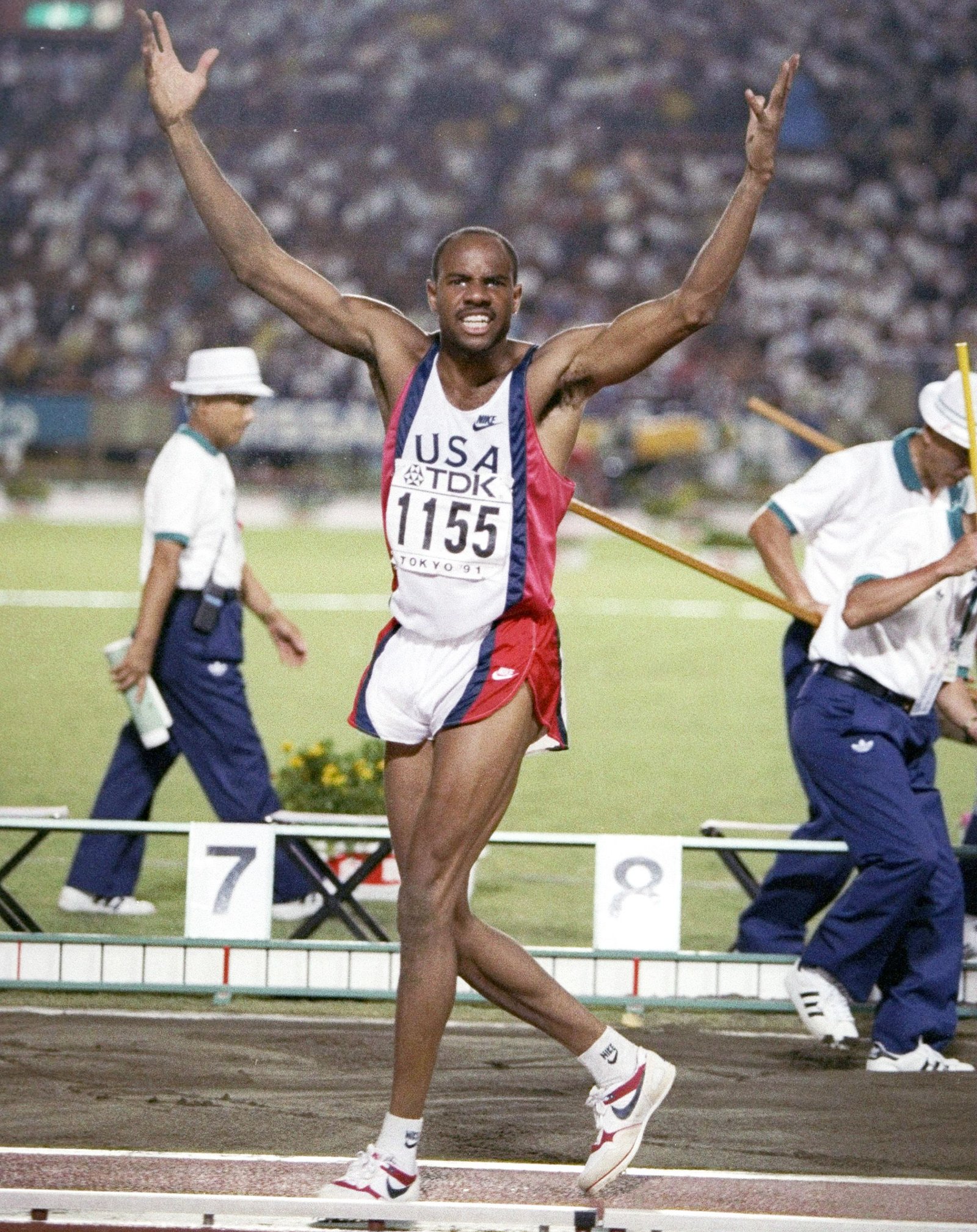
Lewis reached 8.91 metres in the fourth round, farther than Beamon’s old record distance. The accompanying wind reading was +2.9 metres per second, which made the performance wind-assisted for record purposes. Powell’s fifth-round 8.95 came with a +0.3 reading and was ratified as the world record.
That distinction does not mean Lewis’s jump disappeared from the competition. It means a competition result and a record-eligible performance answer related but different questions. The result still helps explain the pressure Powell faced, while the wind reading explains why the earlier distance did not replace Beamon’s mark.
It is tempting to simplify this into a claim that wind did the work for one athlete. The figures do not support assigning a precise number of centimetres to the assistance in that individual attempt. Nor can you subtract one reading from another and produce a reliable corrected distance. Preserve the recorded conditions without inventing a conversion formula.
This is a useful way to read fitness comparisons outside athletics too. Before comparing two personal bests, identify the conditions that define the task. A changed implement, range of motion or measurement method may make a number unsuitable for a direct comparison even when the effort was real.
You can appreciate a demanding performance while describing its limits. Being precise about the conditions gives the achievement a clearer meaning; it does not require pretending that only one kind of sporting result deserves attention.
Read the attempt sequence before inventing a mindset formula
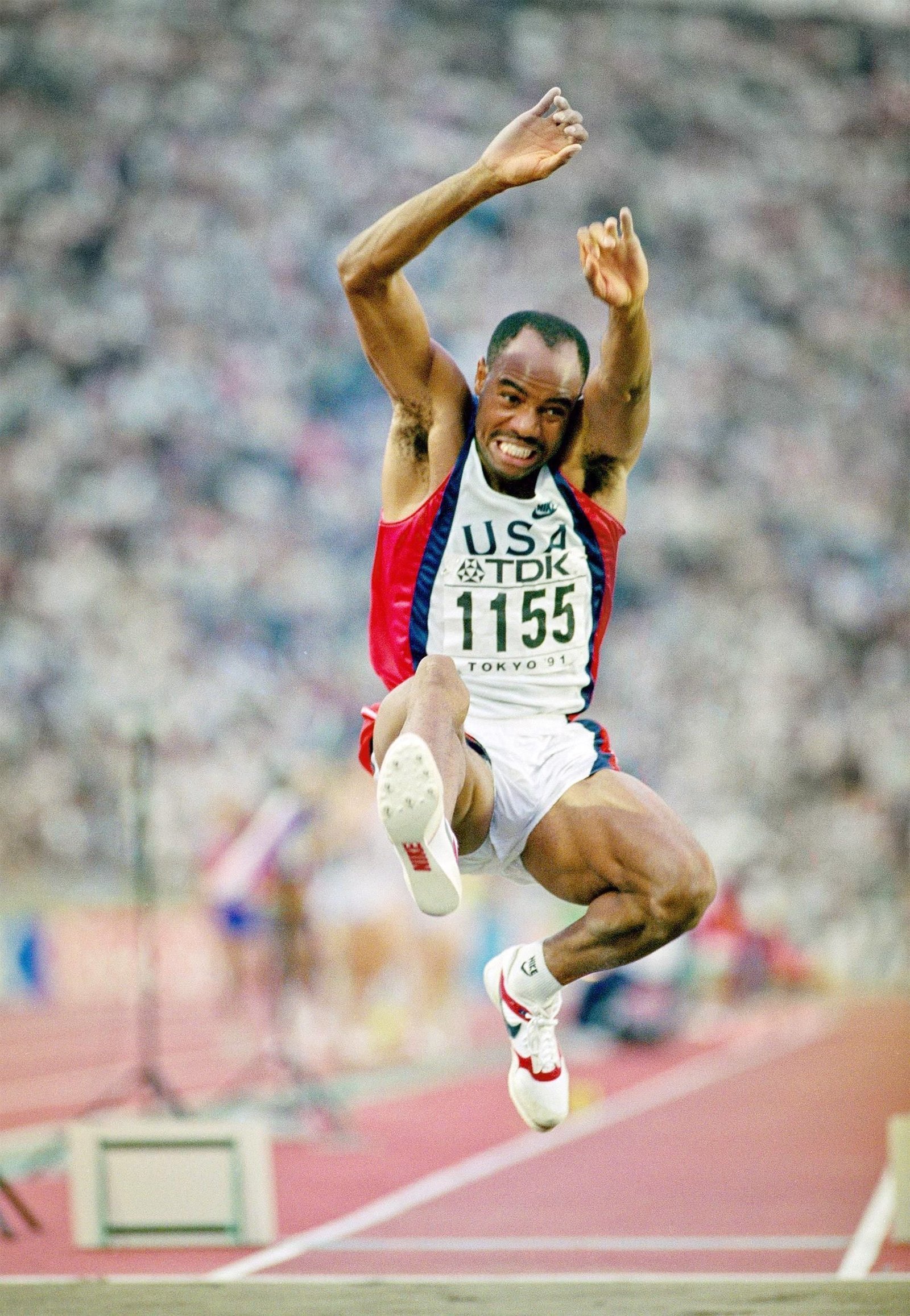
Powell opened with 7.85 metres, then reached 8.54 in round two and 8.29 in round three. His record came in round five. Those marks show that the final was not a smooth progression in which every attempt became longer than the previous one.
In his later recollection, Powell described pressing too hard early, settling back into his normal approach and receiving suggestions from coach Randy Huntington. That is a useful account of how he experienced the competition. It is not a controlled experiment proving that one mental cue caused the record.
A poor first attempt did not settle the result, but that observation should not become permission to keep forcing maximal efforts indefinitely. A championship final has a defined format and athletes prepared for it. A normal gym session has different demands, and fatigue does not stop counting because an inspirational story contains a late breakthrough.
The practical habit is to separate what happened from the explanation you attach to it. Record the attempt before deciding why it was better or worse. If you changed several things together, be cautious about crediting one cue. A coach’s useful intervention can remain useful without being promoted into a universal formula.
When watching a sporting highlight, look for the sequence surrounding it. What had already happened, what opportunities remained and what did the athlete actually need to achieve? That gives a memorable moment more substance than a generic claim that confidence alone produces records.
Keep the world title and the Olympic medals distinct
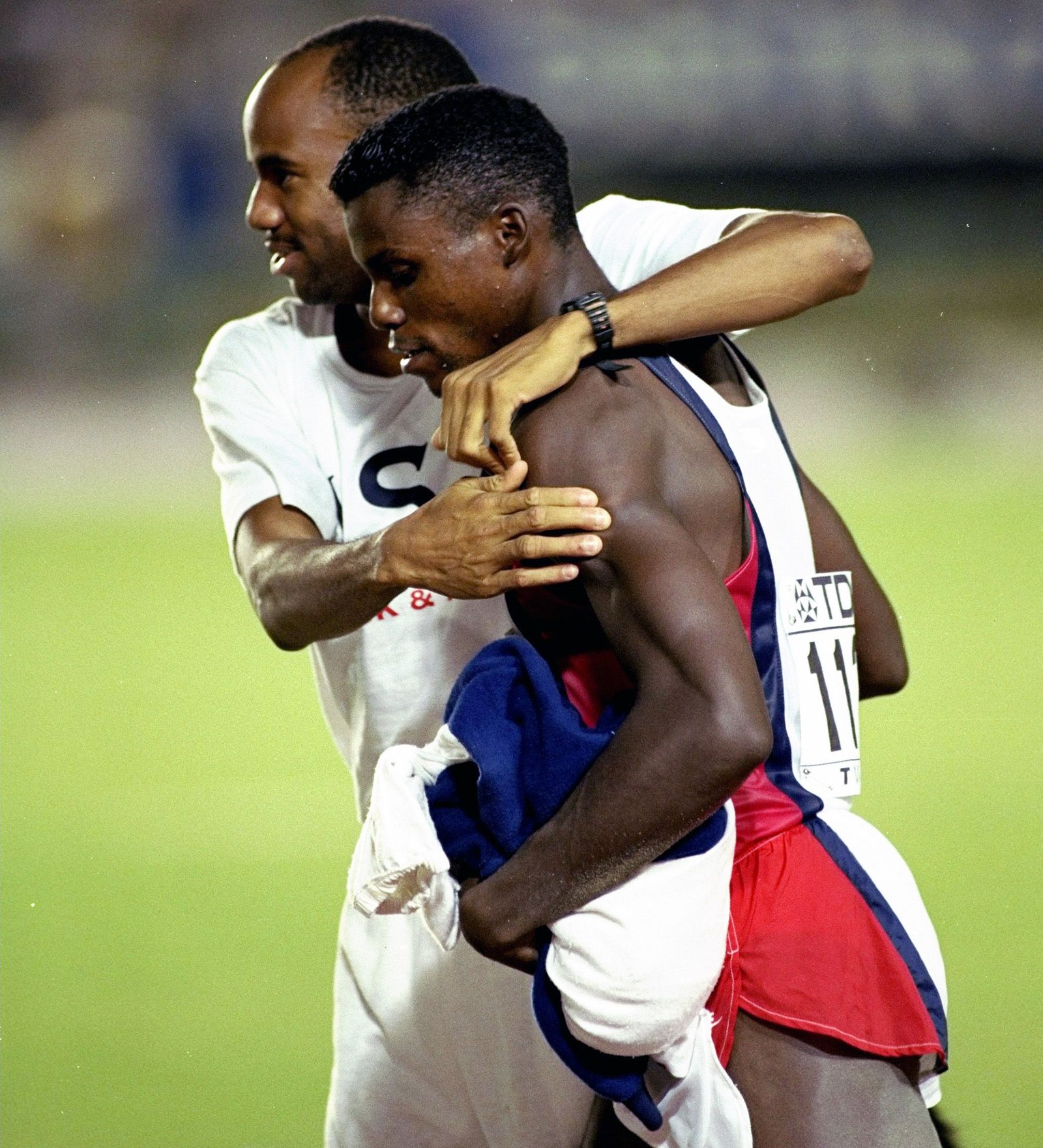
Tokyo 1991 was a World Championships final. Powell also won the world title in 1993, while his Olympic long jump medals were silvers in 1988 and 1992. Lewis won the Olympic title on both of those occasions. Mixing those results together turns a remarkable career into an inaccurate medal summary.
A world record and an Olympic gold are separate achievements. One describes a recognised performance mark; the other describes the outcome of a particular competition. An athlete can hold the former without winning the latter, and understanding that distinction makes Powell’s story more specific.
Lewis still had opportunities after Powell’s fifth-round jump. His last two distances were 8.87 and 8.84 metres, both substantial performances, but neither displaced Powell. The victory therefore required waiting for the competition to finish, rather than treating the record announcement as the end of every remaining attempt.
For readers interested in another famous set of athletics numbers, MMP’s guide to Bolt’s Berlin sprint times separates recorded results from the calculations built around them. In both cases, the event format belongs beside the headline number.
That way of reading a career also leaves room for strong performances that did not win. A runner-up result is not evidence that the athlete lacked preparation or commitment. The placing depends on what the rest of the field produced on that occasion.
Borrow the measurement habits, not an imaginary Powell workout
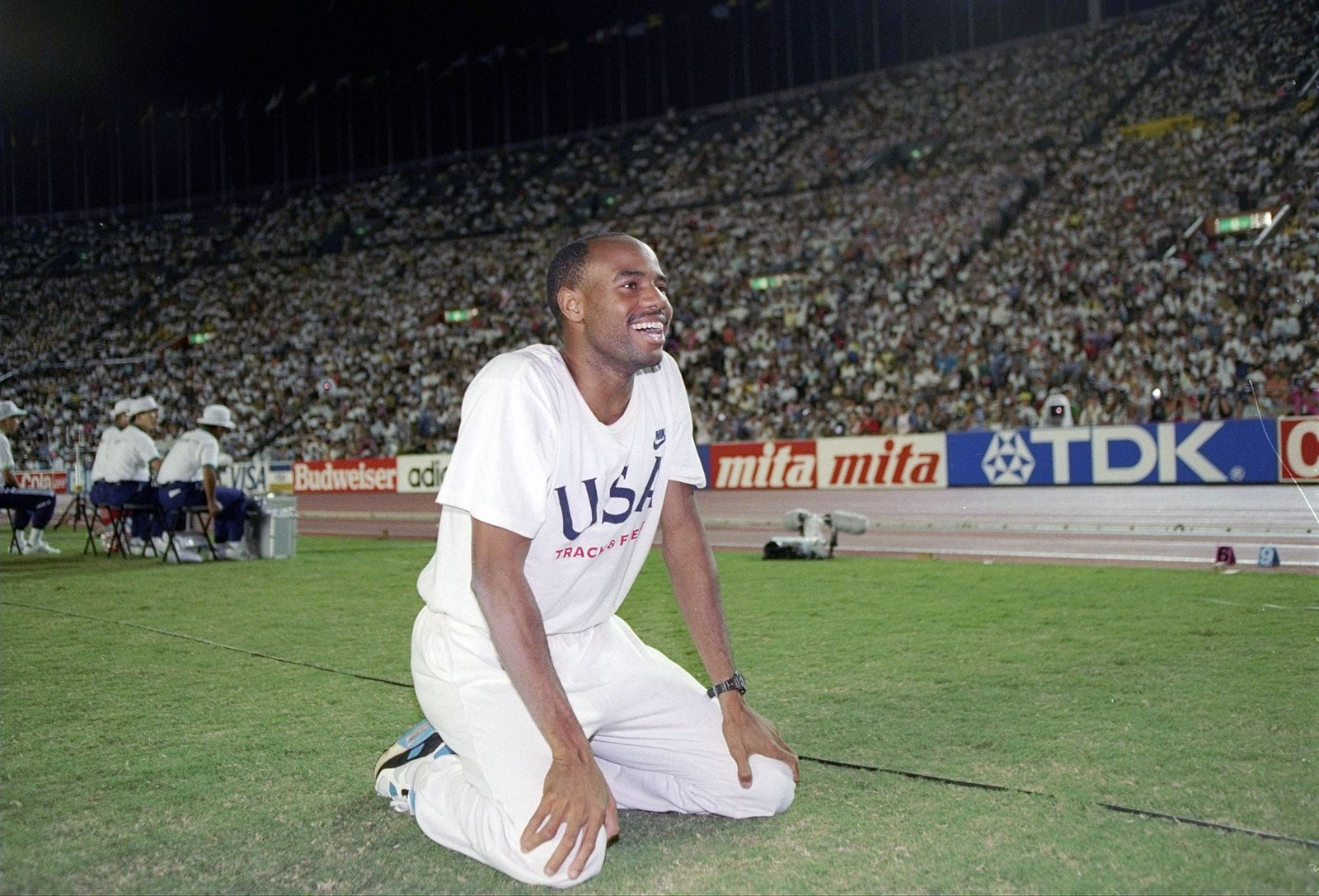
A running long jump, a standing broad jump and a gym strength test are different tasks. Their results cannot be swapped into one ranking of athletic ability. If you want to monitor your own progress, first decide which task you are actually measuring and keep its setup understandable.
For a strength exercise, record the implement, load, intended range and completed repetitions. For any jumping assessment you already perform with appropriate coaching and facilities, retain the same test definition rather than comparing unlike versions. Do not turn an archival world-record clip into instructions for attempting unfamiliar maximal jumps.
Barbells, dumbbells and other resistance tools can support a separately planned strength program. Their inclusion below is for comparing training equipment, not evidence of Powell’s personal routine or a promise that a purchase improves long jump distance. Match a tool to the exercise you intend to perform.

Equipment Worth Exploring
Explore equipment, accessories and gear from our carefully selected range.


Rubber Hex Dumbbells
Rubber-coated hex dumbbell pairs with a stable shape for home and commercial strength training.


Competition Plates
Competition-style bumper plates for Olympic lifts and loaded strength training.


Cast Iron Kettlebells
Textured cast-iron kettlebells for swings, squats, carries, and full-body training.

Keep interpretation as disciplined as measurement. One unusually good result is worth recording, but it does not establish that every change made that week worked. Several comparable observations give you a more useful picture than a story built around the single number you most wanted to see.
Powell’s Tokyo final remains compelling because both the scale and the details matter: 8.95 metres, a fifth-round response, a qualifying wind reading and a rival still capable of answering. Keeping those details together honours the performance and gives readers a better habit than searching for a secret workout that the result itself cannot reveal.