Caffeine is a tool, not a substitute for training
Some lifters treat a pre-workout scoop as the unofficial start of every session. Others drink coffee on the drive to the gym and hope the extra buzz translates into more plates on the bar. Both habits can work, but the useful question is narrower: does caffeine improve the work you actually perform, and is that improvement worth the trade-offs? A stimulant cannot replace a good program, sufficient food, or the sleep that allows you to adapt to training.
Caffeine primarily acts on the central nervous system by blocking adenosine receptors. Adenosine is involved in sleep pressure and perceived fatigue, so interfering with its signaling can make effort feel more manageable. That does not create energy from nowhere. It can change how alert you feel and how willing you are to push through demanding repetitions, intervals, or long sessions. In some people it also improves muscular endurance, maximal strength, power, or sprint performance.
The average benefit is real but usually modest. A synthesis of exercise studies found improvements across several performance categories, with stronger and more consistent evidence for endurance than for some explosive tasks. Individual responses vary. If your bench press moves faster on caffeine but your technique deteriorates because you are shaking, you have not discovered a useful training advantage. You have discovered an uncomfortable dose.
Think of caffeine as a small performance lever. It may help you maintain bar speed, finish a hard set, or concentrate during a heavy single. It does not guarantee muscle growth. More quality training over months can contribute to progress, but there is no reliable shortcut from a bigger caffeine dose to bigger arms. Your training log, not the sensation of being wired, should decide whether it earns a place in your routine.
Find a useful dose without chasing the highest number
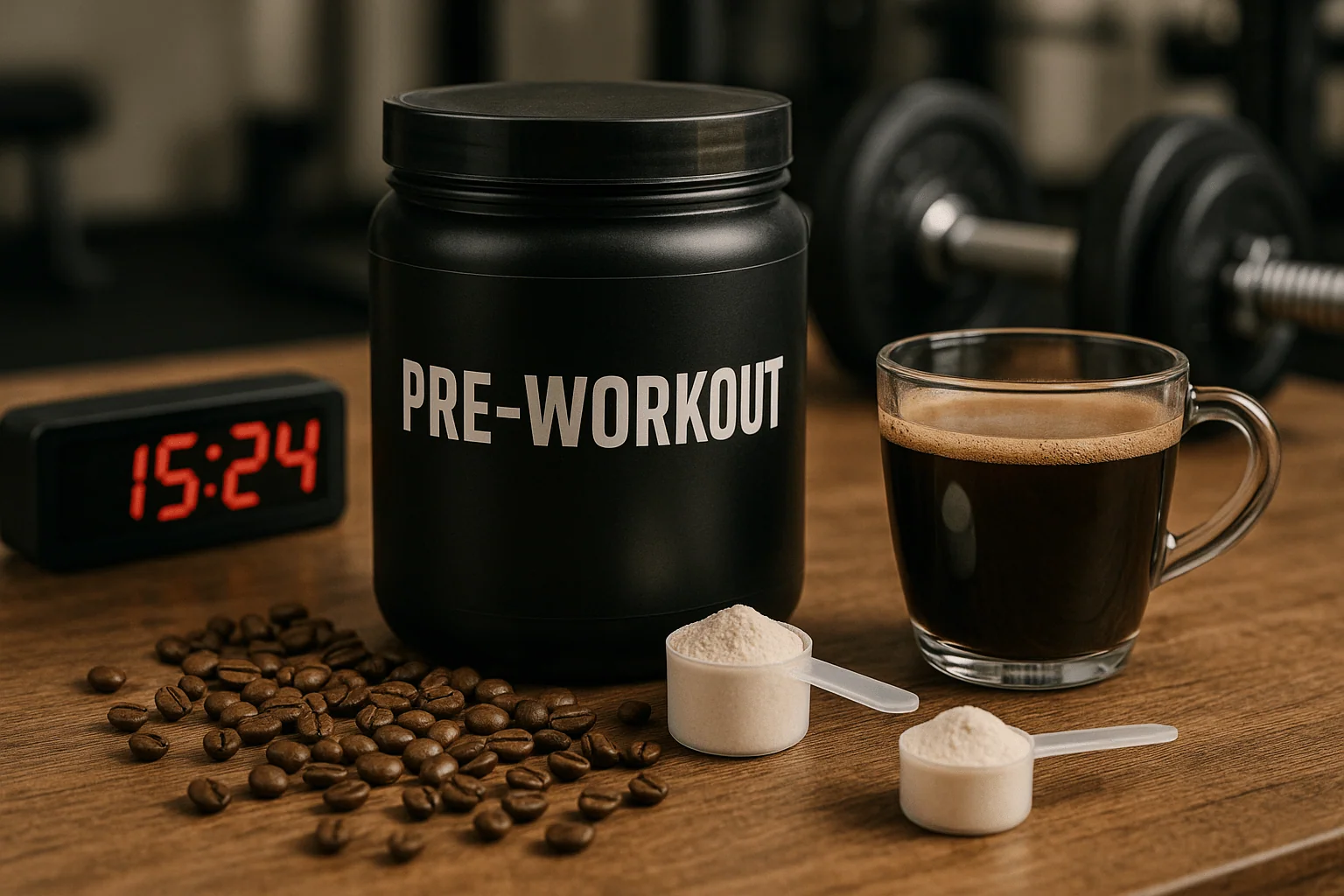
Most exercise research has used roughly three to six milligrams of caffeine per kilogram of body weight. That range is a description of common study protocols, not an instruction that every recreational lifter should consume the upper end. At 70 kilograms, three milligrams per kilogram is 210 milligrams. At 90 kilograms it is 270 milligrams; at 110 kilograms it is 330 milligrams. Six milligrams per kilogram would double those amounts, often pushing a large lifter beyond conservative daily-intake guidance.
Food-safety authorities distinguish performance-study dosing from general population safety. For most healthy adults, about 400 milligrams across an entire day is a commonly cited level not generally associated with negative effects. European guidance also treats a single dose around 200 milligrams as a conservative reference for healthy adults. These are not personalized prescriptions, and they do not mean a 400-milligram pre-workout is automatically appropriate because you are a big guy.
A practical first trial can be substantially lower: roughly 75 to 150 milligrams for someone who rarely uses caffeine, or a familiar cup of coffee whose effect they already understand. If you regularly consume caffeine, avoid stacking an energy drink, a strong coffee, and a pre-workout without adding the amounts. The label’s caffeine figure may be per scoop rather than per full serving. Coffee varies widely with bean, brewing method, and serving size.
The useful target is the smallest amount that produces a repeatable benefit without anxiety, nausea, palpitations, or sleep disruption. There is little reason to chase a theoretical six-milligram-per-kilogram performance ceiling if two milligrams per kilogram already makes your training feel better. More is not a badge of seriousness. If you need progressively more caffeine simply to feel normal, reassess your routine rather than add another scoop.

Equipment Worth Exploring
Explore equipment, accessories and gear from our carefully selected range.
VOLTRA
Compact digital cable trainer with smooth, adjustable resistance.

Go-Tone Pro
Portable digital cable trainer with up to 66 lb (30 kg) of adjustable resistance.


FID Bench MAX
Adjustable bench offering flat, incline, and decline positions + adjustable headrest.


Time it for your working sets, not the gym entrance
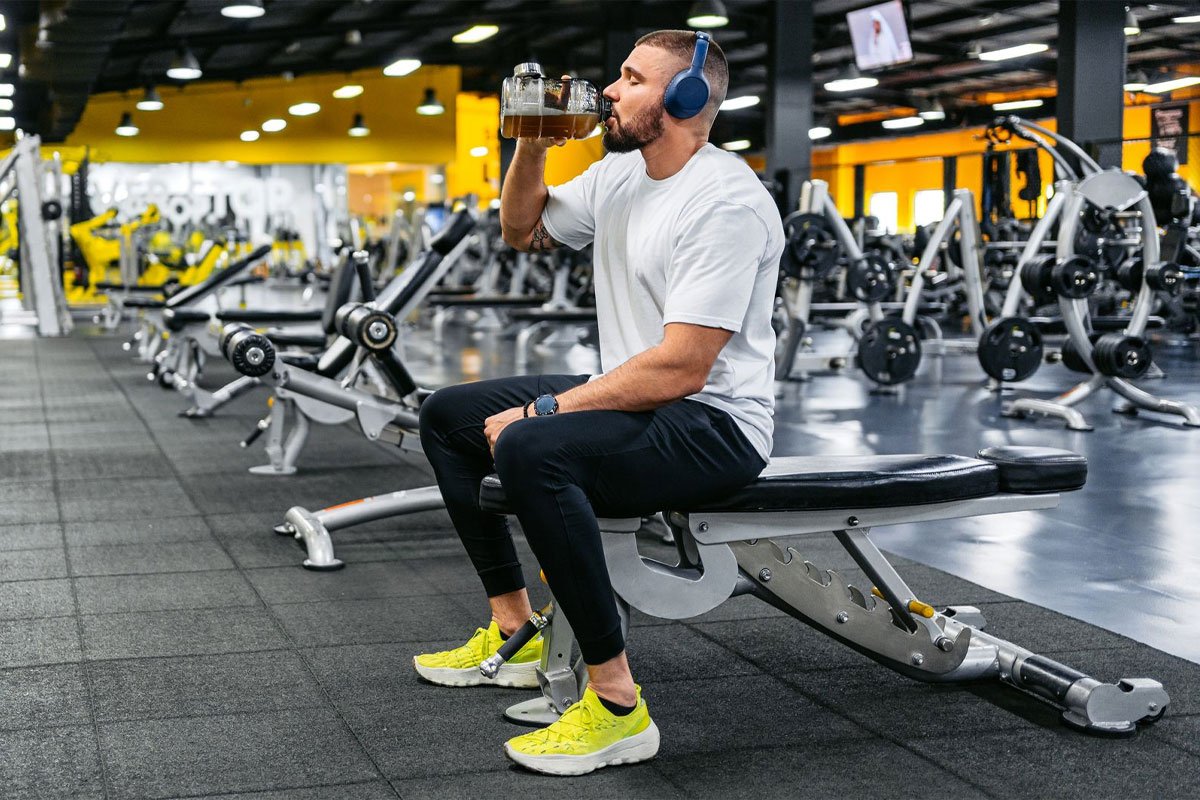
Timing matters because the sensation of taking caffeine and its peak effect are not the same event. For ordinary drinks or capsules, a useful starting window is about 45 to 60 minutes before the hardest part of your workout. Absorption varies by person and product. A lifter who drinks a large coffee while tying their shoes may feel the strongest effect only after the main squat work is finished.
Work backward from your session. If your heavy deadlift sets begin at 7:15 a.m., a coffee around 6:15 to 6:30 a.m. is a sensible experiment. If your session starts with twenty minutes of warm-up and mobility, you do not need the clock to begin at the front door. Your goal is to align the boost with the lifts or conditioning intervals that actually demand it. Keep timing consistent while you test whether caffeine helps.
For a two-hour session, there is rarely a need to keep adding caffeine every time your energy dips. Fatigue during the second half of a long workout may be caused by inadequate rest, poor pacing, or simply doing too much volume. Hydration and carbohydrate intake can matter, particularly if you are also training for HYROX or endurance events. A stimulant cannot make a badly designed session productive.
Do not confuse a faster heart rate with a better warm-up. You still need progressively heavier preparation sets, stable technique, and enough rest between demanding attempts. For powerlifting, a jittery setup can be worse than a slightly less aggressive mindset. For bodybuilding, the real question is whether you complete controlled hard sets with the target muscles doing the work.

Funny Gym Shirts & Workout Gear
Funny gym shirts, tanks, hoodies and workout gear for lifters who like training hard.

Caffeine Gym Cosmic Crewneck , Coffee Preworkout T-Shirt
Show some gym-day personality with “Caffeine”.

Caffeine Skull Coffee Gym Decal Hardcore Workout Energy Sticker
Give your everyday gear a playful “Caffeine Skull” twist.

Coffee and Weights Retro Cartoon Muscle Shirt for Caffe Tank Top
Bring “Coffee and Weights Retro Cartoon” humor to your next lifting session.

Pre-Workout Gym Cosmic Decal , Caffeine Workout Energy Sticker
Give your everyday gear a playful “Pre-Workout” twist.

Spit Preworkout In My Mouth Pre- Meme Hooded Gains Hoodie
Stay casual and show some lifting attitude with “Spit Preworkout In My Mouth”.

Crazy Preworkout Energy – Skull & Flames Meme Shirt T-Shirt
Rep “Crazy Preworkout Energy Graphic” humor in and out of the gym.

Funny Supplement Lover Gym | Hypebeast Pre-Workout Meme Tank Top
Bring “Supplement Lover” humor to your next lifting session.


Caffeine & Weights for Coffee Powered Lifting, Bodybuil Tank Top
Add some lifting attitude to training with “Caffeine & Weights”.

I Love Pre- Bro Weightlifting Meme Cartoon Sticker
Give your everyday gear a playful “I Love Pre-workout Gym Bro Fitness” twist.
Coffee versus pre-workout: what are you paying for?
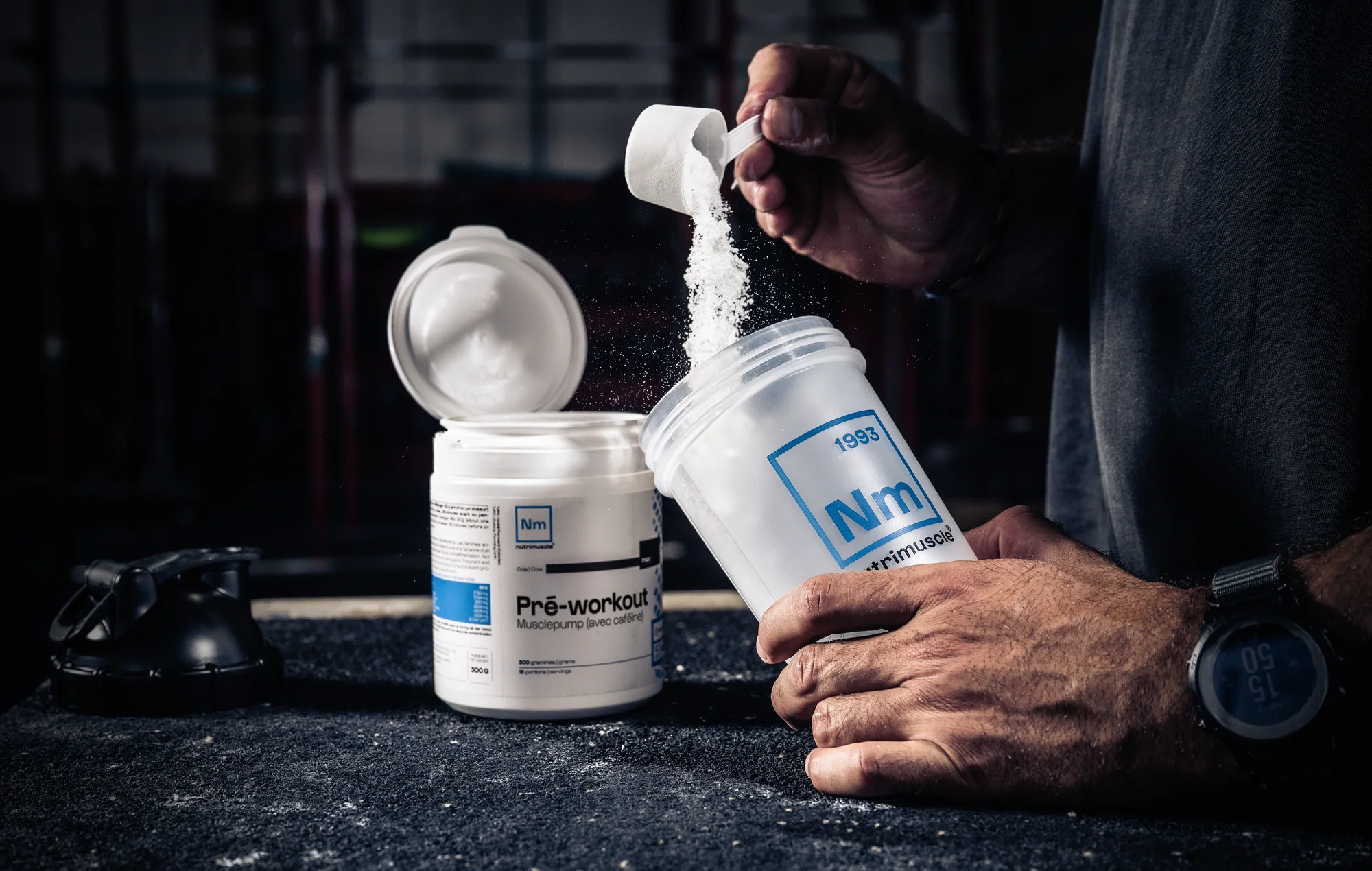
Coffee is an inexpensive, familiar way to consume caffeine. A measured caffeine tablet can offer a more consistent amount. A branded pre-workout may combine caffeine with flavorings, citrulline, beta-alanine, creatine, electrolytes, and other ingredients. None of these formats is automatically superior for every athlete. Compare the actual amounts, the cost per useful dose, and how the product feels in your stomach rather than relying on a dramatic label.
Some pre-workout ingredients have different timelines from caffeine. Creatine supports high-intensity performance when muscle stores are built up through regular use; it does not need to be swallowed minutes before a lift. Beta-alanine also relies on repeated supplementation over time for its main effects. A tingling sensation from beta-alanine is not proof that the caffeine dose is correct, and a product that makes your skin itch is not necessarily improving your squat.
An ordinary coffee can be enough for a moderate training session, but its caffeine content is not perfectly standardized. A strong café drink may contain several times as much as a small home-brewed cup. If precision matters, use a product with clearly stated milligrams per serving. Avoid concentrated loose caffeine powder and never estimate a dose by eye. Measure the entire day’s intake, including energy drinks and any stimulant-containing fat burners.
The best pre-workout is often the one you can use consistently and safely without turning every training day into a chemistry experiment. For evening lifters, a caffeine-free option, water, and a carbohydrate-containing snack may be the better combination. For early sessions, coffee plus breakfast may be sufficient. The right choice depends on the work you need to do, your tolerance, and what happens after you leave the gym.
The sleep trade-off can erase the appeal of the boost
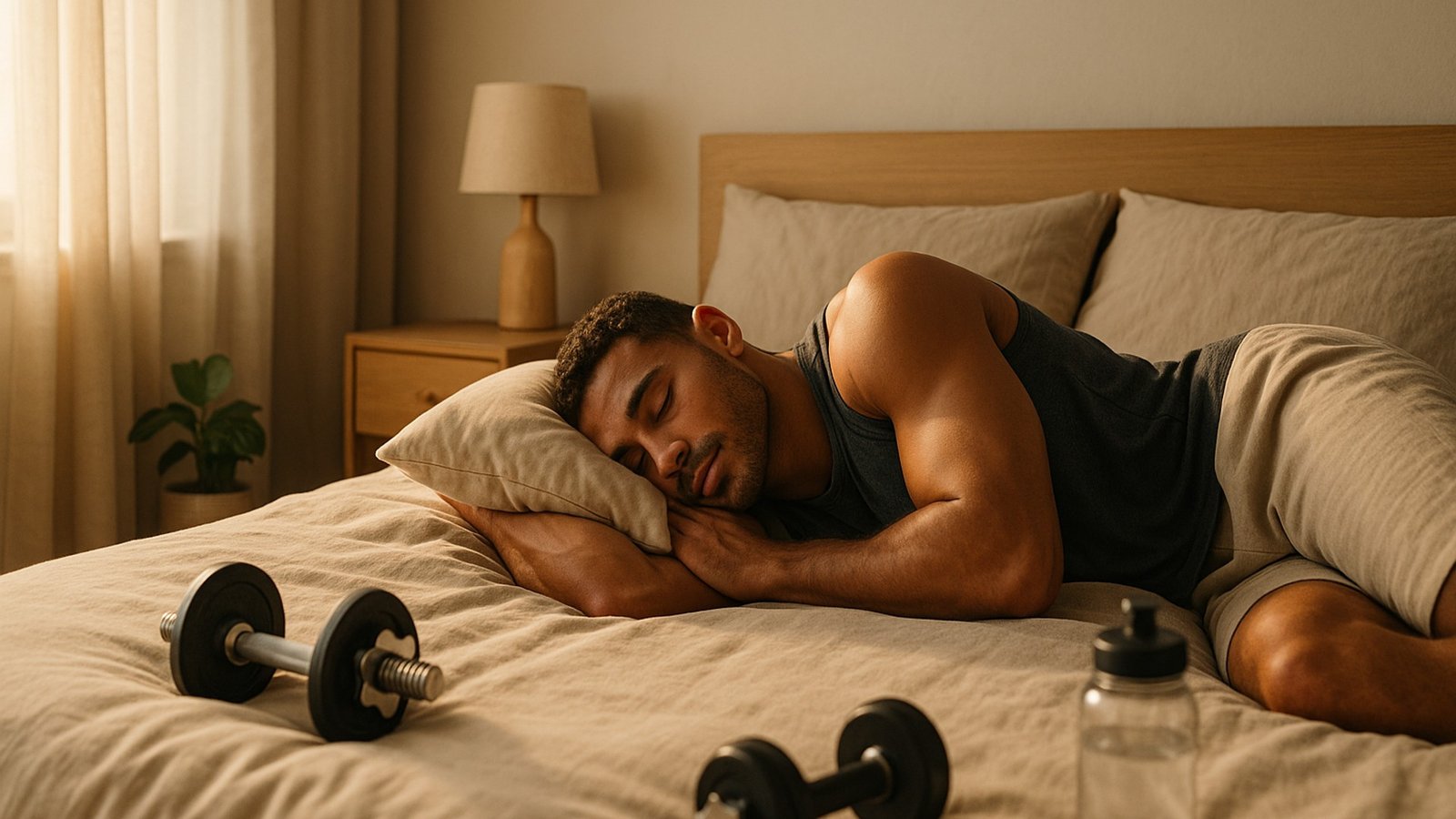
A late training session creates an obvious conflict. Caffeine may help you push through a tired evening workout, yet the same dose can make it harder to fall asleep or reduce how long you stay asleep. Caffeine commonly has a half-life of several hours, and individual metabolism varies substantially. If you consume 300 milligrams at 5 p.m., a meaningful amount may still be circulating when you go to bed.
A systematic review combining sleep experiments found that caffeine consumption reduced average total sleep time by about 45 minutes and sleep efficiency by roughly seven percentage points. Those are pooled results, not a prediction for every person or every cup. The review also found changes in sleep onset and nighttime waking. People can underestimate these effects, especially if they still manage to fall asleep and assume the night was normal.
Sleep is not a minor detail in a strength program. Poor sleep can affect motivation, appetite, recovery, and the quality of subsequent sessions. If caffeine improves one evening workout but repeatedly compromises the next morning, the net training benefit may be negative. The sensible cutoff depends on dose, sensitivity, and bedtime. Someone who sleeps at 10 p.m. may need to stop caffeine well before late afternoon, and high doses may warrant an even earlier cutoff.
Try a simple test: record caffeine amount and timing alongside bedtime, time to fall asleep, awakenings, morning energy, and performance the next day. Do not change your entire training program while conducting the test. If sleep improves when you remove late caffeine, treat that as meaningful evidence for your own routine. A stimulant-free session with solid recovery can beat a spectacular workout followed by a poor night.
Equipment Worth Exploring
Explore equipment, accessories and gear from our carefully selected range.

Leather Lifting Straps
Padded leather straps support grip during heavy rows, deadlifts and pulling exercises.




Power Tower
Freestanding pull-up and dip station with adjustable handles for bodyweight training.

GymPin Squat Wedges
Non-slip 15-degree squat wedges help elevate the heels for deeper quad-focused squats.

GymPin D Handle Bar
Multi-use steel D-handle bar for cable rows, pulldowns and other cable exercises.

Angles 90 Grips
Flexible grip attachments that allow natural wrist movement during pulling exercises.
Tolerance, side effects and the cases to be careful
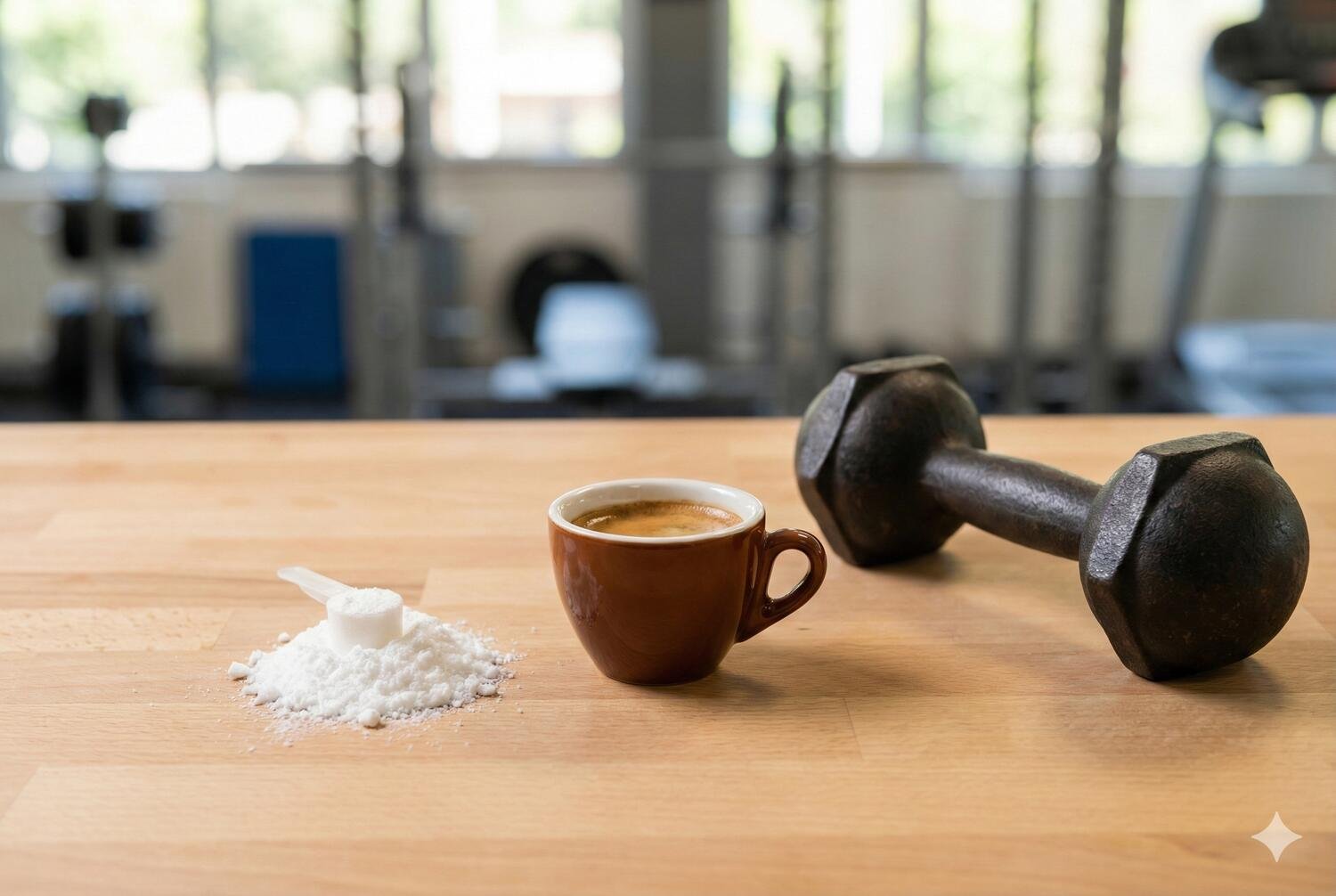
Regular caffeine use can change how strongly you notice the stimulant effect. That does not mean every performance benefit disappears, and the evidence does not support one universally perfect cycling schedule. Habitual high intake can make it harder to distinguish a useful performance boost from simply reversing withdrawal-related fatigue. The solution is not necessarily a complicated detox; it may be a lower daily intake and more deliberate use on important sessions.
Watch for warning signs: persistent jitters, anxiety, nausea, racing heartbeat, headache, gastrointestinal urgency, or a feeling that you cannot train without a pre-workout. More caffeine can make a session feel more intense while actually harming concentration or movement quality. If the dose leaves your hands trembling during a heavy bench press, it has crossed your practical limit regardless of what a dosing chart says.
People with heart rhythm conditions, uncontrolled blood pressure, anxiety that worsens with stimulants, reflux, pregnancy, or medications that interact with caffeine should not apply generic sports dosing without individualized medical advice. Seek urgent assessment for chest pain, fainting, or severe palpitations. Children and adolescents should not copy adult pre-workout protocols. Even for healthy adults, avoid combining several stimulant products whose ingredients overlap.
Caffeine is optional. If you train hard, progress your loads, eat enough protein and calories, and sleep consistently, you already have the foundations that matter. There is no need to force a supplement into a routine that is working. The smartest approach is to use caffeine as a targeted tool, keep the dose modest, and remain willing to skip it when the trade-offs outweigh the benefits.
A four-week caffeine experiment for strength training
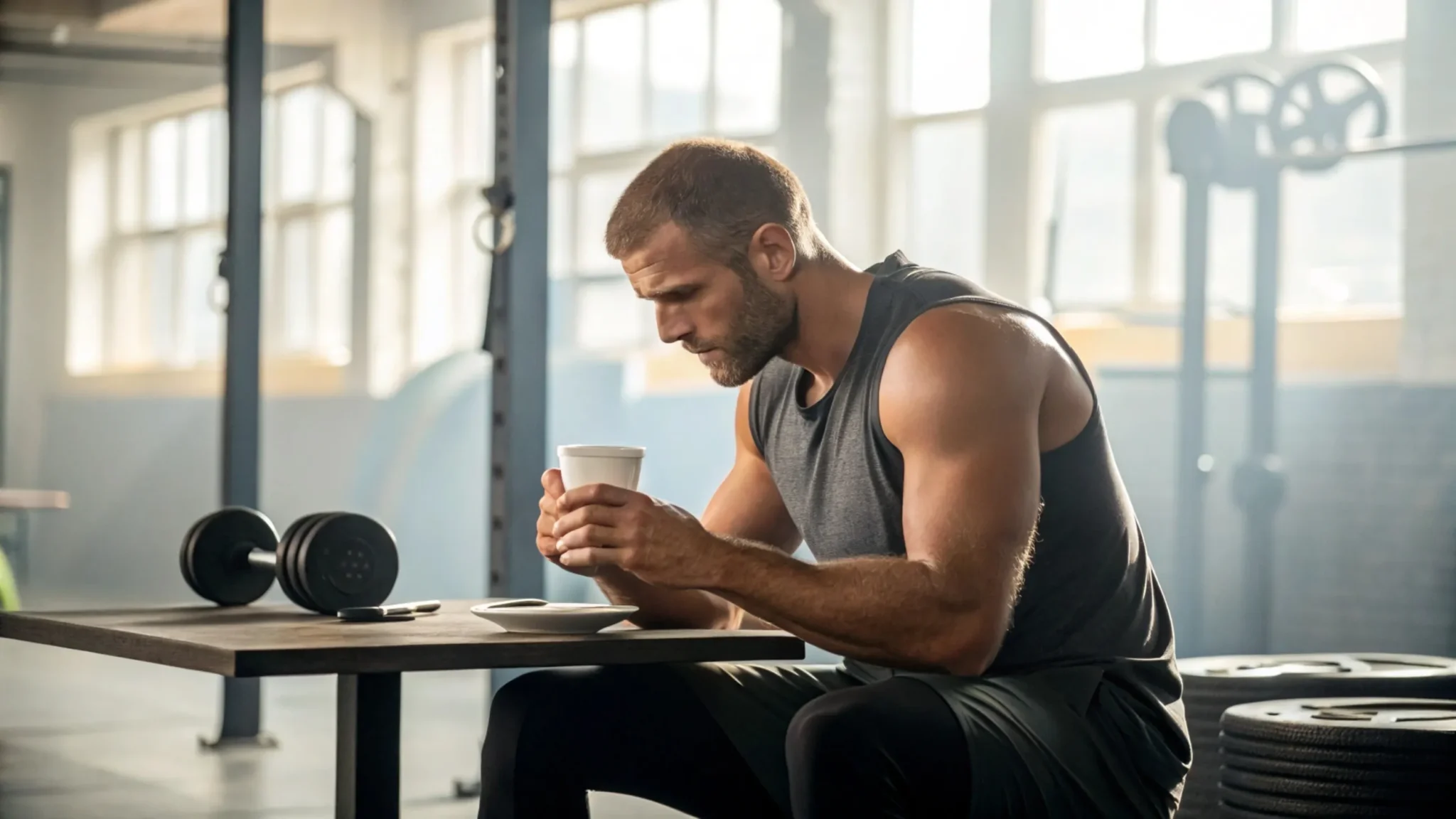
Start with a baseline rather than a heroic dose. In week one, complete your normal program without extra pre-workout caffeine beyond your usual routine. Record your main lifts, sets, repetitions, estimated repetitions in reserve, session duration, and sleep. If you already drink coffee every morning, keep that habit stable rather than introducing abrupt withdrawal and mistaking the resulting fatigue for poor training.
In week two, choose one or two comparable hard sessions and test a modest, known caffeine amount about 45 to 60 minutes before the main work. Keep exercise selection, rest periods, and loading progression similar. Track whether you perform an extra clean repetition, maintain better bar speed, or simply feel more energetic. A better mood is pleasant, but it is not the same as a meaningful training improvement.
In week three, repeat the same dose and timing on another comparable session. Look for consistency across attempts rather than celebrating a single personal record. Note any negative effects: poor sleep, increased heart rate, restlessness, digestive discomfort, or a crash later in the day. If you train after work and sleep suffers, run the comparison without caffeine instead of increasing the amount. The experiment should improve your training life, not make it harder.
In week four, decide where caffeine belongs. Some lifters will reserve it for heavy squat and deadlift days, long conditioning workouts, or competition attempts. Others may prefer a small coffee before morning sessions. Some will discover that they perform just as well without it. Keep the result simple: choose the lowest effective amount, count every source, protect your sleep, and let progressive training do the heavy lifting.
Bodybuilding Shirts & Workout Gear
Bodybuilding shirts, tanks and gym gear for lifters chasing muscle, size, symmetry and the pump.

Pre- Lovers Breaking Bad Decal Shakers & Gear Sticker
Stick a little “Pre-Workout Lovers” humor on your favorite gear.

Pre- Blue Crystal & Fans Tank Top
Add some powerlifting attitude to training with “Pre-Workout”.

99.1% Pure Pre- Breaking Bad Parody Decal Water Sticker
A fun “99.1% Pure Pre-Workout” touch for bottles, laptops, and lockers.

This Is Your Body On Pre- Shirt – Superpower T-Shirt
Show some powerlifting attitude with a playful “This Is Your Body On Pre-workout” tee.

Coffee and Weights for Caffeine Lovers, Lifters and Har T-Shirt
Show some gym-day personality with “Coffee and Weights”.

Coffee Shots & Heavy Squats for Caffeine, Lifting and S Sticker
Put “Coffee Shots & Heavy Squats” gym humor on your laptop, bottle, or gym gear.

Matcha and Weights for Matcha Lovers, Lifters and Gym A Sticker
Give your everyday gear a playful “Matcha and Weights” twist.

Squatbucks & Coffee Meme Leg Day, & Gains Top T-Shirt
Show some leg-day attitude with a playful “Squatbucks Gym & Coffee” tee.

Swole Siren Starbucks Coffee And Gains Meme T-Shirt
Make gym days more fun with “Swole Siren Starbucks Coffee and Gains” style.

Preworkout Lovers – Meme , & T-Shirt
Show some lifting attitude with a playful “Preworkout Lovers” tee.