Advertising disclosure: This page includes affiliate product links that may earn us a commission, as well as products from our own store.
Most core workouts reward you for keeping still: planks, bracing drills and carries. The cable woodchop asks for a different skill. You rotate your hips and rib cage together while controlling a diagonal resistance line, then resist the cable pulling you back. Here is how to train both directions, choose sensible equipment and progress for six weeks without treating every rep like an explosive golf swing.
What cable woodchops train—and what they cannot promise
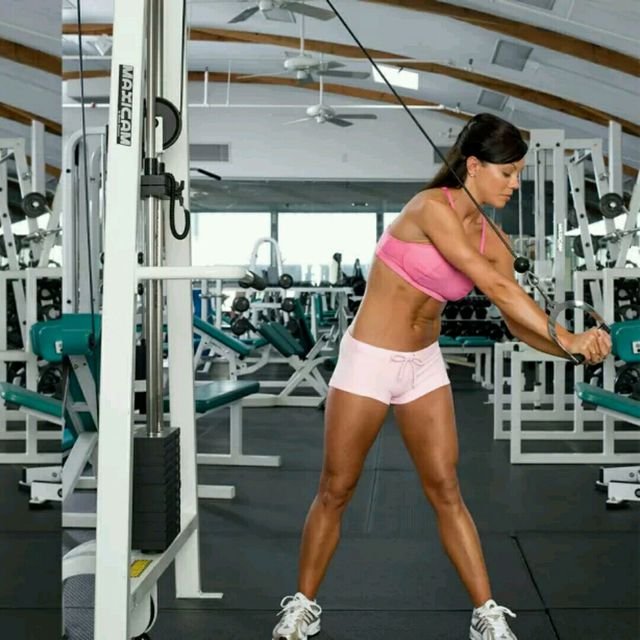
A standing woodchop is a loaded rotation exercise. The external and internal obliques help turn the torso while the other abdominal muscles, spinal stabilizers, hips and shoulders coordinate the movement. Your arms connect you to the handle; they should not do all the work. A well-executed rep requires you to organize the rib cage over the pelvis rather than wrenching through one small part of your back.
That makes woodchops different from a Pallof press. In a Pallof press, you actively resist turning toward the cable. In a woodchop, you permit deliberate trunk and hip rotation and control its return. Neither is universally superior; the two train related but different tasks. You can include both in a broader strength program.
Do not confuse a muscle list with an outcome study. Coaching descriptions identify the obliques as important movers, but there is not strong direct evidence that high-to-low chops build a particular portion of the abs better than low-to-high chops. Nor does a cable-chop routine automatically fix back pain, prevent sports injuries or improve your swing speed. Those are bigger claims than a form demonstration can support.
The useful goal is measurable and modest: develop controlled rotation on both sides with a stable stance, repeatable range and gradually increasing resistance. If you already squat, deadlift and carry weights, this gives your trunk a practice opportunity those mostly forward-and-back movements do not provide.
High-to-low cable woodchop: the starting variation
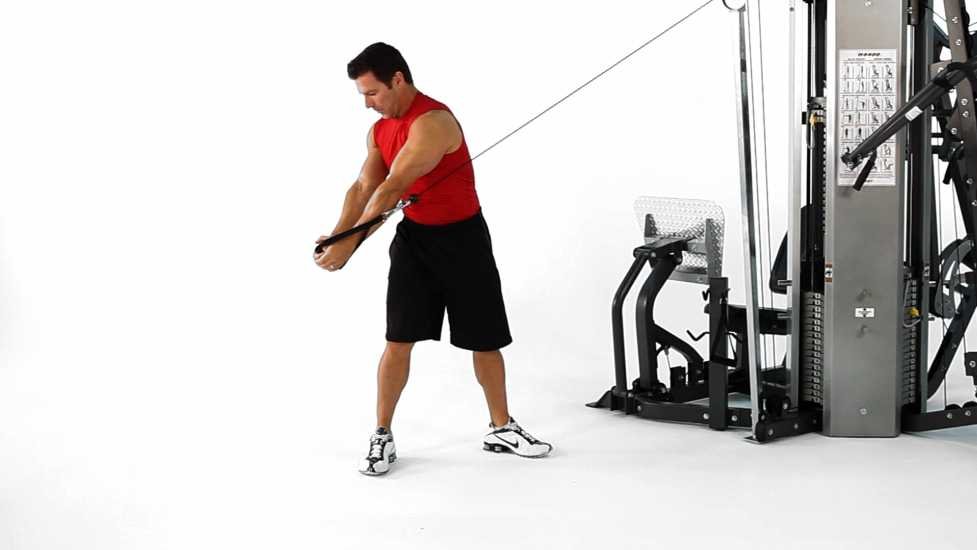
Set an adjustable cable pulley just above shoulder or head height, attach a single handle and stand side-on about one arm’s length from the stack. Take a stance slightly wider than hip-width, soften your knees and grasp the handle with both hands. Start with the arms long but not locked, reaching up toward the pulley, and choose a light setting you can control throughout the return.
- Brace first. Exhale lightly, keep your rib cage stacked over your pelvis and maintain natural spinal alignment.
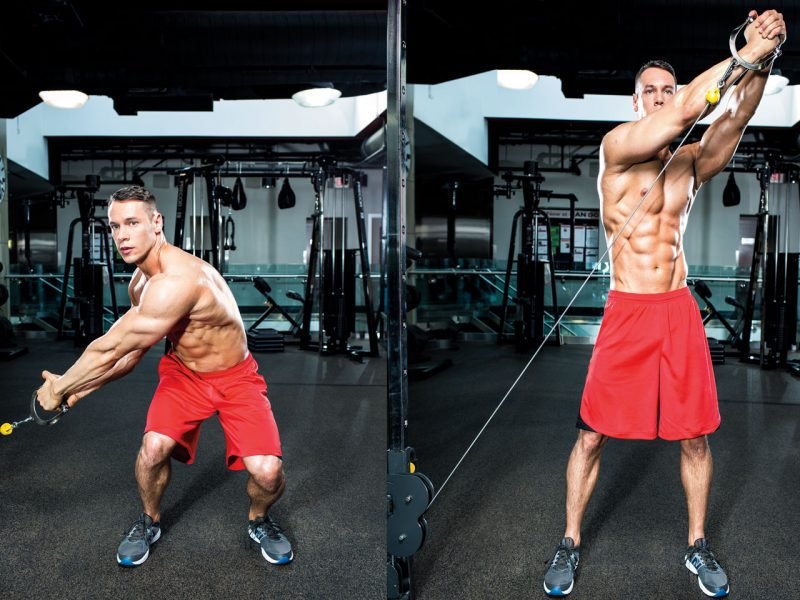
- Chop diagonally. Guide your hands from the high pulley across your body toward the outside of the opposite hip or knee. Turn your chest and hips together rather than yanking the cable with your elbows.
- Let the foot pivot if needed. A small, deliberate rear-foot turn can prevent twisting a planted knee while your hips rotate.
- Own the return. Take roughly two seconds to bring the handle back along the same path. Finish the assigned reps on one side, then reverse your stance and train the other side.
Stop the rep before your lower back has to bend or your stance shifts uncontrollably. Your finished position does not need to look dramatic. You should feel the sides of the torso working while the legs supply a steady base. Begin with two sets of eight to twelve controlled reps per side, leaving enough capacity to do two or three more clean repetitions.
For lifters with a cramped home gym, the cable line matters more than the amount of floor space. Test the full sweep at very low resistance before selecting your working load. Make sure the handle cannot hit an adjacent rack upright, shelf or wall.
Low-to-high woodchop: a different diagonal, not a magic muscle switch
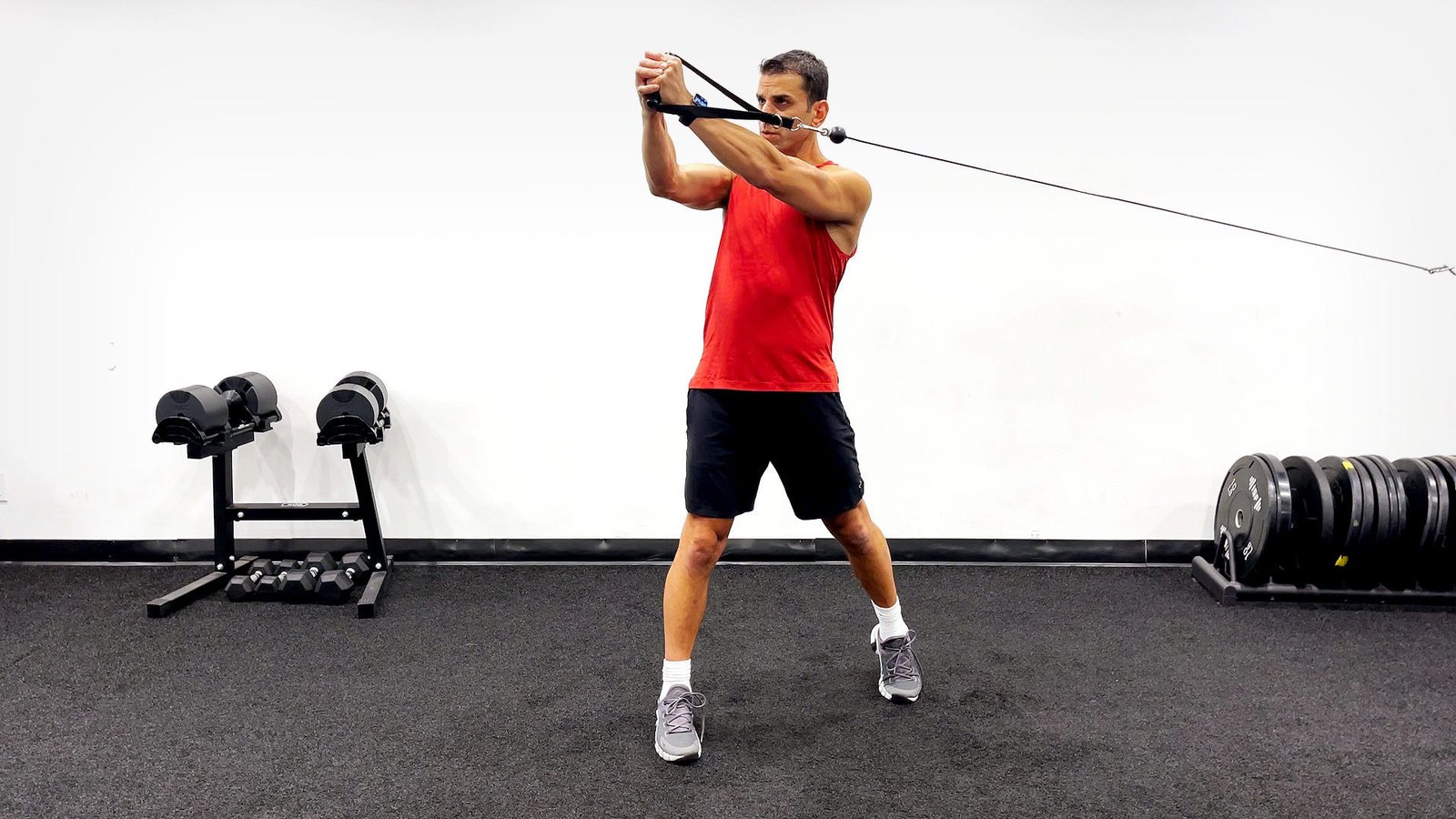
Move the cable carriage close to the floor and turn sideways again. Hold the handle beside the hip nearest the stack. From a soft-kneed athletic stance, rotate and guide both hands upward toward the opposite shoulder. Rise tall without leaning backward or throwing your arms above your head. Bring the handle back down slowly, and switch sides only after you complete the set.
Compared with the downward version, this drill asks you to coordinate an upward diagonal with hip extension and rotation. The trajectory may feel closer to certain lifting and throwing patterns, but similarity is not proof of direct sport transfer. Use the direction that lets you rehearse the movement you want while preserving control.
The easiest mistake is to turn the exercise into a diagonal front raise. If your shoulders fatigue long before your trunk, move the cable closer to your midline, reduce resistance and think about turning your sternum with your hips. Likewise, the finish should not be a big backward arch. End at shoulder height until you can maintain the same rib-and-pelvis relationship through a larger range.
You can use both variants in the same week without trying to set a personal record on each. For example, perform high-to-low on Monday and low-to-high on Thursday. Record the side, pulley position and load so your next session compares the same exercise rather than a changed mechanical setup.

Equipment Worth Exploring
Explore equipment, accessories and gear from our carefully selected range.
VOLTRA
Compact digital cable trainer with smooth, adjustable resistance.

Go-Tone Pro
Portable digital cable trainer with up to 66 lb (30 kg) of adjustable resistance.

VForce Wall Trainer
Space-saving wall-mounted functional trainer with pivoting cable arms and variable resistance ratios.

VForce 2IN1
Half rack and pivot-arm functional trainer with switchable 1:1 and 2:1 pulley ratios.

VForce 3IN1
All-in-one rack combining an adjustable Smith machine, functional trainer, and free-weight station.


Foldable Wall Rack
Wall-mounted folding squat rack designed to save floor space between workouts.
Premium Carabiner
Durable carabiner for connecting cable attachments and training accessories.


GymPin Ergo Handles
Pair of ergonomic cable handles shaped for comfortable triceps and pulling exercises.
Six technique errors that turn core work into a cable yank
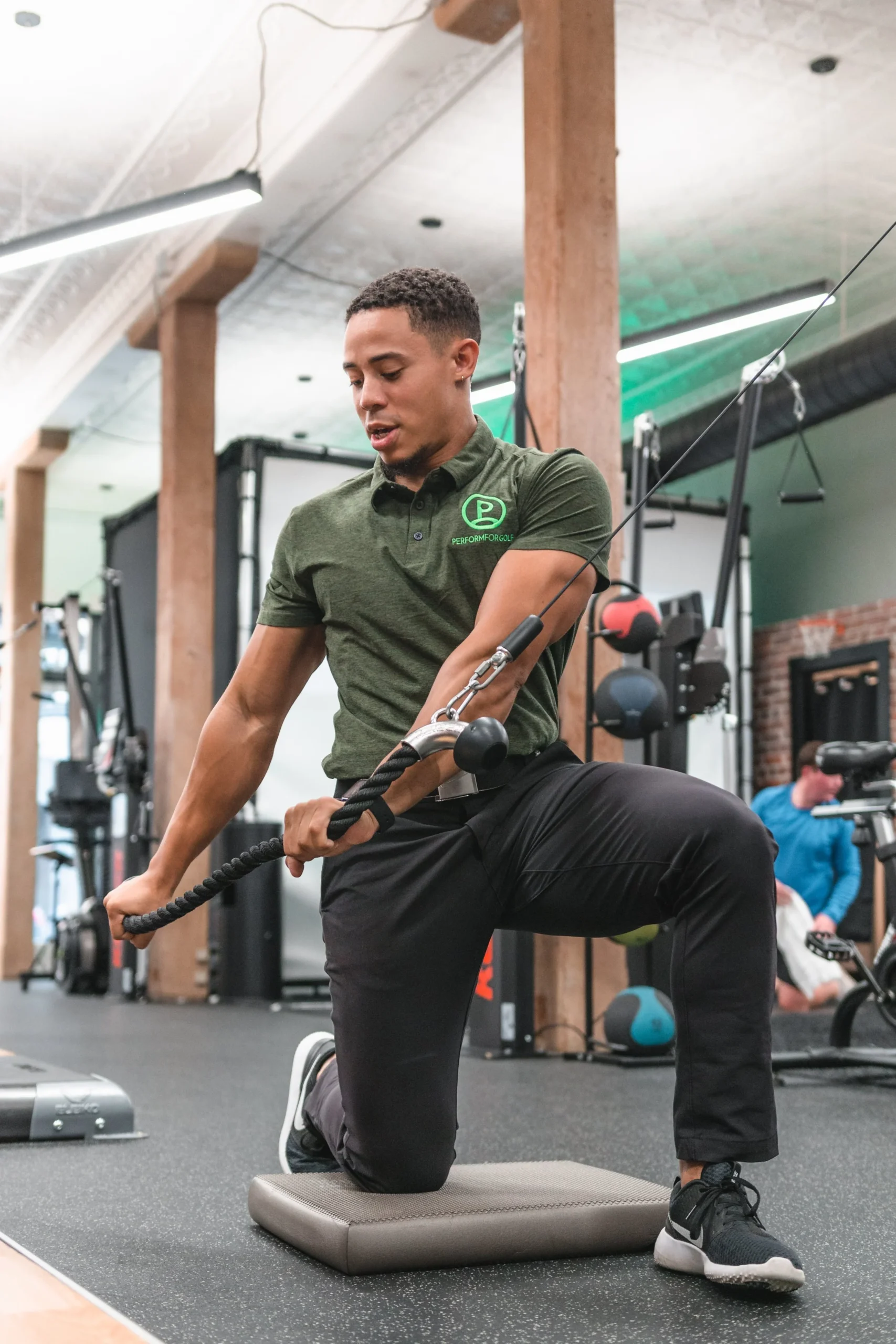
Loading too much too early is the most common giveaway. The weight stack should not launch your hands back toward the machine. Drop the load until the final third of the return is as controlled as the first. A slow eccentric is not a guarantee of extra growth, but it is a reliable technique check.
Locking the feet in place can force unnecessary twist through a knee when the hips want to turn. A stable stance is useful, yet stable does not always mean motionless. On larger rotations, let your rear heel pivot in a small and deliberate way while keeping the knee aligned with the foot.
Bending the arms into a row changes the challenge. Keep the elbows softly extended and allow the hands to travel together as the trunk turns. Collapsing forward is another compensation; if your head and ribs pitch toward the floor, shorten the endpoint rather than chasing a lower handle position.
Rushing the first rep often hides poor setup. Take up slack in the cable, find the stance and only then move. Finally, doing the stronger side first and copying its load blindly can turn the weaker side into a sloppy shoulder movement. Match each side by movement quality and use a range both can control.
If a chop causes sharp, persistent or radiating pain, stop the exercise. A coach or qualified clinician can help you determine whether a different range, variation or training approach is appropriate. Pain tolerance is not a progression strategy.

Functional Fitness Shirts & Workout Gear
Functional-fitness shirts, tanks and workout gear for athletes who train strength, conditioning and everything in between.

Vive Le Resistance Bands – Resistance Bands Warmup Reha T-Shirt
Add a playful “Vive Le Resistance Bands” touch to your casual rotation.


Vitruvian Kettlebell Tee
Heavy lifts, good laughs, and a little “Vitruvian Man With Kettlebells” energy.

Super Kettlebell Crewneck Pullover Sweater Kettlebell T T-Shirt
Add a playful “Super Kettlebell” touch to your casual rotation.

Happy Kettlebell Emoji Smiley Kettlebell Workout Shirt Tank Top
Bring “Happy Kettlebell Emoji” humor to your next lifting session.

Kettlebell Heart X-Ray – Valentine's Workout Meme Decal Sticker
Stick a little “Kettlebell Heart X-Ray” humor on your favorite gear.

Heavy Metal Gym – Funny Kettlebell Rock Music Hooded Pu Hoodie
Keep it laid-back with a little “Heavy Metal” attitude.

Shirt – Day Of The Dead Kettlebell – Dia De Los T-Shirt
Bring “Day of the Dead Kettlebell” humor to your next gym day.

Gym Equation Kettlebell Makes Me Happy Design Workout a Hoodie
Make your off-duty look more fun with “Gym Equation”.

Atlas Kettlebell Earth Meme Greek God Top T-Shirt
Make gym days more fun with “Atlas Kettlebell Earth Lifter” style.
Horizontal, band and half-kneeling chops: when to modify
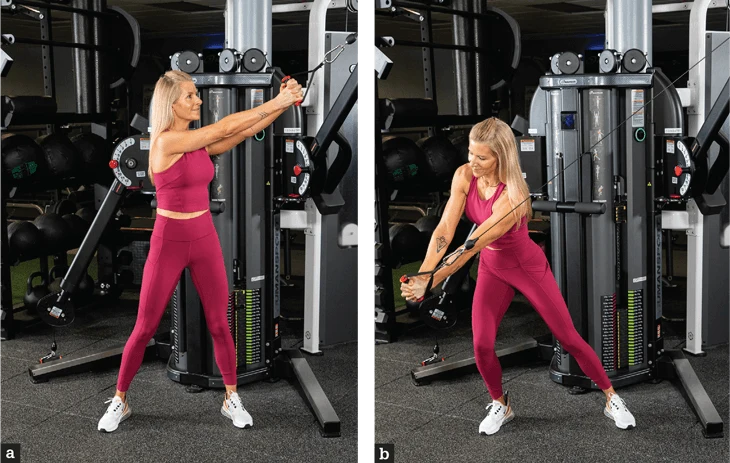
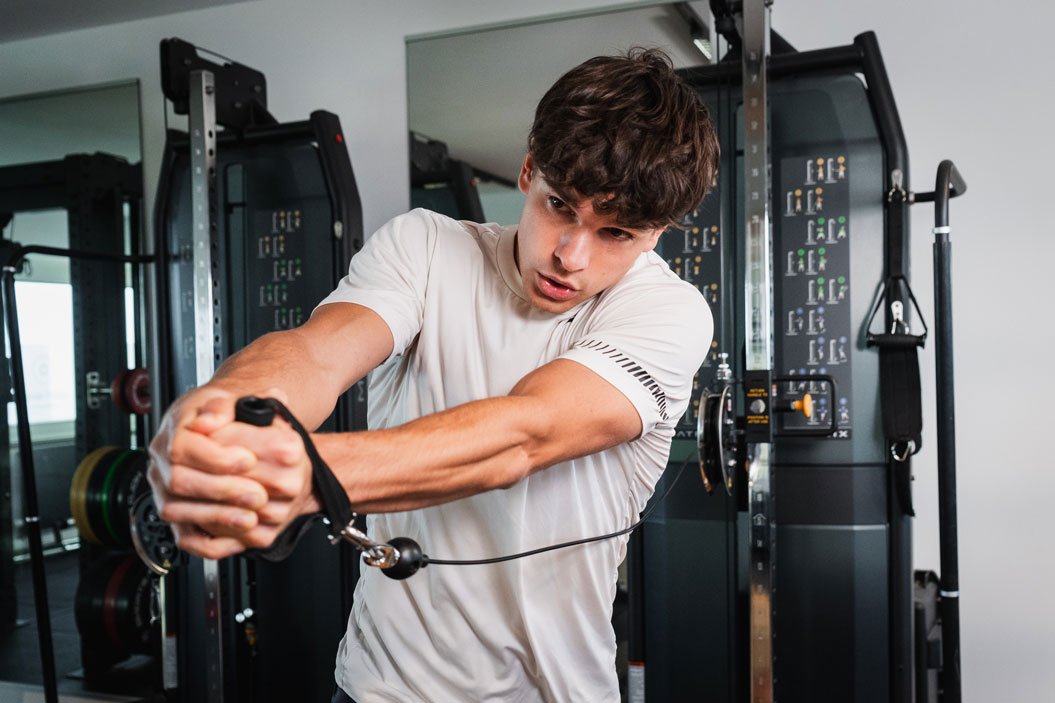
A horizontal cable chop places the handle around chest height. The hands travel across the body at approximately the same level instead of tracing a diagonal. This can make it easier to notice whether the ribs and hips are rotating together. It is also a practical starting point if a full diagonal keeps pulling you off balance.
A band woodchop uses a securely anchored resistance band instead of a weight stack. Anchor the band above shoulder height for high-to-low or near the floor for low-to-high. Bands usually change tension as they stretch, so do not compare their resistance directly with cable-stack numbers. Check the band and anchor before each set; an unstable door anchor or damaged band is a reason to choose another setup.
A half-kneeling or tall-kneeling variation reduces the contribution of a large standing pivot and gives you a different balance challenge. It can help you rehearse controlled movement at a lighter load, but do not assume kneeling is automatically safer for every back or hip condition. Start with a shortened path and add range only when it remains pain-free and controlled.
You can also use a Pallof press on a day when you want to resist rotation rather than create it. A side plank gives another no-cable option, and a slow suitcase carry challenges the trunk to resist side-bending. These movements are complementary, not interchangeable. Their resistance directions and movement demands differ.
Home-gym gear and setup: what actually matters
A height-adjustable cable trainer is the easiest way to repeat both directions without re-engineering the movement. The critical features are a stable anchor, enough vertical pulley travel, room for the cable to clear the rack and resistance increments small enough to preserve form. An all-in-one rack or wall-mounted trainer can work as well as a standalone functional trainer when it offers those basics.
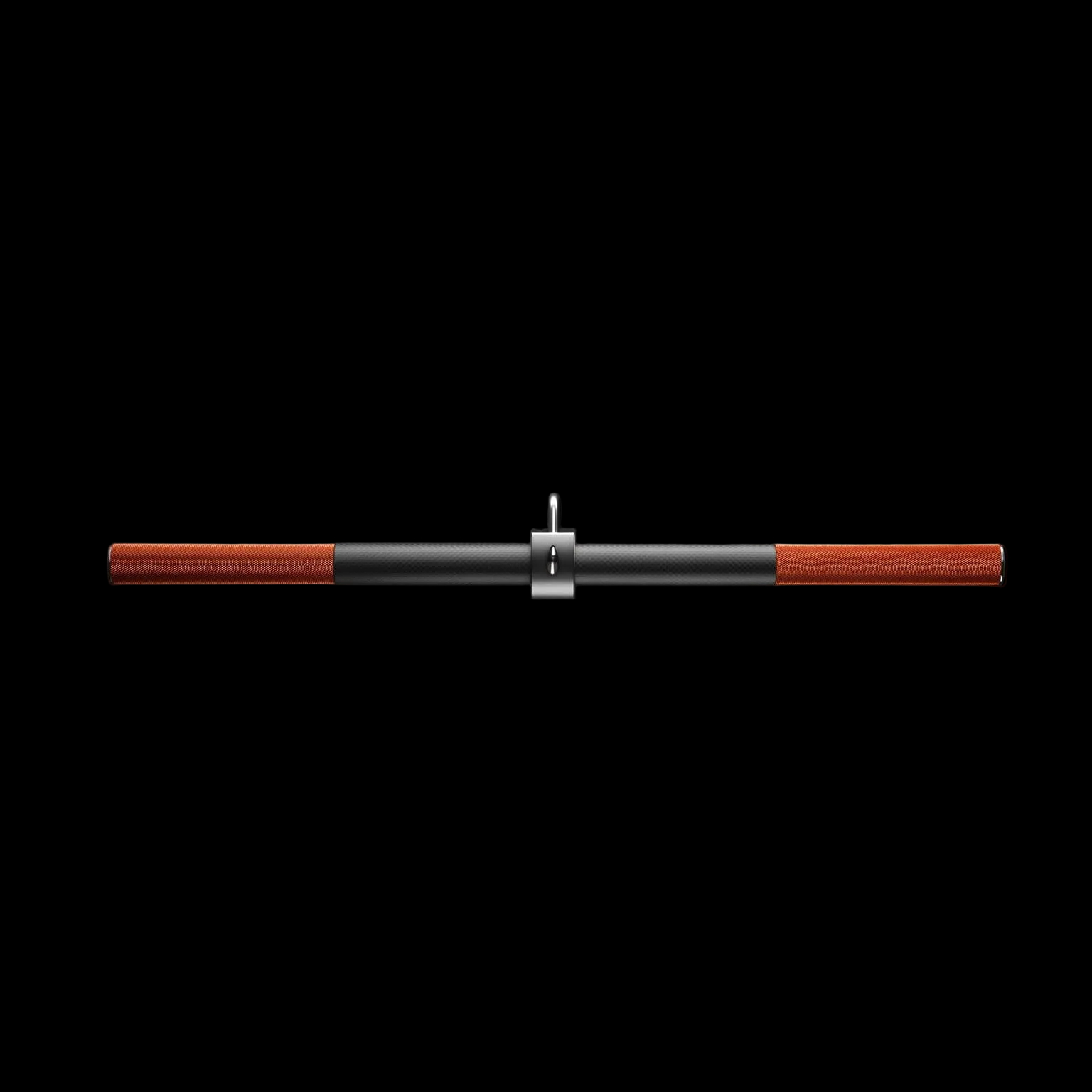
Use a comfortable single D-handle or small rope attachment. Most people need no exotic grip: the hands stay together while the torso and hips provide the rotation. If a thick attachment encourages you to bend the elbows or shrug, a simpler handle is better. A carabiner that rotates freely can help the cable follow the changing angle without twisting the strap.
Resistance ratios matter. A selectable ten-kilogram setting on one cable system can feel unlike the same number on a different pulley arrangement. Log the actual machine and setting instead of comparing raw stack labels. On an electronic cable trainer, choose controlled resistance and keep the same software mode while assessing progress.
No suitable cable tower? A strong resistance band attached to a verified rack anchor is a compact alternative. A rotational medicine-ball throw is not a straight substitute: it is a different, more ballistic drill. Likewise, kettlebell carries and loaded walks can contribute to overall trunk training but do not replicate the diagonal loaded rotation of a woodchop.
For a small gym, prioritize a clear lane around your hips, hands and cable before choosing another attachment. An expensive functional trainer is not required for this accessory movement; a secure, smoothly working existing cable line is enough.
Equipment Worth Exploring
Explore equipment, accessories and gear from our carefully selected range.


Cast Iron Kettlebells
Textured cast-iron kettlebells for swings, squats, carries, and full-body training.


Rubber Hex Dumbbells
Rubber-coated hex dumbbell pairs with a stable shape for home and commercial strength training.


Pro Sled System
Heavy-duty push-pull training sled for loaded conditioning, speed, and strength work.

Competition Wall Ball
Competition-style weighted wall ball for HYROX, wall-ball shots, and functional conditioning.

Slam Ball
Low-bounce weighted slam ball for explosive throws and high-intensity conditioning.
A six-week woodchop progression that fits a lifting program
Start with two brief core sessions per week after your main strength work, leaving a day between sessions. Treat a repetition as successful only when your torso, hips, handle path and controlled return are reproducible. Pick light resistance in the first week; the objective is skill and tolerable workload, not fatigue for its own sake.
| Week | Session A: high-to-low | Session B: low-to-high | Progression priority |
|---|---|---|---|
| 1 | 2 × 8/side | 2 × 8/side | Learn stance, range and controlled return |
| 2 | 2 × 10/side | 2 × 10/side | Repeat the same handle path |
| 3 | 3 × 8/side | 2 × 12/side | Add one set, keep load stable |
| 4 | 3 × 10/side | 3 × 8/side | Match quality on both sides |
| 5 | 3 × 10–12/side | 3 × 10/side | Add a small load increment only if clean |
| 6 | 3 × 12/side | 3 × 12/side | Retest at a repeatable range and setting |
Rest 45–75 seconds between sides or sets, longer if breathing or balance is limiting. The exact sets and repetitions above are a practical coaching template, not a protocol proven superior in a six-week trial. Keep the effort at roughly two clean repetitions in reserve. If technique breaks, reduce the load or repeat the previous week’s target.
Record three things after each session: resistance setting, repetitions and whether either side lost range or control. At the end of week six, compare a video from week one with one from week six at the same cable height. Smoother turns, better balance or more load at the same form standard are useful signs of progress. An unchanged waist measurement is not evidence the exercise failed: this is primarily a strength-and-coordination accessory, not a spot-reduction tool.
The take-home rule is simple: turn together, return under control, and progress one variable at a time. High-to-low and low-to-high woodchops both deserve a place when your training needs loaded rotation. They earn that place through repeatable form—not the biggest number on the stack.
Powerlifting Shirts & Lifting Gear
Powerlifting shirts and gym gear for squat, bench and deadlift lifters who live for heavy numbers.

No Plates No Dates Gym Meme | Funny Workout Sweater For T-Shirt
Bring “No Plates No Dates Gym Meme” humor to your everyday gym style.

More Plates More Dates | Weightlifting Meme Graphic Shi T-Shirt
Heavy lifts, good laughs, and a little “More Plates More Dates” energy.

Barbell Crossed Weights 45LB Plate Hardcore Fitness Wor Tank Top
Add some powerlifting attitude to training with “Classic Barbell Crossed Weights 45LB Plate”.

Blood Sweat and Tears Weight Plate 45LB Plate Blood & W Sticker
Put “Blood Sweat and Tears Weight Plate” gym humor on your laptop, bottle, or gym gear.

Flaming 45LB Weight Plate Fire Barbell Lifting T-Shirt
For laid-back days and powerlifting humor: “Flaming 45LB Weight Plate”.

Skull & Weights 45LB Plate Skull Weight Plate Graphic H T-Shirt
Show some Halloween attitude with a playful “Skull & Weights 45LB Plate” tee.

Gymhead Lifting Is On My Mind Hooded Skull Hoodie
Stay casual and show some powerlifting attitude with “Gymhead”.

Fight Your Inner Demon Decal Water Bottles & Sticker
Put “Fight Your Inner Demon” gym humor on your laptop, bottle, or gym gear.

Gold Skull , Uplift Iron Club Gym Shirt, Bodybuilding G T-Shirt
Show some lifting attitude with a playful “Gold Skull” tee.

Lifting Cult Meme Graphic Bodybuilding Powerlifting Wor T-Shirt
Make gym days more fun with “Lifting Cult” style.